
The Times of Trenton reported that Hamilton Township has scheduled an additional hepatitis A vaccination clinic for Monday, December 8th in response to a confirmed case of the infection at Rosa’s Restaurant and Catering between Nov. 10 and Dec. 1.   At a clinic Thursday, the township administered about 600 hepatitis A vaccines.

The second clinic on Monday will be held at the township’s health building at 2100 Greenwood Avenue, from 10 a.m. to 7 p.m.

A food service employee at Rosa’s Restaurant and Catering, located at 3442 S. Broad Street, was diagnosed with hepatitis A on Monday but has been hospitalized since Nov. 25. The employee is the only person confirmed to have the infection thus far.

The symptoms include mild fever, loss of appetite, nausea, fatigue, vomiting, diarrhea, abdominal pain and dark urine and jaundice. Officials have urged anyone who ate at the restaurant who has concerns or develops symptoms to call a doctor.  The infection varies in severity, with mild cases lasting two weeks or less and more severe cases lasting four to six weeks.

If only the employee had been vaccinated, all these people would not have to stand in line.

Today the Colorado Department of Public Health and Environment (“CDPHE”) and several Denver metropolitan area public health departments released a report of their investigation of an outbreak of Escherichia coli O157:H7 (E. coli O157:H7) that occurred in October 2013 at Denver Jimmy John’s restaurants.

Nine cases were identified, including 1 probable case and 8 laboratory-confirmed cases with matching pulsed-field gel electrophoresis (PFGE) and multiple-locus variable number tandem repeat analysis (MLVA) patterns from E. coli O157:H7 isolated from stool. All 9 cases reported eating sandwiches at Denver-area Jimmy John’s locations in early October 2013.

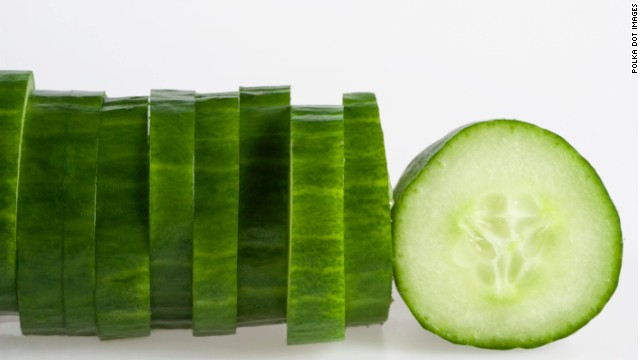
The outbreak investigation consisted of case finding and interviews, 2 separate case-control studies, environmental investigations, produce traceback, and laboratory testing. The results of this investigation indicate that consumption of Jimmy John’s sandwiches containing cucumbers imported from Mexico was the likely cause of the outbreak. As of the date of this report, no other cases of E. coli O157:H7 with the PFGE pattern combination seen in this outbreak were reported in Colorado.  See PowerPoint PDF.  And, its not like Jimmy John’s has not been in this position – BEFORE.

As of December 2, 2014, a total of 87 people infected with the outbreak strains of Salmonella Enteritidis have been reported from 11 states.

Twenty-seven percent of ill persons have been hospitalized. No deaths have been reported.

CDC’s National Antimicrobial Resistance Monitoring System (NARMS) laboratory conducted antibiotic resistance testing on Salmonella Enteritidis isolates collected from three ill persons infected with the outbreak strains.

All three isolates were susceptible to all antibiotics tested on the NARMS panel.

Collaborative investigation efforts of state, local, and federal public health and regulatory agencies indicate that bean sprouts produced by Wonton Foods, Inc. are the likely source of this outbreak.

In interviews, 42 (78%) of 54 ill persons reported eating bean sprouts or menu items containing bean sprouts in the week before becoming ill.

Wonton Foods, Inc. continues to cooperate with state and federal public health and agriculture officials.

On November 21, 2014, Wonton Foods, Inc. agreed to destroy any remaining products while they conducted thorough cleaning and sanitization and implemented other Salmonella control measures. On November 24, the firm completed cleaning and sanitization and restarted production of bean sprouts. The firm resumed shipment on November 29, 2014

Contaminated bean sprouts produced by Wonton Foods, Inc. are likely no longer available for purchase or consumption given the maximum 12-day shelf life of mung bean sprouts.

Overhill Farms, Inc. of Vernon, California is voluntarily recalling the frozen food product Open Nature Chile Cheese Enchiladas due to potential Salmonella contamination. The supplier for the organic cilantro contained in such product notified Overhill Farms that the organic cilantro may have Salmonella contamination based on routine testing conducted. The product is sold nationwide at all Safeway-owned stores, including Safeway, Carrs, Genuardi’s, Pak ‘N Save, Pavilions, Randalls, Tom Thumb and Vons.

No illnesses have been reported to date in connection with this voluntary recall.

Open Nature Chile Cheese Enchiladas are a frozen prepared dinner packaged in a box with a net weight of 9 oz. and marked with a UPC 0-7989310436-9. The product was sold at stores from Oct 9, 2014, through December 1, 2014.

Packages with the following lot code and “Best Before” dates are subject to the recall:

Lot Number Best By Date

141006 AUG-06-15

The lot number and best by date can be found on the side panel of the box.

Salmonella is an organism which can cause serious and sometimes fatal infections in young children, frail or elderly people, and others with weakened immune systems. Healthy persons infected with Salmonella often experience fever, diarrhea (which may be bloody), nausea, vomiting and abdominal pain. In rare circumstances, infection with Salmonella can result in the organism getting into the bloodstream and producing more severe illnesses such as arterial infections (i.e., infected aneurysms), endocarditis and arthritis.

Cristina Rojas reports that a confirmed case of hepatitis A has been traced to a food worker employed at Rosa’s Restaurant and Catering in Hamilton, officials said late Monday.

Health officials warned that anyone who ate at or catered from the restaurant between Nov. 10 and Monday may be at risk for developing Hepatitis A if they have not been previously vaccinated.

Unvaccinated individuals who ate there should receive an injection of immune globulin or hepatitis A vaccine. Both can prevent an infection if given within 14 days of exposure.

Officials urged anyone who ate at the restaurant who develops symptoms to call a doctor. The symptoms include mild fever, loss of appetite, nausea, fatigue, vomiting, diarrhea, abdominal pain and dark urine and jaundice.

The disease varies in severity, with mild cases lasting two weeks or less and more severe cases lasting four to six weeks.

Second sprout recall in two years.

On November 24, 2014, Henry’s Farm Inc. of Woodford, VA recalled all packages of Soybean Sprouts because they may be contaminated with Listeria monocytogenes, an organism which can cause serious and sometimes fatal infections to individuals with weakened immune systems. Although healthy individuals may suffer only short term symptoms such as high fever, severe headache, stiffness, nausea, abdominal pain and diarrhea, Listeria infection can cause miscarriages and stillbirths among pregnant women.

The following products were being recalled by the firm.

  1. All clear 1 lb packages of Natto Soybean Sprouts. These products are labeled as produced by Henry’s Farm Inc. The packages were not coded.
  2. All clear 2 lb packages of Bean Sprouts. These products are labeled as distributed by Rhee Bros. Inc. Columbia, MD. The packages were not coded.
  3. All bulk (approximately 10 lbs.) black plastic bags of Soy Bean Sprouts. These products are labeled as produced by Henry’s Farm Inc. The packages were not coded.

These items were distributed to retail stores in Virginia and Maryland.

The contamination was discovered after sampling by the Virginia Department of Agriculture and Consumer Services Food Safety & Security Program and subsequent analysis by the Virginia Division of Consolidated Laboratory Services revealed the presence of Listeria monocytogenes in the products.

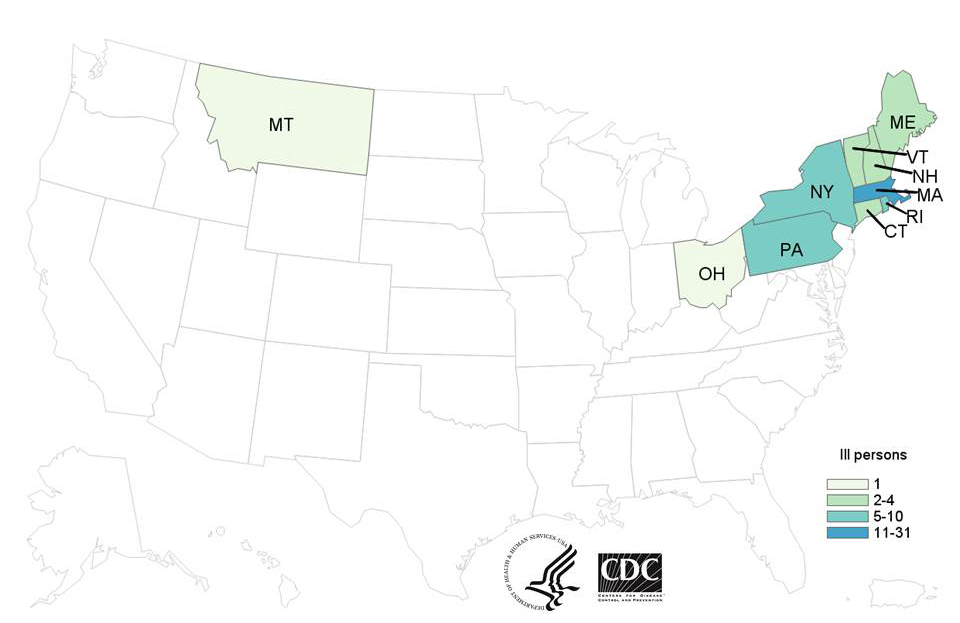
As of November 24, a total of 68 persons infected with the outbreak strains of Salmonella have been reported from 10 states. The number of ill people identified in each state is as follows: Connecticut (4), Maine (3), Massachusetts (31), Montana (1), New Hampshire (4), New York (5), Ohio (1), Pennsylvania (10), Rhode Island (6), and Vermont (3). The one ill person from Montana traveled to the Eastern United States during the period when likely exposure occurred.

Illness onset dates range from September 30, 2014 to November 10, 2014. Ill persons range in age from younger than one year to 83 years, with a median age of 31 years. Fifty-six percent of ill persons are female. Among 43 persons with available information, 11 (26%) have been hospitalized, and no deaths have been reported.

State and local public health officials also performed traceback investigations on the source of bean sprouts for all five-illness clusters as well as for several individual ill persons and reported the results of these investigations to FDA and CDC. Traceback from all of the establishments indicated that all received bean sprouts from Wonton Foods, Inc. of Brooklyn, New York. Although some restaurants also received bean sprouts from other suppliers, Wonton Foods, Inc. was the only supplier common to all of the restaurants and was the sole supplier of bean sprouts to at least two of the restaurants. The firm is cooperating with public health and agriculture officials and has reported that their last shipment of bean sprouts was on November 18, 2014. As of November 21, 2014, the firm has verbally agreed to voluntarily stop the production and sale of their bean sprouts while they take steps to prevent Salmonella contamination.

I admittedly have much to be thankful for.  I have three beautiful, talented daughters and a spectacular wife who has tolerated me for over 25 years.  I am fortunate at Marler Clark to be surrounded by great staff and gifted lawyers.  And, unlike many in my profession, I love my job.  I am also daily honored by families that retain me to seek justice and change.  After 21 years representing victims of foodborne illnesses in every state, it is impossible to make a list of clients I am especially thankful for, but here is my Turkey Day try:

Brianne Kiner – nine years old at the time when I represented her in the 1993 Jack in the Box E. coli O157:H7 outbreak, she suffered one of the worst of the illnesses.  She developed hemolytic uremic syndrome, which caused her to become puffy and jaundiced.  She began to bleed from every orifice in her body. Brianne would eventually slip into a coma, during which doctors removed her large intestine and hooked her heart, lungs, and kidneys up to machines to keep them functioning. Though expected to die, Bri eventually emerged from the coma, and began the slow process of recovery, to the extent she would be able to recover.  Bri and I talk – not as frequently and we used to – but she has become a wonderful, caring young woman.  Her story was told in the book Poisoned.

Mari Tardiff – In June 2008 Mari Tardiff began to experience acute diarrhea and vomiting, which eventually gave way to a searing pain in her legs. The night of June 12th, Mari went to bed after soaking her legs in hot water to get some temporary relief, and awoke to find she could not move her legs. She was admitted to the hospital, where the paralysis began to spread to the rest of her body. Despite being unable to move, she continued to feel intense pain instead of the numbness usually experienced by victims of paralysis. Doctors eventually diagnosed Mari with Guillain-Barré syndrome, a severe complication of Campylobacter infection in which the body’s immune system attacks part of the peripheral nervous system. Mari’s case was linked to those of others who had developed Campylobacter infections from drinking raw milk produced by Alexandre EcoDairy Farms, a “cow-share” program in California. Mari spent almost six months in the hospital and in rehabilitation facilities, where she slowly learned to breathe again without a ventilator, and began to regain some of her speech and motion. She now lives at home in her family room, which has been outfitted with the equipment she needs, such as a hospital bed, stand-up frame, and Hoyer lift. Mari still is unable to walk without assistance, but her progress has been amazing.

Linda Rivera – In May 2009, when Linda Rivera dipped a spoon into the package of Nestle Toll House cookie dough she was using to make cookies for her twin sons’ prom party, she was unaware that she was also consuming a batch of E. coli O157:H7 bacteria that would eventually lead to hemolytic uremic syndrome.  Four days later, Linda was admitted to the hospital, vomiting every five minutes. Doctors told her that E. coli was destroying her colon. They removed part of the organ, along with her gallbladder. Her kidneys and liver also shut down, and she was put into a medically induced coma. When she awoke, she went into cardiac arrest, and required emergency kidney dialysis.  Linda spent the next year of her life in Las Vegas-area hospitals. She was given last rites in expectation of her death three times. In the 13th month of her illness, she was finally transported to a rehabilitation facility in San Francisco, where she remained for another year, learning to walk and communicate again. Linda, with the support of her amazing husband and family, was finally able to come home, where after a noble struggle with numerous health issues, she finally passed.  I had the honor to speak at her memorial service.

Abby FenstermakerAbby Fenstermaker, who will be forever six, was admitted to the hospital on May 11, 2009 after ongoing diarrhea left her severely dehydrated. Her body hurt so badly that she sometimes cried out in pain. Abby had developed hemolytic uremic syndrome.  Abby’s kidneys began to shut down. A chest x-ray revealed fluid building up around her lungs. She was eventually put on oxygen to facilitate breathing. The next day found Abby minimally responsive, and a brain scan revealed that she had likely suffered a massive stroke. She then slipped into a coma. Her condition declined further over the next two days until doctors finally proclaimed her brain-dead. On May 17, Abby’s parents requested that she be removed from life support, and, along with family and friends, said goodbye to their only daughter.

Richard Miller – On October 13, 2003, Richard Miller and his wife Linda stopped by Chi-Chi’s restaurant in Monaca, Pennsylvania to grab lunch, and left with a Hepatitis A virus. Later in the month, both fell ill with body aches, loss of appetite and energy, and jaundice. But while Linda recovered within a few days, Richard’s case grew more severe. When he became incoherent and unable to stand, he was admitted to the hospital, sedated and eventually put on life support. Richard ultimately required a liver transplant, during which he suffered cardiac arrest. He pulled through the operation, only to begin a new life.

Stephanie Smith – In October of 2007, Cargill Meat Solutions Corporation recalled 847,000 pounds of frozen ground beef patties after they were found to be the source of a particularly virulent strain of E. coli O157:H7 that sickened 11 people. Stephanie Smith, a 22-year-old dance instructor from Cold Spring, Minnesota, suffered the worst injuries of the victims of the E. coli outbreak traced to Cargill meat.  She developed hemolytic uremic syndrome, which shut down her kidneys and led to such frequent seizures that she was put into a medically induced coma for nine months. She emerged from the coma with brain damage, paralyzed from the waist down. A 2009 New York Times article by Michael Moss chronicling Stephanie Smith’s experience with E. coli won the Pulitzer Prize for journalism. The article traces her hamburger back to the day it was made, looking at how it and other ground beef patties are produced. It also investigates the shortcomings of ground beef regulation that increase the risk of E. coli contamination.  The article spurred sympathy for Stephanie and raised awareness of the problems associated with beef production in the United States.

Jeff Almer – Over 714 people in 46 states became ill with Salmonella Typhimurium infections after consuming peanut and peanut butter products produced in 2008 and 2009 by Peanut Corporation of America confirmed.  Nine people died, including Jeff’s mom. Jeff has been a tireless food safety advocate and seeker of justice for his mom.

Cantaloupe Listeria Clients – For the last three years Marler Clark has represented the families of 46 victims of the 2011 Listeria outbreak linked to cantaloupe grown by Jensen Farms.  The firm has pursued compensation from Jensen Farms, the firms that audited the farm’s food safety practices, the companies that distributed the Listeria-contaminated cantaloupes and the retailers that sold the unsafe food.  We have also seen the criminal justice system work and have been more that proud of many of the clients who have told their stories and helped push a reluctant food safety system forward.

Honored, proud and thankful.

The Food Standards Agency’s (FSA) released its “Name and Shame” Report this morning.  The idea of testing retail chicken and publishing the results had been the focus of much discussion over the last few months.  Some UK retailers were not very happy that the public would actually know how tainted the chicken really is.

If this had been the US equivalent, FSIS, we would be wondering why would the report be released on Thanksgiving Day.  My guess is that in the UK Thanksgiving does not have the same meaning as it does over here.

Retailers had tried to block the study’s release.

Well, back to the study; Campylobacter was found in 70 per cent of chicken tested up from 59 per cent of chickens in August.  Almost a fifth of all chickens (18 per cent) tested positive for Campylobacter above the highest level of contamination, while six per cent of packaging tested positive – a rise of four per cent since August.

The FSA also revealed that Asda sold the highest percentage of chickens contaminated with the bug.  Campylobacter was present in 78 per cent of chickens from the supermarket, with 28 per cent above the highest level of contamination.

Packaging testing showed 12 per cent was contaminated.  Don’t forget the recent “chicken juice” report.

Almost three-quarters of chickens (73 per cent) sold by the Co-operative tested positive, followed by Morrisons, Sainsbury’s and Waitrose (69 per cent), Marks & Spencer (67 per cent) and Tesco (64 per cent).

Perhaps it is time to redo our 2011 testing of contamination levels in chicken purchased in Seattle.  Here were some of the results:

The study showed that up to 80% of Seattle area raw chicken could be contaminated with some form of potentially harmful bacteria.

Testing done by IEH Laboratories in Lake Forest Park, Washington showed that 80 of 100 raw chickens purchased at various Seattle area grocery stores contained at least one potentially harmful pathogen.

The test was comprised of 18 brands of chicken purchased at 18 different Seattle area stores including chain grocery stores, Safeway (3 locations), Albertsons (2), QFC (4), Fred Meyer (2), Thriftway (1); warehouse clubs Costco (2) and Sam’s Club (1); natural foods stores Whole Foods (1) and PCC (1), and one small market, Ken’s Market (1).

In the study local and organic chicken did not prove to be safer than other samples. In terms of origination, 59 chicken samples originated from Washington, while 13 samples came from other states and 28 were of unknown origin. Regardless of place, chicken from every state tested was confirmed to contain potentially harmful bacteria.  Of the 14 samples of organic chicken 12 contained harmful bacteria.

The study tested for five pathogens.  While some findings were typical, other results were more surprising.  Previous studies have found on average that 33 to 53% of chicken is contaminated with Campylobacter.  In Seattle 65% of the chicken tested positive for Campylobacter.  Salmonella was isolated in 19% of the chicken purchased at retail stores in the Seattle area, slightly higher than the expected average of 16%.  Staphylococcus aureus was found in 42% of the chicken sampled; 10 of these samples were Methicillan-resistant, commonly known as MRSA.  One sample cultured positive for Listeria monocytogenes and one sample cultured positive for E. coli O26, a bacteria often found in beef.

As of November 24, a total of 68 persons infected with the outbreak strains of Salmonella Enteritidis have been reported from 10 states. The number of ill people identified in each state is as follows: Connecticut (4), Maine (3), Massachusetts (31), Montana (1), New Hampshire (4), New York (5), Ohio (1), Pennsylvania (10), Rhode Island (6), and Vermont (3). The one ill person from Montana traveled to the Eastern United States during the period when likely exposure occurred.

Illness onset dates range from September 30, 2014 to November 10, 2014. Ill persons range in age from younger than one year to 83 years, with a median age of 31 years. Fifty-six percent of ill persons are female. Among 43 persons with available information, 11 (26%) have been hospitalized, and no deaths have been reported.

Collaborative investigation efforts of state, local, and federal public health and regulatory agencies indicate that bean sprouts produced by Wonton Foods, Inc. are the likely source of this outbreak.

The information available to date indicates that bean sprouts produced by Wonton Foods, Inc. may be contaminated with Salmonella and are not safe to eat. As of November 21, 2014, the firm has verbally agreed to voluntarily stop the production and sale of their bean sprouts.