
Clover Hill Dairy Requesón / Soft Ricotta — What the Outbreak Numbers Are Really Telling Us
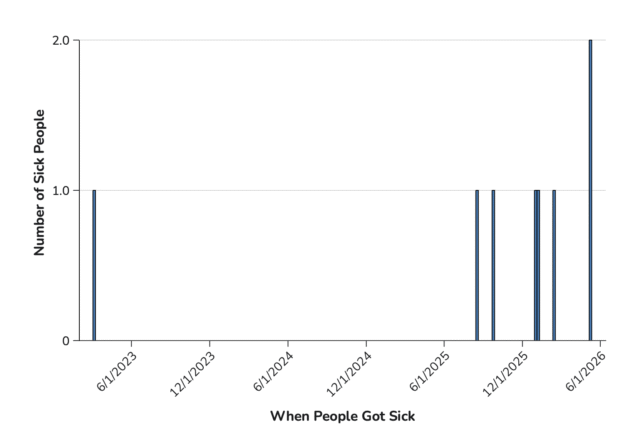
One death, seven hospitalizations out of eight known illnesses, and a contaminated strain that genetic fingerprinting ties back to 2023.

Let me say that again, because it deserves to be said plainly. Nearly nine in ten of the people we know about ended up in a hospital bed. One of them did not survive. And the bacteria that did this has apparently been circulating, undetected and unaddressed, for the better part of three years.

One Death and a 7-in-8 Hospitalization Rate

As of June 4, 2026, the CDC and FDA report 8 people infected with the outbreak strain across 3 states — Maryland, New York, and Virginia — with 7 hospitalizations and 1 death. Do the math on that. An 87.5 percent hospitalization rate is not a statistic you shrug at. Most foodborne pathogens put a fraction of the people they sicken in the hospital. Listeria monocytogenes is different, and it has always been different. It is one of the deadliest bugs we deal with in this work, and these numbers show exactly why.

And remember what the CDC itself says about counts like these: the true number of sick people is almost certainly higher. It takes three to four weeks to confirm that someone is part of an outbreak, and people who recover at home are never tested at all. So, eight is the floor, not the ceiling. Behind that single reported death is a family that got the worst possible news, and behind those seven hospitalizations are people who, if they were pregnant, elderly, or immunocompromised, were fighting for their lives over a container of soft cheese.

A Strain That Whole Genome Sequencing Ties Back to 2023

Here is the part that should make everyone — regulators and the dairy alike — deeply uncomfortable. According to the FDA, the patient samples in this outbreak were collected on dates ranging from March 6, 2023 to May 9, 2026. This is being investigated as a multi-year outbreak, and that is not a casual description. Whole genome sequencing — the genetic fingerprinting that lets public health scientists say with confidence that illnesses years apart were caused by the same bacterial strain — is what links these cases together.

In plain English: the same Listeria has very likely been making people sick since the spring of 2023. When a strain persists for three years, it usually means it has found a home — a harborage point on equipment, in drains, in the production environment — and has been seeding product the whole time. That is the textbook signature of a sanitation problem that was never found or never fixed. People do not get sick for three years from a one-time slip.

How Investigators Connected the Cheese to the Cases

The break in this case came out of New York. On May 13, 2026, the Suffolk County Health Department flagged two related Listeria illnesses in the same family, who had bought food from a retailer in Brentwood, New York. State investigators confirmed both had eaten requesón cheese from that store, pulled five cheese samples, and one repacked requesón sample tested positive. Whole genome sequencing then confirmed that the Listeria in the cheese matched the strain that had sickened the two New York patients.

From there the trace-back led to the source. On May 27, 2026, New York investigators inspected the retailer’s distributor and identified Clover Hill Dairy, LLC of Mechanicsville, Maryland as the manufacturer. A sample taken from an unopened, sealed 18-pound bucket of Clover Hill requesón also tested positive for Listeria monocytogenes. On June 3, 2026, Clover Hill issued a voluntary recall of its requesón and soft ricotta products, and the Maryland Department of Health suspended the company’s operating license and issued a consumer advisory.

I want to be fair about where the investigation stands. The FDA is candid that this is early, that additional products may be involved, and that — in its words — there is not yet enough evidence to determine whether the recalled cheese explains the entire outbreak. Of seven people interviewed, five reported eating cheese and two specifically named Clover Hill requesón. That is an investigation still being built. But a sealed bucket of this company’s product testing positive for the pathogen is about as direct a piece of physical evidence as you will find this early in a case.

What the Recall Covers

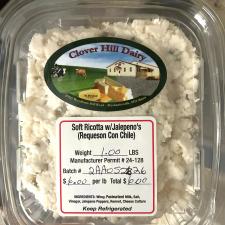
The recall covers all requesón cheese manufactured by Clover Hill Dairy, and people should know a few things about how to spot it:

  • Some varieties carry jalapeño or other flavors.
  • The product may be relabeled under a different brand when it is distributed, so the manufacturer information on the package is what matters.
  • The label should show the Clover Hill Dairy manufacturer permit (plant) number “24-128.”
  • It was sold from Clover Hill’s own retail market in Maryland, at farmers markets, and through third-party distributors, including in New York and Virginia.

If you have this cheese, do not eat it — throw it out or return it. And because Listeria survives and even grows at refrigerator temperatures, clean and sanitize anything it touched: shelves, drawers, containers, surfaces. This is one of the few pathogens that treats your refrigerator as a comfortable place to live.

Why This One Matters

Soft, fresh, Hispanic-style cheeses — queso fresco, requesón, and their cousins — have a long and tragic history with Listeria. They sit at the dangerous intersection of high moisture, minimal processing, and a customer base that often includes pregnant women and their families. For a pregnant woman, Listeria can mean miscarriage, stillbirth, premature delivery, or a life-threatening infection in a newborn. For someone over 65 or with a weakened immune system, it routinely means hospitalization and sometimes death. The CDC’s own guidance is blunt: if you are in one of those groups, soft cheeses like these — even pasteurized ones — are a riskier choice.

None of this had to happen. That is the line I have repeated for three decades, and I will repeat it again here, because it is still true. Listeria outbreaks are preventable. The tools to find this organism in a plant — environmental monitoring, whole genome sequencing, aggressive sanitation when you get a positive — exist and are well understood. When a strain is allowed to persist for three years and it takes a death and seven hospitalizations to bring it to light, that is not bad luck. That is a failure of food safety, and the people who paid for it were the customers who trusted a label.

Sources

I have been suing companies over contaminated ground beef for more than thirty years, and I had hoped I would not be writing this kind of alert in 2026. Yet here we are. Nine people in California — most of them children — were sickened with E. coli O157:H7 after eating beef kofta at The Kebab Shop, and as of this past week we now have genetic confirmation tying their illnesses to the meat. This is what I want the public to know about where things stand.

Where Things Stand Today

The California Department of Public Health (CDPH), the USDA’s Food Safety and Inspection Service (FSIS), and local health departments are investigating an outbreak of Shiga toxin-producing E. coli O157:H7 linked to grilled beef kofta — seasoned ground beef kebabs — served at The Kebab Shop. As of June 1, 2026, the count stands at nine confirmed patients across five California counties. Six of them are children. Five people have been hospitalized, and two of the children developed hemolytic uremic syndrome (HUS), the kind of acute kidney failure that haunts these cases. No deaths have been reported. Reported illness onset dates run from March 27 through April 30, 2026.

The implicated beef kofta was produced as a raw ground beef product by Olympia Food Industries, Inc., doing business as Olympia Foods (Establishment 18743), in Franklin Park, Illinois, on January 6, 2026, and shipped to The Kebab Shop locations in California, Texas, and Florida. The Kebab Shop pulled the beef kofta from every one of its restaurants on May 18, 2026. FSIS issued a public health alert on May 24 rather than a recall, for the simple reason that the product was already gone from sale. Health officials say the exposure risk is not ongoing, and that no cases outside California have been connected to this outbreak.

The Genetic Match — and Why It Matters

The most important development came on June 1, when FSIS confirmed that whole genome sequencing of the beef kofta samples it collected — the product made at Olympia Foods — matched the outbreak strain of E. coli O157:H7 that sickened these families. In plain English: the laboratory fingerprint of the bacteria in the meat is the same fingerprint found in the patients. This is no longer a case built on interviews and circumstance. It is a confirmed link from a contaminated raw ground beef product, through the kitchen, and into children who ended up in the hospital.

That confirmation matters because it removes the convenient “we don’t really know” defense. We do know. The science is in. When a raw ground beef product carries E. coli O157:H7 — an adulterant, plain and simple — and that organism matches the people who fell ill, responsibility runs to the manufacturer of the meat and through the chain that served it.

The Case We Have Filed

We have not waited to act. On May 29, 2026, my firm filed suit in Los Angeles County Superior Court on behalf of the family of a young child — identified in court papers by the initials J.A.K. — who was hospitalized with hemolytic uremic syndrome and acute kidney failure after eating beef kofta at The Kebab Shop. The complaint names TKS Restaurants, LLC, the operator of The Kebab Shop, and Olympia Food Industries, Inc., the Illinois manufacturer that supplied the contaminated raw ground beef. It alleges strict product liability, negligence, breach of the implied warranty of merchantability, and violations of the federal food safety laws and USDA performance standards that govern ground beef. We intend to hold every responsible link in that chain accountable, and we stand ready to help any other family sickened in this outbreak.

What I Have Learned About E. coli and Ground Beef

My career in food safety began with hamburger. In 1993, the Jack in the Box E. coli O157:H7 outbreak swept through the Pacific Northwest, sickening hundreds and killing four children. I represented Brianne Kiner, a nine-year-old girl who was the most seriously injured survivor of that outbreak — she spent weeks in a coma and nearly lost her life to HUS. Her case ended in a landmark settlement, but more than that, it changed how I see a hamburger. Behind every “outbreak” headline is a Brianne, and a family whose life is divided into before and after.

In the years since, I have litigated E. coli and HUS cases tied to ground beef against Jack in the Box, Cargill, ConAgra, and others, alongside outbreaks traced to lettuce, spinach, sprouts, and raw milk. Over three decades my firm has recovered more than nine hundred million dollars for the people we represent. I take no satisfaction in those numbers. Every dollar reflects a person who was poisoned by food they trusted, and far too many of them were small children whose kidneys or brains were permanently injured by a pathogen they could not see, smell, or taste.

Here is what those thirty-plus years have taught me. Ground beef can be made far safer than it was in 1993 — the Jack in the Box outbreak drove real reform, including the designation of E. coli O157:H7 as an adulterant in raw ground beef and the testing and process controls that followed. Grinding commingles meat from many animals, so a single contaminated carcass can taint an enormous lot, and the bacteria live in the gut of healthy cattle and arrive at the plant on otherwise normal-looking meat. That is precisely why a manufacturer’s job is to test, to verify, and to keep the adulterant out — because a child cannot. Ground beef has been tamed. It has not been conquered. The Kebab Shop outbreak is this year’s reminder that the work is not finished, and that vigilance lapses still land children in intensive care.

A child should not eat a kebab and end up in the ICU on dialysis with seizures. That should never happen in 2026. We have known how to prevent these illnesses for thirty years, and when companies do the work, they do not happen.

If You or Your Family Ate Beef Kofta at The Kebab Shop

If you ate beef kofta at any The Kebab Shop location between March 27 and April 30, 2026, and then developed symptoms within about ten days — severe stomach cramps, vomiting, or diarrhea that is often bloody — contact your health care provider right away and tell them where you ate. Symptoms of an E. coli O157:H7 infection usually begin three to four days after exposure. Watch children especially closely: HUS can develop after the diarrhea seems to be improving, and warning signs include decreased urination, unusual paleness, easy bruising, and extreme fatigue. If you see those, seek emergency care immediately. Discard any leftover beef kofta from the restaurant.

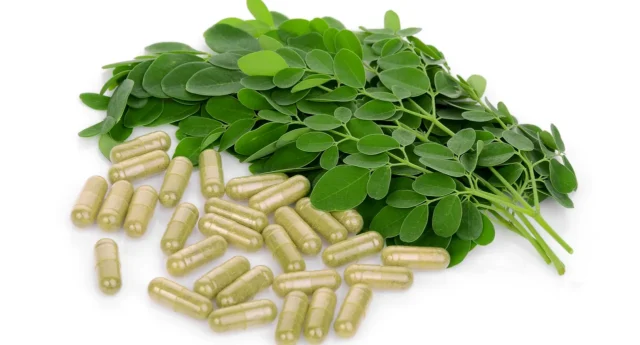
I rarely see: three separate Salmonella outbreaks, all traced back to the same humble ingredient — moringa leaf powder — unfolding within a few months of one another. The FDA and CDC are treating these as distinct investigations, with different strains, different brands, and different companies. But to a consumer standing in front of a supplement shelf, the lesson is the same: a “superfood” capsule is not automatically a safe one, and “natural” is not a synonym for “clean.”

Below is a plain-English rundown of all three outbreaks, who is sick, which products have been recalled, and exactly what you should do if any of these are in your kitchen cabinet right now.

The three outbreaks at a glance

Outbreak / productCasesHospital.StatesStatus
Live it Up Super Greens, Why Not Natural, TNVitamins (moringa leaf powder)1193236Ongoing
Rosabella capsules (XDR Salmonella)1038Closed
MOGO Moringa capsules18714Ongoing

1. The big one: Live it Up “Super Greens,” Why Not Natural, and TNVitamins

This is the largest of the three and the one I am watching most closely. The FDA and CDC are investigating a multistate outbreak of Salmonella Typhimurium and Salmonella Newport linked to dietary supplements made with imported moringa leaf powder. As of the May 27 update, 119 people have been infected across 36 states, with 32 hospitalizations and no deaths. Illnesses go all the way back to August 22, 2025, and the most recent began April 26, 2026.

Here is the part that should make everyone pay attention: investigators closed this outbreak on March 17, then reopened it on May 27 after 22 new illnesses turned up in four more states. When an outbreak that was declared over comes roaring back, it tells me contaminated product is still sitting on shelves and in people’s homes — and these supplements have a long shelf life.

The products recalled in this outbreak

  • Live it Up Super Greens (Superfoods, Inc. dba Live it Up, New York, NY) — all Original and Wild Berry powders, in both pouches and stick packs, with expiration dates from 08/2026 to 01/2028. Recalled January 14–15, 2026.
  • Why Not Natural Pure Organic Moringa Green Superfood capsules (Art Monkey LLC dba Why Not Natural, Houston, TX) — lot #A25G051, best-by 07/2028. Recalled January 28, 2026.
  • TNVitamins and Doctor’s Pride Ultra Potent Complete Green Superfood Moringa capsules, 10,000 mg(Total Nutrition Inc., Deer Park, NY) — multiple lots recalled May 26 and expanded June 2, 2026 to add lot 2748 (EXP 07/2027).

Why the evidence here is strong

This is not guesswork. FDA’s traceback found that Live it Up and Why Not Natural shared a common manufacturerthat used the same moringa leaf powder in both products and concluded that the moringa powder itself was the source of contamination. Laboratory testing then sealed it: the outbreak strains were found in six samples, including two moringa leaf powder ingredient samples, an opened Why Not Natural sample, and — critically — an unopened Live it Up Super Greens sample collected by Minnesota officials. Whole genome sequencing matched the bacteria in those products to the bacteria making people sick. An unopened, sealed product testing positive cuts the legs out from under any argument that consumers contaminated this themselves. Recalled product was distributed nationwide, including Puerto Rico, Guam, and the U.S. Virgin Islands, and Live it Up was also shipped to consumers in the United Kingdom.

2. The dangerous one: Rosabella capsules and extensively drug-resistant Salmonella

This outbreak is smaller in number but, frankly, the one that worries a physician most. The FDA and CDC investigated a multistate outbreak of Salmonella Newport and Salmonella Kentucky linked to Rosabella-brand moringa powder capsules distributed by Ambrosia Brands, LLC. Final count: 10 people sick across 8 states, 3 hospitalizations, no deaths, with illnesses from September 26, 2025 to January 8, 2026. CDC has declared it over and FDA has closed its investigation.

What sets this one apart is the bug itself. These strains are extensively drug-resistant — resistant to all of the first-line and alternative antibiotics doctors normally reach for to treat Salmonella. Worse, the Newport strain carries an NDM-1 carbapenemase gene, which means it may also resist meropenem and other carbapenems, the drugs held in reserve for the toughest infections. If you treated this like a routine stomach bug, the usual antibiotics could fail you.

As with the Super Greens outbreak, the lab work is damning: an unopened Rosabella sample taken from a sick person’s home in Indiana tested positive for the outbreak strain of Newport, confirmed by whole genome sequencing. FDA traced the contaminated moringa to a single supplier and recalled 52 lots (all with 2027 expiration dates) on February 13, 2026. This product was sold nationwide and in roughly 80 countries, primarily online through tryrosabella.com, Amazon, TikTok Shop, Shein, and eBay.

3. The newest one: MOGO Moringa capsules

The most recent outbreak, and a brand-new and separate investigation, involves Salmonella Typhimurium linked to MOGO-brand Pure Moringa Oleifera capsules distributed by MOGO Moringa LLC of St. Louis, Missouri. As of the May 27 update, 18 people have been infected across 14 states, with 7 hospitalizations and no deaths. Illnesses began between February 3 and April 7, 2026. Of the people interviewed, most reported eating moringa capsules, and several specifically named MOGO.

The product recalled

  • MOGO Pure Moringa Oleifera capsules — white plastic bottles with a green label, lot #15525AA (EXP 6/2027) and lot #00926AA (EXP 1/2028). Recalled May 25, 2026.

These were sold online, including through Amazon, eBay, and mogomoringa.com. FDA’s traceback is still underway, so I expect this picture to keep developing.

What you should do right now

  • Check your cabinets. These are shelf-stable products with long expiration dates. “I bought it months ago” is exactly why they’re still dangerous.
  • Do not eat, sell, or give away any recalled product. Throw it out, or return it for a refund. Don’t “use it up.”
  • Clean up after it. Wash and sanitize any container, scoop, shaker bottle, or counter the powder or capsules touched, using hot soapy water or a dishwasher.
  • Save what you can if you got sick. If you became ill and still have the product, the packaging, your receipt, or the lot number, hang on to all of it. That evidence matters.

Symptoms of Salmonella — and when to call a doctor

Most people infected with Salmonella develop diarrhea, fever, and stomach cramps, usually 6 hours to 6 days after exposure, and recover in 4 to 7 days. But it can be far more serious for children under 5, adults over 65, and anyone with a weakened immune system.

Call your healthcare provider right away if you have any of these:

  • Diarrhea with a fever higher than 102°F
  • Diarrhea that lasts more than 2 days without improving
  • Bloody diarrhea
  • So much vomiting that you cannot keep liquids down
  • Signs of dehydration — little or no urination, dry mouth and throat, or dizziness when standing up

A final word

Three outbreaks, three different companies, one common ingredient sourced from overseas. That is not a coincidence — it is a warning about how little scrutiny imported supplement ingredients receive before they end up in a capsule marketed as a path to better health. Dietary supplements do not go through the kind of pre-market safety review most people assume they do.

If you or a family member developed a laboratory-confirmed Salmonella infection after taking any of these moringa products, you have a right to understand what happened and who is responsible. My colleagues and I at Marler Clark have represented victims of foodborne illness outbreaks for three decades, and we are happy to answer questions at no cost. More information and updates are posted regularly on the Marler Blog and Food Poison Journal.

Stay safe and read your labels.

Government sources

The FDA and CDC, in collaboration with state and local partners, are investigating a multi-state, multi-year outbreak of Listeria monocytogenes infections potentially linked to requeson, a soft cheese similar to ricotta.  

Based on epidemiological information collected by CDC, a total of 8 people infected with the outbreak strain of Listeria have been reported from 3 states. Sick people’s samples were collected on dates ranging from March 6, 2023, to May 9, 2026. Of the 7 people interviewed, 5 reported eating any cheese. Two people (29%) reported eating requeson made by Clover Hill Dairy. There have been 7 hospitalizations, and one death reported.

On May 13, 2026, the Suffolk County Health Department (SCHD) notified the New York State Department of Agriculture & Markets (NYS AGM) of two related Listeria monocytogenes illnesses from the same family, who had purchased food from a local retailer in Brentwood, NY. The following day, the New York State Department of Health (NYS DOH) confirmed that both cases had consumed requeson cheese purchased at that retailer. NYS AGM investigators tested five cheese samples collected from the retailer. One sample of requeson that had been repacked by the retailer tested positive for Listeria monocytogenes, and whole genome sequencing (WGS) confirmed the strain of Listeriafound in the requeson cheese matches the strain of Listeria causing illnesses in the two New York cases who reported purchasing cheese from this retailer. 

On May 27, 2026, NYS AGM conducted an inspection at the retailer’s cheese distributor, which identified Clover Hill Dairy, LLC of Mechanicsville, MD as the requeson cheese manufacturer. A sample collected from an unopened 18-pound sealed bucket of requeson manufactured by Clover Hill Dairy, LLC also tested positive for Listeria monocytogenes; WGS analysis is pending. 

On June 3, 2026, Clover Hill Dairy, LLC issued a voluntary recall of its requeson/soft ricotta products. Consumers and retailers should not eat, serve, or sell recalled requeson cheese.

Due to the public health risk, the Maryland Department of Health has suspended the Clover Hill Dairy LLC’s operating license, issued a Consumer Advisory, and is conducting a follow up evaluation in cooperation with the facility.  

FDA is in the early stages of this investigation, additional products may be impacted, and further testing by FDA and state partners is underway. The FDA will provide updates as new information becomes available.


Case Count Map Provided by CDC

A map of the United States showing the number of sick people by state. Most states are shaded gray, indicating no reported cases. New York and Virginia, Maryland are shaded in green, indicating sick people in those states.

Product Distribution Map 

Distribution of recalled products has been confirmed for states shown below, but product could have been distributed further, reaching additional states.

Map of the United States, including Alaska, Hawaii, and Puerto Rico, with all states labeled by their two-letter abbreviations. Maryland (MD), New York (NY), and Virginia (VA) are highlighted in blue, while all other states and territories are shown in gray.”

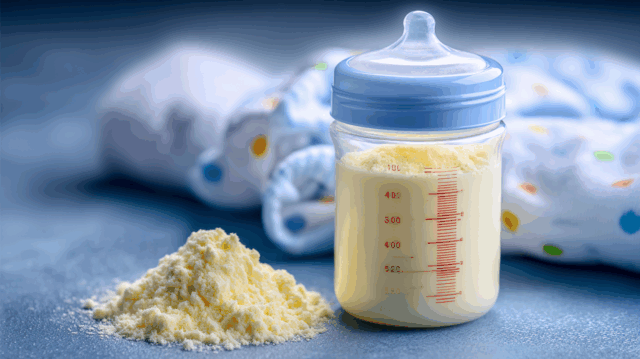
The FDA yesterday quietly put up a new page describing its “post-outbreak response activities” for the Clostridium botulinum illnesses tied to ByHeart powdered infant formula. I have read it more than once. I represent more than twenty of the families behind the numbers on that page, so let me say a few things the agency’s careful prose does not.

Start with the count. Forty-eight infants sickened across seventeen states. Twenty-eight confirmed, twenty probable. Zero deaths — and I am grateful for that every single day, because infant botulism is the kind of illness that takes a healthy baby and, within hours, leaves a parent watching a ventilator breathe for their child. But look at the other line on that ledger: forty-eight hospitalized. Every last one of them. There is no version of “zero deaths” that makes a forty-eight-for-forty-eight hospitalization rate a clean record. These were newborns and infants whose parents fed them a product they had every reason to believe was safe.

The FDA’s page leads with ingredients — incoming powdered milk, a lot of organic whole milk powder, Dairy Farmers of America, Organic West Milk — However, the FDA also tells us the root-cause investigation continues “with a focus on ingredients.” 

Here is what the agency’s own whole genome sequencing showed: C. botulinum type A matching across a clinical isolate, a closed can of ByHeart finished formula, and the ingredient. That is not only an ingredient problem that happened to pass through ByHeart. That is ByHeart’s product, in ByHeart’s can, with ByHeart’s name on it, fed to a baby. Sourcing, verifying, and testing what goes into infant formula is the job.

And spare me the suggestion — built carefully into the bottom of that page — that spore-forming bacteria are simply too resilient, too hard to detect, too slow to culture for anyone to have prevented this. It is all true as a matter of microbiology, and it is also beside the point. The risk of C. botulinum spores in commercial powdered infant formula is not a surprise the science just delivered. Barash, Hsia, and Arnon published soil-dwelling clostridia in commercial powdered infant formulas in the Journal of Pediatrics in 2010. That is sixteen years ago. “It is hard to test for” is an argument for more vigilance from the people selling the product, not a pre-written excuse for the next outbreak.

To the FDA, I will give credit where it is due, and I do not give it often. Unlike the November 2024 romaine outbreak, I have spent the last year prying names out of, the agency named ByHeart, named Dairy Farmers of America, and named Organic West Milk. That is how it is supposed to work. Naming the responsible parties during an outbreak is not punishment; it is the whole point of public reporting. So, I will say to the FDA: good. Now finish the job.

Finishing the job means not letting “we have transitioned to post-outbreak response activities” become the sound of a door closing. A risk assessment from JEMRA and a request to the Codex Committee on Food Hygiene are fine things. They are also years away, and they will not look a single one of my clients’ children in the eye. What those families need is a root cause stated plainly, an accounting of how contaminated formula reached forty-eight babies in seventeen states, and a regulatory posture that treats infant formula as exactly what it is — the only food some of the most vulnerable people in this country eat.

The Idaho Department of Health and Welfare (DHW) is working with local and state partners to investigate a recent increase in illnesses after consumption of unpasteurized (raw) milk. Since May 19, 2026, nearly 60 people have been identified who became ill after consuming raw milk. At least 45 of those people tested positive for campylobacteriosis, a bacterial infection, although not everyone who is sick was tested. Investigation and interviews of people reported as ill are ongoing and additional illness may be identified. 

The Idaho Division of Public Health is collaborating with Panhandle District Health, Southwest District Health, Central District Health, Southeastern Idaho Public Health, South Central Public Health, and Eastern Idaho Public Health on the investigation.

Most people who were sick reported consuming raw milk from two different milking operations – one in northern Idaho and one in southern Idaho. 

Investigation is ongoing to identify potential batches of concern and test milk samples.

Raw, unpasteurized dairy products can contain bacteria that make people sick, particularly young children, pregnant women, the elderly, and those who are immunocompromised. Pasteurization kills nearly all the germs that can exist in raw milk while maintaining nutritional benefits. 

Common symptoms of campylobacteriosis infection include diarrhea (sometimes bloody), fever, stomach cramps, nausea and/or vomiting. Symptoms usually start two to five days after exposure and last about one week; some people may develop complications that last longer. Anyone who is experiencing symptoms after consuming raw milk or raw milk products is encouraged to promptly seek medical care. 

For over thirty years, I have been beating the same drum, and the last few days were no exception (some argue a bit too loudly and self-serving). 

I have been posting about public health officials — and the FDA — sending out outbreak documents with the names of companies, growers, processors, and retailers blacked out behind gray boxes I do not think belong there. My position has not changed in three decades: most of those redactions should never have been made in the first place. Not surprisingly, my readers wrote back.

I welcome the pushback. Some of it is thoughtful. A little of it I even agree with. So rather than let the arguments for secrecy sit unanswered in my inbox, let me put them all on the table — every justification for non-disclosure I have heard over the years — and tell you exactly what I think of each.

“There is no written policy, but it is the way we have done things for years.”

I keep hearing my mother’s voice: “just because so-and-so does it does not mean you should too.” A practice is not a policy, and “we have always done it this way” is not a reason — it is the absence of one. Like all government habits (and, frankly, like neckwear), change is good.

“The outbreak is over, so there is no immediate public health threat.”

Frankly, that is true in most foodborne illness outbreaks. In nearly every outbreak I have ever seen, the source is figured out long after the peak of illnesses has passed. But that misses the point of disclosure. Telling the public who grew, processed, and sold the contaminated food is not only about stopping today’s outbreak — it is about giving consumers a track record, so they can see which companies have a strong food safety record and which keep turning up in the same sad story.

“Naming the company jeopardizes its cooperation in this and future outbreaks.”

If a company will cooperate only in exchange for a spot in the witness protection program and a promise of permanent anonymity, that tells you everything you need to know about its commitment — and our government’s commitment — to safe food. Cooperation purchased with secrecy is not cooperation. It is a hostage negotiation in which the public never gets a seat at the table.

“Bad publicity may cause economic hardship for the company.”

True. But here is a better business practice than avoiding bad press: not poisoning your customers. The economic hardship of an outbreak belongs to the company that caused it — not to the consumers left guessing.

“The source was an unknown supplier, so naming the point of service unfairly blames that business.”

This one actually makes some sense, and I will give it its due. But ask the obvious follow-up questions. Is this the first time this restaurant or retailer was burned by a faulty supplier, or is it a pattern? And even if it is the first time, is some of that unnamed product still sitting on shelves or in walk-in coolers somewhere? Fairness to the point of service cannot come at the expense of the people it serves.

“The product is perishable, so by the time we announce, it has already been eaten.”

I have heard this one a “bunch” of times, especially in leafy green outbreaks, and it is the one I find most cynical. Yes, the romaine is long gone. But why should the public be left in the dark about the kind of product that sickened people, and about the grower and shipper behind it, when that is precisely the information they need to decide who to buy from next time? “It’s already been eaten” is a reason to disclose, not a reason to hide.

“Going public with the point of service before the investigation is complete compromises the epidemiology.”

I completely agree with this one. This is the hard call — the one I suspect causes public health officials the most genuine angst. They are balancing the need to have enough data to go public and protect people against the risk of pointing the finger too soon. We have all lived through “it’s the tomatoes — no, wait, it’s the peppers.” The answer is not to stay silent forever. The answer is simple: do not go forward until the investigation is complete. Then go forward and go forward fully.

“We are afraid of making an investigation mistake — the tomatoes-then-peppers problem.”

This is exactly why the law gives public health officials immunity from liability for the good-faith decisions they make to protect the public. The system already accounts for honest error. Fear of an honest mistake is not a license for permanent silence.

“Surveillance is underfunded, and there simply are not the resources to finish investigations.”

There is no question this is true, and it is the argument that worries me most — because it is not really an argument for secrecy at all. It is a confession. I have watched investigations get dropped over the last few years. Labs that are not doing the genetic fingerprinting that links sick people to a common source. Tracebacks that stall out for lack of the people needed to find the root cause. That is a scandal in its own right, and the answer is to fund the work — not to redact our way out of admitting it is not getting done.

And now let me say the part the FDA never will. We do not have to guess whether transparency would cause the sky to fall, because we have already run the experiment. For the better part of twenty years, the USDA’s Food Safety and Inspection Service has named the manufacturers of contaminated meat — and, since 2008, the retailers who sold it. The trade secrets of the beef and poultry industries did not collapse. Consumer confidence went up, not down. Chicken Little, the sky did not fall.

The FDA, which oversees roughly eighty percent of the food supply, could have learned that lesson from its sister agency two decades ago. Instead, it still hides behind “confidential commercial information.” And the line is not hard to draw. Formulations, ingredients, and how a product is made — those are trade secrets. Who supplied the tainted raw material, who made the tainted product, and where the tainted product was sold are not, especially during an outbreak. The most egregious example I know of remains the 2017 outbreak tied to I.M. Healthy soy nut butter — a great name for a product carrying a pathogen — which sickened dozens, some of them children, seriously. A recall was announced. No retailers were named. The company went bankrupt and was in no position to help. The public was left to fend for itself.

I have just watched the same instinct play out again. In the fall of 2024, a multistate E. coli O157:H7 outbreak tied to romaine lettuce hospitalized dozens, sent children into kidney failure, and killed someone. The FDA logged a few lines in a table, closed the file, and never issued the named, complete public notice it had issued for every comparable romaine outbreak before it. The processor and the grower sat behind gray boxes while they were free to tell anyone who asked that the evidence did not point to them. It did. The records said so, by name — once someone bothered to make the agency take the boxes off.

So where does that leave me, after over thirty years and more redacted documents than I care to count? Right where I started. Strip away the budget excuses, the cooperation worries, and the trade-secret theater, and you are left with a single question: who gets to decide what the public is allowed to know about the food that can kill them?

For me, the answer is easy. The public has a right to know, and to use that information however it sees fit. And people — especially government employees — have no business deciding for the rest of us what we should and should not be allowed to find out.

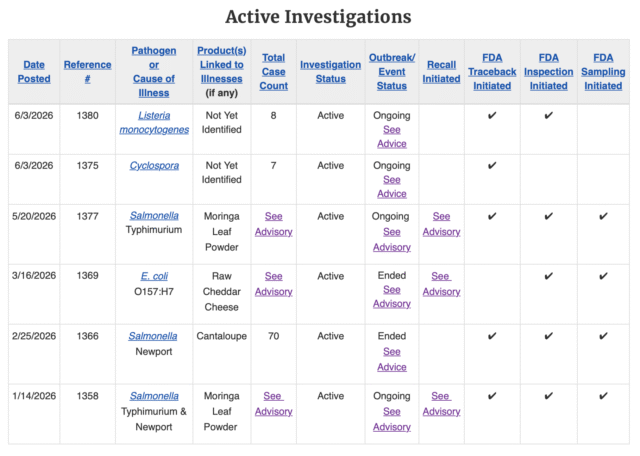
A new outbreak of Listeria monocytogenes (ref #1380) linked to a not yet identified product has been added to the table. FDA has initiated traceback and onsite inspections.

A new outbreak of Cyclospora (ref #1375) linked to a not yet identified product has been added to the table. FDA has initiated traceback.

For the outbreak of Salmonella Typhimurium (ref #1377) linked to moringa leaf powder, FDA has initiated sampling. 

A little over a year ago, in January 2025, I wrote in this space asking a simple question about the November 2024 E. coliO157:H7 romaine outbreak: why would the FDA not tell the public who grew, processed, and sold the lettuce that sickened 89 people across 15 states, hospitalized 36, gave 7 of them hemolytic uremic syndrome, and killed one? The agency had quietly announced the outbreak was over, called the vehicle a “common supplier” of romaine lettuce, and left it there. No grower. No processor. No names.

I said then that I would weigh in where the FDA would not. I have now spent the months since doing exactly that — staying on the agency until it unredacted the documents it should never have hidden in the first place. The documents are now in hand, and they tell the story the gray boxes were built to keep from you.

Here is the short version of how this played out.

When the FDA first released its traceback investigation summary for this outbreak (CARA #1280), nearly every name that mattered was blacked out under the (b)(4) exemption — the part of the Freedom of Information Act meant to shield genuine confidential commercial information and trade secrets. The processor was a gray box. The grower was a gray box. The ranch was a gray box. The distribution centers, the brokers, the lot codes — all gray boxes. What the public was left with was a document that confirmed romaine lettuce as the vehicle but told you absolutely nothing about whose romaine it was or where it came from.

So, I did what I always do. I stayed on them. And the FDA, in stages, unredacted the document.

The fully unredacted version now identifies, in plain text, what the (b)(4) boxes were hiding:

  • Taylor Farms of California (Salinas, CA; FEI 3012342127) was the sole processor. The summary states that Taylor Farms “supplied all the romaine lettuce that would have been available at all points of sale during the timeframe of interest.”
  • Anthony Costa & Sons LLC (Soledad, CA) was the single grower.

The records also fill in the other end of the chain, and that too was originally redacted. The unredacted summaries name Andre’s Banquets and Catering of St. Louis, Missouri (1 of the 15 states) as the caterer at the center of the largest cluster of illnesses — the events where many of these people actually ate the lettuce. The traceback ties Andre’s to three separate catered events with meal dates of November 6 through 8, 2024, including a marching band banquet and a Veteran’s Day luncheon at a St. Louis-area high school, with twenty-two cases linked to that point of service alone. The lettuce blend Andre’s served was supplied through its distributor and traced straight back up the chain to Taylor Farms and Anthony Costa & Sons. But the public had no way to know any of that while the caterer’s name, the school events, and the supplier above them all sat behind the same gray boxes — which meant the families who got sick at those events could not see, in the agency’s own records, how the lettuce on their plate connected to the field it came from.

None of that is a trade secret. The identity of the company that processed lettuce that killed someone is not confidential commercial information. The name of the farm that grew it is not a trade secret. A harvest date is not a proprietary formula. These are the basic facts of a public health disaster, and the only thing the redactions accomplished was to delay the moment when the public — and the families of the people who were hospitalized — could learn who was responsible.

I have been making this same point for years, and I will make it again here, because the FDA keeps forcing me to. Formulations, ingredients, and how products are made are trade secrets. Who supplied the tainted raw material, who made the tainted product, and where the tainted product was sold are not — especially during an outbreak. That line is not hard to draw. The agency simply refuses to draw it.

This matters for a reason that goes well beyond my own irritation. While those names sat behind gray boxes, the companies were free to take the position, in the investigation and elsewhere, that the evidence did not point to them. I have watched that move many times: a processor reviews its own internal traceability, announces it “determined there were no commonalities identified,” and lets the redactions do the rest of the work. But the FDA’s own records told a different story. The agency’s traceback identified a single processor and a single grower, found that the implicated product was available at every point of service, and tied it to specific lots. The unredacted document does not leave room for “it wasn’t us.” It was them. The records say so, by name.

That is exactly why over-redaction is not a harmless bureaucratic habit. When the FDA blacks out the name of the processor and the grower in a fatal outbreak, it is not protecting a trade secret — it is handing the responsible companies a period of deniability they did not earn, and the public did not consent to. The (b)(4) exemption was written to protect genuine competitive information, not to spare a lettuce processor the embarrassment of being named in connection with the produce it sold.

We do not have to guess whether transparency would cause the sky to fall, because we have already run the experiment. For most of the 2000s the USDA’s Food Safety and Inspection Service would name the manufacturer of E. coli-contaminated meat but refused to reveal where it was sold. I still remember people sickened in the 2002 ConAgra outbreak telling investigators they had heard about the recall but figured it did not apply to them because “we bought our meat at Safeway, not at ConAgra.” In 2008, after years of industry hand-wringing about distribution lists, FSIS finally concluded that naming retailers would not cause substantial competitive harm and began releasing the lists. Retailers of USDA-regulated products survived. Trade secrets did not collapse. Consumer confidence went up, not down. Chicken Little, the sky did not fall.

The FDA, which oversees roughly 80 percent of the food supply, could have learned that lesson from its sister agency two decades ago. Instead, it is still hiding behind “confidential commercial information,” and consumers are still left confused — not by too much information, but by too little. The most egregious example I know of remains the 2017 outbreak tied to I.M. Healthy soy nut butter — a great name for a product carrying a pathogen — which sickened dozens, some of them children, seriously. A recall was announced but no retailers were named, the company went bankrupt and had no interest in helping, and the product stayed on shelves and online for months after the recall. That is what secrecy buys you: contaminated product still within reach of the next family while the agency guards a “secret” that protects no one but the seller.

Years ago, a senior CDC official defended withholding company names by saying the practice protects not only public health but also “the bottom line of businesses that could be hurt by bad publicity.” I have a great deal of respect for the people in the diarrheal trenches, but that explanation has always had it exactly backwards. The government does not exist to protect a company’s bottom line from the consequences of selling food that hurts people. Protecting the public sometimes means the responsible company takes a reputational hit. That is not a bug in transparency. That is the point of it.

I would put the principle simply. When people are hospitalized and someone dies, the public’s interest in knowing who grew and processed the food is at its highest, and the commercial interest in staying anonymous is at its lowest. The FDA’s redaction practice in cases like this one inverts that balance. It treats the names of the firms as the secret most in need of protection, when the names are the single most important thing the public is entitled to know.

I am glad the FDA eventually unredacted this one. I should not have had to ask. The next family should not have to wait for a lawyer to pry the names loose months after the outbreak is over and the lettuce is long gone. If the agency genuinely wants to rebuild public trust in how it handles foodborne illness, it can start by drawing the (b)(4) line where the statute actually puts it — and by remembering that the public reporting on an outbreak is supposed to inform the public, not shield the companies.

The lettuce in this outbreak was grown by Anthony Costa & Sons and processed by Taylor Farms. The FDA’s own records say so. There was never a good reason for anyone to have to guess.

When ten people die in a Listeria outbreak traced to a single plant with a documented, years-long record of filth, I pay attention to what the government promises to do about it. And I keep a calendar.

By that calendar, it has now been roughly twenty months since the Department of Justice was formally asked to decide whether Boar’s Head should face criminal charges. It has been roughly twenty months since the USDA Inspector General opened a review of how its own inspectors let the Jarratt, Virginia plant keep running for years while the noncompliance’s piled up. The plant has since closed, been “rebuilt from the inside out,” and reopened. The news cycle has moved on.

And from the two investigations that actually matter for accountability — the DOJ’s and the IG’s — we have heard essentially nothing.

Let me be precise, because precision is the whole point. I am not claiming the investigation was dropped. I do not know that, and neither does anyone outside a grand jury room. What I know is what the public record shows, and what it shows is a long, deliberate silence.

We know there was a real law-enforcement investigation, not just a request for one. When the Associated Press asked USDA for the inspection and enforcement records on Jarratt and eight other Boar’s Head facilities, the agency refused to hand them over. Its stated reason was that the records had been compiled for a law-enforcement purpose covering “both civil and criminal statutes,” and that releasing them could interfere with the investigation. You do not invoke a law-enforcement FOIA exemption over a matter that does not exist. That refusal, in writing, is the strongest confirmation we have that someone with a badge was looking hard at this company.

We know two members of Congress — Senator Richard Blumenthal and Representative Rosa DeLauro — referred the matter to the Attorney General and the Secretary of Agriculture in September 2024 and asked, in plain language, whether criminal charges were warranted. We know the IG opened a review of FSIS’s conduct. We know that as recently as the plant’s February 2026 reopening, reporters were still writing that DOJ “is investigating whether criminal charges are warranted” — present tense — and that the IG “is reviewing” the agency’s handling. Present tense, twenty months on.

What we do not have is a single public document closing the loop. No indictment. No criminal information. No plea. No deferred-prosecution agreement. No consent decree. No public declination explaining why no charge was brought. And no public report from the Inspector General on whether the inspectors who walked past mold, insects, and dripping condensation for years did their jobs. On the central questions, the file is blank.

I want to head off the easy excuse. Someone will say these things take time. They do — and I have made that argument myself. Food-safety criminal cases routinely run two to four years from outbreak to charge. The Peanut Corporation of America prosecution that put Stewart Parnell away for twenty-eight years took years to build. Chipotle’s $25 million deferred-prosecution deal in 2020 followed outbreaks that began long before. So, I am not banging the table because charges haven’t appeared on a schedule I prefer. I am asking a narrower and fairer question: is anyone still working this, and will the public ever be told how it ends?

Because here is what should make every regulator uncomfortable. While we wait, the same company’s other plants keep generating the same kind of paperwork. Records released to the AP around the reopening documented dozens of noncompliance reports at a second Boar’s Head facility in 2025 — dripping condensation, meat residue, and a failure to follow the company’s own written Listeria controls. One inspector noted that a single violation was the fifth of its kind in a month. That is not ancient history dredged up by a plaintiff’s lawyer. That is last year. If the threat of accountability has already faded, the conduct it was supposed to deter apparently has not.

I am asking, on the record, two simple questions.

To the Department of Justice: What happened to the Boar’s Head investigation? If you charged it, say so. If you closed it, say so and tell the families why ten deaths did not clear your bar. The responsible-corporate-officer doctrine and the Federal Meat Inspection Act exist precisely for executives who preside over uncorrected, dangerous conditions. Either those tools applied here or they did not. The public deserves an answer, not a shrug.

To the USDA Inspector General (assuming there is one): What happened to your review of FSIS? You opened it to learn how inspectors and the cooperative state-inspection arrangement let Jarratt operate for years. That answer belongs to the public, because the public is the next set of people who will eat what these plants ship.

Ten people are dead. Sixty were hospitalized across nineteen states. A plant that should never have been allowed to deteriorate the way it did is back in business. The least we are owed — the families, the survivors, and everyone who buys lunch meat trusting that someone is watching — is to be told whether anyone in Washington ever finished the job.

I will keep my calendar open. I would rather fill in an answer than another month of silence.

Legal Basis for a Criminal Investigation Under the Federal Meat Inspection Act

1. The prohibited conduct

The Federal Meat Inspection Act (“FMIA”), 21 U.S.C. § 601 et seq., makes it unlawful to sell, transport, offer for sale or transportation, or receive for transportation in commerce any meat or meat food product that is adulterated or misbranded. 21 U.S.C. § 610 (prohibited acts), including § 610(c). A federal criminal investigation of a meat processor proceeds from the premise that adulterated product entered commerce in violation of § 610.

2. What makes the product “adulterated”

“Adulterated” is defined at 21 U.S.C. § 601(m). Two clauses are directly relevant to a Listeria outbreak: § 601(m)(1) covers a product bearing or containing any poisonous or deleterious substance that may render it injurious to health, and § 601(m)(4) covers a product prepared, packed, or held under insanitary conditions whereby it may have become contaminated with filth or rendered injurious to health. FSIS treats Listeria monocytogenes in ready-to-eat product as an adulterant on a zero-tolerance basis, so confirmed contamination of RTE deli meat establishes adulteration under § 601(m)(1), and a documented record of insanitary plant conditions independently supports adulteration under § 601(m)(4).

3. The criminal penalty structure

Criminal penalties are set by 21 U.S.C. § 676(a), which creates two tiers:

  • Misdemeanor (baseline). Any violation of the FMIA for which no other penalty is provided is punishable by up to one year of imprisonment and a fine. This tier requires no proof of intent or knowledge — it is a strict-liability “public-welfare” offense.
  • Felony (elevated). The offense becomes a felony, punishable by up to three years of imprisonment and a larger fine, if the violation involves intent to defraud or any distribution or attempted distribution of an article that is adulterated (other than the narrow pesticide/additive carve-out at § 601(m)(8), which does not apply to Listeria). Because Listeria-contaminated RTE meat is adulterated under § 601(m)(1), distributing it can supply the felony predicate even without proof of intent to defraud.

Separately, § 676(b) lets the Secretary decline to refer minor violations for prosecution where a written warning will adequately serve the public interest — a discretion provision, not a shield for a repeated, uncorrected pattern of the kind documented at Jarratt.

4. Reaching corporate officers: the responsible-corporate-officer doctrine

Because the FMIA misdemeanor is a strict-liability public-welfare offense, individual executives can be charged under the responsible-corporate-officer doctrine of United States v. Dotterweich, 320 U.S. 277 (1943), and United States v. Park, 421 U.S. 658 (1975). Under Park, an officer who stood in a position of authority and responsibility over the conditions that produced the violation — and who had the power to prevent or correct them — may be convicted of the misdemeanor without any showing that the officer personally participated in or knew of the violation. A documented, repeated, uncorrected pattern of insanitary conditions is the classic factual setting in which these tools are deployed.

5. Who investigates and who charges

  • FSIS. USDA’s Food Safety and Inspection Service investigates suspected FMIA violations through its Office of Investigation, Enforcement, and Audit and refers matters warranting prosecution to the Department of Justice. FSIS’s invocation of the law-enforcement FOIA exemption (Exemption 7, 5 U.S.C. § 552(b)(7)) over the Boar’s Head records is the public marker that such an investigation existed.
  • DOJ. Criminal FMIA matters are prosecuted by the Department of Justice — typically the Consumer Protection Branch (which handles FMIA and Food, Drug, and Cosmetic Act food prosecutions) working with the U.S. Attorney’s Office for the relevant district, here the Eastern District of Virginia. Any charging instrument would appear as an indictment or criminal information on that court’s docket.
  • Grand-jury secrecy. An ongoing federal criminal investigation is shielded by Fed. R. Crim. P. 6(e), which is why continued silence is consistent with either a pending matter or a closed one; the public record cannot distinguish between them.

6. The distinct basis for the FSIS internal investigation

The USDA Inspector General’s review is grounded in different authority — the Inspector General Act of 1978, now recodified at 5 U.S.C. § 401 et seq. (formerly 5 U.S.C. App.) — which empowers the IG to audit and investigate the programs and operations of USDA, including whether FSIS and the cooperative (Talmadge-Aiken) state-inspection arrangement responded appropriately to the documented conditions at Jarratt. This is oversight of the agency itself, separate from any FMIA prosecution of the company, and its findings are ordinarily released to the public in an IG report.