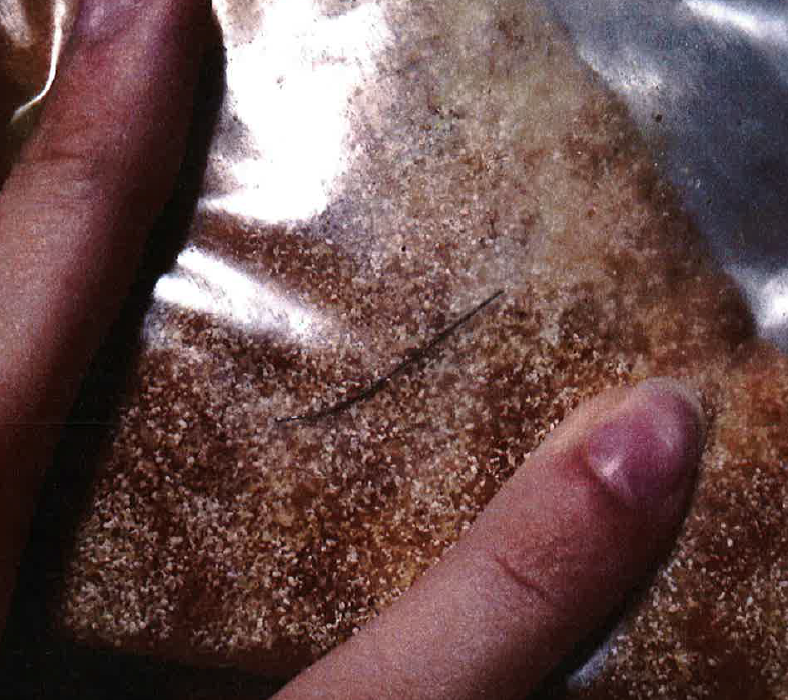

I pulled this off of Huffington Post:

Brave is the little girl who sits by herself at the breakfast table while I pack her lunch or take a shower. No longer a chatty, noisy morning, but one spent in quiet loneliness.

Brave is the young woman, biting her lip to hold back tears in her AP English class, as they discuss loss and love in The Poisonwood Bible. Knowing, better than the teacher, what the author hoped to get across.

Brave is the man who goes to the office every morning, knowing he will return to a fraction of his family. Who smiles at stories of co-workers’ children and remains genuinely interested, though he knows he will never have new stories to tell about his son.

Brave is what we call someone who faces their fears and perseveres through a difficult challenge. So, I guess I fit that definition. I have spent the last four months living every parent’s worst fear and I get up every morning and keep going.

There are no eloquent words to describe the pain of losing a child. It is unending. It feels exactly as you would imagine it would, but worse. Having grown a child inside of my body, it was hard enough to have him away from me in life. To have him gone from this earth is beyond unbearable. I understand why some parents become reclusive after losing a child, but I feel the need to do something. For me, it is harder to stay in bed and cry. They say that ” life goes on” and it is true. Though it seems impossible, the earth keeps spinning, the sun keeps shining, the seasons change and we have to make the choice to keep moving forward. I will keep my son, Joshua, with me every step of the way. The love I have for him will never fade. It will infuse everything that I do.

Joshua died on July 7 after a 13-day battle with E. coli 0157H7, which he contracted from eating contaminated grass-fed ground beef. My husband and I are working to improve Food Safety and Public Health protocol. We are working to make changes at the national level, as well as holding production facilities and retail establishments accountable for the safety of the food they produce and provide.

We have started a foundation in Joshua’s name to continue his passion for helping animals and children around the world. We will also work with other families who have lost children, to remember their children with a community service project that is meaningful to them.

Really, I just don’t know what else to do. My girls need me to show them that there can be happiness, even if it will never be as great as it would have been with Josh.

There is work to be done, love to be given, and joy to be spread.

Thanks Melissa, Josh would be very proud.
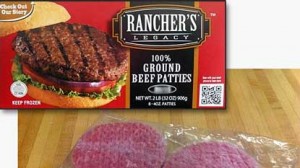
On Saturday afternoon FSIS announced that Ranchers Legacy Meat Co., of Vadnais Heights, Minnesota was recalling 1,200 pounds of ground beef products that may be contaminated with E. coli O157:H7.

Products subject to the recall are packaged in plastic cryovac sealed packets, and contain various weights of ground beef.  All products produced on Nov. 19, 2014 are subject to recall.

All of the following have a Package Code (use by) 12/10/2014 and bear the establishment number “Est. 40264” inside the USDA mark of inspection. Individual products include:

  • Ranchers Legacy Ground Beef Patties 77/23
  • Ranchers Legacy Ground Chuck Patties 80/20
  • Ranchers Legacy USDA Choice Ground Beef 80/20
  • Ranchers Legacy USDA Choice WD Beef Patties 80/20
  • Ranchers Legacy RD Beef Patties 80/20
  • OTG Manufacturing Chuck/Brisket RD Patties
  • Ranchers Legacy Chuck Blend Oval Beef Patties
  • Ranchers Legacy WD Chuck Blend Patties
  • Ranchers Legacy USDA Choice NAT Beef Patties 80/20
  • Ranchers Legacy NAT Beef Patties 80/20
  • Ranchers Legacy USDA Choice NAT Beef Patties 80/20
  • Ranchers Legacy Ground Chuck Blend
  • Ranchers Legacy Chuck Blend Bulk Pack NAT Patties
  • Ranchers Legacy Chuck Blend NAT Beef Patties

The product was discovered by FSIS inspection personnel during a routine inspection. Products testing positive on November 21, 2014 were held at the establishment.  The products being recalled were produced on the same day and equipment as the positive product.  Products were shipped to distributors for sales nationwide.

FSIS and the company are concerned that some product may be frozen and in consumers’ freezers. FSIS and the company have received no reports of illnesses associated with consumption of these products.

Thanks to those working late on Friday.

As of November 21, 2014, the CDC reports a total of 63 persons infected with the outbreak strains of Salmonella Enteritidis have been reported from 10 states: Connecticut, Maine, Massachusetts, Montana, New Hampshire, New York, Ohio, Pennsylvania, Rhode Island, and Vermont. The one ill person from Montana traveled to the Eastern United States during the period when likely exposure occurred.

Illness onset dates range from September 30, 2014 to November 8, 2014. Among 42 persons with available information, 11 (26%) have been hospitalized, and no deaths have been reported.

Collaborative investigation efforts of state, local, and federal public health and regulatory agencies indicate that bean sprouts produced by Wonton Foods, Inc. are the likely source of this outbreak.

The information available to date indicates that bean sprouts produced by Wonton Foods, Inc. may be contaminated with Salmonella and are not safe to eat. As of November 21, 2014, the firm has verbally agreed to voluntarily stop the production and sale of their bean sprouts.

CDC recommends that restaurants and other retailers do not sell or serve bean sprouts produced by Wonton Foods, Inc. at this time. CDC recommends that consumers do not eat bean sprouts produced by Wonton Foods, Inc. at this time.

Time for a Warning?

Three people in Vermont and four people in New Hampshire have been sickened by Salmonella believed to be associated with bean sprouts, health officials in the two states said Friday.

According to the Vermont Department of Health, the Centers for Disease Control reported Friday (not yet on its website) that 63 people in 10 states have become ill as part of the outbreak. Eleven people were hospitalized and none have died. Health officials in Vermont said three of the cases were in Vermont, and New Hampshire said it has four associated cases.

The CDC said a review of records and invoices at restaurants in the northeast where people became ill shows they ate bean sprouts from Wonton Food, Inc. of Brooklyn, New York.

“The investigation by state and federal partners is still underway, but consumers should avoid eating bean sprouts grown and sold by Wonton Food, Inc.,” the Vermont Department of Health said. “Restaurants and grocery stores have been advised not to serve or sell bean sprouts from this firm.”

Earlier the Massachusetts Department of Public Health announced that it was investigating a possible Salmonella cluster in Massachusetts and across state lines.

Infection with Salmonella typically causes diarrhea, vomiting, fever and abdominal cramps. Illness can be severe and require hospitalization. Young children, the elderly and those with weakened immune systems are more likely to develop severe illness. It can be fatal without prompt treatment.

My friends at Barf Blog document at least 55 sprout-associated outbreaks occurring worldwide affecting a total of 15,233 people since 1988.

As far back as September 1998, FDA issued a warning against sprouts urging:

Children, pregnant women and the elderly should not eat alfalfa sprouts until growers find a way to reduce the risk of a potentially deadly bacteria that infects some sprouts, the Food and Drug Administration said this week. The FDA, which is investigating sprout industry practices, said children, the elderly and people with weakened immune systems should avoid eating sprouts.

Here is the CDC warning :

Sprouts Not Healthy Food for Everyone

Children, the elderly, and persons whose immune systems are not functioning well should not eat raw sprouts, because current treatments of seeds and sprouts cannot get rid of all bacteria present.

Persons who are at high risk for complications from foodborne illness should probably not eat raw sprouts, according to an article in the current issue of Emerging Infectious Diseases, CDC’s peer-reviewed journal, which tracks new and reemerging infectious diseases worldwide.

Although sprouts are often considered a “health food,” the warm, humid conditions needed for growing sprouts from seeds are also ideal for bacteria to flourish. Salmonella, E. coli, and other bacteria can grow to high levels without affecting the appearance of the sprouts.

Researchers have treated both seeds and sprouts with heat or washed them in solutions of chlorine, alcohol, and other chemicals. Some of these disinfectants reduced the levels of bacteria, but a potential hazard remained, especially for persons with weak immune systems. High temperatures that would kill the bacteria on the seeds would also keep them from sprouting. Until an effective way is found to prevent illness from sprouts, they should be eaten with caution, if at all.

Boston’s Fox 25 News reports that Massachusetts state and federal health officials are looking into cases of salmonella that have been reported in multiple states.

The Massachusetts Department of Health confirmed on Thursday afternoon that the agency, along with the Centers for Disease Control and Food and Drug Administration, are investigating a potential multi-state salmonella cluster.”

The CDC defines a cluster as a “larger number of people than expected appear to have the same illness in a given time period and area.”

Although the investigation is underway, as of Thursday none of the cases have been tied directly to one source, according to the Mass.DPH No cases have been directly tied to a source at this time.

Coral Beach of the Packer reports this morning that positive test results for salmonella contamination spurred Latin Specialties Inc., Houston, to recall 80 cases of whole avocados from Unity Groves Corp. in Florida.

The Houston company initiated the voluntary recall Oct. 30, according to a Nov. 19 enforcement report from the Food and Drug Administration. Recalls frequently show up on the weekly enforcement report weeks or months after the fact.

The FDA report does not list the variety of the recalled avocados.

The FDA report categorizes the recall as “ongoing.”

No lot codes are known of for the recalled fruit, which was packed in brown cardboard boxes with green print, according to the enforcement report. The boxes are printed with “Unity Groves Pride of the Redlands Florida Avocados 25399 SW 157 Ave Homestead, FL 33031.”

Latin Specialties received the avocados Oct. 10, according to the FDA. The fruit tested positive for salmonella, but the FDA report does not reveal who did the testing or where the test samples were collected. Each of the 80 boxes contained 32 avocados.

According to letters received by victims of the 2010 Salmonella Outbreak that sickened 2000 and forced the recall of 500,000,0000 eggs, U.S. District Judge Mark W. Bennett has scheduled a February sentencing for the father and son whose Iowa egg farms were linked to the outbreak.

U.S. District Judge Mark W. Bennett ruled Thursday that Quality Egg owners Austin “Jack” DeCoster and Peter DeCoster will be sentenced during hearings that begin February 9, 2015 in Sioux City and could last five days.

The DeCosters pleaded guilty to misdemeanor charges of introducing adulterated food into interstate commerce. They face up to one year in jail, but their attorney is arguing for a fine and probation.

Quality Egg also faces a fine after pleading guilty to bribing a federal inspector, selling misbranded food and introducing adulterated food into interstate commerce.  The fine may be as much as $7,000,000.

See full charging document.  Also, see Victims’ Statement.

On the evening of Friday, September 19, 2014 Diane Norman bought pizzas at Domino’s Pizza located at 2800 Milton Way in Milton, Washington.  She took the pizzas home for her family to consume. Michael Norman chose two slices of Canadian bacon and pineapple pizza and took a bite of one slice.  He swallowed and immediately felt something sharp in his throat.  He started to choke and dashed to the sink to drink water to help clear his throat. At this point he felt a sharp tearing at his throat and drank a glass of cranberry juice. His throat felt scratched and to relieve his pain he ate a slice of bread.  Although this action eliminated the feeling that food was lodged in his throat, Michael felt a dull pain in his stomach. Since he was no longer felt hungry, he did not eat any more pizza. Diane Norman froze the remaining leftover pizza. Sometime later she examined the frozen pizza slices and found a wire in a piece of the pizza she had saved.

Over the next few days Michael continued to feel a dull pain in his abdomen.  His doctor ordered x-rays which showed two metallic objects inside his abdomen.  A CT scan revealed that one of the metal objects had punctured his small intestines. After a failed attempt to remove the metal objects via endoscopy, Michael was rushed into surgery on September 27. It was then that surgeons removed two wires from Michael Norman’s intestines.

On September 30 Michael Norman filed a complaint with the Tacoma Pierce County Health Department.  In response to his complaint, TPCHD environmental health specialist, Christina Sherman, conducted an on-site investigation at the Domino’s in Milton.  Ms. Sherman reviewed the pizza making process with Domino’s employee, James Tyler. She noted that a wire brush was used to clean a wire rack inside the oven at the end of each day. Ms. Sherman also observed wear on some of the brush bristles. This wear was evident in photos of the brush taken by Ms. Sherman.

On October 8 Michael Johnson at TPCHD conducted a second on-site visit to Domino’s.  Mr. Johnson wrote in the inspection report:

“Observed a wire brush with food debris between the wires. Wires on the brush were bent and pointing in different directions and did not maintain its original design. Employee stated they had another brush that was used to clean the oven but was discarded last week. Person in charge stated the outside of the oven is cleaned every night and the inside of the oven is cleaned once a month using the brush.”

Ms. Johnson advised, “[E]quipment and utensils must be designed and construction to be durable and to retain their characteristic qualities under normal use conditions.”

The wire brush was discarded.

Of note is that other food safety violations were noted at Domino’s including inadequate handwashing facilities, improper cold holding and use of stem thermometers instead of digital thermometers.[1]

The facts of this case clearly link injuries experienced by Michael Norman to Domino’s pizza he consumed on September 19. Immediately after taking a bite of pizza he felt a sharp pain in his throat and started choking.  After experiencing several days of stomach pain x-rays were taken of his abdomen and revealed two metal wires in his intestines. Doctors performed emergency surgery and removed the wires.  Diane Norman found a metal wire in pizza leftover from the September 19 meal. Domino’s Pizza staff described how metal wire brushes were used to clean the pizza oven and public health investigators observed that wires on the brush at the Domino’s Pizza in Milton were bent.  A Tacoma Pierce County Health Department investigator took photos of the wire brush. These photos show obvious wear and tear of the brush.

Internal injuries from ingestion of wire grill-cleaning bristles are well documented. In a single hospital system 12 patients with injuries due to ingestion of wire bristles were reported between July 2009 and June 2012. The severity of injury ranged from puncture of the soft tissues of the neck, causing severe pain on swallowing, to perforation of the gastrointestinal tract requiring emergency surgery. (REF: Grand DJ, Egglin TK, Mayo-Smith WW. et al. Injuries from ingesting wire bristles dislodged from grill-cleaning brushes – Providence, Rhode Island, 2009-2012. J. Safety Res. 2012 Dec. 43(5-6):413-5.)  The Centers for Disease Control and Prevention (CDC) recommends actions to prevent these injuries by increasing awareness among consumers, manufacturers, retailers, and medical professionals to promote prevention, timely diagnosis and appropriate treatment. In an editorial published in the Morbidity and Mortality Weekly Report (MMWR), the agency suggests that awareness by manufacturers and retailers of the risk of ingesting wire bristles might encourage alteration of current products or development of safer ones. The CDC recommends those in the food services industry to “examine whether their patrons are at risk for this injury” and advises the “use of alternative grill-cleaning methods or products.”  (REF: Centers for Disease Control and Prevention, Injuries from ingestion of wire bristles from grill-cleaning brushes – Providence, Rhode Island, March 2011-June 2012. MMWR Morb Mortal Wkly Rep 2012 Jul 6;61(26):490-492.)

According to a recently released report by the Minnesota Department of Health (MDOH), 57 individuals who met the case definition[1] were deemed to be part of the outbreak linked to Jim-N-Joe’s Northland Katering.

Of those ill, 65% were women.  All cases reported diarrhea, 96% cramps, 61% bloody stool, 37% vomiting and 19% fever.  37% sought medical treatment with 16% hospitalized.

After an exhaustive investigation, MDOH concluded that the common server at the five events between July 1 and July 17 on the Fond du Lac Reservation was Jim-N-Joe’s Northland Katering.  MDOH also found that the most common food items were the celery and onions.  Potato Salad, which included celery and onions was found to be tainted with E. coli O157:H7.  Cases were also identified at events where potato salad was not served, but celery was.  The celery was traced back to a field adjacent to a defunct dairy operation near Gonzales, California.

We represent several of those hospitalized due to E. coli O157:H7.  See additional documents at Outbreak Database.


[1] A case was defined as an individual who attended an event catered by Jim-N-Joe’s Northland Katering and subsequently developed diarrhea that was bloody or at least three days of duration, or an individual who had E. coli O57:H7 isolated from a stool culture with a PFGE pattern indistinguishable from the main outbreak pattern.

The BBC reports that 1 in 10 sausages and processed pork meat products in England and Wales could cause hepatitis E virus (HEV) infection if undercooked, experts warn.

There has been an “abrupt rise” in the number of cases in England and Wales as people do not realise the risk, scientists advising the government say.

Sausages should be cooked for 20 minutes at 70C to kill the virus, they said.

Although serious cases are rare, HEV can cause liver damage or be fatal.

Official government figures show there were 124 confirmed cases of HEV in 2003, which rose to 691 cases in 2013. There were 461 cases in the first six months of this year.

Symptoms include jaundice and sometimes tiredness, fever, nausea, vomiting and abdominal pain.

Most people will get over the virus, although for some, such as those with an immune deficiency disorder, or pregnant women, it can prove fatal.