jjthAccording to the Salt Lake City Department of Health:

This establishment was closed for an imminent health hazard in response to a foodborne illnesses outbreak and ongoing illness connected to this establishment and the following violations:

  1. Food employees worked in the establishment while ill.
  2. An employee did not wash hands when changing gloves.
  3. An employee removed a loaf of bread from the pan with bare hands.
  4. Fresh bread is being stored on the dirty dish drain board.
  5. An employee beverage is stored next to establishment food in the walk in cooler.
  6. The vent in the walk in cooler is not properly repaired to be easily cleanable.
  7. Fan covers in the walk-in cooler are dirty.
  8. Food equipment is not being air dried before being nested together.
  9. The mop is not hung to air dry.
  10. Bread sticks in the walk in freezer are not covered to prevent contamination.
  11. Food is being stored on the floor.

Jimmy Johns has become the Marler Clark Full Employment Act.
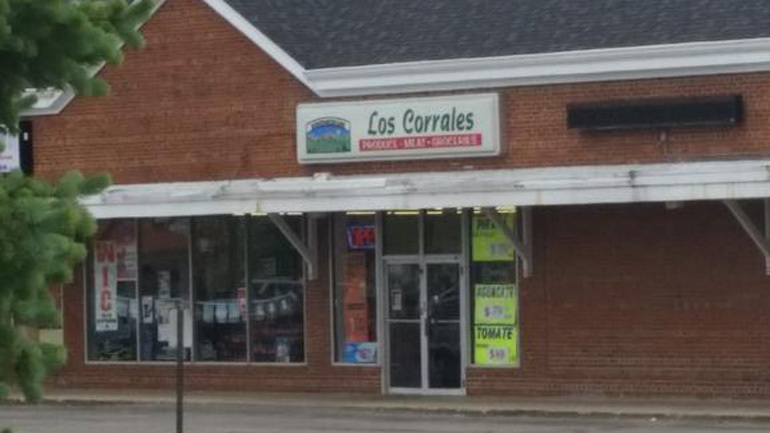
cfyzv-wweaaofb8According to news reports, Pork carnitas sold at Supermercado Los Corrales in Kenosha, Wisconsin during Mother’s Day weekend have officially been identified as the source of the Salmonella outbreak that sickened as many as 70 people, officials with the Department of Health Services (DHS), the Department of Agriculture, Trade and Consumer Protection (DATCP), and local health officials from Kenosha County, announced Wednesday, June 10th.

A total of seven people had to be hospitalized.

Health officials say interviews with the individuals who became ill revealed that most had consumed pork carnitas purchased from Supermercado Los Corrales Mother’s Day weekend.

Lab tests conducted by DATCP and the Wisconsin State Laboratory of Hygiene (WSLH) confirmed that Salmonella with a matching DNA fingerprint was in samples of the product and in samples from those individuals who became ill.

Learning-Vine-daycareLearning Vine on Overland Drive in Greenwood shut down voluntarily on Monday.  The closure followed the death of 2-year-old Myles Mayfield, of Greenwood, who died from hemolytic uremic syndrome, a condition associated with E. coli that can lead to kidney failure.

Since Myles’ death, the South Carolina Department of Health and Environmental Control confirmed that there are eight cases of E. coli connected to Learning Vine.  Health officials have not said if those with E. coli are children or adults.

Site reviews conducted by the state Department of Social Services’ Division of Early Care and Education June 4 found 12 violations at Learning Vine, according to results posted on the DSS website.

The violation areas pending correction are:

– Diaper changing, 24-month and younger room (x2)

– Improper medication practices

– Sanitation violations (x3)

– Facility restrooms (x2)

– Feeding, 24-month and younger room

– Food safety/menu

– Posted information

– Other health and safety

Learning Vine has a C in the DSS Division of Early Care and Education ABC Quality voluntary rating and improvement program, meaning it meets basic requirement, but C is the lowest of grades in the rating program.

map-06-10-2015-fullBlue Bell is doing “what they always should have been doing and likely wish they had been doing,” Marler said. ” … If I had a dollar for every company that found religion after a self-imposed disaster, I could have retired years ago.”

The CDC reported this morning that the Blue Bell Outbreak and investigation is over. According to the CDC, this was a complex multistate outbreak investigation of listeriosis cases occurring over several years. Public health investigators used the PulseNet system to identify illnesses that were part of this outbreak. DNA “fingerprinting” is performed on Listeria bacteria isolated from ill people using techniques called pulsed-field gel electrophoresis (PFGE) and whole genome sequencing (WGS). WGS gives a more detailed DNA fingerprint than PFGE. PulseNet manages a national database of these DNA fingerprints to identify possible outbreaks of enteric illness. Several PFGE patterns (strains) of Listeria were involved in this outbreak.

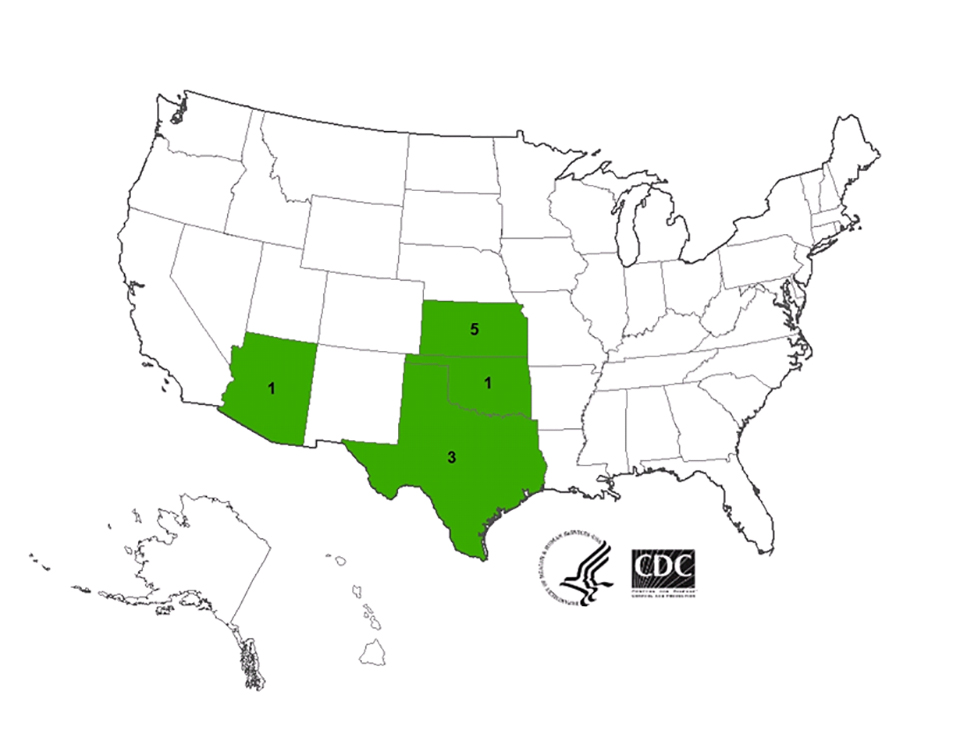
A total of 10 people infected with several strains of Listeria were reported from 4 states: Arizona (1), Kansas (5), Oklahoma (1), and Texas (3). Illness onset dates ranged from January 2010 through January 2015. The people with illness onsets during 2010–2014 were identified through a retrospective review of the PulseNet database for DNA fingerprints matching isolates collected from Blue Bell ice cream samples. All 10 (100%) people were hospitalized. Three deaths were reported from Kansas.

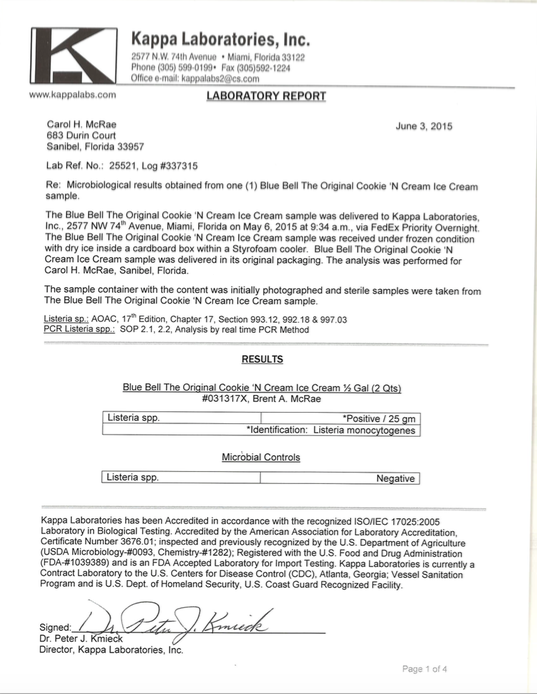
The FDA also released all inspection reports and responses by Blue Bell.  It does not appear that the FDA or State investigators have released all product or environmental tests yet.

In 1998 in what was the first criminal conviction in a large-scale food-poisoning outbreak, Odwalla Inc. pleaded guilty to violating Federal food safety laws and agreed to pay a $1.5 million fine for selling tainted apple juice that killed a 16-month-old girl and sickened 70 other people in several states in 1996. Odwalla, based in Half Moon Bay, California pleaded guilty to 16 counts of unknowingly delivering ”adulterated food products for introduction into interstate commerce” in the October 1996 outbreak, in which a batch of its juice infected with the toxic bacteria E. coli O157:H7 sickened people in Colorado, California, Washington and Canada. Fourteen children developed a life-threatening disease (hemolytic uremic syndrome -HUS) that ravages kidneys. At the time, the $1.5 million penalty was the largest criminal penalty in a food poisoning case.  Odwalla also was on court-supervised probation for five years, meaning that it had to submit a detailed plan to the food and drug agency demonstrating its food safety precautions and that any subsequent violations could have resulted in more serious charges. (Odwalla)

In 2012 Eric Jensen, age 37, and Ryan Jensen, age 33, brothers who owned and operated Jensen Farms, a fourth generation cantaloupe operation, located in Colorado, presented themselves to U.S. marshals in Denver and were taken into custody on federal charges brought by the U.S. Attorney’s Office with the Food and Drug Administration – Office of Criminal Investigation. According to the six-count indictment, Eric and Ryan Jensen unknowingly introduced adulterated (Listeria-tainted) cantaloupe into interstate commerce. The indictment further stated that the cantaloupe was prepared, packed and held under conditions, which rendered it injurious to health.  The outbreak sickened over 147, killing over 33 in 28 states in the fall of 2011.  The Jensen’s faced up to six years in jail and $1,500,000 in fines each. The eventually pleaded guilty and were sentenced to five years probation. (Eric Jensen Plea and Ryan Jensen Plea)

In 2013, Austin “Jack” DeCoster and his son, Peter DeCoster, both faced charges stemming from a Salmonella outbreak caused by their Iowa egg farms in 2010.  The Salmonella outbreak ran from May 1 to November 30, 2010, and prompted the recall of more than a half-billion eggs. And, while there were 1,939 confirmed infections, statistical models used to account for Salmonella illnesses in the U.S. suggested that the eggs may have sickened more than 62,000 people. The family business, known as Quality Egg LLC, pleaded guilty in 2015 to a federal felony count of bribing a USDA egg inspector and to two misdemeanors of unknowingly introducing adulterated food into interstate commerce. As part of the plea agreement, Quality Egg paid a $6.8-million fine and the DeCosters $100,000 each, for a total of $7 million.  Both DeCosters were sentenced to three months in jail. They are appealing the jail sentence. (Austin “Jack” DeCoster Plea and Peter DeCoster Plea)

In 2014 former Peanut Corporation of America owner Stewart Parnell, his brother and one-time peanut broker, Michael Parnell, and Mary Wilkerson, former quality control manager at the company’s Blakely, Georgia, plant, faced a federal jury in Albany, Georgia. The 12-member jury found Stewart Parnell guilty on 67 federal felony counts, Michael Parnell was found guilty on 30 counts, and Wilkerson was found guilty of one of the two counts of obstruction of justice charged against her. Two other PCA employees earlier pleaded guilty. The felony charges of introducing adulterated food into interstate commerce, “with the intent to defraud or mislead,” stemmed from a 2008 to 2009 Salmonella outbreak that sickened 714 and left nine dead. All defendants will be sentenced in July of this year. Stewart and Michael are facing decades in jail. (Parnell Jury Verdict)

In 2015 ConAgra Foods agreed to plead guilty and pay $11.2 million in connection with the shipment of Salmonella contaminated peanut butter linked to a 2006 through 2007 nationwide outbreak of that sickened over 700. ConAgra signed a plea agreement admitting that it unknowingly introduced Peter Pan and private label peanut butter contaminated with Salmonella into interstate commerce during the 2006 through 2007 outbreak. (ConAgra Plea)

e-coli-o157The S.C. Department of Health and Environmental Control (DHEC) has provided the following update to a STEC investigation in Greenwood County:

  • As of today, DHEC has confirmed eight (8) cases of Shiga toxin – producing E. coli (STEC) associated with The Learning Vine daycare in Greenwood County – including 1 death.

As part of this ongoing investigation, DHEC today:

  • Continued to collect and test samples for laboratory analysis
  • Provided information to individuals affected by the investigation
  • Continued to operate a hotline to provide assistance to those affected
  • Worked with the S.C. Department of Social Services to provide information to daycare facilities in Greenwood, Laurens, and Abbeville Counties
  • Notified individuals of their test results

At this time, no other facility is included as part of this ongoing investigation.

How does DHEC confirm the diagnosis of STEC and the specific strain?

Confirmatory testing for STEC in individuals who have had diarrhea requires stepwise laboratory processes to isolate the organism from stool. If bacteria are isolated, the laboratory must grow the specimen to get a sample to conduct additional laboratory procedures to identify if specific STEC strains are present.

Completion of the entire process may take up to a week for specific strain identification. To date, four (4) of the samples have undergone complete strain identification and these have a matching pattern.

When will the daycare be able to reopen?

The following criteria must be met prior to students and staff returning to the facility:

  • All students and staff must be tested for Shiga toxin – producing E. coli (STEC) and have at least one negative stool sample before returning to the facility.  Some individuals may be required to have two negative stool samples before returning to the facility based on their history of illness or contact with cases.
  • The facility must continue to follow all recommendations issued by DHEC.

Sounds far too familiar.

In August of 2000, the Kindercare facility located on Lexington Drive in Folsom, California, was traced as the source of an E. coli O157:H7 outbreak. Health department officials who investigated the outbreak determined that the probable “index case” – a child who unknowingly brought the bacteria into the facility – experienced “explosive diarrhea at the daycare on the afternoon of 8-3-00.” Shortly thereafter, four other children became infected with E. coli O157:H7 on successive days, the 6th, 7th, 8th and 9th of August, 2000. All of the children were in the same day care group. In addition to the illnesses of the children, the mother of one child, and another child’s sibling became ill and tested positive for E. coli. Another toddler also became ill.

According to the Facility Evaluation Report by the Department of Social Services dated November 7, 2000, “[t]he cause of the [E. coli O157:H7] outbreak [at the Lexington Drive Kindercare] was due to a sponge being used simultaneously for wiping down a changing table and wiping down a table used for serving meals.”

In June of 2002, the Disease Control Section of the Tarrant County Public Health Department (TCPHD) in Fort Worth, Texas, was notified that a 2-year old child had been hospitalized with hemolytic uremic syndrome, or HUS, a complication of E. coli O157:H7 infection. In the following days, TCPHD received several additional reports of E. coli O157:H7 illness, including five culture-positive cases. During its investigation into the outbreak, TCPHD learned that all of the victims were associated with the CCC Alternative Learning Program Daycare in Fort Worth, Texas; 12 children who attended the daycare, one daycare staff member, and one parent of a daycare attendee had all fallen ill with E. coli infections.  TCPDH’s inspection of the daycare revealed “several breaches in food preparation and procedures at the daycare facility.”  In its investigation report, TCPDH noted:

  • The daycare had not obtained a city permit to prepare and serve food, but was providing food for the children attending the daycare.
  • Appropriate sources of drinking water were not available in the building housing the smaller children; water jugs were filled using the bathroom sink.
  • A swimming pool at the facility was in use with murky water prior to chlorination and the daycare had not obtained a city permit.

Perhaps the most important finding during TCPHD’s investigation was that staff, parents and children reported frequently eating portable lunches on the daycare grounds by a pond.  The pond collected run-off from a pasture that held grazing cattle.  TCPDH reported that several samples of pond water confirmed a heavy concentration of E. coli O157:H7.

On May 10, 2004, the Jasper County Health Department (JCHD) received a report from St. Johns Regional Medical Center that two 2-year-old children had been hospitalized with hemolytic uremic syndrome (HUS) at Children’s Mercy Hospital in Kansas City, Missouri.  The children, one boy and one girl, were residents of Carthage Missouri.  Five of the girl’s family members soon developed symptoms of E. coli infection, and one later tested positive for E. coli O157:H7. JCHD began investigating the apparent E. coli outbreak, and learned that the hospitalized girl and one of her siblings attended daycare at Kid’s Korner daycare in Joplin, Missouri. JCHD investigators visited the daycare facility on May 11.  They did not note any major hand washing or diapering violations, and discussed the importance of excluding children with diarrheal illness from the daycare with daycare operators and employees.

On May 24, JCHD was notified that a 4-year-old girl who attended daycare at Kid’s Korner had become ill with symptoms of E. coli infection on May 14 and was being transferred from a Joplin hospital to Children’s Mercy in Kansas City with HUS.  JCHD inspectors returned to Kid’s Korner on May 25, and instructed the daycare to distribute a letter explaining the incidence of E. coli at the daycare and the signs and symptoms of illness to parents.  During this inspection, JCHD investigators noted deficiencies conducive to the spread of disease and instructed Kid’s Korner employees on methods of hygiene and sanitation effective to prevent the further spread of E. coli.

By May 26, JCHD had received two additional reports of illness in children who attended Kid’s Korner.  One of the children had had bloody diarrhea on May 11; the child’s sibling fell ill on May 26 and was later hospitalized with HUS.  Despite their earlier assurances that no children at the daycare had been symptomatic during the month of May, Kid’s Korner then produced a list of nine children who had exhibited symptoms of E. coli infection to JCHD investigators.

On May 27, JCHD inspectors returned to the daycare center and noted handwashing lapses.  They also learned that Kid’s Korner had failed to distribute the May 25 letter regarding possible E. coli exposure and symptoms to 32 percent of the families with children in attendance at Kid’s Korner.

th55 men, women and children have shown symptoms that include vomiting and severe stomach pains.

The Salt Lake County Health Department (SLCoHD) has determined that a food item served Sunday night at the St. Vincent de Paul Dining Hall contained Staphylococcal enterotoxin, a common cause of foodborne illness that produces symptoms consistent with those reported by the affected individuals.

The toxin is caused by Staphylococcus aureus, common bacteria found on the skin that does not usually cause illness—unless it is introduced into improperly heated or cooled food. Staph bacteria are most often introduced into food when food handlers touch food with their bare hands. If that food is within the “food danger zone” of 40°F to 140°F, the bacteria can then grow and produce the toxin.

“This is an important reminder to anyone who prepares food—either commercially or at home—that hand washing, avoiding bare-hand contact with food, and keeping hot foods hot and cold foods cold are all essential to preventing illness,” said Andrea Gamble, SLCoHD environmental health scientist.

“This incident at St. Vincent de Paul Dining Hall appears to be an isolated food handling error,” said Gamble. “Unfortunately, a single lapse in temperature controls or food-contact protocols can cause problems.“

It is relatively rare to identify the specific organism that caused a foodborne illness outbreak. Health department epidemiologists and environmental health scientists began work late Sunday night to interview those affected and to inspect various kitchens and food items identified by those ill. The Utah Public Health Lab ultimately isolated the staph toxin from a food sample late Thursday night.

“It doesn’t really matter which specific organism caused this unfortunate illness,” continued Gamble. “Whether it had been salmonella, norovirus, or staph—the important message is that proper food handling will help prevent them all.”

Recalled-smoked-salmon-labelSanta Barbara Smokehouse of Santa Barbara, CA, is recalling all smoked salmon from March 1 to April 8, 2015, because it has the potential to be contaminated with Listeria monocytogenes,

The recalled Cold Smoked Salmon was distributed within the United States through retail stores and food wholesalers.

The following brands are affected: Cambridge House, Coastal Harbor, Harbor Point, North Shore S.F. Specialty, Channel Islands and Santa Barbara, along with the following batch range of 1015 – 3949.

No illnesses have been reported to date.

Santa Barbara Smokehouse has tested and received certificates of analysis showing negative results for the products in question during that time period. All fresh product has use-by dates of April 29 to May 6, 2015.

The company is recommending as a precautionary measure to pull frozen product produced on or before April 8, 2015.

Santa Barbara Smokehouse had a recall of smoked salmon products earlier this year, also for potential Listeria contamination. That recall involved two batches of cold smoked salmon manufactured in August and September 2014 and all cold smoked salmon packed between Dec. 17-24, 2014.

At the time, officials with the California Department of Public Health and the U.S. Food and Drug Administration said they were investigating bacteriologic contamination found in the company’s processing facility.

Listeria can cause serious and sometimes fatal infections in young children, frail or elderly people, and others with weakened immune systems. Although healthy individuals may suffer only short-term symptoms such as high fever, severe headache, stiffness, nausea, abdominal pain and diarrhea, Listeria infection can cause miscarriages and stillbirths among pregnant women.

Screen Shot 2015-06-05 at 4.50.56 PMOrange County has confirmed three cases of campylobacteriosis infection associated with consumption of raw goat milk distributed by Claravale Farm of San Benito County, California.  All three patients are young children less than 5 years of age.  One patient was hospitalized, and all of them are expected to recover.

The raw goat milk was distributed throughout the state, and the California Department of Public Health (CDPH) is leading an investigation to determine if there are additional cases.  While the CDPH investigation is ongoing the Health Care Agency advises against consuming Claravale Farm raw goat milk.

There is always a risk of illness associated with consumption of raw, or unpasteurized, milk products.  The risk of getting sick from drinking raw milk is greatest for infants and young children, the elderly, pregnant women, and people with weakened immune systems, such as people with cancer or HIV/AIDS. But, it is important to remember that healthy people of any age can get very sick if they drink raw milk contaminated with harmful germs.

Campylobacteriosis is an infectious disease caused by the Campylobacter bacteria. Outbreaks of Campylobacter disease have most often been associated with unpasteurized dairy products, contaminated water, poultry, and produce. Most people who become ill with campylobacteriosis get diarrhea, cramping, abdominal pain, and fever within two to five days after exposure to the organism.