Skip to content

Livestock exhibitions, petting zoos, county and state fairs, frankly any “farm experience,” are “as American as apple pie.”

Unfortunately, these same places have been the source of large outbreaks of zoonotic diseases over the last decades. And, just as unfortunately, despite the severe illnesses and a death attributed to these activities, little seems to be learned from outbreak to outbreak despite previously existing standards for safer exhibition of animals being encoded more forcefully into law. After each outbreak it is hoped that future exhibitors will, one hopes, heed the calls previously issued by the Centers for Disease Control and Prevention (CDC) and by veterinarians: to take steps to reduce the likelihood of zoonotic-disease transmission to animal exhibition patrons – and to young children in particular.

Now we see another one. During April’s Milk Maker’s Fest at the Washington Fairgrounds at least 25 were sickened by E. coli O157:H7 with 10 hospitalized and six developing hemolytic uremic syndrome (HUS). The cause of this outbreak is clearly set forth in recommendations for future event organizers:

  • Evaluate and update plans for cleaning and disinfection before, during, and after events, particularly surfaces with high levels of hand contact (such as seats, door or fence handles, and hand railings).
  • Evaluate and update measures to restrict access to areas more likely to be contaminated with animal manure.
  • Ensure access to hand washing facilities with soap, running water, and disposable towels.
  • Display signs and use other reminders to attendees to wash hands when leaving animal areas.
  • Store, prepare, or serve food and beverages only in non-animal areas.

Screen Shot 2015-06-04 at 9.42.10 AMSeeing this I feel a bit frustrated since I gave a speech 10 years ago to the Washington State Fair Association about the risks of animal contact in these types of settings and recommendation on how to avoid outbreaks.

The risk of transmission in exhibition settings of zoonotic diseases in general and E. coli O157:H7 in particular is not – or should not be – news. A survey as far back as 2003 of the literature, including CDC’s Morbidity and Mortality Weekly Report (MMWR), revealed at least 23 outbreaks of zoonotic disease, including illnesses from E. coli O157:H7, associated with animal exhibitions in the United Kingdom and the United States. These prior outbreaks included an E. coli O157:H7 outbreak associated with a county fair in Medina, Ohio, in August, 2000; two E. coli O157:H7 outbreaks in Pennsylvania in 2000 and 2001 associated with farm animals; 92 E. coli O157:H7 cases associated with the Wyandot County Fair in Ohio in September 2001; and the largest E. coli O157:H7 outbreak in Oregon history at the Lane County Fair in September 2002. And, over the last decade there is not a year that has gone by that many other outbreaks have left hundreds and hundreds sickened.

In addition, research has shown that E. coli O157:H7 is prevalent even among the prize livestock exhibited at agricultural fairs. A 2003 study on the prevalence of E. coli O157: H7 in livestock at 29 county and three large state agricultural fairs in the United States found that E. coli O157:H7 could be isolated from 13.8 percent of beef cattle, 5.9 percent of dairy cattle, 3.6 percent of pigs, 5.2 percent of sheep, and 2.8 percent of goats. Over 7 percent of pest-fly pools also tested positive for E. coli O157:H7.

Against this backdrop, the CDC published recommendations for reducing the risk that enteric pathogens will be transmitted at petting zoos, open farms, and animal exhibits. The most updated version of these recommendations can be found on CDC’s MMWR Web site. These recommendations arise out of several documented outbreaks in which enteric pathogens were passed to humans in such settings. Draft recommendations were published in MMWR on April 20, 2001; readers were invited to submit comments and suggestions; and the final recommendations were posted on the Internet on October 26, 2001. The recommendations encapsulated on the CDC Web site and in MMWR were created by the National Association of State Public Health Veterinarians (NASPHN). Many of the recommendations are common sense and most, if not all were likely ignored by those involved with the Milk Maker’s Fest:

Venue operators should take the following steps:

  • Become familiar with and implement the recommendations in this compendium.
  • Consult with veterinarians, state and local agencies, and cooperative extension personnel on implementation of the recommendations.
  • Become knowledgeable about the risks for disease and injury associated with animals and be able to explain risk-reduction measures to staff members and visitors.
  • Be aware that direct contact with some animals is inappropriate in public settings, and this should be evaluated separately for different audiences.
  • Develop or obtain training and educational materials and train staff members.
  • Ensure that visitors receive educational messages before they enter the exhibit, including information that animals can cause injuries or carry organ- isms that can cause serious illness.
  • Provide information in a simple and easy-to-under- stand format that is age and language appropriate.
  • Provide information in multiple formats (eg, signs, stickers, handouts, and verbal information) and languages.
  • Provide information to persons arranging school field trips or classroom exhibits so that they can educate participants and parents before the visit.

Venue staff members should take the following steps:

  • Become knowledgeable about the risks for dis- ease and injury associated with animals and be able to explain risk-reduction recommendations to visitors.
  • Ensure that visitors receive educational messages regarding risks and prevention measures.
  • Encourage compliance by the public with risk- reduction recommendations, especially compliance with hand-washing procedures as visitors exit animal areas.

Recommendations for nonanimal areas are as follows:

  • Do not permit animals, except for service animals, in nonanimal areas.
  • Store, prepare, serve, or consume food and beverages only in nonanimal areas.
  • Provide hand-washing facilities and display hand- washing signs where food or beverages are served.
  • Entrance transition areas should be designed to facilitate education.
  • Post signs or otherwise notify visitors that they are entering an animal area and that there are risks associated with animal contact.
  • Instruct visitors not to eat, drink, smoke, and place their hands in their mouth, or use bottles or pacifiers while in the animal area.
  • Establish storage or holding areas for strollers and related items (eg, wagons and diaper bags).
  • Control visitor traffic to prevent overcrowding.
  • Exit transition areas should be designed to facilitate hand washing.
  • Post signs or otherwise instruct visitors to wash their hands when leaving the animal area.
  • Provide accessible hand-washing stations for all visitors, including children and persons with disabilities. Position venue staff members near exits to encourage compliance with proper hand washing.

Recommendations for animal areas are as follows:

  • Do not allow consumption of food and beverages in these areas.
  • Do not allow toys, pacifiers, spill-proof cups, baby bottles, strollers, or similar items to enter the area.
  • Prohibit smoking and other tobacco product use.
  • Supervise children closely to discourage hand-to- mouth activities (eg, nail biting and thumb sucking), contact with manure, and contact with soiled bedding. Children should not be allowed to sit or play on the ground in animal areas. If hands become soiled, supervise hand washing immediately.
  • Ensure that regular animal feed and water are not accessible to the public.
  • Allow the public to feed animals only if contact with animals is controlled (eg, with barriers).
  • Do not provide animal feed in containers that can be eaten by humans (eg, ice cream cones) to decrease the risk of children eating food that has come into contact with animals.
  • Promptly remove manure and soiled animal bedding from these areas.
  • Assign trained staff members to encourage appropriate human-animal interactions, identify and reduce potential risks for patrons, and process reports of injuries and exposures.
  • Store animal waste and specific tools for waste removal (eg, shovels and pitchforks) in designated areas that are restricted from public access.
  • Avoid transporting manure and soiled bedding through nonanimal areas or transition areas. If this is unavoidable, take precautions to prevent spillage.
  • Where feasible, disinfect the area (eg, flooring and railings) at least once daily.
  • Provide adequate ventilation both for animals and humans.
  • Minimize the use of animal areas for public activities (eg, weddings and dances). • If areas previously used for animals must be used for public events, they should be cleaned and disinfected, particularly if food and beverages are served.

In addition, the Pennsylvania legislature enacted a law mandating standards for animal exhibition sanitation. The Pennsylvania law requires animal exhibit operators to “promote public awareness of the risk of contracting a zoonotic disease” by posting notices. The law further requires adequate hand-cleansing facilities and prohibits the exhibition of any animal not properly cared for by a veterinarian.

Thus, even before the outbreaks in North Carolina and Florida in the fall and winter of 2004-2005, the risk of disease transmission and the means of reducing that risk were well known. This common knowledge forms the basis of legal liability for both the private and governmental entities that operate animal exhibitions. While laws vary from state to state, the liability of these entities to those sickened through exposure to animals on site would be based in the premises of both liability and negligence.

Under premises liability law, the entity or entities responsible for managing an animal exhibition have a duty of care to those it invites onto the premises. This duty includes the responsibility to adequately reduce risks the entity is or should be aware of. The duty also carries a responsibility to warn fairgoers of risks present at the exhibition.

The principles of negligence also revolve around the risks to fairgoers that animal exhibitors know of or reasonably should know of. To successfully bring a negligence claim, a sickened person would need to show that the actions of an animal exhibitor fell below a reasonable standard of care in the operation of the exhibit. Failing to implement the well-established recommendations of the CDC and NASPHV constitutes falling below that standard of care.

Both bases for liability on the part of animal exhibitors-premises liability and negligence-carry with them a burden of education on the part of the exhibitor. Because the law holds people to a standard of what they reasonably should know, ignorance of the risks involved is not an effective defense. The law thus provides no impetus to stray from the course of action that is best for both customers and exhibitors in the first place-recognizing the risk and taking steps to reduce it.

Following the E. coli O157:H7 outbreak in North Carolina, the Terry Sanford Institute of Public Policy at Duke University contracted with the North Carolina Department of Health and Human Services to develop recommendations on regulating petting zoos. The researchers concluded:

In response to the largest outbreak of Escherichia coli (E. coli) in North Carolina history, we recommend that the North Carolina Department of Health and Human Services (DHHS) issue guidelines and pursue legislation that will control public contact with animals, inform the public of risks related to animal contact, provide transition areas, regulate animal care, and license petting zoos.

The North Carolina Legislature subsequently adopted “Aedin’s Law,” named after a young child who was severely injured in the outbreak. According to the preamble of the bill, the child was hospitalized for 36 days and will suffer lifelong injury from complications of HUS. Aedin’s Law requires that animal exhibitors acquire a public permit. The bill further requires the North Carolina State Board of Agriculture to adopt regulations in line with those of the Duke University study and CDC.

There are benefits to continuing the tradition of animal exhibits – it is a recreational and educational link to our country’s ongoing agricultural heritage. Slowly heeding the hard lessons learned, private, public, and legal forces are at work to reduce the risks associated with this pastime. Animal exhibitors are unwise to view these changes as a threat, or those working for change as enemies. Likewise, it is shortsighted to resist the recommendations and guidelines offered to make the animal exhibits safer. The long-term existence of animal exhibits to the public cannot be assured in an environment that permits the possibility of large-scale, life-threatening disease outbreaks like those that occurred in North Carolina and Florida. And, the best way to keep the lawyers out of it is to keep the children safe.

References

  1. See E. coli O157:H7 outbreak in Whatcom County, Washington Final Investigation Summary – http://wa-whatcomcounty.civicplus.com/CivicSend/ViewMessage/Message?id=5760
  1. See http://www.fair-safety.com/fair-outbreaks.htm
  1. E. Keen, T.E. Wittum, J.R. Dunn, J.L. Bono, and M.E. Fontenot. 2003. “Occurrence of STEC O157, O111, and O26 in Livestock at Agricultural Fairs in the United States,” Proc. 5th Int. Symp. on Shiga Toxin-Producing Escherichia coli Infections, Edinburgh, UK 22 (2003) – http://www.ars.usda.gov/research/publications/Publications.htm?seq_no_115=144426
  1. National Association of State Public Health Veterinarians, Inc. (NASPHV). “Compendium of Measures to Prevent Disease Associated with Animals in Public Settings – http://nasphv.org/documentsCompendiumAnimals.html
  1. CDC, “Notice to Readers: Availability of Final Recommendations on Reducing the Risk for Transmission of Enteric Pathogens at Petting Zoos, Open Farms, Animal Exhibits, and Other Venues,” 50 MMWR Weekly, 928 (October 25, 2001) – http://www.cdc.gov/mmwr/preview/mmwrhtml/mm5042a6.htm
  1. Outbreak Response and Surveillance Unit, Recommendations: Farm Animal Contact, (Atlanta, CDC September 2002) – http://www.cdc.gov/foodborneoutbreaks/publication/recomm_farm_animal.htm
  1. See 3 Pa. C.S. [section]2501 et seq
  1. Dustyn Baker, Tugba Gurcanlar, Emily Hildebrand, Matthew Perault, & Kuang-zhen Wu, “E. coli Outbreak Creates Need for Government Regulation” (Terry Sanford Institute of Public Policy May 2005) – http://www.fair-safety.com/ecoli-public-policy.pdf
  1. See N.C. S. L. 2005-191
  1. Marler speech to Washington State Fair Association 2005 – http://www.slideshare.net/marlerclark/2005-washington-fair-assoc
E-COLI-300x200The Whatcom County Health Department (WCHD) in Bellingham investigated an outbreak of Shiga toxin-producing E. coli O157:H7 infections. The Washington State Department of Health and the Centers for Disease Control and Prevention assisted with the investigation.
Environmental contamination with E. coli O157:H7 of the Dairy Barn at the Northwest Washington Fairgrounds was the likely source of this outbreak. All of the ill people either attended the Milk Makers Fest between April 21 and 23 at the Northwest Fairgrounds; helped with the event between April 20 and 24; or were close contacts of people associated with the event. Most of the ill people were children, including older children who helped with the event. More than 1,000 children from primary schools in Whatcom County attended the event on these days.
The investigation team greatly appreciates the time and support of many community stakeholders who made this work possible, including Whatcom County schools, teachers, parents, students, Whatcom County Dairy Women, Northwest Washington Fair, and clinical and lab providers.

Final Case Counts

Disease investigators calculated case counts based only on lab-confirmed infection with E. coli 0157:H7 or physician-diagnosed hemolytic uremic syndrome (HUS), a type of kidney failure.

•          25 people were confirmed cases.

–          9 of these cases were considered secondary cases (the ill person didn’t attend the event but had close contact with someone who did attend).

•          No one died.

•          10 people were hospitalized.

•          6 people developed HUS.

Final Environmental Sampling Results

Multiple samples from the environment where the event was held were collected on two different days (April 30 and May 13) and submitted for laboratory testing. The samples indicated that several areas of the north end of the Dairy Barn at the Northwest Washington Fairgrounds were contaminated with the same strain of E. coli that made people ill. Negative results do not rule out contamination in other parts of the barn.

The outbreak strain of E. coli O157:H7 was identified in the following areas of the Dairy Barn:

•          Manure bunker

•          Hay maze area

•          Bleachers by east wall

•          Bleachers by west wall

Contamination of the environment most likely occurred before the Milk Makers Fest. Any environment where animals have been kept, such as barns, should be considered contaminated. E.coli 0157 can survive in the environment up to 42 weeks (Varma, 2003 JAMA).

Epidemiologic Investigation Findings

As part of the investigation, officials interviewed many of the confirmed cases to find out what they did during the event before they got ill. Officials also interviewed “controls,” meaning people who attended the Milk Makers Fest but did not get ill to find out what they might have done differently.

The results of analyzing the data collected during the interviews are not final, but a few preliminary findings stand out:

•          Event attendees who reported washing or sanitizing their hands before eating lunch were less likely to become ill.

•          Children who reported always biting their nails were more likely to become ill.

•          Leaving animal areas without washing hands might have contributed to an increased risk of transmission.

•          Eating in animal areas might have contributed to an increased risk of transmission.

Recommendations for Event Organizers:

•          Evaluate and update plans for cleaning and disinfection before, during, and after events, particularly surfaces with high levels of hand contact (such as seats, door or fence handles, and hand railings).

•          Evaluate and update measures to restrict access to areas more likely to be contaminated with animal manure.

–          This is especially important for people at higher risk for severe illness. These people include young children, pregnant women, adults older than 65, and people with weakened immune systems.

•          Ensure access to hand washing facilities with soap, running water, and disposable towels.

•          Display signs and use other reminders to attendees to wash hands when leaving animal areas.

•          Store, prepare, or serve food and beverages only in non-animal areas.

Recommendations for the Public:

•          Consider any environment where animals have been kept, such as barns, to be contaminated with bacteria or viruses that can make people ill.

•          Hands should always be washed immediately when exiting animal areas, after removing dirty clothing or shoes, and before eating or drinking.

–         Hand washing with soap, running water, and disposable towels is the most effective method.

–         Adults should always supervise young children while they wash their hands.

•          Food and beverages should be consumed in non-animal areas and only after washing hands first.

•          Be aware that objects such as clothing, shoes, and stroller wheels can become soiled and serve as a source of germs after leaving an animal area.

•          Nine secondary cases were reported during this outbreak. It’s important for people infected with E. coli or those with a family member infected with E. coli to follow these precautions to prevent secondary infection:

–          Wash your hands thoroughly with soap and water immediately after using the restroom or changing a child’s diaper.

–          Wash your hands before and after preparing food for yourself and others.

–          Stay home from school or work while diarrhea persists; most people can return to work or school when they no longer have diarrhea. Special precautions are needed for food handlers, health care workers, and child care providers and attendees. Check with your employer before returning to work, and check with your child’s child care center before resuming child care.

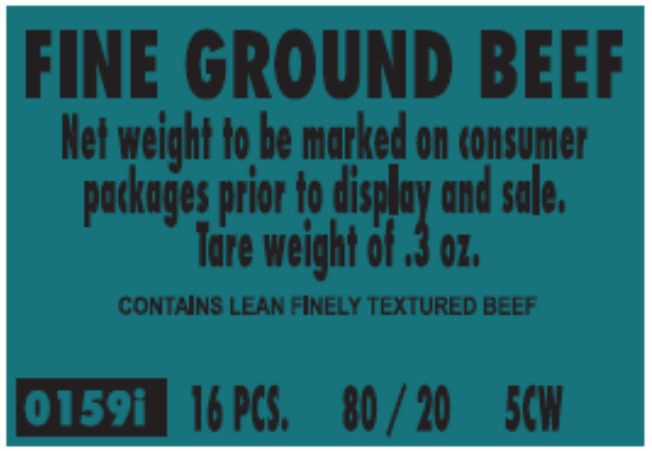
Screen Shot 2015-06-03 at 4.01.16 PMTyson Fresh Meats, a Dakota City, Neb., establishment, is recalling approximately 16,000 pounds of ground beef products that may be contaminated with E. coli O157:H7, the U.S. Department of Agriculture’s Food Safety and Inspection Service (FSIS) announced today.

The ground beef items were produced on May 16, 2015. The following products are subject to recall:

5 lb. chubs of “80% Lean Ground Beef.”

The products subject to recall bear the establishment number “EST. 245C” inside the USDA mark of inspection and a “best before or freeze by” date of June 5, 2015. These products were shipped to one distribution location in New York.

FSIS discovered the problem during a routine sampling program. Neither FSIS nor the company received any reports of illnesses associated with consumption of this product. FSIS and the company are concerned that some product may have been sold and stored in consumers’ refrigerators or freezers.

E. coli O157:H7 is a potentially deadly bacterium that can cause dehydration, bloody diarrhea and abdominal cramps 2–8 days (3–4 days, on average) after exposure the organism. While most people recover within a week, some develop a type of kidney failure called hemolytic uremic syndrome (HUS). This condition can occur among persons of any age but is most common in children under 5-years old and older adults. It is marked by easy bruising, pallor, and decreased urine output. Persons who experience these symptoms should seek emergency medical care immediately.

Pork SalmonellaThe Kenosha County Division of Health reports that as of Wednesday, June 3rd, Salmonella with a matching DNA fingerprint has been found in 35 patients. Divisions of Health official’s say 70 sick people have been identified during an investigation into Supermercado Los Corrales. Salmonella has been confirmed in a total of 35 patients.

Based on interviews that have been conducted and laboratory testing, the source of the Salmonella outbreak has been determined to be pork carnitas sold at Supermercado Los Corrales during Mother’s Day weekend (May 8th through 10th).

Laboratory testing conducted at the Department of Agriculture, Trade and Consumer Protection isolated Salmonella from leftover carnitas sold at Supermercado Los Corrales on Sunday, May 10th. Further testing performed at the Wisconsin State Laboratory of Hygiene confirmed the Salmonella had the same DNA fingerprint as the patient isolates.

As of Wednesday, June 3rd, health officials have given Supermercado Los Corrales officials the green light to reopen the facility’s food preparation area, which had been closed during this investigation.

website_bannerThe Southwest Utah Public Health Department (SWUPHD) has received confirmation that a food handler working at a restaurant in Iron County has tested positive for hepatitis A.

The health department is seeking to alert customers who ate at the Pizza Cart in Cedar City from April 29th through June 1st, as they may have been exposed to hepatitis A.

Anyone previously vaccinated for hepatitis A is protected from infection.

Unvaccinated customers who ate at the restaurant from May 19th through June 1st should be treated with a hepatitis A vaccination (and immune globulin, depending on age). Treatment is available at the SWUPHD or your healthcare provider. People who visited the restaurant outside of these dates do not need preventive treatment. Contact the health department at 435-865-5148 for more information.

Customers who ate at the restaurant from April 29th through June 1st should contact their doctor or healthcare provider if they develop symptoms of hepatitis A; including jaundice (yellowing of the eyes and skin), fatigue, loss of appetite, abdominal pain, nausea, vomiting, diarrhea, and fever.

E-COLI-300x200A 2-year-old boy from Greenwood, SC, has died from complications related to E. coli infection, according to Greenwood County Coroner Sonny Cox. Myles Mayfield reportedly died Sunday night at Greenville Memorial Hospital.

On Monday, the local school district posted a letter indicating that the South Carolina Department of Health and Environmental Control (DHEC) was investigating a potential Shiga toxin-producing (STEC) infection at Springfield Elementary School.

“We take these matters very seriously,” stated Superintendent Darrell Johnson in the letter. “We are very concerned about the health and well-being of every student and adult at Springfield and in our district.”

Johnson said that the elementary school has been sanitized and that district officials would be working with DHEC personnel to monitor the situation.

Bluebell Ice CreamBlue Bell Creameries has signed a voluntary agreement with the Alabama Department of Public Health laying out a series of steps the company plans to take to control Listeria contamination before its products may legally be sold there again. The company has a plant in Sylacauga, AL, which is currently closed.

The Blue Bell agreement with Alabama health authorities states that the company will be:

  • Conducting root cause analyses to identify the potential for Listeria or actual sources;
  • Retaining an independent microbiology expert to help establish and review controls to prevent the future introduction of Listeria;
  • Notifying the Alabama Department of Public Health promptly of any presumptive positive test result for Listeria monocytogenes found in ingredients or finished product samples and providing the state agencies full access to all testing;
  • Ensuring that the company’s Pathogen Monitoring Program for Listeria in the plant environment outlines how the company will respond to presumptive positive tests for Listeria species, and,
  • Instituting a “test and hold” program to assure that products are safe before they are shipped or sold.

GTY_listeria_jef_150409_16x9_992On February 12, 2015 the South Carolina Department of Health & Environmental Control, during routine product sampling at a South Carolina distribution center, found three strains of Listeria monocytogenes that would later be shown to be related to illnesses reported in Kansas and four other rare strains of Listeria monocytogenes in samples of Blue Bell Creameries single serving Chocolate Chip Country Cookie Sandwich and Great Divide Bar ice cream products. These products were manufactured at Blue Bell’s Brenham facility.

The Texas Department of State Health Services subsequently collected product samples from the Blue Bell’s Brenham facility. These samples yielded Listeria monocytogenes from the same products tested by South Carolina and a third, single-serving ice cream product, Scoops, which is also made on the same production line.

On March 13 the CDC announced a link between five Kansas cases of Listeriosis (including three deaths).

On March 13 Blue Bell announced a limited product recall by removing from the market the Scoops ice cream product and other products made on the same Brenham production line.

On March 22 the Kansas Department of Health & Environment reported one positive test for Listeria monocytogenes on a chocolate institutional/food service cup recovered from a hospital in Wichita, Kansas. The cup was produced in the Broken Arrow Oklahoma plant on April 15, 2014. CDC searched the PulseNet database and identified six patients with Listeriosis between 2010 and 2014 who had Listeria monocytogenes isolates with PFGE patterns indistinguishable from those of Listeria monocytogenes isolated from Blue Bell brand 3 oz. institutional/food service chocolate ice cream cups.

On March 23 Blue Bell issued a second recall, recalling three flavors of 3 oz. institutional/food service ice cream cups—chocolate (SKU #453), strawberry (SKU #452) and vanilla (SKU #451).

On April 3 Blue Bell suspended operations at its Broken Arrow plant.

On April 7 the CDC expanded the outbreak case count to include the five Kansas cases of Listeriosis (including three deaths), three cases in Texas, one in Arizona and one in Oklahoma. Illness onset dates range from January 2010 to January 2015.

On April 7 FDA notified Blue Bell that Listeria monocytogenes was present in samples of Blue Bell Banana Pudding Ice Cream pints.  FDA collected the samples as part of a joint inspection with the Oklahoma Department of Agriculture, Food and Forestry of the Broken Arrow plant, which began on March 23, 2015.

On April 7 Blue Bell expanded the recall of ice cream manufactured in its Broken Arrow plant to include additional products that have the potential to be contaminated with Listeria monocytogenes. Blue Bell reported that the recalled products were manufactured on the same production line that produced the ice cream that showed the presence of Listeria monocytogenes and that the products were manufactured between February 12, 2015, and March 27, 2015.

On April 20 Blue Bell recalled all of its products on the market made at all of its facilities.

On May 7 the U.S. Food and Drug Administration released the findings from recent inspections at the Blue Bell production facilities in Brenham, Texas[PDF 4 pages], Broken Arrow, Oklahoma[PDF – 11 pages], and Sylacauga, Alabama[PDF – 5 pages], including the Broken Arrow plant where 17 separate positive tests for Listeria were found on equipment and in other locations from March 2013 through February 2015.

On May 14 Blue Bell signed agreements with health officials in Oklahoma and Texas requiring that the company would inform the states whenever there is a positive test result for Listeria monocytogenes in its products or ingredients.

On May 20 the FDA released inspectional observations of FDA inspections at Blue Bell Creameries facilities in Brenham, Texas in 2009 (PDF – 170KB), Broken Arrow, Okla., in 2012 (PDF – 328KB), Houston, Texas in 2007 (PDF – 196KB), and San Antonio, Texas in 2014 (PDF – 159).

Screen Shot 2015-05-28 at 7.40.38 PMAP reports today that U.S. District Court Judge Louis Sands Thursday refused to throw out criminal convictions in a Salmonella outbreak traced to Former Peanut Corporation of America after the court investigated defense attorneys’ claims of jury misconduct.

Former Peanut Corporation of America owner Stewart Parnell, his food broker brother, Michael Parnell, and the former quality assurance manager of the company’s Georgia plant, Mary Wilkerson, were convicted in September on charges related to a salmonella outbreak in 2008 and 2009 that was blamed for 714 illnesses nationwide.  Two other defendants pleaded guilty before the trial.

Court records unsealed Thursday show that months ago defense attorneys for all three defendants asked the judge to overturn the convictions after one juror came forward saying other jury members had researched the case outside the courtroom and discussed deaths that had been blamed on the outbreak. Deaths were not part of the trial evidence.

In his ruling, U.S. District Court Judge Louis Sands revealed that he had called all jury members back to court and interviewed them in closed-door sessions with attorneys in October and November. Sands said only the juror who initially approached defense attorneys — whom he referred to only as Juror 34 — claimed there was any misconduct that might jeopardize the verdicts.

“Throughout the sealed proceedings held on alleged juror misconduct, the court only uncovered one juror who could be termed biased: Juror 34,” Sands said in his ruling. He also concluded that, during the trial, “the evidence against the Defendants was overwhelming.”

Here is the Court’s Ruling.