South Africa on Monday declared an official end to the world’s worst recorded listeria outbreak after it killed 216 people and sickened more than 1,000 since early 2017.

Health Minister Aaron Motsoaledi said no news cases had been recorded over the past three months.

Health officials announced in March that they had traced the outbreak to an Enterprise Food plant owned by Tiger Brands

At least 216 people died during the outbreak, according to the country’s National Institute for Communicable Diseases.

A total of 1,060 people contracted the disease, which is caused by bacteria from soil, water, vegetation and animal feces which can contaminate fresh food, notably meat.

The United Nations had said South Africa’s listeriosis outbreak was believed to be the largest-ever worldwide.

See press alert:

http://www.nicd.ac.za/index.php/media-statement-by-the-minister-of-health-on-the-listeriosis-outbreak/

See last outbreak update:

http://www.nicd.ac.za/wp-content/uploads/2018/07/Listeriosis-outbreak-situation-report-_26July2018_fordistribution.pdf

On Aug. 16, 2018, FSIS was notified of an investigation of E. coli O26 illnesses. FSIS, the Centers for Disease Control and Prevention, and state public health and agriculture partners determined that raw ground chuck was the probable source of the reported illnesses. The epidemiological investigation identified 18 case-patients, predominantly from Florida, with illness onset dates ranging from July 5 to July 25, 2018. Traceback information indicated that case-patients consumed ground chuck products purchased at various Publix Super Markets that was supplied by a yet-to-be determined source.

2018 Outbreak of E. Coli O26 Linked to Homegrown Restaurants, King County, Washington

  • Organism:
  • Non-O157 STEC
  • Vehicle:
  • Chicken pesto sandwich

On May 25, 2018 Public Health Seattle King County (PHSKC) announced an outbreak of E. Coli O26 associated with Homegrown Restaurants. Four cases were reported. Three were laboratory confirmed with a genetically indistinguishable strain of E. Coli …Read More »

2017 E. coli O157:H7 and E. coli O26 outbreak among Marine recruits, California

  • Organism:
  • coli O157:H7, Non-O157 STEC
  • Vehicle:
  • beef

In October 2017 an outbreak of E. coli O157:H7 and E. coli O26 occurred among recruits at the Marine Corps Recruit Depot in San Diego and the command’s field training facilities at Edson Range, Camp Pendleton, California. Investigators identified 62 …Read More »

2017 Outbreak of E. coli O26 in Multiple Counties, Colorado

  • Organism:
  • Non-O157 STEC
  • Vehicle:
  • Unknown

Six people residing in Adams, Arapahoe, Denver and Douglas counties, Colorado were laboratory confirmed with E. coli O26 between September 1, 2017 and October 15, 2017. One person was hospitalized. No one died. Three out of 6 cases consumed raw spina…Read More »

2015 Outbreak of E. coli O26 Linked to Chipotle Mexican Grill, Washington and Oregon

  • Organism:
  • Non-O157 STEC
  • Vehicle:
  • unknown

The CDC, FDA, USDA FSIS and public health officials in several states investigated two outbreaks of E. coli O26 linked to food sold at Chipotle Mexican Grill restaurants. Public health investigators used PulseNet to identify illnesses that were part …Read More »

2013 Multi-state Outbreak of E. coli O26 Suspected to be Caused by Iceberg Lettuce

  • Organism:
  • Non-O157 STEC
  • Vehicle:
  • Iceberg lettuce

In the spring of 2013 twenty six cases of E. coli O26 were reported by 13 states: Illinois (6), Minnesota (5), Wisconsin (3), Michigan (2), California (2) and Kentucky, Missouri, Mississippi, New Jersey, new York, Ohio, Washington and West Virginia, …Read More »

2011 Outbreak of E. coli O26 at Jimmy John’s Restaurants Linked to Raw Clover Sprouts

  • Organism:
  • Non-O157 STEC
  • Vehicle:
  • Vegetables, Sprouts, Clover Sprouts

On February 15, 2012, the Centers for Disease Control first announced an ongoing investigation into illnesses linked to the consumption of raw clover sprouts consumed at Jimmy John’s Restaurants in several states. The illnesses were caused by E. co…Read More »

Cargill Meat Solutions/BJ’s Wholesale Club Ground Beef 2010

  • Organism:
  • Non-O157 STEC
  • Vehicle:
  • Beef, Ground Beef

A recall of ground beef was issued on August 28 when three people developed illnesses caused by rare strain of E. coli O26 after they had eaten the product. The ground beef produced by Cargill Meat Solutions, of Pennsylvania and was distributed to B…Read More »

Thanks for Outbreak Database Dot Com.

And, there is some history to consider:

Last year (2010), the USDA’s Food Safety and Inspection Service (FSIS) was petitioned to declare six additional disease-causing and potentially life-threatening strains of E. coli, those referred to as non-O157 Shiga-toxin producing E. coli (STECs) or more succinctly, “the big six,”  as adulterants.Specifically, those six strains include E. coli O26, O11, O103, O121, O45 and O145. Those strains of the E. coli bacteria were targeted because of their capacity to produce the same deadly Shiga toxins as E. coli O157.

Today, despite much controversy and debate and after many months of waiting, those six dangerous strains of E. coli will now be banned from the nation’s meat supply and take their place with E. coli O157 to be classified as adulterants. Accordingly, it will be illegal for meat packers to sell meat contaminated with those pathogens.

William Neuman of The New York Times explained that in his report:

Under the rule, any meat that is found to contain the Big Six E. coli, in tests by government or industry, will have to be diverted for use in cooked products. The bacteria is killed by heating the meat to 160 degrees.

Previously, in 1994, FSIS declared E. coli O157 to be an adulterant an outbreak linked to tainted hamburger patties sold at Jack in the Box restaurants sickened more than 700 people in four states and led to 171 hospitalizations and four deaths. In 2010, in support of the petition to label “the big six” as adulterants, Bill Marler wrote: “the people of this nation do not deserve another Jack in the Box-sized catastrophe as a pre-requisite for currently needed agency action.”

According to a news story by MSNBC health reporter JoNel Aleccia:

The move was hailed as a long-sought victory by food safety advocates, who said they wondered why it took so long to require testing for bacteria that last year collectively caused more infections in the U.S. than E. coli 0157.

“I think what consumers can expect is less contaminated product making it into commerce,” said Nancy Donley, president of the agency STOP Foodborne Illness. “It’s fantastic news.”

Bill Marler, seasoned attorney and food safety advocate, also applauded the move by FSIS as a step in the right direction. In an interview with Aleccia, Marler said, “I am more than pleased. It’s a big recognition that there are other pathogens out there that cause human disease.”

As Aleccia noted in her report:

In 2010, for the first time, those rarer strains of E. coli were responsible for more infections in the U.S. than E. coli O157, according to a June study released by the Centers for Disease Control and Prevention. The non-STECs caused 451 confirmed infections last year, including 69 people who were hospitalized and one death. E. coli O157 caused 442 infections, 184 hospitalizations and two deaths.

However, CDC officials say many infections are never detected. The agency estimates that overall, as many as 265,000 STEC infections occur each year in the United States, with the non-0157 strains causing up to 113,000 illnesses and 300 hospitalizations annually.

Today’s decision will hopefully serve to better protect the public from foodborne illness. As Elisabeth Hagen, the head of food safety for the Department of Agriculture, told William Neuman, “This is one of the biggest steps forward in the protection of the beef supply in some time.” She added, “We’re doing this to prevent illness and to save lives.”

I have been thinking today about what growers in Yuma are going to do next season?  With the FDA and CDC fingering the water from an irrigation canal that flowed by a feedlot with some 100,000 cows, you have to wonder what is going to happen next season if nothing changes?  What are grocery stores and restaurants going to do?  What will consumers demand?

This Years Outbreak

In April 2018 local, state and federal public health and agriculture agencies announced an outbreak of E. coli O157:H7 linked to romaine lettuce from the Yuma, Arizona growing area. On June 28, 2018 the Centers for Disease Control and Prevention (CDC) declared the outbreak over.

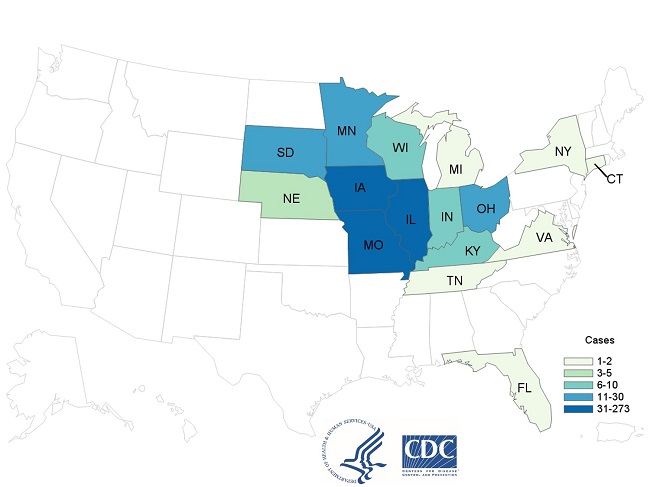
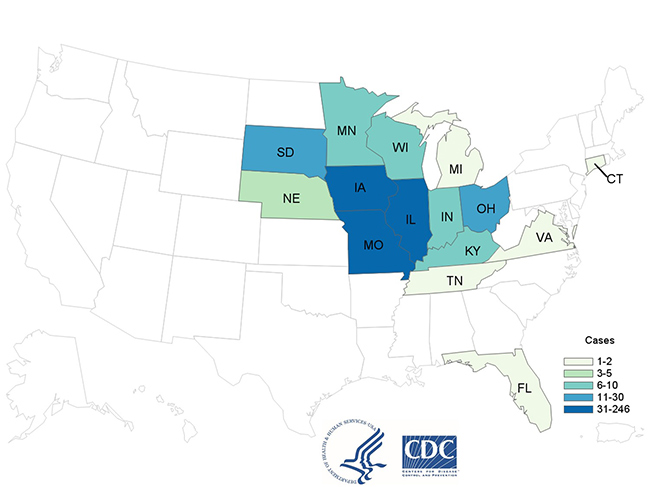
The outbreak strain was identified as PulseNet strain EXHX01.0047/EXHA26.0626. A total of 210 people in the United States infected with the outbreak strain of E. coli O157:H7 were reported from 36 states.

States reporting outbreak associated case patients

Illnesses started on dates ranging from March 13, 2018 to June 6, 2018. Ill people ranged in age from 1 to 88 years, with a median age of 28 years. Sixty-seven percent of ill people were female. Of 201 people with information available, 96 (48%) were hospitalized, including 27 people who developed hemolytic uremic syndrome (HUS), a type of kidney failure. Five deaths were reported from Arkansas, California, Minnesota (2), and New York.

WGS analysis of isolates from 184 ill people identified antibiotic resistance to chloramphenicol, streptomycin, sulfisoxazole, tetracycline, and trimethoprim-sulfamethoxazole. Standard antibiotic resistance testing of eight clinical isolates by CDC’s National Antimicrobial Resistance Monitoring System (NARMS) laboratory confirmed these findings. Isolates from four of those ill people also contained genes for resistance to ampicillin and ceftriaxone.

In Canada there were eight illnesses of E. coli O157:H7 with a similar genetic fingerprint to illnesses reported in the U.S. investigation. The eight Canadian illnesses were reported in five provinces:  British Columbia (1), Alberta (1), Saskatchewan (2), Ontario (3), and Quebec (1). Individuals in Canada became sick between March and April 2018. One patient was hospitalized and no one died. Based on the evidence from the U.S. outbreak investigation and information provided by individuals who became sick, Canadian investigators concluded that the likely source of illness in Canada was contaminated romaine lettuce. All of the individuals reported having eaten romaine lettuce at home or in prepared salads purchased at grocery stores, restaurants and fast food chains before their illnesses occurred. Two Canadians did report traveling to the U.S. before getting sick and eating romaine lettuce while they were there.[1]

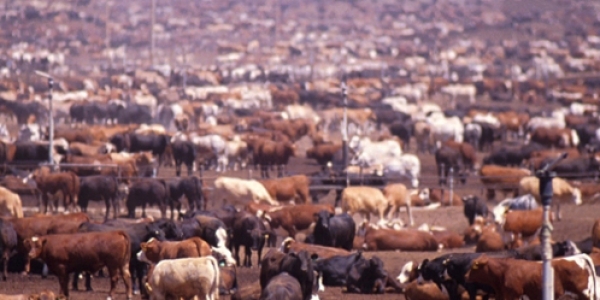
The FDA and state and local regulatory officials traced the romaine lettuce to many farms in the Yuma growing region. The FDA, along with CDC and state partners, started an environmental assessment in the Yuma growing region and collected samples of water, soil, and manure. CDC laboratory testing identified the outbreak strain of E. coli O157:H7 in water samples taken from a canal in the Yuma growing region. WGS showed that the E. coli O157:H7 found in the canal water was closely related genetically to the E. coli O157:H7 isolated in ill people. Investigators believe this finding suggests that contaminated water coming into contact with produce, either through direct irrigation or other means, is a viable explanation for transmission of the bacteria to romaine lettuce. The FDA also notes that the canal is close to a Concentrated Animal Feeding Operation (CAFO), a facility that can hold in excess of 100,000 head of cattle at any one time. FDA traceback information showed a clustering of romaine lettuce farms nearby. The Environmental Assessment report will be made publicly when complete.[2]  

And a Bit(e) of Lettuce History

Date Vehicle Etiology Confirmed
Cases
States/Provinces
July 1995 Leafy Greens E. coli O157:H7 74 1:MT
Sept. 1995 Romaine E. coli O157:H7 20 1:ID
Sept. 1995 Iceberg E. coli O157:H7 30 1:ME
Oct. 1995 Iceberg E. coli O157:H7 11 1:OH
May-June 1996 Mesclun Mix E. coli O157:H7 61 3:CT, IL, NY
May 1998 Salad Mix E. coli O157:H7 2 1:CA
Feb.-Mar. 1999 Iceberg E. coli O157:H7 72 1:NE
Oct. 1999 Salad E. coli O157:H7 92 3:OR, PA, OH
Oct. 2000 Lettuce E. coli O157:H7 6 1:IN
Nov. 2001 Lettuce E. coli O157:H7 20 1:TX
July-Aug. 2002 Romaine E. coli O157:H7 29 2:WA, ID
Nov. 2002 Lettuce E. coli O157:H7 13 1:Il
Dec. 2002 Lettuce E. coli O157:H7 3 1:MN
Oct. 2003-May 2004 Salad Mix E. coli O157:H7 57 1:CA
Apr. 2004 Spinach E. coli O157:H7 16 1:CA
Nov. 2004 Lettuce E. coli O157:H7 6 1:NJ
Sept. 2005 Romaine E. coli O157:H7 32 3:MN, WI, OR
Sept. 2006 Spinach E. coli O157:H7 and other serotypes 205 Multistate and Canada
Nov./Dec. 2006 Lettuce E. coli O157:H7 71 4:NY, NJ, PA, DE
Nov./Dec. 2006 Lettuce E. coli O157:H7 81 3:IA, MN, WI
July 2007 Lettuce E. coli O157:H7 26 1:AL
May 2008 Romaine E. coli O157:H7 9 1:WA
Oct. 2008 Lettuce E. coli O157:H7 59 Multistate and Canada
Nov. 2008 Lettuce E. coli O157:H7 130 Canada
Sept. 2009 Lettuce: Romaine or Iceberg E. coli O157:H7 29 Multistate
Sept. 2009 Lettuce E. coli O157:H7 10 Multistate
April 2010 Romaine E. coli O145 33 5:MI, NY, OH, PA, TN
Oct. 2011 Romaine E. coli O157:H7 58 Multistate
April 2012 Romaine E. coli O157:H7 28

1:CA

Canada

June 2012 Romaine E. coli O157:H7 52 Multistate
Sept. 2012 Romaine E. coli O157:H7 9 1:PA
Oct. 2012 Spinach and Spring Mix Blend E. coli O157:H7 33 Multistate
Apr. 2013 Leafy Greens E. coli O157:H7 14 Multistate
Aug. 2013 Leafy Greens E. coli O157:H7 15 1:PA
Oct. 2013 Ready-To-Eat Salads E. coli O157:H7 33 Multistate
Apr. 2014 Romaine E. coli O126 4 1:MN
Apr. 2015 Leafy Greens E. coli O145 7 3:MD, SC, VA
June 2016 Mesclun Mix E. coli O157:H7 11 3:IL, MI, WI
Nov. 2017 Leafy Greens E. coli O157:H7 67 Multistate and Canada
Mar. 2018 Romaine E. coli O157:H7 219 Multistate and Canada


[1] https://www.canada.ca/en/public-health/services/public-health-notices/2018/public-health-notice-outbreak-e-coli-infections-linked-romaine-lettuce.html

[2] https://www.cdc.gov/ecoli/2018/o157h7-04-18/0; and https://www.fda.gov/Food/RecallsOutbreaksEmergencies/Outbreaks/ucm604254.htm

The big takeaway is that this outbreak was caused by an environmental contaminate – a lot of cows in a feedlot near the water source used to irrigate crops.

So, if nothing changes environmentally and a similar E. coli outbreak happens, what is the responsibility of the growers, processors, shippers and “points of sale” – grocery stores and restaurants?

Perhaps we should take a look at Black’s Law Dictionary on punitive damages:

“Punitive damages are designed to not only discourage the defendant in question from engaging in similar behavior in the future, but are also meant to be a message sent to society at large. Civil courts that punish reckless or negligent behavior with punitive damages indicate to others that such behavior will not be tolerated and that that behavior can lead to monetary consequences.”

If next spring another E. coli outbreak happens in Yuma linked to the same cause and people get sick and/or die – count on punitive damages against against everyone – “Farm to Fork.”

When food makes people sick all around the country, an army of germ detectives jumps into action.

Listen here: https://one.npr.org/?sharedMediaId=641737545:641737661

CDC, public health and regulatory officials in several states, and the U.S. Food and Drug Administration are investigating a multistate outbreak of Cyclospora infections. At this time, there is no evidence to suggest that this cluster of illnesses is related to the  Cyclosporaoutbreak linked to Del Monte fresh produce vegetable trays.

As of August 23, 2018 (12pm EDT), a total of 507 laboratory-confirmed cases of Cyclospora infection were reported in people who consumed salads from McDonald’s restaurants; the cases were reported by 15 states and New York City. Note, the Connecticut, New York City, Tennessee, and Virginia case-patients purchased salads while traveling in Illinois; the Florida case-patient purchased a salad while traveling in Kentucky.

Illnesses started on or after May 20, 2018. The median illness onset date is June 29, 2018 (range: May 20 to July 21). Ill people range in age from 14 to 91 years old, with a median age of 52. Sixty-six percent (66%) are female. At least 24 people have been hospitalized; no deaths have been reported.

Illnesses that started after July 12, 2018 might not have been reported yet due to the time it takes between when a person becomes ill and when the illness is reported. For Cyclospora infections, this can take up to six weeks.

Epidemiologic evidence indicates that salads purchased from McDonald’s restaurants are one likely source of these infections. The investigation is ongoing, and FDA is working to determine the sources of the ingredients that were in common to the salads served at McDonald’s.

On July 26, 2018, FDA completed analysis of an unused package of romaine lettuce and carrot mix distributed to McDonald’s by the Fresh Express processor in Streamwood, IL. The analysis confirmed the presence of Cyclospora in that mix. On July 27, 2018, FDA informed Fresh Express of these results.

Fresh Express reported to FDA that the carrots in the mix went to McDonald’s restaurant locations only, and that the romaine lettuce was the only ingredient in the mix that was distributed to other locations. Romaine lettuce from the same lot that was positive for Cyclospora was distributed in pre-made salads and wraps distributed by Caito Foods LLC of Indianapolis, IN. Fresh Express also reported that no romaine lettuce from the lot that was positive for Cyclospora was packaged for direct retail sale to consumers.

On July 30, 2018, The U.S. Department of Agriculture’s Food Safety and Inspection Service (FSIS) issued a public health alert about pre-made salads and wraps containing romaine lettuce that were distributed by Caito Foods LLC of Indianapolis, IN. The pre-made salads and wraps were shipped to distribution centers nationwide. The pre-made salads and wraps were produced July 15 to July 18, 2018 and have a “Best By,” “Enjoy by,” “Best if Sold By,” or “Sell By” date ranging from July 18 through July 23, 2018. See the product labels here. The pre-made salads and wraps have establishment number “EST. 39985” or “P-39985” inside or next to the USDA mark of inspection. See the full list of products, product labels, UPC code numbers, and other identifying information here.

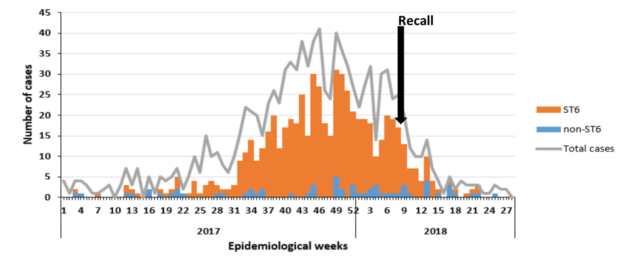
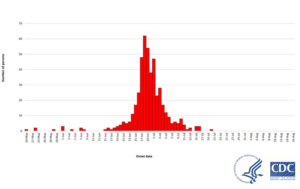
1,060 laboratory-confirmed listeriosis cases have been reported from 01 January 2017 to 17 July 2018. The number of new cases reported each week has decreased since the implicated products were recalled on 04 March 2018 with no new cases of listeriosis reported during the week prior to release of this sitrep (Figure 1). Neonates ≤28 days of age are the most affected age group (42%, 443/1 060), followed by adults aged 15 – 49 years of age (32%, 334/1 060) – Figure 2. Most cases have been reported from Gauteng Province (58%, 614/1 060), followed by Western Cape (13%, 136/1 060) and KwaZulu-Natal (8%, 83/1 060) provinces. Final outcome (i.e. death or discharge) is known for 76% (806/1 060) of total cases to date; 27% (216/806) with known outcome died.

Prior to 2017, an average of 60 to 80 laboratory-confirmed listeriosis cases per year (approximately 1 per week), were reported in South Africa. In July 2017, an increase in laboratory-confirmed cases of listeriosis was reported to National Institute for Communicable Diseases (NICD) which triggered further investigation. On 05 December 2017, the listeriosis outbreak was declared by the Minister of Health, Dr. Aaron Motsoaledi. The source of the outbreak was identified as ready-to-eat processed meat products manufactured at Enterprise Foods’ Polokwane production facility. A recall of affected products was initiated on 04 March 2018.

Full Report

On March 17, 2018, I penned the following: (Other than Tiger Brands admitting that its product tested positive for the exact same strain of Listeria that sickened now over 1,000 and killed 200), not much.  Lawrence, I’m still willing to write the check.

Imagine that the phone call comes or an email pops into your inbox – “Sir, we have been contacted by the health authorities and they say our product (polony) has been linked to illnesses and deaths. What do we do?”

So, what do you do?  Lawrence MacDougall received that call.  Now, what has he done and what will he do?
After being involved in every major (and a few minor) food poisoning outbreaks since the Jack in the Box E. coli Outbreak of 1993, I have seen it all. I have seen good CEOs act badly and make their and their company’s problems worse and I have seen bad CEOs handle the outbreak with such aplomb that they become associated with both food safety and good PR.

So, what do you do?

Of course, it is always best to avoid the outbreak to begin with. When I have spoken to CEOs or their Boards–generally, pre-outbreak and pre-lawsuit–I always pitch them on “why it is a bad idea to poison your customers.” Putting safe food as the primary goal–yes, alas, even before profits–will (absent an error) give you a very, very good chance of never seeing me on the other side of a courtroom.

But, what if despite your best efforts, or what if you simply did not care, and an outbreak happens.

So, what do you do?

First, have a pre-existing relationship with the folks that regulate you. If someone holds your business in the palm of his or her hand, you should at least be on a first name basis. No, I am not suggesting that you can influence your way out of the outbreak but knowing who is telling you that your company has a problem allows you the ability to get and understand the facts. Do regulators and their investigators make mistakes? Perhaps, but not very often and not often enough to waste time arguing that your company did not poison customers.

Second, stop production of the implicated product and initiate a recall of all products at risk immediately. This procedure should have been practiced, and practiced, and practiced before. All possibly implicated suppliers should be alerted and all retailers should be offered assistance. Consumers need to be engaged too.  The goal now is to get poisoned product out of the marketplace and certainly out of the homes of consumers.

Third, launch your own investigation with two approaches, and at the same time. Are the regulators correct? And, what went wrong? Tell everyone to save all documents and electronic data. The goal here is to get things right. If it really is not your product, what has happened is bad, but survivable. If it really was your product, then learning what happened helps make sure it is likely to never happen again. More than anything, be transparent. Tell everyone what you find–good or bad.

According to the South African Minister of Public Health, Minister of Health Dr. Aaron Motsoaledi:

Listeria monocytogenes was isolated from stool collected from one of the ill children, and from both of the polony specimens collected from the crèche. These isolates were sent to the NICD Centre for Enteric Diseases and underwent whole genome sequencing and genomic analysis. The ST6 sequence type was confirmed on all three isolates on Saturday 27th January. Remember that in the last press conference I informed you that from clinical isolates obtained from patients (patient blood), 9 sequence types of Listeria monocytogenes were isolated and 91% were of sequence type 6 (ST6). We had then concluded that time that this outbreak is driven by ST6.

Following the lead from the tests performed on these children from Soweto and the food they had ingested, the EHPs (Environmental Health Practitioners), together with the NICD and DAFF representatives, accompanied by 3 technical advisors from the World Health Organization in Geneva, visited a food-production site in Polokwane and conducted an extensive food product and environmental sampling.

Listeria monocytogenes was isolated from over 30% of the environmental samples collected from this site, which happens to be the Enterprise factory in Polokwane.

To conclude the investigation, whole genome sequencing analysis was performed from this Enterprise factory and the results became available midnight or last night. The outbreak strain, ST6, was confirmed in at least 16 environmental samples collected from this Enterprise facility.

THE CONCLUSION FROM THIS IS THAT THE SOURCE OF THE PRESENT OUTBREAK CAN BE CONFIRMED TO BE THE ENTERPRISE FOOD-PRODUCTION FACILITY IN POLOKWANE

As of the March 14, 2018 update of Listeria monocytogenes Outbreak from the Centre for Enteric Diseases (CED) and Division of Public Health Surveillance and Response, Outbreak Response Unit (ORU), National Institute for Communicable Diseases (NICD)/National Health Laboratory Service (NHLS), a total of 978 cases has been reported since 2017. Since the last situational update (8 March 2018), 11 additional cases have been reported to the NICD. The death total remained at 183. Given the above work by NICD and the fact that the number of ill is failing post-recall, Tiger Brands – Enterprise has nothing to argue about the source of the outbreak.

Fourth, assuming that the outbreak is in fact your fault, publicly admit it. If it is not your fault, then fight it. However, pretending that you are innocent when you are actually at fault will get you nowhere. Asking for forgiveness is not a bad thing when you have something to be forgiven for. Saying you are sorry is not wrong when you are in fact wrong.

Mr. MacDougall, given the facts saying this was both heartless and stupid: “There is no direct link with the deaths to our products that we are aware of at this point. Nothing.”

Fifth, do not blame your customers.  If your food has a pathogen it is not your customers responsibility to handle it like it will likely kill them or a member of their family.  Hoping that the consumer will fix your mistake takes your eye off of avoiding the mistake in the first place.

Sixth, reach out to your customers and consumers who have been harmed. Offering to pay legitimate losses will save money and your company’s reputation in the long run.  The public with give you credit and it will be a reduction from the future award during litigation.

Seventh, teach all what you have learned. Do not hide what you have learned. Make your knowledge freely available so we all limit the risk that something similar will happen again.

Mr. MacDougall, I will match you personally 1,000,000 Rand to donate to an Organization or University in South Africa to lead a review of both food processing standards and governmental regulations and oversight.  I will help find experts from around the world to assist.

Yes, you can do all of the above and still get sued. And, I might be the one to sue you, and in Mr. MacDougall’s case I am. Yet, companies who have followed the above find their passage through an outbreak, recall, and litigation temporary. The companies that struggle for unfounded reasons will seldom exist in the long run, or they will simply pay my clients more money.

Bill Marler is trial lawyer who spends a great deal of time trying to convince companies around the world why it is a bad idea to poison customers. Twitter @bmarler and Blog at www.marlerblog.com

As of August 16, 2018 (3pm EDT), a total of 476 laboratory-confirmed cases of Cyclospora infection were reported in people who consumed salads from McDonald’s restaurants; the cases were reported by 15 states. Note, the Connecticut, Tennessee, and Virginia case-patients purchased salads while traveling in Illinois; the Florida case-patient purchased a salad while traveling in Kentucky.  Illnesses started on or after May 20, 2018. The median illness onset date is June 29, 2018 (range: May 20 to July 20). Ill people range in age from 14 to 91 years old, with a median age of 53. Sixty-six percent (66%) are female. At least 21 people have been hospitalized; no deaths have been reported.

Epidemiologic evidence indicates that salads purchased from McDonald’s restaurants are one likely source of these infections. The investigation is ongoing, and FDA is working to determine the sources of the ingredients that were in common to the salads served at McDonald’s.

On July 26, 2018, FDA completed analysis of an unused package of romaine lettuce and carrot mix distributed to McDonald’s by the Fresh Express processor in Streamwood, IL. The analysis confirmed the presence of Cyclospora in that mix. On July 27, 2018, FDA informed Fresh Express of these results.

Fresh Express reported to FDA that the carrots in the mix went to McDonald’s restaurant locations only, and that the romaine lettuce was the only ingredient in the mix that was distributed to other locations. Romaine lettuce from the same lot that was positive for Cyclospora was distributed in pre-made salads and wraps distributed by Caito Foods LLC of Indianapolis, IN. Fresh Express also reported that no romaine lettuce from the lot that was positive for Cyclospora was packaged for direct retail sale to consumers.

On July 30, 2018, The U.S. Department of Agriculture’s Food Safety and Inspection Service (FSIS) issued a public health alert about pre-made salads and wraps containing romaine lettuce that were distributed by Caito Foods LLC of Indianapolis, IN. The pre-made salads and wraps were shipped to distribution centers nationwide. The pre-made salads and wraps were produced July 15 to July 18, 2018 and have a “Best By,” “Enjoy by,” “Best if Sold By,” or “Sell By” date ranging from July 18 through July 23, 2018. See the product labels here. The pre-made salads and wraps have establishment number “EST. 39985” or “P-39985” inside or next to the USDA mark of inspection. See the full list of products, product labels, UPC code numbers, and other identifying information here.

The CDC, public health and regulatory officials in several states, and the U.S. Food and Drug Administration are investigating a multistate outbreak of Cyclospora infections. As of August 9, 2018 (11am EDT), a total of 436 laboratory-confirmed cases of Cyclospora infection were reported in people who consumed salads from McDonald’s restaurants; the cases were reported by 15 states. Note, the Connecticut, Tennessee, and Virginia case-patients purchased salads while traveling in Illinois; the Florida case-patient purchased a salad while traveling in Kentucky.

Illnesses started on or after May 20, 2018. The median illness onset date is June 29, 2018 (range: May 20 to July 20). Ill people range in age from 14 to 91 years old, with a median age of 53. Sixty-six percent (66%) are female. At least 20 people have been hospitalized; no deaths have been reported.

On July 26, 2018, FDA completed analysis of an unused package of romaine lettuce and carrot mix distributed to McDonald’s by the Fresh Express processor in Streamwood, IL. The analysis confirmed the presence of Cyclospora in that mix. On July 27, 2018, FDA informed Fresh Express of these results.

Fresh Express reported to FDA that the carrots in the mix went to McDonald’s restaurant locations only, and that the romaine lettuce was the only ingredient in the mix that was distributed to other locations. Romaine lettuce from the same lot that was positive for Cyclospora was distributed in pre-made salads and wraps distributed by Caito Foods LLC of Indianapolis, IN. Fresh Express also reported that no romaine lettuce from the lot that was positive for Cyclospora was packaged for direct retail sale to consumers.

On July 30, 2018, The U.S. Department of Agriculture’s Food Safety and Inspection Service (FSIS) issued a public health alert about pre-made salads and wraps containing romaine lettuce that were distributed by Caito Foods LLC of Indianapolis, IN. The pre-made salads and wraps were shipped to distribution centers nationwide. The pre-made salads and wraps were produced July 15 to July 18, 2018 and have a “Best By,” “Enjoy by,” “Best if Sold By,” or “Sell By” date ranging from July 18 through July 23, 2018. See the product labels here. The pre-made salads and wraps have establishment number “EST. 39985” or “P-39985” inside or next to the USDA mark of inspection. See the full list of products, product labels, UPC code numbers, and other identifying information here.

What is Cyclospora?

Cyclospora is a parasite composed of one cell, too small to be seen without a microscope. The organism was previously thought to be a blue-green alga or a large form of cryptosporidium. Cyclospora cayetanensis is the only species of this organism found in humans. The first known human cases of illness caused by cyclospora infection (that is, cyclosporiasis) were first discovered in 1977. An increase in the number of cases being reported began in the mid-1980s, in part due to the availability of better diagnostic techniques. Over 15,000 cases are estimated to occur in the United States each year. The first recorded Cyclospora outbreak in North America occurred in 1990 and was linked to contaminated water. Since then, several cyclosporiasis outbreaks have been reported in the U.S. and Canada, many associated with eating fresh fruits or vegetables. In some developing countries, cyclosporiasis is common among the population and travelers to those areas have become infected as well.

Where does Cyclospora come from?

Cyclospora is spread when people ingest water or food contaminated with infected stool. For example, exposure to contaminated water among farm workers may have been the original source of the parasite in raspberry-associated outbreaks in North America.

Cyclospora needs time (one to several weeks) after being passed in a bowel movement to become infectious. Therefore, it is unlikely that Cyclospora is passed directly from one person to another. It is not known whether or not animals can be infected and pass infection to people.

What are the typical symptoms of Cyclospora infection?

Cyclospora infects the small intestine (bowel) and usually causes watery diarrhea, bloating, increased gas, stomach cramps, and loss of appetite, nausea, low-grade fever, and fatigue. In some cases, vomiting, explosive diarrhea, muscle aches, and substantial weight loss can occur. Some people who are infected with Cyclospora do not have any symptoms. Symptoms generally appear about a week after infection. If not treated, the illness may last from a few days up to six weeks. Symptoms may also recur one or more times. In addition, people who have previously been infected with Cyclospora can become infected again.

What are the serious and long-term risks of Cyclospora infection?

Cyclospora has been associated with a variety of chronic complications such as Guillain-Barre syndrome, reactive arthritis or Reiter’s syndrome, biliary disease, and acalculous cholecystitis. Since Cyclospora infections tend to respond to the appropriate treatment, complications are more likely to occur in individuals who are not treated or not treated promptly. Extraintestinal infection also appears to occur more commonly in individuals with a compromised immune system.

How is Cyclospora infection detected?

Your health care provider may ask you to submit stool specimen for analysis. Because testing for Cyclospora infection can be difficult, you may be asked to submit several stool specimens over several days. Identification of this parasite in stool requires special laboratory tests that are not routinely done. Therefore, your health care provider should specifically request testing for Cyclospora if it is suspected. Your health care provider might have your stool checked for other organisms that can cause similar symptoms.

How is Cyclospora infection treated?

The recommended treatment for infection with cyclospora is a combination of two antibiotics, trimethoprim-sulfamethoxazole, also known as Bactrim, Septra, or Cotrim. People who have diarrhea should rest and drink plenty of fluids. No alternative drugs have been identified yet for people with Cyclospora infection who are unable to take sulfa drugs. Some experimental studies, however, have suggested that ciprofloxacin or nitazoxanide may be effective, although to a lesser degree than trimethoprim-sulfamethoxazole. See your health care provider to discuss alternative treatment options.

How can Cyclospora infection be prevented?

Avoiding water or food that may be contaminated is advisable when traveling. Drinking bottled or boiled water and avoiding fresh ready-to-eat produce should help to reduce the risk of infection in regions with high rates of infection. Improving sanitary conditions in developing regions with poor environmental and economic conditions is likely to help to reduce exposure.

Washing fresh fruits and vegetables at home may help to remove some of the organisms, but Cyclospora may remain on produce even after washing.

Marler Clark, The Food Safety Law Firm, is the nation’s leading law firm representing victims of Cyclospora outbreaks. The Cyclospora Attorneys and Lawyers have represented victims of Cyclospora and other foodborne illness outbreaks and have recovered over $650 million for clients.  Marler Clark is the only law firm in the nation with a practice focused exclusively on foodborne illness litigation.

If you or a family member became ill with a Cyclospora infection after consuming food and you are interested in pursuing a legal claim, contact the Marler Clark Hepatitis A attorneys for a free case evaluation.

Surprised?  I did not think so.  Cattle feces from a CAFO gets into the water supply that is used to irrigate romaine lettuce – what possibly could go wrong?

Of note, the FDA still has not been transparent (except that “romaine [lettuce] from the Yuma growing region as the likely source of contamination”) as to where the romaine was consumed (except for the “Alaskan correctional facility back to a single farm – [Harrison]”).  Nor, has the FDA been transparent what farms grew the romaine, where and who processed it and who shipped it.  The FDA in fact knows most, if not all, of this, but refuses to release the information citing, “trade secrets.”

As the CDC reported in its final assessment of the outbreak on June 28, 2018, there are 210 cases in 36 states: Alabama (3) Alaska (8), Arkansas (1), Arizona (9), California (49), Colorado (3), Connecticut (2), Florida (3), Georgia (5), Idaho (12), Illinois (2), Iowa (1), Kentucky (1), Louisiana (1), Massachusetts (4), Michigan (5), Minnesota (12), Mississippi (1), Missouri (1), Montana (9), Nebraska (1), New Jersey (8), New York (11), North Carolina (1), North Dakota (3), Ohio (7), Oklahoma (1), Oregon (1), Pennsylvania (24), South Dakota (1), Tennessee (3), Texas (4), Utah (1), Virginia (1), Washington (8), and Wisconsin (3). 5 deaths were reported from Arkansas, California, Minnesota (2), and New York.  8 illnesses were reported in Canada linked to the same outbreak.

On August 6, 2018, the FDA posted an update on the status of its ongoing environmental assessment on the likely, what used to be called the “root cause.” The FDA’s update was as follows:

On July 31 and August 1, 2018, the FDA participated in a meeting of the Leafy Greens Food Safety Task Force that was formed in response to the serious outbreak of E. coli O157:H7 associated with romaine lettuce that occurred earlier this year. During the meeting FDA shared preliminary hypotheses from the Environmental Assessment in Yuma to facilitate conversations with state and local officials, industry and local growers on the hypotheses and associated actions necessary to prevent such an outbreak from occurring again.

As FDA has previously stated, samples of canal water have tested positive for the outbreak strain of E. coli. FDA continues to consider that contaminated water coming into contact with produce, either through direct irrigation or other means, is a viable explanation for the pattern of contamination. But other hypotheses were discussed as well. FDA notes that the canal is close to a Concentrated Animal Feeding Operation (CAFO), a facility with a large number of cattle on the premises. The CAFO can hold in excess of 100,000 head of cattle at any one time and the FDA traceback information showed a clustering of romaine lettuce farms nearby.

Our experts continue to work on examining potential links between the CAFO, adjacent water, and geologic and other factors that may explain the contamination and its relationship to the outbreak. Additional sampling activities will be conducted to further explore and narrow down hypotheses in the near future. Our findings will be detailed in a finalized environmental assessment report.

We urge other government and non-government entities, produce growers in the region, and those engaged in managing the canal systems to work with FDA and marshal and deploy resources to achieve our collective food safety goal. Broad engagement from the surrounding community is critical to developing and implementing remediation measures to reduce the potential for another outbreak. We believe local in-depth knowledge and actions are critical in helping resolve this issue in order to protect public health.

The Environmental Assessment report will be made publicly available when complete.

And, then there is this – for those “geographically challenged,” Yuma is near the dark purple in the lower left corner:

To date, we have filed 10 lawsuits and are making great progress tracing back from restaurants and grocery stores that sold the E. coli-tainted romaine in the spring.  And, once the “points of sale” flip the supply chain of the romaine, we are making great progress finding out who brokered the sale and who processed the romaine.  We are making slower process identifying specific farms, but that information is coming. Once we have the names of more farms, we will move back up other chains of distribution identifying additional shippers, brokers, processors and eventually more restaurants and grocery stores.

Having discovery and subpoena power is a great tool for truth.