

No, not that kind of roach.

S&S Food Import corp. is recalling all packages of Uneviscerated Dried Roach (Vobla) with the following package code “Best Before 06.05.2015”. The Uneviscerated Dried Roach (Vobla) was sampled by New York State Department of Agriculture and Markets food Inspectors during a routine sanitary inspection. Subsequent analysis of the product by New York State food Laboratory personnel confirmed that the fish had not been properly eviscerated prior to processing.

This product may be contaminated with Clostridium botulinum spores with can cause botulism, a serious and potentially fatal food-borne illness.

The sale of uneviscerated processed fish is prohibited under New York State Agriculture and Markets regulations because Clostridium botulinum spores are more likely to be concentrated in the viscera than any other portion of the fish. Uneviscerated fish have been linked to outbreaks of botulism poisoning.

Symptoms of botulism poisoning include blurred or double vision, general weakness, and poor reflexes, difficulty swallowing and respiratory paralysis.

No illnesses have been reported to date in connection with this problem.

The Uneviscerated Dried Roach (Vobla) was distributed nationwide, in 5 kg boxes.
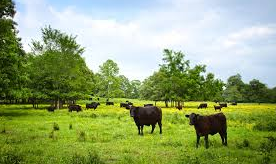
In 2008, I explored in an op-ed the popular belief that switching from grain to grass feeding could be the solution to the problem with E. coli O157:H7 in beef cattle. Flashing forward six years, are we any closer to finding the Holy Grail for on-farm food safety through the diets we feed cattle?

To answer this question, more than another 20 additional pieces of literature were reviewed and are summarized below. The goal in doing this literature review is to help better inform grass-fed producers and consumers about the risks from E. coli O157 whether eating grass-fed or grain-fed beef products.

This piece is not meant to stifle innovation in farming and alternative food markets, or deny positive evidence-based nutritional claims about grass-fed beef. But, it is critically important that food producers, as well as journalists, chefs, and others promoting grass-fed beef, recognize that they have a shared responsibility to provide consumers with accurate information about the safety of beef products. People working in these high profile professions are not expected to understand all of the science, but they should do some honest research and talk to experts in the field before incorrectly downplaying to consumers the risk of E. coli O157:H7 from grass-fed beef.

In a 2010 Slate article (Beware the Myth of Grass-Fed Beef), James E. McWilliams, author of Just Food: Where Locavores Get It Wrong and How We Can Truly Eat Responsibly and a professor of history at Texas State University, wrote on the grass-fed vs grain fed literature. He calls-out a Chef for possibly putting the public at risk by ignoring the science behind food safety and grass-fed beef. Toward the end of the article he says:

“The point in dredging up these studies—ones the media never covered—is not to play gotcha with advocates of grass-fed beef. (As mentioned above, grass-fed beef may be healthier than conventional beef over all, and kinder to the animals.) Instead, it’s a warning that advocacy for a trendy food choice might result in a public health hazard. Such a fear is confirmed by consulting the cooking directions provided by many purveyors of grass-fed beef. The home page for one major producer explains that “cooking ‘real food’ is not the same as cooking concocted food. … Grass-fed meats are best when raw (steak tartar), rare, or medium rare.”

Mr. McWilliam’s virtually portends an outbreak from grass-fed beef.

In 2014, at least 3 case-patients have developed E. coli O157:H7 infections (including one HUS and death) linked to grass-fed beef sold at Whole Foods and produced by Rain Crow Ranch, http://www.raincrowranch.com/ also home of the American Grassfed Association (AGA). Patricia Whisnant, Rain Crow Ranch Co-Founder and President of AGA, was quoted on a food blog:

“When that animal, that ruminant, that cow, is fed on grass and maintains a healthy ruminant as it’s supposed to at a neutral pH, then if that E. Coli goes through and for some reason contaminates the finished beef, and is consume by a human, that pathogen is immediately killed by the acid environment of the human stomach.”

Tragically, misinformation about the safety of grass-fed beef and E. coli O157:H7 could lead to a false sense of security among producers, buyers, and consumers, ultimately resulting in illnesses and even death from eating grass-fed beef.

This is what the science actually tells us at this time about grass-fed vs grain-fed beef safety.

  • Cattle are considered the primary hosts of E. coli O157:H7. The organism has been isolated repeatedly from cattle, and implicated as the root cause of outbreaks from beef and dairy products. For this reason, identification of on-farm management practices that would reduce E. coli O157:H7 in cattle reservoirs is an active area of research. Diet has been investigated extensively as a possible pre-harvest intervention, but the research remains inconclusive.
  • In 1998, a study published by Cornell University excited the science and popular media worlds. The researchers suggested that cattle could be fed hay for a brief period before slaughter to significantly reduce the risk of foodborne E. coli infection.  They based this conclusion on a hypothesis that grain feeding increases acid resistance of E. coli in cattle.  Although they showed increased acid resistance in E. coli from grain-fed cattle, only 3 animals were studied (small sample size), and they used “generic” E. coli stains, not pathogenic E. coli O157:H7.
  • The “acid” theory was subsequently debunked in follow-up studies, but has continued as perhaps the most pervasive food safety myth ever. Dietary influences on E. coli O157:H7 shedding and concentration continue to be important areas of pre-harvest food safety research, but recent findings indicate the situation is far more complex and nuanced than the original simplified theory proposed in the widely cited 1998 Science paper.
  • Areas of current research into the role of diet and E. coli O157:H7 in cattle include examination of the influence of distiller’s and brewer’s grains, and different combinations of forage and grains. Intriguing new research shows that the gut ecosystem may play more of a role than the original acid resistance hypotheses.
  • In summary, the scientific evidence at this time still does not support a broad conclusion that grass feeding significantly and consistently reduces the risk of E. coli O157:H7 or other dangerous foodborne pathogens entering the food chain. Consumers should continue to follow recommendations for safe handling and cooking of beef products regardless of whether they are grass-fed or grain-fed.

References

1.         Bach, S. J., L. J. Selinger, K. Stanford, and T. A. McAllister. 2005. Effect of supplementing corn- or barley-based feedlot diets with canola oil on faecal shedding of Escherichia coli O157:H7 by steers. J Appl Microbiol 98:464-475.

3.         Bailey, G. D., B. A. Vanselow, M. A. Hornitzky, S. I. Hum, G. J. Eamens, P. A. Gill, K. H. Walker, and J. P. Cronin. 2003. A study of the foodborne pathogens: Campylobacter, Listeria and Yersinia, in faeces from slaughter-age cattle and sheep in Australia. Commun Dis Intell Q Rep 27:249-257.

4.         Berg, J., T. McAllister, S. Bach, R. Stilborn, D. Hancock, and J. LeJeune. 2004. Escherichia coli O157:H7 excretion by commercial feedlot cattle fed either barley- or corn-based finishing diets. J Food Prot 67:666-671.

5.         Brownlie, L. E., and F. H. Grau. 1967. Effect of food intake on growth and survival of salmonellas and Escherichia coli in the bovine rumen. J Gen Microbiol 46:125-134.

6.         Buchko, S. J., R. A. Holley, W. O. Olson, V. P. Gannon, and D. M. Veira. 2000. The effect of different grain diets on fecal shedding of Escherichia coli O157:H7 by steers. J Food Prot 63:1467-1474.

7.         Callaway, T. R., M. A. Carr, T. S. Edrington, R. C. Anderson, and D. J. Nisbet. 2009. Diet, Escherichia coli O157:H7, and cattle: a review after 10 years. Curr Issues Mol Biol 11:67-79.

8.         Callaway, T. R., R. O. Elder, J. E. Keen, R. C. Anderson, and D. J. Nisbet. 2003. Forage feeding to reduce preharvest Escherichia coli populations in cattle, a review. J Dairy Sci 86:852-860.

9.         Cray, W. C., Jr., T. A. Casey, B. T. Bosworth, and M. A. Rasmussen. 1998. Effect of dietary stress on fecal shedding of Escherichia coli O157:H7 in calves. Appl Environ Microbiol 64:1975-1979.

10.       Daley, C. A., A. Abbott, P. S. Doyle, G. A. Nader, and S. Larson. 2010. A review of fatty acid profiles and antioxidant content in grass-fed and grain-fed beef. Nutr J 9:10.

11.       de Jonge, R., K. Takumi, W. S. Ritmeester, and F. M. van Leusden. 2003. The adaptive response of Escherichia coli O157 in an environment with changing pH. J Appl Microbiol 94:555-560.

12.       Depenbusch, B. E., T. G. Nagaraja, J. M. Sargeant, J. S. Drouillard, E. R. Loe, and M. E. Corrigan. 2008. Influence of processed grains on fecal pH, starch concentration, and shedding of Escherichia coli O157 in feedlot cattle. J Anim Sci 86:632-639.

13.       Dewell, G. A., J. R. Ransom, R. D. Dewell, K. McCurdy, I. A. Gardner, A. E. Hill, J. N. Sofos, K. E. Belk, G. C. Smith, and M. D. Salman. 2005. Prevalence of and risk factors for Escherichia coli O157 in market-ready beef cattle from 12 U.S. feedlots. Foodborne Pathog Dis 2:70-76.

14.       Diez-Gonzalez, F., T. R. Callaway, M. G. Kizoulis, and J. B. Russell. 1998. Grain feeding and the dissemination of acid-resistant Escherichia coli from cattle. Science 281:1666-1668.

15.       Djordjevic, S. P., V. Ramachandran, K. A. Bettelheim, B. A. Vanselow, P. Holst, G. Bailey, and M. A. Hornitzky. 2004. Serotypes and virulence gene profiles of shiga toxin-producing Escherichia coli strains isolated from feces of pasture-fed and lot-fed sheep. Appl Environ Microbiol 70:3910-3917.

16.       Doyle, M. P., and M. C. Erickson. 2006. Reducing the carriage of foodborne pathogens in livestock and poultry. Poult Sci 85:960-973.

17.       Edrington, T. S., J. C. MacDonald, R. L. Farrow, T. R. Callaway, R. C. Anderson, and D. J. Nisbet. 2010. Influence of wet distiller’s grains on prevalence of Escherichia coli O157:H7 and Salmonella in feedlot cattle and antimicrobial susceptibility of generic Escherichia coli isolates. Foodborne Pathog Dis 7:605-608.

18.       Fegan, N., P. Vanderlinde, G. Higgs, and P. Desmarchelier. 2004. The prevalence and concentration of Escherichia coli O157 in faeces of cattle from different production systems at slaughter. J Appl Microbiol 97:362-370.

19.       Fox, J. T., B. E. Depenbusch, J. S. Drouillard, and T. G. Nagaraja. 2007. Dry-rolled or steam-flaked grain-based diets and fecal shedding of Escherichia coli O157 in feedlot cattle. J Anim Sci 85:1207-1212.

20.       Franz, E., A. D. van Diepeningen, O. J. de Vos, and A. H. van Bruggen. 2005. Effects of cattle feeding regimen and soil management type on the fate of Escherichia coli O157:H7 and salmonella enterica serovar typhimurium in manure, manure-amended soil, and lettuce. Appl Environ Microbiol 71:6165-6174.

21.       Fu, C. J., J. H. Porter, E. E. Felton, J. W. Lehmkuhler, and M. S. Kerley. 2003. Pre-harvest factors influencing the acid resistance of Escherichia coli and E. coli O157:H7. J Anim Sci 81:1080-1087.

22.       Garber, L. P., S. J. Wells, D. D. Hancock, M. P. Doyle, J. Tuttle, J. A. Shere, and T. Zhao. 1995. Risk factors for fecal shedding of Escherichia coli O157:H7 in dairy calves. J Am Vet Med Assoc 207:46-49.

23.       Gilbert, R. A., S. E. Denman, J. Padmanabha, N. Fegan, D. Al Ajmi, and C. S. McSweeney. 2008. Effect of diet on the concentration of complex Shiga toxin-producing Escherichia coli and EHEC virulence genes in bovine faeces, hide and carcass. Int J Food Microbiol 121:208-216.

24.       Gilbert, R. A., N. Tomkins, J. Padmanabha, J. M. Gough, D. O. Krause, and C. S. McSweeney. 2005. Effect of finishing diets on Escherichia coli populations and prevalence of enterohaemorrhagic E. coli virulence genes in cattle faeces. J Appl Microbiol 99:885-894.

25.       Grauke, L. J., S. A. Wynia, H. Q. Sheng, J. W. Yoon, C. J. Williams, C. W. Hunt, and C. J. Hovde. 2003. Acid resistance of Escherichia coli O157:H7 from the gastrointestinal tract of cattle fed hay or grain. Vet Microbiol 95:211-225.

26.       Hancock, D. D., T. E. Besser, C. Gill, and C. H. Bohach. 1999. Cattle, hay and E. coli. Science 284:51-53.

27.       Harmon, B. G., C. A. Brown, S. Tkalcic, P. O. Mueller, A. Parks, A. V. Jain, T. Zhao, and M. P. Doyle. 1999. Fecal shedding and rumen growth of Escherichia coli O157:H7 in fasted calves. J Food Prot 62:574-579.

28.       Herriott, D. E., D. D. Hancock, E. D. Ebel, L. V. Carpenter, D. H. Rice, and T. E. Besser. 1998. Association of herd management factors with colonization of dairy cattle by Shiga toxin-positive Escherichia coli O157. J Food Prot 61:802-807.

29.       Hovde, C. J., P. R. Austin, K. A. Cloud, C. J. Williams, and C. W. Hunt. 1999. Effect of cattle diet on Escherichia coli O157:H7 acid resistance. Appl Environ Microbiol 65:3233-3235.

30.       Hussein, H. S. 2007. Prevalence and pathogenicity of Shiga toxin-producing Escherichia coli in beef cattle and their products. J Anim Sci 85:E63-72.

31.       Jacob, M. E., T. R. Callaway, and T. G. Nagaraja. 2009. Dietary interactions and interventions affecting Escherichia coli O157 colonization and shedding in cattle. Foodborne Pathog Dis 6:785-792.

32.       Jacob, M. E., J. T. Fox, J. S. Drouillard, D. G. Renter, and T. G. Nagaraja. 2008. Effects of dried distillers’ grain on fecal prevalence and growth of Escherichia coli O157 in batch culture fermentations from cattle. Appl Environ Microbiol 74:38-43.

33.       Jacob, M. E., J. T. Fox, J. S. Drouillard, D. G. Renter, and T. G. Nagaraja. 2009. Evaluation of feeding dried distiller’s grains with solubles and dry-rolled corn on the fecal prevalence of Escherichia coli O157:H7 and Salmonella spp. in cattle. Foodborne Pathog Dis 6:145-153.

34.       Jacob, M. E., J. T. Fox, S. K. Narayanan, J. S. Drouillard, D. G. Renter, and T. G. Nagaraja. 2008. Effects of feeding wet corn distillers grains with solubles with or without monensin and tylosin on the prevalence and antimicrobial susceptibilities of fecal foodborne pathogenic and commensal bacteria in feedlot cattle. J Anim Sci 86:1182-1190.

35.       Jacob, M. E., Z. D. Paddock, D. G. Renter, K. F. Lechtenberg, and T. G. Nagaraja. 2010. Inclusion of dried or wet distillers’ grains at different levels in diets of feedlot cattle affects fecal shedding of Escherichia coli O157:H7. Appl Environ Microbiol 76:7238-7242.

36.       Jacob, M. E., G. L. Parsons, M. K. Shelor, J. T. Fox, J. S. Drouillard, D. U. Thomson, D. G. Renter, and T. G. Nagaraja. 2008. Feeding supplemental dried distiller’s grains increases faecal shedding of Escherichia coli O157 in experimentally inoculated calves. Zoonoses Public Health 55:125-132.

37.       Jay, M. T., M. Cooley, D. Carychao, G. W. Wiscomb, R. A. Sweitzer, L. Crawford-Miksza, J. A. Farrar, D. K. Lau, J. O’Connell, A. Millington, R. V. Asmundson, E. R. Atwill, and R. E. Mandrell. 2007. Escherichia coli O157:H7 in feral swine near spinach fields and cattle, central California coast. Emerg Infect Dis 13:1908-1911.

38.       Krause, D. O., W. J. Smith, L. L. Conlan, J. M. Gough, M. A. Williamson, and C. S. McSweeney. 2003. Diet influences the ecology of lactic acid bacteria and Escherichia coli along the digestive tract of cattle: neural networks and 16S rDNA. Microbiology 149:57-65.

39.       Krueger, N. A., R. C. Anderson, W. K. Krueger, W. J. Horne, I. V. Wesley, T. R. Callaway, T. S. Edrington, G. E. Carstens, R. B. Harvey, and D. J. Nisbet. 2008. Prevalence and concentration of Campylobacter in rumen contents and feces in pasture and feedlot-fed cattle. Foodborne Pathog Dis 5:571-577.

40.       Kudva, I. T., P. G. Hatfield, and C. J. Hovde. 1995. Effect of diet on the shedding of Escherichia coli O157:H7 in a sheep model. Appl Environ Microbiol 61:1363-1370.

41.       Kuhnert, P., C. R. Dubosson, M. Roesch, E. Homfeld, M. G. Doherr, and J. W. Blum. 2005. Prevalence and risk-factor analysis of Shiga toxigenic Escherichia coli in faecal samples of organically and conventionally farmed dairy cattle. Vet Microbiol 109:37-45.

42.       Leheska, J. M., L. D. Thompson, J. C. Howe, E. Hentges, J. Boyce, J. C. Brooks, B. Shriver, L. Hoover, and M. F. Miller. 2008. Effects of conventional and grass-feeding systems on the nutrient composition of beef. J Anim Sci 86:3575-3585.

43.       Looper, M. L., T. S. Edrington, R. Flores, J. M. Burke, T. R. Callaway, G. E. Aiken, F. N. Schrick, and C. F. Rosenkrans, Jr. 2007. Influence of dietary endophyte (Neotyphodium coenophialum)-infected tall fescue (Festuca arundinacea) seed on fecal shedding of antibiotic resistance-selected Escherichia coli O157:H7 in ewes. J Anim Sci 85:1102-1108.

44.       Looper, M. L., T. S. Edrington, R. Flores, C. F. Rosenkrans, Jr., M. E. Nihsen, and G. E. Aiken. 2006. Prevalence of Escherichia coli O157:H7 and Salmonella in beef steers consuming different forage diets. Lett Appl Microbiol 42:583-588.

45.       Looper, M. L., T. S. Edrington, and C. F. Rosenkrans, Jr. 2009. Influence of body condition and forage type on prevalence of Escherichia coli O157:H7 and Salmonella in grazing beef cows. Lett Appl Microbiol 49:361-365.

46.       Lowe, R. M., K. Munns, L. B. Selinger, L. Kremenik, D. Baines, T. A. McAllister, and R. Sharma. 2010. Factors influencing the persistence of Escherichia coli O157:H7 lineages in feces from cattle fed grain versus grass hay diets. Can J Microbiol 56:667-675.

47.       Oliver, S. P., D. A. Patel, T. R. Callaway, and M. E. Torrence. 2009. ASAS Centennial Paper: Developments and future outlook for preharvest food safety. J Anim Sci 87:419-437.

48.       Paddock, Z. D., D. G. Renter, X. Shi, C. R. Krehbiel, B. DeBey, and T. G. Nagaraja. 2013. Effects of feeding dried distillers grains with supplemental starch on fecal shedding of Escherichia coli O157:H7 in experimentally inoculated steers. J Anim Sci 91:1362-1370.

49.       Peterson, R. E., T. J. Klopfenstein, R. A. Moxley, G. E. Erickson, S. Hinkley, G. Bretschneider, E. M. Berberov, D. Rogan, and D. R. Smith. 2007. Effect of a vaccine product containing type III secreted proteins on the probability of Escherichia coli O157:H7 fecal shedding and mucosal colonization in feedlot cattle. J Food Prot 70:2568-2577.

50.       Reinstein, S., J. T. Fox, X. Shi, M. J. Alam, D. G. Renter, and T. G. Nagaraja. 2009. Prevalence of Escherichia coli O157:H7 in organically and naturally raised beef cattle. Appl Environ Microbiol 75:5421-5423.

51.       Renter, D. G., J. M. Sargeant, and L. L. Hungerford. 2004. Distribution of Escherichia coli O157:H7 within and among cattle operations in pasture-based agricultural areas. Am J Vet Res 65:1367-1376.

52.       Renter, D. G., J. M. Sargeant, R. D. Oberst, and M. Samadpour. 2003. Diversity, frequency, and persistence of Escherichia coli O157 strains from range cattle environments. Appl Environ Microbiol 69:542-547.

53.       Russell, J. B., F. Diez-Gonzalez, and G. N. Jarvis. 2000. Invited review: effects of diet shifts on Escherichia coli in cattle. J Dairy Sci 83:863-873.

54.       Russell, J. B., F. Diez-Gonzalez, and G. N. Jarvis. 2000. Potential effect of cattle diets on the transmission of pathogenic Escherichia coli to humans. Microbes Infect 2:45-53.

55.       Sargeant, J. M., J. R. Gillespie, R. D. Oberst, R. K. Phebus, D. R. Hyatt, L. K. Bohra, and J. C. Galland. 2000. Results of a longitudinal study of the prevalence of Escherichia coli O157:H7 on cow-calf farms. Am J Vet Res 61:1375-1379.

56.       Synge, B. A., M. E. Chase-Topping, G. F. Hopkins, I. J. McKendrick, F. Thomson-Carter, D. Gray, S. M. Rusbridge, F. I. Munro, G. Foster, and G. J. Gunn. 2003. Factors influencing the shedding of verocytotoxin-producing Escherichia coli O157 by beef suckler cows. Epidemiol Infect 130:301-312.

57.       Tkalcic, S., C. A. Brown, B. G. Harmon, A. V. Jain, E. P. Mueller, A. Parks, K. L. Jacobsen, S. A. Martin, T. Zhao, and M. P. Doyle. 2000. Effects of diet on rumen proliferation and fecal shedding of Escherichia coil O157:H7 in calves. J Food Prot 63:1630-1636.

58.       Van Baale, M. J., J. M. Sargeant, D. P. Gnad, B. M. DeBey, K. F. Lechtenberg, and T. G. Nagaraja. 2004. Effect of forage or grain diets with or without monensin on ruminal persistence and fecal Escherichia coli O157:H7 in cattle. Appl Environ Microbiol 70:5336-5342.

59.       Van Elswyk, M. E., and S. H. McNeill. 2014. Impact of grass/forage feeding versus grain finishing on beef nutrients and sensory quality: the U.S. experience. Meat Sci 96:535-540.

60.       Wells, J. E., S. D. Shackelford, E. D. Berry, N. Kalchayanand, J. M. Bosilevac, and T. L. Wheeler. 2011. Impact of reducing the level of wet distillers grains fed to cattle prior to harvest on prevalence and levels of Escherichia coli O157:H7 in feces and on hides. J Food Prot 74:1611-1617.

61.       Wells, J. E., S. D. Shackelford, E. D. Berry, N. Kalchayanand, M. N. Guerini, V. H. Varel, T. M. Arthur, J. M. Bosilevac, H. C. Freetly, T. L. Wheeler, C. L. Ferrell, and M. Koohmaraie. 2009. Prevalence and level of Escherichia coli O157:H7 in feces and on hides of feedlot steers fed diets with or without wet distillers grains with solubles. J Food Prot 72:1624-1633.

62.       Williams, K. J., M. P. Ward, O. P. Dhungyel, and E. J. Hall. 2014. Risk factors for Escherichia coli O157 shedding and super-shedding by dairy heifers at pasture. Epidemiol Infect:1-12.

63.       Yang, H. E., W. Z. Yang, J. J. McKinnon, T. W. Alexander, Y. L. Li, and T. A. McAllister. 2010. Survival of Escherichia coli O157:H7 in ruminal or fecal contents incubated with corn or wheat dried distillers’ grains with solubles. Can J Microbiol 56:890-895.

64.       Zhang, J., S. K. Wall, L. Xu, and P. D. Ebner. 2010. Contamination rates and antimicrobial resistance in bacteria isolated from “grass-fed” labeled beef products. Foodborne Pathog Dis 7:1331-1336.

65.       Zhao, L., P. J. Tyler, J. Starnes, C. L. Bratcher, D. Rankins, T. A. McCaskey, and L. Wang. 2013. Correlation analysis of Shiga toxin-producing Escherichia coli shedding and faecal bacterial composition in beef cattle. J Appl Microbiol 115:591-603.

I remember the names of every kid that died from shiga-toxin producing E. coli that I have had the honor to represent in the last 21 years.  I still think about what their ages were then and what their ages would be now and how that related to the ages of my three daughters then and their ages now.

I remember the parents too – making impossible decisions in an ICU, sharing uncontrollable grief across a kitchen table, and trying to make sense of how doing everything right for their child might have also lead to death.  And, I think about them wanting answers.

Serena Profitt, age four, died a week ago.  It is time to get answers to how she was infected, why she died, and what we can do to prevent it from happening again.

We owe it to all four year olds.

First questions – directed at Washington State and Oregon State Departments of Health – What is the connection between Aubrie Utter, age 3, Brad Sutton, age 5 and Serena? My, answers, not theirs in italics.

How long until you get presumptive positive stool culture for E. coli?

1 day (ideally clinical lab is running both culture and Shiga toxin immunoassay); add extra 1-2 days if pure colonies need to be isolated before shipment to state Public Health lab.

Positive? Or Negative?

If culture positive, shipped to Public Health lab for confirmation (shipping time plus biochemical/PCR: 1-2 days); if culture negative, culture-independent immunoassay positive then enrichment broth shipped to state Public Health lab for culture with IMS and confirmation (shipping plus enrichment/IMS/biochem/PCR: 2-3 days).

How long for PFGE?

At least 2-3 days including analysis.

How long for MLVA?

1 day is possible for both data and analysis

How long for Genetic Sequencing?

1 day possible for data, but multiple days needed for analysis

It has now been weeks.  These parents should have answers already.

Washington Post’s Kimberly Kindy reported last week that a New York-based consumer advocacy group posted more than 300 pages of USDA reports on their Web site Thursday that show widespread health and safety violations at Foster Farms plants across the nation, including mold growth, fecal contamination and cockroaches.

The Natural Resources Defense Council reviewed the Department of Agriculture reports and identified more than 200 violations at the two Foster Farms plants in California that the National Centers for Disease Control linked to an antibiotic-resistant outbreak of salmonella that has sickened at least 634 people, the records show.

Jonathan Kaplan, director of NRDC’s food and agriculture program, said the group was most surprised that the rate of violations for fecal contamination — a common source of salmonella — remained at almost the same levels at the two California plants, even after USDA had stepped up enforcement and oversight.

It has been a very hard week in the Pacific Northwest as we have heard about two youngsters killed by E. coli O157:H7 and at least two others severely sickened with potentially life-threatening hemolytic uremic syndrome (HUS).  Families and health investigators are trying to find any possible connection and explanation for what has happened.

Aubrie Utter, age 3 – Hospitalized for a week, HUS, 5 blood transfusions

Brad Sutton, age 5 – Still hospitalized, HUS, Dialysis

Serena Profitt, age 4 – HUS, Death

Brooklyn Hoksbergen, age 3 – HUS, Death

And, then there are the five young Kentucky children, or more, being treated at Kosair Children’s Hospital in Louisville for HUS, and the state health department has launched an investigation into how they got sick. Three of the sick children are from Hardin County, one is from Oldham County and one is from Boone County.

In 2009 the Peanut Corporation of America peanut plant was found to be the source of a Salmonella outbreak blamed for the deaths of nine Americans and the sicknesses of 714 more – many of them my clients.

Former Peanut Corporation of America owner Stewart Parnell and his brother, food broker Michael Parnell, and the plant’s former quality control manager, Mary Wilkerson have been on trial since August 1.  They are accused of shipping tainted peanuts and peanut butter to customers and covering up positive lab tests for Salmonella.  Two other employees were charged and pled guilty.  They both testified against the Parnells and Wilkerson.

The felony indictment charged the Parnells with conspiracy, mail fraud, wire fraud and the introduction of adulterated and misbranded food into interstate commerce with the intent to defraud or mislead. Wilkerson was charged with obstruction of justice. The three defendants were charged with a total of 71 counts carrying prison sentences of up to 20 years apiece.

This is a trial that is being watched by food producers the world over.  It is one thing to sicken and kill your customers and face civil liability and bankruptcy; it is quite another thing to face jail time.

It is now in the hands of the jury.

As someone who has tried cases, there is an indescribable feeling of both relief and dread when the judge gives the jury their charge (jury instructions), the closing arguments are all made and the exhibits go back into the jury room.

And, now you wait, and guess the outcome and second-guess yourself.

Honestly, I have no idea what this jury in Judge Sands Court will do.  That would be true if I had been one of the lawyers in the courtroom in Albany or thousands of miles away here in Seattle.  Once those jurors head back to that room, what little control the lawyers ever had is lost.  The jurors are now on their own – equipped with a mixture of intelligence, prejudice and common sense, and, in my experience, a commitment to try and do the right thing.

Will I personally be disappointed if the jury does not convict?  Perhaps I will be.  I know many of the victims, watched Stewart Parnell take the Fifth before congress and have advocated for his prosecution since 2009.

That being said, if the jurors find the defendants not guilty, I would still be thankful that the U.S. Attorneys, the FDA, OCI, CDC, and state and local health departments worked together to bring the charges that have sent a clear message – “It is a bad idea to poison your customers.”

This trial, along with the misdemeanor charges against the Jensen brothers in the 2011 Listeria Cantaloupe outbreak and against the elder and younger DeCosters in the 2010 Salmonella Egg outbreak, have been part of a more aggressive move on the part of prosecutors in recent years.  Yes, it has created fear on the production line and in the boardroom, and, regardless what the jurors in Albany do, this extra attention to food safety is a very, very good thing.

The Massachusetts Department of Public Health (DPH) and the Massachusetts Department of Fish and Game, Division of Marine Fisheries (DMF) today announced the precautionary closure of oyster beds in Katama Bay in the community of Edgartown effective September 3, 2014. This precautionary closure is due to the presence of environmental conditions conducive to the growth of Vibrio parahaemolyticus (Vibrio) in oysters harvested from the area based on information relative to closures in 2013.

Harvesting and possession of oysters from these areas for commercial purposes is prohibited for seven days. This is the first time a specific harvest area in Massachusetts has been closed due to Vibrio this year. The decision to issue a precautionary closure was made jointly between DPH and DMF officials in response to warming waters in Katama Bay, anticipated high air temperatures forecast for this week, and identification of a fourth confirmed case of Vibrio tied to the area. Current water temperatures in Katama Bay are consistent with water temperatures and environmental conditions that were associated with Vibrio illnesses in 2013.

The Vibrio season in Massachusetts runs from May to October. Health officials are reminding all persons who are at high risk, especially those who are elderly or immune compromised, to avoid eating any raw shellfish.

This year, DPH has linked four cases of Vibrio illness to oysters consumed from the Katama Bay area.

Vibrio is a bacteria that occurs naturally in coastal waters in the United States and Canada. It has caused illnesses in the Gulf Coast and West Coast of the United States for a number of years. It is not related to pollution of Massachusetts shellfish.

When ingested, Vibrio causes watery diarrhea, often with abdominal cramping, nausea, vomiting, fever and chills. Usually these symptoms occur within 24 hours of ingestion and last three days. Severe illness, increased risk of infection, and serious complications, including death, may occur in the very young, elderly, pregnant women, and immune impaired individuals such as people with underlying medical issues, such as liver disease or alcoholism. About 10 percent of cases will develop a blood infection that may require hospitalization. Vibrio can also cause an infection of the skin when an open wound is exposed to warm seawater.

Trim Recall:  V&T Meat Wholesale, Chestermere, Alberta is recalling certain raw pork products from the marketplace due to possible E. coli O157:H7 contamination. Consumers, food service establishments, retailers, distributors and manufacturers in Alberta, should not consume, serve, use, or sell certain raw pork products sold by the retailers, listed below, because the raw pork products may be contaminated with E. coli O157:H7.  All raw pork products sold from these locations, during the identified time periods, are affected by this recall.

  • Trimming Fresh Meats Ltd. – July 15 to July 22, 2014.
  • Hiep Hoa Asian Food – July 15 to August 17, 2014

Spring Roll Recall:  Vinh Fat Food Products is voluntarily recalling frozen pork spring rolls, pork buns and pork wontons as part of larger recall of Alberta pork products.  The following frozen pork products have been sold exclusively from Vinh Fat Food Products, which is located at 10630 97th Street in Edmonton.

▪   Pork spring rolls sold between July 10 and Sept. 5 inclusively.

▪   Pork buns sold between July 10 and Sept. 5 inclusively.

▪   Pork wontons sold between July 10 and Sept. 5 inclusively.

This recall was triggered by the E. coli outbreak investigation led by Alberta Health Services and supported by the Canadian Food Inspection Agency (CFIA) that has sickened at least 153.

Nancy Luna reports with the Orange county Register that an upscale restaurant at Fashion Island that bills itself as a healthy living establishment is at the center of a suspected foodborne illness outbreak involving at least six victims, county officials said Thursday.

The sickened diners tested positive for Shigella, an intestinal bacteria that triggers severe diarrhea. The “common factor” for each victim was they ate a meal at True Food Kitchen in Newport Beach on Aug. 21, 23, 24 and 25, county healthy officials said.

The county shut the restaurant Aug. 28 to investigate the outbreak. None of the victims ate the same dish, leading investigators to believe that the bacteria was spread “person to person,” said Denise Fennessy, director of Environmental Health at the county’s Health Care Agency.

Just got this email:

I ate at Red O on August 24 and got deathly sick.  I was notified by the nurse at Orange County CDC that I had Shigella, documented from HOAG Hospital lab test results.  I have been on Cipro for a week.   I just read that True Food in Newport beach (1/2 mile from Red O) was shut down with an outbreak of Shigella.

And, here are some inspection reports:

http://decadeonline.com/insp.phtml?agency=och&violsortfield=TB_CORE_INSPECTION_VIOL.ENTERED_BY&violsortorder=DESC&forcefac=0&record_id=PR0004233

http://foodinspections.ocgov.com/foodinspections/inspectionArchives/DA9935939.pdf

http://decadeonline.com/insp.phtml?agency=och&violsortfield=TB_CORE_INSPECTION_VIOL.ENTERED_BY&violsortorder=DESC&forcefac=0&record_id=PR0087523