
At least 80 people fell ill this summer with Campylobacter infections linked to the consumption of unpasteurized milk from a farm in Utah, according to Utah health officials speaking with state lawmakers on Wednesday.

Health officials said that the outbreak also contributed to the death of one immunocompromised man. Twenty percent of cases were hospitalized.

The farm linked to the outbreak, Ropelato Dairy in west Ogden, had its license reinstated on Oct. 3 after testing of samples showed no more sign of contamination, according to the Salt Lake Tribune.

The state of Utah requires raw milk products to bear a label warning consumers of the potential illness risk, but Ropelato’s milk reportedly did not carry that label.

The vast majority of patients were Utah residents, though at least one was from Idaho and one from California. Ages of patients ranged from 2 to 74 years old.

Most illnesses developed between May 9 and July 21. State health officials suspended the dairy’s license to sell milk on Aug. 4.

AMS Health Sciences is recalling 2014 bottles of Saba Shark Cartilage Complex due to possible contamination of Salmonella.

A single lot of Saba Shark Cartilage Complex is the subject of this public announcement and recall as a result of a sample from one bottle that tested positive for Salmonella. This product is packaged in black screw-top bottles with the brand name “saba” in red letters, the product name “shark cartilage complex” in white letters, and a net quantity statement of “500 mg 60 capsules” in small white letters. Product from the affected lot can be identified by the Lot Number 416349 and an expiration date of 08/16, both of which are printed in black letters inside a white rectangle that is adjacent to the products “Suggested Use” instructions.

Product from this lot was sold to consumers through the internet site www.sabaforlife.com during the period of February through August 2014. AMS is initiating this recall out of caution for consumer health, even though numerous samples from the same Lot No. have tested negative for Salmonella.

FDA is investigating illnesses associated with the product.

Oasis Brands, Inc. of Miami, FL is recalling select lots of various Lacteos Santa Martha products with Best by dates of 07/01/14 through 12/31/14, because the products has the potential to be contaminated with Listeria monocytogenes, an organism which can cause serious and sometimes fatal infections in young children, frail or elderly people, and others with weakened immune systems. Although healthy individuals may suffer only short-term symptoms such as high fever, severe headache, stiffness, nausea, abdominal pain and diarrhea, Listeria infection can cause miscarriages and stillbirths among pregnant women.

The recalled products were distributed in Florida, Georgia, Tennessee and North Carolina from April 1st thought October 14, 2014 to distributors and retail stores. The products can be identified by the batch ID code (best used by date) sticker on the label of the plastic bag of 07/01/14 through 12/31/14.

  • Queso Seco Centroamericano (Dry White Cheese) 1Lb UPC 876593 001874
  • Queso Seco Olanchano (Dry Cheese) 1Lb UPC 635349 000840
  • Queso Seco Hondureno (Dry Cheese) 12oz UPC 876593 001690
  • Quesito Casero (Fresh Curd) 12oz UPC 635349 000406
  • My Queso (Latin Flavor Cheese) 1Lb UPC 635349 000406
  • Queso Cuzcatlan (Salvadorean Flavor Cheese) 1Lb UPC 635349 000406
  • Queso para Freir (Cheese for Frying) 12oz UPC 635349 000758
  • Queso Fresco (Fresh Cheese) 12oz UPC 635349 000703
  • Cuajada en Hoja Queso Casero Hecho a Mano (Fresh Curd) 12oz UPC 635349 000895
  • Crema Centroamericana (Soft Blend Dairy Spread) 1Lb UPC 876593 001898
  • Mantequilla Hondurena (Honduran Style Cream) 1Lb UPC 635349 000772
  • Crema Nica (Grade A Cultured Cream) 1Lb UPC 635349 000468
  • HonduCrema Olanchana (Olanchana Style Soft Blend Dairy Spread) 1Lb UPC 635349 000598
  • Crema Guatemalteca (Guatemalan Style Cream) 1Lb UPC 635349 000819
  • Crema GuateLinda (Guatemalan Style Cream) 1Lb UPC 635349 000390
  • Crema Cuzcatlan (Salvadorean Style Cream) 1Lb UPC 635349 000444

The recall is the result of routine sampling by The Virginia Department of Agriculture and Consumer Services Food Inspectors and subsequent FDA environmental samples that revealed the presence of Listeria monocytogenes. The company ceased production and distribution of the product as FDA and the company continue their investigation as to what caused the problem.

More than 400 people attending a church conference could have been exposed to Salmonella.

According to press reports, the Salmonella outbreak in Gaston County, North Carolina has already made 55 people sick, but health officials say that number could grow.

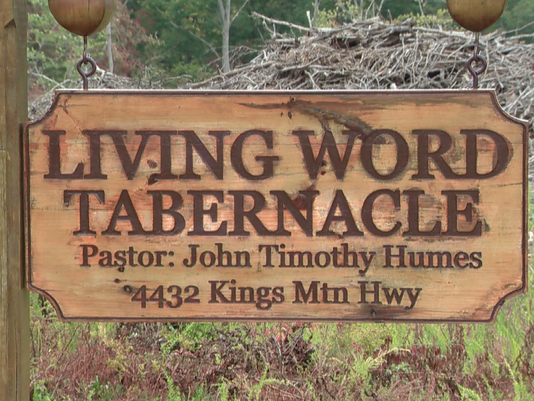
The 400 plus people who attended a conference at Living Word Tabernacle Church the first week of October ate well.

“Everything from meat to poultry, potato salad, just a number of what we would consider high risk food products,” said Gaston County Health and Human Services Director Chris Dobbins.

But a problem in the preparation, serving or storage of some of that food is believed to be the cause of the outbreak in people who attended that church conference.

Tests show seven confirmed Salmonella cases, but more results are pending.

Two people ended up at the hospital.

Just what dish made people sick out of the dozens prepared is something investigators are still trying to narrow down.

“The congregation essentially brought many different types of food to the conference and because of that we’ve had a very difficult time identifying any one single source of the outbreak,” Dobbins said.

SunBurst Foods of Goldsboro is voluntarily recalling all of its SunBurst, Fresh Bites and Private labeled products because they have the potential to be contaminated with Listeria monocytogenes.

The products being recalled were sold in North Carolina, South Carolina, Virginia, and Georgia.

This recall was initiated as a result of sampling and testing performed by the North Carolina Department of Agriculture & Consumer Services.

Listeria cause serious and sometimes fatal infections in young children, frail or elderly people, and others with weakened immune systems. To date, SunBurst is unaware of any illnesses related to these products.

Products not manufactured but distributed by SunBurst such as cakes, burritos, and chips are not part of this recall.

All codes, all sell-by dates and sizes of SunBurst and Fresh Bites brands are being recalled.

Private label products are identified by the following brand names: River Edge Farms, CFW, Southern Zest, CJ’s Vending, Binford Street Deli, Middle Georgia Vendors, Roanoke Foods, Select Foods, and Jesse Jones (Double Chili Dogs).

Last week as the news surrounding the hospitalization of an Ebola victim in Dallas, I passed through the Dallas/Fort Worth airport on my way to Austin to give a series of food safety speeches.  By the time I got home came the report of the first death in the United States.  This morning came the report of a infected health care worker at the Dallas Hospital where the original victim died last week.

The outbreak, which to date has primarily impacted West Africa – Total Cases: 8399, Laboratory-Confirmed Cases: 4655, Total Deaths: 4033 – has now clearly hit our shores.

The World Health Organization reports that it is “thought that fruit bats of the Pteropodidae family are natural Ebola virus hosts. Ebola is introduced into the human population through close contact with the blood, secretions, organs or other bodily fluids of infected animals such as chimpanzees, gorillas, fruit bats, monkeys, forest antelope and porcupines found ill or dead or in the rainforest.”

It does make you think.

Coral Beach reports that fresh-cut roma tomatoes grown in Mexico and distributed to Costco by Boskovich Farms Inc. may have been contaminated with salmonella and are part of a voluntary recall Expo Fresh LLC initiated in September.

Boskovich was not named in the Sept. 12 recall notice on the Food and Drug Administration’s website. However, the Oxnard, Calif., company and its diced roma tomatoes were included in the agency’s Oct. 7 weekly enforcement report.

No illnesses have been reported in connection to the tomatoes, according to the FDA. The recall was initiated after a routine sampling by government officials returned positive results for salmonella.

None of the diced tomatoes remain in the stream of commerce and the company is cooperating with the FDA as the agency investigates the situation, said Dave Murphy, director of food safety for Boskovich. He declined to name the supplier of the romas, citing business confidentiality, but said Costco was Boskovich’s only customer to receive any of the suspect lots.

Boskovich supplied Costco with 5-pound clear plastic overwrapped black poly trays and 24-ounce clear plastic bags of diced roma tomatoes.

California Department of Public Health (CDPH) Director and State Health Officer Dr. Ron Chapman warned consumers today not to eat Williams-Sonoma Pumpkin Seed Pesto sauce because it may have been improperly produced, making it susceptible to contamination with Clostridium botulinum.

Ingestion of botulism toxin from improperly processed jarred and canned foods may lead to serious illness and death.

The manufacturer of the product, California Olive and Vine, LLC, of Sutter, California, initiated the voluntary recall after CDPH determined that the product had been improperly processed. The product was packaged in eight ounce glass jars with screw-on metal lids. The recalled product can be identified by the following stock keeping unit (SKU) numbers: 6404305 and 6389043. Photographs of the affected product package are located on the Recalled Product Photo Page. The Williams-Sonoma Pumpkin Seed Pesto has been sold nationwide at Williams-Sonoma retail stores since September 2014.

The California Department of Public Health (CDPH) is warning consumers not to eat certain types of seafood from the Ventura county coastline due to dangerous levels of a naturally occurring toxin that can cause illness or death.

Consumers are advised not to eat:

• recreationally harvested bivalve shellfish (such as mussels, clams or whole scallops), or

• the internal organs of lobster or rock crab

Dangerous levels of domoic acid have been detected in the internal organs of lobster (also called lobster tomalley) from this region. This toxin, also known as Amnesic Shellfish Poisoning (ASP), can cause illness or death in humans. No cases of human poisoning from domoic acid are known to have occurred in California. Rock crab are also capable of accumulating this toxin in the internal organs (also called crab butter). 

This warning does not apply to commercially sold clams, mussels, scallops or oysters from approved sources. State law permits only state-certified commercial shellfish harvesters or dealers to sell these products. Shellfish sold by certified harvesters and dealers are subject to frequent mandatory testing to monitor for toxins. 

Symptoms of domoic acid poisoning can occur within 30 minutes to 24 hours after eating toxic seafood. In mild cases, symptoms may include vomiting, diarrhea, abdominal cramps, headache and dizziness. These symptoms disappear within several days. In severe cases, the victim may experience trouble breathing, confusion, disorientation, cardiovascular instability, seizures, excessive bronchial secretions, permanent loss of short term memory, coma or death. 

The annual quarantine on recreationally harvested mussels remains in effect along the entire California coastline. This quarantine applies to all species of mussels harvested along the California coast, including all bays and estuaries.


Oasis Brands Inc. of Miami, FL, has recalled 12-oz. packages of Cuajada en Hoja (fresh curd) with Best-By dates of 10/01/14-10/08/14 and 10/18/14 because it has the potential to be contaminated with Listeria monocytogenes. The recalled product was distributed in South Florida through retail stores.

The recalled product comes in plastic bags and is labeled Cuajada en Hoja 12-oz., Brand Lacteos Sta. Martha, Fresh Curd, Best by 10-01-14-10/08/14 and 10/18/14.

No illnesses have been reported to date.

The recall is the result of sampling by the U.S. Food and Drug Administration (FDA). The company has ceased production and distribution of the product as FDA and the company continue their investigation into what caused the problem.