Molly Rosbach of the Yakima Herald stepped into the tragedy that often is Listeria this morning with two stories: Listeria monocytogenes is one nasty bug and Listeria recall: How a web of oversight still couldn’t prevent an outbreak.  I had a couple of things to say:

Based on his experience with companies of all sizes, Bill Marler, a prominent Seattle attorney who has handled foodborne illness cases for more than two decades, said he wouldn’t call Queseria Bendita a bad actor, as listeria is so difficult to control.

But, “Companies that produce food have a moral and legal responsibility to produce food that doesn’t sicken and kill its customers,” he said. “So they’re responsible for what they sell.”

While food manufacturers try to keep E. coli or salmonella bacteria at bay by maintaining cool temperatures, those conditions don’t discourage listeria.

“Once it gets into a facility, it’s really hard to get rid of,” said Bill Marler, a Seattle attorney who has specialized in food safety cases for 20 years. “The problem with listeria is it grows really well in refrigerator temperatures.”

That means the bacteria could have been lurking around Queseria Bendita of Yakima since the 2010 outbreak, Marler said. He remembers the Michigan-based Bil Mar hot dog listeria outbreak, linked to several deaths in 1999, and “to get rid of the listeria, they had to dismantle the entire inside of the plant,” he said.

Listeria bacteria are present in the soil, so people can get listeriosis from almost anywhere. What counts as an outbreak is when multiple patients are sickened by strains that can be matched genetically to strains found in a particular food or manufacturer.

CDC collaborated with public health officials in several states and the U.S. Food and Drug Administration (FDA) to investigate a multistate outbreak of Salmonella Enteritidis infections. Results from this investigation indicated that bean sprouts produced by Wonton Foods, Inc. were the likely source of this outbreak.

A total of 115 persons infected with the outbreak strains were reported from 12 states. The number of ill people identified in each state was as follows: Connecticut (8), Maine (4), Maryland (6), Massachusetts (36), Montana (1), New Hampshire (6), New York (22), Ohio (3), Pennsylvania (18), Rhode Island (7), Vermont (3), and Virginia (1). The one ill person from Montana traveled to the Eastern United States during the period when likely exposure occurred.

Illness onset dates ranged from September 30, 2014, to December 15, 2014. Ill persons ranged in age from younger than 1 year to 83 years, with a median age of 32 years. Sixty-four percent of ill persons were female. Among 75 persons with available information, 19 (25%) were hospitalized, and no deaths were reported.

My take from the LA TIMES:

“Although I applaud that FSIS is setting standards for chicken parts, and doing product testing for salmonella and campylobacter, 15% is too high,” Seattle-based food-safety attorney Bill Marler told The Times.

“Like E. coli O157:H7, salmonella and campylobacter should be zero tolerance. If you want to save people and avoid lawsuits, do what FSIS and the beef industry did with E. coli O157:H7 — ban it.  Fifteen years ago, 90% of my firm’s work was E. coli cases linked to hamburger — that is now nearly zero.”

On the FSIS Press Release:

The U.S. Department of Agriculture’s (USDA) Food Safety and Inspection Service (FSIS) today proposed new federal standards to reduce Salmonella and Campylobacter in ground chicken and turkey products as well as raw chicken breasts, legs and wings. Development of these new standards is a major step in FSIS’ Salmonella Action Plan, launched in December 2013 to reduce Salmonella illnesses from meat and poultry products.

“Today, we are taking specific aim at making the poultry items that Americans most often purchase safer to eat,” said Agriculture Secretary Vilsack. “This is a meaningful, targeted step that could prevent tens of thousands of illnesses each year.”

“These new standards, as well as improved testing patterns, will have a major impact on public health,” said USDA Deputy Under Secretary for Food Safety Al Almanza. “The proposed changes are another way we’re working to meet the ever-changing food safety landscape and better protect Americans from foodborne illness.”

“Getting more germs out of the chicken and turkey we eat is an important step in protecting people from foodborne illness,” said Robert V. Tauxe, MD, deputy director of the Division of Foodborne, Waterborne and Environmental Diseases at the Centers for Disease Control and Prevention. “I look forward to seeing fewer Americans get sick as a result of these proposed changes.”

A pathogen reduction performance standard is the measure that FSIS uses to assess the food safety performance of facilities that prepare meat and poultry products. By making the standards for ground poultry tougher to meet, ground poultry products nationwide will have less contamination and therefore result in fewer foodborne illnesses. FSIS implemented performance standards for whole chickens in 1996 but has since learned that Salmonella levels increase as chicken is further processed into parts. Poultry parts like breasts, wings and others represent 80 percent of the chicken available for Americans to purchase. By creating a standard for chicken parts, and by performing regulatory testing at a point closer to the final product, FSIS can greatly reduce consumer exposure to Salmonella and Campylobacter.

FSIS’ science-based risk assessment estimates that implementation of these standards would lead to an average of 50,000 prevented illnesses annually. FSIS intends to evaluate comments for 60 days and announce final standards and an implementation date this spring. The federal register notice is available on FSIS’ website at http://www.fsis.usda.gov/wps/portal/fsis/topics/regulations/federal-register/federal-register-notices.

For chicken parts, ground chicken, and ground turkey, FSIS is proposing a pathogen reduction performance standard designed to achieve at least a 30 percent reduction in illnesses from Salmonella. For chicken parts, ground chicken, and ground turkey, FSIS is proposing a pathogen reduction performance standard designed to reduce illness from Campylobacter by at least 19 and as much as 37 percent.

FSIS plans to use routine sampling throughout the year rather than infrequently sampling on consecutive days to assess whether establishments’ processes are effectively addressing Salmonella and, where applicable, Campylobacter on poultry carcasses and other products derived from these carcasses.

Sometimes Foodborne Illness Outbreaks become very public, sometimes they go on behind the scenes with only public health officials, owners of the business, and of course the people sickened by eating the food, knowing the facts.  And, then sometimes one of those sickened people retains me (Thanks to Trevor Quirk for bringing me in) and things become very public, and that is a good thing.

2014 Outbreak of Salmonella Montevideo, Brent’s Deli Westlake Village

In July 2014 public health investigators in California learned of an increase of case patients diagnosed with Salmonella serotype Montevideo.  The California Department of Public Health (CDPH) Microbial Disease Laboratory (MDL) conducted pulsed field gel electrophoresis (PFGE) on isolates cultured from patient specimens. Seven patients were infected with an indistinguishable genetic strain identified as JIXX01.0645, an uncommon genetic strain.  Patients resided in Ventura and Los Angeles counties.  Information gathered in interviews conducted by local health investigators revealed that just prior to onset of symptoms; all seven patients had eaten at Brent’s Deli, a restaurant located in Westlake Village, California.  Health officials initiated active surveillance of patients diagnosed with Salmonella Montevideo strain JIXX01.0645. In total 19 patients infected with strain JIXX01.0645 were identified. Two additional patients were infected with strain JIXX01.1565, considered to be a clonal derivative of the main outbreak strain. Two of the 21 patients were employees of Brent’s Deli. Eight patients were hospitalized. Dates of illness onset ranged from April 30, 2014 to August 15, 2014.  See Outbreak Investigation Timeline.

On July 9, 2014 environmental health staff at the County of Ventura Environmental Health Division conducted an on-site inspection at Brent’s Deli. Multiple food safety violations were noted including improper sanitation, cooling and storage issues. The restaurant manager was instructed to correct all violations immediately. A follow-up inspection was conducted on July 22. Major food safety violations were again noted. Specifically, potentially hazardous foods were not held at or below 41 degrees and were not properly cooled. Wiping cloths were not stored in a sanitizing solution between uses. The inspector observed an employee not properly washing hands before handling food or clean utensils. A refrigerator was not operating properly. Plumbing fixtures were leaking and in disrepair. Floor surfaces were damaged preventing adequate cleaning. These items were corrected by the next inspection conducted on July 29. Due to continuing reports of ill customers, Ventura County Environmental Health staff conducted another inspection on August 11. Violations included inadequate hot holding temperatures for corned beef and improper thawing.  On August 12 the restaurant was closed and a third party company was hired to oversee cleaning. Stool specimens were collected from employees who were also required to attend training classes on proper food safety practices.  Food and environmental samples were collected for testing.  Tests showed that two employees were positive for Salmonella Montevideo, strain JIXX01.0645. None of the environmental samples was positive for Salmonella. None of the food samples was positive for Salmonella. The restaurant was allowed to reopen on August 13.  Inspections continued to occur between August 14 and August 19. An inspection was conducted during the week of September 12 and no violations were noted.  The outbreak investigation was closed on October 1, 2014 after no reports of illnesses had been received since August 16, 2014.  See Inspection Reports.

In looking through the investigation file, I did enjoy seeing this email:

And, here in the Complaint.

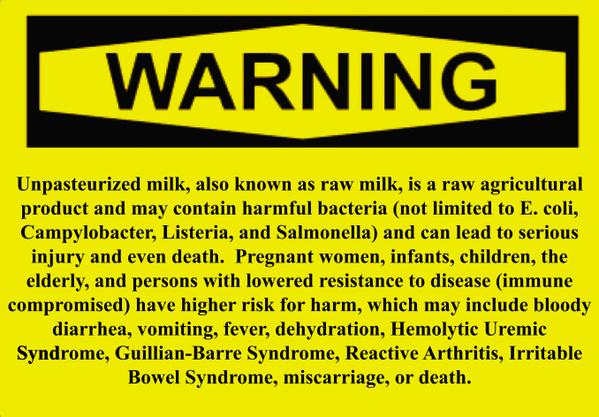
The Everett Herald reports this morning that some batches of raw milk from the Old Silvana Creamery are being recalled out of concern they may be contaminated with Campylobacter, bacteria that can cause vomiting and diarrhea.

The recall affects raw milk from the farm with expiration dates of Jan. 23 and Jan. 24, according to Jim Sinnema, who manages the farm.

The milk is sold in 15 stores in Western Washington. The creamery produces several hundred gallons of raw milk a week, he said.

The recall, announced Monday evening, was launched after an independent lab discovered Campylobacter in a routine weekly sample sent to a laboratory for testing, Sinnema said. It had an expiration date of Jan. 23. As a precaution, raw milk from Old Silvana Creamery with an expiration date of Jan. 24 also was recalled, Sinnema said.

Testing showed batches with recall dates of Jan. 26 and Jan. 27 were not affected, he said.

Most people who become ill from the bacteria get diarrhea, cramping, abdominal pain, and fever within two to five days after exposure, according to the federal Centers for Disease Control and Prevention. Campylobacter is one of the most common causes of diarrheal illness in the United States, according to the federal health agency.

And, we seem so worried about imports?

Malaysia News reports that the Ministry of Agriculture and Agro-based Industry has restricted the entry of Gala and Granny Smith apples from the United States into Malaysia, as the products have been suspected to be tainted with Listeria bacteria.

Its minister Datuk Seri Ismail Sabri Yaakob said the restriction was imposed by the Department of Malaysian Quarantine Inspection Services (Maqis) after the Ministry received a notice on the contamination two days ago.

“We received a notice from US Food and Drug Administration (FDA) informing us about the contamination and it is understood that it has caused three deaths and many fallen ill in the US and Canada,” he said.

The issue related to the ban on the apples had spread via the social media for the past few days. In fact a media portal had also reported that the spread of the bacteria was detected at an apple processing centre in Bidart Bros near Bakersfield, California involving apples coated with caramel.

In 2010, Queseria Bendita recalled the same three types of cheeses for potential contamination with Listeria monocytogenes. At least one illness was reported in Washington and two in Oregon in connection with that recall.

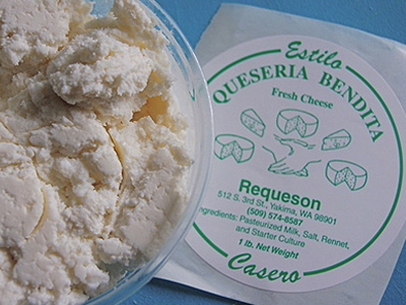
Queseria Bendita LLC of Yakima, Washington is recalling all lots of Panela, Queso Fresco, Requeson, Cotija fresh soft cheese products and Sour Cream to include those with best by dates up to 4/16/2015

Washington State health and agriculture officials are working with the Centers for Disease Control and Prevention and the U.S. Food and Drug Administration on an ongoing outbreak of Listeria monocytogenes infections linked to consumption of Latin-style soft cheese produced by Queseria Bendita, a Yakima, Washington firm.

As of January 16, 2015, a total of three cases have been identified from Washington in King, Pierce and Yakima counties. One illness was pregnancy-associated, two people were hospitalized and one death was reported. The affected products made by the Yakima-based Queseria Bendita are subject to a voluntary recall and the firm has stopped producing cheese.

Health officials are warning consumers who may have purchased these three Queseria Bendita brand cheeses: Queso Fresco, Panela, and Requeson and still have it in their refrigerators to throw the product away and not eat it. Grocery stores and distributors should pull and not sell these products.

Listeriosis is a serious infection caused by eating food contaminated with the bacterium Listeria monocytogenes. The disease affects primarily older adults, pregnant women, newborns, and persons with weakened immune systems. Approximately 11 to 29 cases of listeriosis are reported in Washington each year.

Symptoms of listeriosis include fever, muscle aches, headache, stiff neck, confusion, loss of balance, and convulsions. Blood stream infections or meningitis may occur. Infected pregnant women may experience only a mild, flu-like illness; however, infections during pregnancy can lead to miscarriage or stillbirth, premature delivery, or infection of the newborn. Symptoms often begin three weeks after infection, but it could take anywhere from three to 70 days.