Screen Shot 2015-02-24 at 7.59.54 PMThe FDA, CDC and the USDA’s FSIS today released a report on the new method for analyzing outbreak data to determine which foods are responsible for illness related to four major foodborne bacteria. The report, titled “Foodborne Illness Source Attribution Estimates for Salmonella, Escherichia coli O157 (E. coli O157), Listeria monocytogenes (Lm), and Campylobacter using Outbreak Surveillance Data,” was produced by the Interagency Food Safety Analytics Collaboration (IFSAC).

As outlined in the report, IFSAC analyzed data from nearly 1,000 outbreaks that occurred from 1998 to 2012 to assess which categories of foods were most responsible for making people sick with Salmonella, E. coli O157, Listeria, and Campylobacter. The pathogens were chosen because of the frequency or severity of the illnesses they cause, and because targeted interventions can have a significant impact in reducing them. Some of the findings include:

  • More than 80 percent of E. coli O157 illnesses were attributed to beef and vegetable row crops, such as leafy vegetables.
  • Salmonella illnesses were broadly attributed across food commodities, with 77 percent of illnesses related to seeded vegetables (such as tomatoes), eggs, fruits, chicken, beef, sprouts and pork.
  • Nearly 75 percent of Campylobacter illnesses were attributed to dairy (66 percent) and chicken (8 percent). Most of the dairy outbreaks used in the analysis were related to raw milk or cheese produced from raw milk, such as unpasteurized queso fresco.
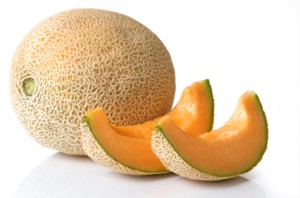
  • More than 80 percent of Listeria illnesses were attributed to fruit (50 percent) and dairy (31 percent). Data were sparse for Listeria, and the estimate for fruit reflects the impact of a single large outbreak linked to cantaloupes in 2011.

Reception in their honor Monday February 23

Join us Monday, February 23 for a reception in honor of our guest and visiting professor, Bill Marler and his law partner Denis Stearns.  Bill and Denis will be here teaching a condensed course for us,  Food Safety Litigation, Monday and Tuesday.

The reception will be Monday evening from 5:00-7:00 with a presentation by Bill at 5:30.

bill marler reception 2-2015

MMWR reported today: In August 2014, PulseNet, the national molecular subtyping network for foodborne disease surveillance, detected a multistate cluster of Salmonella enterica serotype Newport infections with an indistinguishable pulse-field gel electrophoresis (PFGE) pattern (XbaI PFGE pattern JJPX01.0061).* Outbreaks of illnesses associated with this PFGE pattern have previously been linked to consumption of tomatoes harvested from Virginia’s Eastern Shore in the Delmarva region and have not been linked to cucumbers or other produce items (1). To identify the contaminated food and find the source of the contamination, CDC, state and local health and agriculture departments and laboratories, and the Food and Drug Administration (FDA) conducted epidemiologic, traceback, and laboratory investigations. A total of 275 patients in 29 states and the District of Columbia were identified, with illness onsets occurring during May 20–September 30, 2014. Whole genome sequencing (WGS), a highly discriminating subtyping method, was used to further characterize PFGE pattern JJPX01.0061 isolates. Epidemiologic, microbiologic, and product traceback evidence suggests that cucumbers were a source of Salmonella Newport infections in this outbreak. The epidemiologic link to a novel outbreak vehicle suggests an environmental reservoir for Salmonella in the Delmarva region that should be identified and mitigated to prevent future outbreaks.

Purdue University research shows that standard cleaning procedures in retail delis may not eradicate Listeria monocytogenes bacteria.

A study led by Haley Oliver, assistant professor of food science, found that 6.8 percent of samples taken in 15 delis before daily operation had begun tested positive for Listeria monocytogenes   In a second sampling phase, 9.5 percent of samples taken in 30 delis during operation over six months tested positive for the bacteria. In 12 delis, the same subtypes of the bacteria cropped up in several of the monthly samplings, which could mean that Listeria monocytogenes can persist in growth niches over time.

Listeria monocytogenes can cause listeriosis – a serious systemic infection – in immunocompromised people such as the elderly, infants and children, pregnant women and people with HIV. In severe cases, L. monocytogenes can pass through the intestinal membrane and into the bloodstream or cross the blood-brain barrier. The bacteria can also cross the placental barrier in pregnant women, which can trigger abortion.

Ready-to-eat deli meats are the food most associated with L. monocytogenes, which can grow at refrigerator temperatures, unlike Salmonella and E. coli.

Stringent control measures and inspections have tamped down the presence of L. monocytogenes at meat processing plants, but there are no regulations specific to Listeria for retail delis. Recent risk assessments suggest that up to 83 percent of listeriosis cases linked to deli meats are attributable to products contaminated at retail.

The paper was published in the Journal of Food Protection.

Being at the office on a Saturday allows for a bit of catch up after a week of traveling (and hand surgery).  Today is a day to double-check that all the t’s are crossed and i’s dotted in finalizing the Listeria Cantaloupe Litigation.  After three years, five months and one day, I am glad for all concerned that the litigation is behind.  My hope is that the lessons learned will translate into far fewer future outbreaks; because regardless of the settlement, no amount of money changes the fact that nearly forty people needlessly died and a hundred more were injured, many permanently.  An added bonus to the quiet in the office is this email I just received from one of those clients:

I wanted to send an email to say Thank You for all of the hard work and patience that you and your staff gave me and my family.  I hope that we didn’t call or email too much during this process.  This was a new experience for my family since we haven’t been involved in a lawsuit before.
 
The reason we initially contacted you was because I wanted to do something, anything about my father passing away before it was his time.  I didn’t know if we had a valid claim or if anyone cared about my father passing away.  I also knew that if I didn’t do something that someday I would regret it when someone would ask “What did you do about your dad dying from Listeria?”
 
Thank you for the closure.
Thank you for caring.
Thank you for answering all my emails.
Thank you for answering all my phone calls.
 
Please continue to fight for food safety.

Its why I work Saturdays.

CDC collaborated with public health officials in several states and with the U.S. Food and Drug Administration (FDA) to investigate an outbreak of Listeria monocytogenes infections (listeriosis). Joint investigation efforts indicated that commercially produced, prepackaged caramel apples made from Bidart Bros. apples were the likely source of this outbreak.

Public health investigators used the PulseNet system to identify illnesses that were part of this outbreak. PulseNet is the national subtyping network of public health and food regulatory agency laboratories coordinated by CDC. DNA “fingerprinting” is performed on Listeria bacteria isolated from ill people using techniques called pulsed-field gel electrophoresis (PFGE) and whole genome sequencing (WGS).

The 35 ill people included in this outbreak investigation were reported from 12 states: Arizona (5), California (3), Colorado (1), Minnesota (4), Missouri (5), Nevada (1), New Mexico (6), North Carolina (1), Texas (4), Utah (1), Washington (1), and Wisconsin (3). Illness onset dates ranged from October 17, 2014, to January 6, 2015. Eleven illnesses were associated with a pregnancy (occurred in a pregnant woman or her newborn infant). One fetal loss was reported. Among people whose illnesses were not associated with a pregnancy, ages ranged from 7 to 92 years, with a median age of 62 years, and 33% were female. Three invasive illnesses (meningitis) occurred among otherwise healthy children aged 5–15 years. Thirty-four people were hospitalized, and listeriosis contributed to at least three of the seven deaths reported.

The Public Health Agency of Canada (PHAC) identified two cases of listeriosis in Canada with the same PFGE patterns as those seen in the U.S. outbreak. More detailed testing using WGS showed that the isolate from only one of the two cases was genetically related to the U.S. outbreak. That person reported eating a caramel apple.

On January 6, 2015, Bidart Bros. of Bakersfield, California, voluntarily recalled Granny Smith and Gala apples because environmental testing revealed contamination with Listeria monocytogenes at the firm’s apple-packing facility. The recall included all Granny Smith and Gala apples shipped from its Shafter, California, packing facility in 2014. On January 8, 2015, FDA laboratory analyses using PFGE showed that environmental Listeria isolates from the Bidart Bros. facility were indistinguishable from the outbreak strains. On January 18, 2015, WGS found that these isolates were highly related to the outbreak strains. In addition, WGS showed that Listeria isolates from whole apples produced by Bidart Bros., collected along the distribution chain, also were highly related to the outbreak strains.

Three firms that produce caramel apples issued voluntary recalls after receiving notice from Bidart Bros. that there may be a connection between Bidart Bros. apples and this listeriosis outbreak. On December 24, 2014, Happy Apple Company of Washington, Missouri, voluntarily recalled Happy Apples brand caramel apples with a best use by date between August 25 and November 23, 2014. On December 31, 2014, Happy Apple Company expanded the recall to include Kroger brand caramel apples produced by Happy Apple Company with a best use by date between September 15 and November 18, 2014. On December 27, 2014, California Snack Foods voluntarily recalled Karm’l Dapple brand caramel apples with a best use by date between August 15 and November 28, 2014. On December 29, 2014, Merb’s Candies of St. Louis, Missouri issued a voluntary recall of Merb’s Candies Bionic Apples and Double Dipped Apples that would have been available from September 8 through November 25, 2014.

Bill Marler made history with the horrendous 1993 Jack in the Box food poisoning outbreak. Marler represented the most seriously ill child, Brianne Kiner. Four children died and hundreds were sickened by under-cooked E. coli:O157 tainted hamburgers. It was the beginning of a long, battle to not only represent victims, but also advocate for tougher food safety laws.

It has been a busy week in the press:

The New Yorker:  A Bug in the System

Why last night’s chicken made you sick.

BY WIL S. HYLTON:  February 2, 2015

A lawyer is leading the fight to keep contaminated food off the supermarket shelf. Continue Reading KTCS 9 INCLOSE – Bill Marler – Food Safety Warrior