
The Iowa Department of Public Health (IDPH) and the Iowa Department of Inspections and Appeals (DIA) today jointly issued a consumer advisory for chicken salad sold at Fareway stores. The chicken salad, which is produced and packaged by a third party for Fareway, is implicated in multiple cases of salmonella illness across Iowa. Preliminary test results from the State Hygienic Laboratory (SHL) at the University of Iowa indicate the presence of salmonella in this product.

Fareway voluntarily stopped the sale of the product and pulled the chicken salad from its shelves after being contacted by DIA. “The company has been very cooperative and is working with IDPH and DIA in the investigation of the reported illnesses,” said DIA Food and Consumer Safety Bureau Chief Steven Mandernach, who noted that no chicken salad has been sold to the consuming public since last Friday evening (2/9/18).

IDPH is investigating multiple cases of possible illness associated with the chicken salad. “The bottom line is that no one should eat this product,” said IDPH Medical Director, Dr. Patricia Quinlisk. “If you have it in your refrigerator, you should throw it away.”

A Little Caesars Pizza restaurant in Indiana was temporarily closed after customers found mouse feces in their food.

Johnathan McNeil said he and his girlfriend noticed the droppings after picking up the pizza at a Little Caesars in Indianapolis on their way home on Feb. 6, reports Fox 59.

“She looked at the pizza and realized there was like doo-doo looking stuff on the pizza,” said McNeil.

Disgusted, the two rushed back to the restaurant.

“All of them were looking at my pizza dumbfounded as if they didn’t know what’s going on,” recalls McNeil, “I said ‘That’s mouse doo-doo on the bottom of my pizza.'”

Later, McNeil called in health inspectors and posted about the incident on social media.

“I called the police and three officers came to the scene and found the mice poop covering the entire pizza,” McNeil wrote on Facebook. “This is extremely disgusting and unsafe to health. I seen a woman with children walking out with pizza before me. Lets expose them & get them shutdown.”

Upon inspection, authorities confirmed McNeil’s suspicions.

“We did find that there were rodent droppings and violations that warranted us doing a license suspension,” said Janelle Kaufman with the Marion County Health Department.

The new mother,Michelle Carr, of a 10-week-old newborn boy was enjoying a quick lunch on Jan. 29 as she washed her lettuce, inverted it to drain, ripped it apart by hand and threw on some grape tomatoes, olive oil and balsamic vinegar. Then, as she went to take a bite, she stuck her fork into something firm, but it wasn’t a slice of avocado.

It was the scaly, tail-less carcass of a lizard.

“It was longer than my middle finger without its tail. We’re not talking about a spider or a bug or even a little salamander. This was a huge lizard with scales,” said Carr, a registered hematology oncology bone marrow transplant nurse. “I instantly wretched and I was revolted because I thought for a second I could’ve eaten its tail.”

Carr said she purchased the bag of store-brand romaine lettuce at the Shaw’s supermarket in Portsmouth on Jan. 26.

Carr said she had a friend who is a biologist examine the lizard and told her it could have been a blue-bellied lizard, which primarily live in California and can be up to 8.4 inches long, according to the Burke Museum at the University of Washington. The lettuce is distributed by a company out of California.

Carr said she then called representatives at the New Hampshire Department of Health and Human Services (NHDHHS), Shaw’s and the Food and Drug Administration but had not yet heard if her complaint was being investigated.

On Monday, NHDHHS communications director Jake Leon took a call from Seacoast Media Group and confirmed his agency had received the complaint from Carr. Because the lettuce was packaged and shipped from another state, he said that any investigation would be conducted by the FDA.

A batch of frozen raspberries from China that was recalled by the provincial government could have made hundreds of Quebecers sick last summer.
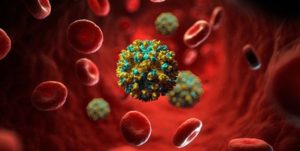
More than 700 confirmed or suspected cases of norovirus, a diarrhea-inducing bug, were reported to the health watch division of Quebec’s Health Ministry and the Ministry of Agriculture, Fisheries and Food (MAPAQ).

MAPAQ surveys found that consuming food that contained these raspberries, which came from the same Chinese supplier, was potentially the source of last summer’s contamination.

Three Quebec importers — Farinex, Mantab and Alasko — were subject to 11 food recalls by MAPAQ between June 21 and Aug. 14.

Hotels, restaurants, pastry and dairy shops, retail stores, retirement homes and daycares across Quebec were affected by the recall.

Norovirus symptoms include nausea, vomiting, diarrhea, muscle pain and fatigue. While it is highly contagious, it usually doesn’t require medical intervention and clears up on its own within a few days.

Fox 31 News reports that the Tri-County Health Department has confirmed to FOX31’s Erika Gonzalez that one person has died from Salmonella poisoning related to eating at a restaurant in Aurora.

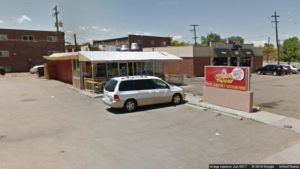
The health department tells FOX31 that 33 people were sickened by eating at La California restaurant on Peoria Street in November 2017. One person died from issues related to salmonella.

The health department says lab tests show the family combo meal may have led to the poisoning.

The health department says the outbreak affected people who ate at La California from November 4 to November 26, 2017.

La California is at 1685 Peoria Street in Aurora.

The health department’s report says 13 of the 33 cases are confirmed, and 20 of the cases are probable for Salmonella. The illnesses involved 32 restaurant patrons and one employee.

Twenty-five cases had exposures at the restaurant with their meals with a 5-day period from November 10 to November 14, 2017.

La California earned an ‘F’ in FOX31’s Restaurant Report Card two years ago for 30 critical violations in its March 2015 health inspection.

Guymon Extracts Inc. of Guymon, OK, is recalling 4,202 pounds of pork soup after an inspector discovered a processing problem that may have allowed pathogen growth, including Clostridium botulinum and Clostridium perfringens, the USDA’s Food Safety and Inspection Service announced Tuesday.

The USDA labeled the recall Class I, meaning it is high risk. Expiration dates on the product are set for the end of next year, so people could still have the recalled soup in their homes.

The fully cooked pork products were produced and packaged on Jan. 3. The following product is subject to the recall:

  • 2-pound polly bags packed 10 to each paper carton with labels that say “Pork Soup with Rendered Pork Fat (from bone)” with lot code 010218-1, a product code of 61306, and a best-before date of Dec. 22, 2019.

The products subject to recall have the establishment number “Est. 32161” printed inside the USDA mark of inspection. Guymon Extracts Inc. sent the recalled pork soup to distribution centers, which further distributed it in California, Colorado, Florida, Georgia, Illinois, Texas and Washington.

CDC, several states, and the U.S. Department of Agriculture’s Animal and Plant Health Inspection Service (USDA-APHIS) investigated a multistate outbreak of multidrug-resistant Campylobacter infections. Epidemiologic and laboratory evidence indicated that contact with puppies sold through Petland stores were a likely source of this outbreak. This outbreak investigation is over. Illnesses could continue to occur because people may be unaware of the risk of Campylobacter infections from puppies and dogs.

A total of 113 people with laboratory-confirmed infections or symptoms consistent with Campylobacter infection were linked to this outbreak. Illnesses were reported from 17 states. Illnesses started on dates ranging from January 12, 2016 to January 7, 2018. Ill people ranged in age from less than 1 year to 86, with a median age of 27. Sixty-three percent of ill people were female. Of 103 people with available information, 23 (22%) were hospitalized. No deaths were reported. Whole genome sequencing (WGS) showed that isolates from people infected with Campylobacter were closely related genetically. This close genetic relationship means that people in this outbreak were more likely to share a common source of infection.

Breese Hollow Dairy has been prohibited from selling raw milk after the Department of Agriculture and Markets said it found a sample contaminated with Listeria monocytogenes on Jan. 30.
Agriculture Commissioner Richard Ball warned consumers in Rensselaer County and surrounding areas on Wednesday to not consume unpasteurized raw milk from the dairy business, which has a farm—David Phippen Farm—located in Hoosick Falls.

An employee who worked at the Lancaster restaurant Al-E-Oops and the Brookdale Williamsville Senior Living Facility may have exposed 346 patrons and nursing home residents to hepatitis A. The contagious liver virus can be transmitted through contaminated food and water and close contact with an infected person.

Patrons of the restaurant, located at 5389 Genesee St., and the nursing home, may have been exposed to the virus in late January, announced Erie County Executive Mark C. Poloncarz and Health Commissioner Gale R. Burstein. The food prep employee who worked there tested positive for the hepatitis A virus on Monday.

The county is offering an emergency vaccination clinic on from 3 to 8 p.m. Wednesday at Bowmansville Volunteer Fire Station No. 1, located at 36 Main St. in Bowmansville.

Restaurant patrons who could benefit from either a hepatitis A vaccine or immune globulin injection would have eaten at the restaurant between Jan. 27-30, county officials said. Those who patronized Al-E-Oops between Jan. 16-26 may have been exposed to the disease but would not benefit from an injection. Those who patronized the restaurant after Jan. 30 are at no risk.

The National Institute of Communicable Diseases (NICD) reported this week that the number of confirmed listeriosis cases is now 852‚ and 107 people have died. The death rate, based on the outcome data for 355 cases for which details are available, sits at 30 percent, according to the South African news website Times LIVE.

Of the 852 confirmed cases‚ 42 percent were babies younger than 1 month. Pregnant women are 20 times more likely to develop listeriosis infections than other healthy adults. Women account for 55 percent of the reported cases in which gender is known.

Listeriosis comes from eating or drinking food or beverages containing the pathogen Listeria monocytogenes. The bacterium is found in the environment in water, soil, vegetation and in certain animal feces, including those of infected people. It can contaminate animal products, including meat and dairy, seafood and fresh produce. Once Listeria becomes established in a food production facility it can be very difficult to remove.

The source of the South Africa outbreak that started in January 2017 is thought to be a food product or range of products from one company, but that is still just a theory. Victims include people from various social and economic backgrounds.