
Lest we forget, as of June 27, 2018, 210 people infected with the outbreak strain of E. coli O157:H7 were reported from 36 states.  Illnesses started on dates ranging from March 13, 2018 to June 6, 2018. Ill people ranged in age from 1 to 88 years, with a median age of 28. Sixty-seven percent of ill people were female. Of 201 people with information available, 96 (48%) were hospitalized, including 27 people who developed hemolytic uremic syndrome, a type of kidney failure. Five deaths were reported from Arkansas, California, Minnesota (2), and New York.

Here is the FDA Traceback chart:

Here is our Traceback chart to date:

I take a ferry to work guarded at times by now unpaid members of the Coast Guard.  Next week with increasing trepidation, I will go through TSA Security with more unpaid professionals on the job monitoring security to then board a plane to be routed to NYC by unpaid Air Traffic Controllers.  I am not sure I could focus on my job while wondering how bills were to be paid.

The shutdown hit close to home this morning when I opened my laptop at 5:30 A.M. to see a flood of hundreds of “Out of Office” notifications responding to emails generated from last night blog posts on Salmonella in flour and spinach.

Here are just a few:

“Thank you for your message. I am not in the office at this time. I am on furlough without access to email, due to the lapse in federal government funding. I will return your message as soon as possible once funding has been restored. For information about available government services, visit USA.gov.”

“Due to the absence of either an FY 2019 appropriation or Continuing Resolution for FDA, I am out of the office on furlough status and I am not able to read or respond to your message.”

“I am currently out of the office.” 

Odd way to run a government.

Satur Farms, 3705 Alvah’s Lane, Cutchogue, NY 11935 is voluntarily recalling Baby Spinach and Mesclun with the specific lot numbers listed below because it has the potential to be contaminated with Salmonella, an organism which can cause serious and sometimes fatal infections in young children, frail or elderly people and others with weakened immune systems. Healthy persons infected with Salmonella often experience fever, diarrhea (which may be bloody), nausea, vomiting and abdominal pain. In rare circumstances, infection with Salmonella can result in the organism getting into the bloodstream and producing more severe illnesses such as arterial infections (i.e. aneurysms), endocarditis and arthritis. The following product was distributed in New York and Florida through retail stores.
Retail product is packed in plastic clamshell containers with Satur Farms brand name:

5 oz, 10 oz, 16 oz
Food service product is packed in sealed poly bags:
2-1/2 lbs, 3#, 4#, 4 x 2.5#, 4 x 3#

Spinach Lot #18494
Spinach Lot #18513
Mesclun Lot #18520

There have been no reported illnesses.

The voluntary recall is being initiated following routine sampling by Florida Department of Agriculture and New York State Department of Agriculture and markets. Consumers who have purchase Satur Farms products with these lot numbers are urged to return it to the place of purchase for a full refund. Satur Farms requests all consignees (wholesalers and retailers) to hold and discontinue selling their existing stock of this product.

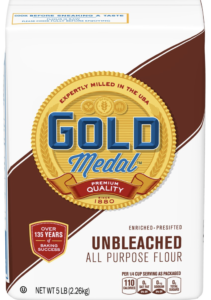
General Mills announced today a voluntary national recall of five-pound bags of its Gold Medal Unbleached Flour with a better if used by date of April 20, 2020.

The recall is being issued for the potential presence of Salmonella which was discovered during sampling of the five-pound bag product. This recall is being issued out of an abundance of care as General Mills has not received any direct consumer reports of confirmed illnesses related to this product.

This recall only affects this one date code of Gold Medal Unbleached Flour five-pound bags. All other types of Gold Medal Flour are not affected by this recall.

Consumers are asked to check their pantries and dispose of the product affected by this recall.

Guidance from the Food and Drug Administration (FDA) and the Centers for Disease Control (CDC) continues to warn that consumers should refrain from consuming any raw products made with flour. Salmonella is killed by heat through baking, frying, sautéing or boiling products made with flour. All surfaces, hands and utensils should be properly cleaned after contact with flour or dough.

This voluntary recall includes the following code date currently in stores or consumers’ pantries:

Gold Medal Unbleached All Purpose 5LB Flour
Package UPC 000-16000-19610-0
Recalled Better if Used by Date 20APR2020KC

Healthy persons infected with Salmonella often experience fever, diarrhea (which may be bloody), nausea, vomiting and abdominal pain. In rare circumstances, infection with Salmonella can result in the organism getting into the bloodstream and producing more severe illnesses such as arterial infections (i.e., infected aneurysms), endocarditis and arthritis.

As of January 9, 2019, 62 people infected with the outbreak strain of E. coli O157:H7 were reported from 16 states and the District of Columbia.

Illnesses started on dates ranging from October 7, 2018, to December 4, 2018. Ill people ranged in age from 1 to 84 years, with a median age of 25. Sixty-six percent of ill people were female. Of 54 people with information available, 25 (46%) were hospitalized, including two people who developed hemolytic uremic syndrome, a type of kidney failure. No deaths were reported.

Epidemiologic, laboratory, and traceback evidence indicated that romaine lettuce from the Central Coastal growing regions of northern and central California was the likely source of this outbreak.Two illness clusters were identified at restaurants where ill people reported eating romaine lettuce. An illness cluster is defined as two or more people who do not live in the same household who report eating at the same restaurant location, attending a common event, or shopping at the same location of a grocery store in the week before becoming ill. In these two clusters, several ill people reported eating at the same restaurant or shopping at the same location of a grocery store. Investigating illness clusters provides critical clues about the source of an outbreak. If several unrelated ill people ate or shopped at the same location of a restaurant or store within several days of each other, it suggests that the contaminated food item was served or sold there.

Traceback information from the FDA indicated that ill people in this outbreak ate romaine lettuce harvested from specific counties in the Central Coastal growing regions of northern and central California. The FDA, along with CDC and state partners, investigated farms and cooling facilities in California that were identified in traceback. CDC analyzed water and sediment samples from an Adam Bros. Farming, Inc. farm in Santa Barbara County, which was one of the farms identified in the traceback investigation. The outbreak strain of E. coli O157:H7 was found in sediment within an agricultural water reservoir on the farm. WGS results showed that the E. coli O157:H7 found in the agricultural water reservoir was closely related genetically to the E. coli O157:H7 isolated from ill people.

WGS results also showed that the E. coli O157:H7 strain isolated from ill people in this outbreak is closely related genetically to the E. coli strain isolated from ill people in a 2017 outbreak linked to leafy greens in the United States and to romaine lettuce in Canada. The outbreak described here is not related to a spring 2018 multistate outbreak of E. coli O157:H7 infections linked to romaine lettuce. People in the spring outbreak were infected with E. coli O157:H7 bacteria with a different DNA fingerprint.

In Canada, as of December 24, 2018, there have been 29 confirmed cases of E. coli illness investigated in Ontario (5), Quebec (20), New Brunswick (1), and British Columbia (3). The illnesses in British Columbia were related to travel to Quebec, Ontario and the United States. Individuals became sick between mid-October and mid-November 2018. Ten individuals have been hospitalized, and two individuals suffered from hemolytic-uremic syndrome (HUS), which is a severe complication that can result from an E. coli infection. No deaths have been reported. Individuals who became ill are between 2 and 93 years of age. The majority of cases (52%) are female.

And, there are the real people I have spoken to in last week related to this outbreak:

  1. Husband with wife in rehabilitation after nearly two-month hospitalized in ICU with HUS.  She is still on dialysis three times a week and will be for rest of her life.
  2. Airline pilot who stopped over in Toronto and has now been hospitalized for weeks in the US with HUS.
  3. Father of Canadian child who ate romaine lettuce while on vacation in California and has been hospitalized with HUS for seven weeks in Vancouver, BC.
  4. Mom tonight who I spoke to as her daughter was undergoing a bowel resection do to E. coli O157:H7.
  5. Another mom whose daughter spent 15 days in the hospital undergoing several blood transfusions after being diagnosed with HUS.

Real people.

Grand Strand Sandwich is recalling Lunch Box Italian Subs, Lunch Box Ham & Swiss Croissants and Lunch Box Ham & Cheese Frozen Wedges due to a potential contamination of Listeria monocytogenes. Listeria monocytogenes, an organism which can cause serious and sometimes fatal infections in young children, frail or elderly people, and others with weakened immune systems. Although healthy individuals may suffer only short-term symptoms such as high fever, severe headache, stiffness, nausea, abdominal pain and diarrhea, a Listeria monocytogenes infection can cause miscarriages and stillbirths among pregnant women.
On January 3, 2019 the firm was notified by FDA that the swabs they collected from the meat slicing area on December 11, 2018 test positive for Listeria monocytogenes.

No illnesses have been reported to date.

Products affected are:

Product Size UPC Julian Dates
Italian Subs 7 oz package 0 67068 12222 8 35218
Ham & Swiss Croissants 5 oz package 0 67068 21217 2 34618
Ham & Cheese 4.5oz package 0 67068 12110 8 34618

The products were distributed between December 17, 2018 until January 4, 2019. These products were packaged in clear plastic and sold primarily in convenience stores and vending machines located in the States of: North Carolina and South Carolina.

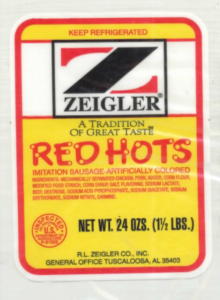
R. L. Zeigler Co., Inc., a Selma, Ala. establishment, is recalling approximately 11,664 pounds of ready-to-eat (RTE) poultry and meat sausage products that may be contaminated with extraneous materials, specifically metal, the U.S. Department of Agriculture’s Food Safety and Inspection Service (FSIS) announced today.

The RTE Red Hot chicken and pork sausage items were produced on Nov. 29, 2018. The following products are subject to recall: [View Labels (PDF only)]

  • 24-oz. plastic packages containing approximately 9 links of “ZEIGLER A TRADITION OF GREAT TASTE RED HOTS” with a “Use By Jan 24 19” date.
  • 24-oz. plastic packages containing approximately 9 links of “EXTRA HOT ZEIGLER A TRADITION OF GREAT TASTE RED HOTS” with a “Use By Jan 24 19” date.

The products subject to recall bear establishment number “EST. P-9156S” inside the USDA mark of inspection. These items were shipped to retail locations nationwide.

The problem was discovered after the firm received consumer complaints on Dec. 13 and 27, 2018. The firm investigated to determine the nature of the complaints and notified FSIS on Dec. 29, 2018.

There have been no confirmed reports of adverse reactions due to consumption of these products. Anyone concerned about an injury or illness should contact a healthcare provider.

FSIS is concerned that some product may be in consumers’ refrigerators or frozen and in consumers’ freezers. Consumers who have purchased these products are urged not to consume them.

Wash produce!

The U.S. Food and Drug Administration released two reports today on its sampling of whole fresh avocados and hot peppers to determine how frequently harmful bacteria are found in each commodity. These sampling studies are part of an ongoing effort by the FDA to help ensure food safety and prevent contaminated products from reaching consumers.

In 2014, the FDA adopted a new, proactive sampling program to learn more about how frequently common environmental pathogens like Salmonella, Listeria monocytogenes, and Escherichia coli (E. coli) are in selected foods, and to help the agency identify patterns that may help reduce microbial contamination in those foods. Additional information about this program is described in an “FDA Voices” blog by Susan Mayne, the director of FDA’s Center for Food Safety and Applied Nutrition (CFSAN), and William Correll, the director of CFSAN’s Office of Compliance.

For the hot pepper sampling assignment, the FDA collected, tested and analyzed domestic and imported hot pepper samples for Salmonella, E. coli O157:H7, and other types of Shiga toxin-producing E. coli (STEC). Of the 1,615 hot pepper samples tested, 46 (2.85%) were positive for Salmonella and one was positive for STEC, but further testing revealed that the STEC strain could not cause severe illness.

For the whole fresh avocado sampling assignment, the FDA collected, tested and analyzed 1,615 domestic and imported avocado samples for Salmonella and Listeria monocytogenes. Of the 1,615 samples, 12 (0.74%) tested positive for Salmonella. As to the Listeria monocytogenes testing, the agency primarily tested the pulp of the avocado samples (as the pulp is the part of the fruit people eat), and some samples of the fruit’s skin. Of the 1,254 avocado pulp samples, 3 (far less than one percent) were positive for Listeria monocytogenes. Of the 361 avocado skin samples, 64 (17.73%) were positive for Listeria monocytogenes. FoodSafety.gov advises consumers to wash all produce before cutting into it or eating.
When the FDA found positive samples of hot peppers or avocados in domestic product, the agency worked with the responsible firms to conduct recalls as indicated, and followed up with inspections of growers and packinghouses to ascertain their adherence to recommended good agricultural and manufacturing practices. When the FDA found positive samples of hot peppers or avocados in imported product, the agency refused entry to all product in lots associated with the positive(s), and placed the firms on import alert to stop additional product from entering the U.S.

For additional information on the FDA’s sampling program, and to read the whole fresh avocado and hot pepper reports, visit “Microbiological Surveillance Sampling.”

In addition to the hot pepper and avocado sampling reports, the FDA also posted a quarterly update on its ongoing sampling assignments on fresh herbs, guacamole and processed avocado.

As of October 1, 2018, the FDA has tested 683 fresh herb samples (407 domestic, 276 import) and 474 processed avocado or guacamole samples (386 domestic, 88 import) as part of its ongoing monitoring of potential pathogens associated with these products. Of the fresh herb samples, nine tested positive for Salmonella (4 domestic, 5 import); six tested positive for STEC (2 domestic, 4 import), with further characterization determining that the STEC were incapable of causing severe illness; and four tested positive for Cyclospora cayetanensis (2 domestic, 2 import). The FDA did not detect 0157 in any of the fresh herb samples it tested. Of the processed avocado or guacamole samples, 11 tested positive for Listeria monocytogenes (9 domestic, 2 import). The FDA did not detect Salmonella in any of the samples of processed avocado or guacamole.

As of December 18, 2018, 216 people infected with the outbreak strain of Salmonella Reading have been reported from 38 states and the District of Columbia.

Illnesses started on dates from November 20, 2017, to December 6, 2018. Ill people range in age from less than 1 year to 99, with a median age of 40. Fifty-five percent of ill people are female. Of 175 people with information available, 84 (48%) have been hospitalized. One death has been reported from California.

State and local health departments continue to interview ill people about the foods they ate and other exposures in the week before they became ill. Fifty-eight (54%) of the 108 ill people interviewed reported preparing or eating turkey products that were purchased raw, including ground turkey, turkey pieces, and whole turkey. Ill people reported buying many different brands of raw turkey products from multiple stores. Also, 3 of the 108 ill people interviewed became sick after pets in their home ate raw ground turkey pet food. Four of the 108 ill people interviewed worked in a facility that raises or processes turkeys, or lived with someone who did.

Public health officials in Arizona and Michigan collected unopened Jennie-O brand ground turkey from the homes of two ill people. WGS showed that Salmonella bacteria isolated from the ill persons and from the ground turkey were closely related genetically. This result provides more evidence that people in this outbreak got sick from eating turkey.

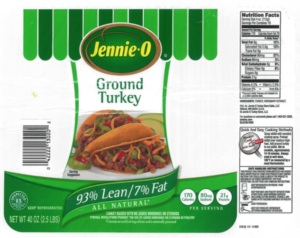
On November 15, 2018, Jennie-O Turkey Store Sales, LLC, in Barron, Wisconsin recalled approximately 91,388 pounds of raw ground turkey products. On December 21, 2018, Jennie-O Turkey Store Sales, LLC, in Faribault, Minnesota recalled approximately 164,210 pounds of raw ground turkey products.

Ill people in this outbreak report buying many different brands of raw turkey products from multiple stores. Available data indicate that this strain of Salmonella Reading may be present in live turkeys and in raw turkey products. A single, common supplier of raw turkey products or of live turkeys has not been identified that could account for the whole outbreak.

If anyone wants an informative read from a near Pulitzer-quality article and photos (if they would have also shown the real impacts on the consumers of the product, the article would have been a Pulitzer-lock – See The Burger that Shattered Her Life – 2010 Prize), please take the time to read Robert Anglen of the Arizona Republic recent article: Clues to a deadly medical mystery hide in Arizona’s romaine lettuce fields – Attempts to trace E. coli outbreaks are often unsuccessful and misleading. Outbreaks tied to romaine spread farther and sicken more.
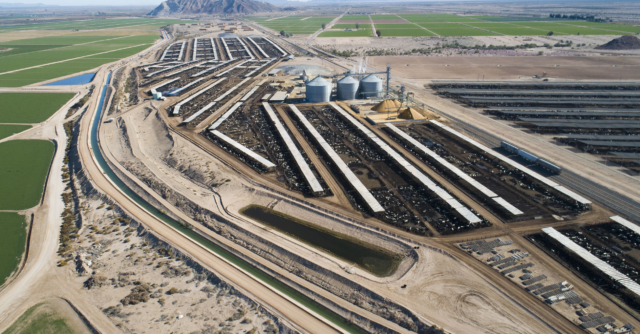
Me, I am into the obvious, any real questions on why we have E. coli O157:H7 outbreaks linked to cows and romaine in Yuma?