

Over the years, I have had a disagreement or two with the CDC, but I never, ever thought for a moment that the premier public health agency in the world was anything less than that.  Everyone interested in any aspect of public health, and specifically the COVID-19 pandemic should read the letter below.

From the pages of The Washington Post as first reported by USA Today:

WILLIAM FOEGE, a legendary figure in public health who helped devise the strategy that curtailed smallpox in West and Central Africa in the late 1960s and who led the Centers for Disease Control and Prevention under Presidents Jimmy Carter and Ronald Reagan, wrote a letter Sept. 23 to the current CDC director, Robert Redfield. The letter has now been disclosed by USA Today and should be read by everyone concerned by President Trump’s dreadful response to the coronavirus pandemic and his corrosive politicization of public health.
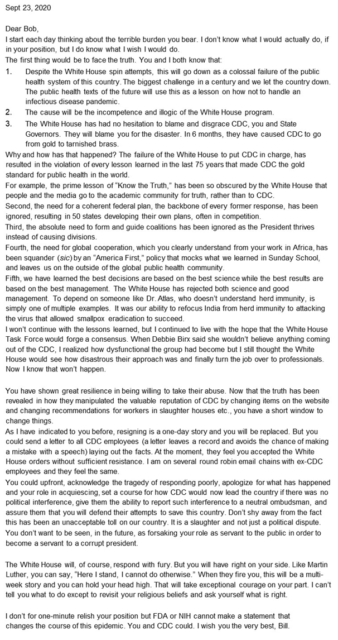
Foege-Letter

It is true, “Everything Tump Touches, Dies”.
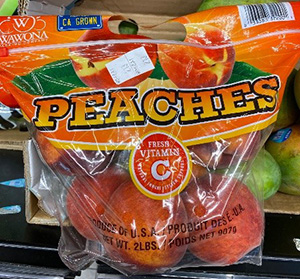
Peaches sicken at least 126 in the US and Canada – Onions sicken at least 1,527 in the US and Canada

Wawona Packing Peaches: The FDA and CDC reported that as of August 27, 2020, a total of 78 people infected with the outbreak strain of Salmonella Enteritidis have been reported from 12 states. Illnesses started on dates ranging from June 29, 2020, to August 3, 2020. Ill people range in age from 1 to 92 years, with a median age of 44. Sixty-four percent of ill people are female. Of 67 ill people with available information, 23 hospitalizations have been reported. No deaths have been reported.

Whole genome sequencing analysis shows that an outbreak of Salmonella Enteritidis infections in Canada is related genetically to this outbreak in the United States. This means that people in both of these outbreaks are likely to share a common source of infection.

As of September 2, 2020, there have been 48 confirmed case of Salmonella Enteritidis illness linked to this outbreak in two provinces: Ontario (32) and Quebec (16). Individuals became sick between June and August 2020. Eleven individuals have been hospitalized. No deaths have been reported. Individuals who became ill are between 0 and 91 years of age. The majority of cases (58%) are female.

Epidemiologic evidence indicates that peaches are the likely source of this outbreak. This investigation is ongoing to identify other retailers that may have sold contaminated peaches packed or supplied by Prima Wawona or Wawona Packing Company LLC.

Thomson International Onions: The FDA and CDC reported that as of August 31, 2020, a total of 1,012 people infected with the outbreak strain of Salmonella Newport have been reported from 47 states. Illnesses started on dates ranging from June 19, 2020, to August 11, 2020. Ill people range in age from less than 1 to 102 years, with a median age of 40. Fifty-seven percent of ill people are female. Of 581 ill people with information available, 136 hospitalizations have been reported. No deaths have been reported.

Whole genome sequencing analysis shows that an outbreak of Salmonella Newport infections in Canada is related genetically to this outbreak in the United States. This means that people in both of these outbreaks are likely to share a common source of infection.

In total, there were 515 confirmed cases of Salmonella Newport illness linked to this outbreak in the following provinces: British Columbia (121), Alberta (293), Saskatchewan (35), Manitoba (26), Ontario (14), Quebec (25) and Prince Edward Island (1). Individuals became sick between mid-June and late-August 2020. Seventy-nine individuals were hospitalized. Three people died, but Salmonella did not contribute to the cause of these deaths. Individuals who became ill were between 1 and 100 years of age. The majority of cases (54%) were female.

Epidemiologic and traceback information indicates that red onions are a likely source of this outbreak. Due to the way onions are grown and harvested, other onion types, such as, white, yellow, or sweet yellow, are also likely to be contaminated. The traceback information collected from several of these illness clusters identified Thomson International, Inc., of Bakersfield, California, as a likely source of red onions. Due to the way onions are grown and harvested, other onion types, such as white, yellow, or sweet yellow, are also likely to be contaminated. Traceback is ongoing to determine if other onions are linked to the outbreak.

Some would say, why it took so long?

Canada Food Inspection Agency (CFIA) is now requiring testing of romaine lettuce from the Salinas Valley, but not from Yuma.

Romaine lettuce imported from the United States has been associated with several outbreaks of foodborne E. coli O157:H7 illnesses in Canada and the USA. Food safety investigations and trace-backs from U.S. authorities have identified a recurring geographical area as the source of the outbreaks. This area encompasses the California Salinas valley counties of Santa Cruz, Santa Clara, San Benito and Monterey.

Due to the reoccurring nature of the outbreaks in Canada the CFIA is implementing temporary import conditions for romaine lettuce originating from these growing areas. This import requirement will require importers of romaine lettuce from the implicated regions in the USA to provide a Certificate of Analysis for each shipment to demonstrate that the product does not contain detectable levels of E. coli O157:H7. This measure is in effect for all shipments arriving in Canada between October 7 and December 31, 2020.

The CFIA will allow the importation of romaine lettuce from the USA if:

  • the importer has a valid Safe Food for Canadians license
  • the importer indicates the geographical origin of the romaine lettuce
  • romaine lettuce grown in California has been handled by a certified member of the California LGMA
  • romaine lettuce grown in Arizona has been handled by a shipper that is a certified member of the Arizona LGMA
  • romaine lettuce from the California counties of Santa Clara, Santa Cruz, San Benito and Monterey is accompanied by a certificate of analysis demonstrating that sampling was conducted according to the sampling and testing requirements and the product does not contain detectable levels of E. coli O157:H7
  • if a declaration of origin of the romaine lettuce is not available, a certification of analysis must be provided

Why not Yuma?

As of September 24, 2020, a total of 41 people infected with the outbreak strain of Salmonella Stanley have been reported from 10 states – Arizona, California, Connecticut, Georgia, Illinois, Louisiana, New Jersey, New York City, Pennsylvania and Wisconsin.

Illnesses started on dates ranging from January 21, 2020, to August 26, 2020. Ill people range in age from 2 to 74 years, with a median age of 27. Sixty-two percent of ill people are female. Of 32 ill people with information available, 4 hospitalizations have been reported. No deaths have been reported.

Epidemiologic and traceback information show that wood ear mushrooms distributed by Wismettac Asian Foods, Inc., are the likely source of this outbreak.

The California Department of Public Health collected dried fungus at one of the restaurants linked to an illness cluster for testing. Testing identified Salmonella in a sample of dried fungus distributed by Wismettac Asian Foods, Inc. WGS analysis is being done to determine if the Salmonella identified in the dried fungus is the same as the Salmonella from ill people.

On September 24, 2020, Wismettac Asian Foods, Inc., issued a recallof all Shirakiku imported dried fungus after the California Department of Public Health found Salmonella in the product.

From FDA Press Release from yesterday:

Today, the U.S. Food and Drug Administration (FDA) announced a proposed rule to establish additional traceability recordkeeping requirements for certain foods. The FDA also published a draft “Food Traceability List,” which describes the foods that would be subject to the proposed requirements. The list includes leafy greens, fresh cut fruits and vegetables, some types of fish, shell eggs, nut butters, and more.

The proposed rule, “Requirements for Additional Traceability Records for Certain Foods” (Food Traceability Proposed Rule) is a key component of the FDA’s New Era of Smarter Food Safety Blueprint and would implement Section 204(d) of the FDA Food Safety Modernization Act (FSMA). If finalized, the proposal would standardize the data elements and information firms must establish and maintain, and the information they would need to send to the next entity in the supply chain to facilitate rapid and accurate traceability. While limited to only certain foods, this proposal lays the foundation for a standardized approach to traceability recordkeeping, paving the way for industry to adopt, harmonize, and leverage more digital traceability systems in the future. Where possible, FDA has drawn on existing consensus standards that industry members may already be using.

Existing FDA regulations require much of the food industry to establish and maintain records to identify the immediate previous sources and the immediate subsequent recipients of foods (commonly referred to as “one-up, one-back” recordkeeping). These requirements form a baseline for traceability recordkeeping, but they provide limited information to effectively and rapidly link shipments of food through each point in the supply chain. This — and the fact that recordkeeping systems can be largely paper-based and lack a universal lexicon throughout industry– can make it difficult to trace a product to its original source when necessary.

As a result, many foodborne illness outbreak investigations have been slowed, resulting in more illnesses and economic loss. Improved traceability, as envisioned by the proposed rule, would allow the FDA to more quickly identify the source of a contaminated product, reduce the scope of product recalls, and conduct more timely root-cause investigations to learn more about how contamination occurred in order to prevent future outbreaks.

At the heart of the proposal is a requirement for those who manufacture, process, pack, or hold a food on the Food Traceability List (FTL) to establish and maintain records associated with specific Critical Tracking Events (CTEs): growing, receiving, transforming, creating, and shipping. For each CTE, entities would be required to establish and maintain records containing Key Data Elements (KDEs). Examples of KDEs include the traceability lot code, the date the product was received, the date the product was shipped, and a product description. The traceability lot code is an important KDE throughout the supply chain intended to establish critical linkages that will help to facilitate rapid traceback and traceforward investigations during foodborne illness outbreaks and recall events. In addition, those subject to the rule would also be required to create and maintain records related to their internal traceability program, which would help regulators better understand a firm’s recordkeeping practices and traceability operations.

The proposed rule would require records to be maintained as either electronic, original paper records, or true copies. In addition, the proposal states that in the event of a foodborne illness outbreak, a product recall, or other threat to public health, the FDA could require that firms submit, within 24 hours, an electronic sortable spreadsheet containing relevant traceability information for specific foods and date ranges. More generally, the FDA encourages all food businesses to maintain their traceability records electronically whenever possible, to expedite the identification of traceability information when needed to address threats to public health.

The requirements of the proposed rule would only apply to foods that are on the FTL, which includes foods that have listed foods as ingredients. The proposed rule includes several exemptions, including that the additional traceability records would not be required after a kill-step (a process that significantly minimizes pathogens in a food) is applied to a food, but documentation of the kill-step application would have to be established and maintained.

The proposed rule and draft Food Traceability List are available for public comment for a 120 days from the date of publication. The FDA will also be holding three public meetings during the public comment period. Information about the public meetings will be provided in a forthcoming announcement.

For More Information

Marler Clark, Bainbridge Island, lowered our flag out of respect for Justice Ginsberg.

From the Justice:

My mother told me to be a lady. And for her, that meant be your own person, be independent.

I said on the equality side of it, that it is essential to a woman’s equality with man that she be the decision-maker, that her choice be controlling.

Women will only have true equality when men share with them the responsibility of bringing up the next generation.

The state controlling a woman would mean denying her full autonomy and full equality.

Someone who used whatever talent she had to do her work to the very best of her ability. And to help repair tears in her society, to make things a little better through the use of whatever ability she has.

To do something, as my colleague David Souter would say, outside myself. ‘Cause I’ve gotten much more satisfaction for the things that I’ve done for which I was not paid.

I tell law students… if you are going to be a lawyer and just practice your profession, you have a skill—very much like a plumber. But if you want to be a true professional, you will do something outside yourself… something that makes life a little better for people less fortunate than you.

Real change, enduring change, happens one step at a time.

Fight for the things that you care about, but do it in a way that will lead others to join you.

Women will have achieved true equality when men share with them the responsibility of bringing up the next generation.

A federal court in Texas sentenced ice cream manufacturer Blue Bell Creameries L.P. to pay $17.25 million in criminal penalties for shipments of contaminated products linked to a 2015 listeriosis outbreak, the Justice Department announced today.

Blue Bell pleaded guilty in May 2020 to two misdemeanor counts of distributing adulterated ice cream products.  The sentence, imposed by U.S. District Judge Robert Pitman in Austin, Texas, was consistent with the terms of a plea agreement previously filed in the case.  The $17.25 million fine and forfeiture amount is the largest-ever criminal penalty following a conviction in a food safety case.

“American consumers must be able to trust that the foods they purchase are safe to eat,” said Acting Assistant Attorney General Jeffrey Bossert Clark of the Justice Department’s Civil Division.  “The sentence imposed today sends a clear message to food manufacturers that the Department of Justice will take appropriate actions when contaminated food products endanger consumers.”

“The health of American consumers and the safety of our food are too important to be thwarted by the criminal acts of any individual or company,”  said Judy McMeekin, Pharm.D., Associate Commissioner for Regulatory Affairs, U.S. Food and Drug Administration.  “Americans expect and deserve the highest standards of food safety and integrity.  We will continue to pursue and bring to justice those who put the public health at risk by distributing contaminated foods in the U.S. marketplace.”

“The results of this investigation reflect the determination of the Defense Criminal Investigative Service to hold companies that sell food products to the military accountable and ensure they comply with food safety laws,”  said Michael Mentavlos, Special Agent-in-Charge of the DCIS Southwest Field Office.  “The health and safety of our service members and their dependents is of paramount importance.”

The plea agreement and criminal information filed against Blue Bell allege that the company distributed ice cream products that were manufactured under insanitary conditions and contaminated with Listeria monocytogenes, in violation of the Food, Drug and Cosmetic Act.  According to the plea agreement, Texas state officials notified Blue Bell in February 2015 that samples of two ice cream products from the company’s Brenham, Texas factory tested positive for Listeria monocytogenes, a dangerous pathogen that can lead to serious illness or death in vulnerable populations such as pregnant women, newborns, the elderly, and those with compromised immune systems.  Blue Bell directed its delivery route drivers to remove remaining stock of the two products from store shelves, but the company did not recall the products or issue any formal communication to inform customers about the potential Listeria contamination.  Two weeks after receiving notification of the first positive Listeria tests, Texas state officials informed Blue Bell that additional state-led testing confirmed Listeria in a third product.  Blue Bell again chose not to issue any formal notification to customers regarding the positive tests. Blue Bell’s customers included military installations.

In March 2015, tests conducted by the Food and Drug Administration (FDA) and Centers for Disease Control and Prevention (CDC) linked the strain of Listeria in one of the Blue Bell ice cream products to a strain that sickened five patients at a Kansas hospital with listeriosis, the severe illness caused by ingestion of Listeria-contaminated food.  The FDA, CDC, and Blue Bell all issued public recall notifications on March 13, 2015.  Subsequent tests confirmed Listeria contamination in a product made at another Blue Bell facility in Broken Arrow, Oklahoma, which led to a second recall announcement on March 23, 2015.

According to the plea agreement with the company, FDA inspections in March and April 2015 revealed sanitation issues at the Brenham and Broken Arrow facilities, including problems with the hot water supply needed to properly clean equipment and deteriorating factory conditions that could lead to insanitary water dripping into product mix during the manufacturing process.  Blue Bell temporarily closed all of its plants in late April 2015 to clean and update the facilities. Since re-opening its facilities in late 2015, Blue Bell has taken significant steps to enhance sanitation processes and enact a program to test products for Listeria prior to shipment.

Trial Attorneys Patrick Hearn and Matt Lash of the Civil Division’s Consumer Protection Branch prosecuted the case with assistance from Shannon Singleton and Michael Varrone of the FDA’s Office of Chief Counsel.  The criminal investigation was conducted by the FDA’s Office of Criminal Investigations and the Department of Defense Criminal Investigative Service.

For more information about the enforcement efforts of the Consumer Protection Branch visit its website at http://www.justice.gov/civil/consumer-protection-branch.

“Fight like you live here” was always the tag at the end of any of Tony’s frequent email missiles.

It it is was a great empty feeling of loss that I learned about his death today.  My thoughts to his family and friends.  From Food and Water Watch’s website:

Tony Corbo is the senior lobbyist for the food campaign at Food & Water Watch. He is responsible for food-related legislative and regulatory issues that come before Congress and the Executive Branch. Tony has extensive organizing experience having directed major public employee representation campaigns in several states. He has also directed political campaigns at various levels, and he served as the administrative assistant to a Member of Congress. He holds a Bachelor of Arts degree in Public Affairs from The George Washington University and a master’s degree in industrial and labor relations from Cornell University.

Tony would not need time to think or process – I do – but I will have more to say about a friend who I greatly admired.

Introduction. On June 28, 2016, the Chicago Department of Public Health (CDPH) received five reports of Shiga Toxin-producing Escherichia Coli (STEC)1 through routine surveillance. By June 29, routine interviews conducted by the CDPH Communicable Disease (CD) Program revealed that three of the five cases reported consuming food items from Carbon (Restaurant A) within 2-3 days before illness onset. That evening, three separate hospitals reported an increase in the number of patients that presented to the ED with complaints of diarrhea and had preliminary positive STEC diagnostic laboratory tests. By July 1, seven cases reported eating at Restaurant A prior to their illness onset. Carbon Final Outbreak Summary – City of Chicago Dept. of Public Health

Restaurant. Restaurant A has two Chicago locations, one on the south side and another on the west side of the city. The restaurant is open 7 days a week and serves Mexican-style foods. Both locations serve the same menu and use the same food suppliers. The majority of food preparation is performed out of the south side location; most food for the west side location is transported after preparation at the south side kitchen. Catering is also available. Overall, approximately 40% of food orders are placed by phone or through online ordering websites (i.e. GrubHub, Eat24, etc.) for delivery or pickup. Catering and other delivery orders are prepared in the same kitchen and by the same staff as dine-in orders at both locations. Staff members at each location reported regularly consuming restaurant food.

Epidemiological investigation. Case finding was conducted through public messaging and disease surveillance. On June 30, 2016, CDPH issued a health alert to all Chicago hospitals to notify them of the outbreak, to request prompt reporting of STEC cases, and to discourage use of antibiotics and encourage aggressive hydration if suspecting a diagnosis of STEC. Concurrently, the Illinois Department of Public Health (IDPH) issued an alert via the Food borne Outbreak Network to state health departments to notify them of any STEC cases with travel to Chicago and mention of Restaurant A.

A standard questionnaire was created to collect information about signs and symptoms of illness, food consumption and other potential exposures occurring in the seven days prior to the case’s onset of illness, and meal companions. A case-control study was conducted to determine risk factors for infection with STEC. Case definitions were in accordance with the Centers for Disease Control and Prevention (CDC) and Council of State and Territorial Epidemiologists standards2. A confirmed case was defined as isolation of E. coli O157:H7 (STEC) from a clinical specimen in a person with illness onset between June 3-July 23, 2016, with either reported exposure to Restaurant A or a pulsed-field gel electrophoresis (PFGE) pattern indistinguishable from one of 14 patterns associated with the outbreak. Confirmed cases with reported Restaurant A exposure and onset dates that preceded others within their household were considered confirmed primary cases. A probable case was defined as a person with clinically compatible illness (bloody diarrhea or ~3 days of diarrhea with ~3 stools in a 24-hour period) in the absence of laboratory confirmation, and exposure to Restaurant A or shared household with a primary case. Secondary cases were defined as household contacts of primary confirmed or probable cases, with onset of diarrhea one to eight days after the primary case’s symptom onset date. Case-control analysis was limited to primary confirmed cases and well controls. To identify controls, CD Program staff asked confirmed cases about their meal companions and obtained a list of individuals who placed orders through the online delivery service GrubHub. Controls were frequency matched 4:1 to cases by meal date (June 17th-June 30th) and restaurant location.

Contingency tables were arranged to evaluate the bivariate relationships between case status and individual food items, and odds ratios (OR) with 95% confidence intervals {95% Cl) were estimated for each. Chi-Square tests were performed to identify statistically significant associations, except when expected cell counts were less than or equal to 5, in which case Fisher’s Exact test was used. P-values <0.05 were considered statistically significant. The independent effects of variables found to be significantly associated with disease in the bivariate analyses were further evaluated using multivariable logistic regression, adjusted for age and gender. All statistical analyses were carried out with SAS version 9.3 (SAS Institute, Cary, NC).

Environmental investigation. On July 1, 2016, the Food Protection Division (FPD) conducted an environmental inspection of Restaurant A and collected the following: food samples, initial information about restaurant employees and food preparation, and copies of invoices for food items. Food items collected included steak, chicken, cilantro, elote (corn), elote mix, cheese, sour cream, grilled corn & pineapple salsa, salsa fresca, tequila lime sauce, red and green salsas. CD Program staff performed in depth interviews of the owners of the restaurant and employees. Because employees at both locations often functioned in multiple roles, all on-site restaurant employees were considered food handlers for the purposes of this outbreak investigation. Food handlers were asked to submit stool specimens to screen for STEC.

Laboratory investigation. Clinical culture or polymerase chain reaction tests were performed by hospital and commercial laboratories and results were reported to the CD program. Specimens from cases, food handlers, and food were sent to the Illinois Department of Public Health Division of Laboratories for culture, and for serotyping and PFGE analysis of STEC isolates. PFGE patterns were uploaded to the national Pulse Net database and compared by the Centers of Disease Control (CDC). Sixteen isolates selected to represent all outbreak-associated PFGE patterns and a variety of source patients (primary and secondary cases as well as food handlers), restaurant locations, and meal dates were sent to CDC for characterization by multiple locus variable number of tandem repeats analysis (MLVA).

Epidemiologic findings. Sixty-nine confirmed and 37 probable cases were identified as part of this outbreak. Among the confirmed, 55 met the primary case definition, four were secondary cases, and ten of the confirmed cases matched the outbreak PFGE pattern but their association with the restaurant was not identified (five denied eating at the restaurant and five were unable to locate). One additional case, identified after the restaurant closure and reopening, was unable to be classified due to multiple

Restaurant A meal dates and a PFGE pattern that was similar but not identical to other outbreak patterns. Illness onset dates of the 55 confirmed primary cases ranged from June 19-July 3.

Median age was 29 years (range, 3 to 69 years); 29 (53%) of the cases were female. Median incubation period was 3 days (range 12 hours-5 days). Twenty-one primary and one secondary case were hospitalized. No cases developed hemolytic uremic syndrome, and none died. Among the 55 confirmed primary cases, 50 (91%) ate at the south side location (meal date range 6/17 to 6/30) and 5 (9%) ate at the west side location (meal date range 6/19 to 6/26).

Multiple food items were associated with illness on bivariate analysis (Table 1) including consumption of cilantro (odds ratio [OR] 3.5, 95% Cl: 1.5-8.1), salsa fresca (OR 3.1, 95% Cl: 1.6-6.1), chicken taco (OR 3.1, 95% Cl: 1.6-6.0), and lettuce (OR 2.01, 95% Cl: 1.1-3.8). Multivariable analysis using logistic regression (Table 2) revealed that consumption of cilantro (adjusted OR [aOR] 4.64, 95% Cl: 1.87-12.011.6), salsa fresca (aOR 2.85, 95% Cl: 1.31-6.05.4), and lettuce (aOR 2.57, 95% Cl: 1.23-5.26) remained independently associated with illness after adjusting for age and gender. The observed epidemiologic association with chicken tacos may reflect collinearity between chicken tacos and cilantro, meaning that an association was identified because the chicken tacos are prepared and served with raw cilantro. All cases who reported eating a chicken taco also reported eating cilantro. Other chicken-containing items (e.g., chicken burritos, chicken salad bowls) were not associated with illness. Because salsa fresca was known to contain raw cilantro, an additional multivariable logistic regression analysis was performed including a combined variable indicating consumption of either cilantro or salsa fresca. In this model, consumption of cilantro or salsa fresca was associated with an adjusted odds ratio of 6.9 [Cl: 2.0-24.0]

Lettuce was associated with illness in both multivariable models but was consumed by only 44% of cases. In comparison, cilantro was consumed by 87% of cases, and either cilantro or salsa fresca were consumed by 95% of cases.

Environmental findings and food handler interviews. Meats, salsas, and marinades were fully or partially prepared at the south side location and transported daily to the west side location. Most fresh produce items, including cilantro and lettuce, were received by each location in separate deliveries and chopped and prepared on-site. Several critical violations were identified during the sanitarians’ inspection of Restaurant A on July 1, including improper temperatures for several food items (i.e. red & green salsas, tequila lime sauce, raw fish, guacamole, and cheese), and improper hand hygiene practices among food handlers. Because of concern for a potential ongoing public health threat associated with food served by Restaurant A, CDPH recommended that the restaurant voluntarily cease operations and withdraw from a large outdoor food festival until more information about the source of the contamination was known. The owner agreed, and Restaurant A voluntarily closed both locations. CD staff subsequently interviewed and tested forty food handlers from both locations. According to the restaurant owner, there was no cross-over of food handlers at the two locations. Among the forty food handlers interviewed none reported any history of gastrointestinal illness in the two weeks preceding or during the outbreak period, though absenteeism was reported for one. Nearly all food handlers had stool tests performed within one week after the restaurant closure.

Laboratory findings. Specimens from 69 cases and 16/40 (40%) food handlers yielded STEC isolates. From primary case isolates, 10 PFGE patterns were identified. An additional four similar patterns were identified among food handler isolates. The 16 isolates analyzed by MLVA displayed four unique MLVA patterns. One predominant MLVA pattern was shared by 10 isolates. Food handler and case isolates displayed a variety of MLVA patterns, with some food handlers sharing MVLA patterns indistinguishable from restaurant patrons despite differing PFGE patterns. There were no distinct pattern groupings according to restaurant location. None of the 12 food items cultured were positive for STEC.

Food product traceback. In collaboration with CDPH, FPO and IDPH department of Food, Drugs and Dairy, invoices collected from the restaurant for the outbreak period meal dates were reviewed. Cilantro was purchased from a distributor serving multiple other restaurants throughout Illinois. The distributor repackaged cilantro from multiple sources, including suppliers in Mexico and Illinois. Of the five laboratory-confirmed cases who denied Restaurant A exposure, none reported cilantro consumption, although cooperation with re-interview was limited. In the absence of confirmed cases reporting consumption of implicated food items from another restaurant, it was not possible to perform further traceback to assess for a common source of contamination. No other restaurants serviced by the distributor were linked to the outbreak.

Re-inspection and reopening. FPO performed re-inspections at both locations, during which instruction and guidance were provided on hand hygiene and it was ensured that food preparation and storage areas were adequately sanitized. Only food workers who had two consecutive negative tests for STEC were permitted to work at the reopened locations, which delayed reopening of the south side location. After passing FPO re-inspections, the south and west side restaurants re-opened on July 9 and 29, respectively.

An additional case of STEC was subsequently identified with a meal date of July 11, 2016 at the reopened west side location, prompting imposed restriction of all food handlers who had been involved with preparation of the case’s meal. All of these food handlers and the case’s meal companions were tested for STEC, with negative results. The case had also eaten food from the restaurant on June 21 with a household member, prior to the restaurant’s closing; neither reported symptoms of illness at that time. PFGE analysis revealed an additional pattern not previously identified in this outbreak, but which appeared related to other outbreak patterns. Because of the multiple meal dates, negative test results of all meal companions and involved food handlers, and absence of additional reported restaurant-associated cases after the re-opening, we could not definitively determine if the case was primary, secondary or unrelated. Food handlers were permitted to return to work after repeated negative test results. No additional complaints were received in association with the restaurant in the two months following this case’s illness onset

Conclusion. This was a large restaurant-associated outbreak of Shiga toxin-producing E. coli O157:H7 infections. Closure of the restaurant during the early stage of the investigation prevented additional cases of illness from occurring. Cilantro was the most likely food-vehicle causing this outbreak, based on the strong statistical association of raw cilantro consumption with illness, and the high percentage of cases explained by cilantro consumption. The large number of PFGE patterns associated with the outbreak was suggestive of a heavily contaminated food item rather than introduction from a point source such as an ill food worker at the restaurant. However, STEC was not isolated from cilantro or cilantro-containing food items collected from the restaurant or the restaurant’s distributor. Inability to isolate STEC from food samples may have been hindered by imperfect sensitivity of testing, imperfect representativeness of food samples, or turnover of produce items through the distribution chain leading to items no longer being contaminated at the time of collection. Additionally, cross-contamination during food preparation and transmission by food handlers who were found to have STEC infection likely contributed to the outbreak.

Given that there is a Salmonella outbreak and recall of peaches and people sick and hospitalized from eating said peaches – timing of the below tweet does not seem optimal? Outbreak of Salmonella Enteritidis Infections Linked to Peaches | CDC cdc.gov/salmonella/ent… via @CDCgov – Damn Twitter!