
Some ask me why I get so exercised over foodborne illnesses. Here is an email I just got:  

My wife has been hospitalized with typical HUS after E. coli infection verified O157. She consumed Wendy’s three days prior to symptom onset. Has been in hospital from August 6th to present and experienced kidney failure, among other secondary cognitive issues we hope clear up over time. We are still in hospital. 

The good news/bad news of being in the middle of every E. coli outbreak linked to leafy greens over the last 20 years is that I have a lot of insight and contacts outside and inside the industry.

No one would dispute that at this time of the year, lettuce like the romaine/iceberg hybrid would be grown in California instead of Arizona (too damn hot this time of year).  So, it was with little surprise that I learned from multiple sources over the weekend that California is once again, specifically the Santa Maria Valley, the likely source of yet another E. coli outbreak that in the last month has sickened between 84 and 160 people in Ohio, Pennsylvania, Michigan and Indiana who ate at Wendy’s restaurants.

According to Pacific International Marketing (PIM):

The Santa Maria Valley in California stretches from the cool coastal areas to the warm inland valleys. The valley provides a unique climate and soil types making it and ideal place for ideal year-round growing conditions for many of our row crops. Each year, Pacific with its growers and partners produces approximately five million packages of produce from this area.

In the Santa Maria Valley, our growers use both conventional and organic farming practices. They grow anise, beets, broccoli, Brussels sprout stalks, cauliflower, celery, celery hearts, cilantro, green onion, iceberg lettuce, kale, leeks, mixed leaf lettuce, parsley, radishes, romaine, romaine hearts, spinach and spring mix lettuces.

Watch this space or the lawsuits in Ohio, Pennsylvania, Michigan and Indiana. Although, if Wendy’s and/or the grower, processor, shipper want to chat, I am all ears.
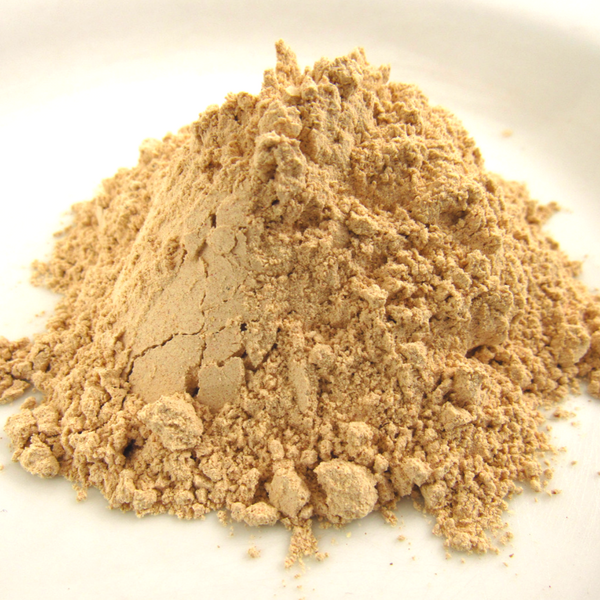
Here is what Daily Harvest and Wendy’s have said in the last weeks about outbreaks that are negatively impacting hundreds of their customers:

Daily Harvest: “At this time, we have identified tara flour as the cause of the issue. Our extensive investigation has involved many experts analyzing data from all sources. We have only used this ingredient in French Lentil + Leek Crumbles and we are no longer sourcing from this producer who does not provide any ingredients for our 140+ other items. This was the first and only time we’ve used tara flour, which has been available and used in the North American market as a plant-based source of protein prior to our use. Our investigation team will continue working with the FDA, the tara flour producer and others to help determine what specifically made people sick.” 

Wendy’s: “We are fully cooperating with public health authorities on their ongoing investigation of the regional E. coli outbreak reported in certain midwestern states. While the CDC has not yet confirmed a specific food as the source of that outbreak, we are taking the precaution of discarding and replacing the sandwich lettuce from some restaurants in that region. The lettuce that we use in our salads is different and is not affected by this action. As a company, we are committed to upholding our high standards of food safety and quality,” 

Here are some things that both Daily Harvest and Wendy’s can do to help their customers and help themselves.

  1. Be transparent about where you received the tainted product. You can do it willingly, or I will get it from you during the litigation process. Getting ahead of me is really not that difficult and it will be good public relations.
  2. Provide samples of the offending ingredient to the FDA and to me. Knowing more what has sickened customers may drive answers and will increase public trust that your are trying to do the right thing. Again, you can do it willingly, or I will get it from you during the litigation process.
  3. Offer to pay customers out-of-pocket medical bills and wage loss now to those who are clearly victims of your tainted product. Again, you can do it willingly, or I will get it from you during the litigation process. Again, getting ahead of me is really not that difficult and it will be good public relations.

Anyone want to place bets on if Daily Harvest and/or Wendy’s takes my advice?

  1. I did not get Revive and the FDA to recall the Pineapple and Mango Smoothies with tara that has sickened dozens with acute liver failure, including surgeries to remove gallbladders. We are now representing over 30 clients.
  2. I did not get Wendy’s to tell me who provided the E. coli-tainted lettuce that has sickened well over a hundred, many hospitalized, some with kidney failure. But, I have my sights set on California. We are now representing close to 30 clients. Hey, Wendy’s, tell me now or you will tell me later anyway.
  3. I did not get Daily Harvest, Stone Gate nor Smirk’s to willingly provide tara for testing despite them being the cause of hundreds of people (we represent over 350 clients) that suffered acute liver failure, including surgeries to remove gallbladders after consuming French Lentil + Leek Crumbles. I have had to ask the Court to order them to do so.
  4. I did not get Daily Harvest, Stone Gate nor Smirk’s to tell me who manufactured and provided the tara that went into the French Lentil + Leek Crumbles. Hey, tell me now or you will tell me later anyway.
  5. Thus far, despite spending thousands on testing of Pineapple and Mango Smoothies and French Lentil + Leek Crumbles, we have still not determined what in the products (with the ingredient tara) has caused all the illnesses. I have shared all test results with Daily Harvest, Stone Gate, Smirk’s and the FDA.

Well, I have the weekend and next week to turn it around.

Yes, the product has been pulled from the Revive website, but there has been no recall, no, “market withdraw.”  People still have this product in their freezers and have consumed them recently.

People, at least 30 who have contacted me have suffered severe liver complications, including several who have had their gallbladders removed.

I got this email from someone today:

I am contacting you on behalf of my girlfriend. I understand there is an ongoing lawsuit with Revive pineapple and mango smoothies and I was wondering if she is eligible to be a part of it. She has been hospitalized three times in the last 6 months with severe abdominal pain, one visit leading to her gallbladder being removed surgically. All three times were shortly after ingesting the pineapple and mango smoothies regularly and the similarities in the symptoms are uncanny. Please let me know if this is something we can pursue. Thank you.

Why put consumers at risk?

Borrowing a bit from Buffalo Springfield:

There’s something happening here 
But what it is ain’t exactly clear 

Tom Vilsack was a farm state governor and a presidential aspirant. I must admit, I have long been a fan, but never, ever, thought I would see him write and Op-ed that would clearly piss off the big meat players in the United States. Tom Vilsack is now the U.S. Department of Agriculture secretary, and here is what he wrote in the Hill a few days ago.

As you read this, millions of Americans across the country are preparing meals for their families, friends, or themselves. Some may be racing to pack lunches for their kids, others might be preparing for a large family gathering. Regardless of the purpose of a meal, we can all relate to how food brings us together and that is why we want the safest options for all of us. When it comes to food safety, the United States has one of the strongest system in the world, but foodborne bacteria, including Salmonella, continue to sicken hundreds of thousands of people every year.

At USDA, under President Biden’s leadership, keeping all of us safe from foodborne illnesses is not only our duty, but our mission. As secretary of Agriculture, one of my key priorities is ensuring that the American public has access to a safe food supply. Our food safety system is robust, but we recognize that there is always room to improve.

Despite data showing that Salmonella contamination in poultry has been decreasing since the 1990s, there has not been a reduction in Salmonella illnesses. Every year, we see nearly 1.35 million Salmonella infections. Almost one quarter of those are attributed to poultry consumption.

When we look at these numbers, it is evident that we need to reevaluate our current approach to controlling Salmonella in poultry. Most of us agree that contaminated meat and poultry products that make consumers sick should not be sold to the American public. That is why the USDA’s Food Safety and Inspection Service (FSIS) is developing a new approach to better protect the American public. Recently, we announced a significant action that USDA is taking related to Salmonella in raw poultry.

This fall, USDA will take the critical step of declaring Salmonella as an adulterant — or substance that can compromise the safety of a product — in breaded and stuffed raw chicken products, a decision that will enable us to stop their sale when we find contamination. When a food product is adulterated, it cannot be sold to the public.

Breaded and stuffed raw chicken products have been a consistent source of Salmonella infections for decades and have been associated with 14 illness outbreaks. The most recent outbreak was just last year and resulted in illnesses across 11 states. At the root of these outbreaks is the fact that people often do not realize these items are raw because the outside of the product may appear browned and cooked. This misleads consumers to believe that what they are about to eat has already been cooked to a safe temperature, leading some to ignore cooking instructions. Efforts to improve labeling of these products have not led to a reduction in outbreaks.

This announcement is important because it is the first time that Salmonella is being declared an adulterant in a class of raw poultry products. But it is just the first step in our efforts. We know that to move closer to our national public health targets, we must continue taking decisive action to control Salmonella in all poultry products. 

In the fall, FSIS will be presenting a proposed framework for a new comprehensive strategy to reduce Salmonella illnesses linked to poultry and convening a public meeting to discuss it. The main components of our proposed framework include: enforceable final product standards aimed at ensuring that poultry products with levels or types of Salmonella contamination that make people sick are not sold to consumers; modifications to our slaughter and processing regulations to better ensure that Salmonella contamination is reduced throughout the slaughter and production process; and a requirement that Salmonella test results accompany each flock as it enters the establishment.

As we have done throughout this process, USDA will continue to collaborate extensively with all stakeholders on this new strategy that better protects consumers from foodborne illness. We will devote the necessary resources to advancing this effort and will continue listening to thoughtful feedback along the way.

When it comes to feeding Americans, even one foodborne illness is one too many. If that one illness involves your loved one — particularly a young child or older relative who can suffer serious infections, this problem ceases to be one of merely science and becomes something very personal. By addressing the dangers of Salmonella head on, we can make meaningful improvements to food safety and take one step closer to an America where this microscopic threat is reduced.

Good on ya, Secretary Tom. But, I am watching.

Total Adverse Illness Events: 369*
Hospitalizations: 125*
Deaths: 0
Last illness onset: August 9, 2022*
States with Adverse Illness Events: AZ, CA, CO, CT, DE, FL, GA, IL, IN, IA, KS, MD, MA, MN, MS, MI, MO, MT, NV, NH, NJ, NY, NC, OH, OK, OR, PA, RI, SC, SD, TN, TX, UT, VT, VA, WA, WI
Product Distribution: Nationwide
*Estimate based on Consumer Complaint and CAERs reports received by the FDA

Yet another E. coli outbreak linked to leafy greens is burning through at least four states – Ohio, Indiana, Pennsylvania and Michigan – in people that ate hamburgers – with lettuce – at Wendy’s.

Hundreds are sick and those numbers will rise. There are several people – mostly kids – with hemolytic uremic syndrome (HUS). Here is an email that I just received:

“My wife has been hospitalized with HUS after an E. coli infection verified O157. She consumed Wendy’s three days prior to symptom onset. Has been in hospital from August 6th to present and experienced kidney failure, among other secondary cognitive issues we hope clear up over time. Still in hospital. Wondering what options and possible outcomes are. Located in Indianapolis Indiana.”

I have also been contacted by another woman with HUS and two children under 10.

It is 2022 and 16 years since the 2006 spinach E. coli outbreak that was supposed to be the wake-up call for both the leafy green industry (beginning the the Leafy Green Marketing Agreement – LGMA) and what prompted the need for the Food Safety Modernization Act – FSMA). Yet, nothing has really changed. Here is a bit of history.

This is one case out of 205 as told by CNN. Perhaps it is time from Dr. Gupta to make a house call to California?

Thursday, May 17, 2007

A face behind the spinach scare

By Dr. Sanjay Gupta
Chief Medical Correspondent

Over the past several months, we have been working on a one-hour special about food safety. I have to say, it has been one of the most eye-opening stories on which I have worked. As a rule, when we go to the grocery story, we have a simple expectation. We expect what we purchase will be safe to eat, especially when it comes to healthy foods like spinach. As most everyone knows, that is not always the case. Over the last decade, there have been 22 major outbreaks of E.coli O157:H7 in produce, and the most recent one in spinach last October killed at least three people and made more than 200 very sick.

If you’re like most people, these numbers may not mean a whole lot to you. As a journalist, though, I thought it was important to introduce you to just one of the faces behind those numbers. Ashley Armstrong is from Indiana. Just 2 years old, she was cute, spunky and in constant motion. Always running around the house, sometimes giggling at the top of her lungs, she reminded me of my own daughter. On a fall day, she, her adorable sister and two parents sat down to a healthy dinner, including a spinach salad. Within a week, three members of the family became sick. Soon, it became clear that Ashley had been hit the hardest. For a long time, her parents thought the illness would just pass. It didn’t and Ashley was soon diagnosed with kidney failure and brain swelling. Doctors were trying everything possible to save their life. It took a while, but they figured out that she had been infected with E.coli O157:H7 and its deadly toxin was systematically shutting down her body. I remember her father looking at me misty-eyed and saying, “Fathers are supposed to protect their daughters… in this case, there was nothing I could do.” The culprit was a green, leafy piece of spinach.

I took Ashley’s story with me when I was given unfettered access to the chiefs at the FDA. They sat down with me and told me that, for the most part, food is safe in this country. Fair enough, but what about Ashley? Was the food any safer this year as compared to last? They really couldn’t say for sure and beyond that, they told me something even more alarming: They weren’t even sure exactly how to make the produce any safer. One FDA chief just called it bad luck.

What do you think? Do you believe it is just bad luck and that we should accept a few deaths and illnesses every year from our food? Or, do we as a society say this is important– I don’t ever want to worry about the safety of my food and we should do whatever it takes to see to that?

For the rest of Ashley’s story and an exclusive look at food safety from farm to fork, watch “Danger: Poisoned Food” this Saturday and Sunday at 8 p.m. and 11 p.m. ET. – Link no longer works.

Here is the story about the Armstrong’s that is likely being repeated in this current outbreak.

On August 26, 2007, the Armstrong family became victims of the 2006 dole baby spinach outbreak when the family had a spinach salad for dinner.  A little over a week later, Isabella (6) and Ashley (3) began to experience severe diarrhea. While Isabella recovered relatively quickly, Ashley became severely dehydrated and was admitted to the hospital. There, her infection developed into hemolytic uremic syndrome (HUS), a serious and potentially fatal complication of E. coli poisoning. Her small body became swollen with the fluids her kidneys couldn’t eliminate, and she was kept on constant dialysis for almost six weeks.

After she was discharged from the hospital, Ashley remained on dialysis until finally, after four months, it was discontinued.  By the end of January, her kidney function, while far from normal, had improved enough for her peritoneal dialysis catheter to finally be removed.

Ashley was one of 205 people affected by an outbreak of E. coli O157:H7 resulting from contaminated bags of Dole baby spinach. The spinach was recalled on September 14, 2006. It was eventually traced back to Natural Selection Foods in Salinas Valley, CA.

Ashley’s E. coli infection and HUS drastically altered her future. She will require multiple kidney transplants, which her body will become increasingly likely to resist, and she will require dialysis multiple times throughout her life.  She is also at a higher risk of weak bones, short stature, high blood pressure, heart attacks and cancer.

Ashley is now surviving due to a kidney transplant.

The size of the E. coli O157:H7 outbreak linked to Wendy’s in court states is growing. We have been retained by 10 folks in Ohio, Michigan and Pennsylvania, including 3 with hemolytic uremic syndrome (HUS).

E. coli O157:H7 illnesses range from July 26th to August 8th.

The CDC reports as of August 18, 2022, a total of 37 people infected with the outbreak strain of E. coli O157:H7 have been reported to CDC from 4 states.

However, ODOH reports that the 19 cases in Ohio are located in the following counties: Wood (7), Lorain (3), Cuyahoga (2), Lucas (2), Mahoning (2), Clermont (1), Franklin (1), and Summit (1). Note, Wood County reports (22). The affected individuals in Ohio range in age from 8 to 82 years old. There are 11 males and eight females. In Ohio, four people have been hospitalized.

And, MDHHS had received reports of 98 cases of E. coli infection in August, compared to 20 cases reported during the same time period in 2021. The current investigation is in the early stages. Laboratory results have linked some of these cases to each other. Michigan currently has 43 confirmed E. coli O157 cases matched with the outbreak strain. The illness onset dates range from late July through early August. Outbreak cases have been reported from 18 jurisdictions including the counties of Allegan, Branch, Clinton, Genesee, Gratiot, Jackson, Kent, Macomb, Midland, Monroe, Muskegon, Oakland, Ogemaw, Ottawa, Saginaw, Washtenaw, and Wayne and the City of Detroit. The age range of those affected are 6 to 94 years old. Among the Michigan outbreak cases with available information to date, 56% have been hospitalized. Four cases of hemolytic uremic syndrome (HUS), a severe complication that occurs in some people diagnosed with STEC infection, have been identified.

The Food Safety Law Firm: 

Marler Clark, The Food Safety Law Firm, is the nation’s leading law firm representing victims of E. coli outbreaks and hemolytic uremic syndrome (HUS). The E. coli lawyers of Marler Clark have represented thousands of victims of E. coli and other foodborne illness infections and have recovered over $850 million for clients. Marler Clark is the only law firm in the nation with a practice focused exclusively on foodborne illness litigation. Our E. coli lawyers have litigated E. coli and HUS cases stemming from outbreaks traced to ground beef, raw milk, lettuce, spinach, sprouts, and other food products. The law firm has brought E. coli lawsuits against such companies as Jack in the Box, Dole, ConAgra, Cargill, Wendy’s and Jimmy John’s. We have proudly represented such victims as Brianne KinerStephanie Smith and Linda Rivera.

If you or a family member became ill with an E. coli infection or HUS after consuming food and you’re interested in pursuing a legal claim, contact the Marler Clark E. coli attorneys for a free case evaluation.

Additional Resources:

We know that Wendy’s knows, but is not yet saying – they will eventually and I continue to sue them. It is also possible the FDA knows, but also is not saying – yet.

I am not that far behind.

Well, we know from Wendy’s and the FDA that the likely E. coli-tainted product is the Hybrid Romaine and Iceberg Lettuce that came from ____________.

Not knowing ____________ reminded me of a story.  

After 30 years of doing this work, I have lots of stories.

Shortly after Labor Day 2006, as the Dole baby spinach E. coli outbreak was blowing up (eventually, 205 sick with dozens with kidney failure and with 5 deaths), I drove from San Francisco to Salinas looking for where the baby spinach was grown.  Like now, this time of year the “salad bowl of America” shifts to the greater Salinas Valley.  After hitting a few Salinas bars, I found the residents of Salinas more than willing to throw a neighboring community, San Juan Bautista, under the E. coli bus. “Go there, it wasn’t us” was the constant refrain as I paid the tab.

San Juan Bautista was not a far drive, but a drive well back in time, to when this area of California was part of greater Mexico.  The town has an old Mission that dates to the 1700’s.  The Mission has a field next to it that is an unmarked grave for several thousand native Americans.

Sitting in yet another bar with an open tab (sensing a theme here), I was quickly directed to a farm on the outskirts of town where a few FDA vans were pulled up – BINGO!

The 2006 Dole baby spinach outbreak started on a 20-acre parcel “in transition” to organic that was harvested in one day and sent to a processor that bagged the spinach for Dole.  Although the actual cause of the outbreak remains somewhat a mystery, a few wild pigs and some neighboring grass-fed cows were the most likely culprits.  

This 2006 outbreak was supposed to be the lettuce industries “Jack-in-the-Box” – “its 911.”  

But here we are again, and again, and again.

So, to the internet I go.  So far, the only two companies I have found that do produce the Hybrid Romaine and Iceberg Lettuce is Tanimura and Antle and Mann’s.  However, my guess is there are others.  I reached out to contacts over the last 20 years about what I found, and then I got this email:

My understanding is that it’s not that consistent, but I haven’t really worked with Wendy’s much. They always seem to be represented at many of the industry meetings but at least in my experience don’t tend to say much or interact much. Those two are certainly possible but I believe that both Taylor Farms and Church Bros/ True Leaf have at least in the past – possibly currently. Although if FDA has turned its focus on to Santa Maria, then other commodity companies like Tanimura and Antle might be the suppliers… But I don’t actually know…

It may not be any of the above.

Seems like I may be heading to a Salinas bar – drinks on me!

By the way, here is the graveyard:

In 2007 I spent a month and a half traveling Australia giving speeches about “why it is a bad idea to poison you customers.” My wife, Julie, and three daughters, Morgan, Olivia and Sydney, went with me. In addition to the meat pies, Foster’e Lager, hiking to the top of Uluru, and counting all the animals that could kill you, I was struck by how often when someone did something nice someone would say, “Good on ya mate.”

Over the years I have tried to replicate that, but I just do not have the right accent. But, I have to say, “Good on ya mate,” to Sammy B to offering to help with “medical bills and related costs associated with the adverse health reactions that you experienced as a result of consuming the French Lentil + Leeks Crumbles.” Here is the email that Sammy B sent to most of my clients on August 12th:

From: daily-harvest support support@daily-harvest.mail.kustomerapp.com Date: Fri, Aug 12, 2022 at 8:55 AMSubject: Following up from Daily Harvest To: _______________________
 
Hi _________, Thank you so much for your patience. My name is Sammy and I’m happy to help answer your questions. We are currently finalizing details with our partners so that we can process your claim as quickly as possible. You can expect further communication regarding next steps within the month of August. If you haven’t done so already, start compiling documentation relating to medical bills and related costs associated with the adverse health reactions that you experienced as a result of consuming the French Lentil + Leeks Crumbles. Let me know if you have any other questions or concerns in the meantime. I’m here to help!

Sincerely,

Sammy B

Care Manager

Of the over 350 clients, most have health insurance, but some with high deductibles or co-pays. There are some that do not have heath insurance or insurance that has not fully paid medical expenses. Thanks to Sammy B at Daily Harvest we are in the process of providing those “medical bills and related costs.”

“Good on ya mate.”