

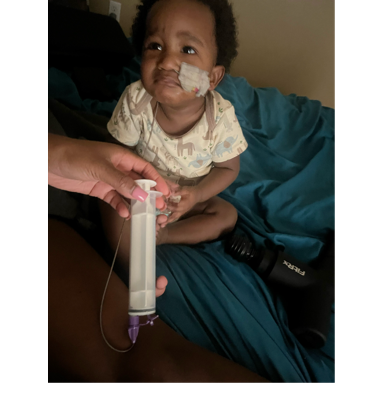
On Thursday, June 11, 2026, the FDA quietly posted to its website the document those of us investigating the ByHeart infant-botulism outbreak have waited months to see: the complete Establishment Inspection Report (EIR) for Blendhouse Allerton, LLC — the Iowa plant that produced ByHeart’s infant-formula base powder.
Credit where it is due: Bloomberg’s Anna Edney was first to flag the release, reporting that federal inspectors found no evidence ByHeart’s own production “caused” the outbreak and pointed instead toward contaminated ingredients. You can read her piece here: FDA Finds No Evidence ByHeart Production Caused Infant Formula Botulism Cases. She is right — but a 55-page government report holds far more than any headline can, so I read all of it.
So can you. Here is the actual source document: FDA Establishment Inspection Report, Blendhouse Allerton, LLC (FEI 1921383), inspection 11/11/2025–01/22/2026 — https://www.fda.gov/media/192916/download.
This full EIR is a different and much longer document than the three-page Form FDA 483 that issued back in January. The 483 is simply Attachment 1 to this report. The narrative, the findings, and FDA’s conclusions live in the EIR — and the EIR is what went public Thursday.
What the FDA actually concluded:
After weeks on site, FDA’s investigators wrote, on page 35, that the genetic match between the Clostridium botulinum–positive ingredients and both a sick infant and a previously manufactured finished product “appears to indicate that raw materials were more likely the source of the outbreak than the firm’s processing equipment and storage practices.”
In plain English: the spores most likely rode in on an ingredient.
That ingredient is organic whole milk powder. The report lays out how, on January 21, 2026, ByHeart’s VP of Quality told FDA that lots of organic whole milk powder had tested presumptive-positive for C. botulinum, and that one isolate matched both a clinical sample from a sick baby and a ByHeart finished product (pp. 31–32). The CORE team identified organic whole milk powder as “an ingredient of concern” (p. 34). FDA collected a dozen base-powder samples tied to the recalled finished lots — 251131P2, 251261P2, 251481P2, and 243201P2 — and shipped them out for botulinum testing (pp. 47–48).
Follow the milk: Organic West Milk → Dairy Farmers of America → ByHeart
The EIR redacts the supplier names, but the supply chain is no longer a secret. As the Associated Press’s Jonel Aleccia first reported, the organic whole milk powder was made from fluid organic whole milk supplied by Organic West Milk, Inc., a California company that pools milk from 55 farms, and was dried into powder at a Dairy Farmers of America (DFA) plant in Fallon, Nevada. DFA sold the powder to ByHeart, and the lot FDA collected at the DFA plant genetically matched the outbreak strain.
So, the chain runs like this:
- Fluid whole milk — Organic West Milk, Inc. (California, 55 farms)
- Powdered whole milk — Dairy Farmers of America, Fallon, Nevada (dries the milk)
- Infant-formula base powder — ByHeart at Blendhouse Allerton, Iowa
- Finished, canned formula — ByHeart’s Blendhouse Portland, Oregon plant
- The Retailers — the stores that sold the can to a parent
The agency was looking hard upstream: FDA’s investigators collected “Audit Observations at DFA” as Exhibit 81 (p. 51), alongside ingredient tracebacks.
And the finger-pointing has predictably begun — ByHeart points upstream, DFA has emphasized that the maker of the end product bears responsibility to properly process ingredients for safety, while Organic West’s owner has suggested something went wrong in turning milk into powder and powder into formula. Everyone in the chain is pointing at the next link.
What “the ingredients did it” does not mean:
Here is where I want to be very clear, because the spin will be loud: identifying a contaminated milk ingredient does not get ByHeart off the hook. Not legally, and not morally.
Blendhouse Allerton is the sole producer of the base powder used in ByHeart’s formula (p. 1). And the very same report that points upstream also handed ByHeart a fresh three-item Form 483 (pp. 41–44):
- A process-intrusion flush that was never documented after black rubber pieces were found in the line, with no rationale recorded — 21 CFR 106.50(a)(1);
- A finding that the firm did not ensure all ingredient-contact surfaces were cleaned and sanitized — specifically, an oil storage silo that did not receive the second caustic wash its own procedure required — 21 CFR 106.30(b); and
- A base mix that dropped below its required temperature and was fed forward with no management approval, where the firm failed to evaluate the public-health significance of the deviation — 21 CFR 106.6(c)(4).
Worse, two observations from the February 2025 inspection were carried into this report as still “Not Corrected”: failing to maintain the building in a clean and sanitary condition (21 CFR 106.20(a)) and approving and releasing an ingredient that was not held under conditions to prevent adulteration (21 CFR 106.40(f)(3)) (pp. 2–3). Read that last one again. Months before babies got sick, FDA had already cited this plant for releasing an ingredient that wasn’t held under conditions to prevent adulteration — and at the time of this outbreak report, it still wasn’t fixed. And look at what that February 2025 inspection actually found. Its very first observation named the exact ingredient now at the center of this outbreak: FDA cited the plant for receiving and releasing whole organic dried milk powder that was not held under conditions to prevent adulteration (p. 1). The same inspection faulted the firm for failing to eliminate rodent-harborage areas after rodent problems in 2024–2025, and for not adequately monitoring the dryer floor after findings of confirmed Cronobacter sakazakii — a pathogen that can be deadly to infants and that drove the massive 2022 Abbott formula recall (pp. 1–2). This plant was already on notice about the milk, about the rodents, and about a baby-killing organism at its dryer, months before a single child got sick.
And then the central point: Clostridium botulinum spores in dairy are a known, foreseeable hazard. The entire job of an infant-formula manufacturer is to control the hazards in the ingredients it buys — because the end product goes into the most vulnerable humans on earth, whose immature guts allow those spores to germinate and produce toxin. ByHeart’s own June 10 “action plan” now promises C. botulinum-specific testing of every dairy ingredient and every finished batch before release. That is a tacit admission that this hazard was testable and controllable all along. You do not get credit for installing the smoke detector after the house has burned down. Nor was the hazard hypothetical at this plant. In January 2025, BHA’s own records (SNC25-002-BHA) document pallets of organic whole milk powder arriving with visible gnaw holes, spilled powder, and potential rodent droppings (p. 15) — rodent contamination on the very ingredient that carries C. botulinum spores. FDA ultimately concluded those particular contaminated pallets were not the source of this outbreak — they involved different lots received at a different warehouse (p. 35) — but that misses the larger point. A plant that has already watched gnawed, soiled bags of milk powder come through its doors knows exactly how filth rides in on this ingredient, and exactly why every lot of it must be controlled before it ever reaches a baby.
The bottom line:
Forty-eight infants were hospitalized across seventeen states. None died — but botulism can leave lasting harm, and these are babies. The FDA report does real and important work tracing the spores to a milk-powder ingredient and to the companies that supplied and processed it. Organic West Milk and Dairy Farmers of America will have to answer for the lot that carried the outbreak strain, and they should. The scale of the danger is in the report itself: the recall began with two lots on November 8, 2025, grew to every lot of ByHeart formula by November 19, and FDA classified it Class I — the agency’s most serious category, reserved for products that can cause serious injury or death. It was still ongoing when inspectors closed this report (pp. 8–9).
But a company that puts its name on a can of infant formula — that markets it as the closest thing to breast milk — cannot outsource responsibility for what is inside that can. ByHeart chose its suppliers, bought the ingredient, made the base powder, and sold the product to parents who trusted it. Pointing at the milk explains how the spores got in. It does not change who was responsible for keeping them out. The buck — and the baby’s bottle — stopped with ByHeart.
And the responsibility does not stop at ByHeart. Every company that sold this formula to a family is part of the chain of distribution of an adulterated, dangerous product — and under long-settled product-liability law, sellers in that chain can be held strictly liable for placing it into a parent’s hands, whether or not they knew what was in the can. The grocery chains, pharmacies, big-box stores, and online sellers that stocked and shipped recalled ByHeart formula profited from moving this product to the most vulnerable consumers there are. That carries a legal duty, and it carries a moral one. When a retailer chooses to sell infant formula, it vouches for that product to every parent who trusts its shelves — and when the product turns out to be contaminated, it shares in the responsibility to the babies who were harmed.
I have spent more than thirty years representing the families on the wrong end of food that should never have been sold — and this report follows the oldest pattern I know: a contaminated ingredient travels down a chain of companies, and the moment babies are hurt, every one of them points at the next link.
I am not interested in that game, and neither should you be. Trace this outbreak honestly and it runs in a straight line — from the farms that supplied Organic West Milk, to the Dairy Farmers of America plant in Fallon, Nevada that dried that milk into powder, to ByHeart and its Blendhouse plant in Iowa that turned the powder into base, to the Portland plant that sealed it into a can, to the grocery shelves and online carts that put it within a parent’s reach.
FDA warned this entire industry, by name, in March 2023 that Clostridium botulinum was a known hazard in powdered infant formula — and that an ingredient supplier whose milk receives no lethal treatment is, in the agency’s words, “an extension of the infant formula manufacturing process.”
Every company in that line had a duty to the child at the end of it, and the law of strict products liability holds every one of them to it. Forty-eight babies in seventeen states had no say in which of these companies cut which corner. They are owed answers, they are owed accountability, and they are owed the one thing this chain was built to deliver and did not: a can of formula that was safe to feed a baby. From the milk to the shelf, that was everyone’s job — and these babies are everyone’s responsibility.