“Unprecedented” Settlement Could Mean Jail Time for Elder DeCoster

Host Ben Kieffer talks with Seattle, Washington food safety lawyer Bill Marler, who represented some of those sickened in a 2010 salmonella outbreak caused by contaminated eggs.  This week a settlement was reached with Quality Egg and two of its top executives, Jack and Peter DeCoster.  Marler says Jack DeCoster comes to the court with a “checkered past,” that could make jail time more likely in this case.

Listen 8:55 RTR 6-6-14 News Buzz – interview with Bill Marler on “unprecedented” Salmonella settlement

As of June 2, 2014, a total of 17 ill persons infected with the outbreak strains of Salmonella Newport (12 persons) or Salmonella Hartford (5 persons) have been reported from 10 states. The number of ill persons identified in each state is as follows: Arizona (1), California (2), Connecticut (2), Ohio (1), Florida (1), Massachusetts (1), Michigan (1), New York (4), Utah (1), and Wisconsin (3).

Among persons for whom information is available, dates that illnesses began range from January 21, 2014 to May 5, 2014. Ill persons range in age from 4 years to 81 years, with a median age of 51 years. Sixty-five percent of ill persons are female. Among 13 ill persons with available information, two (15%) report being hospitalized. No deaths have been reported.

In interviews, ill persons are answering questions about foods eaten and other exposures in the week before becoming ill. To date, 12 (100%) of 12 persons interviewed reported eating chia seeds or powder, and 9 (75%) of 12 persons reported eating chia powder specifically.

In Canada, two strains of Salmonella have been associated with this outbreak: Salmonella Newport and Salmonella Hartford. In total, 29 cases have been reported in British Columbia (6), Alberta (4), Ontario (17) and Quebec (2). Five cases have been hospitalized; four cases have been discharged and have recovered or are recovering. The status of one case was not provided to the Agency. No deaths have been reported. The investigation is ongoing but currently, 18 of 18 cases that have been interviewed have reported consumption of sprouted chia seeds or sprouted chia seed powder, and 15 of 18 cases specifically report sprouted chia seed powder.

The Watauga County office of Appalachian District Health Department is working with the N.C. Division of Public Health to investigate a gastrointestinal illness outbreak among patrons of a local restaurant. There are five confirmed cases of salmonellosis and none have been hospitalized.

As of Friday, the Health Department had identified 9 individuals with signs and symptoms consistent with salmonellosis: diarrhea, stomach pain, fever, nausea, and sometimes vomiting. All share something in common — they ate at the same food establishment, Proper Restaurant, one to three days before becoming ill.

The Health Department is asking anyone who ate food or drank beverages from Proper Restaurant (142 S Water Street, Boone, NC) on or after Saturday, May 17, and started having diarrhea within three days of eating or drinking to call the department at 828-264-6635. If individuals call after hours or on the weekend, they should stay on the line to be connected to our on-call staff.

Ill people need to make sure they are staying hydrated and should seek medical care from their private doctor, urgent care or emergency room if their diarrhea and/or vomiting symptoms don’t improve.

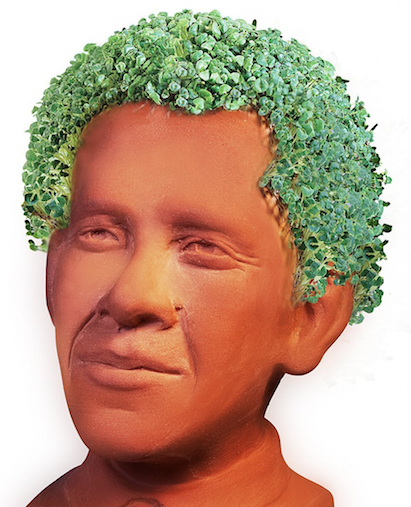
I never thought I could use a Chia Head on a blog post (note, there is no indication that these heads are dangerous – just ugly)

As of June 2, 17 people from 10 U.S. states been sickened with Salmonella infections linked to the recalled chia seed powder, according to the U.S. Centers for Disease Control and Prevention (CDC). CDC notes that 12 of those 17 were infected with a strain of S. Newport and five with a strain of S. Hartford, two of the 17 have been hospitalized, and no deaths have been reported.  The outbreak strain of S. Hartford in five U.S. cases matches the outbreak strain in Canada, CDC added.

The Canadian Food Inspection Agency has updated its recall warning issued May 30 regarding sprouted chia seed powder to include additional product information identified during its food safety investigation.

The May 30 warning came after Advantage Health Matters and Back 2 the Garden announced they were recalling various products containing dried sprouted organic chia seed powder from the marketplace due to possible Salmonella contamination.

In Canada, two strains of Salmonella have been identified associated with this outbreak: Salmonella Newport and Salmonella Hartford. In total, 24 cases have been reported in Ontario (15), British Columbia (6), Alberta (1) and Quebec (2).

Food contaminated with Salmonella may not look or smell spoiled but can still make you sick. Young children, pregnant women, the elderly and people with weakened immune systems may contract serious and sometimes deadly infections. Healthy people may experience short-term symptoms such as fever, headache, vomiting, nausea, abdominal cramps and diarrhea. Long-term complications may include severe arthritis.

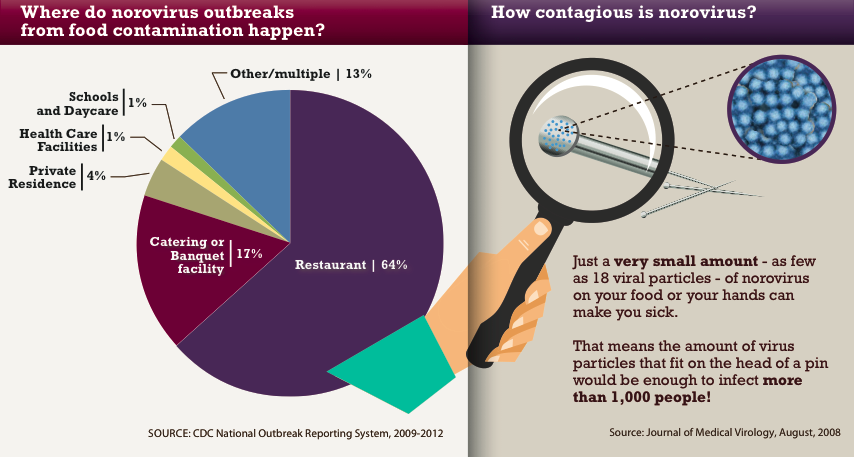
Most norovirus outbreaks from contaminated food occur in food service settings, according to a Vital Signs report by the Centers for Disease Control and Prevention. Infected food workers are frequently the source of these outbreaks, often by touching ready-to-eat foods served in restaurants with their bare hands. The food service industry can help prevent norovirus outbreaks by enforcing food safety practices, such as making sure workers always practice good hand hygiene on the job and stay home when they are sick.

Norovirus often gets a lot of attention for outbreaks on cruise ships, but those account for only about 1 percent of all reported norovirus outbreaks. Norovirus is highly contagious and can spread anywhere people gather or food is served, making people sick with vomiting and diarrhea. About 20 million people get sick from norovirus each year; most get infected by having close contact with other infected people or by eating contaminated food.

“Norovirus outbreaks from contaminated food in restaurants are far too common.” said CDC Director Tom Frieden, M.D., M.P.H.  “All who prepare food, especially the food service industry, can do more to create a work environment that promotes food safety and ensures that workers adhere to food safety laws and regulations that are already in place.”

The Vital Signs report provides key recommendations to help the food service industry prevent norovirus outbreaks from contaminated food. The recommendations, which underscore provisions in the Food and Drug Administration model Food Code (http://www.fda.gov/Food/GuidanceRegulation/RetailFoodProtection/FoodCode/default.htm) and CDC guidelines (http://www.cdc.gov/mmwr/preview/mmwrhtml/rr6003a1.htm), include:

  • Making sure food service workers practice proper hand washing and use utensils and single-use disposable gloves to avoid touching ready-to-eat foods with bare hands,
  • Certifying kitchen managers and training food service workers in food safety practices, and
  • Establishing policies that require food service workers to stay home when sick with vomiting and diarrhea and for at least 48 hours after symptoms stop.

“It is vital that food service workers stay home if they are sick; otherwise, they risk contaminating food that many people will eat,” said Aron Hall, D.V.M., M.S.P.H., of CDC’s Division of Viral Diseases.  However, 1 in 5 food service workers have reported working at least once in the previous year while sick with vomiting or diarrhea. Fear of job loss and not wanting to leave coworkers short-staffed were cited as significant factors in their decision. “Businesses can consider using measures that would encourage sick workers to stay home, such as paid sick leave and a staffing plan that includes on-call workers,” said Hall.

CDC analyzed norovirus outbreak data reported by state, local, and territorial health departments from 2009 to 2012 through CDC’s National Outbreak Reporting System (NORS). Over the four years, health departments reported 1,008 norovirus outbreaks from contaminated food, most of which occurred in food service settings such as restaurants and catering or banquet facilities.

Factors contributing to food contamination were reported in 520 of the outbreaks, with an infected food worker implicated in 364 (70 percent) of them. Of these outbreaks, 196 (54 percent) involved food workers touching ready-to-eat foods with their bare hands. Ready-to-eat foods are foods that are ready to be served without additional preparation, such as washed raw fruits and vegetables for salads or sandwiches, baked goods, or items that have already been cooked.

CDC’s analysis also looked at which foods were commonly implicated in norovirus outbreaks. Of 324 outbreaks with a specific food item implicated, more than 90 percent were contaminated during final preparation (such as making a sandwich with raw and already cooked ingredients) and 75 percent were foods eaten raw. Leafy vegetables, fruits, and mollusks, such as oysters, were the most common single food categories implicated in these outbreaks.

The report also highlights the key role health departments play in investigating and reporting norovirus outbreaks. Outbreak reporting rates varied greatly among states, likely illustrating differences in surveillance efforts rather than variation in norovirus disease incidence. “There is a continued need to build the capacity of health departments to more thoroughly investigate and report outbreaks to NORS,” said Hall.

Update:  From USA Today:

“I commend the U.S. attorney for bringing federal charges,” said Bill Marler, a Seattle-based food safety lawyer for more than two decades. “It’s possible these guys could actually go to jail. That wakes people up. Knowing CEOs can go to jail has more impact on behavior than a lawsuit that ends up being paid off by an insurance company.”

I woke up a 3:00AM (as I do too often) thinking about my job.  As I do many nights/mornings, I turned to Food Safety News to see what has transpired in the world since I went to be a few hours earlier.  At the top of the page is Dan Flynn’s story: “Big Fine and Guilty Pleas Might Keep DeCosters Out of Jail.”

Austin “Jack” DeCoster and his son, Peter DeCoster, will accept some responsibility today for their contaminated eggs, which made almost 62,000 people sick four years ago, but don’t look for either man to serve much in the way of jail time.

Plea agreement details released ahead of today’s federal magistrate hearing in Sioux City, IA, show the DeCosters have a deal with the government to pay about $6.8 million, which, in turn, greatly reduces their exposure to federal incarceration.

I am not so sure if the federal judge that sentences Jack has read Bill Neuman’s New York Time’s article from September 2010: “An Iowa Egg Farmer and a History of Salmonella.”  Here are some of the highlights/lowlights:

  • Mr. DeCoster’s frequent run-ins with regulators over labor, environmental and immigration violations have been well cataloged. But the close connections between Mr. DeCoster’s egg empire and the spread of salmonella in the United States have received far less scrutiny.
  • Farms tied to Mr. DeCoster were a primary source of Salmonella enteritidis in the United States in the 1980s, when some of the first major outbreaks of human illness from the bacteria in eggs occurred, according to health officials and public records. At one point, New York and Maryland regulators believed DeCoster eggs were such a threat that they banned sales of the eggs in their states.  “When we were in the thick of it, the name that came up again and again was DeCoster Egg Farms,” said Paul A. Blake, who was head of the enteric diseases division of the Centers for Disease Control and Prevention in the 1980s, when investigators began to tackle the emerging problem of salmonella and eggs.
  • Records released by Congressional investigators last week suggest that tougher oversight of Mr. DeCoster’s Iowa operations might have prevented the outbreak, which federal officials say is the largest of its type in the nation’s history, with more than 1,600 reported illnesses and probably tens of thousands more that have gone unreported.
  • According to the records, Mr. DeCoster’s farms in Iowa conducted tests from 2008 to 2010 that repeatedly showed strong indicators of possible toxic salmonella contamination in his barns. Such environmental contamination does not always spread to the eggs, and it is unclear what actions Mr. DeCoster took in response. However, when the Food and Drug Administration inspected the farms after the recalls, officials found unsanitary conditions and the presence of Salmonella enteritidis in barns and feed.
  • The first enteritidis outbreak recognized by public health officials came in July 1982, when about three dozen people fell ill and one person died at the Edgewood Manor nursing home in Portsmouth, N.H. Investigators concluded that runny scrambled eggs served at a Saturday breakfast were to blame. They traced the eggs to what the Centers for Disease Control reports referred to as a large producer in Maine; interviews with investigators confirmed that it was Mr. DeCoster’s former operation.  Eggs from the same farms were also suspected in a simultaneous outbreak that sickened some 400 people in Massachusetts.
  • In 1987, the deadly outbreak at Coler Memorial Hospital on Roosevelt Island occurred. Investigators determined that mayonnaise made from raw eggs had caused the outbreak. They traced the eggs to Mr. DeCoster’s Maryland farms. On a July night in 1987, scores of elderly and chronically ill patients at Bird S. Coler Memorial Hospital in New York City began to fall violently sick with food poisoning from eggs tainted with salmonella.  “It was like a war zone,” said Dr. Philippe Tassy, the doctor on call as the sickness started to rage through the hospital. By the time the outbreak ended more than two weeks later, nine people had died and about 500 people had become sick. It remains the deadliest outbreak in this country attributed to eggs infected with the bacteria known as Salmonella enteritidis.
  • After two more outbreaks were linked to DeCoster eggs the following year, New York banned Mr. DeCoster from selling eggs in the state. He was forced to agree to a rigorous program of salmonella testing on his farms in Maine and Maryland.  Michael Opitz, a poultry expert retired from the University of Maine, said that the testing found that a Maine breeder flock owned by Mr. DeCoster was infected, meaning that hens there could be passing the bacteria to their chicks, which might grow up to lay tainted eggs. Widespread contamination was also found in laying barns.
  • In 1991, tests revealed more salmonella contamination at one of Mr. DeCoster’s farms in Maryland. The state quarantined the eggs, allowing them to be sold only to a plant where they could be pasteurized to kill bacteria. Mr. DeCoster challenged the order and a federal judge ruled that Maryland could not block him from shipping eggs to other states. He was still barred from selling the eggs in Maryland, and in 1992, a state judge found that he had violated the quarantine by selling eggs to a local store; Mr. DeCoster was given a suspended sentence of probation and a token fine.
  • Soon after interstate shipments resumed in 1992, eggs from the Maryland farm caused a salmonella outbreak in Connecticut, according to a 1992 memo from the Maryland attorney general’s office. Federal regulators insisted that Mr. DeCoster decontaminate his barns.  Dr. Roger Olson, the former state veterinarian of Maryland, said that Mr. DeCoster complained about the cost of testing and the quarantine and insisted there was little risk associated with his eggs.

“We never really got an acknowledgment that he was causing a problem,” Dr. Olson said.

Perhaps Jack needs some quiet time in jail to think about it?

AP reports that an Iowa company has agreed to pay $6.8 million in fines for crimes that include selling the tainted eggs that caused a nationwide salmonella outbreak in 2010.

plea agreement filed Monday by federal prosecutors calls for Quality Egg to plead guilty Tuesday to charges of bribery, selling misbranded eggs and introducing adulterated food into interstate commerce.

The company is admitting that between 2006 and 2010, it intentionally sold eggs to customers in Arizona, California and elsewhere with false labels that disguised how old they were.

The company says its employees twice bribed a U.S. Department of Agriculture inspector in 2010 to approve eggs that didn’t meet federal quality standards.

Company owners Austin and Peter DeCoster are expected to plead guilty Tuesday to introducing adulterated food into interstate commerce. Each faces a year in jail, five years of probation and $100,000 fine.

Reminds me of this post – “Will the Jensen Brothers, DeCoster and Parnell ever meet in the Big House?”

Bill Marler, an attorney who represents dozens of the salmonella victims, said the $6.8 million fine was “quite stunning” and the largest he’s heard of in 20 years of practicing food safety law. The fines and potential jail time send “a very strong message to companies that food safety is paramount,” he said.

Nine cases in Canada – Twelve cases in United States

The Public Health Agency of Canada is collaborating with Provincial public health partners, the Canadian Food Inspection Agency, and Health Canada to investigate nine Canadian cases of Salmonella infection linked to the consumption of dried sprouted chia seed powder.  Sprouted chia seed powder is made from ground, dried chia seeds.

In Canada, two strains of Salmonella have been identified associated with this outbreak: Salmonella Newport and Salmonella Hartford. In total, 9 cases have been reported in British Columbia (6), Alberta (1) and Quebec (2). One case was hospitalized and has recovered. No deaths have been reported. The investigation is ongoing but currently, 7 of 7 cases that have been interviewed have reported consumption of dried sprouted chia seed powder.

The United States Centers for Disease Control and Prevention (CDC) and Food and Drug Administration (FDA) are also investigating similar cases of Salmonella, and have recalled three sprouted chia seed powder products linked to their investigation after 12 cases were sickened in seven states: Arizona (1), California (2), Connecticut (1), Massachusetts (1), New York (4), Utah (1), and Wisconsin (2).

As a part of this investigation, The Canadian Food Inspection Agency has issued a food recall warning for various products from Advantage Health Matters containing sprouted chia seeds under the brands Organic Traditions and Back 2 the Garden. These products have been recalled and are being removed from the marketplace due to possible Salmonella contamination.

The CDC reports as of May 27, 2014, a total of 126 persons infected with the outbreak strains of Salmonella Infantis or Salmonella Newport have been reported from 26 states. Since the last update on May 8, 2014, a total of 66 new ill persons have been reported from 18 states: Alabama (4), Colorado (1), Georgia (5), Illinois (1), Indiana (1), Kentucky (2), Maine (4), Montana (1), New Hampshire (1), New Mexico (1), New York (6), North Carolina (11), Ohio (7), Pennsylvania (7), South Carolina (3), Tennessee (5), Virginia (5), and West Virginia (1).  35% of ill persons have been hospitalized, and no deaths have been reported.

Epidemiologic, laboratory, and traceback findings have linked this outbreak of human Salmonella Infantis and Salmonella Newport infections to contact with chicks, ducklings, and other live poultry from Mt. Healthy Hatcheries in Ohio.

82% of ill people reported contact with live poultry in the week before their illness began.

Samples from live poultry and the environments where the poultry live and roam were collected from two ill persons’ homes in Vermont. Testing of these samples yielded one of the outbreak strains of Salmonella Infantis.

Findings of multiple traceback investigations of live baby poultry from homes of ill persons have identified Mt. Healthy Hatcheries in Ohio as the source of chicks and ducklings. This is the same mail-order hatchery that has been associated with multiple outbreaks of Salmonella infections linked to live poultry in past years, including in 2012 and 2013.

From my friends at Food Safety News:

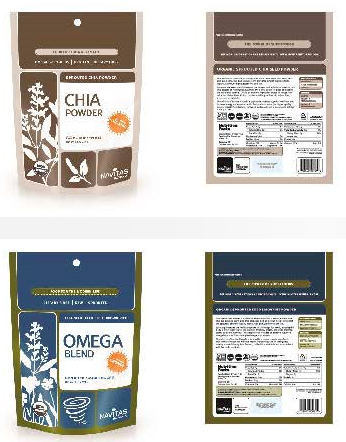
Collaborative investigation efforts of state, local, and federal public health and regulatory agencies indicate that organic sprouted chia powder distributed by Navitas Naturals of Novato, California is the likely source of what he CDC reports as a total of 12 persons infected with the outbreak strain of Salmonella Newport reported from 7 states: Arizona (1), California (2), Connecticut (1), Massachusetts (1), New York (4), Utah (1), and Wisconsin (2).  Chia powder is made from ground dried chia seeds.  The FDA announced a recall.  The affected products were distributed nationally and include:

  • Navitas Naturals Organic Sprouted Chia Powder, 8oz, UPC 858847000369 with best buy dates from 04/30/2015 through 09/05/2015
  • Navitas Naturals Omega Blend Sprouted Smoothie Mix, 8oz, UPC 858847000314 with best buy dates from 07/29/2015 through 09/19/2015
  • Williams-Sonoma Omega 3 Smoothie Mixer, 8 oz, SKU 506436 with best buy dates from 09/12/2015 through 10/02/2015

Salmonella is an organism that can cause serious and sometimes fatal infections in young children elderly people, and others with weakened immune systems. Healthy persons infected with Salmonella often experience fever, diarrhea, nausea, vomiting and abdominal pain. In rare circumstances, infection with Salmonella can result in the organism getting into the bloodstream and producing more severe illnesses.