Being in Hong Kong gives me the advantage of being 15 hours ahead of my office in Seattle.  While they are sleeping, I can get a little work and reading done – and do a little plotting as well.

NBC News reports that Foster Farms announced Monday that they lowered levels of Salmonella in chicken parts — and invested $75 million to do it — even as the firm battles a food poisoning outbreak that has sickened nearly 600 people in more than a year.

According to NBC, most recent 10-week data shared with the U.S. Department of Agriculture showed that Salmonella levels in the firm’s chicken parts had dropped to 2 percent — far below the industry benchmark of 25 percent, Foster Farms officials said.

Perhaps it is time to redo our 2011 testing of contamination levels in chicken purchased in Seattle.  Here were some of the results.

The study showed that up to 80% of Seattle area raw chicken could be contaminated with some form of potentially harmful bacteria. Testing done by IEH Laboratories in Lake Forest Park, Washington showed that 80 of 100 raw chickens purchased at various Seattle area grocery stores contained at least one potentially harmful pathogen.

The test was comprised of 18 brands of chicken purchased at 18 different Seattle area stores including chain grocery stores, Safeway (3 locations), Albertsons (2), QFC (4), Fred Meyer (2), Thriftway (1); warehouse clubs Costco (2) and Sam’s Club (1); natural foods stores Whole Foods (1) and PCC (1), and one small market, Ken’s Market (1).

In the study local and organic chicken did not prove to be safer than other samples. In terms of origination, 59 chicken samples originated from Washington, while 13 samples came from other states and 28 were of unknown origin. Regardless of place, chicken from every state tested was confirmed to contain potentially harmful bacteria.  Of the 14 samples of organic chicken 12 contained harmful bacteria.

The study tested for five pathogens.  While some findings were typical, other results were more surprising.  Previous studies have found on average that 33 to 53% of chicken is contaminated with Campylobacter.  In Seattle 65% of the chicken tested positive for Campylobacter.  Salmonella was isolated in 19% of the chicken purchased at retail stores in the Seattle area, slightly higher than the expected average of 16%.  Staphylococcus aureus was found in 42% of the chicken sampled; 10 of these samples were Methicillan-resistant, commonly known as MRSA.  One sample cultured positive for Listeria monocytogenes and one sample cultured positive for E. coli O26, a bacteria often found in beef.


As of June 6, 2014, a total of 150 persons infected with the outbreak strains of Salmonella Cotham (145 persons) or Salmonella Kisarawe (5 persons) have been reported from 35 states since February 21, 2012.  57% of ill persons are children 5 years of age or younger.  43% of ill persons have been hospitalized. No deaths have been reported.

A second rarely reported serotype, Salmonella Kisarawe, was added to this outbreak investigation after a sample from a bearded dragon collected from an ill person’s home yielded both Salmonella Kisarawe and Salmonella Cotham.

Epidemiologic, laboratory, and traceback findings have linked this outbreak of Salmonella infections to contact with pet bearded dragons purchased from multiple stores in different states.

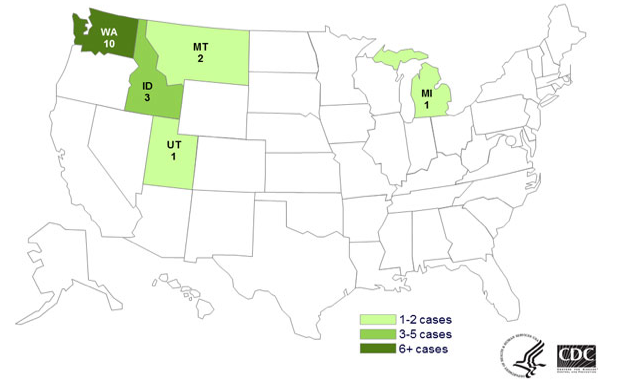
Sprouts:  Today, according to CDC, a total of 17 persons infected with the outbreak strain of Shiga toxin-producing Escherichia coli O121 (STEC O121) have been reported from five states. The number of ill persons identified in each state is as follows:  Idaho (3), Michigan (1), Montana (2), Utah (1), and Washington (10).  Forty-seven percent of ill persons have been hospitalized.

Because contaminated sprouts may still be available on the market, CDC recommends that consumers do not eat any raw clover sprouts produced by Evergreen Fresh Sprouts. The Washington State Department of Health and the Idaho Department of Health and Welfare are also advising people not to eat raw clover sprouts produced by Evergreen Fresh Sprouts.

Also, according to CDC, from April 12 to July 5, 2011, a total of 25 persons infected with the outbreak strain of Salmonella Enteritidis have been reported from five states. Results of the investigation indicate a link to eating alfalfa sprouts and spicy sprouts manufactured by Evergreen Fresh Sprouts. On July 1, 2011, Evergreen Fresh Sprouts LLC of Moyie Springs, Idaho, announced a recall of specific lots of alfalfa sprouts and spicy sprouts because these products have the potential to be contaminated with Salmonella.

This year, FDA conducted an inspection of the Evergreen Fresh Sprouts facility on May 22-23, 2014; May 27-30, 2014; and June 6, 2014. During the inspection, FDA investigators observed a number of unsanitary conditions, including condensate and irrigation water dripping from rusty valves; a rusty and corroded mung bean room watering system; tennis rackets that had “scratches, chips, and frayed plastic” used to scoop mung bean sprouts; a pitchfork with corroded metal being used to transfer mung bean sprouts; and a squeegee with visible corroded metal and non-treated wood being used to agitate mung bean sprouts inside a soak vat.

Chia Seeds and Powder:  The CDC reports today that as of June 9, 2014, a total of 21 ill persons infected with the outbreak strains of Salmonella Newport (13 persons), Salmonella Hartford (6 persons), or Salmonella Oranienburg (2 persons) have been reported from 12 states. The number of ill persons identified in each state is as follows: Arizona (1), California (3), Colorado (1), Connecticut (3), Florida (1), Massachusetts (1), Michigan (1), New York (4), Ohio (1), Utah (1), Washington (1), and Wisconsin (3).  Two ill persons infected with a strain of Salmonella Oranienburg have been identified in two U.S. states.  Through product testing and interviews with ill people, these illnesses have been combined with the Salmonella Newport and Salmonella Hartford infections previously identified as part of this investigation.

Collaborative investigation efforts of state, local, and federal public health and regulatory agencies indicate that organic sprouted chia powder is the likely source of this outbreak.  Chia powder is made from ground dried chia seeds.

On June 4, 2014, Health Matters America, Inc., recalled products that contain sprouted chia seed powder and sprouted chia/flax seed powder due to possible Salmonella contamination.  On June 6, 2014, Navitas Naturals expanded their existing recall to include additional expiration dates of products containing organic sprouted chia powder.

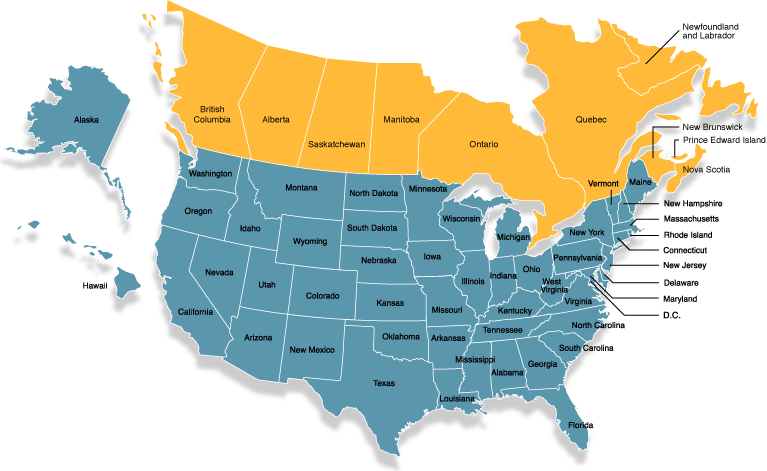
The Public Health Agency of Canada is collaborating with Provincial public health partners, the Canadian Food Inspection Agency, and Health Canada to investigate 34 Canadian cases of Salmonella infection linked to the consumption of sprouted chia seed powder. In Canada, two strains of Salmonella have been associated with this outbreak: Salmonella Newport and Salmonella Hartford. In total, 34 cases have been reported in British Columbia (6), Alberta (4), Ontario (22) and Quebec (2). Five cases have been hospitalized; four cases have been discharged and have recovered or are recovering. The status of one case was not provided to the Agency. No deaths have been reported. The investigation is ongoing but currently, 19 of 19 cases that have been interviewed have reported consumption of sprouted chia seeds or sprouted chia seed powder, and 16 of 19 cases specifically report sprouted chia seed powder.

As a part of this investigation, the Canadian Food Inspection Agency has issued food recall warnings for various products containing sprouted chia seeds and sprouted chia seed powder under the brands Organic Traditions, Back 2 the Garden, Intuitive Path SuperFoods, Harmonic Arts Botanical Dispensary, Naturallyorganic, and Pete’s Gluten Free. These products have been recalled and are being removed from the marketplace due to possible Salmonella contamination.


Fruitland American Meat, a Jackson, Mo. establishment is recalling approximately 4,012 pounds of fresh beef products because the dorsal root ganglia may not have been completely removed, which is not compliant with agency regulations that require their removal in cattle 30 months of age and older, the U.S. Department of Agriculture’s Food Safety and Inspection Service (FSIS) announced today.

The products subject to recall include:

  • 40-lb. cases containing two, roughly 20-lb. cryovac packages of bone-in “Rain Crow Ranch Ribeye” bearing the establishment number “EST. 2316” inside the USDA mark of inspection with the following production dates: 9/5/13, 9/10/13, 9/11/13, 9/26/13, 10/2/13, 10/3/2013, 11/8/13, 11/22/13, 12/17/13, 12/26/13, 12/27/13,1/16/14, 1/17/14, 1/23/14, 1/31/14, 2/13/14, 2/14/14, 2/21/14, 2/28/14, 3/8/14, 3/20/14, 4/4/14 or 4/25/14 printed on the box.
  • Quartered beef carcasses stamped with the USDA mark of inspection and establishment number “EST. 2316.”

The products were produced and packaged on various dates between September 2013 and April 2014. The bone-in ribeye roasts were the source material of concern.

Fruitland American Meat advises that the bone-in ribeye roasts were distributed to a restaurant in New York, NY, and a Whole Foods distribution center in Connecticut which services its stores in New England. The quartered carcasses were distributed to an FSIS-inspected establishment in Missouri for further processing and distribution, and to a restaurant in Kansas City, Mo. All products would have been processed into smaller cuts with no identifying consumer packaging.

The problem was discovered by FSIS during a review of company slaughter logs. The problem may have occurred as a result of the way some company employees were recording information and determining the age of various cattle. Dorsal root ganglia, branches of the nervous system located in the vertebral column are considered specified risk materials (SRMs) and must be removed from cattle 30 months of age and older in accordance with FSIS regulations. SRMs are tissues that may contain the infective agent in cattle infected with Bovine Spongiform Encephalopathy (BSE), as well as materials that are closely associated with these potentially infective tissues. Therefore, FSIS prohibits SRMs from use as human food to minimize potential human exposure to the BSE agent.

Every animal received ante-mortem inspection by an FSIS Public Health Veterinarian. This involves observing each animal at rest and in motion and there is no indication that any of the cattle slaughtered displayed any signs of BSE.

The E. coli Outbreak:  As of June 9, 2014, the CDC reports a total of 17 persons infected with the outbreak strain of Shiga toxin-producing Escherichia coli O121 (STEC O121) have been reported from five states.  The number of ill persons identified in each state is as follows:  Idaho (3), Michigan (1), Montana (2), Utah (1), and Washington (10).  47% of ill persons have been hospitalized. No ill persons have developed hemolytic uremic syndrome (HUS), and no deaths have been reported.

Public Health Warning:  Raw clover sprouts have not been recalled from Evergreen Fresh Sprouts. Because contaminated sprouts may still be available on the market, CDC recommends that consumers do not eat any raw clover sprouts produced by Evergreen Fresh Sprouts.  The Washington State Department of Health and the Idaho Department of Health and Welfare are also advising people not to eat raw clover sprouts produced by Evergreen Fresh Sprouts.

Product Traceback:  Epidemiology and traceback investigations conducted by local, state, and federal officials indicated that contaminated raw clover sprouts produced by Evergreen Fresh Sprouts, LLC of Idaho are the likely source of this outbreak.  In interviews, 12 (86%) of 14 ill persons reported eating raw clover sprouts in the week before becoming ill. As part of the ongoing investigation, FDA performed a traceback analysis and determined that Evergreen Sprouts, in the timeframe prior to the outbreak, supplied sprouts to seven restaurants at which 9 people who became ill during the outbreak reported eating before they became ill.  Eight of the people who became ill recalled eating sprouts. This analysis used documents collected directly from the distributors and the grower, Evergreen Fresh Sprouts, as well as documents collected by the states from the points of service.

Environmental Investigation:  The FDA also conducted an inspection of Evergreen Fresh Sprouts’ facility on May 22-23, 2014; May 27-30, 2014; and June 6, 2014. During the inspection, FDA investigators observed a number of unsanitary conditions, including condensate and irrigation water dripping from rusty valves; a rusty and corroded mung bean room watering system; tennis rackets that had scratches, chips, and frayed plastic” used to scoop mung bean sprouts; a pitchfork with corroded metal being used to transfer mung bean sprouts; and a squeegee with visible corroded metal and non-treated wood being used to agitate mung bean sprouts inside a soak vat.

Past Sprout Related Outbreaks:  Barfblog does a great job of tracking sprout outbreak through 2012. Outbreak Database carries on through 2014.

Past Problems at Evergreen Sprouts:  Also, according to CDC, from April 12 to July 5, 2011, a total of 25 persons infected with the outbreak strain of Salmonella Enteritidis have been reported from five states. Results of the investigation indicate a link to eating alfalfa sprouts and spicy sprouts manufactured by Evergreen Fresh Sprouts. On July 1, 2011, Evergreen Fresh Sprouts LLC of Moyie Springs, Idaho, announced a recall of specific lots of alfalfa sprouts and spicy sproutsbecause these products have the potential to be contaminated with Salmonella.

The CDC reports this evening that as of June 9, 2014, a total of 21 ill persons infected with the outbreak strains of Salmonella Newport (13 persons), Salmonella Hartford (6 persons), or Salmonella Oranienburg (2 persons) have been reported from 12 states. The number of ill persons identified in each state is as follows: Arizona (1), California (3), Colorado (1), Connecticut (3), Florida (1), Massachusetts (1), Michigan (1), New York (4), Ohio (1), Utah (1), Washington (1), and Wisconsin (3).  Two ill persons infected with a strain of Salmonella Oranienburg have been identified in two U.S. states.  Through product testing and interviews with ill people, these illnesses have been combined with the Salmonella Newport and Salmonella Hartford infections previously identified as part of this investigation.

Collaborative investigation efforts of state, local, and federal public health and regulatory agencies indicate that organic sprouted chia powder is the likely source of this outbreak.  Chia powder is made from ground dried chia seeds.

On June 4, 2014, Health Matters America, Inc., recalled products that contain sprouted chia seed powder and sprouted chia/flax seed powder due to possible Salmonella contamination.  On June 6, 2014, Navitas Naturals expanded their existing recall to include additional expiration dates of products containing organic sprouted chia powder.

The Public Health Agency of Canada is collaborating with Provincial public health partners, the Canadian Food Inspection Agency, and Health Canada to investigate 34 Canadian cases of Salmonella infection linked to the consumption of sprouted chia seed powder. In Canada, two strains of Salmonella have been associated with this outbreak: Salmonella Newport and Salmonella Hartford. In total, 34 cases have been reported in British Columbia (6), Alberta (4), Ontario (22) and Quebec (2). Five cases have been hospitalized; four cases have been discharged and have recovered or are recovering. The status of one case was not provided to the Agency. No deaths have been reported. The investigation is ongoing but currently, 19 of 19 cases that have been interviewed have reported consumption of sprouted chia seeds or sprouted chia seed powder, and 16 of 19 cases specifically report sprouted chia seed powder.

As a part of this investigation, the Canadian Food Inspection Agency has issued food recall warnings for various products containing sprouted chia seeds and sprouted chia seed powder under the brands Organic Traditions, Back 2 the Garden, Intuitive Path SuperFoods, Harmonic Arts Botanical Dispensary, Naturallyorganic, and Pete’s Gluten Free. These products have been recalled and are being removed from the marketplace due to possible Salmonella contamination.

The Appalachian District Health Department says that as of Monday afternoon, 37 individuals had symptoms consistent with Salmonellosis.

Three days after health officials in Watauga County confirmed a salmonella outbreak at a restaurant in Boone, authorities are saying they have seven confirmed cases of Salmonellosis and another 30 who are showing symptoms of the illness. None of those individuals have been hospitalized, authorities say.

The Appalachian District Health Department says the illness originated at Proper Restaurant on South Water Street.

Health officials are asking anyone who may have shown any of the following symptoms within 72 hours of dining at Proper Restaurant on or after May 17 to please contact them. Symptoms of illness include: diarrhea, stomach pain, fever, nausea, and sometimes vomiting.

Thirty-four sick in Canada – Seventeen sick in United States

The Public Health Agency of Canada has reported that two strains of Salmonella have been associated with an outbreak: Salmonella Newport and Salmonella Hartford. In total, 34 cases have been reported in British Columbia (6), Alberta (4), Ontario (22) and Quebec (2). Five cases have been hospitalized; four cases have been discharged and have recovered or are recovering. The status of one case was not provided to the Agency. No deaths have been reported. The investigation is ongoing but currently, 19 of 19 cases that have been interviewed have reported consumption of sprouted chia seeds or sprouted chia seed powder, and 16 of 19 cases specifically report sprouted chia seed powder.As a part of this investigation, the Canadian Food Inspection Agency has issued a recall for various products containing sprouted chia seeds and sprouted chia seed powder under the brands Organic Traditions, Back 2 the Garden, Intuitive Path SuperFoods, Harmonic Arts Botanical Dispensary, Naturallyorganic, and Pete’s Gluten Free. These products have been recalled and are being removed from the marketplace due to possible Salmonella contamination.

The CDC reports as of June 2, 2014, a total of 17 persons infected with the outbreak strains of Salmonella Newport (12 persons) or Salmonella Hartford (5 persons) have been reported from 10 states. Collaborative investigation efforts of state, local, and federal public health and regulatory agencies indicate that organic sprouted chia powder is the likely source of this outbreak.

On May 28, 2014, Navitas Naturals recalled products that contain organic sprouted chia powder due to possible Salmonella contamination.  The recalled products include Navitas Naturals Organic Sprouted Chia Powder, Navitas Naturals Omega Blend Sprouted Smoothie Mix, and Williams-Sonoma Omega 3 Smoothie Mixer with specific “best by” dates.  On May 30, 2014, Advantage Health Matters and Back 2 the Garden recalled products that contain sprouted chia seed powder due to possible Salmonella contamination.  The recalled products include Organic Traditions Sprouted Chia Seed Powder, Organic Traditions Sprouted Chia and Flax Seed Powder, and Back 2 the Garden Sprouted Chia Seed Powder.

17 sick this time with E. coli – 25 sick with Salmonella from 2011.

This time, according to CDC, a total of 17 persons infected with the outbreak strain of Shiga toxin-producing Escherichia coli O121 (STEC O121) have been reported from five states. The number of ill persons identified in each state is as follows:  Idaho (3), Michigan (1), Montana (2), Utah (1), and Washington (10).  Forty-seven percent of ill persons have been hospitalized.

Because contaminated sprouts may still be available on the market, CDC recommends that consumers do not eat any raw clover sprouts produced by Evergreen Fresh Sprouts. The Washington State Department of Health and the Idaho Department of Health and Welfare are also advising people not to eat raw clover sprouts produced by Evergreen Fresh Sprouts.

Sound familiar?

Also, according to CDC, from April 12 to July 5, 2011, a total of 25 persons infected with the outbreak strain of Salmonella Enteritidis have been reported from five states. Results of the investigation indicate a link to eating alfalfa sprouts and spicy sprouts manufactured by Evergreen Fresh Sprouts. On July 1, 2011, Evergreen Fresh Sprouts LLC of Moyie Springs, Idaho, announced a recall of specific lots of alfalfa sprouts and spicy sproutsbecause these products have the potential to be contaminated with Salmonella.

This year, FDA conducted an inspection of the Evergreen Fresh Sprouts facility on May 22-23, 2014; May 27-30, 2014; and June 6, 2014. During the inspection, FDA investigators observed a number of unsanitary conditions, including condensate and irrigation water dripping from rusty valves; a rusty and corroded mung bean room watering system; tennis rackets that had “scratches, chips, and frayed plastic” used to scoop mung bean sprouts; a pitchfork with corroded metal being used to transfer mung bean sprouts; and a squeegee with visible corroded metal and non-treated wood being used to agitate mung bean sprouts inside a soak vat.

I guess lightning can strike twice?

Perhaps it is time to dust of my sprout warning label?

As of June 9, 2014, a total of 17 persons infected with the outbreak strain of Shiga toxin-producing Escherichia coli O121 (STEC O121) have been reported from five states.  The number of ill persons identified in each state is as follows:  Idaho (3), Michigan (1), Montana (2), Utah (1), and Washington (10).  47% of ill persons have been hospitalized. No ill persons have developed hemolytic uremic syndrome (HUS), and no deaths have been reported.

Epidemiology and traceback investigations conducted by local, state, and federal officials indicated that contaminated raw clover sprouts produced by Evergreen Fresh Sprouts, LLC of Idaho are the likely source of this outbreak.  In interviews, 12 (86%) of 14 ill persons reported eating raw clover sprouts in the week before becoming ill.

Raw clover sprouts have not been recalled from Evergreen Fresh Sprouts. Because contaminated sprouts may still be available on the market, CDC recommends that consumers do not eat any raw clover sprouts produced by Evergreen Fresh Sprouts.  The Washington State Department of Health and the Idaho Department of Health and Welfare are also advising people not to eat raw clover sprouts produced by Evergreen Fresh Sprouts.

The FDA also conducted an inspection of Evergreen Fresh Sprouts’ facility on May 22-23, 2014; May 27-30, 2014; and June 6, 2014. During the inspection, FDA investigators observed a number of unsanitary conditions, including condensate and irrigation water dripping from rusty valves; a rusty and corroded mung bean room watering system; tennis rackets that had scratches, chips, and frayed plastic” used to scoop mung bean sprouts; a pitchfork with corroded metal being used to transfer mung bean sprouts; and a squeegee with visible corroded metal and non-treated wood being used to agitate mung bean sprouts inside a soak vat.

Barfblog does a great job of tracking sprout outbreak through 2012.  Outbreak Database carries on – through 2014.