

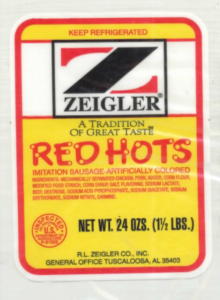
 R. L. Zeigler Co., Inc., a Selma, Ala. establishment, is recalling approximately 11,664 pounds of ready-to-eat (RTE) poultry and meat sausage products that may be contaminated with extraneous materials, specifically metal, the U.S. Department of Agriculture’s Food Safety and Inspection Service (FSIS) announced today.
The RTE Red Hot chicken and pork sausage items were produced on Nov. 29, 2018. The following products are subject to recall: [View Labels (PDF only)]
- 24-oz. plastic packages containing approximately 9 links of “ZEIGLER A TRADITION OF GREAT TASTE RED HOTS” with a “Use By Jan 24 19” date.
- 24-oz. plastic packages containing approximately 9 links of “EXTRA HOT ZEIGLER A TRADITION OF GREAT TASTE RED HOTS” with a “Use By Jan 24 19” date.
The products subject to recall bear establishment number “EST. P-9156S” inside the USDA mark of inspection. These items were shipped to retail locations nationwide.
The problem was discovered after the firm received consumer complaints on Dec. 13 and 27, 2018. The firm investigated to determine the nature of the complaints and notified FSIS on Dec. 29, 2018.
There have been no confirmed reports of adverse reactions due to consumption of these products. Anyone concerned about an injury or illness should contact a healthcare provider.
FSIS is concerned that some product may be in consumers’ refrigerators or frozen and in consumers’ freezers. Consumers who have purchased these products are urged not to consume them.
 Wash produce!
 For the whole fresh avocado sampling assignment, the FDA collected, tested and analyzed 1,615 domestic and imported avocado samples for Salmonella and Listeria monocytogenes. Of the 1,615 samples, 12 (0.74%) tested positive for Salmonella. As to the Listeria monocytogenes testing, the agency primarily tested the pulp of the avocado samples (as the pulp is the part of the fruit people eat), and some samples of the fruit’s skin. Of the 1,254 avocado pulp samples, 3 (far less than one percent) were positive for Listeria monocytogenes. Of the 361 avocado skin samples, 64 (17.73%) were positive for Listeria monocytogenes. FoodSafety.gov advises consumers to wash all produce before cutting into it or eating.
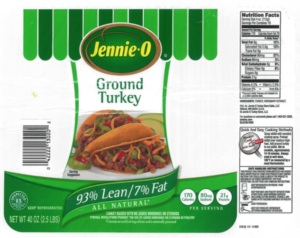 As of December 18, 2018, 216 people infected with the outbreak strain of
 If anyone wants an informative read from a near Pulitzer-quality article and photos (if they would have also shown the real impacts on the consumers of the product, the article would have been a Pulitzer-lock – See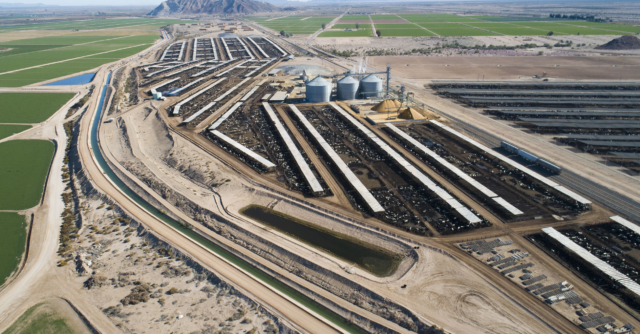
 According to the CDC, fifty-nine people infected with the outbreak strain of Shiga toxin-producing E. coli O157:H7 have been reported from 15 states and the District of Columbia. Illnesses started on dates ranging from October 5, 2018 to November 16, 2018. Twenty-three people have been hospitalized, including two people who developed hemolytic uremic syndrome, a type of kidney failure. No deaths have been reported. In Canada, as of December 13, 2018, there have been 28 confirmed cases of E. coli illness investigated in Ontario (5), Quebec (19), New Brunswick (1), and British Columbia (3). The illnesses in British Columbia were related to travel to Quebec, Ontario and the United States. Individuals became sick between mid-October and mid-November 2018. Ten individuals have been hospitalized, and two individuals suffered from hemolytic-uremic syndrome (HUS), which is a severe complication that can result from an E. coli infection. No deaths have been reported. Individuals who became ill are between 2 and 93 years of age.
 Fifty-nine people infected with the outbreak strain of Shiga toxin-producing E. coli O157:H7 have been reported from 15 states and the District of Columbia. Since the last
 Summary
 That is the Microbiological Date Program – deceased.