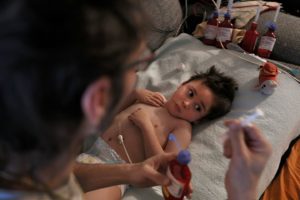
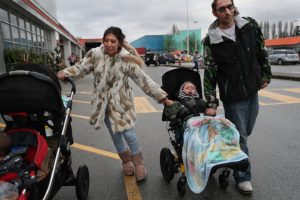
This is a stunning piece of both journalism and photo journalism by Nomatter Ndebele and Thom Pierce of the Maverick Citizen

Thank you for taking the time to tell these peoples’ stories.

The victims of the 2017 listeriosis tragedy and the surviving families of those who died are taking on Tiger Brands in an effort to win some form of justice and force some form of accountability. A Maverick Citizen team travelled to all four corners of South Africa to tell the stories of the claimants who are fighting back.   (see more on the status of the class action and Marler Clark’s role at https://listeriaclassaction.co.za/)

Alana Julie, 37

Alana Julie with her children (L-R) Jayden, Joshua, Lance, Tamsyn and Caitlan; in their bedroom at Alana’s mother’s house in Mitchells Plain, Cape Town. In 2017 Alana’s husband, Antonio, died from listeriosis at the age of 42. (Photo: Thom Pierce)

In 2017, Alana Julie lost her husband, Antonio. He died a gruesome death. He was in excruciating pain from the moment he fell ill. Within 72 hours, Antonio lost his eyesight. By the fourth day he was put on life support, and by the fifth, all his organs had shut down. Doctors told Alana she had two hours to decide whether or not to take him off life support. Since Antonio died, Alana has moved back to her mother’s house, where she shares a single bedroom with her five children. The family struggles to make ends meet, living solely off Alana’s salary, which doesn’t go very far. Her children remember their dad as an ever-present father who used to play the guitar and sing songs to them. A few weeks ago, their house was broken into and thieves stole Antonio’s guitar, devastating his eldest son Jayden.

Carla Verlaat, 23

Carla Verlaat at home in Manenburg, Cape Town. At 22 weeks pregnant, Carla lost her baby, Shem. He was diagnosed as having listeriosis. (Photo: Thom Pierce)

Carla Verlaat lost her first baby in 2017. She went into premature labour at 22 weeks. Her son Shem only lived for 24 hours before he died. The doctors told Carla her baby had a clot in his brain and he was later diagnosed with listeriosis. Carla cries as she speaks about the pain of her milk running out of her breasts intended for a baby who had died. She has a single picture of Shem on her phone. He is lying in an incubator, with many pipes attached to his fragile body, his face a dark grey. Since Shem passed away, Carla has battled with her grief. Despite having gone to therapy, she still struggles to manage her mood swings. Sometimes she stabs her bedroom door with a knife, in an attempt to find some kind of release. She blames herself for Shem’s death and is too afraid to have another baby.

Annelize le Roux, 42

Annelize and Martin Le Roux with their dog Max and their pet lion Caesar on their farm in Winburg, Free State. Annelize suffered a miscarriage at 23 weeks, their baby boy was later diagnosed with listeriosis. (Photo: Thom Pierce)

Annelize le Roux lost her “miracle baby”. The year before giving birth to her miracle, she terminated another pregnancy when told the unborn baby had Down’s syndrome. She was told that she would never have another child. Being subsequently pregnant with her son Andreas was an unexpected but happy surprise. The family was devastated when Andreas died.

Before Andreas died, Annelize’s whole family fell ill. “It was just like strong flu symptoms,” she said. Her husband Martin did not think much of his illness. Annelize, who is a microbiologist, was determined to find out what happened. So after Andreas died, they sent his blood for tests to England. The results confirmed that Andreas had contracted listeriosis while in his mother’s womb. When Annelize found out about the outbreak, she isolated and packaged foodstuffs from her fridge. When the health inspectors came to her home, she had prepared all the samples for them. This played a crucial role in assisting the health department in confirming the source of the contaminated foodstuffs.

Amelia Govender, 28, and Kyle Victor, 26

Kyle Victor and Amelia Govender at their home in Kingsburgh, KwaZulu-Natal. At one day old, their daughter Summer Reign died from listeriosis. For the last two years Amelia has suffered severe health complications brought on by listeriosis. (Photo: Thom Pierce)

Amelia and Kyle were incredibly excited for the arrival of their baby girl, Summer Reign. They both describe the birth of their little girl as the best day of their lives. Kyle, who had initially hoped for a boy, fell in love with his daughter at first sight. “I saw her and I just thought, ‘why did I ever want a boy?’” Amelia and Kyle had been thoroughly prepared for their baby. Amelia had bought little outfits for Summer Reign, she’d even got her a Louis Vuitton designer baby blanket. She became worried when her baby’s movements started to wane. That was the first sign of trouble. A few days later, Summer died. She and Kyle were devastated. Amelia has tears in her eyes as she talks about how she prayed that her baby would wake up during her funeral, but Summer was gone. Since then, Amelia has dealt with debilitating health issues. Every morning, she wakes up to a swollen face, and often her lower body breaks out in an itchy rash that leaves welts all over her. She still has not been able to figure out the cause of her symptoms.

Meryl Khotia, 38

Meryl and Shabeer Khotia at home in Shallcross, KwaZulu-Natal. At seven months, Meryl had to have an emergency Caesarean section and gave birth to a boy, Saiheer, who died less than 24 hours later. He was diagnosed with listeriosis. (Photo: Thom Pierce)

Meryl and her husband were looking forward to having their first child together in 2017. Shabeer immediately started a separate savings account to cater for the baby’s future needs. Seven months into her pregnancy, Meryl started to feel ill. She struggled with fever on and off, until the doctors told her they would have to perform an emergency Caesarean section. Baby Saiheer was born on 28 November 2017 and, as far as Meryl was aware, the baby was healthy. When her husband arrived at the hospital to see her and the baby, he found little Saiheer dead. Saiheer had lived less than a day before he died due to a listeriosis infection contracted while in his mother’s womb.

After Meryl was discharged from the hospital, she started to notice that she was getting severe allergic reactions, especially when it was hot. Her skin would start to itch badly and welts would develop where she scratched. She also described her face swelling up, so much so that she is afraid of leaving the house. “I don’t want people to see me like that,” she said.

Johan Keisser, 65

Johan Keisser at home in Forest Hill, Gauteng. In late 2017, Johan was rushed to hospital where he spent a total of 25 days, 12 of which were in the hospital intensive care unit. He was diagnosed with listeriosis and considers himself lucky to be alive. (Photo: Thom Pierce)

Johan Keisser considers himself “one of the lucky ones”. The 65-year-old pensioner fell ill and was taken to hospital by his wife. He has no recollection of being in the hospital for 25 days, 12 of which he spent in the hospital’s intensive care unit. “I took polony with cheese, lettuce and tomatoes to work every single day, and it almost cost me my life,” he said. While Johan has made a full recovery, he notes that he has a weakness in his legs, making it difficult for him to get up when sitting. He has high praise for the doctors who attended to him. “I am so grateful that they pulled me through because, according to me, I was a dead person for 20 days,” he says.

Aletta Masie, 44

Aletta Masie at home in Xihoko, Limpopo. Annette spent two weeks in hospital being treated for listeriosis after her one-day old baby died from the infection. (Photo: Thom Pierce)

Aletta Masie held her baby girl only once before she died. The infant contracted listeriosis in her womb and died soon after birth. As the baby was premature and weighed less than a kilogram, the foetus was disposed of as medical waste. She was unable to have a funeral for her child. She was discharged the same day and told to come back at a later stage to have her womb cleaned.

Aletta spent at least two weeks in hospital being treated for listeriosis with antibiotic intravenous drips. When she finally returned home to Limpopo, accompanied by her husband Thomas, her two elder children were devastated to find that she did not come home with a baby. “Losing my baby was so painful, especially because I didn’t really know what killed my baby,” said Anetta. Since the death of her baby girl, Anetta does not eat any Enterprise products. She is terrified that she will get ill again.

Christina Ledwaba, 31

Christina Ledwaba at home in Mankweng, Limpopo. Since losing her baby, Mohau, to listeriosis, Christina has managed to give birth to a healthy baby girl.(Photo: Thom Pierce)

Christina Ledwaba’s baby was stillborn.

She knew something was amiss when she noticed that the unborn baby’s movements in her womb had dwindled. She consulted the gynaecologist in Mankweng, Limpopo, who told her not to worry, that perhaps baby was “sleeping”. Not long afterwards Christina fell ill, suffering headaches and a fever. She was again taken to hospital to check on her baby.

“I knew something was wrong the minute I saw that sonar,” she said. Doctors confirmed that the baby had no heartbeat. She then gave birth to Mohau. When the baby was delivered, the nurses merely left the umbilical cord attached. For hours she lay on the bed with her dead baby under her legs.

Since then Christina has had another baby, but when she was eight months pregnant, she experienced diarrhoea and started to panic, worried that something was wrong again, but she was able to give birth to a healthy little girl. Despite good evidence that her stillborn baby’s death was linked to listeriosis, Christina still consumes Enterprise products, but she makes sure that the food is heated first.

Stephen Thokwane, 43

Stephen Thokwane at his home in Steelpoort, Limpopo where he lives with his wife and four children. Once fit and healthy, Stephen contracted listeriosis and is now a shadow of his former self. (Photo: Thom Pierce)

Stephen Thokwane is a shadow of his former self. The once fit and healthy man fell ill in December 2017. What started off as a headache and flu-like symptoms turned into a nightmare for his family.

Dumbfounded by his sudden illness, which he self-diagnosed as a stroke, the family first sought spiritual help. The family said that the prophet told the family that they needed to pray for Stephen. Stephen deteriorated and he was admitted to hospital, where he lost his eyesight, suffering severe delirium and temporary paralysis.

The man, who used to jog 15 kilometres at a time, found himself having to learn how to walk again. And while he is back on his feet, his health is still not what it was. He is fatigued, and he has lost strength. Due to this, he is no longer able to continue his work as a boilermaker, something he did part-time besides his formal employment, in order to support his family.

Thokwane is now working towards paying off a loan he took out to build a house for his wife and four kids. “After he got so sick, he was worried that he may die without leaving us with a roof over our heads, so he took out a loan to build this house,” his wife Maggi said.

Monthla Ngobeni, 37

Monthla Ngobeni with her daughter, Thetho, at home in Polokwane, Limpopo. Montlha is the first named claimant in the listeriosis class action. Thetho was born with severe health complications due to contracting listeriosis in the womb. (Photo: Thom Pierce)

Monthla Ngobeni is the first named claimant in the court papers. Her daughter Thetho, who is almost two, has undergone four operations since she was born. After contracting listeriosis in her mother’s womb, Thetho developed a condition called Hydrocephalus, a build-up of fluid in the brain. A shunt that drains the fluid has been inserted into Thetho’s head in order to manage her condition and, ultimately, save her life. She will always have a shunt and it will have to be replaced periodically as she grows.

The shunt has been blocked twice so far, forcing the little girl to undergo surgery to remove and replace it. Doctors have told Monthla that Thetho’s development milestones will be significantly delayed. At two, Thetho cannot speak yet. There is no certainty of what the future holds for her.

Monthla has fallen into debt trying to manage both her and Thetho’s medical bills. She currently owes a hospital R26,000 for a hip replacement that she needed due to her own listeriosis infection.

Ephraim Chinula, 64

Ephraim Chinula, Riley’s grandfather, at home in Eldorado Park, Soweto. After his grandson fell ill along with nine other children from their creche, Ephraim rallied the community and the result has been the listeriosis class action. (Photo: Thom Pierce)

Ephraim Chinula is Riley Chinula’s grandfather. Riley Chinula contracted Listeriosis alongside nine other children after eating contaminated meat at their creche in Soweto. The stools from the sick children were investigated and led to the first confirmation of the listeriosis outbreak.

Riley, who was three years old at the time, was the youngest of the kids at the creche. They all had high fevers, stomach cramps, vomiting and diarrhoea. The entire group was taken to Chris Hani Baragwanath hospital, where doctors were ready to receive them.

“I got the impression that the doctors knew what they were dealing with, as they had been briefed by the local clinic, so they already suspected listeriosis.”

Laboratory tests were run on the kids and it was confirmed that the children had indeed contracted listeriosis. When the news broke, the community came together and committed themselves to seeking justice for what they viewed as negligence on the part of Tiger Brands.

Tebogo Ntjana, 31

Teddy and Tebogo Ntjana at home in Midrand, Johannesburg. They lost their second daughter to listeriosis, Tebogo and Teddy are still searching for closure. (Photo: Thom Pierce)

Tebogo became very ill in October 2017 and was taken to hospital where she later suffered a miscarriage, four months into her pregnancy. The doctors took blood samples and told her that she had contracted listeriosis. Not knowing anything about the illness, Tebogo and her husband, Teddy, searched online for it and were alarmed to discover the severity of the condition. “We googled listeria … yoh, we got scared.”

Thinking that it was a singular case, they presumed that they had done something to cause the illness.

One month later, the couple heard the then minister of health, Dr Aaron Motsoaledi, announcing the listeriosis outbreak on the radio. The news came as a relief to the couple who would often buy polony and viennas from a Tiger Brands factory shop in Germiston. They have been blaming themselves for the miscarriage since it happened. “You blame yourself as if you killed your baby,” Tebogo said.

If I had heard about the problem even one week earlier … life today would be very different.’

By CHRISTINE HAUGHNEY and POLITICO

People had been getting sick from eating I.M. Healthy Original Creamy SoyNut Butter for more than two months when Peter Ebb, a 59-year-old Boston lawyer and health enthusiast, went for a run and then ate his usual gluten-free English muffin smeared with soy nut butter.

Later that morning — March 6, 2017 — Ebb saw a message from Amazon, which had sold him the nut butter, that the manufacturer had recalled it for contamination by E. coli bacteria. Ebb threw away a protein drink he had made with the soy nut butter, but didn’t worry too much. The Food and Drug Administration warning that was linked to the email was worded very cautiously: Though serious illnesses might result, even potentially leading to death, “most healthy adults can recover completely within a week.”

Six days later, Ebb was hospitalized and developed a deadly type of kidney failure. Within days, doctors told his wife to send for their children in case they needed to bid him a last goodbye. He survived, but remains unable to work full time and has trouble climbing the stairs. Now , he’s joining with 18 other victims to file claims against the companies responsible and call attention to the inadequacy of the nation’s recall system.

“If I had heard about the problem even one week earlier and stopped then, I might have been able to avoid the disease completely, and life today would be very different,” Ebb said.

A POLITICO investigation found that the I.M. Healthy SoyNut Butter case — which officials at the FDA and the Centers for Disease Control and Prevention have hailed as an improvement over past failures — was nonetheless emblematic of persistent weaknesses in the nation’s food-safety system, some of which haven’t been corrected for two years after being flagged by the agency’s inspector general.

Two months elapsed between the first person sickened by eating I.M. Healthy SoyNut Butter on Jan . 4 and the recall orders that began on March 3 and expanded three more times until March 10. The FDA, working through a national network of labs that identifies outbreaks, pinpointed the contamination on Feb . 22. The nine-day lag time in persuading the manufacturer to begin recalling the tainted products was a significant improvement over previous lag times — which were as high as 165 days in one infamous case, according to the inspector general. But victims maintain that the FDA should have ordered a recall on its own authority, given that a few days or even hours can make a difference in a deadly outbreak.

“They have the authority to mandate a recall and, in theory, that would go more quickly than a voluntary recall,” said Sandra Eskin, who directs food safety at the Pew Charitable Trusts. The FDA has used its authority to order recalls only three times since 2011. Instead, it usually waits to give companies time to decide whether to pull a product from shelves voluntarily.

There were complications, as well, in alerting customers to the fact of the recall. The FDA did not identify which retailers sold the contaminated batches of products. (The agency has traditionally considered this information to be trade secrets, and left it to manufacturer s to alert retailers.) Thus, customers who saw only the FDA’s recall notice had no way of knowing whether the products they bought were among those that were contaminated.

“They just did not effectively execute the recall,” said Eskin. “You really have to monitor where the product is sold and reach out to the sellers online.”

Indeed, the contaminated products remained available for months afterward . Linda Harris, a food-safety microbiologist for the University of California at Davis who researched the case for the victims, said she was able to buy a three-pack of I.M. Healthy Original Creamy SoyNut Butter on Amazon in September, five months after the recall. In addition, some stores either missed or ignored the recall and kept the product on the shelves, Harris discovered.

Part of the problem, critics contend, was a lack of urgency: The cautious language of the FDA’s warning didn’t mention potential illnesses until the third paragraph, and the only instruction offered was to return the product to the place it was bought to receive “a full refund.”

“Amazon didn’t provide the information about the seriousness of the recall and the reason,” contended Sarah Sorscher, deputy director of regulatory affairs for the Center for Science in the Public Interest. “You should not have to click through to a government website while you’re eating breakfast to find out that you have a deadly product in your kitchen.”

The weaknesses in the soy nut butter case were all the more notable because they came 8½ months after the FDA’s inspector general declared that it lacked adequate procedures for handling food outbreaks.

“We found that the FDA did not have an efficient and effective food recall initiation process that helps ensure the safety of the Nation’s food supply ,” Inspector General Daniel Levinson wrote on June 8, 2016. “This issue is a significant matter and requires the FDA’s immediate attention.”

Now, more than two years after the IG’s warning, the agency is still updating its procedures. In congressional hearings and blog posts earlier this year, FDA officials have pledged to take specific steps to improve the recall system, including a proposed rule to alert the public to dangers before recalls are announced. Among the other changes promised include revealing which retailers sold the tainted products “in certain cases,” developing a database to help the agency identify contaminated products and requiring companies to issue public warnings more quickly .

Meanwhile, the Trump administration, seeking to improve safety standards, proposed in mid-June consolidating all food-safety functions in a new agency within the U.S. Department of Agriculture as part of a broader reorganization that would require congressional approval. But few observers expect any congressional action in the near term.

In a statement to POLITICO, FDA Commissioner Scott Gottlieb, who took over the agency in May 2017, just after the soy nut butter recall, stressed his commitment to improving the current system.

“When the FDA learns about potentially unsafe foods in the marketplace, we must act quickly to keep people from getting sick or being harmed,” Gottlieb wrote. “The FDA is taking several policy steps this year as part of a broader action plan to further improve our oversight of food safety, and ensure that all food recalls are initiated, overseen, and completed quickly and effectively to best protect consumers. These and other efforts will increase transparency, empower consumers and ultimately lead to fewer potential recall situations with less people getting sick from contaminated food.”

Ten-year-old Mason Stoll began showing digestive symptoms suggestive of a food-borne illness on Jan . 7, 2017. Within four days, the boy was admitted to Johns Hopkins University Hospital, where his father, Bob, works as a project manager in the Applied Physics Laboratory.

Pretty soon, Mason was clinging to life with complications so severe that he coded four times. As he fought for his life, his parents began speaking with Maryland State Department of Health officials, trying to locate the cause of the contamination and passing on information about everything Mason had eaten, including the soy nut butter.

Like many of the families whose relatives were poisoned by contaminated I.M. Healthy Original Creamy SoyNut Butter, the Stolls were familiar with the threats posed by digestive illnesses: Many of the victims were eating soy nut butter because they had food-borne allergies or diseases like Crohn’s that left them unable to eat nuts or dairy products. For his part, Mason was allergic to peanuts, dairy and eggs. The Stolls were comfortable navigating the public-health bureaucracy. Like other families who spoke to POLITICO, they moved quickly on their own initiative to brief local officials and eventually the CDC, sharing receipts and providing detailed information about the foods they consumed.

More than three weeks after Mason began feeling sick, on Jan . 30, an 8-year-old boy named Trevor Simmons entered a hospital in Santa Clara, California , suffering from E. coli poisoning.

Trevor’s mother, Erin Parisi Simmons, said she spoke within two days to the Santa Clara Health Department and discussed possible sources of the illness. When his condition worsened, Trevor was moved to the intensive-care unit of the Stanford Medical Center. Erin Parisi Simmons recalled with chagrin that she unsuspectingly brought I.M. Healthy Original Creamy SoyNut Butter to the hospital on two different occasions to try to entice Trevor to eat, because it was his favorite food. Fortunately, he was too sick even to take a bite.

Around the same time, a Seattle woman named Nicole Cash purchased soy nut butter for her 11-year-old son, Oliver, and 8-year-old daughter, Hannah: Because of Oliver’s peanut allergy, the soy nut butter was a family staple. By Feb . 21, Hannah was experiencing diarrhea so severe that Nicole had to put her in diapers; when Hannah said she had blood in her stool and began vomiting uncontrollably, Nicole rushed her to the hospital.

Within a few days , Hannah was experiencing kidney failure and had to go on dialysis, and Nicole was talking to the CDC about what products m ight have made the girl so sick.

On March 2, Nicole had her answer, via an unlikely source: A closed group of people on Facebook who were posting reports about the E. coli outbreak said it was caused by soy nut butter, a day before I.M. Healthy began its first recalls.

At the same time, Maryland state officials told Mason Stoll’s family that his E. coli poisoning was caused by I.M. Healthy Original Creamy SoyNut Butter, which contained fecal matter. And California officials delivered the same news to Erin Parisi Simmons.

On March 3, the SoyNut Butter Company began its series of voluntary recalls. Even then, the recall s applied only to products with best-by dates of Aug . 30 and 31, 2018. More batches of soy nut butter were recalled the following day, March 4, and the recall was expanded again on March 7 and 10.

The FDA launched an inspection of the facility in which the soy nut butter was made by a food services company called Dixie Dew. Inspectors were at the Dixie Dew facility from March 3 through March 15, finding that it had rodent droppings, a sink that had not had hot water running in two years and an infestation of flies.

FDA records show that it wasn’t until March 28 that the agency finally suspended operations at the Dixie Dew facility.

Even though the FDA announced that the recall was completed by May 4, batches of the tainted products remained on sale through the fall. Over Labor Day weekend, Harris, the University of California at Davis food-safety microbiologist helping lawyer Bill Marler , who represents 19 victims, bought a three-pack on Amazon for $40. Once she received it, she notified Amazon and the state of California.

“It was a complicated recall, in part because it was a small company,” said Harris. “It still was a product that should not have been on the market.”

The vendor selling the nut butter contacted Harris to tell her that the specific jars she purchased were not affected. Harris had to explain that they were, indeed, part of the lot that was recalled. Amazon pulled the nut butter from its site by the Tuesday after Labor Day.

“They did not scroll to the bottom of the website and click to the link that said expanded recall,” Harris said. “When there are these complex recalls that happen in stages, you can’t have the notice of the expanded recall at the bottom of the page.”

Then, in October, Harris found another online retailer selling the nut butter and contacted FDA. The agency ensured that it was removed quickly. But it took until Oct . 13 for the FDA to issue a statement that read “FDA Reminds Public that All I.M. Healthy Soy Nut Butter Products are Recalled.” The notice added that “retailers cannot legally offer for sale” the product.

The FDA said it responded promptly once it learned that the recalled products were being offered for sale.

“The agency worked quickly to locate any remaining products to ensure they were no longer available to consumers and we put out a public notice to remind consumers of the dangers of these recalled products,” an FDA spokesman wrote in an email.

While the recall may be over, most of the victims are still dealing with long-term health effects and the trauma the experience left on their families.

After Peter Ebb left the hospital on March 30, his family had to reconfigure their house because he has trouble taking the stairs. He remains anemic and his kidneys have not returned to normal. “It’s definitely been a life – changing event, one of the worst,” said his wife, Fran Green.

Nicole Cash’s daughter Hannah has largely recovered, but she still has annual checkups to make sure there are no lingering complications. The Cashes, who are Australian, have reconsidered why they are living so far away from family.

Erin Parisi Simmons said her son is still being seen regularly by Stanford University’s nephrology department and is struggling with post-traumatic stress disorder. Her family is trying to stitch itself back together: She said she lost her tech job because her company was taken over while she was caring for her son. Her husband is trying to restore his stature within his company since some colleagues did not understand why he was off for so long. And their older son is still struggling with feelings of abandonment because his parents spent so much time caring for Trevor.

Bob Stoll reports that Mason’s 14 months of illness have depleted the family’s savings. Mason returned to school full time in April. On June 26, he had cervical spine surgery. And they’re preparing for a kidney transplant in their son’s future.

“It has had an emotional impact,” said Bob. “We’re just trying to piece together what normal looks like again.”

In the months after the outbreak, Marler, the victims’ attorney, filed four lawsuits in federal court in Chicago, after which both the SoyNut Butter Company and Dixie Dew declared bankruptcy. Now , the 19 victims represented by Marler are applying to bankruptcy court to divide up $12 million in insurance and assets. After that, Marler said, he plans to file suit against the retailers and shippers who provided the products.

Terrence Guolee, the lawyer representing the SoyNut Butter Company, said that his client only handled marketing and that Dixie Dew handled the manufacturing.

“My client’s company shut down within a couple of weeks of being notified by the CDC as to what happened because they couldn’t survive any further,” Guolee explained.

Dixie Dew did not respond to requests for comment through its lawyer.

An Amazon spokesperson said in an email that “Customer safety is our highest priority. Third-party sellers are required to comply with all relevant laws and regulations when listing items for sale on Amazon. When sellers don’t comply with our terms, we work quickly to take action on behalf of customers.”

The spokesperson noted that after FDA sent out its March recall, Amazon immediately stopped selling the soy nut butter. Then, six months later, when a third-party seller evaded Amazon’s systems and offered the item again for sale, Amazon took the item down, took action against the seller and notified customers.

While Marler is targeting the companies involved, he also has choice words for the FDA, particularly over its failure to publicize the retailers who sold the tainted products.

“This is, in my view, a classic failure of the FDA’s recall system,” he said. “When you don’t have full transparency, there’s confusion not only from consumers — retailers fall into the same trap. They either ignored the warnings or they simply didn’t understand the recall notice.”

In most cases, the FDA does not publicize the stores, restaurants or online retailers that sold contaminated food, a policy that has raised the ire of some members of Congress. “The primary goal of the FDA is to keep food safe,” declared Rep. Rosa DeLauro (D-Conn.). “FDA’s mission is not to protect the trade secrets of corporations.”

The FDA policy is especially perplexing since the U.S. Department of Agriculture, which is responsible for the safety of meat and poultry, changed its own policy against disclosing retailers nearly a decade ago.

Former USDA Under Secretary for Food Safety Richard Raymond recalls taking on the Grocery Manufacturers Association and other big food lobbies to get the policy changed. “Most of the people at USDA said ‘You won’t get this done. You’re wasting your time,’ ” said Raymond. “The FDA does not have to replow new ground. It was plowed by me.”

Gottlieb, the FDA commissioner, suggested in a statement that his agency is moving toward providing more information about retailers.

“Following on our commitment earlier this year to improve our oversight of food safety and how we implement our recall authorities, the FDA will soon issue guidance on additional information the FDA will now make available during certain recall notifications,” Gottlieb wrote. “Note that the agency recently released detailed distribution information by state for the outbreak linked to pre-cut melon so consumers could better know how to avoid the hazardous recalled food.”

As to lessons learned from the soy nut butter case, he wrote: “Anytime there’s a serious outbreak and consumers are hurt the answer is that we could always have done better. We won’t be able to prevent every outbreak and prevent every consumer from being at risk of a food-borne illness but our aim is a system that continues to reduce these risks and we strive toward that goal. I believe we’re heading in the right direction and over time we will see the benefits of our efforts.”

The Trump administration’s proposal to combine all the government’s food-safety functions into a new agency under USDA will continue to be debated. The notion of creating a new food-safety agency won the early support of key advocates and the House Agriculture Committee Chairman Mike Conaway (R-Texas), though even he suggested that it was just the start of a longer review process.

Changes cannot come quickly enough for the victims of the I.M. Healthy contamination, who remain convinced that tighter government oversight and earlier warnings might have spared themselves or their children.

“When it was happening, we felt helpless,” said Bob Stoll. “Now I don’t feel helpless. I feel angry.”

Leafy green vegetables have become the leading cause of E. coli poisoning. And the federal government still lacks the means, and maybe the will, to take it on.

By Christine Haughney of the Boston Globe

Nathan Parker slept with his son Lucas Parker on a mattress in the living room because of his medically fragile condition. Lucas Parker suffered severe permanent injuries after eating romaine lettuce contaminated with E. coli bacteria during a visit to California in 2018. SUZANNE KREITER/GLOBE STAFF

RICHMOND, BRITISH COLUMBIA — It was the vacation of a lifetime for three generations of the Parker family. For much of 2018, Nathan Parker and his wife, Karla Terry, plotted their road trip from this Vancouver suburb down the Oregon coast to their final destination: Disneyland.

No one was more thrilled than Lucas Parker, the endlessly energetic 2-year-old who knew Mickey Mouse’s hot dog dance by heart. When the big week finally came in early October, Lucas and his two siblings delighted in exploring Disneyland’s Tomorrowland and descending into the darkness of the Pirates of the Caribbean ride.

Then Lucas began to throw up.

By the time his mother changed his diaper that early morning, it was bloody. “He was shaking. He was pale,” said Nathan Parker. “He looked just horrible.”

The Parkers immediately started the 22-hour drive home to seek medical help, but family members were so worried that they stopped at an emergency room in Olympia, Wash.

“My kid is limp in my arms,” he recalled. A doctor told him, “I suspect it’s E. coli.’’

The Parkers had no way of knowing, but Lucas was one of the first victims of a disease outbreak that would shake public confidence in a seemingly benign, even virtuous, vegetable: lettuce. Five bites of a salad the boy shared with his father nearly a week earlier were enough to infect him with the toxic bacteria.

Over the next month, 61 more people in 16 states would be diagnosed with E. coli poisoning — all traced to romaine lettuce. Many more might have been sickened if not for drastic action by Scott Gottlieb, then director of the Food and Drug Administration, who tweeted to a startled nation that they should stop eating romaine lettuce just two days before Thanksgiving 2018.

It was a crisis that faded from the news almost as soon as it was safe to restock store shelves. Still, it should have been the wake-up call that mobilized the government to defeat this threat to food safety.

But the call was muted, and the response so far underwhelming.

More than a year after the Thanksgiving outbreak, the E. coli threat is as real as it ever was, and the government still lacks the means, and maybe the will, to take it on, a six-month Globe review finds. There have been four E. coli outbreaks traced to lettuce since September alone, sickening people in more than two dozen states. Since 2017, there are nearly 500 documented victims and six deaths from leafy green vegetables contaminated by E. coli. Because the disease is difficult to document, the actual numbers are likely many times higher.

In fact, leafy green vegetables now cause more E. coli outbreaks than any other food, including beef, but the government’s efforts to secure the safety of greens remains a pale shadow of its policing of red meat. The Globe review found that the FDA still sometimes seems more concerned with preventing panic than fully informing the public about health hazards in the food supply.

Despite the growing number of outbreaks, the agency remains protective of the growers, taking little enforcement action and sometimes shielding growers suspected of causing outbreaks from bad publicity. Consider:

■ The FDA has called little attention to the surge in E. coli outbreaks from leafy green vegetables. It has been slow to investigate or publicize risks and did not disclose one outbreak to the public until the Globe contacted agency officials about reports of E. coli poisonings. FDA officials insist they planned to disclose the early fall 2019 outbreak all along.

■ The FDA has not punished any farm or distributor in connection with the seven outbreaks traced to lettuce since 2017 even though federal law prohibits the sale of contaminated foods. The agency concluded that three of the outbreaks were linked to a single California lettuce grower but declined to release the name.

■ The FDA staff monitoring lettuce production is just a small fraction of that detailed to the federal oversight of beef: There are 614 FDA field investigators responsible for leafy greens compared to 7,068 workers overseeing beef for the Department of Agriculture. Congress recently gave the FDA $8 million to better handle outbreaks, but the agency doesn’t want to talk about the state of its staffing. When the Globe tried to examine just how understaffed the agency is, officials redacted hundreds of pages of records discussing their internal problems.

■ The agency relies almost entirely on voluntary cooperation from the lettuce industry, an approach that has brought about some safety improvements. But FDA has asked relatively little of the industry and recently delayed implementing rules aimed at preventing E. coli contamination of irrigation water until 2022.

“There is no oversight,” said food safety lawyer Shawn Stevens, who previously represented beef powerhouse Cargill in cases brought by contamination victims and who sees the major differences between the regulation of meat and leafy greens. “There is no one watching (lettuce) being harvested or distributed or transported to the processing facility or being washed or being packaged.”

FDA officials defend their performance, noting that pinpointing the source of E. coli contamination is complex, especially for lettuce. Many of the outbreaks appear unrelated to each other, they said, and investigators have not always been able to conclusively identify the source.

“We did not conclude in any of these outbreaks, which are not all related, how the romaine lettuce (or leafy greens) . . . became contaminated,” said spokeswoman Lyndsay Meyer. “We often are not able to explain the full route of contamination.”

Nathan Parker built an aquatic center for his son Lucas in their home. Nathan said the best days of Lucas’s childhood are behind him. “I still have dreams of him running around here,” said Nathan, but he knows that’s extremely unlikely. SUZANNE KREITER/GLOBE STAFF

The importance of closing that investigative gap is as clear as the potential consequences of E. coli poisoning are devastating. Fifteen months after the Parkers’ trip of a lifetime, Lucas still deals with the long-term consequences: He is legally blind. He cannot speak or move. He requires a feeding tube because he cannot swallow, and his medical records show he suffers a litany of other serious conditions.

Nathan Parker now cares for his son full time. As Lucas rested on his chest in the family’s cramped apartment, the father of four wondered what he could have done differently. He thought he was eating sensibly and encouraging his family to do the same. He never saw any warnings to avoid eating lettuce.

“I had no reason to believe that I couldn’t eat salad,” said Nathan Parker. “It’s America’s best kept secret.”

Green Gold 

ACROSS 101,500 DUSTY and sun-soaked acres of Yuma, Ariz., and California’s Central Coast, farmers grow the greens that fill the salad bowls of much of the nation. Over the faint buzz of insects, row after meticulously planted row of romaine lettuce sprout and bloom like verdant bouquets. Once picked, they are sent to processors, where the leaves are soaked in sudsy baths, packaged, boxed, and shipped to restaurants and supermarkets.

The arrival of these delicate greens on menus and supermarket shelves is welcomed by consumers in these health-conscious times. US lettuce production has grown nearly 50 percent since 2000, reaching 4 billion pounds in 2018, according to federal figures.

Romaine lettuce has become a star among leafy greens, its crunchy leaves most often used in Caesar salad or as the bed for countless foods, from a scoop of chicken salad to a charcuterie platter.

But just as consumers have learned to love lettuce, so has a dangerous type of bacteria. A particular strain of E. coli called “Shiga Toxin producing E. coli” or sometimes STEC O157:H7 for short, is a common contaminant, especially of romaine lettuce. Scientists have found that the thirsty plants, which grow close to the ground, offer easy access for E. coli to latch onto them through soil or by water. Once E. coli has landed on romaine’s leaves, it settles into the plant’s pores and rides along through the long journey from field to salad bowl.

Modern farming has made E. coli and lettuce a perfect match. Lettuce thrives in water-starved areas where finding any water and keeping that water clean are ongoing challenges. When water levels are low, contamination becomes even more of a problem, because irrigation is essential and E. coli often settles into sediments at the bottom of the canals that bring water to crops.

Romaine lettuce grew near Yuma, Ariz., one of the nation’s leading producers of leafy green vegetables. At least one recent E. coli outbreak has been traced to farms in the region. CAITLIN O’HARA/FILE 2016

Under the best of circumstances, E. coli is a maddening bacteria for investigators to trace; the Shiga toxin complicates the process further because it takes its time doing its dirty work. Lucas Parker, as is typical for those infected, did not get sick until a week after he ate contaminated lettuce. By that time, any traces of the contaminated lettuce have often been disposed of, making the path of contamination that much harder to trace.

Also, only a few of those infected become seriously ill, dampening the sense of regulatory urgency. The severity of symptoms varies widely. Some victims have mild diarrhea while a few become gravely ill. Case in point: Lucas Parker’s father, grandmother, aunt, and younger brother all had brief symptoms of vomiting or diarrhea after eating the same salad. But they recovered quickly and are fine.

Perhaps not surprisingly, the vast majority of victims are never even identified. The Centers for Disease Control estimates that 265,000 Americans are sickened by E. coli from all causes each year, though only a few thousand cases are confirmed.

Facing this formidable and many-layered challenge, the FDA deploys a modest, overworked team that struggles to handle the workload, especially during a contamination crisis.

A review of 413 pages of internal FDA e-mails during the October-November 2018 outbreak shows that the FDA team worked day and night and through the Thanksgiving holiday weekend to obtain basic information about the outbreak from the leafy greens industry, which still uses paper documentation for much of its produce tracking.

The agency was also, in that moment, still dealing with a previous E. coli outbreak caused by lettuce, tying up staff. On Nov. 27, 2018, FDA executive Jim Gorny, who had returned to FDA to help prevent illnesses caused by contaminated produce, wrote to colleagues, in a heavily redacted e-mail, “I have no resources to deploy.”

FDA spokeswoman Meyer, who responded on behalf of Gorny, said that because Gorny’s job is an advisory position, “he simply meant that he personally could not send anyone to assist” because he had no direct staff. However, Gorny declined to explain his comments.

“The FDA has a number of agents and staff, but nothing in terms of the number of field inspectors needed,” said Darin Detwiler, a Northeastern University dean with an expertise in food policy. His research has found staff shortages are a chronic problem.

Two days before Thanksgiving in 2018, Scott Gottlieb, then commissioner of the Food and Drug Administration, urged consumers to dispose of all romaine lettuce amid an outbreak of E. coli. It was a stark reminder of the perils of toxic bacteria in the US supply of produce. DREW ANGERER/FILE 2017/GETTY IMAGES

The FDA is further hamstrung by what Gottlieb called the agency’s culture of caution, a fear that putting out a false alarm about an E. coli outbreak could damage public trust in the FDA — and needlessly alarm consumers. They want to be absolutely sure they have found the correct source before going public. But this cautiousness has a price.

In the E. coli outbreak that sickened Lucas in October 2018, the FDA waited three weeks after it first heard about the problem to announce anything. The outbreak finally came to national attention two days before Thanksgiving, when Gottlieb, fearful that millions of Americans were about to eat E. coli-contaminated salads with their holiday meals, tweeted that Americans should just throw away all their romaine lettuce. The health warning triggered a massive disposal of lettuce. Gottlieb felt he had no choice.

“This information was getting into the press,” said Gottlieb. “I thought it was important for the agency to have a voice in speaking to these issues.”

A beefy comparison

IN JANUARY 1993, Jack in the Box restaurants triggered one of the worst E. coli outbreaks in US history when workers mostly in the Seattle area did not follow newly created standards to cook its burgers. Detwiler, who was then living in Seattle, found himself caught in the crisis.

Detwiler’s toddler son, Riley, had never even eaten a hamburger. But he picked up E. coli in day care from another child whose parents both worked at Jack in the Box. Riley was one of four who died in the outbreak.

The tragedy upended Detwiler’s life, wrecking his marriage and turning him into an influential advocate for food safety. It also brought unprecedented pressure on the agency charged with keeping meat safe, the Department of Agriculture. New inspectors were hired, and a sophisticated tracking system called PulseNet was launched, bringing together data from 82 labs in all 50 states and accelerating identification of emerging outbreaks and their source.

It was a much-needed regulatory revolution — but it had little impact on the oversight of leafy green vegetables.

These changes “had nothing to do with produce,” said Detwiler. “I actually think that in terms of food safety, you’re better off eating ground beef than you are eating leafy greens today.”

Indeed, since the late 1990s, leafy green vegetables have overtaken beef as a source of E. coli poisonings. Data compiled by the Centers for Disease Control show that, from 2009 to 2018, almost twice as many people suffered E. coli poisoning from leafy green vegetables compared to beef.

Detwiler notes that most produce inspectors are concentrated overseas and at borders, forcing the FDA to delegate most monitoring to state agencies. Most farms are inspected every three years. By comparison, beef has a much more clear-cut system. Federal officials are assigned to individual plants to oversee daily inspections of the process.

After beef leaves the packing plant, the industry employs sophisticated tracking systems that enable investigators to more easily isolate the source of an outbreak without disrupting the nation’s entire beef supply anytime an outbreak occurs. By comparison, both FDA officials and lawyers involved with leafy green outbreaks note that farmers, distributors, restaurants, and retailers still keep paper files and have no computerized way to trace the source.

The Agriculture Department also discloses far more information about retailers that are selling contaminated beef so that customers have better information about whether their local supermarket has been affected. The FDA releases only limited information about retailers selling potentially contaminated produce, arguing that the disclosure could reveal “trade secrets” or information desired by competing stores. The FDA has not identified individual stores selling contaminated lettuce in any of the outbreaks.

But the lettuce industry never had a galvanizing event like the Jack in the Box outbreak to give urgency to the need for reforms. Detwiler predicts it’s only a matter of time. “Pathogens like E. coli, they do not discriminate,” he said.

Missed opportunities

EMERGENCY ROOM STAFF at New Jersey hospitals were the first to notice what would turn out to be the biggest E. coli outbreak linked to lettuce in a decade. In late March 2018, multiple patients with gastro-intestinal symptoms said they had eaten at a Panera restaurant, and doctors began asking other ER patients whether they, too, had visited the chain. Some had, including one woman who tested positive for E. coli.

The outbreak would officially sicken 240 people and kill five across 36 states, a toll that rivaled the Jack in the Box outbreak. But the FDA was slow to catch on that an outbreak was unfolding, first hearing about the growing number of illnesses on April 5, 2018, when a county health official in New Jersey confirmed to a reporter they were investigating two E. coli cases traced to a Panera. By then, the Centers for Disease Control had seen a rise in E. coli cases on PulseNet, but CDC officials said nothing to the FDA until April 4 because “the source of the illnesses was unclear at the time,” a CDC spokesman said.

Despite the specific warnings from New Jersey health officials, the FDA waited another six days before it said anything publicly. An FDA official explained to the Globe that they waited to make an announcement in part because “we did not have a specific location where the romaine was coming from.”

The delays didn’t stop there. The agency got a break in April when eight inmates at an Alaska prison got E. coli poisoning that was traced to some lettuce from Harrison Farms in Yuma, Ariz. That immediately narrowed the search for the cause of at least some poisonings, holding out the promise that, this time, FDA might move quickly.

But the FDA did not send field inspectors to the 140-mile stretch of Arizona farms until June 4, two months after their first call from the New Jersey Department of Health. Meyer, the FDA spokeswoman, said the agency initially did not have enough information to go on.

Karla Terry had her hands full with children, Seth, 4 months, Alex, 2, and Lucas, 3. Lucas became so gravely ill from eating contaminated romaine lettuce that doctors had prepared Terry and her husband, Nathan Parker, for his death. They had Lucas baptized and waited at his bedside. “He never really woke up from the coma,’’ Parker said. SUZANNE KREITER/GLOBE STAFF

But she said the FDA treated the episode as “a major outbreak with all hands on deck,” including nearly two dozen workers in the field and more staff at headquarters.

Eventually, FDA officials found three samples of E. coli O157:H7 in water within a mile of the Wellton irrigation canal that provides water for the lettuce fields in Yuma. The same strain of E. coli was found one mile upstream, next to a large lot where thousands of Holsteins cattle were fed.

Stephen Ostroff, then a top FDA commissioner overseeing the case, said agency investigators had to negotiate with the feedlot owners for access to the land and ended up with only six samples from the manure and water, an amount Ostroff called “inadequate to fully assess” whether E. coli was present.

A vice president of the company, Five Rivers Cattle Feeding, insisted that FDA investigators were welcome to take as many samples as they wanted and that the company cooperated fully.

Officials from Five Rivers as well as the National Cattlemen’s Beef Association went to FDA headquarters in September 2018 to press their case that the feedlot didn’t cause the E. coli outbreak. Ostroff, who attended the meeting, said industry officials thought there was considerable uncertainty about the cause.

In the end, Gottlieb concluded, mildly, that the cattle feed operation was “one potential source” that could have caused the outbreaks.

No one was ever penalized in the spring 2018 outbreak. No lettuce was ever officially recalled.

Some important changes, however, did follow that outbreak. The Leafy Greens Food Safety Task Force, composed of more than 100 industry representatives, called for longer distances between romaine lettuce fields and large-scale cattle feeding operations.

Protecting the source

AT LEAST SOME of the cases in the Thanksgiving outbreak — the one that sickened Lucas — were eventually traced back to one California farm. It is a vast fifth-generation family business located roughly 75 miles north of Santa Barbara that local press reports have said employs hundreds of workers to tend to thousands of acres.

Adam Brothers had sent its harvested lettuce seven miles away to a distributor, United Foods, in Nipomo, Calif. Then United Foods shipped an order of romaine 11 miles away to Gino’s Pizza, which is where the Parkers placed their delivery order for salad and pizza.

The FDA found that the chemical tablets Adam Brothers used to sanitize its irrigation water had not dissolved, leaving the water dirty. Though investigators could not determine where the E. coli had come from, the farm’s failure to fully treat the water allowed the bacteria to survive, contributing to an outbreak that sickened at least 62 people in the US and another 29 in Canada, including Lucas.

Nonetheless, FDA took no action against Adam Brothers, and even allowed the farmers to announce their own recall of potentially tainted red and green leaf lettuce and cauliflower. The farm’s Dec. 13, 2018, announcement of an outbreak did not mention that Adam Brothers had been the source of the deadly contamination. It did, however, mention other Adam Brothers vegetables subject to the recall, noting that “no illnesses have been reported” from eating those.

FDA spokesman Peter Cassell defended Adam Brothers’ recall statement in an e-mail, saying he did not find it misleading. Cassell’s FDA colleague, Meyer, reiterated that “Adam Brothers was cooperative and agreed to a voluntary recall” of other vegetables it grew. That meant “no additional action was needed.”

Adam Brothers officials declined to speak to the Globe, but one of the brothers, Peter Adam, seemed to take the whole episode in stride, telling a local television outlet that the recall was nothing special.

“This isn’t the first time we’ve been under the microscope,” Adam said in the February 2019 interview. “This is part of life in vegetable world in California today and maybe just in business in general in the United States.”

The produce industry took some additional steps.

In September, 100 public health and industry professionals released a report, facilitated by food producers, with specific suggestions on how to avoid outbreaks, encouraging growers to follow higher standards for issues such as the water they irrigate with. As of Jan. 1, the task force instructed all leafy green suppliers to place scannable labels on their products. Industry officials say the vast majority have complied.

Jennifer McEntire, vice president of food safety and technology for United Fresh, one of the organizations that worked on the report, stressed industry’s commitment to helping federal authorities solve the E. coli problem.

Contaminants, the report said, must be traced to their source and eliminated quickly, through the combined efforts of business and government. Otherwise, “we are preordained to repeat those results and ultimately may find ourselves in the middle of yet another outbreak.”

Nathan Parker delivered one of six morning medications through the feeding tube for his son Lucas. Parker quit his job to care for his son full time. SUZANNE KREITER/GLOBE STAFF

What does the public need to know?

ANOTHER OUTBREAK CAME very soon, posing a test of the FDA’s new commitment to protect consumers of leafy greens.

What followed was a repeat of the old patterns, with the FDA trailing a state agency — and the Globe — in taking full notice of the new threat,

The New York State Health Department confirmed to the Globe that it had identified one case tied to a multistate outbreak. Within hours of that announcement, a CDC spokesman confirmed to the Globe that the outbreak had grown to sicken 23 people across 12 states between July and September.

Still, the CDC issued no public warning, a spokesman said, because the “romaine lettuce eaten by sick people was past its shelf life and no longer available for sale.” The FDA took a similarly low-key posture, saying it made no sense to notify the public about an outbreak that was over.

“We don’t have anything specific to tell consumers,” an FDA official told the Globe. “We can’t point to a company and say their lettuce is bad.”

But the night before FDA officials believed the Globe was about to report on the outbreak, and the agency’s passive response, they changed course. FDA contacted the Safe Food Coalition, a group of consumer advocates and foodborne illness victims, to say it would soon announce that a recent outbreak had come and gone.

Frank Yiannas, a former Walmart executive and the current FDA deputy commissioner for Food Policy and Response, then personally called members of the foodborne illness community to say he had planned to announce the outbreak all along. Meyer reiterated that claim in a statement. “FDA was always planning to report, as we did, that an outbreak occurred,” the spokeswoman said. “It was simply not an urgent advisory.”

Since then, the FDA has faced three E. coli outbreaks affecting lettuce that state health departments in Maryland and Wisconsin helped them solve. Combined they sickened 193 people in 29 states. All three outbreaks were traced back to a single grower in Salinas — California’s largest growing region with nearly 60 percent of the state’s total lettuce acreage.

The FDA, citing lingering uncertainty, declined to identify the “common grower” when asked by the Globe.

“It’s still too early to determine whether this grower was in fact the source of this outbreak,” said FDA spokeswoman Meyer.

Karla Terry and Nathan Parker traveled with their children last month to have photos taken with Santa. Lucas (right) became uncomfortable and cried as they made their way through the Home Depot parking lot. They missed last year’s holiday photo because Lucas was in the hospital battling the effects of the contaminated lettuce he ate. SUZANNE KREITER/GLOBE STAFF

Lucas

SINCE LUCAS PARKER was discharged from the hospital in March 2019, he has rarely moved from his family’s couch. On a recent morning, Lucas had his right arm wrapped around his gold-colored Care Bear. His eyes flitted toward the sounds of the History Channel in the background, while Ginger, his grandma’s Chihuahua, and Bella, the Parkers’ cat, protectively encircled him. The only sounds Lucas seems to make are mournful, guttural cries when he needs help.

Lucas’s relatives search for hopeful signs: Lucas’s aunt asked him if he had a busy day and it looks as if he was nodding. Nathan Parker said Lucas lights up at the sounds of wrestling on television. His mother pressed a chocolate doughnut to his lips, and he cooed.

Before his debilitating sickness, Lucas loved to watch Star Wars movies with his father, Nathan, who still props up a phone for Lucas to watch. SUZANNE KREITER/GLOBE STAFF

The Parkers’ lawyer, Bill Marler, said he is getting as many as three calls a week about people who have contracted E. coli from eating romaine lettuce. Ninety percent of his E. coli cases now involve lettuce instead of ground beef. The damage has been so devastating that they have fetched settlements for more than $15 million.

But that number, while large, is far from adequate, given the number of victims and the cost of the medical care Lucas and others will require. Lucas, despite his dire condition, could live a long life. Will the expense and complexity of his care one day outrun his family’s capacity?

Nathan Parker wonders: What will happen to his broader family, when he can no longer care for his son?

“Everybody is gonna be affected by this in their own way,” he said. “This is like casting a stone in a pond and watching ripples. You know, those ripples just get bigger and bigger and bigger.”

Well, this just landed in my inbox:

FDA and CDC are investigating a cluster of 11 cases of E. coli O157:H7 from 4 states: Maine(4), New Hampshire(1), Nevada(1), and Vermont(5).  Illness onset dates range from November 19, 2019 to December 4, 2019.  Patients range in age from 3 years to 41 years (median 12 years), and 55% are female.  Five (45%) of patients were hospitalized, and no deaths were reported.  Bacteria from all the ill people were closely related genetically by whole genome sequencing (WGS).  In interviews, 9 (82%) of 11 people reported eating at locations of the same national sandwich restaurant chain in Maine, New Hampshire, and Vermont.  Eight (89%) of the 9 people who ate at the restaurant chain reported eating lettuce.  Lettuce was the only ingredient reported by over half the ill people.  CDC has not identified any other foods eaten by ill people that were linked to illness.  The epidemiological investigation suggests that the illnesses could be associated with iceberg lettuce.  

Perhaps people in food safety are concerned that this outbreak might be swept under the rug and that the farm where the lettuce was grown and the “national sandwich restaurant chain in Maine, New Hampshire, and Vermont,” will not be named?

Petition seeks to classify all salmonella strains as meat adulterants
By Julie Larson Bricher on 1/23/2020
https://www.meatingplace.com/Industry/News/Details/89900

Seattle-based law firm Marler Clark LLP filed a petition Jan. 19 with USDA’s Food Safety and Inspection Service (FSIS) urging the agency to declare 31 salmonella outbreak serotypes as adulterants in meat and poultry products.

The 60-page petition details current scientific and medical research to show that “the health hazards posed by outbreak serotypes of Salmonella enterica subsp. are undeniable.” It cites CDC estimates that salmonella causes 1.35 million illnesses, 26,500 hospitalizations, and 420 deaths annually in the U.S.

The petition asks FSIS to issue an interpretive rule declaring salmonella outbreak serotypes adulterants within the meanings of the Federal Meat Inspection Act and the Poultry Products Inspection Act.

Attorney Bill Marler, who petitioned FSIS in the early 1990s to declare E. coli as an adulterant following the Jack in the Box outbreak, said that as with E. coli, there is ample evidence over the past 25 years that salmonella makes people sick. (Note:  Actually, FSIS declared E. coli O157:H7 an adulterant in hamburger in 1994.  I petitioned to add O26, O45, 0103, O111, O121, and O145 in 2009).

“Intellectually, there’s little justification to say that E. coli O157:H7 and the Shiga-toxin producing E. coli [serotypes] are adulterants but salmonella is not,” Marler told Meatingplace in an interview. “The question is, what are we going to do about it?”

“There are a lot of things that the industry and government can do to combat this [pathogen]. And I’m a firm believer in, if we can put people on the moon and we can build the Panama Canal, we can figure out how to get chicken shit out of chicken,” he added.

The bottom line, Marler told Meatingplace, is that “even though it seems like we’re asking for a lot, it’s really based in science and on the fact that these strains have caused human illnesses and deaths over the last 25 years.”

Marler says that the law requires that FSIS either accept or deny a petition before the petitioner can take the case to federal court. For example, Marler Clark’s 1994 petition to expand the definition of adulterant to include Shiga toxin-producing E. coli other than O157:H7 languished in decision purgatory at the agency for more than two years, until the attorney pressed for an answer within a six-month period.

“I finally just said, ‘Hey, look, if you don’t deny it or approve it within six months, I’m just going to take it that you’ve denied it, and I’m going to sue you,” Marler recounts. “During that period they made the decision to expand the definition of adulterant for E. coli without actually approving my petition.”

Still, Marler is hopeful that FSIS will act more quickly this time around.

“I don’t think [FSIS] will just come out and deny it. It’s more problematic for them to get into federal court than to try to find a compromise or deal. We will just have to see what FSIS’s approach is going to be. We’re obviously prepared, but prepared either way,” Marler said. “Prepared to work with them, prepared to sue them. It’s completely up to the agency.”

The legal firm filed the petition on behalf of Rick Schiller, Steven Romes, the Porter Family, Food & Water Watch, Consumer Federation of American and Consumer Reports. The two individuals and one family named as petitioners were sickened by and experience ongoing health issues as a result of contracting salmonellosis from consuming meat products.

“When I tell people that chicken manufacturers can knowingly and legally sell something that can kill you, they don’t believe me,” Marler said in an interview. People are equally surprised, he said, to learn that the federal government “stamps meat ‘USDA certified,’ all along knowing that it could be contaminated with cow or chicken” feces.

“Chicken s— shouldn’t be on chicken flesh, it should be in chickens’ guts. Period. End of story,” Marler said. “Same with cows and same with pigs. It shouldn’t be on our food.”

From the Washington Post – Kimberly Kindy – 2020

Lawyer Bill Marler, 62, outside his office in downtown Seattle. (Stuart Isett/for The Washington Post)

Bill Marler, the Seattle lawyer who represented hundreds of victims in the Jack in the Box food poisoning case in the 1990s, was outraged by the avoidable tragedy that sickened 700 and claimed the lives of four children.

He courted the media to get the E. coli bacteria on the agenda of policymakers — and played a key role in getting the U.S. Department of Agriculture to outlaw the most virulent strains of the pathogen in meat.

Now, Marler, 62, is at it again. This time he is taking aim at salmonella, which over the past decade has become the most dangerous bacteria in meat.

On Sunday, Marler filed a petition with the USDA — just as he did regarding E. coli a decade ago — asking it to agree with his legal, scientific and moral arguments to ban dozens of salmonella strains from meat.

The USDA’s data shows that about 1 in every 10 chicken breasts, drumsticks or wings that consumers purchase is probably contaminated with salmonella, which largely comes from fecal matter getting on meat during slaughter.

“When I tell people that chicken manufacturers can knowingly and legally sell something that can kill you, they don’t believe me,” Marler said in an interview. People are equally surprised, he said, to learn that the federal government “stamps meat ‘USDA certified,’ all along knowing that it could be contaminated with cow or chicken” feces.

If the USDA approves the petition, the department would have far-reaching power to recall or seize meat for a variety of salmonella strains. It could also pull its inspectors from wayward meat plants, effectively shutting them down, a move that could cost big operations millions of dollars a day.

A microscopic image of clustered Gram-negative, Salmonella typhimurium bacteria, isolated from a pure culture. (Janice Haney Carr/CDC)

The meat industry opposes banning salmonella, saying the technology needed to prevent and eliminate the contamination has not yet been developed. It also argues that meat prices would rise for consumers.

“With E. coli, it was a wake-up call for an industry that wasn’t paying attention to that pathogen. The industry is not asleep at the wheel with salmonella,” said Mark Dopp, a vice president of the North American Meat Institute, a trade association. “We are doing everything we can think of. Declaring something to be an adulterant isn’t going to make us swim faster or harder. We are swimming as fast and hard as we can.’’

If the USDA moved forward with a ban, meat companies would be legally obligated to make sure the salmonella strains are not on their products before shipping them to restaurants or grocery stores. Marler’s petition calls for new regulations, which would spell out what meat companies must do to comply. That would include new testing for the pathogens.

Meat industry officials, federal regulators and food safety advocates all agree: Marler’s latest petition is audacious.

Rather than attempting to ban a handful of the very worst salmonella strains — a common approach with such petitions — Marler is seeking to label as “adulterants” 31 different salmonella types. The petition includes each type of salmonella responsible for recalls and outbreaks that have made people sick over the past two decades.

“It’s a big leap,” said Sarah Sorscher, deputy director of regulatory affairs at the Center for Science in the Public Interest, which is advocating for a ban of a narrower set of salmonella types. “One of my colleagues described his petition as a punch in the face. You know, maybe [the USDA] needs a punch in the face.”

The timing of the petition is also daring. The Trump administration has a track record for siding with industry, consistently resisting new policies or regulations proposed by public health advocates.

An attorney for the meat industry said Marler should not be underestimated. When Marler embraces a food safety solution, he can be unrelenting, as he was with E. coli.

“He fought that fight and surprisingly won,” said Al Maxwell, an Atlanta-based lawyer who represents food industry clients and has gone up against Marler in hundreds of food poisoning cases. “The meat industry said the sky was going to fall if the government declared the pathogens as adulterants, but that didn’t happen. Meat got safer.”

A copy of the first complaint filed against Jack in the Box for the 1993 E. coli outbreak hangs in Marler’s office. (Stuart Isett)

Salmonella outbreaks

E. coli illnesses and outbreaks linked to meat — especially beef — have plummeted since the USDA banned the most dangerous strain in 1994 and six other deadly strains in 2011.

Salmonella illnesses and outbreaks, however, have remained stubbornly high.

The U.S. Centers for Disease Control and Prevention estimates that salmonella bacteria causes about 1.35 million infections, 26,500 hospitalizations and 420 deaths in the United States every year.

About one-third of those cases involve meat, the CDC says.

“The whole time I was there we had two recalls for salmonella. Now, there can be four or five a month,” said Richard Raymond, who was undersecretary for the USDA’s Food Safety and Inspection Service from 2005 to 2008. “The contamination rate with chickens is a particular embarrassment.”

CDC data shows that when salmonella outbreaks are linked to meat, chicken causes the most illnesses, followed by pork and then beef.

The USDA has rejected two salmonella petitions, both filed by Sorscher’s group, saying there wasn’t yet sufficient scientific data to support the ban of specific strains. The latest rejection came in 2018.

Raymond says the department is hesitant to ban salmonella because it fears the industry will launch a fierce and costly legal battle, as it has with other efforts by the USDA to limit the amount of salmonella allowed on meat.

Marler hopes his 62-page petition — which presents legal arguments against past positions by the USDA and the meat industry opposing such a ban — will mark a turning point.

The petition process is also a mandatory first step before a lawsuit can be filed against the federal government. Marler said he plans to take this next legal step if the USDA rejects his request.

The USDA said it has not yet reviewed Marler’s petition and could not comment on how it might respond.

The department said in a statement that it has made “significant advances” using other enforcement tools and cited the success of a four-year-old rule that limits the amount of salmonella allowed on chicken parts. The rate of contamination on chicken parts has dropped from 24 percent to 9 percent.

Even with this improvement, CDC data shows the rates of salmonella-related illnesses have remained steady.

“Chicken s— shouldn’t be on chicken flesh, it should be in chickens’ guts. Period. End of story,” Marler said. “Same with cows and same with pigs. It shouldn’t be on our food.”

Marler contends that chicken, pork and beef start out as sterile and that salmonella does not naturally occur on meat. Humans and processing equipment, he said, spread the contamination during slaughter.

The North American Meat Institute and the National Chicken Council argue there is nothing unnatural about bacteria from an animal’s gastrointestinal tract ending up on meat. And although contamination typically happens as Marler describes, it’s not the only way.

Katie Rose McCullough, a food scientist with the meat institute, said unlike E. coli, salmonella can be part of the animal’s flesh — in the lymph nodes — which filter and collect potentially harmful pathogens to keep animals healthy. “You can’t remove all of it; that’s impossible,” she said.

The National Chicken Council says that one of the best ways to prevent illness is to cook meat at temperatures high enough to kill the bacteria. “Raw chicken, just like any other raw agricultural commodity, is not a sterile product, and no regulation will ever make it sterile,” the council said in a statement.

But Marler argues that making restaurant chefs and consumers fully responsible for killing the bacteria is foolhardy. In his petition, Marler repeatedly cited research that shows how rare it is for people to follow USDA safety instructions. “You can’t put this burden on the consumer — it doesn’t work,” he said.

‘Put me out of business’

Marler at his Seattle office. Pathogens in food helped him build a lucrative law career. (Stuart Isett/for The Washington Post)

Marler’s role as a food safety crusader might seem odd.

The existence of pathogens in food helped him build a lucrative law career and move his family from a 500-square-foot cabin to a spacious home on bucolic Bainbridge Island, with views of Puget Sound.

In the 1990s and early 2000s, more than 90 percent of Marler’s legal cases involved victims sickened by E. coli in meat. After the ban took effect and reforms followed, he said these cases dwindled and now account for fewer than 5 percent of his firm’s caseload.

Victims of salmonella poisoning in meat now account for 20 percent of his practice, he said.

Marler says he wants to drastically reduce the salmonella cases at the Marler Clark law firm.

“Bill’s very common refrain to industry is, ‘Put me out of business,’ ” said Denis Stearns, who started the firm with Marler, after first being his adversary as legal counsel for Jack in the Box. “He means it. If he had to choose between being a lawyer or a food safety advocate, I’m confident he would chose the food safety advocacy.”

Maxwell, the food industry attorney, is convinced Marler is trying to prevent food poisoning. But he also says Marler has “a selfish reason” for wanting the ban on many types of salmonella.

Making the bacteria illegal in meat could help Marler quickly win settlements for his clients, Maxwell said, since food companies could no longer argue that his clients got sick because they undercooked their meat. It would be illegal for the pathogens to be there in the first place.

Marler can be disarmingly casual. He wears shorts and sweats to his fifth-floor office in downtown Seattle. He sits in a cubicle like the rest of his staff. But his devotion to cases, and an uncanny ability to simultaneously track dozens of them, can sometimes create a tense atmosphere in the firm.

When he asks for a document or other information from a staff member who doesn’t have it, his green eyes burrow into the person.

“We call it Marlerizing,” said Peggy Paulson, who recently retired after working as his administrative assistant and bookkeeper for more than 20 years. “Just bug . . . whoever has it until they comply with what you want. Just Marlerize them.”

In his advocacy work, Marler uses his blog to hammer away at the policy and legislative changes he would like to see. He posts editorials throughout the day — many of them landing at 3 a.m. Pacific time — when people on the East Coast are just beginning their day, but when nearly everyone on the West Coast is still asleep.

He said he spends about $250,000 annually to help finance an online publication, Food Safety News, considered a must-read for food policy leaders that attracts 2.5 million page views each month.

When Marler gives speeches at meat industry and food safety conferences, he speaks of his clients by name. His voice sometimes trembles.

Their stories are woven into his 2009 E. coli petition to the USDA; they are also part of his salmonella petition he filed Tuesday.

There is Rick Schiller, a 57-year-old Californian, whose fiancé rushed him to the hospital, his leg swollen to three times its normal size, after eating chicken contaminated with salmonella. He now suffers from arthritis and diverticulitis of his colon.

And 10-year-old Mikayla Porter of Florida, who spent weeks in a hospital intensive-care unit because of salmonella poisoning from pork.

Putting a human face on food poisoning has worked for Marler in Washington.

After contaminated spinach and peanut butter killed at least a dozen people in the mid-to-late 2000s, Congress considered overhauling the Food and Drug Administration’s food safety laws. Instead of focusing on stopping the flow of poisoned food, the FDA would do more to prevent contamination. (The FDA regulates some aspects of food safety, as does the USDA. Critics, including Marler, say the two federal agencies have policies inconsistent with each other.)

Marler fought for the bill for years, spending his own money to fly clients in to tell their stories in congressional hearings and in meetings with lawmakers and FDA officials.

When the proposed Food Safety Modernization Act stalled in the Senate just before a holiday break in 2010, Marler passed out custom T-shirts to senators that had a small picture of him on the front with a red X over his face. On the back it said: “Put a trial lawyer out of business. Pass meaningful food safety legislation by Thanksgiving.”

It was viewed as a showboat move by some, but when the bill passed, members of Congress and their staffs recognized Marler. A staff member for Rep. Rosa L. DeLauro (D-Conn.), one of the most vocal proponents in the House, gave him a signed copy of the legislation, a nod to the outsize role the lawmaker and Hill staffers believed he played.

Petitioners, Rick Schiller, Steven Romes, The Porter Family, Food & Water Watch, Consumer Federation of America and Consumer Reports.

Each year, Salmonella enterica subsp. enterica causes 1.35 million illnesses, 26,500 hospitalizations, and 420 deaths in the United States.[1] However, for every diagnosed and reported case of Salmonella, scientists estimate that 38 similar cases go unreported.[2] If these scientific predictions are accurate, Salmonella causes approximately 51.3 million illnesses each year and sickens one in six Americans.

There exist Salmonella serotypes that have demonstrable histories of foodborne illness outbreaks and have thus been proven injurious to human health. These “Outbreak Serotypes”[3] have been associated with numerous recalls, demonstrating not only failures within consumer and retail kitchens but also within federally inspected establishments. Thus, Marler Clark LLP, PS, on behalf of Rick Schiller, Steven Romes, the Porter Family, Food & Water Watch, Consumer Federation of America, and Consumer Reports are requesting that the United States Department of Agriculture’s Food Safety and Inspection Service (FSIS) declare these Salmonella Outbreak Serotypes adulterants in meat and poultry products.

Rick Schiller was one of hundreds of persons sickened in the March 2013 Salmonella outbreak linked to Foster Farms poultry. Late one night in September of 2013, Rick was awakened by a sharp pain. When he pulled back the covers, he was startled by the sight of his own body—his right leg was dark purple and swollen to about three times its normal size. When a doctor examined Rick’s leg, she warned him that it was so swollen there was a chance that it might burst. Rick’s doctors eventually discovered that he had contracted Salmonella Heidelberg, which triggered a cascade of conditions, including an inflamed colon and an acute form of arthritis.

In September 2018, Steven Romes consumed medium-to-well done hamburgers as part of a Labor Day family cookout. Two days later, Steven fell ill with painful diarrhea, fever, and stomach cramps. Tests in the emergency room revealed that Steven was suffering from acute kidney injury and his illness was determined to be one of many illnesses in a nationwide outbreak of Salmonella Newport linked to various ground and non-intact beef products manufactured by JBS USA, the world’s largest meatpacker. Steven was later diagnosed with Irritable Bowel Syndrome (IBS). Today, he can only tolerate bland foods and he still occasionally suffers from stomach cramps and diarrhea.

Rose Porter and her 10-year-old daughter Mikayla Porter were two of nearly 200 people reported ill in the summer of 2015 from tainted pork in Washington state. On June 28, 2015, Rose hosted a party at her home. For the event, Rose had purchased a whole hog from a local butcher and spit-roasted it for the recommended 13 hours. By Independence Day of that year (July 4, 2015), a doctor warned Rose and Roger Porter that their daughter Mikayla could die within hours. For nearly a week, Rose and Mikayla had suffered from intensifying bouts of fever, diarrhea, and stomach pains because Salmonella I 4,[5],12:i-. In the end, Rose and Mikayla survived, but the threat of the infection that nearly killed them continues.

Modern scientific and medical research has revealed the health hazards posed by Outbreak Serotypes of Salmonella. Turkeys, chickens, pigs, and cows carry Salmonella and eventually shed the pathogen in their feces, thus delivering it to the environment. As a result, Salmonella is frequently transmitted to humans through the consumption of contaminated animal-based foods, namely poultry, beef, and pork. Although virulence markers are not serotype specific, research has shown that certain Salmonella serotypes are more likely to cause systemic disease. Additionally, a variety of processing methods have been proven to contaminate parts previously uncontaminated with bacteria and exacerbate the spread of pathogens in meat and poultry.

Accordingly, we (the Petitioners) urge the administration of FSIS to issue an interpretive rule declaring Salmonella Outbreak Serotypes adulterants within the meanings of the Federal Meat Inspection Act (FMIA) and the Poultry Products Inspection Act (PPIA). By banning recurring serotypes in meat and poultry products, FSIS will take a significant leap forward in ensuring the safety of American consumers. As the burden of Salmonella infection within the U.S. steadily increases, immediate action on this issue is critical.

Thanks to Denis, Josh, Carl, Ilana and the dozens of others, unnamed at their request, who provided invaluable comments on the Petition.  You can download it here:

FSIS SALMONELLA PETITION 1.19.20 FINAL

___________________

[1]Salmonella Homepage.” Centers for Disease Control and Prevention, 2019.

[2] Mead, P. S., et al. (2000). Food-Related Illness and Death in the United States. J Environ Health. 62(7):9-18.

[3] For the purposes of this petition, the term “Outbreak Serotypes” refers to thirty-one Salmonella serotypes: S. Agona, Anatum, Berta, Blockely, Braenderup, Derby, Dublin, Enteritidis, Hadar, Heidelberg, I 4,[5],12:i:-, Infantis, Javiana, Litchfield, Mbandaka, Mississippi, Montevideo, Muenchen, Newport, Oranienburg, Panama, Poona, Reading, Saintpaul, Sandiego, Schwarzengrund, Senftenberg, Stanley, Thompson, Typhi, and Typhimurium.

The FDA and CDC yesterday announced that the latest romaine lettuce E. coli outbreak was over.  Industry groups crowed that romaine is now safe to eat and they attested to doing more in the future to prevent another outbreak while at the same time discounting the cause of the last one. 

For some these outbreaks are never really over.

Carolyn Graham is a 74-year-old woman residing in Loomis, California with her husband Kenneth. Carolyn was food poisoned after eating contaminated romaine lettuce in a meal she purchased with cash and consumed from a local restaurant in April 2018.

Carolyn began to experience symptoms consistent with E. coli infection on April 14, 2018. An exposure on April 11 is consistent with an incubation period that can averages 3 to 4 days for Shiga toxin-producing E. coli (STEC). A stool specimen collected on April 15, 2018 tested positive for STEC at Kaiser Regional Laboratory in Berkley, California. This specimen was further tested at the California Department of Public Health Laboratory, where it was found to genetically match the Yuma, Arizona romaine outbreak strain (PFGE pattern: EXHX01.0047/ EXHA26.0626).

Given Carolyn’s confirmed infection with STEC O157, her exposure to romaine lettuce within the STEC incubation period, and the genetic evidence connecting her infection to the outbreak, Carolyn was identified as a confirmed case in the Yuma, Arizona romaine E. coli outbreak (Outbreak ID: 1804MLEXH-1) by the California Department of Public Health.

Symptom Onset

Carolyn first noticed that something was amiss with her health when, on April 14, 2018, she began to suffer from severe diarrhea early in the day. By 11:30 PM that night, there was blood in her diarrhea: “… I begin bleeding and the bleeding continued throughout the night.” She did not wait for the night to end before making the decision to seek medical attention. At around 3:30-4 AM, Carolyn called the Kaiser Hospital advice nurse, because she found herself unable to move without feeling blood escape from her rectum. Carolyn was instructed to go immediately to the hospital.

Kaiser Hospital – Roseville, California

It was just past 6 AM on Sunday, April 15, 2018 by the time Carolyn arrived at the Kaiser Hospital located in Roseville, California, where Jessica Holley Derkacs, MD evaluated her in the emergency department. In triage, Carolyn described the onset of lower abdominal pain and diarrhea a little over 24 hours earlier. She noticed her stools looked brownish at first and later turned frankly bloody. She told the nurse that she had tried taking Imodium without relief. Carolyn answered questions about possible exposures, explaining that she had not taken any antibiotics recently, but she had been on Aleve since January for a pinched nerve, taking it a few times a week. She was not on blood thinners and had never had these kinds of symptoms before.

Carolyn was horrified when she experienced an episode of incontinent stool in the bed while she was waiting to see the doctor. The nurse helped Carolyn clean herself up and gave her “pull-ups” to put on, replacing the linens on her bed and providing a clean gown.

On exam, Dr. Derkacs found Carolyn afebrile, but her abdomen was tender in the right upper to mid quadrant, and her bowel sounds were hyperactive. The doctor did identify external hemorrhoids, but these were not bleeding, and she did not identify any anal fissures. Carolyn’s stool was guaiac positive for occult blood. She told the doctor that her last colonoscopy was in 2013, and she was noted to have hemorrhoids and diverticulosis at that time.

Dr. Derkacs started Carolyn on intravenous fluids and sent blood, urine, and stool samples to the lab for analysis. She kept under Carolyn observation in the ER for several hours on IV fluids, as well as clear liquids by mouth. Carolyn required supplemental oxygen to keep her blood oxygen saturation above 92%. She continued to pass “odiferous bloody diarrhea stool (no formed stool at all)” while in the ER.

When Carolyn’s lab results began filtering in, they were significant for an elevated white blood cell count of 17.2; however, she was not anemic (hemoglobin 12.4, hematocrit 38.0) and her renal function was normal (BUN and creatinine 18 and 0.76).[1] Her stool was negative for toxigenic C. difficile. Dr. Derkacs discussed Carolyn’s case with the on-call gastroenterologist, who suspected she had infectious colitis and advised culturing her stool. He recommended avoiding antibiotics until the culture results were back. He saw no indication for colonoscopy at that time.

Dr. Derkacs initially planned to let Carolyn go home after a period of observation; however, when she passed another stool that consisted mostly of bright red, nonclotting blood, she called the hospitalist service to admit her.

Admitted for rectal bleeding – Hospital Day 0

It was just past noon on April 15, 2018 when Pamela Mercado, DO formally admitted Carolyn to the observation unit for a principal diagnosis of “rectal bleeding.” She was kept under contact isolation out of concern for an infectious process. Dr. Mercado planned to trend Carolyn’s blood counts and discharge her from the hospital later that day if her hemoglobin remained stable. If Carolyn exhibited worsening bleeding, Dr. Mercado wanted to bring gastroenterology in for consultation and possible endoscopy.

Later that afternoon, Carolyn was admitted to the medical/surgical unit when her bloody diarrhea increased in frequency to every 20-30 minutes, and her abdominal cramping worsened. In addition, her white count was increased to 20K. Dr. Mercado requested a CT scan.

CT Imaging consistent with pancolitis

Radiologist James Smith, MD took Carolyn for a contrast-enhanced CT of her abdomen and pelvis at 4 PM, during which he observed diffuse wall thickening throughout the entire length of her colon, which appeared edematous. Dr. Smith identified scattered diverticuli without diverticulitis. Her small bowel appeared to be unaffected. He diagnosed Carolyn with inflammatory versus infectious colitis, but he did not think this looked like mesenteric ischemia. He saw no free fluid or gas to suggest perforation.

Initiation of IV antibiotics (Rocephin and Flagyl)

At 6:31 PM, Nidhi Shukla, MD was the hospitalist overseeing Carolyn’s care and received the results of the CT scan. She discussed the CT differential diagnoses of inflammatory vs. infectious colitis with the on-call gastroenterologist, who recommended starting antibiotics if Carolyn spiked a fever or had worsening pain. When the nursing staff alerted her at 7:26 PM of an increase in Carolyn’s abdominal pain, Dr. Shukla conferred with infectious disease, who advised that Carolyn be started on IV ceftriaxone and metronidazole (Rocephin 1 gram IV daily, Flagyl 500 mg IV three times daily). Dr. Shukla implemented the antibiotic infusion and gave Carolyn oral narcotics (Norco) for pain.

Hospital Day 1

On Monday, April 16, 2018 at 4:39 PM, hospitalist Shanin Zanganeh, MD came in to see Carolyn in the afternoon and observed that there had been no change in her symptoms. Her white count was higher at 25.7K, but she was not running a fever. She had little urinary output, but she was losing a great deal of fluid through her diarrhea. Dr. Zanganeh consulted with gastroenterology, who planned to consult in the morning and assess the need for endoscopy.

Hospital Day 2 – GI consultation – IV antibiotics changed to azithromycin

At 11:32 AM on April 17, 2018, gastroenterologist Christopher Romberg, MD came in for a consultation. He assigned Carolyn the diagnosis of acute colitis, “most likely community acquired.” He called the bacteriology lab (“bacti”) and was told the GI Pathogen PCR results should be ready later that afternoon. Dr. Romberg stopped Carolyn’s ceftriaxone and metronidazole and changed her to IV azithromycin. He planned to perform a sigmoidoscopy later that day if she had not improved. He called “bacti” again later in the day and the stool results were still not available. He deferred the sigmoidoscopy but continued the IV azithromycin.

Hospital Day 3 – Altered mental status, anemia, anuria, thrombocytopenia

On April 18, 2018, the nursing staff alerted the hospitalist service at 11:17 AM, when Carolyn became hypotensive and tachycardic. Her blood pressure was 92/42 and she was noted to have only 1 mL of urine output in the prior 24 hours. Her white cell count increased to 28, and she was anemic with a hemoglobin of 10.6 and hematocrit 32.3%. Her platelet count fell to 112K. Carolyn was feeling so weak, she had to ask her husband to move her covers when she felt cold. She was able to move all her extremities but exhibited weak grip strength. She was noted to be confused, “… as she was asking her husband to remove the bathroom door.” Carolyn also reported visual disturbances with “narrow” vision. The nursing staff alerted the rapid response team (RRT) so they would be aware of Carolyn’s potentially unstable status.

Hospitalist Dr. Driscoll thought Carolyn’s leukocytosis fit with C. difficile, but her stool sample tested negative.

Flexible sigmoidoscopy

Dr. Romberg went forward with a flexible sigmoidoscopy that afternoon, citing Carolyn’s failure to respond to the IV antibiotics. During the exam, he observed patchy colitis from the rectum “… to the extent examined.” These areas exhibited patchy submucosal hemorrhages but no visible ulcerations. Dr. Romberg did not think Carolyn had inflammatory bowel disease; he thought the visual appearance of her colon was most consistent with moderate ischemic colitis. He suggested a viral etiology and continued her IV azithromycin. Because Carolyn’s abdomen was extremely tender to examination, he recommended a surgical consultation if her she began to exhibit peritoneal signs.

Confirmation of E. coli O157 DNA by PCR, Shiga toxin 2 positive

Just before 4 PM, the hospital laboratory called a critical value to the floor, reporting that Carolyn’s stool had tested positive for E. coli O157 DNA by PCR testing, as well as positive for Shiga toxin 2 gene. The lab report carried a cautionary warning:

Patients with E. coli O157:H7 infection are at risk of developing hemolytic-uremic syndrome (HUS). Antibiotic treatment and/ or loperamide in the setting of shiga toxin positivity is contraindicated in most cases. E. coli O157:H7 is a reportable disease.

Hospital Day 4 – continued anuria, leukocytosis, thrombocytopenia, acute renal failure

On April 19, 2018, Carolyn’s morning labs had worsened significantly, with a white blood cell count up to 32.5K, and a hemoglobin and hematocrit down to 10.9 and 33.5. Her platelets were down to of 111K. Her urinalysis was significant for moderate hemoglobin, proteinuria, and leukocyte esterase. Carolyn’s renal function was also markedly abnormal, with a BUN and creatinine of 50 and 4.53. In addition, her LDH was elevated at 1548. Carolyn had produced no urine overnight, and nephrology was asked to consult. A Foley catheter was inserted to more accurately measure her output.

Nephrology consultation – possible HUS, altered mental status

At 11 AM,  Tuan Anh Nguyen, MD came in for nephrology at the request of Dr. Driscoll. He reviewed the onset and progression of Carolyn’s diarrhea illness, including her serial lab results and imaging. He noted the negative stool test for toxigenic C. difficile, but positive PCR testing for E. coli O157 and Shiga toxin 2. He observed the WBC spikes, thrombocytopenia, elevated LDH, and abnormal renal function. He saw that Carolyn had been anuric for two days and exhibited signs of fluid overload. She had puffy hands, and her husband reported she was having hallucinations and exhibiting mild delirium. On the plus side, her diarrhea was improving.

Dr. Nguyen assessed Carolyn with “acute kidney injury secondary to ‘multifactorial,’” possibly from acute tubular necrosis (ATN) related to colitis, “… in the setting of lisinopril and contrast-induced injury vs. HUS due to E. coli.” He did not think Carolyn needed hemodialysis at this point, but he discussed with her husband and family that they would need to monitor her closely and he could not rule that out. He wanted to get a hematology consultation for HUS and an assessment of whether apheresis[2] would be recommended. “If apheresis is recommended, she will need an apheresis catheter by IR, and nephrology would be the one to coordinate and perform apheresis.” Particularly in light of Carolyn’s altered mental status, Dr. Nguyen advised avoiding morphine given her acute kidney injury, “due to buildup of metabolites.” He also wanted to avoid the use of nephrotoxins, such as IV contrast, aminoglycoside antibiotics, Fleets enemas, and NSAIDs, and requested that her care team renally adjust all medications for her current eGFR. He requested the insertion of a Foley catheter so Carolyn’s fluid intake and output could be carefully monitored.

Hospital Day 5 – negative head CT

Shortly after midnight on April 20, 2018, the nursing staff placed an urgent call to the rapid response team (RRT) when Carolyn was found moaning loudly, exhibiting increasing confusion, expressive aphasia, and the inability to respond about where she was hurting. Dr. Driscoll responded as well and ordered brain imaging, Tylenol IV, and Dilaudid for pain. Nakiye Yegul, MD performed an urgent head CT urgently, no evidence of an acute intracranial process.

Hematology consultation – diagnosis HUS – CNS involvement

Dinesh Kotak, MD came in for a hematology consultation later than morning and reviewed Carolyn’s clinical presentation, including her abnormal lab results so far. He noted that she had exhibited gradually worsening CNS symptoms over the prior couple of days. “These started with hallucinations; patient has had periods where she is lucid and remembers her family.” Dr. Kotak reviewed a peripheral blood smear that showed 3-4 schistocytes per high power field, with normal appearing platelets but occasionally nucleated red blood cells. Her thrombocytopenia had worsened slightly, with a current platelet count of 91K. Dr. Kotak explained to the family that Carolyn now met the criteria for a diagnosis of hemolytic uremic syndrome (HUS), and the primary treatment for that condition was supportive care only. However, given the severity of Carolyn’s CNS symptoms, Dr. Kotak consulted with a regional expert (“Dr. Bradley”) about her case, who recommended treating Carolyn with one dose of eculizumab[3] (Soliris). Dr. Kotak discussed the need for pre-medication with vaccination, as well as antibiotic coverage for meningococcus per infectious disease.[4] Dr. Kotak deferred to infectious disease for how to treat that.

Nephrologist Dr. Nguyen conferred with Dr. Kotak after his consultation regarding apheresis therapy, and Dr. Kotak advised against it. He cited his discussion with the regional expert and medical literature review, who had recommended the single dose of Soliris based on limited case studies with patients who had exhibited a rapid CNS decline. They would have to request the drug from another medical center and planned to do one hemodialysis treatment before giving Carolyn the Soliris, “… so that the drug is not cleared off.” He advised discontinuing Carolyn’s bicarbonate drip, and Dr. Nguyen did so. After conferring with Dr. Kotak, Dr. Nguyen discussed with Carolyn’s husband and daughter the indication to proceed with renal replacement therapy (hemodialysis versus other methods), which he hoped would be a temporary measure.

Hemodialysis No. 1

At 2 PM, Benedict Hsu, MD performed the insertion of a dual lumen 19 cm right internal jugular tunneled dialysis catheter under fluoroscopic guidance. Both lumens were functioning normally at the conclusion of the procedure. The catheter was then flushed with heparin as recommended by the manufacturer, secured in place, and a sterile dressing was applied. Carolyn tolerated the procedure without difficulty or immediate complications. Dr. Nguyen put a request in to Davita to implement the inpatient hemodialysis procedure. Gary Miller, RN started Carolyn’s hemodialysis at 7:26 PM, ending at 10:26 PM, with a net fluid removal of 1900 mL

Only later, Carolyn talked with her family to piece together what was happening to her during this period of time:

A dialysis port was inserted and my first dialysis started that evening. I had a CT Head/Brain scan to make sure I hadn’t had a stroke. I started a new, rare and expensive, cancer medication to block the E coli. Kaiser Hospital had to find medication. I had no urine output. I did not recognize my family.

Hospital Day 6 – Soliris administered – continued altered mental status

At 1:30 AM on April 21, 2018, Carolyn received a second peripheral IV line to accommodate the administration of eculizumab, which was administered at 1:50 AM. She tolerated the medication without complications. Hospitalist Lifang Zhang, MD implemented a renal dose (500 mg) of intravenous azithromycin for coverage of meningococcus at 2:40 AM. She had originally intended to use oral Penicillin VK, but Carolyn was too sleepy and so she chose the IV azithromycin instead. When she was more alert, Dr. Zhang wrote orders to go back to giving her Pen VK orally twice a day.

Carolyn continued to exhibit a great deal of confusion that morning, so much so that the rapid response team was again called when she began moaning loudly around 5 AM. Dr. Zhang responded to the call as well and ordered the administration of IV Tylenol, as she did not want to give Carolyn and more Dilaudid because of her altered state of consciousness.

Lisa Law, MD came in for hematology around 10 AM and saw Carolyn along with hospitalist Dr. Driscoll. Her husband and granddaughter were at the bedside, and the doctors discussed how Carolyn was doing. Her morning labs showed a slight decrease in her white count to 29.0, with significant hemolytic anemia (hemoglobin 8.2, hematocrit 24.8) and thrombocytopenia (platelets 80K), and abnormal renal function (creatinine 4.46). She did not have a fever and her blood pressure was stable, although she was tachycardic with a pulse of 105. According to her husband and the nursing staff, Carolyn’s mental status was improved, and she was able to answer questions appropriately that morning. She stated her diarrhea had decreased, as had her abdominal pain. Dr. Law did not think her anemia warranted a blood transfusion at that point and they could follow her blood counts for now, as well as a daily LDH.[5] If Carolyn showed no clinical improvement over the next few days, she wanted her to have another dose of eculizumab in one week after the first dose.

Hospital Day 7 – Hemodialysis No. 2 – anuric, continued hemolysis

On April 22, 2018, Dr. Law returned to see Carolyn, finding her mental status worse than it was the day before. Her husband stated that she was not talking and appeared to be more confused, although her eyes were open and she was moving her arms and legs. Her LDH had increased slightly to 1520, her anemia was worse (hemoglobin 8.5, hematocrit 26.3), although her platelets were stable (82K). Her serum creatinine was higher at 6.26. Carolyn had not produced any urine whatsoever in the prior 24 hours. Dr. Nguyen came in for nephrology and made the same observations as Dr. Law, and initiated Carolyn’s second hemodialysis treatment at 12:30 PM. She also received a dose of EPO[6] to stimulate red blood cell production. Carolyn’s doctors continued her diagnoses of “colitis,” “severe sepsis,” and “hemolytic uremic syndrome.” Dr. Driscoll noted that she was much calmer later that afternoon, but she was not in peaceful sleep, “startling” whenever anyone touched her.

Hospital Day 8 – Hemodialysis No. 3 – continued encephalopathy

The following morning, Jignesh Kantibhai Patel, MD was in for nephrology and noted that Carolyn was still anuric with “negligible” urine production. Her mental status remained altered and she was still non-verbal, although her husband thought she was more alert. Dr. Patel looked at her morning labs and observed improvement in her renal function, with a BUN and creatinine of 41 and 4.91, so he did not think her poor mental status was consistent with “uremic confusion.” She was still very anemic but not at a level that required a blood transfusion. Carolyn underwent her third hemodialysis treatment beginning at 2:41 PM, along with another dose of EPO.

Carolyn later recalled what a difficult time this was for her:

It was a rough night. I started a new pain medication that I received every 3 hours. I was still unconscious and I couldn’t seem to move anything, except for my arms, which caused me to scream in pain.

Hospital Day 9 – still anuric, but no hemodialysis today

On April 24, 2018, Dr. Kotak came in for hematology and was happy to see Carolyn speaking with her husband and responding appropriately to questions, albeit in monosyllables. Her granddaughter was at her bedside when the doctors came to see her, and she told them that she had noticed her grandma had difficulty speaking about three days earlier.

Carolyn’s morning labs exhibited slight improvement in her renal function (BUN 34, creatinine 4.27), but she was still not producing any urine; however, Dr. Patel did not think she needed hemodialysis that day.

Hospital Day 10 – Hemodialysis No. 4

On April 25, 2018, hospitalist Irina Badalyan visited Carolyn in the morning. She still carried the diagnosis of severe sepsis with “acute organ dysfunction,” accompanied by leukocytosis with a white count of 21.8; she remained afebrile and was hemodynamically stable, however. Infectious disease specialist Dr. Fontanilla weighed in on her care plan and recommended that she be given meningococcal prophylaxis as long as she still required monoclonal antibody treatment (eculizumab). When she discovered that Carolyn had been given only a Meningococcal B vaccine on the 24th and not the Meningococcal A, C, Y, W vaccine (“apparently there is a shortage”), she recommended they get the vaccine from an outside pharmacy and give it immediately. Dr. Fontanilla approved the use of oral amoxicillin for antibiotic prophylaxis at this point. Carolyn’s blood count had dipped almost down to transfusion levels, with a hemoglobin of 7.2 and hematocrit 21.9, and the plan was to transfuse her with packed red blood cells (PRBCs) if her hemoglobin went below 7.0.

Carolyn’s renal function panel continued to exhibit markedly abnormal values on the 25th, with a BUN and creatinine of 31 and 4.58, and she was still anuric. She underwent her fourth hemodialysis treatment, along with another dose of EPO. Carolyn also received the appropriate meningococcal vaccine that afternoon.

Carolyn recalls:

Today was my fourth day of dialysis. I started to remember some things, and I am trying to talk, but I have difficulty forming words. I worked with the speech therapist. I received a phone call from Lynnette at Placer County Health Department and she spoke with my husband, explaining that that the E. coli strain I had contracted had been traced to a restaurant in Rocklin, California that served Yuma romaine lettuce.

Hospital Day 11 – transfusion PRBCs

On April 26, 2018, Carolyn was noted to have an increase in her rectal bleeding. Her anemia worsened to a hemoglobin of 6.9, and she required a transfusion of PRBCs. Dr. Patel visited her during rounds that morning with her sister and daughter at the bedside. Carolyn was more alert and talkative. Dr. Patel noted that she was tolerating hemodialysis with ultrafiltration.[7] He discussed her minimal urine output and the likelihood of plans for outpatient hemodialysis. Dr. Patel also spoke with Carolyn’s husband in the hallway and explained that, as part of discharge planning, they needed to start looking for an outpatient dialysis spot. He was hoping she might be ready to go outpatient dialysis as early as the following week. Meanwhile, her next dialysis was planned for the 27th.

Hospital Day 12 – Hemodialysis No. 5 – continued anuria

On April 27, 2018, Carolyn’s blood count was improved, reflecting the blood transfusion the day before, with a hemoglobin and hematocrit of 8.3 and 25.4, and her white count had also improved at 17.9. Her platelets were in normal range. Her BUN and creatinine remained markedly abnormal at 42 and 5.80.

Carolyn was more alert and began working with physical therapy to get her ambulatory and increase her stamina, in anticipation of a safe transition to either her home or a skilled nursing facility. Per Dr. Fontanilla, Carolyn was also going to be on antibiotic prophylaxis against meningococcus for a total of three months of amoxicillin treatment. She underwent her fifth hemodialysis that evening, and nephrologist was working on arranging outpatient hemodialysis, as she was still anuric.

Carolyn recalls coming out of the fog of her altered mental status:

After being admitted to my hospital room, I don’t have any recall of the events that took place while in the hospital until April 26 or 27.

Hospital Day 13-14 – Hemodialysis No. 6 – discharged to SNF

On April 28, 2018, Dr. Patel came in for nephrology and noted that Carolyn was alert and conversant. She was beginning to make a little urine, so he approved the removal of her Foley catheter. He had arranged outpatient dialysis for her (“FMC Secret Ravine”), and so he hoped to discharge her the following day after her treatment.

Carolyn’s morning labs on the 29th showed improvement of her anemia and her white count was coming down towards normal range; however, her renal function remained markedly abnormal (BUN 37, creatinine 5.38). She underwent her sixth hemodialysis treatment that morning. Afterwards, Irina Badalyan, MD discharged Carolyn from the hospital, transferring her to the care of a skilled nursing facility. The nursing facility was instructed to continue her antibiotic therapy with oral amoxicillin and three times weekly hemodialysis.

Kindred Siena Skilled Nursing & Rehabilitation – Generations Healthcare

On April 29, 2018, Sreehar Javagal, MD admitted Carolyn to Siena Skilled Nursing and Rehabilitation, where she was slated to receive both occupational and physical therapy, as well as continued hemodialysis. Carolyn remained at Siena until May 11, 2018. Her first dialysis treatment after her arrival at Siena (Hemodialysis No. 7) was administered at the Davita Auburn Dialysis Clinic on Wednesday, May 2, 2018, and she returned there for repeat HD once more that week on Friday, and again on Monday and Wednesday the following week (Hemodialysis Nos. 8, 9 and 10).

On Friday, May 11, 2018, Dr. Javagal reviewed Carolyn’s progress over the prior ten days. She had progress in PT to where she was ambulating over 200 feet with minimal assistance. Despite receiving dialysis treatments three times a week, her serum creatinine had not fallen below 5.0. Her anemia was stable above 7.0 g/dL, but that was just above transfusion threshold and Dr. Javagal thought she would need to continue on EPO with her dialysis. Her platelets were stable in normal range. Carolyn had not exhibited any confusion or other signs of altered mental status during her stay, and Dr. Javagal thought she was ready to go home. She had another dialysis treatment at Davita that day and was discharged from the skilled nursing facility later that afternoon.

Carolyn recalls her stay at the SNF:

I spent 12 days at Sienna Skilled Nursing facility in Auburn, CA. I worked with occupational and physical therapists for a couple of hours every day to learn how to use a walker, dress myself, get in and out of bed, use the bathroom with help, at first, and then, without help near the end of my stay. They also worked on trying to get my mental facilities back. At that time, I was having a hard time figuring out how to use my cell phone, the controls on the bed, and adding and subtracting numbers. I had dialysis three times a week, at Davita Dialysis Center, Auburn, CA while I stayed at the skilled nursing facility.

Fairwood Medical Clinic – Secret Ravine Dialysis Clinic

On Monday, May 14, 2018, Carolyn presented to FMC Secret Ravine outpatient dialysis clinic to resume hemodialysis.

Over the next few weeks, Carolyn continued with regular outpatient hemodialysis, EPO therapy, and serial lab tests to watch her renal function.

Carolyn recalls resuming dialysis in Roseville:

I started dialysis at Secret Ravine Parkway, Roseville, CA- 3 times a week for 3 hours of treatment. Blood tests were done every Monday. They also gave me protein shots and iron supplements to help build up my hemoglobin, which was very low. My labs slowing started improving every week.

Kaiser Riverside Outpatient Clinic – recurrent diarrhea

On May 17, 2018, Carolyn presented to Kaiser Riverside Clinic, where Cindy Loh, MD evaluated her in follow-up of her hospitalization for STEC HUS. Carolyn was still on three days of hemodialysis every week. Since she left the Kaiser SNF, Carolyn reported that she had experienced recurrent diarrhea. It did not contain blood, but she had abdominal cramping and fecal urgency when it occurred. She did not have any fevers, chills, nausea or vomiting. She was taking Lasix for lower extremity swelling and wondered if it was causing her diarrhea. Dr. Loh did not think that the Lasix was the cause and wanted Carolyn to start taking probiotics.

Carolyn told Dr. Loh that she was still taking the amoxicillin prescribed when she was discharged from the hospital. Dr. Loh reviewed her labs and saw that Carolyn still exhibited abnormal renal function, with a serum creatinine of 4.5 the day before this visit. She sent blood work to the lab, as well as a urinalysis with culture if indicated.

Fairwood Medical Clinic – Secret Ravine – continued HD

On June 12, 2018, Christopher McConnell, RN, the Kaiser Renal Care Coordinator, documented a phone call with Dr. Yuan discussing Carolyn’s dialysis clinic lab work and progress. Dr. Yuan was satisfied that Carolyn was showing signs of renal recovery and probably no longer required hemodialysis. He wrote orders for her to return to the FMC Secret Ravine Clinic on Saturday, June 16, 2018 for HD catheter care and another blood draw to check her renal function and complete blood count, and he would base his final HD orders on those results.

Kaiser General Surgery – HD catheter removal

On June 24, 2018, Carolyn presented to Kaiser General Surgery outpatient clinic for removal of her hemodialysis catheter. Matthew Kurowski, PA-C performed the procedure under local anesthesia in the clinic, under the supervision of Joshua Kehoe, MD. There were no complications of the procedure. Carolyn’s blood was drawn that day, and the Kaiser lab returned results showing an improvement in her serum creatinine to 1.89, and she was no longer anemic, with a hemoglobin and hematocrit of 11.4 and 37.5.

Kaiser Roseville Nephrology Clinic

On July 10, 2018, Carolyn presented to Kaiser’s outpatient nephrology clinic in Roseville, where Tuan Anh Nguyen, MD saw her in follow-up of her STEC HUS acute renal failure status post dialysis. Dr. Nguyen reviewed the onset and progression of Carolyn’s diarrhea illness, which had been diagnosed as Shiga toxin related E. coli O157 HUS, complicated by acute renal failure that required renal replacement therapy until June. He noted that she had received one dose of Soliris in the hospital and was still taking amoxicillin for meningococcal prophylaxis. Carolyn reported that she was feeling much better and was even playing golf. Her appetite was back to normal. She was having some ankle swelling, but she had no shortness of breath, cough, or other pulmonary symptoms. She no longer had diarrhea or loose stools.

Dr. Nguyen diagnosed Carolyn with “AKI due to HUS, was on HD, now off, still improving.” He advised her to avoid NSAIDs, herbal supplements and other nephrotoxins. He wanted to repeat her renal function labs in a month, then every two months.

On August 5, 2018, Carolyn had her blood drawn, which returned lab results showing a serum creatinine of 1.71, eGFR 29, parathyroid hormone 85 (RR 10-65 pg/mL), and hemoglobin and hematocrit of 13.1 and 40.8. A recheck on October 4th showed further improvement in her renal function to a BUN and creatinine of 22 and 1.22, the latter of which was still slightly elevated.

Dr. Nguyen telephoned Carolyn on October 31, 2018 to discuss her lab results, explaining that her renal function panel placed her in the category of CKD-3. [8] He reassured her that she was gradually improving and he expected that to continue. He advised her to avoid medications such as NSAIDs, herbal supplements, aminoglycoside antibiotics, and any other medications or substances that were nephrotoxic. He also advised her to stay well hydrated. She had improved sufficiently to where he did not think she needed lab testing as frequently, and they could go to every six months for retesting.

Aftermath

Carolyn reflects on her recovery from her E. coli HUS infection:

In conclusion, I am grateful that my kidneys are functioning better, and that I no longer have to be on dialysis. I know I still have a ways to go, as I continue to have problems with my memory, with confusion, and some difficulty with walking up and down the stairs/steps. I will forever be grateful to my family for their love and support throughout this terrible ordeal. They were at the hospital day and night, working with the nurses and doctors. I am positive that without my family’s care and participation in my recovery, my ordeal and continuing recovery would have been more difficult and the results more dire.

The Future

Providing a prognosis for a patient’s renal outcome who has suffered HUS due to E. coli O157:H7 is often imprecise, but Carolyn’s 4-week history of anuria and 2 months of dialysis dependence suggest she is likely to undergo progressive chronic kidney disease. Her 5-month follow-up with an eGFR of 51 ml/min/1.73m2 with proteinuria make it highly likely she will require kidney replacement therapy in the next 8-13 years. The duration of her initial kidney failure and associated significant renal impairment (eGFR 51 ml/ min/1.73 m with proteinuria) following recovery suggests she will likely require renal replacement therapy and in view of her age it will be some form of dialysis since her age will preclude transplantation.

Carolyn’s proteinuria and renal impairment make it highly likely that she will undergo rapid renal decline (losing 3-5ml/ min/year ). Over the next 5-8 years she will develop symptoms of fatigue and will require erythropoietin therapy and judicious use of phosphate binders and dietary salt restriction plus or minus antihypertensive therapy. Her quality of life will be gradually reduced as her CKD advances and if she requires hemodialysis her quality of life will be about 50% of normal and her life expectancy will be shortened due to her underlying CKD. The only other concern is her prior CNS involvement due to HUS means she requires sensitive psychometric testing re cognitive dysfunction which can potentially have a significant impact on her quality of life.

__________________

[1]           Reference ranges for this lab: WBC 3.7-11.1K, hemoglobin 11.5-15.0 g/dL, hematocrit 34.0-46.0%, BUN 7-27 mg/dL, creatinine <1.11 mg/dL, LDH <270 U/L

[2]           Plasmapheresis is performed by two fundamentally different techniques: centrifugation or filtration. With centrifugation apheresis, whole blood is spun so that the four major blood components are separated out into layers by their different densities. With filtration plasmapheresis, whole blood passes through a filter to separate the plasma components from the larger cellular components of red blood cells, white blood cells, and platelets. Nguyen, Trung C et al. “The role of plasmapheresis in critical illness” Critical care clinics vol. 28,3 (2012): 453-68, vii.

[3]           Severe complications due to Shigatoxin-associated hemolytic uremic syndrome (STEC-HUS) currently present a serious challenge since no specific treatment for this condition is available. Eculizumab, a terminal complement inhibitor, has been used especially in STEC-HUS patients with severe neurological involvement, but the efficacy remains undetermined. Keenswijk, Werner, et al. “Is Eculizumab Efficacious in Shigatoxin-Associated Hemolytic Uremic Syndrome? A Narrative Review of Current Evidence.” European Journal of Pediatrics, vol. 177, no. 3, 2017, pp. 311–318., doi:10.1007/s00431-017-3077-7.

[4]           Eculizumab recipients are at 1,000 to 2000 times greater risk for getting meningococcal disease compared to otherwise healthy individuals in the United States. https://www.cdc.gov/meningococcal/clinical/eculizumab.html

[5]           In HUS, lactate dehydrogenase (LDH) level is commonly elevated. Serial measurements of LDH help track the approximate level of hemolytic activity. Gillespie, Robert, MD. “Pediatric Hemolytic Uremic Syndrome Workup.” Pediatric Hemolytic Uremic Syndrome Workup: Laboratory Studies, Imaging Studies, Other Tests. Medscape, 13 June 2016. Web. 31 Jan. 2017.

[6]           Erythropoietin (also known as EPO) is a growth factor that stimulates the production of red blood cells. Most of the cells in the blood are red blood cells, whose main function is to carry oxygen throughout the body. https://www.themmrf.org/multiple-myeloma-knowledge-center/myeloma-treatments-guide/growth-factors/erythropeietin/

[7]           Ultrafiltration refers to filtration of a colloidal substance in which the dispersed particles, but not the liquid, are held back. During hemodialysis treatments, water and sodium are not ordinarily removed by diffusion but rather through the process of ultrafiltration. Venes, Donald. Taber’s Cyclopedic Medical Dictionary (Taber’s Cyclopedic Medical Dictionary (Thumb Index Version)) (Page 2407). F.A. Davis Company. Kindle Edition.

[8]           A person with stage 3 chronic kidney disease (CKD) has moderate kidney damage. This stage is broken up into two: a decrease in glomerular filtration rate (GFR) for Stage 3A is 45-59 mL/min and a decrease in GFR for Stage 3B is 30-44 mL/min. As kidney function declines waste products can build up in the blood causing a condition known as “uremia.” In stage 3 a person is more likely to develop complications of kidney disease such as high blood pressure, anemia (a shortage of red blood cells) and/or early bone disease. Reference: https://www.davita.com/kidney-disease/overview/stages-of-kidney-disease/stage-3-of-chronic-kidney-disease/e/4749

The Yolo County District Attorney’s Office reached a settlement with Xin Jiang, the owner of “Anna’s Kitchen,” a popular Chinese food delivery business that operated through WeChat and primarily marketed itself to Chinese foreign exchange students at UC Davis in a civil enforcement action. The Yolo County Environmental Health Division began investigating Mr. Jiang after receiving multiple complaints from UC Davis students who reported becoming ill after ordering and consuming food prepared and delivered by Anna’s Kitchen. The investigation revealed that Mr. Jiang did not have a permit to operate a food facility in Yolo County, and had repeatedly delivered hundreds of meals that had not been kept properly hot or cold for extended periods of time, increasing the likelihood of food-borne illness.

The settlement was approved by Yolo County Superior Court Judge Peter M. Williams on December 18, 2019. Mr. Jiang admitted wrongdoing and is no longer operating Anna’s Kitchen. Mr. Jiang will pay $106,997 in costs and penalties, and will forfeit an additional $90,000 in penalties if he is discovered operating Anna’s Kitchen or offering any type of food for retail purchase without a valid permit going forward. Anyone with an outstanding “VIP Card” balance may obtain a cash refund or restaurant credit at Hunan Bar & Restaurant, located at 207 D Street in Davis.

Yolo County District Attorney Jeff Reisig stated, “Consumers who purchase food have the right to expect that their meals are being prepared, handled, and delivered safely and correctly by businesses. We thank the Yolo County Environmental Health Division for bringing these student complaints to our attention, and for thoroughly investigating this matter with assistance from our District Attorney Investigators and UC Davis Environmental Health and Safety staff. We remain dedicated to prosecuting individuals and businesses who knowingly jeopardize public health and safety for their own personal profit.”