Guillain-Barré syndrome (GBS) is a disorder in which the body’s immune response, typically to an infection, causes nerve damage. The syndrome is rare, affecting about one to two people in 100,000 each year. It can present as a very mild case of brief weakness to devastating paralysis, affecting the muscles that allow a person to breathe on their own. Fortunately, most people eventually recover from even the most severe cases of Guillain-Barré, although some are left with some level of weakness. Guillain-Barré syndrome is not contagious.

.

However, according to the CDC, outbreaks of associated pathogenic viruses and bacteria, including Campylobacter, can lead to clusters of people with Guillain-Barré syndrome. About one in every 1,000 reported Campylobacter illnesses leads to Guillain-Barré syndrome. As many as 40 percent of cases in the United States are thought to be triggered by Campylobacter infection.

Guillain-Barré syndrome initially causes weakness and “pins and needles” sensations that begin in the legs. These symptoms can progress up the body and become more severe, leading to paralysis of the arms and legs. There may be weakness of the face muscles, of the muscles that enable a person to swallow, or of the muscles in charge of moving the eyes. Breathing muscles may be involved, and 10-30% of patients with Guillain-Barré syndrome will need a ventilator to breathe. Blood pressure or heart rate can vary from high to low, often unexpectedly, and the patient may not be able to empty their bladder or may be constipated. Pain in the back, arms, or legs is common.

Hemolytic uremic syndrome was first described in 1955, but it was not known to be secondary to Escherichia coli (E. coli) infections until 1983. HUS is now recognized as a cause of acute kidney failure in infants and young children. Adolescents and adults are also susceptible, as are the elderly, who often have severe disease and are at significant risk of death from the disease. The bowel inflammation that occurs prior to the onset of HUS is generally referred to as the “prodrome.”

During the prodromal phase of HUS, the initial diagnosis is often acute surgical abdomen, acute appendicitis, or ulcerative colitis. After several days of diarrhea, thrombocytopenia, hemolytic anemia (secondary to the destruction of red blood cells), and acute kidney injury converge to form the trilogy that defines HUS. Physical findings on admission to the hospital may include lethargy, abdominal tenderness, blood spots or skin hemorrhages (purpura), swelling, or dehydration.

Features on admission that portend a severe or fatal outcome include coma, rectal prolapse, decreased or absent urine output, or an elevated white blood cell count (WBC)—one greater than 20 x 10^9/L (i.e. greater than 20,000 per liter). Children with HUS average about two weeks in the hospital, with a range of three days to three months. Approximately two-thirds require dialysis during the acute phase of the disease. Adults with HUS are typically in the hospital longer because their course of illness tends to be more severe.

There is no effective therapy for HUS—it cannot be stopped with medications or other therapies. Instead, treatment is supportive, which includes meticulous attention to fluid and electrolyte balance—the cornerstone of survival.

Irritable bowel syndrome (IBS) is a functional disorder of the gastrointestinal tract. The hallmark symptoms of IBS are abdominal pain and altered bowel habits. Abdominal pain is usually crampy in nature, but character and sites can vary. In some patients, the pain is relieved by defecation but, in others, defecation may worsen the pain. Additional symptoms may include bloating, straining at stools, and a sense of incomplete evacuation.

.

Altered bowel habits range from constipation to diarrhea, or alternating diarrhea and constipation. The symptoms of IBS may be daily but, more frequently, are episodic. Symptoms may be triggered by specific foods or by stress. Often, however, no specific triggers can be identified. It is estimated that 10-15% of the Western population has symptoms consistent with IBS, although most (75-80%) never seek medical care.

Although researchers and clinicians have not yet identified any actual anatomic changes, it is likely that some people with IBS have dysregulation in the motor function (also called “motility” or “peristalsis”) of their gastrointestinal tracts. Others develop visceral hypersensitivity, an increased sensation in response to stimuli. For example, persons with IBS will experience pain with distension of a balloon in the rectum at a smaller volume than that experienced in people without IBS. Finally, for some people, IBS affects their gut microbiome or causes intestinal inflammation, dyspepsia (i.e. indigestion), or gastroparesis (i.e. a condition in which stomach emptying is delayed, resulting in nausea, vomiting, early satiety, and weight loss).

Reactive arthritis (ReA) is joint inflammation that occurs after a bacterial infection originating outside the joints (“extra-articular”). These infections are either gastrointestinal (e.g., SalmonellaCampylobacterYersiniaShigella, and sometimes E. coli) or urogenital (most commonly Chlamydia trachomatis, but also Neisseria gonorrhea and Mycoplasma).

Typically, symptoms last for 3-5 months, and most resolve by a year. However, 15-20% may involve a more chronic persistent arthritis, with joint damage and deformity in some. Those who are HLA-B27 positive are more likely to have a worse course, as are those who have hip involvement, those who do not respond to nonsteroidal anti-inflammatory drugs (NSAIDs), and those who have elevated inflammatory markers (i.e., ESR greater than 30).Acute ReA occurs several days or weeks after the antecedent infection. It is typically monoarticular (involving one joint) or oligoarticular (involving just a few joints, usually less than six). The lower extremities are most commonly involved, but it can also involve the arms and spine. A small subset of patients with ReA may have two additional symptoms: conjunctivitis (redness and eye pain) and urethritis (burning and pain with urination).


Plainville Brands (Poultry Processing, Poultry Slaughter) from Pennsylvania source of some of the ground turkey sold nationwide.

As of April 12, 2021, 28 people infected with the outbreak strain of Salmonella Hadar have been reported from 12 states. Illnesses started on dates ranging from December 28, 2020, to March 4, 2021.

Sick people range in age from less than 1 to 92 years, with a median age of 49, and 68% are female. Of 19 people with information available, 2 have been hospitalized. No deaths have been reported.

The true number of sick people in an outbreak is likely much higher than the number reported, and the outbreak may not be limited to the states with known illnesses. This is because many people recover without medical care and are not tested for Salmonella. In addition, recent illnesses may not yet be reported as it usually takes 2 to 4 weeks to determine if a sick person is part of an outbreak.

State and local public health officials are interviewing people about the foods they ate in the week before they got sick. Of the 10 people interviewed, 6 (60%) reported eating ground turkey. This percentage was significantly higher than results from a survey of healthy people in which 13% of respondents reported eating ground turkey in the week before they were interviewed. This suggests that people in this outbreak got sick from eating ground turkey.

USDA-FSIS collected an unopened package of ground turkey from a sick person’s freezer for testing. Testing results showed that the ground turkey contained the outbreak strain of Salmonella. The traceback investigation found that the ground turkey purchased by the sick person was produced by Plainville Brands, LLC.

Not all illnesses can be linked to ground turkey produced by Plainville Brands, LLC. Sick people reported buying many different brands of ground turkey from multiple stores, and USDA-FSIS’s traceback investigation identified several turkey processing facilities. The outbreak strain was also identified in samples of several turkey products collected by state and regulatory officials for routine testing.

Most people infected with Salmonella experience diarrhea, fever, and stomach cramps. Symptoms usually start 6 hours to 6 days after swallowing the bacteria. Most people recover without treatment after 4 to 7 days. Some people – especially children younger than 5 years, adults 65 years and older, and people with weakened immune systems – may experience more severe illnesses that require medical treatment or hospitalization.

Ground Turkey Recall:

  • Nature’s Promise (94% lean 6% fat) – 1 lb packages with dates 1/1, 1/3, 1/4, 1/8, and 1/10
  • Wegman (94% lean 6% fat) – 1 lb and 3 lb packages with dates 1/3, 1/4, 1/8, and 1/10
  • Plainville Farms (93% lean 7% fat) – 1 lb packages with dates 1/10

These products have the establishment number “P-244” inside the U.S. Department of Agriculture’s mark of inspection. They were made on December 18-29, 2020, and were sold nationwide. These products are no longer available in stores, but they could still be in your freezer.

Investigators are working to determine if additional turkey products are linked to illnesses.

I made it into Nation’s Restaurant News this weekend.

Restaurants, change is coming to the salad bar

With little fanfare last week, the Food and Drug Administration announced that it would take “two important steps to advance the safety of leafy greens.” Although the announcement was quiet, the impact on how leafy greens will be grown, and the safety of the product, requires the attention of the restaurant industry as a whole.

At issue is something that has been obvious to some for over a decade: the fact that cattle and/or dairy farms adjacent to farms where leafy greens are grown are the likely root cause of E. coli outbreaks tied to lettuce.

In its announcement, the FDA made clear both the likely cause of these outbreaks, and that the time has come for the leafy green industry to take action to prevent them. The FDA said out loud that contamination caused from “adjacent land” is a “reasonably foreseeable hazard.”

The FDA took specific aim at California growers as the cause of repeated and ongoing outbreaks, putting the responsibility of combating the outbreaks squarely on the growers:

“This reoccurring pathogenic E. coli strain therefore appears to be a reasonably foreseeable hazard in the California Central Coast leafy greens growing region, and specifically of concern in the South Monterey County area of the Salinas Valley growing area. Farms subject to the Food Safety Modernization Act Produce Safety Rule are required to take all measures reasonably necessary to identify, and not harvest, produce that is likely to be contaminated with a known or reasonably foreseeable hazard,” FDA officials said. “The updated plan includes a renewed emphasis on actions to prevent contamination stemming from activities on adjacent land … [a.k.a. cattle and dairy operations].”

Feel free to utilize the material and/or link to the sites.

With our own work over the last 28 years (yes, it has been that long) and with the help of dozens of experts throughout the world, we have been updating our informational sites over the last 12 months.  We just finished the last one today. We will continue to update our “About Sites,” that help explain the most common foodborne illnesses and the syndromes caused from these infections – please see the latest:  www.about-campylobacter.com.

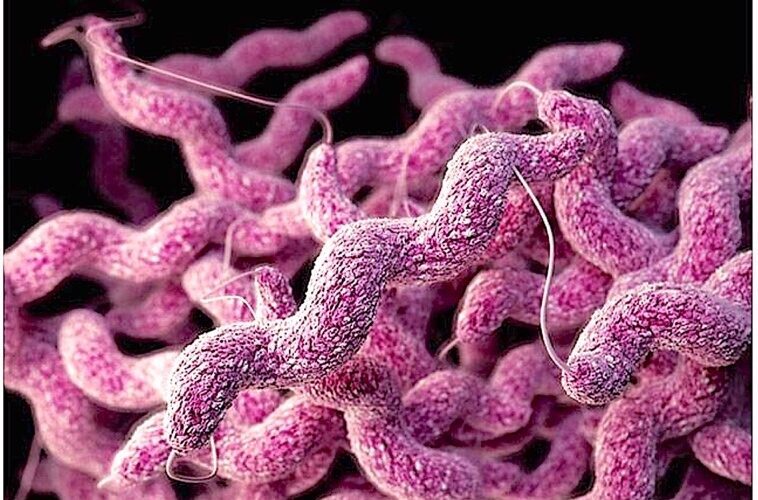
Campylobacter is a genus of bacteria that is among the most common causes of bacterial diarrheal illness in humans worldwide. The name means “curved rod,” derived from the Greek campylos (curved) and baktron (rod). While there are dozens of species, three represent the main sources of human infection: Campylobacter jejuni, Campylobacter coli, and Campylobacter lari. C. jejuni is the most commonly implicated species.

Campylobacteriosis as a disease entity was first recognized by Theodor Escherich in 1886, who described the symptoms of intestinal Campylobacter infections in children as “cholera infantum” or “summer complaint.” However, the organisms were not easily cultured or characterized, which precluded their recognition as major causes of disease until the 1970s.

Campylobacter jejuni is a gram-negative rod-shaped bacterium that grows best in a high temperature (42°C, or 107°F) and low oxygen environment. These characteristics represent adaptations to growth in its normal habitat—the intestines of warm-blooded birds and mammals. Several closely-related bacterial species with similar characteristics, C. coli, C. fetus, and C. upsalienis, may also cause disease in humans but are responsible for less than 1% of human infections annually. The optimal conditions required for the growth of Campylobacter make it difficult to isolate in the laboratory from fecal specimens without special techniques, including the use of selective culture media.

Here are the other updated sites.  Most of them we started in the late 1990’s and early 2000’s – pre Google.

I am pleased to support and participate in the second South Arica Food Safety Summit June 8 and 9, 2021.  Since it is virtual, I urge world-wide participation – https://foodsafetysummit.co.za/#top

Our inaugural 2020 Summit focussed on all the lessons we have learned during this global pandemic. Although the pandemic is still top of mind, we do need to make sure we pay attention to the real food safety issues facing the food industry.

Our event is perfectly timed to mark the celebrations of World Food Safety Day 2021 on 07 June 2021 and thus it is fitting that we will be paying attention to the latest food safety innovations to ensure we are prepared to make safe food now for a healthy tomorrow.

The Food Safety Summit 2021 is a team effort and Anelich Consulting and Food Focus are proud to once again partner for this event. We look forward to teaming up with you too as we come together as food safety professionals.

“This reoccurring pathogenic E. coli strain therefore appears to be a reasonably foreseeable hazard in the California Central Coast leafy greens growing region, and specifically of concern in the South Monterey County area of the Salinas Valley growing area. Farms subject to the FSMA Produce Safety Rule are required to take all measures reasonably necessary to identify, and not harvest,  produce that is likely to be contaminated with a known or reasonably foreseeable hazard.”  

“The updated plan includes a renewed emphasis on actions to prevent contamination stemming from activities on adjacent land,…”

The FDA has made clear the the Leafy Green Industry is NOT doing enough to protect consumers from persistent environment contamination – specifically by E. coli.

From its investigation the FDA found:

The FDA, in collaboration with California state partners, investigated several farms with fields linked through traceback; we identified the outbreak strain in one cattle feces composite sample taken alongside a road approximately 1.3 miles upslope from a produce farm with multiple fields linked to the outbreak through traceback. In addition, several other samples tested positive for other STEC strains, including E. coli O157:H7.

The FDA reccomends:

The FDA recommends that the agricultural community in the California Central Coast growing region work to identify where this reoccurring strain of pathogenic E.coli is persisting and the likely routes of leafy green contamination with STECs.

In addition, when pathogens are identified through microbiological surveys, pre-harvest or post-harvest testing, we recommend growers implement industry-led root cause analyses to determine how the contamination likely occurred and then implement appropriate prevention and verification measures.

FDA Takes Two Important Steps to Advance the Safety of Leafy Greens

April 6, 2021

Today, the U.S. Food and Drug Administration is taking two important steps to advance the safety of leafy greens. The first is the release of a report on the investigation into the Fall 2020 outbreak of E. coli O157:H7 illnesses linked to the consumption of leafy greens. The report describes findings from the investigation, as well as trends key to understanding leafy greens outbreaks linked to the California Central Coast growing region (encompassing the Salinas Valley and Santa Maria growing areas) that have occurred every fall since 2017. In addition, the FDA is also releasing an updated version of the Leafy Green Shiga-toxin producing E. coli (STEC) Action Plan, reaffirming the need for collaborative action to improve the safety of leafy greens, and building on the work accomplished in 2020.

Investigation Report

Between August and December 2020, the FDA and multiple state and federal partners were involved in an investigation into an outbreak of E. coli O157:H7 illnesses associated with the consumption of leafy greens. The outbreak caused 40 illnesses across 19 states, resulting in 20 hospitalizations, including four cases of hemolytic uremic syndrome (HUS), a type of kidney failure.

During the traceback investigation the outbreak was linked via whole genome sequencing (WGS) to outbreaks associated with the consumption of leafy greens grown in California’s Central Coast growing areas that have occurred every fall since 2017.  Using the information learned during traceback, along with data collected in response to previous outbreaks, the FDA was able to narrow the scope of the investigation to fields in the Salinas Valley growing area of California. The FDA, in collaboration with California state partners, investigated several farms with fields linked through traceback; we identified the outbreak strain in one cattle feces composite sample taken alongside a road approximately 1.3 miles upslope from a produce farm with multiple fields linked to the outbreak through traceback. In addition, several other samples tested positive for other STEC strains, including E. coli O157:H7.  While no direct source or route of contamination was identified, the investigation provided insights into potential sources of contamination, including livestock activities on adjacent land.

Reoccurring outbreak strain, growing region, and concerns with the potential impacts of adjacent lands

The FDA analyzed outbreaks that had occurred each fall since 2017 in light of the findings of this investigation and found three key trends in the contamination of leafy greens by E. coli O157:H7 in recent years: a reoccurring strain, reoccurring region and reoccurring concerns with the potential impacts of  adjacent lands. This reoccurring pathogenic E. coli strain therefore appears to be a reasonably foreseeable hazard in the California Central Coast leafy greens growing region, and specifically of concern in the South Monterey County area of the Salinas Valley growing area. Farms subject to the FSMA Produce Safety Rule are required to take all measures reasonably necessary to identify, and not harvest,  produce that is likely to be contaminated with a known or reasonably foreseeable hazard.

Recommendations

The FDA recommends that the agricultural community in the California Central Coast growing region work to identify where this reoccurring strain of pathogenic E.coli is persisting and the likely routes of leafy green contamination with STECs.  In the report, the  FDA encourages producers in the Central Coast of California growing region to participate in the California Longitudinal Study, and in the locally-led, locally-convened California Agricultural Neighbors (CAN) workgroup. In addition, when pathogens are identified through microbiological surveys, pre-harvest or post-harvest testing, we recommend growers implement industry-led root cause analyses to determine how the contamination likely occurred and then implement appropriate prevention and verification measures.

Leafy Greens STEC Action Plan

The FDA recognizes that more work is needed from all leafy greens stakeholders to advance the vision outlined in the Leafy Green STEC Action Plan. Originally released in March 2020, the action plan was designed to foster a more urgent and collaborative approach to preventing leafy greens outbreaks caused by STEC.  Progress made to date includes the launch of  the California Longitudinal Study, the development of an efficacy protocol to aid in the development and registration of antimicrobial treatments for pre-harvest agricultural water, and several  focused inspections, follow-up investigations, sampling assignments, and critical steps taken to advance traceability of leafy greens.

Building on this work, the FDA released an updated version of the Leafy Green STEC Action Plan today which reaffirms our commitment to advancing leafy greens safety. The updated plan includes a renewed emphasis on actions to prevent contamination stemming from activities on adjacent land, announces new actions that build on the accomplishments and learnings from the 2020 plan, and renews our commitment to  completing certain actions that were difficult to accomplish in 2020 due to challenges presented by the COVID-19 pandemic.

Shared Responsibility

We know that we cannot fix the issue of leafy green contamination on our own. Recognizing the interconnection between people, animals, plants, and their shared environment, we strongly encourage collaboration to address the issues contributing to produce contamination. Industry leadership, along with collaboration among growers, processors, retailers, state partners and the broader agricultural community, is critical to establishing needed prevention measures and preventing foodborne illness.

Since 1984, the Legal Foundation of Washington has distributed more than $200 million to Washington’s legal aid community. The Legal Foundation of Washington is a non-profit created by the Washington Supreme Court to build support for civil legal aid across the state.

I hope others step up.

This weekend I continued to work on the Parker and Jarboe E. coli cases – both linked to the consumption of tainted romaine lettuce that was caused by E. coli O157:H7 contaminated cattle feces in the environment.  I was also considering what our next move – short of litigation – might be on the quest to rid Salmonella from beef and chicken.

In researching both issues, I came across – again – a 2017 report by the Pew Charitable Trust entitled “Food Safety from Farm to Fork.” – certainly a common and well-used phrase.  But is made me consider that we need to think of pathogen reduction pre-harvest as not only of a way of making our meat supply safer, but also as a way to reduce pathogens in the environment that can taint other foods we consume – namely leafy greens.

With former food safety head of Pew, Sandra Eskin, now ensconced at FSIS I took a bit harder look at the report that focused on “… “assess[ing] pre-harvest interventions aimed at reducing the level of the major foodborne pathogens—Salmonella, Campylobacter, and Escherichia coli (E. coli) O157:H7—that can lead to the contamination of meat from poultry, swine, and cattle.”

Although the focus of the report was primarily how to prevent contamination of the meat from poultry, swine, and cattle that we consume, it strikes me also as a possible roadmap to reducing pathogens in the environment and therefore reducing pathogens finding their way on to our salads.

Recommendations

To improve food safety in the U.S. through pre-harvest interventions, Pew makes the following recommendations:

To funding agencies such as U.S. Department of Agriculture’s National Institute of Food and Agriculture

1. Extend funding opportunities to support:

a. Relevant research, particularly into biosecurity and best management practices, which are foundational to pre-harvest food safety and effective across a wide variety of species, production systems, and pathogens but to date have not been a focus of most scientific research.
b. Large field trials on commercial operations for interventions that may be promising but currently lack efficacy data, particularly for hard-to-address issues such as Campylobacter in poultry and swine or Salmonella in swine.
c. Research on commercial operations to optimize application protocols, such as timing vaccination to maximize efficacy and cost-effectiveness.

2. Study the basic science, mechanism of action, ancillary benefits, and potential unintended consequences associated with poorly understood yet promising interventions such as pre- and probiotics, including alternative approaches that may reduce the need for antibiotics. Similarly, studies should also evaluate the cost-effectiveness of promising pre-harvest interventions as this will be a critical prerequisite for successful implementation.

3. Designate more funding to evaluate potential synergistic or antagonistic effects among interventions, the underlying drivers of variability in efficacy across farms and operations, and the cost-effectiveness of interventions, including potential incentives to increase uptake of the interventions by producers.

4. Consider incentives to spur research and development in the pre-harvest food safety area, by providing, for instance, more grants and fostering public-private partnerships.

To federal agencies

1. Provide incentives for the implementation of pre-harvest food safety interventions, be they regulatory or economically motivated. In particular, consider strategies that lead to improvements in biosecurity and management practices as part of these incentives.

2. Expand the use of innovative tools such as risk assessments to systematically synthesize pertinent data and prioritize when and where interventions should be applied.

3. Improve the regulatory approval processes in such a way that product safety, consistency, efficacy, and quality can be guaranteed while making sure promising products can reach the market in a timely fashion. In particular, consider the value of technological advancements such as whole-genome sequencing for overcoming traditional challenges to regulatory approval.

4. Improve collaboration and communication among all stakeholders (farmers, meat producers, consumers, regulatory agencies, academic researchers, the pharmaceutical industry) to increase the availability and use of promising interventions. In particular, strengthen interagency collaborations to leverage technical expertise across and within organizations and closely align animal health and food safety responsibilities, even if they rest in different entities such as USDA’s Food Safety and Inspection Service and Animal and Plant Health Inspection Service.

To industry

1. Emphasize the use of individual pre-harvest interventions as one part of a herd health management program, in the context in which they will be used (for example, animal species and age group, production system), along with potential synergisms or antagonisms between interventions. Evaluate whether ancillary benefits may be achieved, such as improvements in overall animal health that may reduce treatment costs and animal losses.

2. Provide adequate biosecurity, feed and water safety, and basic animal health standards as a prerequisite for the production of meat and poultry on farms and feedlots, even if biosecurity may be more challenging to ensure in some production systems (such as pasture-based systems).

3. For industries in which a small number of breeding herds or flocks give rise to the production animals, consider the feasibility and potential value of pathogen eradication programs upstream, in elite herds or flocks, and create incentives for such programs where feasible.

To all stakeholders

1. Encourage data sharing between industry, academia, governmental researchers, and regulatory agencies to allow data on the efficacy and safety of these products from all settings to be used to the greatest extent possible. Public-private partnerships may be the most feasible approach to closing some of the data gaps that currently hinder the development and use of pre-harvest interventions. This will require overcoming legal and logistical challenges such as privacy and transparency concerns and information technology infrastructure compatibility.

Seems like the old saying “killing two birds with one stone” might well have a slightly different take.  If we thought of pre-harvest reduction of pathogens from an environmental prospective, we might well have a shot of at least reducing pathogens in the meat AND the salads we eat.

I am speaking (virtually) at the Food and Drug Law Institute (FDLI) Conference this week: https://www.fdli.org/2021/03/2021-food-and-dietary-supplement-safety-and-regulation-conference-agenda/. My guess is that there will be a few FDA and FSIS people in attendance.

My roll is to bring some reality about why it is a bad idea to poison your customers and what the FDA and FSIS leadership should be doing about it.

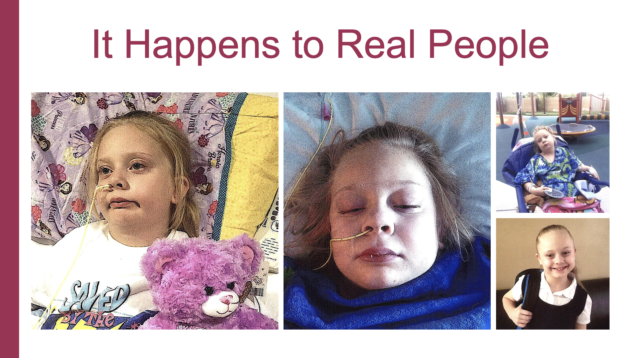
Exposure to Romaine: 4/11/18 (7 years old)

Days in hospital: 39 (4/18/18 through 5/26/18)

Diagnoses:

• E. coli O157:H7 Shiga toxin (STEC E coli)
• Hemolytic uremic syndrome (HUS)
• Acute renal failure requiring prolonged hemodialysis (1 month of dialysis inpatient, and  1 month of outpatient intermittent dialysis)
• Acute respiratory failure requiring chest tube, intubation and mechanical ventilation
• Ventilator acquired pneumonia
• Severe hemolytic anemia from HUS requiring multiple blood transfusions
• Pancreatitis
• Feeding difficulties requiring prolonged use of nasogastric feeding tube
• Chronic hypertension and proteinuria related to HUS, requiring medication

Prognosis:

• Chronic kidney stage 3, with hypertension and proteinuria; damage from HUS, will likely require greater than one kidney transplant over her lifetime
• Chronic gastrointestinal difficulties secondary to pancreatitis and prolonged need for feeding tube
•Cognitive deficits related to prolonged intensive care stay and residual effects from HUS encephalopathy – learning disabilities and need for close follow-up of cognitive function
• Females requiring kidney transplantation are at high risk if they become pregnant – Mikayla will not likely ever be able to bear her own children
• Multiple blood transfusions cause problems with kidney matching for transplantation, may risk waiting for transplant and increased risk for death from kidney failure
• After transplantation, Mikayla will require immunosuppressant drugs for her lifetime, placing her at high risk for acquiring infectious diseases as well as cancer

Here is a link to all she and her family went through and will go through forever: JARBOE Makayla

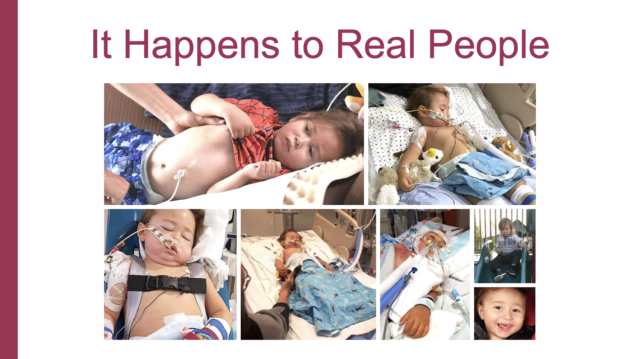
Exposure to Romaine: 10/11/18 (2 years old)

Days in hospital: 51 (10/21/18 through 12/11/18)

Days in rehab: 80 (12/11/18 through 3/1/19)

Diagnoses:

• E. coli O157:H7 Shiga toxin (STEC E coli)
• Hemolytic uremic syndrome (HUS)
• Acute renal failure requiring dialysis
• Acute hemolytic anemia from HUS causing multiple blood transfusions
• Acute respiratory failure requiring intubation and mechanical ventilation
• Severe neurologic damage (severe encephalopathy, brain damage, seizures, multiple episodes of brain hemorrhage, loss of cognitive function, non-verbal)
• Insulin dependent diabetes related to steroids to treat brain swelling
• Chronic hypertension related to HUS

Prognosis:

• Permanent brain damage (no hope to regain significant cognitive function)
• Damage to visual cortex (permanent damage to sight)
• Unable to feed self (permanent tube feeding via G-tube)
• Dystonia of extremities (severe contractures, severe pain)
• Quadriplegia (severe dystonia), wheelchair bound
• Chronic kidney stage 3, damage from HUS, likely transplant candidate if survives >10 years
• Requires 24-hour, 100% assistance for all activities of daily living – risk of aspiration and death at all times

Here is a link to all he and his family went through and will go through forever: PARKER Lucas

Hey, President Biden, ask your food safety leadership to visit Makayla and Lucas.

I wonder if people with decision-making authority sat with these families for a bit, if we would have fewer foodborne illness outbreaks.