STOP petitions government to add Cronobacter to Nationally Notifiable Disease List

This week there were three hearings in Washington D.C. addressing the infant formula shortage and the reasons behind it. FDA officials were pressed about the failure of leadership and disorganization of the recall by Abbott Nutrition. The FDA refused to take food safety seriously and now the most vulnerable are at risk.

Abbott received 17 consumer complaints between 2019 and 2021. This included 15 complaints of infants testing positive for another pathogen and one complaint related to Cronobacter. The company also found Cronobacter in two batches of formula. The first just one day after an FDA inspection in 2019 in addition to five other environmental samples between 2019 and 2021.

The Abbott recall could have been prevented. The agency had reports of safety failures months before the contaminated formula sickened babies and caused two deaths. Now, infants are going hungry due to the delay and lack of urgency.

Sign the petition now to help us add Cronobacter Sakazakii to the Nationally Notifiable Disease List to prevent this from happening again.

Here is what the head of the FDA said in testimony to congress just last week:

The CDC receives reports on foodborne disease outbreaks from state, local, and territorial health departments. On average, CDC receives two to four Cronobacter case reports annually; however, because Cronobacter infection is not reportable in most states, the total number of cases that occur in the United States each year is not known.

Here is a bit of history about why having bacterial infections reportable make a difference.

California – 34 ill: From mid-December to mid-January, 9 cases of E coli O157:H7-associated bloody diarrhea and the hemolytic-uremic syndrome had been reported in San Diego County, California and 1 child died. A total of 34 persons had bloody diarrhea, the hemolytic-uremic syndrome, or E coli O157:H7 organisms isolated from stool during the period November 15, 1992, through January 31, 1993. Organisms of E coli O157:H7 ultimately identified from 6 persons were indistinguishable from those of the Washington outbreak strain linked to Jack in the Box restaurants in Washington, Idaho, Nevada and California.  All the pre-formed frozen hamburgers were produced by Von’s in California and shipped to those restaurants in those states.

According to public health officials:

Improved surveillance by mandating laboratory – and physician – based reporting of cases of E coli O157:H7 infection and the hemolytic uremic syndrome might have alerted health officials to this outbreak sooner, which could have resulted in earlier investigation and the institution of measures to prevent more cases.

Clearly, had E. coli O157:H7 been reportable, public health officials in California would have caught the illnesses and most likely prevented the hamburgers from being shipped to other states.  Hundreds of people – specifically children – would not have been sickened and three would likely not have died.

The final after – outbreak report by the CDC found that nearly all illnesses in states other than California occurred AFTER the cluster of 34 cases that went unreported in California.

Washington – 602: On January 13, 1993, a physician reported to the Washington Department of Health a cluster of children with hemolytic uremic syndrome (HUS) and an increase in emergency room visits for bloody diarrhea. During January-February 1993, 602 patients with bloody diarrhea or HUS were reported to the state health department. 144 were hospitalized, 30 developed HUS and three died.

Idaho – 14: Following the outbreak report from Washington, the Division of Health, Idaho Department of Health and Welfare, identified 14 persons with culture-confirmed E. coli O157:H7 infection. 1 developed hemolytic uremic syndrome (HUS).

Nevada – 58: On January 22, after receiving a report of a child with HUS who had eaten at a local chain A restaurant, the Clark County (Las Vegas) Health District issued a press release requesting that persons with recent bloody diarrhea contact the health department. Of 58 persons whose illnesses met the case definition 9 were hospitalized and 3 developed hemolytic uremic syndrome (HUS).

Do something to prevent the next Cronobacter Sakazakii outbreak from being larger than necessary.

  1. Will J.M. Smucker Company and/or the FDA release immediately all inspection reports on this Jif plant from 2010 (see below) to the present?
  2. Will J.M. Smucker Company and/or the FDA answer if other WGS Salmonella Senftenberg samples found on the public database NCBI from 2010 to the present (notably 2014) are or are not linked to the J.M. Smucker Company Jif Peanut Butter plant?

A little transparency would be nice.

Since the last update on May 21, 2022, two more illnesses have been reported. As of May 25, 2022, a total of 16 people infected with the outbreak strain of Salmonella Senftenberg have been reported from 12 states:  Arkansas (1), Georgia (2), Illinois (1), Massachusetts (1), Missouri (2), Ohio (1), North Carolina (2), New York (1), South Carolina (1), Texas (2), Virginia (1), and Washington (1).

Interesting fact, according to the CDC, for every one person who is a stool-culture confirmed positive victim of Salmonella in the United States, there is a multiple of 38.5 who are also sick but remain uncounted. (See, AC Voetsch, “FoodNet estimate of the burden of illness caused by nontyphoidal Salmonella infections in the United States,” Clinical Infectious Diseases 2004; 38 (Suppl 3): S127-34).

Illnesses started on dates ranging from February 19, 2022, through May 2, 2022. Sick people range in age from less than one to 85 years, with a median age of 51, and 73% are female. Of nine people with information available, two have been hospitalized. No deaths have been reported.

The true number of sick people in an outbreak is likely much higher than the number reported, and the outbreak may not be limited to the states with known illnesses. This is because many people recover without medical care and are not tested for Salmonella. In addition, recent illnesses may not yet be reported as it usually takes 2 to 4 weeks to determine if a sick person is part of an outbreak.

State and local public health officials are interviewing people about the foods they ate in the week before they got sick. Of the 10 people interviewed, 10 (100%) reported eating peanut butter. Of the nine sick people with brand information, all nine (100%) reported eating Jif brand peanut butter.

Whole Genome Sequencing (WGS) analysis shows that samples from sick people in this investigation are closely related genetically to a sample collected in 2010 from the environment at J.M. Smucker Company’s facility in Lexington, KY, where some Jif brand peanut butter is produced.  We have sent a Freedom of Information Act request to the FDA for the release of all inspection reports of this plant from 2010 to the present.

On May 20, 2022, J.M. Smucker Company recalled multiple Jif brand peanut butter types. Additional companies have recalled food items made with Jif brand peanut butter. Do not eat, sell, or serve recalled foods.

Here is the most current recall list thanks to eFoodAlert:

This is a crime.

We are now beyond four years from the date that the NICD announced the association between Tiger Brands’ polony products and the outbreak, and the work done by all parties has only generated more evidence that the NICD’s and Tiger Brands’ conclusions are accurate. There is no evidence to the contrary.

In 2017 and 2018, the world’s largest and deadliest outbreak of listeriosis occurred in multiple provinces of South Africa (Figure 1). The outbreak was caused by contaminated polony, a ready-to-eat, processed meat product. Ready-to-eat, processed meats are a well-known vehicle for listeriosis outbreaks (Thomas et al., 2020). The Minister of Health declared that there was an outbreak of listeriosis on December 5, 2017, and, on March 4, 2018, further identified Tiger Brands’ polony products as the cause of the outbreak. The Minister of Health instructed Tiger Brands to recall all polony products the same day. See generally, Minister of Health September 3, 2018, Media Statement. The Ministry of Health based its conclusions on the investigative findings of the Joint Public Health Emergency Co-ordinating Committee, which was established for the specific purpose of identifying the cause of the outbreak and developing measures to prevent further illnesses and other outbreaks associated with processed meat products generally. Id. The relevant epidemiologic findings are set forth in the paragraphs that follow.

Figure 1. Incidence of Laboratory-Confirmed Listeriosis Cases during the Outbreak Period, According to South African Districts (Thomas et al., 2020).

Cases were reported from across the country, with most cases reported from Gauteng Province (58%). Women accounted for 55% of total cases. The ages of cases ranged from birth to 93 years. Neonates (aged £ 28 days) were the most affected age group, accounting for 43% of cases. This was followed by adults of 15 to 49 years of age, accounting for 32% of cases. The disease outcome was known for 806/1,060 (76%) of cases; 27% (216/806) had the known outcome “died” (Smith et al., 2019).

Listeriosis is a serious foodborne infection with a case-fatality rate (“death rate”) of 20-30% (Thomas et al., 2020). People primarily affected by listeriosis have impaired cell-mediated immunity. This includes those who are pregnant, elderly, or immunocompromised from conditions such as HIV, chronic disease, or immunosuppressive therapy (Thomas et al., 2020). The specific outbreak strain associated with the outbreak was Lm ST6. There are two ways that listeriosis can manifest: febrile gastroenteritis and invasive listeriosis (Coulombier). Invasive listeriosis is characterized by bacteraemia, meningitis, pneumonia, endocarditis, and sepsis (Smith et al., 2019).

A total of 1,060 cases were reported during the period of January 11, 2017, to July 17, 2018 (Figure 2)[1]. The outbreak period was defined as a duration of time during which case numbers exceeded and remained above a weekly threshold of five cases per epidemiological week (Thomas et al., 2020). At the peak of the outbreak (mid-November 2017), 41 listeriosis cases were reported in a single week. Prior to this outbreak, listeriosis was not a reportable disease in South Africa; therefore, information is not available on the prevalence, epidemiology, and description of clusters/outbreaks on listeriosis. Due to the lack of surveillance data, the baseline number of listeriosis cases was estimated from counts of listeriosis cases in 2016.

It is known that in 2015 and 2016, clusters of listeriosis occurred in South Africa. The 2015 listeriosis cluster involved 7 cases total, and the predominant strain was Lm ST6. However, researchers did not have sufficient epidemiologic evidence to connect the 2015 cluster to any specific food product (Shuping et al., 2015). For the 2016 cluster, retrospective analysis of Lm cases from the years 2012-2016 was used to calculate the expected case numbers for years 2013, 2014, 2015, and 2016 in the Gauteng province (Mathebula et al., 2016)[2]. Because there were only 3 cases in the 2016 cluster, researchers needed to estimate the baseline number of cases.

When determining if a cluster of diseases is classified as an outbreak or epidemic, it is essential to know what the baseline number of illnesses is in the population of interest. An epidemic refers to an increase in the number of cases of a disease, above what is normally expected in that population in that area, and an outbreak is defined the same but is often used for a more limited geographic area (Centers for Disease Control and Prevention [CDC], 2012).

Figure 2. Distribution of Laboratory-Confirmed Cases of Listeriosis, According to Outbreak Week and Major Events (January 1, 2017 to August 21, 2018) (Thomas et al., 2020).

Case definitions are used in outbreak investigations to help identify cases who are associated with the outbreak. A case definition includes criteria such as the subject population, implicated location, time, clinical features, and/or laboratory test results if available (CDC, 2012). The initial case definition for the primary listeriosis outbreak included all cases of listeriosis that occurred in South Africa from 2017 to 2018. The initial case definition was appropriate due to the lack of whole-genome sequencing (WGS) data at the beginning of the investigation. Multilocus sequencing typing (MLST) was used later to analyse the WGS results from all viable isolates obtained from case-patients. Researchers discovered that 93% of the clinical isolates collected from cases during the outbreak period were Lm ST6 (Thomas et al., 2020; Gerner-Smidt). The case definition later included sequence typing information to increase the likelihood of identifying a common source (Besser). This finding also showed that the outbreak strain of Listeriosis was definitively the Lm ST6 strain.

Further, we note that investigators thoroughly analysed the theoretical possibility that Lm ST6 was coming from more than just Tiger Brands’ polony products. In short, after conducting environmental investigations at all 157 ready-to-eat meat production facilities in South Africa, there was no Lm ST6 in any other products or facilities except Tiger Brands.

Together with the NCID’s clear statements that Tiger Brands polony products were the source of the outbreak, based on epidemiologic and environmental evidence, the constellation of all evidence conclusively establishes that Tiger Brands’ polony products were in fact the sole source. There is no additional analysis that will materially change these facts.

Based on its investigation findings, the Minister of Health issued a recall of Tiger Brand’s ready-to-eat meat products produced at the Enterprise facility. The Minister of Health also recalled all ready-to-eat meat products produced at Rainbow Foods, but epidemiologic and environmental findings during the investigation showed that this was a precautionary measure only—i.e., the Listeria identified at the Rainbow Foods’ production facility on environmental testing was not Lm ST6, and therefore had no causal association with illness in the outbreak. See Minister of Health March 4, 2017 Statement. Shortly after Tiger Brands’ recall, the outbreak essentially stopped (Figure 3).

Figure 3. Epidemic curve of laboratory-confirmed listeriosis cases by date of clinical specimen collection (n=1 038) and sequence type (ST) (n=564), South Africa, 01 January 2017 to 5 June 2018 (n=1049)

The environmental and epidemiologic investigative findings establish the likely causal nexus between Tiger Brands’ polony products and most all Listeriosis cases that occurred in South Africa before, during, and after the outbreak period. (Coulombier).  As stated above, 93% of clinical isolates that underwent sequencing were shown to be Lm ST6, the strain that was both epidemiologically associated with illness and repeatedly found in the production environment at the Enterprise facility, and nowhere else. But not all isolates could be sequenced, due to the lack of laboratory resources and personnel available (Besser). Based on the high percentage of Lm ST6 clinical isolates, it is highly likely that a similar percentage of non-sequenced isolates would have been Lm ST6 if sequencing could have been done (Coulombier). As further support that there was no difference between the distribution of sequence types among the non-sequenced samples and the distribution of sequence types observed in the sequenced samples, the process of selecting case isolates to be sequenced was not biased. Therefore, it is a statistically valid and provable fact that, in the absence of evidence to the contrary—i.e., sequencing that showed that a clinical isolate was not Lm ST6–a listeriosis patient diagnosed during the outbreak period had a > 90% probability of being related to the outbreak even without confirmed laboratory results (Gerner-Smidt).

After detecting the outbreak, the Centre for Enteric Diseases, a part of the National Institute for Communicable Diseases, conducted a nested case-control study that provided evidence that cases with Lm ST6 infections were more likely to have eaten polony than those with non- Lm ST6 infections (Thomas et. al, 2020). In outbreak investigations, case-control analysis is performed to estimate the odds ratio for the association between specific food items and the outbreak-associated illness. For this nested case-control study, case patients were those with Lm ST6 infections, and control patients were people infected by another strain of LM (i.e., not Lm ST6) during the outbreak period. Results from this study show that the odds ratio was 8.55 with a 95% confidence interval of 1.66 – 43.35. An odds ratio is a measure of association between the odds of becoming ill from consuming a specific food item versus the odds of becoming ill without having consumed the specific food item (Coulombier). An odds ratio of 8.55 signifies that the odds of having eaten polony in Lm ST6 cases is 8.55 times greater than the odds of having eaten polony in non-Lm ST6 cases. Based on the calculated confidence interval, this result is statistically significant because the confidence interval does not include the null value of 1. Therefore, 95% of the time, the true odds ratio fell within this interval.

Prior to the study, food history interviews were conducted to generate a hypothesis as to which food item could have been the source of the outbreak (Coulombier). The food histories were conducted with the use of a standardized questionnaire that inquired as to food consumed by a case-patient over the four weeks prior to onset of symptoms. Open-ended questions were posed to Listeriosis cases to understand each case’s food habits, such as where they purchase food, name of restaurants patronized, and use (and name) of informal food vendors. Closed-ended questions were posed to determine each case’s exposure to specific food items associated with outbreaks in the past and locally consumed foods thought to pose a high risk for listeriosis such as processed meats (e.g., biltong), cold meats (e.g., ham, polony), soft cheeses, raw milk, and raw vegetables. Brand preferences were also captured in the form.  The combination of open and closed-ended questions was and continues to be standard practice for the conduct of epidemiologic investigations internationally and provided investigators with high value data for consideration alongside other epidemiologic and environmental information.

The food history interviews were completed by November 1, 2017. The epidemiologic methods utilized throughout this investigation, including the case-control, were robust and mirrored those used in high-level investigations throughout the world. The investigators’ multi-disciplinary investigative methods were fully appropriate for the outbreak circumstances (Besser).

On January 13, 2018, febrile gastroenteritis developed in 10 children from a nursery in Gauteng Province. Several stool samples were collected from the children, and one yielded Lm ST6. Sandwiches prepared and eaten at the nursery were the only common food exposure, and polony was the common ingredient. Polony was recovered from the nursery refrigerator, and Lm ST6 was identified in the polony produced at Tiger Brands Enterprise Facility in Polokwane (Thomas et al., 2020).

On February 2, 2018, an environmental investigation took place at the Tiger Brands Enterprise Facility in Polokwane following the discovery at the nursery (Gerner-Smidt). Of 317 environmental samples taken from the Polokwane facility, 47 tested positive for Listeria monocytogenes, and of the 47 that tested positive, 34 were subtyped as the outbreak Lm ST6 strain. Additionally, two of 13 samples of unopened polony loaves collected at the facility tested positive for Listeria monocytogenes, and both were subtyped as the outbreak Lm ST6 strain.

These facts stand in stark contrast to the investigations at all other South African ready-to-eat meat producers, during which investigations no Lm ST6 was recovered in any food or environmental sample.

The fact that the public health investigation involved environmental inspections and sampling at the production facilities of other ready-to-eat meat producers is remarkable. Indeed, the public health investigation of this outbreak was unprecedented in scope, even internationally, as it is, in our experience, unprecedented to engage in such robust investigation of producers whose products are not epidemiologically associated with an outbreak. Thus, the only epidemiologic evidence establishes that Tiger Brands, and Tiger Brands alone, produced product contaminated by Lm ST6 during the outbreak period. By incorporating findings from the epidemiologic, environmental, microbiologic, and traceback data, investigators provided conclusive evidence that the source of the outbreak was polony produced fromTiger Brands Enterprise Foods Polokwane production facility, and that there were no other possible causes.

Further, and as set forth previously, the Minister of Health identified Tiger Brands’ polony products as the source of the outbreak on March 4, 2018, and instructed Tiger Brands to recall all its ready-to-eat meat products. At the point in time that Tiger Brands’ polony products were taken off of store shelves and were no longer widely available for purchase and consumption in South Africa, the outbreak ended and listeriosis cases in South Africa shortly returned to their pre-outbreak baseline. As Figure 3 demonstrates, by mid-April 2018 (6 weeks after recall), fewer than 5 cases were reported weekly. Regarding those individuals who became ill between the date of Tiger Brands’ recall and mid-April 2018, listeriosis cases continued to become ill by consumption of Tiger Brands’ polony products that were purchased before the date of the recall, which was to be expected given the lengthy incubation period for listeriosis generally (from 3 days to over one month), or from Tiger Brands’ polony products that were simply not removed from store shelves in time.

Following the findings by the NICD, Tiger Brands conducted its own internal investigation into the outbreak. During this internal investigation, based on information set forth in the discovery conducted to-date and Tiger Brands’ various public statements, Tiger Brands confirmed the presence of the Lm ST6 outbreak strain in both its products and various locations in the production environment at the Enterprise facility. Tiger Brands issued several public statements to this effect.

In a SENS statement dated 19 March 2018, Tiger Brands issued the following public statement:

“On 15 March 2018, Tiger Brands received confirmation from independent laboratory tests corroborating the DoH’s findings of the presence of LST6 in the environment at its Polokwane Enterprise Foods manufacturing Facility. In addition, there was a positive detection of LST6 on the outer casing of two samples.”

On 26 March 2018, Tiger Brands issued a public statement on its website reiterating the independent laboratory results announced in the SENS statement of 19 March 2018 as aforementioned which confirmed the presence Lm ST6 in the Tiger Brands Polokwane Facility. In the 26 March press statement, Tiger Brands CEO, Mr Lawrence Mac Dougall commented on this discovery and, inter alia, stated as follows:

“We are investing all our time and energy into not only understanding the cause of the LST6 detection, but also how it could have come into our facility.”

In a statement to shareholders dated 23 May 2018, Mr Mac Dougall stated that:

“The detection of the presence of Listeria ST6 in our factory in Polokwane was disappointing to us given our compliance with best practices and prevailing standards.”

In a SENS statement dated 25 April 2018, Tiger Brands reported that it had received independent laboratory test results following its own internal investigation which confirmed the presence of the Lm ST6 in samples of ready-to-eat meat products manufactured at the Polokwane Facility:

“The purpose of this announcement is to update shareholders on the results of the independent laboratory re-testing which was carried out in respect of the presence of LST6 in the above samples which were manufactured at the Enterprise Polokwane processing facility. On 24 April 2018, Tiger Brands received confirmation of the presence of LST6 in these samples.”

From both the NICD’s and Tiger Brands’ investigations into the outbreak, there is no evidence that the outbreak had any source other than Tiger Brands’ polony products. There is no epidemiologic support for that proposition, and there is no environmental support for that proposition because NICD found no other positive Lm ST6 samples at any other facility that produces ready-to-eat meat. In fact, Tiger Brands has, in unequivocal terms, admitted to this responsibility. For example, in the request Further Trial Particular, Tiger Brands affirmed its responsibility for Lm ST6 cases:

“Tiger Brands statement of 24 April 2018 was correct. Tiger Brands learnt that laboratory tests had found ST6 in ready-to-eat meat products from its Enterprise Foods manufacturing facility in Polokwane. It accepts that the laboratory findings were correct.”

“Tiger Brands does not know to what products the contamination extended or over what period it occurred. It accepts, however, that ST6 contaminated products from its Polokwane facility probably infected some of the people who suffered from listeriosis during the outbreak.”

“The defendants accept the test results that L. monocytogenes was detected in the polony water coolers at the Polokwane facility.”

Further, and following the Supreme Court of Appeal’s ruling in the third-party subpoena’s litigation, Tiger Brands issued the following statement to the press:

“On Friday, 4 February 2022, the Supreme Court of Appeal overturned the earlier order of the Gauteng Division of the High Court, Johannesburg which required various third parties to hand over epidemiological information relating to the listeriosis outbreak.”

“The 2018 listeriosis outbreak affected many South Africans. We are saddened by the impact it has had on the lives of the victims and those who have lost loved ones from the outbreak. Tiger Brands reiterates its commitment to ensure that a resolution of the matter is reached in the shortest possible time, in the interest of all parties, particularly the victims of listeriosis.”

That Tiger Brands is liable for the manufacture and sale of contaminated polony products that injured people is beyond doubt; the scientific findings from the multi-disciplinary investigation allow only this conclusion, and the functional life of the outbreak ended when Tiger Brands was ordered to withdraw its products from the market. The epidemiologic implications of NICD’s sequencing effort are conclusive, which is the preliminary point made by SAAFOsT, in which organization Tiger Brands is a custodian member, in its December 2017 statement that:

“This is undoubtedly one of the worst listeriosis cases in global history. A large percentage (74%) of all the clinical isolates belong to the same sequence type i.e. ST6—this means that these isolates originate from a single source, most likely a food product on the market.”

What SAAFOsT did not have the benefit of then knowing, however, was that sampling at Tiger Brands’ Polokwane facility would validate in every respect the epidemiologic implications from NICD’s sequencing efforts on human isolates.

We are now beyond four years from the date that the NICD announced the association between Tiger Brands’ polony products and the outbreak, and the work done by all parties has only generated more evidence that the NICD’s and Tiger Brands’ conclusions are accurate. There is no evidence to the contrary.

_____________________

[1]  Note: 23 October 2016 to 3 September 2018 is the “Outbreak Period” in the Certification Order.

[2] The oldest South African CT4148 isolates date from September 2015 and are related to a cluster of three cases of listeriosis in Western Cape Province28; this finding suggests a potential epidemiologic link to the 2017–2018 outbreak. Thomas, et al., 2020

References

Besser, J. (2020). Expert Opinion Regarding a Listeria Outbreak in South Africa Involving Tiger Brands Limited.

Coulombier, D. (2020). Expert Opinion Regarding a Listeria Outbreak in South Africa Involving Tiger Brands Limited.

Gerner-Smidt, P. (2020). Expert Opinion on Subtyping Aspects of the Listeria Outbreak in South Africa Involving Tiger Brands Limited.

Smith, A. M., et al. (2019). Outbreak of Listeria monocytogenes in South Africa, 2017-2018: Laboratory Activities and Experiences Associated with Whole-Genome Sequencing Analysis of Isolates. Foodborne Pathog. Dis. 16(7): 524-530. doi:10.1089/fpd.2018.2586

Thomas, J., et al. (2020). Outbreak of Listeriosis in South Africa Associated with Processed Meat. N. Engl. J. Med. 382: 632-643. doi:10.1056/NEJMoa1907462

Tiger Brands SENS statement dated 19 March 2018, “Financial Impact of Product Recall and Suspension of Operations at the Polokwane, Germiston, Pretoria and Clayville Processing facilities of Value-Added Meat Products (“VAMP”); Institution of Class Action; and Results of Independent Tests carried out in respect of the presence of Listeria monocytogenes ST6 type (“LST6”)”

Tiger Brands Public Statement dated 26 March 2018, “Tiger Brands Listeria Update”

Tiger Brands SENS Statement dated 23 May 2018, “Unaudited group results and dividend declaration for the six months ended 31 March 2018.

Tiger Brands SENS Statement dated 25 April 2018, ‘Results of Independent Tests carried out in respect of the presence of Lister monocytogenes ST6 type (“LST6”)’

Tiger Brands response to Plaintiff’s Further Particulars

Rose, “Tiger Brands Tall Tale”. Financial Mail, 10 February 2022.

Shuping, L., et al. (2015). Investigating a cluster of Listeria monocytogenes cases in the Western Cape province of South Africa, September 2015.

NICD. (2016). Investigation of Listeria monocytogenes cases at Charlotte Maxeke Johannesburg Academic Hospital in Johannesburg, December 2016.

NICD, Listeriosis Outbreak Situation Report. Dated 11 June 2018.

SAAFOST, “Listeriosis Outbreak in South Africa – Latest! By Dr Lucia Anelich, SAAFoST President”. Dated 20 December 2017.

The CDC reports 14 with Salmonella Senftenberg in 12 States linked to Jif peanut butter. Arkansas (1), Georgia (2), Illinois (1), Massachusetts (1), Missouri (1), Ohio (1), North Carolina (1), New York (1), South Carolina (1), Texas (2), Virginia  (1), and Washington (1).

However, as the CDC says, “the true number of sick people in an outbreak is likely much higher than the number reported, and the outbreak may not be limited to the states with known illnesses. This is because many people recover without medical care and are not tested for Salmonella.”

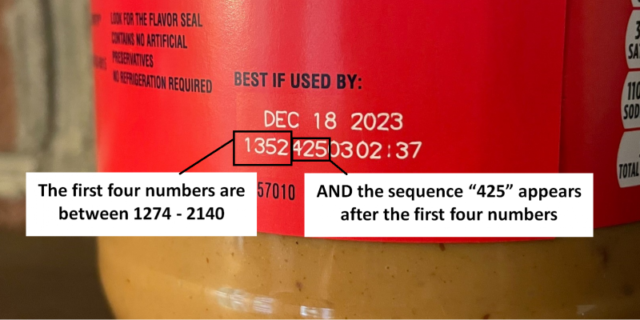
Lot code numbers 1274425 through 2140425, with “425” at the end of the first 7 numbers.

Here is the current recall list – it will grow.

  • Albertsons Companies (11 store-prepared items):- May 21, 2022
  • Cargill (multiple products containing peanut butter, sold at the Wilbur Chocolate Retail Store in Lititz, Pa. and online at Wilburbuds.com.):- May 23, 2022
  • Coblentz Chocolate Company (multiple peanut butter products):- May 24, 2022
  • Country Fresh (select fresh-cut fruit snack trays and fruit snack cups):- May 24, 2022
  • Fresh Del Monte (fresh-cut fruit and vegetable products containing ready-to-eat Jif® peanut butter dip):- May 24, 2022
  • Garden Cut, LLC (Garden Cut products containing 0.750z Jif Peanut Butter Cup):- May 24, 2022
  • Martin’s (Store Brand Apples, Pretzels & Celery with Peanut Butter):- May 23, 2022
  • Mary’s Harvest Fresh Foods Inc (Mary’s Harvest Celery Peanut Butter Cup G&G and Apple Peanut Butter Cup G&G):- May 24, 2022
  • Price Chopper (M32 Apples, Cheese and Pretzels with Peanut Butter Tray):- May 23, 2022
  • Taher Inc. (“Fresh Seasons Power Packs”):- May 24, 2022
  • Wawa (two products containing Jif Peanut Butter):- May 24, 2022
  • Wegmans (Wegmans Snack with Apple, Pretzels, Cheese and Peanut Butter):- May 22, 2022

Thanks to eFoodAlert.

The CDC estimates Salmonella bacteria cause about 1.35 million infections, 26,500 hospitalizations, and 420 deaths in the United States every year. Food is the source for most of these illnesses.

  • Most people who get ill from Salmonella have diarrhea, fever, and stomach cramps.
  • Symptoms usually begin 6 hours to 6 days after infection and last 4 to 7 days.
  • Most people recover without specific treatment and should not take antibiotics. Antibiotics are typically used only to treat people who have severe illness or who are at risk for it.
  • Some people’s illness may be so severe that they need to be hospitalized.

If you have the above symptoms, stay hydrated and seek medical attention.  Ask your treating physician to order a stool culture to test to see if you have been infected with the outbreak strain of Salmonella Senftenberg.

If you have leftover Jif, consider having a lab test it for Salmonella Senftenberg.

Salmonella:  Marler Clark, The Food Safety Law Firm, is the nation’s leading law firm representing victims of Salmonella outbreaks. The Salmonella lawyers of Marler Clark have represented thousands of victims of Salmonella and other foodborne illness outbreaks and have recovered over $800 million for clients.  Marler Clark is the only law firm in the nation with a practice focused exclusively on foodborne illness litigation.  Our Salmonella lawyers have litigated Salmonella cases stemming from outbreaks traced to a variety of foods, such as cantaloupe, tomatoes, ground turkey, salami, sprouts, cereal, peanut butter, and food served in restaurants.  The law firm has brought Salmonella lawsuits against such companies as Cargill, ConAgra, Peanut Corporation of America, Sheetz, Taco Bell, Subway and Wal-Mart.

If you or a family member became ill with a Salmonella infection, including Reactive Arthritis or Irritable bowel syndrome (IBS), after consuming food and you’re interested in pursuing a legal claim, contact the Marler Clark Salmonella attorneys for a free case evaluation.

Additional Resources:

What we know: There have been four sick with two dead from Cronobacter sakazakii linked to Abbott’s manufacturing plant.

Now the House and Senate are set to ask questions of the Industry and FDA about how the outbreak happened and how it impacted the supply of infant formula.


Formula Safety and Supply: Protecting the Health of America’s Babies
 – Wednesday, May 25 at 11am, House Energy and Commerce Committee

The Infant Formula Crisis – Wednesday, May 25 at 2pm, House Committee on Appropriations

Infant Formula Crisis: Addressing the Shortage and Getting Formula On Shelves – Thursday, May 26 at 10:30am, U.S. Senate Committee on Health, Education, Labor & Pensions

Here is a preview of the FDA’s position See full testimony – FDA Testimony ECOI Infant Formula 5.25.2022 final:

TESTIMONY OF

ROBERT M. CALIFF, M.D. COMMISSIONER OF FOOD AND DRUGS

FRANK YIANNAS, M.P.H.
DEPUTY COMMISSIONER, FOOD POLICY AND RESPONSE

SUSAN T. MAYNE, PH.D.
DIRECTOR, CENTER FOR FOOD SAFETY AND APPLIED NUTRITION

FOOD AND DRUG ADMINISTRATION DEPARTMENT OF HEALTH AND HUMAN SERVICES

BEFORE THE
SUBCOMMITTEE ON OVERSIGHT AND INVESTIGATIONS COMMITTEE ON ENERGY AND COMMERCE
U.S. HOUSE OF REPRESENTATIVES

FORMULA SAFETY AND SUPPLY: PROTECTING THE HEALTH OF AMERICA’S BABIES

MAY 25, 2022

RELEASE ONLY UPON DELIVERY

Introduction

Chair DeGette, Ranking Member Griffith, and members of the Subcommittee, thank you for inviting us here today to testify before you on supply disruptions in infant formula. We have all seen the images of empty store shelves and heard the stories of parents of kids unable to find the food their children need to survive. This situation is unacceptable. The staff at the U.S. Food and Drug Administration (FDA or the Agency) feel this not just as public servants whose job it is to ensure that these critical products are safe and nutritious, but also as parents and grandparents. Our top priority now is addressing the dire need for infant formula in the U.S. market, and our teams are working night and day to help make that happen.

At the same time, we have begun an after-action review to evaluate our own performance. We appreciate the opportunity to discuss conditions at the Abbott Nutrition facility in Sturgis, Michigan, which led to the recall that contributed to the current supply disruptions; our infant formula supply chain monitoring and mitigation efforts; and additional tools necessary if we are to prevent, monitor, and mitigate any future infant formula supply disruptions.

Inspection of Abbott Nutrition’s Sturgis, Michigan, Facility

On September 20, 2021, FDA learned of a Cronobacter infection in an infant who reportedly consumed powdered infant formula produced at Abbott Nutrition’s Sturgis, Michigan, facility. FDA immediately reported this case to Abbott Nutrition and immediately followed up on the complaint, including testing formula associated with this case complaint. No Cronobacter was recovered from the product after FDA testing.

On November 17, 2021, FDA received a complaint involving an infant with Salmonella infection. FDA and our partners at the Centers for Disease Control and Prevention (CDC) eventually determined this event was unrelated to the other cases.

FDA received the second complaint involving an infant with Cronobacter infection on December 1, 2021. We again collected intact samples of powdered formula; no Cronobacter was recovered. We also notified Abbott Nutrition about this case.

Because Cronobacter is not a nationally reportable disease, isolates of the pathogens had not routinely undergone genomic analyses, as would occur with pathogens like Salmonella. In 2021 there was no genetic evidence available for us to know if these two cases from 2021 were linked by whole genome sequencing.

But given the two case complaints and the potential severity of Cronobacter infections, along with a complaint from a former employee at the Sturgis facility, on December 6, 2021, FDA initiated inspectional planning for a for-cause inspection at the Sturgis facility with an anticipated inspection date in early January 2022. We notified Abbott Nutrition of the planned inspection on December 30, 2021. Abbott Nutrition responded by notifying FDA of approximately a dozen COVID-19-positive employees in its facility. Although we delayed our inspection temporarily because of these COVID-19 infections, FDA commenced our inspection on January 31, 2022.

FDA received a third report of an infant Cronobacter illness on January 11, 2022, while the facility’s COVID-19 outbreak delayed FDA’s inspection. Again, FDA tested product associated with this illness, found no Cronobacter, and notified Abbott Nutrition.

FDA learned of a fourth case of Cronobacter infection on February 17, 2022, the date on which Abbott Nutrition initiated a voluntary recall and FDA issued a consumer advisory.

Infants in all four cases were hospitalized, and Cronobacter may have contributed to deaths in two cases. All of the infants are reported to have consumed powdered infant formula produced at Abbott Nutrition’s Sturgis facility. The Agency investigated each complaint and analyzed product from the consumers’ homes when available. FDA also notified Abbott Nutrition after receiving each complaint.

The CDC receives reports on foodborne disease outbreaks from state, local, and territorial health departments. On average, CDC receives two to four Cronobacter case reports annually; however, because Cronobacter infection is not reportable in most states, the total number of cases that occur in the United States each year is not known. Thus, the four cases that came to our attention between September 20, 2021, and February 17, 2022, raised concerns. Despite this very unusual combination of events, we do not have definitive evidence proving that insanitary conditions of the Sturgis facility actually caused the Cronobacter illnesses of these infants.

We have included this timeline in Appendix A, and we have processes under review to develop better systems within FDA.

In sum, awareness of the four Cronobacter cases offered an evolving fact pattern, leading us to initiate a for-cause inspection, but our inspection dramatically altered the fact pattern.

Sanitary environmental conditions and well-maintained equipment are the most basic, minimal conditions needed for a manufacturer to produce dry powdered infant formula that is free of bacterial contamination. The FDA inspection team observed significant operational deficiencies in Abbott Nutrition’s Sturgis facility during the January 2022 inspection. The totality of evidence obtained during our inspection caused FDA to conclude that infant formulas produced at this plant were produced under insanitary conditions and may be contaminated with Cronobacter. We based our conclusions on the following evidence:

  • FDA investigators collected multiple samples from swabs in the facility’s environment, which later tested positive for Cronobacter sakazakii.
  • FDA investigators observed serious cracks in the firm’s spray dryers, key pieces of equipment for producing powdered products and an issue that has been linked to at least one historical foodborne illness outbreak in powdered infant formula at a different facility.
  • FDA investigators also found water leaks and condensation, which are risk factors for Cronobacter, in areas where dry powdered formula was produced.
  • Employees in the facility lacked adequate handwashing technique.
  • A review of the firm’s internal records also indicated environmental contamination with Cronobacter sakazakii and the firm’s destruction in 2019 and 2020, respectively, of two batches of finished product due to the presence of Cronobacter.
  • FDA investigators noted that Abbott Nutrition did not establish a system of process controls covering all stages of processing designed to ensure that infant formula does not become adulterated due to the presence of microorganisms in the formula or in the processing environment.
  • FDA also noted that Abbott Nutrition did not ensure that all surfaces that contacted infant formula were maintained to protect infant formula from being contaminated by any source.

FDA investigators collected numerous product and environmental samples during the inspection. Product samples FDA collected at Abbott Nutrition’s Sturgis facility and analyzed for Cronobacter tested negative. It is well documented in the scientific literature, however, that end product testing is unlikely to detect low levels of contamination. In contrast, five environmental subsample surface swabs collected from the facility tested positive for Cronobacter sakazakii; four of these instances of contamination were detected by FDA-initiated testing, and one was detected through simultaneous firm-initiated testing. The positive Cronobacter sakazakii environmental samples collected at Abbott Nutrition’s Sturgis facility have been analyzed using whole genome sequencing, revealing five different strains of Cronobacter sakazakii. While none of these environmental samples matched the limited (two) clinical samples from infants ill with Cronobacter, these findings remain a serious concern, as environmental sources of Cronobacter in infant formula manufacturing plants have been identified as one of the most likely sources of contamination.

As soon as the Agency received these positive environmental sampling results in February 2022, we communicated with Abbott Nutrition about the need for the firm to issue a voluntary recall. Abbott Nutrition voluntarily ceased production at the Sturgis facility two days prior to the recall, and FDA supported this decision given the insanitary conditions at the facility. On February 17, 2022, we issued a public communication advising consumers not to use the affected products. Abbott Nutrition initiated a voluntary recall the same day.

Insanitary conditions of this kind are unacceptable in all food manufacturing facilities, but especially in areas producing dry powdered formulas that serve as the sole source of nutrition for infants. Finding pathogens in finished product during routine testing also generally indicates a potentially serious loss of sanitary process control during manufacturing. FDA would expect any manufacturer with a robust quality assurance program to identify and quickly take corrective action when such conditions are present.

FDA knew that restarting the Sturgis, Michigan, facility was critical, because it was one of three plants run by a company with the largest market share, and many of its specialty formula products cannot be quickly manufactured at other facilities. We also became aware that Abbott Nutrition lacked a contingency plan to produce its lines of specialty metabolic and amino acid formulas that serve as a sole source of nutrition for thousands of infants with metabolic disorders. We lost confidence that Abbott Nutrition had the appropriate safety and quality culture and commitment to fix these problems quickly. FDA was left with limited options. Given the market share that Abbott Nutrition had for regular and critically needed specialty metabolic and amino acid formulas, FDA decided to negotiate a consent decree with the company rather than seeking a court order of permanent injunction through a contested process. A consent decree was the best option, giving FDA more control over the outcome, and was more likely to result in a safe resumption of operations by Abbott Nutrition at the Sturgis facility.

With the urgent public health need in mind, FDA, along with the U.S. Attorney’s Office for the Western District of Michigan, moved as quickly as possible through the negotiation process. In fact, the process here was shorter than it often is for obtaining a consent decree. FDA made clear its expectations for a safe reopening of the facility. Even still, because it was a negotiation process with a regulated firm, the U.S. government did not completely control the timeline. Moreover, FDA’s negotiations needed to be informed by our inspection of the Sturgis facility, which did not close until March 18, 2022, to ensure that the consent decree would fully address all observed violations.

FDA’s and U.S. Government Actions to Increase the Supply of Specialty Metabolic Formulas

When we talk about the infant formula supply chain, we really need to consider multiple supply chains, including, but not limited to, the supply of infant formula for healthy infants, another for infants with allergies and/or medical conditions who need hypoallergenic amino acid formulas, and another for infants who have very serious medical conditions, such as inborn errors of metabolism, and require unique specialty metabolic formulas. Abbott Nutrition dominates the market for many of the amino acid-based and metabolic formulas. Unfortunately, the only site where Abbott Nutrition produces these critical products is the Sturgis plant. Thus, the Agency immediately had to consider the potential impact a recall of these specialty formulas could have on infant health.

FDA decided to exempt specialty metabolic products from the recall and required that the current stock of these formulas in storage would be subject to third-party review before release. Some of the infants who were using these non-recalled products could potentially be switched to comparable products, but transitioning is not always well tolerated or possible and thus requires clinical input from the child’s health care provider. For this reason, we coordinated with groups such as the American Academy of Pediatrics, Genetic Metabolic Dietitians International, and the Society of Inherited Metabolic Disorders so providers would be prepared to advise their patients whether switching products was appropriate. We also coordinated with the U.S. Department of Agriculture’s (USDA) Special Supplemental Nutrition Program for Women, Infants, and Children (WIC), and made them aware of the pending recall in advance of it occurring. To help support supply chains, our infant formula team had to determine for each of these products what comparable products might exist from other infant formula manufacturers and request that they increase production of these products as much as possible. These efforts included seeking available inventory outside of the domestic market.

FDA worked with Abbott Nutrition to identify and prioritize specialty and metabolic formulas and asked Abbott Nutrition to establish a process to provide these formulas to those in need on a case-by-case basis. After the third-party audit concluded, Abbott Nutrition began releasing these critical products on a case- by-case basis. In these circumstances, the benefit of allowing caregivers, in consultation with their healthcare providers, to access these products may outweigh the potential risk of bacterial infection. FDA determined that the case-by-case release of these priority products is the best solution prior to resuming production of them at Abbott Nutrition’s Sturgis facility. Since Abbott Nutrition did not have a plan or any capability to produce these critical, lifesaving products at another of their facilities, case-by-case release was the only option. FDA continues to use all levers we have, including Operation Fly Formula, to be able to increase the supply of these formulas, which come from an even more limited set of manufacturers than general infant formula. The first airlifts of infant formula as part of Operation Fly Formula are amino acid and hypoallergenic hydrolyzed formulas that are most critically needed. We note that having access to good data on the availability of specialty and metabolic formulas is challenging; measures useful to assess the supply of general formula such as those from Information Resources Inc. (IRI) (discussed below), are not informative for these products, as they are not always sold in traditional retail settings.

FDA’s Work with Partners to Increase the Broader Infant Formula Supply

The United States was facing infant formula supply chain stress even before the Abbott Nutrition recall began on February 17, 2022. Abbott Nutrition’s voluntary recall and subsequent voluntary cessation of operations at its Sturgis plant in February further destabilized the infant formula supply chain. Prior to the voluntary recall of several infant formula products produced at the Abbott Nutrition facility, FDA was working to address supply chain issues associated with the pandemic, including those impacting the infant formula industry. Our efforts to help support an all-of-government supply chain response included regular engagement with the Infant Nutrition Council of America (INCA), and its members, to identify challenges they were facing. Beginning immediately after the recall in February, this work greatly intensified, and the Agency has been working extensively with Abbott Nutrition and other manufacturers to bring safe products to the U.S. market as quickly as possible.

FDA’s intra-agency group includes experts from the Office of Food Policy and Response (OFPR) and the Center for Food Safety and Applied Nutrition (CFSAN). They began evaluating infant formula supply chain implications prior to the recall, met with USDA, and ensured that U.S. government supply chain partners were engaged at the highest levels. FDA and USDA, as co-leads for Food and Agriculture Sector Risk Management, provided regular updates to the White House regarding overall supply chain concerns, including information about infant formula. Since the first day, FDA has worked tirelessly with U.S. government partners to mitigate the supply chain disruption for both regular and specialty formulas.

It is important to understand that only facilities experienced in and already producing infant formula and specialty metabolic products are in a position to make products that would not pose significant health risks to consumers. Infant formulas for healthy, full-term infants are complex in terms of formulation, processing, and other considerations to achieve required levels of 30 different nutrients and to avoid excessive levels of 10 nutrients that can be toxic when levels are too high. Formulas for low birth weight or premature infants, or those with serious health conditions, are even more complex; for example, hypoallergenic formulas need to be manufactured to ensure cross-contact with other formulas made in a facility does not occur.

FDA continues taking key steps to help increase the supply of infant formula in the United States. FDA is leveraging all tools at our disposal to support the supply of infant formula products:

  • Meeting regularly with major infant formula manufacturers to better understand and maximize their capacity to increase production of various types of infant formulas and essential medical foods. The infant formula industry is already working to maximize their production to meet new demands. Efforts already underway by several infant formula manufacturers include optimizing processes and production schedules to increase product output, as well as prioritizing product lines that are of greatest need, particularly specialty formulas.
  • Helping manufacturers bring safe product to the market by expediting review of notifications of manufacturing changes that will help increase supply, particularly in the case of the specialized formulas for medical needs.
  • Monitoring the status of the infant formula supply by using the Agency’s 21 Forward food supply chain continuity system, combined with external data. Originally designed to address the broader food supply during the pandemic, FDA has adapted 21 Forward to monitor and support infant formula supplies by adding additional data sets to provide more frequent and granular information about infant formula product availability and sales.
  • Compiling data on trends for in-stock rates at both national and regional levels to help understand whether the right amount of infant formula is available in the right locations, and if not, where it should go.
  • Implementing a new process to temporarily exercise enforcement discretion, on a case-by-case basis, for certain requirements that apply to infant formula. These flexibilities, applicable to both imported and domestically produced infant formula, will augment supply volume while meeting FDA’s criteria for labeling, nutrition standards, and safety testing. Within a week, FDA informed two foreign manufacturers that they could use this pathway to import their infant formula, and we are evaluating multiple other promising requests.
  • Expediting the necessary certificates to allow flexibility in the movement of already permitted products from abroad into the United States.
  • Offering a streamlined import entry review process for certain products coming from foreign facilities with favorable inspection records.
  • Exercising enforcement discretion on minor labeling issues to help increase volume of product available as quickly as possible.
  • Continuing outreach to retailer stakeholder groups to request that their members consider placing purchase limits on some products to protect infant formula inventories for all consumers.

In broader whole-of-government efforts, agencies are working together to improve the supply of infant formula to American families by:

    • Invoking the Defense Production Act, directing firms to prioritize and allocate the production of key infant formula inputs to help increase production and speed up supply chains.
    • Launching Operation Fly Formula, coordinating the Department of Health and Human Services and U.S. Department of Agriculture (USDA) to leverage Department of Defense contracts with commercial air cargo lines to pick up overseas infant formula that meets U.S. health and safety standards, so it can get to store shelves faster. Bypassing regular air freighting routes will speed up the importation and distribution of formula and serve as an immediate support as manufacturers continue to ramp up production.
    • Offering state health commissioners flexibilities through WIC to determine products that may be substituted for recalled products, allow families to purchase different container sizes and physical forms, allow purchase of noncontract brands, and waive retailer minimum stocking requirements to allow formula to transfer to where it is most needed. We thank Congress for passing the Access to Baby Formula Act of 2022 to expand access to baby formulas for certain American families during this supply chain disruption, but we know that still more remains to be done to ensure industry consolidation and sole-source purchasing contracts do not put future American families in this situation again.
    • Addressing price gouging and unfair market practices by calling on retailers to issue purchasing limits, as well as engaging with state attorneys general to encourage them to user their power to monitor and act on price gouging and predatory behavior. In addition, the Administration has asked the Federal Trade Commission to use all of its available tools to monitor and investigate illegal and predatory conduct.

FDA has been working closely with all major infant formula manufacturers to mitigate supply disruption. All manufacturers already in the U.S. market have increased production to capacity. However, FDA lacks authority, resources, or dedicated staff to predict, detect, and respond to supply chain issues for infant formula and medical foods – although we have requested authority to do so since 2020, including in our fiscal year (FY) 2022 and FY 2023 budget requests. FDA developed this legislative proposal because we were well aware that the U.S. infant formula supply chain was dominated by a small number of actors with only a handful of manufacturing facilities – making it at high risk for disruption by any single event or stressor. Even without the authorities to compel submission of supply chain data, FDA took numerous steps to request these data and shore up supply to the extent we received cooperation of firms.

Following FDA’s efforts, the major infant formula manufacturers are producing at increased capacity and have been further optimizing their lines to produce more infant formula to meet current demand. In the month of April, consumers purchased more infant formula than they did in the four weeks prior to the recall, which is a good indication that powdered infant formula availability is headed in the right direction. Data from IRI show nearly 80 percent in-stock rates for the week ending May 15, 2022, (compared to 89 to 90 percent in-stock rates before the Abbott Nutrition recall; see figure 1). This means that if a local supermarket normally carries 50 different infant formula products, an 80 percent in-stock rate translates to 40 of those 50 product types being available. But we understand – as parents and grandparents ourselves – that many have been unable to access the products they need and that they are understandably frustrated and anxious.

While in-stock rates have dropped gradually because of Abbott Nutrition’s inability to resume production as quickly as we all would like, there are some positive trends because of FDA’s call to action to the rest of the industry. National infant formula sales by volume for the most recent four weeks of data through May 8, 2022, increased 12 percent compared to the four weeks prior to the recall (see figure 2). And national infant formula sales by unit increased 5 percent for the most recent four weeks of data through May 8, 2022, compared to the four weeks prior to the recall (see figure 3).

Through our weekly intensive discussion with manufacturers, we also know that all producers that supply the U.S. market have already stepped up to the challenge and are telling us they are producing at an expanded capacity. For example, Nestle Gerber increased the amount of its infant formula available to consumers by approximately 50 percent in March and April, and Reckitt is supplying more than 30 percent more product so far this year.

What these data tell us collectively is that while there is more product being produced and sold, it is of less variety than prior to the recall. These metrics also indicate that we are on a positive trajectory. However, we know that one parent not being able to find the products they want is one parent too many, and we, also, have seen the photos of empty shelves and heard of the stressful stories of parents having to work extra hard to find product. This is unacceptable.

Importantly, we know that some data suppliers who use less standardized metrics have reported lower in- stock rates, and we believe those news reports, recited without validation, may have exacerbated the situation in recent weeks. Throughout the pandemic, retailers have experienced a new type of consumer behavior – which we can appreciate and understand – where consumers may purchase additional units to ensure they can stock their pantries, because of a loss in confidence that their desired products will be available during their next grocery shopping trip. And when it comes to ensuring their infants have access to a sole source of nutrition, this behavior is understandable.

As discussed above, data available to FDA show that volume sales of infant formula, as a category, are currently higher than they were before the Abbott Nutrition recall. However, there have been dramatic shifts in which products (e.g., brand, type, and size) are being sold, and the recent increases in consumption create empty shelves that require further ramp up of supply. In addition, there are significant concerns related to the availability of certain specialty formula products, such as amino acid-based products and formulas for individuals with inborn errors of metabolism – these are products on which FDA has been especially focused. Indeed, the availability of specialty and metabolic formulas remains a fluid and evolving situation.

The Agency’s best current assessment is that with all of the current actions, and the potential for Abbott Nutrition’s Sturgis facility to resume production safely in the near term, the supply of infant formula will continue to improve over the next several weeks. In the meantime, FDA is encouraged to see that as of early May, the amount of infant formula sold in the United States continues to rise.

On May 16, 2022, the U.S. District Court for the Western District of Michigan entered a consent decree of permanent injunction between FDA and Abbott Nutrition, as well as three Abbott Nutrition principals. Under the consent decree, Abbott Nutrition has agreed to take corrective actions following FDA’s inspection of its Sturgis, Michigan, facility. The consent decree obligates Abbott Nutrition to take actions that are expected to ultimately result in an increase of infant formula products, while ensuring that the company undertakes certain actions that would ensure safe powdered infant formula is produced at the facility. When the company restarts production at this facility, it must conform with the provisions of the consent decree and meet FDA food safety standards. If contamination is identified, the company must notify FDA, identify the source of the problem, and conduct a root-cause investigation before resuming production.

Modernizing Infant Formula Safety and Supply Chain Security

We take seriously our duty to prevent and respond to foodborne illnesses and food contamination events. FDA will be conducting an evaluation of our response to this incident and determine what additional steps should be taken to ensure the maximum effectiveness of Agency programs and policies related to infant formula and medical food complaints, illnesses, and recalls.

More than 3.5 million babies are born in the United States each year, many of whom rely on formula at some point as their sole source of nutrition. FDA has nine staff devoted to reviewing infant formula premarket submissions for safety and nutrition. Even before the voluntary recall and production halt at Abbott Nutrition’s Sturgis facility, FDA’s infant formula staff faced increased workload due to COVID- 19 supply chain issues and increased product innovation in the infant formula industry. Furthermore, the war in Ukraine has caused a disruption in the supply of sunflower oil, an ingredient in many formulas, which has further increased FDA’s review responsibilities as manufacturers assess their supply chains and needs to reformulate product. Recent actions to increase imports will also increase FDA’s workload, as the review team must review incoming applications and collaborate with the food safety team to ensure that these products are both safe and nutritionally adequate.

The wide-reaching impacts of a recall from a single infant formula manufacturing facility underscore the risks and vulnerabilities in the supply chain when production is consolidated among few major manufacturers utilizing few manufacturing facilities. Building resiliency across the infant formula supply chain will better enable the industry to withstand any future disruptions without a significant breakdown in supply. To this end, we are exploring additional mechanisms to incentivize flexibility and redundancy of the infant formula supply chain infrastructure to increase resiliency in the infant formula industry over the long term. Recommendations from the White House’s 100-day supply chain review report1 with regard to pharmaceutical and active pharmaceutical ingredient supply chain resiliency may prove insightful here. In partnership with other agencies across the U.S. government, we also hope to initiate a broad dialogue on how contracting models for these products could be enhanced to incentivize greater resiliency for infant formula supply, encourage new entrants into the market, and diversify the supply chain, without adversely impacting programmatic costs and the number of infants served by the WIC contract models.

While infant formulas – and particularly specialty and metabolic formulas – are regulated by FDA as food, they are in many ways comparable to life-saving medications. Viewing these products through the lens of how FDA addresses drug shortage monitoring and mitigation supports the need for a more responsive mechanism to monitor for and mitigate against potential supply chain disruptions. FDA’s foods regulatory program has and can continue to benefit from the expertise and experience available within the Agency’s medical product centers in this regard. The importance of a team with clinical, nutritional, and analytical expertise cannot be emphasized too much.

Strengthening data and technology tools at FDA and other agencies is also critical to enhancing infant formula supply chain resiliency. The industry has sophisticated supply chain data enabling modeling and predictive analytics for the individual manufacturers and suppliers, but there is no data system to combine the information into a composite picture that would enable an understanding of the resiliency of the entire system to stresses, disruptions, and changes in demand. We need a sustainable mechanism for infant formula supply chain monitoring to allow us to better identify and address existing and future potential supply chain disruptions. A dynamic, interconnected supply chain monitoring platform and robust data sets are necessary to enable the Agency to be most effective in monitoring food supply chains, managing risks, and identifying and quickly addressing supply chain disruptions to reduce impacts on consumers.

One example of a beginning to this effort is FDA’s 21 Forward platform, which has been essential to our infant formula supply chain efforts. Further development of the technology will allow us to integrate, analyze, and monitor multiple data sets – including data on consumer purchasing, in-stock product availability, food facility registration, and imports – in real time to inform our response and help us focus on the areas of greatest need.

In the President’s FY 2023 budget request, we have also identified legislative changes that would provide new tools to help FDA signal our partners who control supply chain dynamics to take action that would prevent or mitigate shortages of infant formula and essential medical foods. Our proposal would require firms to notify FDA of anticipated significant interruptions in the supply of infant formula or essential medical foods, similar to how drug manufacturers do today. These notifications would allow the Agency to receive relatively imprecise – but helpful – indicators about likely or confirmed shortages in the U.S. marketplace, better enabling us to alert the system and stimulate the industry and government partners to take steps that promote the continued availability of these important foods, which often are a sole source of nutrition.

Another component of this proposal would be requiring manufacturers to develop and implement risk management plans. These are routine in most industries and have been used in our drug shortages supply chain oversight. These plans would identify, evaluate, and manage risks to the supply of infant formula or essential medical food. These plans would serve supply chain resiliency within each manufacturer, but they would also be available to FDA for its real-time monitoring efforts of the way they fit together to produce a complete picture of resiliency and vulnerability of this vital supply chain.

None of these improvements would be as useful as a digital platform that monitors the supply chain constantly and in real time. This industry and most others have been resistant to efforts to develop such a system, but until such steps are taken, the American public will be vulnerable to threats from natural disasters and cyberattacks as well as the quality problem that created the current infant formula situation.

Another legislative change identified in the President’s FY 2023 budget request is access to records in lieu of or in advance of an inspection, or, in other words, the authority to conduct remote regulatory assessments. Presently, FDA has such authority for drug inspections, and the Agency often relies on voluntary participation for remote regulatory assessments of many non-drug establishments. However, reliance on voluntary requests is not sufficient to achieve effective and efficient oversight, as firms can refuse to provide records or other information in advance of or in lieu of an inspection or to participate in remote regulatory assessments. We are seeking to expand the explicit statutory authority in section 704(a)(4) of the Federal Food, Drug, and Cosmetic Act to require firms to provide records or other information pertaining to all FDA-regulated products. An expansion across the board, in advance of or in lieu of inspections, would significantly enhance FDA’s ability to obtain access remotely to records and other information from facilities producing infant formulas and essential medical foods, and would help the Agency investigate emerging supply chain issues, promote regulatory compliance, and protect the public health.

Conclusion

Ensuring the availability of safe, sole-source nutrition products like infant formula is of the utmost importance to FDA. Our teams have been working tirelessly with all the responsible entities across government to address and alleviate supply issues while protecting safety, and we will continue doing everything within our authority to ensure the production of safe infant formula products.

Thank you, and we look forward to answering any questions you may have.

__________________

The White House, Building Resilient Supply Chains, Revitalizing American Manufacturing, and Fostering Broad- based Growth: 100-day Reviews under Executive Order 14017, June 2021, available at https://www.whitehouse.gov/wp-content/uploads/2021/06/100-day-supply-chain-review-report.pdf.

U.S. Food and Drug Administration, “Form 483: Inspectional Observations; Abbott Nutrition, Sturgis, Michigan Facility,” September 20-24, 2021, available at https://www.fda.gov/media/156747/download?utm_medium=email&utm_source=govdelivery.

See full testimony for appendix – FDA Testimony ECOI Infant Formula 5.25.2022 final

I know a bit about hearings:

My email and phone have been a bit busy this weekend with people reaching out who have received notice of the Jif peanut butter recall.  Some have opened and unopened jars, some are presently ill or they and family have been sick over the last several weeks. Most have suffered without seeking medical treatment, and those that have received treatment have not received a stool culture to determine if the illness is caused by Salmonella,  specifically, Salmonella Senftenberg.

Late Friday as I boarded a plane from New Orleans to Seattle, the FDA announced that it and the CDC’s review of epidemiological information indicated that five out of five people reported consuming peanut butter and four of the five people specifically reported consuming different varieties of Jif brand peanut butter prior to becoming ill with Salmonella Senftenberg.  There has been a recall in both the United States and Canada thus far.

Interestingly, the FDA also reported that it had conducted (presumably recently) Whole Genome Sequencing (WGS) analysis on an environmental sample collected at the Lexington, KY, J.M. Smucker Company facility in 2010 and found Salmonella Senftenberg.

Total Illnesses of Salmonella Senftenberg that are a WGS match to each other and the 2010 environmental sample, thus far are 14 with 2 hospitalizations in the following states: Arkansas (1), Georgia (2), Illinois (1), Massachusetts (1), Missouri (1), Ohio (1), North Carolina (1), New York (1), South Carolina (1), Texas (2), Virginia (1), and Washington (1). Last Illness Onset: May 1, 2022.

Interesting fact, according to the CDC, for every one person who is a stool-culture confirmed positive victim of Salmonella in the United States, there is a multiple of 38.5 who are also sick, but remain uncounted. (See, AC Voetsch, “FoodNet estimate of the burden of illness caused by nontyphoidal Salmonella infections in the United States,” Clinical Infectious Diseases 2004; 38 (Suppl 3): S127-34).

Friday night the FDA, along with CDC and state and local partners, reported that they are investigating a multistate outbreak of Salmonella Senftenberg infections linked to certain Jif peanut butter products produced at the J.M. Smucker Company facility in Lexington, Kentucky.

Total Illnesses: 14, Hospitalizations: 2, Last Illness Onset: May 1, 2022. States with Cases: Arkansas (1), Georgia (2), Illinois (1), Massachusetts (1), Missouri (1), Ohio (1), North Carolina (1), New York (1), South Carolina (1), Texas (2), Virginia (1), and Washington (1).

CDC’s review of epidemiological information indicates that five out of five people reported consuming peanut butter and four of the five people specifically reported consuming different varieties of Jif brand peanut butter prior to becoming ill. FDA conducted Whole Genome Sequencing (WGS) analysis on an environmental sample collected at the Lexington, KY, J.M. Smucker Company facility in 2010.

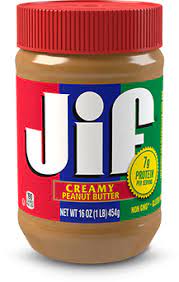
The analysis shows that this 2010 environmental sample matches the strain causing illnesses in this current outbreak. Epidemiologic evidence indicates that Jif brand peanut butter produced in the J.M. Smucker Company facility located in Lexington, KY, is the likely cause of illnesses in this outbreak. J.M. Smucker Company has voluntarily recalled certain Jif brand peanut butter products that have the lot code numbers between 1274425 – 2140425 manufactured in Lexington, KY.

It reminded me of another Salmonella outbreak.  Beginning in November 2008, CDC PulseNet staff noted a small and highly dispersed, multistate cluster of Salmonella Typhimurium isolates. The outbreak consisted of two pulsed field gel electrophoresis (PFGE) defined clusters of illness. The first cluster displayed a unique primary enzyme (XbaI) restriction pattern and an uncommon secondary enzyme (BlnI) pattern. The second cluster had two closely related XbaI patterns that were very similar to the first cluster and a BlnI pattern that was indistinguishable from the first cluster. Illnesses continued to be revealed through April 2009, when the last CDC report on the outbreak was published. A total of 714 were sickened, with 171 hospitalized and at least nine deaths.

Peanut butter and peanut butter containing products produced by the Peanut Corporation of America plant in Blakely, Georgia, were implicated. King Nut brand peanut butter was sold to institutional settings. Peanut paste was sold to many food companies for use as an ingredient. Implicated peanut products were sold widely throughout the USA, 23 countries and non-U.S. territories.

So, what have we learned?  Not, enough!


Following the tragedy of the PCA Salmonella peanut outbreak in 2008-2009, that sickened over 700 and killed nine, Dr. Stephen Sundlof of the Food and Drug Administration told lawmakers that agency inspectors will start to routinely collect samples for bacterial testing whenever they go into a peanut butter manufacturing facility.

“We are changing that now as a result of this (outbreak),” Sundlof, head of the FDA’s food safety center, told the House Energy and Commerce investigations subcommittee. The panel is looking for ways to prevent another outbreak like the one that has sickened some 600 people and is being linked to nine deaths. More than 1,900 products have been recalled.

Peanut butter may also be singled out for special attention. Sundlof said the government is weighing whether to designate it as a high-risk food. That means producers would be required to follow written food safety plans to prevent contamination.

Also in 2009, the US Food and Drug Administration (FDA) issued two sets of recommendations for reducing the risk of Salmonella contamination in peanut products, one aimed at the food industry and the other at food service establishments and retail stores.

The FDA’s action follows a 2-month investigation of a nationwide Salmonella Typhimurium outbreak linked to peanut butter, peanut paste, and other items made by Peanut Corporation of America (PCA) that has sickened 683 people in 46 states and has led to the recall of more than 2,833 products. The FDA published the documents on its Web site.

In its guidance for the food industry, the FDA said the document isn’t a set of guidelines, but rather its current thinking on addressing the risk of Salmonella contamination in foods that contain peanut products. It pointed out that Salmonella can become heat resistant as the water activity of a food becomes lower, conditions found in peanut butter and peanut paste.

The effectiveness of processing methods to reduce Salmonella in food products may depend on if and how much an ingredient with low water activity is rehydrated. Processing methods are more effective at killing the pathogen when the peanut ingredient is completely mixed into a high–water activity food, given time to fully rehydrate, and heated or acidified adequately. However, the pathogen may remain when lumps or swirls of peanut butter remain in the food product.

The FDA recommends that food manufacturers obtain peanut products only from suppliers that have validated procedures to reduce Salmonella contamination.

In instances when manufacturers must use raw shelled or blanched peanuts or when Salmonella concerns have been raised about a particular lot or lots of peanut ingredients, the FDA recommends that manufacturers:

  • Ensure that their own manufacturing processes adequately reduce Salmonella contamination
  • Adjust processing conditions to account for the food’s specific characteristics
  • Keep in mind that the most reliable way to gauge if a manufacturing process reduces Salmonella in a peanut-containing food is to conduct microbiological challenge studies
  • Avoid depending on negative tests by themselves in finished products to measure the efficacy of processes that reduce Salmonella

Following the passage of the Food Safety Modernization Act (FSMA) in 2011, the FSMA requires FDA to designate high-risk foods for which the proposed additional recordkeeping requirements “are appropriate and necessary to protect the known safety risks of a particular food, including the history and severity of the public health.” The high-risk food designation must be based on the following factors:

  • Foodborne illness outbreaks attributed to such food, taking into consideration foodborne illness data collected by the Centers for Disease Control and Prevention (CDC)
  • The likelihood that a particular food has a high potential risk for microbiological or chemical contamination or would support the growth of pathogenic microorganisms due to the nature of the food or the processes used to produce the food
  • The point in the manufacturing process of the food where contamination is most likely to occur
  • The likelihood of contamination and steps taken during the manufacturing process to reduce the possibility of contamination
  • The likelihood that consuming a particular food will result in a foodborne illness due to contamination of the food
  • The likely or known severity, including health and economic impacts, of a foodborne illness attributed to a particular food.

Did that ever happen?

Tonight the FDA, along with CDC and state and local partners, are investigating a multistate outbreak of Salmonella Senftenberg infections linked to certain Jif peanut butter products produced at the J.M. Smucker Company facility in Lexington, Kentucky. Total Illnesses: 14, Hospitalizations: 2, Last Illness Onset: May 1, 2022. States with Cases: Arkansas (1), Georgia (2), Illinois (1), Massachusetts (1), Missouri (1), Ohio (1), North Carolina (1), New York (1), South Carolina (1), Texas (2), Virginia (1), and Washington (1). CDC’s review of epidemiological information indicates that five out of five people reported consuming peanut butter and four of the five people specifically reported consuming different varieties of Jif brand peanut butter prior to becoming ill. FDA conducted Whole Genome Sequencing (WGS) analysis on an environmental sample collected at the Lexington, KY, J.M. Smucker Company facility in 2010. The analysis shows that this 2010 environmental sample matches the strain causing illnesses in this current outbreak. Epidemiologic evidence indicates that Jif brand peanut butter produced in the J.M. Smucker Company facility located in Lexington, KY, is the likely cause of illnesses in this outbreak. J.M. Smucker Company has voluntarily recalled certain Jif brand peanut butter products that have the lot code numbers between 1274425 – 2140425 manufactured in Lexington, KY.

I bit(e), or spread, of history:

In 1996, 15 people were sickened after eating peanut butter that was contaminated with S enterica serovar Mbandaka, according to a 1998 report published in the Australia and New Zealand Journal of Public Health. Investigators traced the contamination source to roasted peanuts.

In November 2006, public health officials detected a substantial increase in reports of Salmonella Tennessee isolates. In February 2007, a multistate, case-control study linked the consumption of either Peter Pan or Great Value Peanut Butter brands with infection. 715 people were sickened with 129 hospitalized.  Subsequently the same strain of Salmonella Tennessee was isolated from unopened jars of peanut butter and from environmental samples collected from the processing plant. The product was recalled, and new illness reports declined. Unsanitary conditions at the Sylvester, Georgia, processing plant were known about since 2004. On April 5, 2007, ConAgra announced inadvertent moisture from a leaking roof and sprinkler system could have promoted bacteria growth in the plant. Great Value brand was sold at Walmart stores.

Beginning in November 2008, CDC PulseNet staff noted a small and highly dispersed, multistate cluster of Salmonella Typhimurium isolates. The outbreak consisted of two pulsed field gel electrophoresis (PFGE) defined clusters of illness. The first cluster displayed a unique primary enzyme (XbaI) restriction pattern and an uncommon secondary enzyme (BlnI) pattern. The second cluster had two closely related XbaI patterns that were very similar to the first cluster and a BlnI pattern that was indistinguishable from the first cluster. Illnesses continued to be revealed through April 2009, when the last CDC report on the outbreak was published. A total of 714 were sickened, with 171 hospitalized and at least nine deaths. Peanut butter and peanut butter containing products produced by the Peanut Corporation of America plant in Blakely, Georgia, were implicated. King Nut brand peanut butter was sold to institutional settings. Peanut paste was sold to many food companies for use as an ingredient. Implicated peanut products were sold widely throughout the USA, 23 countries and non-U.S. territories.

On September 22, 2012, the CDC announced a multistate outbreak of Salmonella serotype Bredeney linked to Trader Joe’s Valencia Creamy Salted Peanut Butter. Collaborative efforts by local, state and federal public health and regulatory officials traced the product to Sunland, Inc. a Portales, New Mexico company. Sunland issued a recall of multiple nut butters and products made with nut butters. When the outbreak was declared over, a total of 42 people infected with the outbreak strain of Salmonella serotype Bredeney had been reported by 20 states. Among persons for whom information was available, illness onset dates ranged from June 14, 2012 to September 21, 2012. Ill persons ranged in age from less than 1 year to 79 years, with a median age of 7 years. Sixty-one percent of ill persons were children less than 10 years old. Among 36 persons with available information, 10(28%) patients had been hospitalized. The FDA confirmed that environmental samples collected at the Sunland facility had an DNA fingerprint that was indistinguishable to the DNA fingerprint found in outbreak associated patients.

On August 21, 2014, the CDC announced a multistate outbreak of Salmonella Braenderup involving 6 people residing in Connecticut (1), Iowa (1), New Mexico (1), Tennessee (1), and Texas (2). Almond and peanut butter manufactured by nSpired Natural Foods, Inc. was named as the likely source of this outbreak. The outbreak was declared over on October 16, 2014. Illness onset dates range from January 22, 2014 to May 16, 2014. Among 5 ill persons with available information, one person reported being hospitalized. During inspections at the nSpired Natural Food facility in Ashland, Oregon, between January 2014 and August 2014, the FDA isolated Salmonella Braenderup from environmental samples. A search of the PulseNet database linked ill patients to the environmental isolates taken from the nSpired production plant. On August 19, 2014 nSpired Natural Foods issued a voluntary recall of certain lots of almond and peanut butters because of potential contamination with Salmonella. The recalled brands include Arrowhead Mills, MaraNatha, and specific private label almond and peanut butters.

On December 2, 2015 JEM Raw Chocolate LLC (JEM Raw) of Bend, Oregon announced a recall of its full line of all nut butter spreads due to possible contamination with Salmonella. Health authorities at the FDA, Oregon Health Authority, Oregon Department of Agriculture and the CDC had linked illnesses in 13 persons who consumed nut spreads. Dates of onset ranged from July 18, 2015 to November 22, 2015. Cases were reported from California, Colorado, Georgia, Hawaii, Idaho, Illinois, Maine, North Carolina, New Jersey and Oregon.

In March 2017, the Centers for Disease Control and Prevention (CDC) and several state health departments attributed a multistate outbreak of Shiga toxin-producing Escherichia coli O157:H7 to I.M. Healthy brand SoyNut Butter manufactured by Dixie Dew and sold at retail on online outlets. Outbreak investigators collected open containers of SoyNut Butter from the homes of sick people, and unopened containers from retail locations. Containers of SoyNut Butter from lots #243162 and 244161 tested positive for E. coli. Whole genome sequencing revealed that the same strain of E. coli was found in clinical isolates from sick people and containers of I.M. Healthy SoyNut Butter. Epidemiologic investigation determined that 32 people ill with this strain of E. coli had been infected by eating or attending a facility that served I.M. Healthy SoyNut Butter. This included residents of Arizona (4), California (5), Florida (2), Illinois (1), Massachusetts (1), Maryland (1), Missouri (1), New Jersey (1), Oregon (11), Virginia (2), Washington (2), and Wisconsin (1).

References:

https://www.fda.gov/food/outbreaks-foodborne-illness/outbreak-investigation-salmonella-peanut-butter-may-2022

https://pubmed.ncbi.nlm.nih.gov/9744205/

https://www.cdc.gov/mmwr/preview/mmwrhtml/mm5621a1.htm

https://www.cdc.gov/mmwr/preview/mmwrhtml/mm58e0129a1.htm

https://www.cdc.gov/salmonella/bredeney-09-12/

https://www.cdc.gov/salmonella/braenderup-08-14/

https://www.cdc.gov/salmonella/paratyphi-b-12-15/

https://www.cdc.gov/ecoli/2017/o157h7-03-17/index.html