

 The Public Health Agency of Canada is collaborating with federal and provincial public health partners to investigate an outbreak of Escherichia coli, called E. coli O121 that has now been linked to Robin Hood All Purpose Flour, Original. The Canadian Food Inspection Agency (CFIA) has issued a food recall warning advising Canadians of the
Soy Nut Butter E. coli Outbreak Expands to 23
 7 with hemolytic uremic syndrome – 23 with E. coli O157:H7 in Arizona 4, California 5, Maryland 1, Missouri 1, New Jersey 1, Oregon 6, Virginia 2, Washington 2, Wisconsin 1.
The CDC this morning updated the E. coli O157:H7 outbreak linked to I.M. Healthy and Dixie Dew Soy Nut Butter to twenty-three people
Marler Clark Files Fourth Lawsuit Against SoyNut Butter Company and Dixie Dew Products over Nationwide E. coli O157:H7 Outbreak
 Plaintiffs in most recent complaint are parents of minor child who developed Hemolytic uremic syndrome, a life-threatening complication of E. coli infection
A lawsuit has been filed on behalf of the Seattle-area parents of a young child who was sickened after eating E. coli O157:H7 contaminated product sold by The SoyNut Butter Company of
Ode to Whistleblowers – Anonymous Tip Outs Likely Manufacturer of I.M. Healthy Soy Nut Butter
Last week I posted this question:
Today the SoyNut Butter Co. released the following:
…
For over 20 years, the SoyNut Butter Co. has tried to make nut free products that help those with allergies eat like everyone else. Likewise, we chose our contract manufacturer because of their integrity and knowledge of food safety and

Is there a link between the recall of SoLo GI brand energy bars and the E. coli outbreak linked to I.M. Healthy Soy Nut Butter?
The Canadian Food Inspection Agency has issued a nationwide recall for SoLo GI brand energy bars is in place because of possible E. coli contamination.
In a news release issued Saturday night, the agency said New Era Nutrition Inc., the company that produces the energy bars recalled the product sold nationally in stores and on
SoyNut Butter Co.’s I.M. Healthy brand soynut butter Likely Linked to E. coli Outbreaks at Arizona and Oregon Day Cares
![LOGO[1]](https://www.marlerblog.com/files/2017/03/LOGO1.jpg) AP reported this week that Arizona health officials say four cases of E. coli infections involving children at Arizona child care centers appear to be linked to eating soynut butter produced by a Glenview, Illinois-based company that is conducting a voluntary recall.
AP reported this week that Arizona health officials say four cases of E. coli infections involving children at Arizona child care centers appear to be linked to eating soynut butter produced by a Glenview, Illinois-based company that is conducting a voluntary recall.
The Arizona Department of Health Services recommends consumers avoid eating the SoyNut Butter
Who Manufactures SoyNut Butter Co. I.M. Healthy SoyNut Butters and I.M. Granola?
 Today the SoyNut Butter Co. released the following:
Please note that the SoyNut Butter Co. has expanded our voluntary recall to include ALL I.M. Healthy SoyNut Butters and I.M. Granola effective immediately. Regardless of Best Buy date or variety, we recommend that you do not consume I.M. Healthy SoyNut Butter or I.M. Healthy Granola and
E. coli Outbreak Linked to I.M. Healthy SoyNut Strikes 16 in 9 States
 Washington, Oregon, California, Arizona, Wisconsin, Missouri, Virginia, Maryland and New Jersey
CDC, multiple states, and the U.S. Food and Drug Administration (FDA) are investigating a multistate outbreak of Shiga toxin-producing Escherichia coliO157:H7 (STEC O157:H7) infections.
Sixteen people infected with the outbreak strains of STEC O157:H7 have been reported from nine states.
Eight ill people have
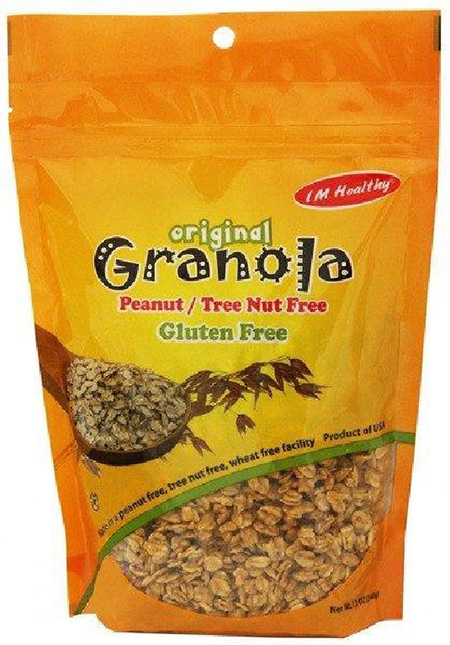
I.M. Healthy SoyNut Butters and Granola Recall Expanded after E. coli Sickens a Dozen

 The SoyNut Butter Co. of Glenview, IL is recalling all varieties of I.M. Healthy SoyNut Butters and all varieties of I.M. Healthy Granola products because they may be contaminated with Escherichia coli O157:H7 bacteria (E. Coli O157:H7). E. coli O157:H7 causes a diarrheal illness often with bloody stools. I.M. Healthy Products were distributed in multiple

Oregon, California, Arizona, New Jersey and Maryland Linked to I.M. Healthy brand SoyNut Butter
12 children sickened with E. coli, six have been hospitalized and four people developed hemolytic uremic syndrome – outbreak likely to grow – no recall yet!
CDC is collaborating with public health and regulatory officials in several states and the U.S. Food and Drug Administration (FDA) to investigate a multistate outbreak of Shiga toxin-producing Escherichia