
The CDC reported on December 11, 2013, a total of 33 persons infected with the outbreak strain of E. coli O157:H7 were reported from four states.  The number of ill persons identified in each state was as follows: Arizona (1), California (28), Texas (1), and Washington (3).  32% of ill persons were hospitalized. Two ill persons developed hemolytic uremic syndrome (HUS), and no deaths were reported.

Epidemiologic and traceback investigations conducted by local, state, and federal officials indicated that consumption of two ready-to-eat salads, Field Fresh Chopped Salad with Grilled Chicken and Mexicali Salad with Chili Lime Chicken, produced by Glass Onion Catering and sold at Trader Joe’s grocery store locations, was the likely source of this outbreak of E. coli O157:H7 infections.

On June 17, 2014, the California Department of Public Health Report that concluded that:

An outbreak of E. coli O157:H7 infections occurred in October and November of 2013, affecting 33 individuals in four western states.  The outbreak disproportionately affected California residents, accounting for 85 percent of all case-patients. Two varieties of prepackaged RTE salads produced by “Company A” (Atherstone Foods – Glass Onion Catering) and sold by “GCA” (Trader Joe’s) were implicated as the source of infection.  This is supported by the statistically significant association of case-patients with consumption of one of the two implicated “GCA” salad varieties and by the regional distribution of reported cases matching the regional distribution of these two salads.  No other food items or exposures were associated with illness.  While these salads were strongly associated with the outbreak, the exact source of the contamination remains undetermined.

Today the Food and Drug Branch – Emergency Response Unit – of the California Department of Public Health produced the Environmental Investigation of an E. coli O157:H7 Outbreak in October 2013 Associated with Pre-packaged Salads. The report 28 pages long with several hundred pages of attachments, traces the consumption of the salads to the possible source of the E. coli O157:H7 contamination.

This report not only implicates the two varieties of prepackaged salads noted above, but also two others – one produced by Atherstone Foods – Glass Onion Catering – and another produced by an unnamed manufacturer in Oakland – both for sale at Walgreens.

The investigators concluded that the one common item between the two manufacturers and the four salads was romaine lettuce from a single filed in Modesto, California shipped by Ratto Bros., and grown by Lake Bottom Farms, LLC.  Five of 44 environmental samples collected in areas around the implicated farm tested positive for E. coli O157:H7, however, the “positive samples were not a genetic match to the outbreak strain” – not a match to the ill people.

I found an interesting notation regarding audits (name of auditor redacted by CDPH) – this is on page 14 of the report:

Ratto Bros. also underwent routine audits from a third party, _____. The most recent _____ audit before the implicated romaine harvest was on August 8, 2013 (Exhibit B). The audit was performed on Ranch 6, 9, and 10 and the audit evaluated two areas, food safety management system requirements and good agricultural practices requirements. The firm had received a total score (before corrections) of 95.91% out of a possible 100%. The area where Ratto Bros. lost points in the audit was in good agricultural practices. They were marked down because there was animal activity (birds) on Ranch 6 during the audit, there were three dogs observed on land adjacent to Ranch 6, a water source was accessible to animals, and a water source was not free from a contamination issue (vegetation). The final _____ audit score was recalculated after corrective actions were performed by Ratto Bros. The final score was 99.32% out of 100% due to the fact that not all of the firm’s corrective actions were accepted by the _____ auditor. The corrective action that was not accepted by the _____ auditor was the non-conformance related to animals having access to the water source (open canal). The firm had taken measures to ensure that water used for irrigation, washing of equipment, and mixing of pesticides remained free of contaminants by filtering the water from an open source, chlorinating, testing regularly, maintaining equipment to ensure that it was not a source of contamination to the water source, and employing personnel and a security company to patrol the ranches. The aforementioned measures were not accepted by the _____ auditor, thus not allowing the full score of 100% to be reached. (Exhibit C).

Here are all Attachments and Exhibits.

At 6:41 AM, on January 20, 2009, Minnie Borden was pronounced dead.  It was a stunning end to an illness that came about all because of an invisible collection of bacteria contained in a package of peanut butter crackers.

Minnie Borden was born in 1926, in the town of Lanett, Alabama.  Although she stopped attending school after the fifth grade, her education certainly did not cease to carry on.  In the words of her only daughter, Earlene Carter, “She was educated through her life experiences.”

Starting around age 16, she began perfecting her notorious work ethic, one that carried her through life until her retirement at the age of 70.  For many of those years she worked tirelessly as a housekeeper for local families, eventually segueing into the food service industry.  She continued in this field, ultimately working at the Sinclair Community College as a cook until she decided the time had arrived to retire.  The year was 1996.

Refuting the notion that retirees ease into an idle existence, Minnie continued to be a spitfire of independence.  She suffered from rheumatoid arthritis, a condition she was diagnosed with in the 1960s.  But despite the sometimes debilitating pain pulsating in her fingers, knees, and hips, she continued to be mobile, doing her own shopping and upkeep around the house without assistance.  By 2002, she was still as active as ever, but with a trusty cane planted firmly at her side.  Living by herself in Dayton, Ohio, Minnie stuck faithfully to her daily morning routine, rising from her bed, then making her way to the bathroom to clean up before heading to the kitchen for some breakfast.  Her days were peppered with a few favorite TV shows, some light chores, and chats with family and neighbors.

In late 2007, Earlene noticed that her mom’s joint pain had became very severe, making it more difficult for her to remain mobile.  Earlene purchased a wheelchair for her to use in the house.  She took to her new wheeled companion well, and continued living independently and generally caring for herself along with some assistance from Earlene, who lived a quick five miles down the road.

By fall of 2008, other than arthritis and poor hearing, her health was excellent.  It was quite unusual then, when in November, Minnie mentioned to Earlene that her appetite was lacking and her stomach hurt.  There was nothing unusual about her diet at that time.  In fact, she continued to enjoy one of her favorite snacks on a regular basis, Little Debbie’s Peanut Butter Cheese sandwich crackers.  Speaking daily and seeing each other nearly as often, Earlene took note of her mother’s new discomfort, but other than mentioning the abdominal pains, Minnie did her best to keep the escalating situation to herself.

On November 24, Earlene picked up Minnie for an appointment with an arthritis specialist, Dr. Mujeeb A. Ranginwala.  Again, she mentioned the stomach pain, but was not overly vocal about her discomfort.  He had a blood sample collected and sent to the lab for testing, but nothing unusual was uncovered.  They left the appointment and Earlene took Minnie back to the comfort of her home.

As the days continued, and November turned into December, Minnie’s gastrointestinal issues worsened and she became undeniably weaker.  Earlene started going over to her mother’s house early each morning, motivating her out of bed and providing some assistance for her to make it to the bathroom.  Earlene washed her up and even helped her dress, though Minnie increasingly stated that she would rather remain in her robe.

By December 10, Minnie was no longer able to keep quiet about her intensifying stomach cramps and distress.  That morning started off typical—Earlene came over and helped Minnie up, then took care of some cleaning chores around the house.  After she was done, Earlene returned home.  About an hour after she arrived home, the phone rang.  It was Minnie, with notable distress in her voice, stating that the stomach pain was worsening and was now in her chest too—she needed to go to the hospital.

Earlene hustled over to Minnie’s house, helped her to the car using the wheelchair, and together they headed off to the Miami Valley Hospital Emergency Room (ER).  As soon as the nurses and doctors were told that Minnie was having pain in her chest, their immediate concern was a potential heart attack.  An EKG machine was connected to Minnie’s frail body to monitor her heart functions, and a blood sample was obtained and sent to the lab for testing.  After preliminary results indicated she was not suffering from a heart attack, the treating physicians decided it was prudent to admit her for further observation and testing.  It took a number of hours before a room was ready and she was transferred from the ER.  Over the next two days, she was carefully observed and her blood test results were monitored.  A heart attack was ultimately ruled out and the causes of her abdominal and chest pains were left unanswered.

Earlene was at the hospital with her mother at the time of discharge.  The treating physician discussed the recommendations for physical/occupational therapy—preferably in a skilled nursing facility—to help with Minnie’s weakened state.  Moving Minnie to a nursing home was out of the question for Earlene.  The strengthening therapy she needed could be provided with in-home treatment visits, and if needed, Earlene agreed to have Minnie move in with her.  “I have been by her side and she has been by mine.  We walked that walk together for many years.  Whatever she needed, I could do and did, and whatever I needed that she could do, she did.  We cared for each other deeply.”

After being discharged, Minnie was driven home.  Earlene again used the wheelchair to move her from the car to the house, making it to the bedroom where she could rest.  Once home, however, Minnie’s gastrointestinal complaints only worsened.  By now, Minnie’s failing strength made it necessary for Earlene to help her mother out of bed to use the bedside toilet during the night, several times a night.  Earlene also had to help Minnie dress and groom herself every day, something she had not previously had to do.

Earlene also noticed that Minnie’s stools had turned loose and black.  When pressed, Minnie stated that she passed similar black stools recently.  Earlene continued to provide her with as much water as she could consume, aware of the importance of staying hydrated.  The downhill decline only continued.  As Earlene recalls, “I treated her like she was a little baby that I took care of, cleaning her up, powdering her down, and sanitizing her bottom.”

When her black, loose stools failed to resolve, Earlene became worried and decided a visit to the doctor was necessary—an appointment was set for December 18.  Earlene drove Minnie to the appointment and went into the examination room with her, bringing a sample of the stool along in an adult diaper that she had begun putting on Minnie.  Dr. Chitanya Kadakia, her primary care physician, took one look at the sample and said “there’s blood in that stool.”  The tone and words of Dr. Kadakia sent chills up Earlene’s spine as he explained that she must go immediately to the ER.  He agreed to call the hospital in advance to notify them that Minnie was on her way.  A short time later, they arrived at the Good Samaritan Hospital ER.

She was examined and noted to be very weak and pale, with bright red blood discharging from her rectum and black tarry stools.  Her abdomen was tender to the touch, with pain described as achy.

Minnie’s stay at Good Samaritan Hospital lasted from December 18 until her discharge on December 29.  While in the hospital, Minnie endured repeated procedures while the doctors attempted to diagnose her illness.

On Friday, December 19, Minnie was given a transfusion with packed red blood cells (PRBCs).  She continued to have frequent watery diarrhea and was in constant pain.  The next day, an esophagogastroduodenoscopy was performed, which revealed a benign gastric ulcer without any active bleeding.  The doctors remained stumped.

By Monday, December 22, her stools were described alternately as “greenish liquid” and “reddish brown,” indicating continued infection and bleeding.  A peripherally inserted central catheter (PICC) line was placed in her right arm, with Minnie wincing and struggling to maintain her composure throughout the procedure.  Later that evening, she passed another large green liquid stool.

Finally, on Wednesday, December 24, Christmas Eve, a sample of Minnie’s bloody liquid stool was obtained and sent to the lab to be cultured for pathogens.  Why this was not done sooner remains a mystery.  The results were alarming, and provided an explanation for her continued suffering—she was infected with Salmonella Group B.  The Ohio Department of Health was notified, and conducted further testing on the sample, revealing that she was infected with Salmonella Typhimurium, the same strain later identified as part of the nationwide PCA Salmonella outbreak.

Continue Reading Another Salmonella Death Linked to Peanut Corporation of America

Three-year-old Jacob consumed Salmonella-contaminated Austin Toasty Crackers with peanut butter. Jacob’s parents purchased the crackers at Costco Wholesale in Wilsonville, Oregon.

Jacob’s stool sample collected on January 7, 2009 was positive for Salmonella, serotype Group B, Typhimurium. PFGE testing conducted on the Salmonella isolate was a genetic “match” to the national outbreak pattern associated with PCA peanut butter.

Stool Culture Results:
• Confirmed Salmonella Typhimurium
• Serotype Group B

PFGE:
• Xba I Pattern – JPXX01.0459

Jacob was three years old on January 3, 2009 when he fell ill. At the time, he appeared to his parents to be coming down with the flu. He was sallow, lethargic and feverish. Soon, it became clear that it was not the flu. He began to vomit, and the bouts of diarrhea became more frequent. On January 6, Jacob’s parent’s noticed that his diarrhea had turned bloody, and decided that he needed medical attention.

Cameron Luck, MD, at the Children’s Clinic in Tualatin, Oregon, saw Jacob that day. He was noted to be suffering from vomiting and bloody, mucous diarrhea. Dr. Luck ordered a stool culture that later returned positive for Salmonella typhimurium. Dr. Luck advised that the Hurley’s push Jacob to consume lots of fluids, and restrict his diet to bland foods.

Jacob returned home and his diarrhea continued. In fact, before his illness was over, he would endure eleven days of diarrhea. His ongoing, infectious diarrhea was of particular concern in the Hurley household because of the presence of his seven-month-old sister, Alyssa. Thankfully, due to the Hurley’s diligence, Alyssa did not fall ill. After Jacob’s diarrhea finally ceased on January 13, 2009, he began to regain his appetite and strength.

And, then Jacob went to Washington D.C. to call for safer food.

Hazardous items were delivered to schools and hospitals.

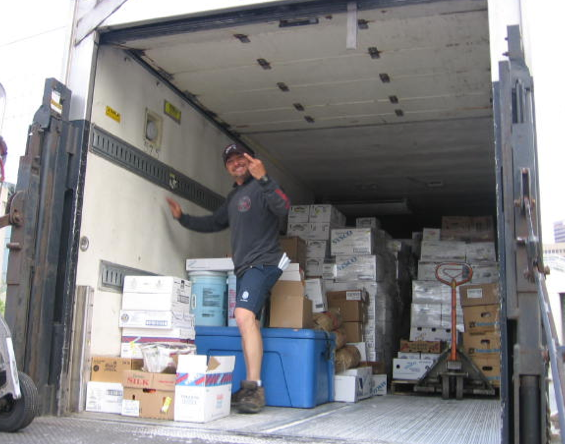
Vicky Nguyen of NBC San Francisco reports that Sysco Corporation, the world’s largest food distributor, has agreed to pay $19.4 million in penalties and restitution after an NBC Bay Area investigation uncovered the company’s secret food sheds regulators called illegal and unsafe.

Inspectors from the California Department of Public Health (CDPH) launched their investigation into Sysco Corporation last July, after whistleblowers came forward to NBC Bay Area to expose the company’s longstanding practice of storing meat, produce, dairy, and other fresh food in dirty, unrefrigerated, outdoor storage units.  CDPH inspectors combed though company records from July 2009 to August 2013 and found:

  • 25 unregistered drop sites across Sysco’s 7 distribution centers spanning from – Sacramento to San Diego
  • 23,287 cumulative days food was illegally stored
  • 156,740 food items stored in drop sites without temperature controls
  • 405,859 food items stored in illegal drop sites

Last summer, NBC Bay Area witnessed this potentially hazardous process first hand, as the Investigative Unit’s surveillance cameras captured raw food being transported from Sysco’s Fremont distribution center to unrefrigerated storage lockers in Concord and San Jose where it was placed on the floor next to insects and rattraps. The food sat for hours in temperatures as high as 80 degrees before it was picked up by sales associates and delivered to restaurants and hotels.

In a written statement, the Santa Clara District Attorney’s office wrote: “The July 2013 NBC report triggered a state-wide investigation by the California Department of Public Health and, ultimately, an enforcement proceeding brought by the California Food Drug and Medical Device Task.”

Following their investigation (pdf) Santa Cruz and Santa Clara counties ultimately filed suit.

As part of the settlement, Sysco agreed to pay more than $4 million in restitution, including a $1 million food contribution to food banks throughout California and $3.3 million to fund a 5 year state-wide-program aimed at helping health inspectors enforce food transportation laws.

As of July 14, 2014, a total of 25 ill persons infected with the outbreak strains of Salmonella Newport (16 persons),Salmonella Hartford (7 persons), or Salmonella Oranienburg (2 persons) have been reported from 15 states. The number of ill persons identified in each state is as follows: Arizona (1), California (3), Colorado (1), Connecticut (3), Florida (1), Massachusetts (1), Michigan (1), New York (5), Ohio (1), Rhode Island (1), Texas (2), Utah (1), Washington (1), and Wisconsin (3).

Three ill persons have been hospitalized. No deaths have been reported.

Collaborative investigation efforts of state, local, and federal public health and regulatory agencies indicate that organic sprouted chia powder is the likely source of this outbreak.

Sprouted chia powder is made from chia seeds that are sprouted, dried, and ground.

As a result of this investigation, several recalls of products containing organic sprouted chia powder and chia seeds have been issued.

The Public Health Agency of Canada continues to investigate similar cases of Salmonella infection in several Canadian provinces. In Canada, four strains of Salmonella causing illness have been associated with this outbreak:Salmonella Newport and Salmonella Hartford, Salmonella Oranienburg, and Salmonella Saintpaul. In total, 59 cases have been reported in British Columbia (13), Alberta (10), Ontario (33) and Quebec (3). Nine cases have been hospitalized; seven cases have been discharged and have recovered or are recovering. The status of two cases has not been provided to the Agency. No deaths have been reported. The investigation is ongoing but currently, 43 of 51 cases that have been interviewed have reported consumption of chia seeds or sprouted chia seed powder.

Several Canadian companies have recalled products containing sprouted chia powder or chia seeds.

Ramona Giwargis’s article from the Merced Sun Star entitled “Livingston city officials present Foster Farms with key to city” dropped into my inbox a few moments ago and I have been trying to come up with a reaction different than – “WTF” – so far, I have been unsuccessful.

You have to wonder what Foster Farms would get if he poisoned more than the 755 that the CDC has linked to its facilities in two outbreaks (1 and 2) stretching over the last year and a half.

Ms. Giwargis gushed in her article’s opening line:

Without Livingston, there is no Foster Farms, and without Foster Farms, there is no Livingston.

According to Ms. Giwargis, those were the words of Mayor Pro Tem Gurpal Samra as he explained the company’s impact on the city of Livingston. Samra joined Mayor Rodrigo Espinoza and Councilman Arturo Sicairos in presenting Foster Farms CEO Ron Foster with a commemorative key to the city last night.

Again, according to Ms. Giwargis, Ron Foster said he was grateful for the support of the Livingston community, especially amid a Salmonella outbreak and cockroach infestation that shut down the plant for days sending nearly 3,000 employees home without pay – and sent 40% of his sickened customers to the hospital.

One can only imagine what Gurpal Samra, Rodrigo Espinoza and Arturo Sicairos would have given Mr. Foster if instead of sickening 755 with Salmonella it was the CDC’s estimate of 20 to 40 times that?

What bonus would the politicians have bestowed on Mr. Foster if some of the sickened had died?

The Minnesota Department of Health (MDH) is investigating 13 cases of foodborne illness associated with a type of E. colibacteria known as E. coli O111. This form of E. coli is in the same family as the more well-known E. coli O157:H7. All of the illnesses were caused by the same genetic strain of E. coli O111, and the ill people do not all share any obvious commonalities; these facts indicate the illnesses resulted from a widely distributed food item.

While seven of the people with E. coli O111 infections reported eating at Applebee’s restaurants in Minnesota between June 24 and 27, there are multiple cases with no apparent connection to the restaurant. Applebee’s is cooperating fully with the investigation, and as a precaution volunteered to remove the Oriental Chicken salad from menus at all its Minnesota restaurants while the investigation continues. The restaurant is also removing specific ingredients of its Oriental Chicken salad from other items on its menu out of an abundance of caution. Health officials are still working with Applebee’s, the Minnesota Department of Agriculture, and other regulatory partners to determine the cause of the outbreak.

Symptoms of illness caused by E. coli O111 typically include stomach cramps and diarrhea, often with bloody stools, but only a low-grade or no fever. People usually become ill two to five days after exposure, but this time period can range from one to at least eight days. Most people recover in five to 10 days. Complications from infection are more common among those with weaker immune systems, including young children and the elderly. MDH investigators note that this genetic strain of E. coli O111 has not been seen in the United States previously.

Health officials say anyone who visited a Minnesota Applebee’s since June 20 and has symptoms of E. coli O111 infection (particularly bloody diarrhea) should contact their health care provider immediately and inform them of their possible involvement in this outbreak. MDH also asks that they contact the department’s foodborne illness hotline at 1-877-FOOD-ILL (1-877-366-3455) to report the potential connection.

Four of the 13 people who became ill were hospitalized, and all have recovered or are recovering. Diarrhea associated withE. coli O111 infection should NOT be treated with antibiotics, as this practice might promote further complications. More information on E. coli infection can be found at www.health.state.mn.us. MDH will share more information with the public as the investigation continues.

FSIS announced this evening to further clarify and correct “Use or Freeze by” and “Best by” date ranges, as well as to provide an updated product list. The product list remains the same and the recall is not expanded.

Foster Farms, a Livingston, Calif., based establishment, is recalling an undetermined amount of chicken products that may be contaminated with a particular strain of Salmonella Heidelberg, the U.S. Department of Agriculture’s Food Safety and Inspection Service (FSIS) announced today. FSIS requested Foster Farms conduct this recall because this product is known to be associated with a specific illness.

The recalled product includes fresh and frozen chicken products sold by retailers under Foster Farms or private label brand names, with varying “use or freeze by”dates ranging from March 16 through March 31, 2014 and Aug. 29, 2015 through Sept. 2, 2015, and frozen Sunland Chicken products with “best by” dates from March 7 through March 11, 2015 and Aug. 29, 2015 through Sept. 2, 2015. Consumers will only be able to locate such dates on fresh product retail packaging. [Other dates can be found on bulk master cases of products.]  The products subject to recall bear the establishment number “P6137,” P6137A” or “P7632” inside the USDA mark of inspection.

The chicken products were produced from March 7 through March 13, 2014. These products were shipped to Costco, Foodmaxx, Kroger, Safeway and other retail stores and distribution centers in Alaska, Arizona, California, Hawaii, Idaho, Kansas, Nevada, Oklahoma, Oregon, Utah and Washington. The list of products subject to recall can be accessed here. We will continue to update the list as more information is available. FSIS and the company want the public to be aware that the products are most likely no longer available for purchase, but may be in consumers’ freezers.

FSIS was notified by the Centers for Disease Control and Prevention (CDC) of a Salmonella Heidelberg illness on June 23, 2014, associated with the consumption of a boneless skinless chicken breast product. Working in conjunction with CDC, FSIS determined that there is a link between boneless skinless chicken breast products from Foster Farms and this illness. Based on FSIS’ epidemiological and traceback investigations, one case-patient has been identified in California with an illness onset date of May 5, 2014.

Bobby Ray Hullett, known to friends and family as Pete, and his wife Shirley lived in Maiden, North Carolina.  The Hulletts were married for forty-five years and worked together at the Southern Glove mill for thirty years.  Pete was a soft spoken man who worked all his life. Early in his career at Southern Glove a huge press crushed one of his hands leaving him with one functional hand.  Despite his hand injury, Pete continued to work uninterrupted at Southern Glove until his retirement shortly before his death.

Pete was also able to take care of the house, garden, and car, which he loved to tinker with.  A man of quiet pride, Pete never complained about his misfortune, and taught his sons to never make excuses for themselves.  Pete liked football, bowling, and wrestling, but he loved NASCAR.  Pete and Shirley were also devoted to their church, which they attended three times a week, and they especially enjoyed the gospel choir.  Pete always provided for his family and was Shirley’s constant companion throughout the decades of their marriage.

Shirley Hulett had two young boys from a prior marriage when she married Pete.  Pete helped raise the boys, Tony and Dale, and was the only father they knew.  When Dale was only seventeen he had a son himself.  Dale turned to Shirley and Pete to be surrogate parents.  And so Shirley and Pete also raised Dale’s son Bobbie who is now thirty-five and remains devoted to his grandmother.  Dale passed away from complications from chronic liver disease in his early 50’s.

At the time of his illness and death, though on high blood pressure and cholesterol medications, Pete was a very healthy person.  He was also a frequent consumer of Austin-brand peanut butter crackers.  In fact, in the days leading up to the illness that would take his life, Pete ate the crackers as a snack two or three times a day.

Continue Reading Bobby Ray – Another Salmonella Death Linked to PCA

Food Safety News editor Dan Flynn and reporter Dallas Carter, reported yesterday that The trial of the three former Peanut Corporation of America (PCA) executives that was to begin Monday morning is being delayed two weeks to give defense attorneys more time to review late-arriving documents from prosecutors.

Jury selection is now scheduled to begin July 28 for a trial likely to take about eight weeks. U.S. District Court Judge W. Louis Sands ordered the delay Friday after hearing defense motions to both dismiss all charges in the case and to postpone the trial.

At issue in Friday’s pre-trial hearing at the federal courthouse in Albany, GA, was the July 1 delivery of a computer file from the prosecution that contains an estimated 100,000 documents.

Defense attorneys said the information was useless to them because the volume of documents could not be adequately reviewed in the remaining time before trial. A range of “remedies” were available to Sands to resolve the issue, including dismissing the entire 76-count federal felony indictment.

The other two former PCA executives facing indictment are Michael Parnell, a former peanut broker, and Mary Wilkerson, quality control officer for the Blakely, GA, PCA plant. The Parnells are charged with fraud and conspiracy, along with placing misbranded and adulterated food into interstate commerce. Wilkerson is charged with obstruction of justice.

Two of the five original targets of a four-year investigation led by the Federal Bureau of Investigation (FBI) agreed to plead guilty in exchange for consideration at sentencing, which won’t come until after the trial that could see both of them testify for the government. Both Daniel Kilgore and Samuel Lightsey were top PCA managers at Blakely, and both now await sentencing.