
Last week I penned – “Biting the Hand that Feeds You – Primus Sues Walmart and Frontera:”

I have been accused of beating up on Primus a bit too much recently. So, I have to give it some credit for doubling-down on fighting back. I am just not so sure it is a good business model in the long-term. In its answer to the plaintiff Onsager’s complaint in Montana Federal Court, Primus includes in its Answer and Cross-Complaint the typical defense (among the 23 total defenses asserted) alleging that the damages the plaintiffs have suffered were caused by others, including Walmart and Frontera, and that as a result, liability “should be apportioned according to their respective degrees of fault.”

So, it came as a pleasant surprise when Primus Group, Inc.’s Notice of Voluntary Dismissal of Its Cross-Claims Against Walmart Stores, Inc. Without Prejudice landed in my inbox. Dismissing its claim against Walmart showed a level of business sense and common sense that has been lacking in this litigation.

A moment of clarity indeed!  Perhaps this is the beginning of a change of heart for a company heretofore focused on its own self destruction?

Friday the CDC updated its ongoing reporting of a Salmonella outbreak linked to baby chickens and ducks.  Now a total of 300 persons infected with the outbreak strains of Salmonella Infantis, Salmonella Newport, or Salmonella Hadar have been reported from 42 states and Puerto Rico. The number of ill persons identified in each state is as follows:  Alabama (8), Arizona (2), Arkansas (3), California (3), Colorado (5), Connecticut (1), Florida (1), Georgia (16), Idaho (4), Illinois (5), Iowa (3), Indiana (4), Kansas (1), Kentucky (11), Maine (9), Maryland (3), Massachusetts (1), Michigan (1), Minnesota (1), Mississippi (2), Missouri (1), Montana (3), Nebraska (3), New Hampshire (3), New Jersey (2), New Mexico (2), New York (30), North Carolina (28), Ohio (24), Oregon (1), Pennsylvania (29), Puerto Rico (1), South Carolina (6), South Dakota (3), Tennessee (17), Texas (2), Utah (1), Vermont (7), Virginia (25), Washington (8), West Virginia (18) Wisconsin (1), and Wyoming (1).

31% of ill persons have been hospitalized, and no deaths have been reported.

Epidemiologic, laboratory, and traceback findings have linked this outbreak of human Salmonella infections to contact with chicks, ducklings, and other live poultry from Mt. Healthy Hatcheries in Ohio.  80% of ill people reported contact with live poultry in the week before their illness began.

Findings of multiple traceback investigations of live baby poultry from homes of ill persons have identified Mt. Healthy Hatcheries in Ohio as the source of chicks and ducklings. This is the same mail-order hatchery that has been associated with multiple outbreaks of Salmonella infections linked to live poultry in past years, including in 2012 and 2013.

Associated Press’ Russ Bynum and Michael Warren have been following the PCA criminal trial (along with Food Safety News).  I had a chance to talk with them between the IAFP Conference and the CTLA Convention.

The CDC says it has tracked salmonella outbreaks since 1962. It even has an interactive map with county-by-county information on the impact. And while many sources are never discovered, dozens of food producers have been identified through the years. Some egregious incidents have resulted in fines, and victims have found private attorneys to file civil lawsuits that often get settled out of court. But illnesses, and deaths, continue.

“Could all these people have been charged criminally with something? The answer is, hell yes,” said Bill Marler, an attorney who claims to have won $500 million for victims of food-borne illnesses over the past two decades.

Three other cases — a salmonella outbreak traced to eggs in Iowa, a listeria outbreak blamed on dirty cantaloupes in Colorado and an E. coli outbreak linked to Odwalla juices in California — resulted in federal plea deals without prison time. This is the first to go to trial, Marler said.

“I’m a firm believer in using the civil justice system to hold people accountable. But these criminal prosecutions have really got people’s attention,” said Marler. “It’s a completely different viewpoint that these CEOs and managers have when they’re facing jail time and fines that aren’t insured.”

Meanwhile, the FDA lacks the resources to regularly inspect food producers, and when outbreaks happen, they largely depend on their goodwill to find the source.

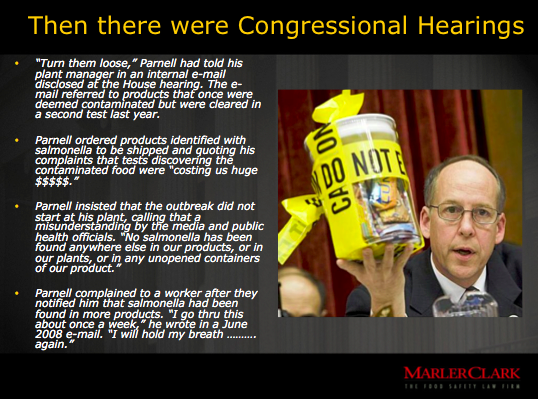
Here are some of the slides that I used at IAFP and CTLA:

Shoot me an email (bmarler@marlerclark.com), if you would like the above slides.

I have been accused of beating up on Primus a bit too much recently.  So, I have to give it some credit for doubling-down on fighting back.  I am just not so sure it is a good business model in the long-term.

In its answer to the plaintiff Onsager’s complaint in Montana Federal Court, Primus includes in its Answer and Cross-Complaint the typical defense (among the 23 total defenses asserted) alleging that the damages the plaintiffs have suffered were caused by others, including Walmart and Frontera, and that as a result, liability “should be apportioned according to their respective degrees of fault.”

Apparently, Primus did not believe that this defense was sufficient. Primus has, thus, also cross-claimed against—which is to say sued—Walmart and Frontera.

In lawyer-talk, the claim is for “Equitable Implied Indemnity and Contribution.” But what it really means is that Primus wants Walmart and Frontera to reimburse it if a jury ends up issuing a verdict-ordering Primus to pay damages to the plaintiffs. In its claim against Walmart and Frontera, Primus alleges that both parties had “failed to request or require corrective actions with respect to the deficiencies, non-compliance issues, or comments set forth in the Packinghouse Audit Report.” (Paragraphs 62 & 63)

The claim also seems to point the finger at the FDA and the Colorado Dept. of Health, alleging that, “[d]espite epidemiological evidence,” the two agencies did not “infor[m] the public of the potentially contaminated cantaloupes, until September 14, 2011, when Jensen Farms issued a voluntary Class 1 recall.”

In short, despite the alleged shortcoming of Primus, the fact that so many were seriously injured or killed is the fault of Walmart and Frontera for having decided to rely on the audit that Primus performed.

You have to wonder how long suppliers like Frontera and retailers like Walmart will accept a Primus audit?

The Michigan Department of Agriculture and Rural Development (MDARD) is issuing a public health alert due to a finding of Listeria monocytogenes in sample of Chicken Caesar Salad sold at Sam’s Club in Novi, MI.

The product is packaged in an 11 oz. clear plastic clamshell container, labeled “Chicken Caesar Salad” with the name “Daily Chef” on the label and a sell by date of July 31, 2014. The product was sold from the deli at the Sam’s Club located at 27300 Wixom Road in Novi, Michigan.

The problem was discovered when routine product sampling by MDARD personnel tested positive for Listeria monocytogenes on August 4, 2014.

No illnesses have been linked with this product to date.

Consumption of food contaminated with L. monocytogenes can cause listeriosis, a serious infection. Older adults, persons with weakened immune systems, and pregnant women and their newborns are at higher risk of developing illness.

Listeriosis can cause fever, muscle aches, headache, stiff neck, confusion, loss of balance and convulsions sometimes preceded by diarrhea or other gastrointestinal symptoms. An invasive infection spreads beyond the gastrointestinal tract. In pregnant women, the infection can cause miscarriages, stillbirths, premature delivery or life-threatening infection of the newborn. In addition, serious and sometimes fatal infections in older adults and persons with weakened immune systems. Listeriosis is treated with antibiotics. Persons in the higher-risk categories who experience flu-like symptoms within two months after eating contaminated food should seek medical care and tell the health care provider about eating the contaminated food.

Consumers who may still have this product in their homes should immediately discard it.  If someone has consumed it and has concerns regarding listeriosis, they should contact their health care provider.

Duke University researchers report that samples isolated from Chobani yogurt that was voluntarily recalled in September 2013 have been found to contain the most virulent form of a fungus called Mucor circinelloides, which is associated with infections in immune-compromised people.

The study by Duke University scientists shows that this strain of the fungus can survive in a mouse and be found in its feces as many as 10 days after ingestion.

In August and September 2013, more than 200 consumers of contaminated Chobani Greek Yogurt became ill with vomiting, nausea and diarrhea. The U.S. Food and Drug Administration (FDA) analyzed the contaminant and identified it as the mold Mucor circinelloides.

On September 5, 2013, Chobani voluntarily recalled eight product lines that had been distributed nationwide from its Twin Falls, Idaho facility. The facility was shut down and thoroughly cleaned. Chobani said at the time that the mold was naturally occurring and not considered a food-borne pathogen.

This study, which appears July 8 in the online, open access journal mBio, indicates that the particular strain of fungus found in the yogurt may pose a more serious threat to public health than previously thought, said Dr. Joseph Heitman, a senior author of the study and professor and chair of molecular genetics and microbiology at Duke’s School of Medicine.

Heitman said the finding also suggests specific attention should be paid to fungal pathogens in food products and the factories that manufacture them.

Brie Zeitner of the Plain Dealer reports that two people in Ohio have been hospitalized with botulism that public health officials suspect is connected to a nationwide recall of VR Green Farms’ jarred sauces.

The two Ohio patients, both Cincinnati residents in their 20’s, were each on ventilators at one point but are improving, according to the Cincinnati Health Department. One patient is still on a ventilator and was transferred last week to an acute long-term care facility, Dr. Steven Englender, director of the department’s Center for Public Health Preparedness said in an email. The other patient is breathing unassisted and “may have been discharged by now,” he said.

Preliminary testing by the Cincinnati Health Department found evidence of Clostridium botulinum type B in a meal of pasta that contained the recalled pesto sauce. The lab is still awaiting confirmation of those results.

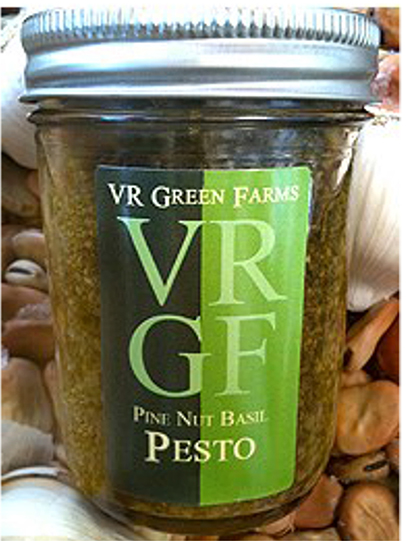
VR Green Farms of San Clemente, CA, is voluntarily recalling a variety of its jarred food products because they may have been improperly produced, therefore making them susceptible to contamination by Clostridium botulinum.

The recalled products include Pine Nut Basil Pesto, Pickled Farm Mix, Old World Tomato Sauce, Sundried Tomatoes in Olive Oil, Tuscan Grilling Sauce and Pasta Sauce. Photographs of these products can be found here. The products were sold at the VR Green Farms stand in San Clemente, CA, and via the Internet to consumers throughout the United States.

Ingestion of botulism toxin from improperly processed jarred and canned foods may lead to serious illness and death. The California Department of Public Health (CDPH) is coordinating with the U.S. Food and Drug Administration and the Ohio Department of Health in the investigation of two cases of suspected foodborne botulism infections that may be associated with consumption of the firm’s Pine Nut Basil Pesto.

Botulism toxin is odorless and colorless. Consumers who have any of these products or any foods made with these products should discard them immediately. Double-bag the jars in plastic bags and place in a trash receptacle for non-recyclable trash. Wear gloves when handling these products or wash your hands with soap and running water afterward.

Botulism is a rare but serious paralytic illness caused by a nerve toxin that is produced by the bacterium Clostridium botulinum. The initial symptoms frequently experienced are double or blurred vision, drooping eyelids, and dry or sore throat. Progressive descending paralysis, usually symmetrical, may follow. Infants with botulism appear lethargic, feed poorly, are constipated, have a weak cry and poor muscle tone.

Finished the keynote speech at IAFP last night and had time to start blogging this morning.

SW Wisc Dairy Goat Products Coop of Mt Sterling, Wisc is recalling Raw Milk Mild Cheddar Cheese Lot Code 103-114 because it may be contaminated with Shiga toxin producing Escherichia coli (STEC) O111:H8 bacteria. This is one of the 6 STEC strains that have been deemed to be of serious health concern as it can cause diarrheal illness, often with bloody stools, and may lead to more severe complications like Hemolytic Uremic Syndrome (HUS). HUS is most likely to occur in young children, the elderly and immunocompromised individuals and can lead to severe kidney damage and even death.

This product was distributed in the Midwest and Southwest regions of the US. This product was sent through distributorship in Wisconsin and Georgia. From these two states this product was then sent to retail stores in the Midwest and Southwest.

This product was packed as an 8oz cryovac retail size piece with the code 103-114 on a sticker attached to the side of the cheese. This product is all white in appearance and has a front and back separate label. The back label is a black and white nutrition and ingredient label and the front label is a yellow and blue colored label with the Mt Sterling Coop Creamery brand name. “No illnesses have been reported to date.”

The recall was initiated after a case of two five pound loafs in the original packaging was collected on 7-8—14 from an offsite warehouse. The product sample tested positive for Shiga toxin 1and was contaminated with E. coli O111:H8.

I got home yesterday from a four day trip to DC and LA just in time to turn around this morning to head to IAFP, but had a few moments to see what food is poisoning us today – sprouts – no surprise there.

CTV News reports that Alberta Health Services (AHS) officials said there has been an increase in the number of E. coli cases in the Edmonton Zone, and they’re warning Edmonton residents about the bacteria.  AHS said 24 E. coli cases have been confirmed in the Edmonton Zone in recent weeks – and it’s believed bean sprouts may be to blame for the spike.

AHS was also reported to have said: “The current outbreak is over, and there’s no further risk to the public.”

Well, that is until the next sprout outbreak.

Barfblog documents at least 55 sprout-associated outbreaks occurring worldwide affecting a total of 15,233 people since 1988. A comprehensive table of sprout-related outbreaks can be found at barfblog.com/wp-content/uploads/2014/08/Sprout-associated-outbreaks-8-1-14.xlsx.

Wawona Packing Company of Cutler, California is expanding its voluntary recall from July 19, 2014, of whole white and yellow peaches, white and yellow nectarines, plums and pluots due to the potential of the products being contaminated with Listeria monocytogenes.

The July 19 recall covered specific lots of products packed from June 1 through July 12, 2014. Wawona Packing Company is expanding the recall, as a precautionary step, to cover all products packed in the Wawona Packing Co. facility from June 1, 2014 through July 17, 2014 because the company’s experts have yet to identify with scientific certainty the source of Listeria monocytogenes in the facility.

Beginning on July 18, 2014, no products have been packed at the Wawona Packing facility in Cutler, CA. Products packed on or after July 18 outside of the Wawona Packing Co. facility are not affected by this recall.

Consumers can identify the recalled products by the information provided in the attached photographs. The recalled products include the following brands marketed to consumers: Sweet 2 Eat, Sweet 2 Eat Organic, Mrs. Smittcamp’s, and are also packed in private labels. These brands will be on the boxes or on the stickers placed on individual fruit. Anyone who has the recalled products in their possession should not consume them and should discard them.

Wawona Packing shipped the recalled products directly to retailers and wholesalers who resell or further distribute the products. Because we do not know the locations of the companies or stores that received the products from our direct customers, the company is issuing a nationwide recall.

Wawona Packing has already notified its business customers of the expanded recall, and requested that they remove the additional recalled products from commerce. Wawona Packing is voluntarily recalling these products in consultation with the U.S. Food and Drug Administration.

The July 19 recall was initiated based on internal company testing.