Zilks Foods, LLC of Austin, TX is recalling all of its 8 ounce hummus products because they may contain undeclared peanuts. People who have allergies to peanuts run the risk of serious or life-threatening allergic reaction if they consume these products.

This recall affects the following products.

The recalled hummus was distributed nationwide in retail stores.

The containers are clear plastic tubs with white lids. The brand name “Zilks” can be found on each tub on both the top and side labels.

No illnesses have been reported to date in connection with this problem.

This recall was initiated after it was discovered that a spice ingredient from a single supplier used in the affected products was contaminated with peanut allergens.

Eillien’s Candies Inc. announced today that it is recalling various sizes and brands of Walnut Pieces because some of these products may be contaminated with Salmonella.  This recall is the result of a routine sampling program conducted by the FDA in the retail marketplace, which revealed that a package of Walnut Pieces contained Salmonella.

Consumers who have recently purchased the items with the BEST BY DATES at stores located in AR, CO, FL, IA, ID, IL, IN, KS, KY, MI, MN, MO, MT, ND, NY, NE, OH, OK, PA, TN, TX, SD, UT, WA, WV, WI, WY should not consume this product. The BEST BY DATES can be found on the back of the bags.

Salmonella is an organism, which can cause serious and sometimes fatal infections in young children, frail or elderly people and others with weakened immune systems. Healthy persons infected with Salmonella often experience fever, diarrhea (which may be bloody), nausea, vomiting and abdominal pain. In rare circumstances, infection with Salmonella can result in the organism getting into the bloodstream and producing more severe illnesses such as arterial infections (i.e., infected aneurysms), endocarditis and arthritis.

Reily Foods of Louisiana is recalling Carroll Shelby brand and Wick Fowler brand chili seasoning kits because they may contain peanut and almond allergens not declared on the label.

Anyone with an allergy to those two foods could have a serious allergic reaction if they eat these products.

The products are Carroll Shelby Chili Mix in 4 ounce packages, with UPC number 0-00-72396-10000-8 and Best by date range of July 1, 2016 – November 21, 2016. Also recalled are Carroll Shelby White Chicken Chili in 3 ounce packages, with UPC number 0-00-72396-10019-0 and best by date range of July 1, 2016 – December 8, 2016. Wick Fowler 2-Alarm Chili Kit is recalled, sold in 3.625 ounce packages with UPC number 0-00-71092-00069-8 and best by date range of July 1, 2016 – December 8 2016. Finally, Wick Fowler False Alarm Chili Kit in 3.03 ounce packages is recalled, with UPC number 0-00-71092-00111-4 and best by date range of September 2, 2016 – December 2, 2016. They were sold in retail stores nationwide.

Ingredients from a single supplier used in the products were contaminated with the allergens. If you purchased these products and are allergic to peanuts and almonds (tree nuts), do not eat them.

Happy Apples is expanding their voluntary recall of caramel apples to include Kroger Brand caramel apples produced by Happy Apple Company with a best use by date between September 15th and November 18th 2014, because it has the potential to be contaminated with Listeria monocytogenes.

Kroger brand caramel apples produced by Happy Apple Company are sold in single packs and three packs and each package will have a best use by date on the front of the label. They were distributed to the following states: Arizona, Alaska, Kansas, Idaho, Louisiana, Montana, Missouri, Nebraska, Nevada, Oregon, Texas, Utah, Washington and Wyoming.

We have been working with the Food and Drug Administration in their investigation of the current outbreak of Listeriosis which has been associated with caramel apples. We recently received notice from Bidart Brothers, one of our apple suppliers to our California facility that there may be a connection between this outbreak and the apples that they supplied to that facility.

Listeria monocytogenes is an organism which can cause serious and sometimes fatal infections in young children, frail or elderly people, and others with weakened immune systems. Although healthy individuals may suffer only short-term symptoms such as high fever, severe headache, stiffness, nausea, abdominal pain and diarrhea, Listeria infection can cause miscarriages and stillbirths among pregnant women.

Happy Apples ceased operations at the end of October as part of our normal, seasonal shut down and the caramel apples produced are no longer available in stores, however, out of deep concern for public safety, we are recommending that consumers follow the advice of the CDC and remove any caramel apples you may have in storage and dispose of them in a secure container to avoid potential contamination in animals.

The Outbreak:  The CDC reports as of December 30, 2014, a total of 32 people infected with the outbreak strains of Listeria monocytogenes have been reported from 11 states: Arizona (4), California (2), Minnesota (4), Missouri (5), Nevada (1), New Mexico (6), North Carolina (1), Texas (4), Utah (1), Washington (1), and Wisconsin (3). Thirty-one ill people have been hospitalized and six deaths have been reported. Listeriosis contributed to three of these deaths, and it is unclear whether it contributed to an additional two deaths. The sixth death was unrelated to listeriosis.  The Public Health Agency of Canada (PHAC) has identified 2 cases of listeriosis in Canada with the same PFGE patterns as seen in the US outbreak.

The Recall:  The FDA has traced the distribution of the caramel apples to Bidart Brothers from California. Although the Happy Apple Company and Merb’s Candies received apples from other growers, the FDA’s ongoing traceback investigation has confirmed that Bidart Brothers is the only apple grower that supplied apples to both companies.  Bidart Brothers apples have been the common denominator as the source of apples used in the production of caramel apples implicated in the latest illnesses and deaths.

  • Happy Apple reported that it received notice from Bidart Brothers, one of its apple suppliers to the Orosi, California facility, that there is a connection between this outbreak and the apples that they supplied to that facility.
  • California Snack Foods issued a voluntary recall of California Snack Foods brand caramel apples that they received from Bidart Brothers.
  • Pacific Coast Fruit announced last week that it was made aware that Bidart Brothers was recalling apples.  Happy Apples purchased apples from Bidart Brothers and Pacific Coast Fruit in turn distributed Happy Apples to Pacific Coast Fruit customers.
  • Merb’s Candies issued a recall of the Merb’s Candies brand Bionic Apples and Double Dipped Apples.  Bidart Brothers, who was one of Merb’s Candies apple suppliers, has initiated a recall.
  • Although no recall has been announced, Minnesota cases purchased caramel apples from Cub Foods, Kwik Trip, and Mike’s Discount Foods, which carried Carnival brand and Kitchen Cravings brand caramel apples.  These apples were produced by H. Brooks and supplied indirectly by Bidart Brothers.

The Lawsuit:  Marler Clark, the nation’s only law firm dedicated to representing victims of foodborne illness, has filed a wrongful death lawsuit against Safeway Inc., in the Superior Court of Santa Cruz on behalf of James Raymond Frey, 87, and the estate of his deceased wife, Shirlee Jean Frey, 81, who died tragically on December 2, 2014 after consuming a Listeria-tainted caramel apple purchased at the Safeway in Felton, California. The case number is CISCV180721.  The complaint was amended to add in two additional parties – Happy Apple and Bidart Brothers.

The Bug:  Listeria monocytogenes is an organism that can cause serious and sometimes fatal infections in young children, frail or elderly people, and others with weakened immune systems. Although healthy individuals may suffer only short-term symptoms such as high fever, severe headache, stiffness, nausea, abdominal pain and diarrhea, Listeria infection can cause miscarriages and stillbirths among pregnant women. Approximately 2,500 cases of listeriosis are estimated to occur in the U.S. each year. About 200 in every 1,000 cases result in death.

On May 17, 2014 the Hawaii Department of Health (HDOH) learned of an outbreak of gastrointestinal illnesses among Royal Hawaiian Hotel guests and restaurant patrons.  People who had attended a wedding dinner reception held on May 15 at the Azure Restaurant, a guest food establishment at the hotel, had reported symptoms to the hotel general manager.  The HDOH initiated an outbreak investigation.

A total of 114 individuals reported symptoms of diarrhea and vomiting in a 24 hour period. Ill persons identified a wide variety of food exposures; individual parties consumed different food items that were prepared and served on different days. Thus, no one food item or employee was identified as the source of the infections. The only common factor was that ill persons had consumed food that had been prepared by the kitchen at the Royal Hawaiian. Illness onset dates ranged from May 14 to May 26, 2014. Ten stool specimens were submitted to the HDOH State Laboratories Division (SLD). Of these, 6 were positive for norovirus, genotype GI.3B.  One additional specimen was reported as norovirus positive by a private clinical laboratory.

There are a total of three guest food establishments at the Royal Hawaiian. All three share one common kitchen/prep area and staff. Employee meals are prepared by the same common kitchen and served at an employee cafeteria.  Seventeen employees reported having a gastrointestinal illness during the outbreak period. One ill employee reported an episode of diarrhea in the employee restroom at work on May 14 prior to dinner service. A second employee reportedly vomited into a kitchen area trash can on May 15. The last employee illness was on May 20.

The hotel conducted environmental sanitation beginning on May 16.  The HDOH Sanitation Branch inspected the hotel kitchen on May 19 and observed violations of sanitizing procedures and cold holding temperatures.  A follow-up inspection on May 21 verified correction of these violations. Due to additional reports of illness on May 24, the Sanitation Branch conducted a re-inspection of the kitchen on May 25 and directly supervised the discarding of prepared food items, sanitation of food preparation areas, and thorough facility cleaning from May 25 through May 28. The Azure Restaurant was closed during this period.

The HDOH concluded there was a confirmed norovirus outbreak associated with consuming foods prepared by the Royal Hawaiian Hotel. Seven cases of confirmed norovirus and 107 probable cases meeting the clinical definition of norovirus were identified.  Citing the shared onset date (May 14) for guests and employees, the HDOH did not determine how the virus was introduced in the hotel.  However, the HDOH did note that illness among food handling personnel and coincident environmental contamination were likely contributing factors which served to propagate the infection among hotel guests and employees.

An Introduction to Norovirus

The Centers for Disease Control and Prevention (CDC) estimates that noroviruses cause nearly 21 million cases of acute gastroenteritis annually, making noroviruses the leading cause of gastroenteritis in adults in the United States. [1] According to a relatively recent article in the New England Journal of Medicine:

The Norwalk agent was the first virus that was identified as causing gastroenteritis in humans, but recognition of its importance as a pathogen has been limited because of the lack of available, sensitive, and routine diagnostic methods. Recent advances in understanding the molecular biology of the noroviruses, coupled with applications of novel diagnostic techniques, have radically altered our appreciation of their impact. Noroviruses are now recognized as being the leading cause of epidemics of gastroenteritis and an important cause of sporadic gastroenteritis in both children and adults.

Of the viruses, only the common cold is reported more often than a norovirus infection—also referred to as viral gastroenteritis. [2]

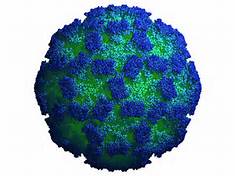
Nature has created an ingenious bug in norovirus. [3] The round blue ball structure of norovirus is actually a protein surrounding the virus’s genetic material. [4]  The virus attaches to the outside of cells lining the intestine, and then transfers its genetic material into those cells.  Once the genetic material has been transferred, norovirus reproduces, finally killing the human cells and releasing new copies of itself that attach to more cells of the intestine’s lining. [5]

Norovirus (previously called “Norwalk-like virus” or NLV) is a member of the family Caliciviridae. The name derives from the Latin for chalice—calyx—meaning cup-like, and refers to the indentations of the virus surface. [6] The family of Caliciviridae consists of several distinct groups of viruses that were first named after the places where outbreaks occurred.  The first of these outbreaks occurred in 1968 among schoolchildren in Norwalk, Ohio.  The prototype strain was identified four years later, in 1972, and was the first virus identified that specifically caused gastroenteritis in humans.  Other discoveries followed, with each strain name based on the location of its discovery—e.g., Montgomery County, Snow Mountain, Mexico, Hawaii, Parmatta, Taunton, and Toronto viruses.  A study published in 1977 found that the Toronto virus was the second most common cause of gastroenteritis in children.  Eventually this confusing nomenclature was resolved, first in favor of calling each of the strains a Norwalk-like virus, and then simply, a norovirus – the term used today.

Humans are the only host of norovirus, and norovirus has several mechanisms that allow it to spread quickly and easily.  Norovirus infects humans in a pathway similar to the influenza virus’ mode of infection. In addition to their similar infective pathways, norovirus and influenza also evolve to avoid the immune system in a similar way.  Both viruses are driven by heavy immune selection pressure and antigenic drift, allowing evasion of the immune system, which results in outbreaks.  Norovirus is able to survive a wide range of temperatures and in many different environments.  Moreover, the viruses can spread quickly, especially in places where people are in close proximity, such as cruise ships and airline flights, even those of short duration. [7] As noted by the CDC in its Final Trip Report:

Noroviruses can cause extended outbreaks because of their high infectivity, persistence in the environment, resistance to common disinfectants, and difficulty in controlling their transmission through routine sanitary measures.

Continue Reading Norovirus – a Nasty Bug

After two Seattle area men contracted Listeria, Snoqualmie Gourmet Ice Cream issued a recall followed by Molly Moon’s, Pink’s Ice Cream and Grove.  Now Full Tilt Ice Cream of Seattle, Washington is recalling all Dairy Based Ice Cream flavors (except the non-dairy frozen desserts), sold under brand Full Tilt.

The Full Tilt dairy base ice cream products distributed in Oregon and Washington through grocery stores and retail scoop shops.

The ice cream was sold in 16oz paper containers with a 7 digit code ending in 14x (ie: 0219142), as well as 1.5 gallon and 3 gallon plastic gallon tubs produced before 12/19/2014.

These dairy base ice cream products contain ice cream base produced and recalled by Snoqualmie Gourmet Ice Cream, Inc. as an ingredient.

I wonder how many consumers knew that Snoqualmie Gourmet Ice Cream made the ingredients for their favorite ice creams?  I wonder is the retailer/resellers knew of the ongoing and past health violations that likely caused the outbreak?

Listeria monocytogenes is an organism which can cause serious and sometimes fatal infections in young children, frail or elderly people, and others with weakened immune systems. Although healthy individuals may suffer only short-term symptoms such as high fever, severe headache, stiffness, nausea, abdominal pain and diarrhea, listeria infection can cause miscarriages and stillbirths among pregnant women.

The Hamilton Township Division of Health has been informed of two (2) additional Hepatitis A cases which were confirmed over the New Year’s holiday.

In the first additional case (second case in community), the Hamilton Township Division of Health was informed by Robert Wood Johnson Hospital – Hamilton and the New Jersey Department of Health late on December 31, 2014, that a case of Hepatitis A was confirmed in an employee of The Hair Port Salon, located at 3144 South Broad Street in Hamilton Township, N.J.  This employee has been released from the hospital and is presently recovering at home.

In the second additional case (third case in community), the Hamilton Township Division of Health was informed by the New Jersey Department of Health on January 1, 2015, that a case of Hepatitis A was confirmed in a part-time fitness instructor at the Hamilton Area YMCA’s JKR Branch located at 1315 Whitehorse-Mercerville Road in Hamilton Township, N.J.  This instructor also serves at a fitness instructor at the New Jersey Athletic Club, located at 4152 Quakerbridge Road in Lawrenceville, NJ, and is also an employee of the Mercer County Board of Social Services, located at 200 Woolverton Street in Trenton, NJ.   This fitness instructor is presently recovering at home.

During routine questioning by Hamilton Township Health officials it was confirmed that both individuals in these two additional cases had eaten at or from Rosa’s Restaurant and Catering located at 3442 South Broad St, Hamilton Township, NJ, during the first confirmed Hepatitis A case in November.  Hamilton Township’s Division of Health cannot say with any certainty that the two additional cases were a direct result from the original infection/case.

The Massachusetts Department of Public Health (MDPH) has notified the local New Bedford Board of Health of several cases of food borne illness linked to food recently served by the Churrascaria Aveirense Restaurant located at 175 Sawyer Street in New Bedford.

The New Bedford Board of Health has asked the restaurant owners to close the establishment until further notice. The Board of Health will not permit the restaurant to reopen until all employees have tested negative for the bacteria and the restaurant has met all food safety requirements.

MADPH has informed the local board of health that several persons have tested positive for the bacteria known as Salmonella. Most persons infected with Salmonella develop diarrhea, fever, and abdominal cramps 12 to 72 hours after infection. The illness usually lasts 4 to 7 days, and most persons recover without treatment. If you or someone you know is experiencing these symptoms, you should contact your primary health care provider.