
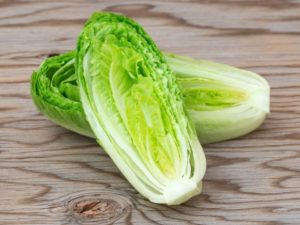
Health officials are investigating a series of recent illnesses from a dangerous strain of E. coli bacteria that may be linked to romaine lettuce.  Five people in the U.S. have been hospitalized and one has died, according to the Centers for Disease Control and Prevention (CDC).  There has also been one death reported in Canada.

Food safety experts at Consumer Reports are advising that consumers stop eating romaine lettuce until the cause of the outbreak is identified and that product is removed from store shelves.

Over the past seven weeks, 58 people in the U.S. and Canada have become ill from the strain of E. coli (0157:H7). In the U.S., the infections have occurred in 13 states — California, Connecticut, Illinois, Indiana, Michigan, Nebraska, New Hampshire, New York, Ohio, Pennsylvania, Virginia, Vermont, and Washington state.

Canadian health authorities identified romaine lettuce as the source of the outbreak in Canada, and are advising people in the country’s eastern provinces to consider eating other types of salad greens until further notice. In the U.S., government health officials are investigating the outbreaks, but have stopped short of recommending people avoid romaine lettuce or any other food.

From Business Insider:

A deep knowledge of thousands of food poisoning cases across the US has scared Bill Marler off of certain foods.

With more than two decades working as a food poisoning advocate and attorney, there are simply some things that Marler has cut out of his diet. Marler has won more than $600 million for clients in foodborne-illness cases — and become convinced that some foods aren’t worth the risk.

In an article by Health Insider from BottomLine and in conversations with Business Insider, Marler has identified certain foods that he avoids — and that others should be wary of as well.

Here are the foods that this expert says scare him the most:

Marler told Business Insider that the idea he would have to warn people against drinking unfiltered, untreated water didn’t cross his mind until recently.

“Almost everything conceivable that can make you sick can be found in water,” Marler says.

Unfiltered, untreated water — even from the cleanest streams — can contain animal feces, spreading Giardia, which has symptoms such as vomiting and diarrhea and results in roughly 4,600 hospitalizations a year. Hepatitis A, which resulted in 20 deaths in a California outbreak in 2017, can be spread through water if it isn’t treated. E. coli and cholera can also be transmitted via untreated water.

Uncooked flour is on the other end of the spectrum — something that most people see as harmless, but that can actually spread bacteria, Marler says.

From late 2015 to 2016, 56 people in 24 states developed an E. coli infection from eating raw or uncooked flour, Consumer Reports reported. 

Most people think that raw eggs are the biggest food poisoning threat in cookie dough, Marler says. However, flour can also be a culprit — and you don’t even have to eat it. Simply not washing your hands after getting uncooked flour on them can spread E. coli.

Marler says that he has seen more foodborne illnesses linked to shellfish in the past five years than in the two preceding decades.

The culprit: warming waters. As global waters heat up, they produce microbial growth, which ends up in the raw oysters consumers are slurping down.

Marler says that he avoids these “like the plague.” Convenience may be nice, but, as more people handling and processing the food means more chances for contamination, it isn’t worth the risk.

For example, a study from Consumer Reports found unacceptable levels of bacteria that commonly cause food poisoning in about a third of the 208 salad bags that were tested. As Business Insider’s Rebecca Harrington notes, that doesn’t mean these bacteria would cause illness; just that they had the potential to do so.

Sprout outbreaks are surprisingly common, with more than 30 bacterial outbreaks — primarily salmonella and E. coli — in the past two decades.

“There have been too many outbreaks to not pay attention to the risk of sprout contamination,” Marler says. “Those are products that I just don’t eat at all.”

Marler agrees with known-germaphobe President Trump on at least one thing: well-cooked meat is the way to go.

According to the expert, meat needs to be cooked to 160 degrees throughout to kill bacteria that could cause E. coli or salmonella.

For anyone who remembers the salmonella epidemic of the 1980s and early ’90s, this is a no-brainer. According to Marler, the chance of getting food poisoning from raw eggs is much lower today than it was 20 years ago, but he still isn’t taking any chances.

A precursor to the raw water trend is the movement encouraging people to drink “raw” milk and juices, arguing that pasteurization depletes nutritional value.

Marler says that pasteurization is not dangerous — but raw beverages can be, as skipping the safety step means an increased risk of contamination by bacteria, viruses, and parasites.

“There’s no benefit big enough to take away the risk of drinking products that can be made safe by pasteurization,” he says.

Our plan is to ask nicely for the records in this case so the FDA can see the benefit or transparency.  If the FDA refuses to respond by disclosing the information, we will ask a Court to decide if the public has a right to know.  FSIS has done this on recalls of beef, pork and poultry for over a decade and the world did not stop spinning.


January 3, 2018

Food and Drug Administration

Division of Freedom of Information

Office of the Executive Secretariat, OC

5630 Fishers Lane, Room 1035

Rockville, MD 20857


REQUEST FOR PUBLIC RECORDS

Outbreak of E. coli, January-March 2017

                        I.M Healthy SoyNut Butter, I.M Healthy Granola, Dixie Diner’s Club Carb Not Beanit Butter, and 20/20 Life Styles Yogurt Peanut Crunch Bars


To Whom It May Concern:

I am writing to request copies of public records on file at the Food and Drug Administration (FDA) regarding the names and locations of all retailers known by the FDA to have received shipments of I.M. Healthy SoyNut Butter, I.M. Healthy Granola, Dixie Diner’s Club Brand Carb Not Beanit Butter, and 20/20 Life Styles Yogurt Peanut Crunch bars that have been recalled due to potential contamination with E. coli.

On March 3, 2017, The SoyNut Butter Company voluntarily recalled its I.M. Healthy Original Creamy SoyNut Butter with Best By dates of August 30, 2018 and August 31, 2018. On March 4, 2017, The SoyNut Butter Company expanded the recall of its I.M. Healthy Original Creamy SoyNut Butter to include product packaged in 15oz. plastic jars with Best By dates of July 05, 2018, August 30, 2018, and August 31, 2018; individual portion cups with a Best By date of August 08, 2018; and 4lb. plastic tubs with Best By dates of November 16, 2018 and July 25, 2018.

On March 7, 2017, The SoyNut Butter Company recalled all lots of I.M. Healthy SoyNut Butter and I.M. Healthy Granola. I.M. Healthy SoyNut Butter is packaged in 15 oz. plastic jars, individual portion cups, 4 lb. plastic tubs or 45 lb. pails. The products are available in Original Creamy, Chunky, Honey Creamy, Unsweetened and Chocolate. I.M Healthy Granola is packaged in individual serving packages, 12 oz. bags, 50 oz. bags, and 25 lb. bulk bag. I.M. Healthy Granola is available in Original, Apple, Blueberry, with Raisin, and Cranberry.

On March 10, 2017, The SoyNut Butter Company expanded its recall to include all best buy dates of Dixie Diner’s Club brand Carb Not Beanit Butter. The recalled product was only available for purchase via mail order or online portals.

On March 24, 2017, Pro Sports Club recalled 20/20 Life Styles Yogurt Peanut Crunch bars because they were made with soy nut butter supplied by The SoyNut Butter Company.

Despite the recall of these products, Amazon was still selling I.M. Healthy SoyNut Butter as of September 5, 2017, a Lucky’s Market in Redwood City, California was still selling I.M. Healthy SoyNut Butter as of September 26, 2017, and Shop.com was still selling I.M. Healthy SoyNut Butter as of October 12, 2017.

We are willing to pay all costs associated with providing the requested records.  If you require pre-payment, please contact me and I will arrange for it to be made. Responsive documents can be sent via email, facsimile (206-346-1898) or by U.S. Mail.  If you choose to mail documents please send them to my attention at the following address.

 Marler Clark Law Firm

1012 First Avenue, Fifth Floor

Seattle, WA 98104-1008

If you have any questions about my request or need further information, please contact me.  Thank you in advance for your prompt reply.


Very truly yours

Katrina Deardorff, MPH

Epidemiologist

I talked to Kate Taylor at Business Insider about “Raw Water” yesterday:

When food-safety expert Bill Marler saw The New York Times’ trend pieceon Silicon Valley’s recent obsession with raw water, he thought he was reading a headline from The Onion.

According to The Times, demand for unfiltered water is skyrocketing as tech-industry insiders develop a taste for water that hasn’t been treated, to prevent the spread of bacteria or other contaminants.

In San Francisco, “unfiltered, untreated, unsterilized spring water” is selling for as much as $60.99 for a 2.5 gallon jug. Startups dedicated to untreated water are popping up. People — including startup Juicero’s cofounder Doug Evans — are gathering gallons of untreated water from natural springs to bring to Burning Man.

Tourmaline Spring sells an untreated water as “sacred, living water.” 

While Evans and other fans say raw water is perfect for those who are “extreme about health,” Marler — a food-safety advocate and a lawyer — says the opposite is true.

“Almost everything conceivable that can make you sick can be found in water,” Marler told Business Insider.

Unfiltered, untreated water, even from the cleanest streams, can contain animal feces, spreading Giardia, which has symptoms such as vomiting and diarrhea and results in roughly 4,600 hospitalizations a year. Hepatitis A, which resulted in 20 deaths in a California outbreak in 2017, can be spread through water if it isn’t treated. E. coli, and cholera can also be transmitted via untreated water.

Because filtered, treated water has become the norm, Marler says, most people don’t realize how dangerous s0-called raw water can be.

“The diseases that killed our great-grandparents were completely forgotten about,” he said.

Most Americans don’t personally know anyone who died of Hepatitis A or cholera, thanks to advances in technology and more stringent safety standards. As a result, they had a hard time realizing the risks involved in consuming untreated water.

“It’s fine till some 10-year-old girl dies a horrible death from cholera in Montecito, California,” Marler said.

On January 2, Business Insider’s Melia Robinson visited a San Francisco supermarket where a small company called Live Water sells its untreated water. Rainbow Grocery was sold out of the Fountain of Truth Spring Water from Live Water, but a sign indicated a “slight price increase.”

The cost of a 2.5 gallon jug increased from $36.99 to $60.99 since The Times’ article published. While the price includes the glass container, a refill costs only $14.99, according to The Times.

According to Marler, the raw-water trend is similar to people’s obsession with raw milk or opposition to vaccines. While they lack scientific evidence, they’re convinced that they are correct, in part because they have failed to see the repercussions of life without scientific advances.

“You can’t stop consenting adults from being stupid,” Marler said. “But we should at least try.”

Thanks to Canada for telling US about what’s happening in the US

According to Alex McKeen of the Star, the Center for Disease Control is reporting 17 cases of E. coli infection across 13 American states, dating as early as Nov. 15, 2017.

While the cases extend coast-to-coast, from California, Connecticut, Illinois, Indiana, Michigan, Nebraska, New Hampshire, New York, Ohio, Pennsylvania, Virginia, Vermont, and Washington, the bulk of the U.S. instances of the infection were in the northeast part of the country.

Of the 17 U.S. cases, five people have been hospitalized, one of whom has died. Two have developed hemolytic uremic syndrome, a type of kidney failure, which Canada’s public health authority calls a rare life-threatening symptom of E. coli infection.

The Center for Disease Control has not yet determined whether the people sick with E. coli infection in that country have a type of food in common, but Canada has linked the cases in this country to romaine lettuce.

There are 40 sick in Canada with 1 death in Ontario, Quebec, New Brunswick, Nova Scotia, and Newfoundland and Labrador.

With a Hepatitis A outbreak boiling in southeast Michigan for the last year, one would think common sense would dictate vaccinating employees and protecting your customers?

Monroe County Health Department (MCHD) has confirmed a second case of Hepatitis A in an individual who works at a local restaurant. MCHD is providing information to alert residents and guests to the possible exposure and to recommend prompt Hepatitis A vaccination or Immune Globulin (IG) treatment to potentially exposed individuals.
The diagnosed individual works at Tim Hortons Restaurant located at 404 S. Monroe Street in Monroe. Anyone who consumed food and/or drink from the restaurant between December 10, 2017 and December 28, 2017 may have been exposed.

MCHD is working with the restaurant to vaccinate all employees, determine if there are any additional cases and to eliminate any additional risk of exposure. Concerned individuals are urged to contact MCHD or their health care provider with questions.

Anyone who has consumed food and/or drink at Tim Hortons from December 10th to December 28th, should monitor for symptoms of Hepatitis A which include fatigue, poor appetite, stomach pain or tenderness, nausea or vomiting, dark urine, and yellowing of the skin (jaundice). Most children less than 6 years of age do not experience symptoms. Symptoms typically appear 2 to 6 weeks after exposure. Individuals with symptoms should call their health care provider and seek medical care.

Earlier, The Department extended the free Hepatitis A walk-in clinic, through the week of December 18 through the 22 where at least 1,800 people were vaccinated after the first employee with hepatitis A was announced. The clinic was for anyone who consumed food and/or drink between November 21 and December 8 from the same Tim Horton’s location.

Hepatitis A vaccine or Immune Globulin (IG) treatment may provide protection against the disease if given within two weeks of exposure. Anyone potentially exposed to Hepatitis A should contact their healthcare provider to be assessed for vaccination or IG treatment. Hepatitis A vaccine is available from health care providers, pharmacies and at MCHD. People who have had Hepatitis A disease or have previously received two doses of the hepatitis A vaccine do not need to be vaccinated.

Hepatitis A is caused by the Hepatitis A virus, and it can cause damage to the liver and cause other health problems.

The most effective method to prevent Hepatitis A is to get vaccinated. The Hepatitis A vaccine is now routinely recommended for children at 1 year of age. Most adults, however, may not be vaccinated, unless they did so for travel or other risk factors.

The Hepatitis A virus is most commonly spread from person-to-person by the fecal-oral route. Most infections result from contact with an infected household member or sex partners. Sometimes, infection results from food or drink that is contaminated with the virus. It is not spread through coughing or sneezing. Anyone who has Hepatitis A can spread the virus to others for 1-2 weeks prior to symptoms appearing.

Frequent hand-washing with soap and warm water after using the restroom and before handling food can help prevent the spread of Hepatitis A. Thoroughly preparing foods can also help prevent infection. Freezing food does not kill the virus.

Outbreak in Southeast Michigan From August 2016 to December 20, 2017 there have been 630 cases of Hepatitis A diagnosed in Southeast Michigan. Monroe County has 14 confirmed cases of Hepatitis A.

Affected states include California, Connecticut, Illinois, Indiana, Michigan, Nebraska, New Hampshire, New York, Ohio, Pennsylvania, Virginia, Vermont, and Washington.  Link to recent Canadian Outbreak.

Federal and state health officials are investigating a multistate Escherichia coli O157:H7 outbreak that has sickened 17 people in 13 states, and preliminary tests by the US Centers for Disease Control and Prevention (CDC) show that the outbreak strain is closely related to one in Canada that has been associated with romaine lettuce.

The CDC said illness onsets range from Nov 15 through Dec 8, according to a press release today sent to journalists.

State and local authorities are interviewing sick people to see what they ate in the week before they became ill. Because a source of the US infections hasn’t been identified, the CDC said it is unable to recommend if US residents should avoid a particular food. “This investigation is ongoing, and more information will be released as it becomes available,” it said.

The Public Health Agency of Canada (PHAC) issued its first announcement about an E coli outbreak linked to romaine lettuce on Dec 11. In a Dec 21 update, it said it is so far investigating 41 cases from five provinces: Ontario, Quebec, New Brunswick, Nova Scotia, and Newfoundland and Labrador. There was one reported death. It urged the public to avoid eating romaine lettuce until more is known about the contamination.

The Food and Drug Administration’s Food-Recall Process Did Not Always Ensure the Safety of the Nation’s Food Supply 

Prior Office of Inspector General (OIG) reviews focused on U.S. Food and Drug Administration (FDA) oversight of food recalls. Food recalls are the most effective means of protecting public health when a widely consumed food product is either defective or potentially harmful. At the time of those OIG reviews, FDA did not have statutory authority to require food manufacturers to initiate recalls of most foods.

After those reviews, enactment of the FDA Food Safety Modernization Act gave FDA new authority to order a mandatory recall and require firms to recall certain harmful foods. We conducted this review to determine whether FDA is fulfilling its responsibility in safeguarding the Nation’s food supply now that it has mandatory recall authority.

Our objective was to determine whether FDA had an efficient and effective food-recall process that ensured the safety of the Nation’s food supply. Specifically, we focused on FDA’s (1) oversight of firms’ initiation of food recalls, (2) monitoring of firm-initiated recalls, and (3) maintenance of food-recall data in the electronic recall data system.

We reviewed documentation for 30 voluntary food recalls judgmentally selected from the 1,557 food recalls reported to FDA between October 1, 2012, and May 4, 2015.

FDA did not always have an efficient and effective food-recall process that ensured the safety of the Nation’s food supply. We identified deficiencies in FDA’s oversight of recall initiation, monitoring of recalls, and the recall information captured and maintained in FDA’s electronic recall data system, the Recall Enterprise System (RES). Specifically, we found that FDA could not always ensure that firms initiated recalls promptly and that FDA did not always (1) evaluate health hazards in a timely manner, (2) issue audit check assignments at the appropriate level, (3) complete audit checks in accordance with its procedures, (4) collect timely and complete status reports from firms that have issued recalls, (5) track key recall data in the RES, and (6) maintain accurate recall data in the RES.

Recalls were not always initiated promptly because FDA does not have adequate procedures to ensure that firms take prompt and effective action in initiating voluntary food recalls. FDA’s monitoring of recalls was not always adequate because FDA staff had insufficient oversight to ensure that the assignment was at the appropriate level, and FDA obtained incomplete or inaccurate consignee information from firms initiating recalls. Additionally, FDA lacked adequate procedures to collect timely and complete status reports from these firms because the procedures did not require staff to request status reports at the time the recall was initiated. Lastly, the RES contained deficient recall information because it did not track all information necessary for FDA to effectively monitor recall activities and assess the timeliness of recalls; the RES also contained inaccurate data.

We recommended that FDA use its Strategic Coordinated Oversight of Recall Execution (SCORE) initiative to establish set timeframes, expedite decision-making and move recall cases forward, and improve electronic recall data. We also made other procedural recommendations, which are listed in the report.

FDA agreed with our conclusion that it needs to help ensure that recalls are initiated promptly in all circumstances and said that it will consider the results of our review as it “continues to operate the SCORE team.” FDA also described other actions it has taken in response to our early alert, issued June 8, 2016, and draft report including initiating a new quality system audit process and a plan to provide early notice to the public and more guidance to staff.

Download the complete report or the Report in Brief.

Public Health England has linked a 12 cases of E. coli to Sainsbury’s Taste the Difference Aberdeen Angus quarter-pounder burgers, 454g packets, which are sold in the frozen section. Product: Taste the Difference 4 pack Aberdeen Angus British Beef Quarter Pounders (Frozen). Batches with ‘Best Before’ dates: July 2018, September 2018 and October 2018

The Public Health Agency of Canada says 40 E. coli illnesses are under investigation as possibly being linked to romaine lettuce. People who have reported illnesses have said that they ate romaine at home, at restaurants and in prepared salads purchased from grocery stores. The people infected are between the ages of 4 to 80 years of age and 70 % are women. One person has died.

The Centers for Disease Control and Prevention and the Kansas Department of Health and Environment have linked one person’s Salmonella Oranienburg infection to taking rattlesnake pills. Rattlesnake pills are often marketed as remedies for various conditions, such as cancer and HIV infection. These pills contain dehydrated rattlesnake meat ground into a powder and put into pill form. CDC recommends that you talk to your health care provider if you are considering taking rattlesnake pills, especially if you are in a group more likely to get a severe Salmonella infection.

Epidemiologic and laboratory evidence indicate that one person in Kansas became sick after taking rattlesnake pills purchased in Mexico. The ill person reported taking rattlesnake pills in the week before getting sick. Advanced laboratory testing called whole genome sequencing showed that the Salmonella that made the person sick matched the Salmonella found in rattlesnake pills from Mexico collected in an earlier, unrelated investigation.

Reptiles and their meat can carry Salmonella and make people sick. Past outbreak investigations have identified rattlesnake pills as a source of human Salmonella infections.

People in the following groups are more likely to get a severe Salmonella infection: People with weakened immune systems, including people who are receiving chemotherapy or have HIV; pregnant women; children younger than 5 years; and older adults. If you get sick after taking rattlesnake pills, contact your health care provider.