

 According to the World Health Organization (WHO) and the Food and Agriculture Organization of the United Nations (FAO), with an estimated 600 million cases of foodborne illnesses annually, unsafe food is a threat to human health and economies, disproportionally affecting vulnerable and marginalized people, especially women and children, populations affected by conflict, and migrants. An estimated 420 000 people around the world die every year after eating contaminated food and children under 5 years of age carry 40% of the foodborne disease burden, with 125 000 deaths every year.
World Food Safety Day on 7 June aims to draw attention and inspire action to help prevent, detect and manage foodborne risks, contributing to food security, human health, economic prosperity, agriculture, market access, tourism and sustainable development. The World Health Organization (WHO) and the Food and Agriculture Organization of the United Nations (FAO) jointly facilitate the observance of World Food Safety Day, in collaboration with Member States and other relevant organizations. This international day is an opportunity to strengthen efforts to ensure that the food we eat is safe, mainstream food safety in the public agenda and reduce the burden of foodborne diseases globally.
I think about it more on a personal level. It has been over 28 years since the 1993 Jack in the Box E. coli outbreak sickened several hundred – many with kidney failure – some died – and, changed the trajectory of my legal work. It was about this time in 1993 that Bri Kiner – who became the face of the litigation – was still months from discharge from the hospital – see Video
I still recall visiting her and her family in the hospital – I still remember the smell of the room and the look of a shriveled 9-year-old with a gapping wound where once were her large intestines. It was an honor to try and do justice for her – see the book Poisoned – soon to be a documentary.
I could not even begin to to list all the people around the world that have been impacted by the failures of the food safety system that I have met or represented. But, there are many that I cannot forget:
Linda Rivera – hospitalized for two years after eating Nestle Toll House Cookie Dough and developing one of the most complex E. coli infections for anyone that survived the acute phase of the infection – see also the Washington Post.
Stephanie Smith – a dancer who lost her ability to even walk because of a E. coli tainted Cargill hamburger – see Pulitzer Prize winning article in the New York Times.
Clifford Tousignant – a Korean War Purple Heart winner who died from Salmonella tainted peanut butter.
Dr. Michael Hauser – who was one of at least 33 people who died from Listeria tainted cantaloupe.
Lucas Parker – a 4-year-old who cannot walk, talk or feed himself due to the severity of his E. coli infection.
You get my point, it has impacted me deeply, but tragically impacted these people and their families. I could spend hours talking about the Listeria tragedy in South Africa – 1,000 sickened with 200 dead and three years later no justice.
These people all need our concerted efforts.
To all food safety I professionals – we have still much to do.
I will leave you with this video – this, I can never shake.


 Yesterday, the CDC, public health and regulatory officials in several states, and the U.S. Department of Agriculture’s Food Safety and Inspection Service (USDA-FSIS) announced a multistate outbreak of Salmonella Enteritidis infections linked to raw frozen breaded stuffed chicken products. As of June 2, 2021, a total of 17 people infected with the outbreak strain of Salmonella Enteritidis have been reported from 6 states. Illnesses started on dates ranging from February 21, 2021 to May 7, 2021.
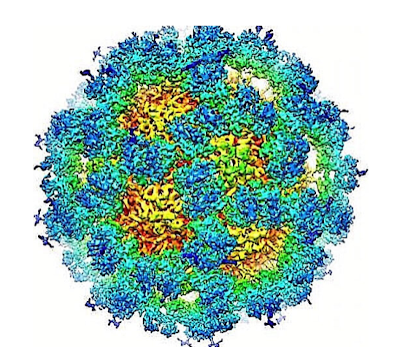 The Centers for Disease Control and Prevention (CDC) estimates that noroviruses cause nearly 21 million cases of acute gastroenteritis annually, making noroviruses the leading cause of gastroenteritis in adults in the United States. Norovirus is highly contagious and transmitted by infected individuals at an enormous rate. According to CDC estimates, this translates into about 2,500 reported norovirus outbreaks in the United States each year. Norovirus outbreaks have been reported in many settings, including healthcare facilities, restaurants and catered events, schools, and childcare centers. Cruise ships account for a small percentage (1%) of reported norovirus outbreaks overall. Norovirus outbreaks occur throughout the year but are most common from November to April. The most common symptoms are sudden onset of vomiting and watery diarrhea, although stomach cramps and pain also often occur. Some people experience fever and body aches. Symptoms usually start 12 to 48 hours after being exposed and typically last about 1 to 3 days.
 As part of the investigation, the Minnesota Department of Agriculture collected frozen, raw, breaded, stuffed chicken products from a retail store for testing. The raw product samples tested positive for the outbreak strain of SalmonellaEnteritidis. At this time, the production lots tested in Minnesota are not known to have been purchased by any of the case patients. FSIS has not received any purchase documentation, shopper records, or other traceable information at this time. Therefore, FSIS does not have the necessary information to request a recall. FSIS will continue to evaluate any new illness or traceable information as it becomes available. The investigation is ongoing, and FSIS continues to work with the CDC and state partners.
 There will be two more Hepatitis A vaccination clinics in Chautauqua County this week after a
 As of May 20, 2021, a total of 163 people infected with one of the outbreak strains have been reported from 43 states. Illnesses started on dates ranging from February 12, 2021, to April 25, 2021.
 State and local public health officials are interviewing people about the animals they came into contact with in the week before they got sick. Of the 92 people interviewed, 81 (88%) reported contact with backyard poultry before getting sick.
 Last night Food Safety News reported that the Arizona Department of Health was reporting a “secondary E. coli case,” linked to Pure Eire Dairy that has thus far sickened over a dozen – mainly children – some with acute kidney failure.
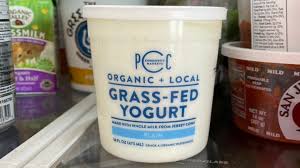 Food Safety News report that more patients are being identified by investigators working on an E. coli O157 outbreak that has been limited to Washington State. However, today Arizona officials confirmed there is a child in that state with an infection from the same strain of the pathogen.