
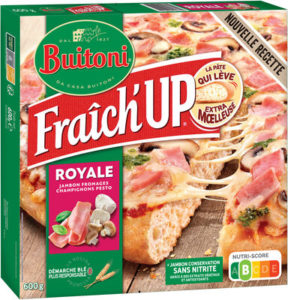
“If you have a Fraîch’Up pizza in your freezer, do not eat it and throw it away”

The French Directorate General of Health indicated on Wednesday that the link was confirmed between the resurgence of contamination with E. coli bacteria and Nestlé Buitoni’s “Fraîch’up” frozen pizzas, likely the dough.

To date in France, 41 children have developed hemolytic uremic syndrome (HUS), which causes kidney failure, since February. 34 additional cases are being evaluated. Two children died after contracting this infection. These 75 cases occurred in 12 regions of metropolitan France: Hauts-de-France (16 cases), New Aquitaine (11 cases), Pays de la Loire (10 cases), Ile-de-France (9 cases), Brittany ( 7 cases), Grand Est (5 cases), Auvergne-Rhône-Alpes (4 cases), Center Val-de-Loire (4 cases), Provence-Alpes-Côte d’Azur (3 cases), Bourgogne Franche-Comté ( 2 cases), Normandy (2 cases) and Occitanie (2 cases).

“If you have a Fraîch’Up pizza in your freezer, do not eat it and throw it away”, advised the industrial general manager of Nestlé France, Jérôme Jaton. “It is an extremely tragic situation” and “we will take all our responsibilities.”

NOTE: BRAVO PET FOODS IS NOT BRAVO PACKING INC. Bravo Pet Foods, located in Manchester, CT, has NO relationship OF ANY KIND with Bravo Packing.  Bravo Pet Foods has been producing ultra high end frozen and freeze dried diets for pets for 20 years.

The U.S. Food and Drug Administration (FDA) announced today that Bravo Packing, Inc., an animal food manufacturing company of Carney’s Point, New Jersey, has agreed to stop selling, manufacturing and distributing raw pet food and come into compliance with the Federal Food, Drug, and Cosmetic Act (FD&C Act).

Today’s action marks the first consent decree of permanent injunction against an animal food manufacturer for violating public safety standards under Part 507 (Current Good Manufacturing Practice (CGMP) requirements) of the Food Safety Modernization Act (FSMA) Preventive Controls for Animal Food Regulation. Part 507 requires, among other things, that animal food facilities take adequate precautions to prevent animal food from becoming contaminated and that all animal food manufacturing, processing, packing, and holding is conducted under the conditions necessary to minimize the potential for the growth of undesirable microorganisms to protect against the contamination of animal food.

“The food we give our pets should be safe for them to eat and safe for people to handle,” said Steven Solomon, DVM, MPH, director of FDA’s Center for Veterinary Medicine. “The FDA has taken this action to protect public health because, despite multiple inspections, notifications of violations, and recalls, this firm continued to operate under insanitary conditions and produce pet food contaminated with harmful bacteria. We will not tolerate firms that put people or animals at risk and will take enforcement actions when needed.”

The FDA conducted inspections in 2019 and 2021 and issued a warning letter to the facility in 2020. During these inspections, the FDA found evidence of significant food safety violations including grossly insanitary conditions and the failure to follow CGMP regulations for animal food. Multiple samples of finished raw pet food products collected during the inspections tested positive for Salmonella. Pet food that is contaminated with Salmonella can lead to illness in both the pets consuming the food, as well as humans, who handle the food and care for the pets. Some of these finished samples as well as environmental samples from the two inspections also tested positive for Listeria monocytogenes.

The consent decree of permanent injunction entered by U.S. District Judge Noel L. Hillman between the FDA and Bravo Packing, Inc., along with the company’s owner and secretary, Joseph Merola, and its president, Amanda Lloyd, prohibits the defendants from receiving, preparing, processing, packing, holding, labeling, and/or distributing pet food unless and until the company completes corrective actions. The decree also allows the FDA to order a shutdown, recall, or other corrective action in the event of future violations and requires the defendants to pay the costs of inspections performed pursuant to the decree. Failure to abide by the agreement can also lead to civil or criminal penalties.

On February 10, 2022, CDC was notified of the Food and Drug Administration’s (FDA’s) investigation of consumer complaints of infant illness related to products from Abbott Nutrition in Sturgis, Michigan.

The most recent investigation details are summarized below:

From September 16, 2021, to January 5, 2022, CDC received reports of three Cronobacter cases in infants that were later found to be included in FDA’s ongoing investigation. On February 16, 2022, CDC asked clinicians and state and local health departments to provide information on other Cronobacter infections associated with infant formula from November 2020 through the present. Since then, CDC has identified one additional case of Cronobacter infection in an infant who consumed formula produced at this facility.

  • Four infants with Cronobacter infections in Minnesota (1), Ohio (2), and Texas (1) consumed formula produced at the Sturgis, Michigan, facility before they got sick.
  • Formula types included Similac Sensitive, Similac Pro-total Comfort, Similac Advance, and Similac PM 60/40.
  • Cronobacter infections may have contributed to the deaths of two infants in Ohio.

CDC performed whole genome sequencing (WGS) on Cronobacter bacteria isolated from two available patient samples to compare them with environmental samples taken at the facility to determine if there is any relation.

At this time, CDC has completed laboratory testing for the two available patient samples. The analysis performed by WGS did not find these samples from patients to be closely genetically related to the multiple strains of Cronobacterfound in the environmental samples obtained from Abbott Nutrition’s Sturgis, MI facility. Furthermore, WGS showed that bacteria from available patient samples were not closely related to one another. During the course of this investigation, FDA collected additional product samples from the facility and FDA analysis is ongoing.

FDA received one complaint of an infant with a Salmonella infection who consumed infant formula from the Sturgis facility. However, there is not enough information available to definitively link this illness to the recalled infant formula. CDC confirmed that this single Salmonella illness is not linked to an outbreak. CDC is working with state and local partners to monitor for Salmonella illnesses linked to infant formula.

At least 4 sick with 2 babies dead – it’s infant formula for damn sakes!

Congress passed the Federal Food, Drug, and Cosmetic Act in 1938 in reaction to growing public safety demands.  The primary goal of the Act was to protect the health and safety of the public by preventing deleterious, adulterated or misbranded articles from entering interstate commerce.  Under section 402(a)(4) of the Act, a food product is deemed “adulterated” if the food was “prepared, packed, or held under insanitary conditions whereby it may have become contaminated with filth, or whereby it may have been rendered injurious to health.” A food product is also considered “adulterated” if it bears or contains any poisonous or deleterious substance, which may render it injurious to health.  The 1938 Act, and the recently signed Food Safety Modernization Act, stand today as the primary means by which the federal government enforces food safety standards.

Chapter III of the Act addresses prohibited acts, subjecting violators to both civil and criminal liability. Provisions for criminal sanctions are clear:

Felony violations include adulterating or misbranding a food, drug, or device, and putting an adulterated or misbranded food, drug, or device into interstate commerce.  Any person who commits a prohibited act violates the FDCA.  A person committing a prohibited act “with the intent to defraud or mislead” is guilty of a felony punishable by up to ten years in jail and up to $1,000,000 in fines or both – per charge.

A misdemeanor conviction under the FDCA, unlike a felony conviction, does not require proof of fraudulent intent, or even of knowing or willful conduct.  Rather, a person may be convicted if he or she held a position of responsibility or authority in a firm such that the person could have prevented the violation.  Convictions under the misdemeanor provisions are punishable by not more than one year or fined not more than $250,000, or both – per charge.

Thanks to efoodalert for digging into past inspections of the Sturgis, Michigan, Abbott infant formula manufacturing facility.

Abbott’s infant formula production facility in Sturgis, MI, has undergone twenty-seven FDA inspections since October 2008, according to the FDA’s inspection database. Twenty-four of the twenty-seven inspections resulted in the company’s operations receiving a clean bill of health.

In October 2010, the FDA inspector cited the company for three issues, specifically:

  • Effective measures are not being taken to exclude pests from the processing areas
  • There is no assurance that raw materials which are susceptible to contamination with extraneous materials comply with current FDA standards and defect action levels
  • Failure to manufacture foods under conditions and controls necessary to minimize contamination.

These issues were apparently corrected, as subsequent inspections that same year and for several years did not result in any adverse reports.

The situation changed in September 2019 (Sept. 16-24, 2019), when the FDA inspector cited Abbott for a single issue, stating:

  • You did not test a representative sample of a production aggregate of a powdered infant formula at the final product stage and before distribution to ensure that the production aggregate meets the required microbiological quality standards.

Once again, the company corrected its procedures to the FDA’s satisfaction.

There were no inspections carried out for two full years. Then, in September 2021 (Sept. 20-24, 2021) (unclear if in response to reported illness), the FDA returned. This time, the inspection uncovered several issues:

  • Personnel working directly with infant formula, its raw materials, packaging, or equipment or utensil contact surfaces did not wash hands thoroughly in a hand-washing facility at a suitable temperature after the hands may have become soiled or contaminated.
  • You did not maintain a building used in the manufacture, processing, packing or holding of infant formula in a clean and sanitary condition
  • An instrument you used to measure, regulate, or control a processing parameter was not properly maintained.
  • You did not monitor the temperature in a thermal processing equipment at a frequency as is necessary to maintain temperature control.
  • You did not install a filter capable of retaining particles 0.5 micrometer or smaller when compressed gas is used at a product filling machine.

In its recall notice, Abbott acknowledged having found “evidence of Cronobacter sakazakii in the plant in non-product contact areas, ”but denied having found the bacterium in finished product.

This would appear to be in direct contradiction to the FDA’s revelation that the company had recorded the destruction of product in the past due to the presence of Cronobacter.  Specifically, “a review of the firm’s internal records also indicate environmental contamination with Cronobacter sakazakii and the firm’s destruction of product due to the presence of Cronobacter.”

The FDA was back in the plant January 31, 2022 through March 18, 2022 as the 2022 Form 483 noted.

Specifically, the FDA environmental samples collected on 2/1/22-2/2/22 confirmed the presence of Cronobacter sakazakki in the packing room on surfaces like the hinge attachment and bolt heads and the clear cover of the scoop hopper. The scoop hopper is utilized to feed scoops, which are placed directly inside infant formula containers and contact product.  Cronobacter sakazakki was found in other samples – structural support piece for the dryer and immediate surrounding floor – duct tape on the wall.

The FDA further noted positive Cronobacter spp. Between September 25, 2019 and February 20, 2022 in both environmental and finished product samples – environmental samples eight times between October 10, 2019 and February 2, 2022 and twenty times between February 6, 2022 and February 20, 2022.  In reviewing NCR’s the FDA found two positive Cronobacter spp. Result in 2019 and 2020.

FDA also noted that standing water was observed repeatedly from September 20, 2021to September 24, 2021, with 310 water events from January, 1, 2020 to February 1, 2022 and personnel working directly with infant formula,… did not wear necessary protective apparel.

Perhaps the most shocking observation by the FDA, was the observation that Abbott did not adequately follow-up on customer complaints Cronobacter sakazakki illnesses and deaths.

Abbott, I would lawyer-up!

What we know: There have been four sick with two dead from Cronobacter sakazakii

The recall: The recall began on February 17, 2022 and expanded on February 28, 2020. The FDA is advising consumers not to use recalled Similac, Alimentum, or EleCare powdered infant formulas. Recalled products can be identified by the 7-to-9-digit code and expiration date on the bottom of the package (see image below). Products are included in the recall if they have all three items below:

  • the first two digits of the code are 22 through 37 and
  • the code on the container contains K8, SH, or Z2, and
  • the expiration date is 4-1-2022 (APR 2022) or later, and
  • Abbott Nutrition has recalled Similac PM 60/40 with a lot code 27032K80 (can) / 27032K800 (case).

The inspection: Abbott Nutrition did not establish a system of process controls covering all stages of processing that was designed to ensure that infant formula does not become adulterated due to the presence of microorganisms in the formula or in the processing environment. Abbott Nutrition did not ensure that all surfaces that contacted infant formula were maintained to protect infant formula from being contaminated by any source. Cronobacter was found in the plant both environmental and product samples.

The questions:  Given that illnesses began in early September 2021, did that fact that Cronobacter sakazakii is only reportable in Minnesota hamper the investigation and delay the outbreak announcement and recall?

According to the CDCCronobacter infections are rare, but they can be deadly in newborns. Infections in infants usually occur in the first days or weeks of life. About two to four cases are reported to CDC every year, but this figure may not reflect the true number of illnesses because most hospitals and laboratories are not required to reportCronobacter infections to health departments. Although, not specifically listed as reportable in all states, in some states it is reportable under bacterial meningitis (e.g., California). It is reportable in Minnesota.

I must admit, until the announcement of this most current Cronobacter sakazakii outbreak, I thought Cronobacter sakazakii was a reportable bacteria illness in all states, much like E. coli O157:H7 has been since at least 1993-1994.  However, for E. coli O157:H7 it was not always that way.

For a bit of history; most recall that the Jack-in-the-Box E. coli O157:H7 outbreak as hitting the public’s conscious in January 1993 after it was linked to several hundred sickened, dozens with acute kidney failure and three deaths – all children – with all illnesses sharing the same genetic E. coli O157:H7 in their stools which matched E. coli O157:H7 found in frozen hamburger patties.  At first, most illnesses were tied to people that consumed undercooked hamburgers in Oregon, Idaho, Nevada and Washington – most of all the illnesses and all three deaths were in the greater Seattle area.  Prior to 1993 in all four states shared more than just borders – E. coli O157:H7 was a reportable bacteria illness in all four states.

Unknown when the outbreak exploded in those four states in January was cluster of just over forty E. coli O157:H7, including several with acute kidney failure and one six-year-old girl name Lauren, in California that occurred in November and December of 1992.  In 1992 E. coli O157:H7 was not a reportable bacteria illness in California so public health was flying blind to these illnesses, and, because it was not reported, the meat was shipped North, and a terrible history was not avoided.

In 1994 Lauren’s Law was enacted making E. coli O157:H7 a reportable bacteria illness in California.  It is time to pay attention.

Note:

https://www.cdc.gov/nndss/about/index.html

The Council of State and Territorial Epidemiologists and CDC identify the list of notifiable diseases and conditions.

https://ndc.services.cdc.gov/

While the list of reportable conditions varies by state, the Council of State and Territorial Epidemiologists (CSTE) has recommended that state health departments report cases of selected diseases to CDC’s National Notifiable Diseases Surveillance System (NNDSS).  Every year, case definitions are updated using CSTE’s Position Statements.  They provide uniform criteria of national notifiable infectious and non-infectious conditions for reporting purposes.

The result – 4 sick with 2 dead.

Why is Cronobacter NOT reportable – except in Minnesota?

According to the CDC, Cronobacter infections are rare, but they can be deadly in newborns. Infections in infants usually occur in the first days or weeks of life. About two to four cases are reported to CDC every year, but this figure may not reflect the true number of illnesses because most hospitals and laboratories are not required to report Cronobacter infections to health departments.Although, not specifically listed as reportable in all states, in some states it is reportable under bacterial meningitis (e.g., CA). It is reportable in Minnesota.

FDA Inspections of Abbott 2019, 2021 and 2022

The FDA, along with CDC and state and local partners are investigating consumer complaints and/or reports of infant illness related to products from Abbott Nutrition’s Sturgis, MI facility. All of the ill patients are reported to have consumed powdered infant formula produced from Abbott Nutrition’s Sturgis, MI facility.

The FDA is releasing the FDA Form 483s from three inspections conducted at Abbott Nutrition’s facility on Sept. 16-24, 2019Sept. 20-24, 2021, and Jan. 31-March 18, 2022. The inspectional observations in these Form 483s do not constitute final FDA determinations of whether any condition was or is in violation of the Federal Food, Drug, and Cosmetic Act or any of its implementing regulations. FDA will take appropriate action in the future – if warranted – as we continue to evaluate the 2022 inspectional findings.

Important observations noted in the 2022 Form 483 include, but are not limited to:

  • [Abbott Nutrition] did not establish a system of process controls covering all stages of processing that was designed to ensure that infant formula does not become adulterated due to the presence of microorganisms in the formula or in the processing environment.
  • [Abbott Nutrition] did not ensure that all surfaces that contacted infant formula were maintained to protect infant formula from being contaminated by any source.

Once the immediate public health risk is minimized, FDA will conduct a programmatic review to ensure the maximum effectiveness of agency programs and policies related to infant formula and special medical food complaints, illnesses, and recalls.

Conducting this review is a top priority for the FDA and will be done as efficiently as possible, and we can ensure this effort will not interfere with the immediate recall response activities. We will and must continue focusing on taking all steps possible to protect the health of those who rely on safe powdered infant formula.

Recall Recommendation

The FDA is advising consumers not to use recalled Similac, Alimentum, or EleCare powdered infant formulas. Recalled products can be identified by the 7 to 9 digit code and expiration date on the bottom of the package (see image below). Products are included in the recall if they have all three items below:

  • the first two digits of the code are 22 through 37 and
  • the code on the container contains K8, SH, or Z2, and
  • the expiration date is 4-1-2022 (APR 2022) or later.

In addition to products described above, Abbott Nutrition has recalled Similac PM 60/40 with a lot code 27032K80 (can) / 27032K800 (case). At this time, Similac PM 60/40 with lot code 27032K80 (can) / 27032K800 (case) is the only type and lot of this specialty formula being recalled. Additional recall information for the initial recall is available on the FDA website. Parents can also enter their product lot code on the company’s website to check if it is part of the recall.

Recalled products were distributed to the following countries in addition to the United States: Australia, Bahrain, Barbados, Bermuda, Canada, Chile, China, Colombia, Costa Rica, Dominican Republic, Ecuador, Egypt, Guam, Guatemala, Hong Kong, India, Indonesia, Israel, Jordan, Kuwait, Lebanon, Malaysia, Mexico, New Zealand, Oman, Peru, Puerto Rico, Qatar, Saudi Arabia, Singapore, South Africa, Sudan, Taiwan, Thailand, United Arab Emirates, United Kingdom, and Vietnam ANI South.

Thanks to efoodalert for digging into past and current inspections of the Sturgis, MI, Abbott manufacturing facility.

Abbott’s infant formula production facility in Sturgis, MI, has undergone twenty-seven FDA inspections since October 2008, according to the FDA’s inspection database.

Twenty-four of the twenty-seven inspections resulted in the company’s operations receiving a clean bill of health.

In October 2010, the FDA inspector cited the company for three issues, specifically:

  • Effective measures are not being taken to exclude pests from the processing areas
  • There is no assurance that raw materials which are susceptible to contamination with extraneous materials comply with current FDA standards and defect action levels
  • Failure to manufacture foods under conditions and controls necessary to minimize contamination.

These issues were apparently corrected, as subsequent inspections that same year and for several years did not result in any adverse reports.

The situation changed in September 2019, when the FDA inspector cited Abbott for a single issue, stating:

  • You did not test a representative sample of a production aggregate of a powdered infant formula at the final product stage and before distribution to ensure that the production aggregate meets the required microbiological quality standards.

Once again, the company corrected its procedures to the FDA’s satisfaction.

There were no inspections carried out for two full years. Then, in September 2021 (unclear if in response to reported illness), the FDA returned. This time, the inspection uncovered several issues:

  • Personnel working directly with infant formula, its raw materials, packaging, or equipment or utensil contact surfaces did not wash hands thoroughly in a hand-washing facility at a suitable temperature after the hands may have become soiled or contaminated.
  • You did not maintain a building used in the manufacture, processing, packing or holding of infant formula in a clean and sanitary condition
  • An instrument you used to measure, regulate, or control a processing parameter was not properly maintained.
  • You did not monitor the temperature in a thermal processing equipment at a frequency as is necessary to maintain temperature control.
  • You did not install a filter capable of retaining particles 0.5 micrometer or smaller when compressed gas is used at a product filling machine.

In its recall notice, Abbott acknowledged having found “evidence of Cronobacter sakazakii in the plant in non-product contact areas, ”but denied having found the bacterium in finished product.

This would appear to be in direct contradiction to the FDA’s revelation that the company had recorded the destruction of product in the past due to the presence of Cronobacter.  Specifically, “a review of the firm’s internal records also indicate environmental contamination with Cronobacter sakazakii and the firm’s destruction of product due to the presence of Cronobacter.”

What do you need to know about Cronobacter sakazakii?

Cronobacter sakazakii is a bacterium that causes a rare but often fatal infection of the bloodstream and central nervous system. Infants with weakened immune systems, particularly premature infants, are most likely to contract an Cronobacter infection, although the bacteria have caused illnesses in all age groups.

Cronobacter sakazakii in Infant Formula

Most cases of Cronobacter sakazakii come from powdered infant formula contaminated with the bacterium. However, this type of infection is still very rare. High temperatures reached in preparing the formula usually kill the bacteria, but they are known to survive even after preparation.

Powdered infant formula is most likely contaminated after production, since the pasteurization process is normally adequate to kill Cronobacter sakazakii bacteria. However, if the powder is produced using the dry blending process, and not heated, Cronobacter bacteria can survive in the formula.

Symptoms of Cronobacter Infection

Cronobacter symptoms usually include the following in infants:

  • Poor feeding response
  • Irritability
  • Jaundice
  • Grunting while breathing
  • Unstable body temperature

A Cronobacter sakazakii infection can also turn into meningitis, an inflammation of the membranes surrounding the brain and spinal cord. Signs of meningitis in newborns include:

  • High fever
  • Constant crying
  • Excessive sleepiness or irritability
  • Sluggishness
  • Poor feeding
  • A bulge in the soft spot on the top of the head
  • Stiffness of the body and neck
  • Seizures

Around 50 percent of infants who have Cronobacter sakazakii die, and those who survive may experience neurological impairment.

Treatment for Cronobacter sakazakii

A Cronobacter sakazakii infection is usually treatable with antibiotics, although some antibiotic-resistant strains have recently been discovered. If a newborn exhibits any of the above symptoms, consult a doctor to see whether the infant might need treatment.

How to Prevent a Cronobacter sakazakii Infection

The CDC recommends the following steps for preventing a Cronobacter infection:

Breastfeed your infant. Breastfeeding is one of the best things you can do for your baby’s health and development. Among its benefits: preventing different kinds of infections, such as ear and respiratory infections. Very few cases of Cronobacter infections have been reported among infants fed only breast milk.

Clean, sanitize, and store feeding items and breast pump parts safely. You can help prevent contamination with germs and keep the milk you feed your baby safe by carefully cleaning, sanitizing, and storing:

• Baby bottles

• Other feeding items

• Breast pump parts

Consider using liquid formula when possible. If your baby gets formula, consider using formula sold as a liquid rather than a powder. This is especially important when your baby is less than 3 months old or if your baby was born prematurely or has a weakened immune system. Liquid infant formula is made to be sterile (without germs) and should not transmit Cronobacter infection when handled carefully. Powered formula is not sterile.

Infant formula does not need to be warmed before feeding, but some people like to warm their baby’s bottle. If you do decide to warm the bottle, never use a microwave. Microwaves heat milk and food unevenly, resulting in “hot spots” that can burn your baby’s mouth and throat.

To warm a bottle, place the bottle under warm running water, taking care to keep the water from getting into the bottle or on the nipple. Put a couple drops of infant formula on the inside of your wrist to make sure it is not too hot.

Prepare and store powdered infant formula safely. Make sure that your formula is not expired or recalled, and that the container is in good condition. Keep powdered formula lids and scoops clean, and close containers of formula as soon as possible. In most cases, it is safe to mix powdered infant formula following manufacturer’s instructions. But if your baby is less than 3 months old, was born prematurely, or has a weakened immune system, you may want to take the following extra steps to prepare your formula with hot water (at least 158°F/70°C) to protect against Cronobacter:

• Clean work surfaces, such as countertops and sinks.

• Boil water and let it cool for about 5 minutes.

• Pour into a clean bottle or feeding cup.

• Add the exact amount of formula listed on the container, and carefully shake the capped bottle rather than stirring the mixture.

• To use right away, cool the formula to body temperature to ensure it is not too hot before feeding your baby. Run the prepared, capped bottle under cool water or place it into an ice bath. Do not let the cooling water get into the bottle or on the nipple.

• Before feeding the baby, test the formula’s temperature by putting a few drops on the inside of your wrist. It should feel warm, not hot.

Use prepared infant formula within 1 hour from start of feeding and within 2 hours of preparing it. If your baby does not finish the entire bottle of formula, throw away leftover formula.

If you do not plan to use the prepared formula right away, refrigerate it immediately. Use refrigerated formula within 24 hours. If you can’t remember how long you have kept formula in the refrigerator, it is safer to throw it out than to feed it to your baby.

Keep hands clean! Always wash your hands carefully with soap and water during key times:

• Before preparing and feeding bottles or foods to your baby.

• Before touching your baby’s mouth.

• Before touching pacifiers or other things that go into your baby’s mouth.

• After using the toilet or changing diapers.

If soap and water are not available, use an alcohol-based hand sanitizer with at least 60% alcohol (check the product label to be sure). Hand sanitizer with at least 60% alcohol kills Cronobacter germs, but wash with soap and water as soon as possible after using hand sanitizer. That’s because hand sanitizer does not kill all types of germs, and it may not work as well if hands are visibly greasy or dirty. It’s also important to keep all objects clean that may enter the baby’s mouth (such as pacifiers and teethers).

Outside References

Centers for Disease Control and Prevention. “Cronobacter Infection and Infants”. CDC: Cronobacter: People at Risk. 28 February 2022. https://cdc.gov/cronobacter/infection-and-infants.html

Black, Elaine, Ph.D Microbiology. “Managing the Risks of Cronobacter Sakazakii.” Ecolab. 3 Dec. 2014. https://www.ecolab.com/expertise-and-innovation/resources/microbial-risks/cronobacter-sakazakii

Mayo Clinic. “Diseases & Conditions: Meningitis/Symptoms-Causes.” Mayoclinic.org. 2 March 2022. https://www.ecolab.com/expertise-and-innovation/resources/microbial-risks/cronobacter-sakazakii

As the quantity of food imported into the United States continues to rise, it is increasingly important to minimize foodborne illness risks for U.S. consumers. Foods contaminated with pathogens or toxins can result in foodborne illnesses. A recent USDA, Economic Research Service (ERS) study examined the number of U.S. import refusals caused by pathogen/toxin contamination and which pathogens accounted for those safety violations. From 2002 to 2019, 22,460 pathogen/toxin violations were discovered among imported shipments. Salmonella was the most frequently identified agent among imported foods during the period with 80 percent, or 17,922 of total pathogen/toxin violations. Listeria recorded the second largest number of violations at 2,463, accounting for 11 percent of the total. It was followed by histamine with 804 violations (3.6 percent), aflatoxin with 663 violations (3 percent), and bacteria other than Salmonella or Listeria with 455 violations (2 percent). Those five most frequently detected pathogens and toxins accounted for 99.3 percent of the total pathogen/toxin violations from imported foods over the period. This chart was drawn from the ERS report Examining Pathogen-Based Import Refusals: Trends and Analysis From 2002 to 2019, published December 2021.


ALERT: Cronobacter Illnesses Linked to Powdered Infant Formula

Recalled Infant Formula:

On February 28, 2022, Abbott Nutrition recalled Similac PM 60/40 powdered formula (Lot # 27032K80 (can) / Lot # 27032K800 (case).

The Similac PM 60/40 recall is in addition to other lots of Similac, Alimentum, and EleCare powdered formula that were recalled on February 17, 2022 for possible Cronobacter contamination.

Similac, Alimentum, or EleCare powdered formula products recalled on February 17 have all three of these markings:

First two digits are 22 through 37, AND

Code on the container contains “K8,” “SH,” or “Z2,” AND

Use-by date is 4-1-2022 (APR 2022) or later

What do you need to know about Cronobacter sakazakii?

Cronobacter sakazakii is a bacterium that causes a rare but often fatal infection of the bloodstream and central nervous system. Infants with weakened immune systems, particularly premature infants, are most likely to contract an Cronobacter infection, although the bacteria have caused illnesses in all age groups.

Cronobacter sakazakii in Infant Formula

Most cases of Cronobacter sakazakii come from powdered infant formula contaminated with the bacterium. However, this type of infection is still very rare. High temperatures reached in preparing the formula usually kill the bacteria, but they are known to survive even after preparation.

Powdered infant formula is most likely contaminated after production, since the pasteurization process is normally adequate to kill Cronobacter sakazakiibacteria. However, if the powder is produced using the dry blending process, and not heated, Cronobacter bacteria can survive in the formula.

Symptoms of Cronobacter Infection

Cronobacter symptoms usually include the following in infants:

  • Poor feeding response
  • Irritability
  • Jaundice
  • Grunting while breathing
  • Unstable body temperature

A Cronobacter sakazakii infection can also turn into meningitis, an inflammation of the membranes surrounding the brain and spinal cord. Signs of meningitis in newborns include:

  • High fever
  • Constant crying
  • Excessive sleepiness or irritability
  • Sluggishness
  • Poor feeding
  • A bulge in the soft spot on the top of the head
  • Stiffness of the body and neck
  • Seizures

Around 50 percent of infants who have Cronobacter sakazakii die, and those who survive may experience neurological impairment.

Treatment for Cronobacter sakazakii

A Cronobacter sakazakii infection is usually treatable with antibiotics, although some antibiotic-resistant strains have recently been discovered. If a newborn exhibits any of the above symptoms, consult a doctor to see whether the infant might need treatment.

How to Prevent a Cronobacter sakazakii Infection

The CDC recommends the following steps for preventing a Cronobacterinfection:

Breastfeed your infant. Breastfeeding is one of the best things you can do for your baby’s health and development. Among its benefits: preventing different kinds of infections, such as ear and respiratory infections. Very few cases of Cronobacter infections have been reported among infants fed only breast milk.

Clean, sanitize, and store feeding items and breast pump parts safely. You can help prevent contamination with germs and keep the milk you feed your baby safe by carefully cleaning, sanitizing, and storing:

• Baby bottles

• Other feeding items

• Breast pump parts

Consider using liquid formula when possible. If your baby gets formula, consider using formula sold as a liquid rather than a powder. This is especially important when your baby is less than 3 months old or if your baby was born prematurely or has a weakened immune system. Liquid infant formula is made to be sterile (without germs) and should not transmit Cronobacter infection when handled carefully. Powered formula is not sterile.

Infant formula does not need to be warmed before feeding, but some people like to warm their baby’s bottle. If you do decide to warm the bottle, never use a microwave. Microwaves heat milk and food unevenly, resulting in “hot spots” that can burn your baby’s mouth and throat.

To warm a bottle, place the bottle under warm running water, taking care to keep the water from getting into the bottle or on the nipple. Put a couple drops of infant formula on the inside of your wrist to make sure it is not too hot.

Prepare and store powdered infant formula safely. Make sure that your formula is not expired or recalled, and that the container is in good condition. Keep powdered formula lids and scoops clean, and close containers of formula as soon as possible. In most cases, it is safe to mix powdered infant formula following manufacturer’s instructions. But if your baby is less than 3 months old, was born prematurely, or has a weakened immune system, you may want to take the following extra steps to prepare your formula with hot water (at least 158°F/70°C) to protect against Cronobacter:

• Clean work surfaces, such as countertops and sinks.

• Boil water and let it cool for about 5 minutes.

• Pour into a clean bottle or feeding cup.

• Add the exact amount of formula listed on the container, and carefully shake the capped bottle rather than stirring the mixture.

• To use right away, cool the formula to body temperature to ensure it is not too hot before feeding your baby. Run the prepared, capped bottle under cool water or place it into an ice bath. Do not let the cooling water get into the bottle or on the nipple.

• Before feeding the baby, test the formula’s temperature by putting a few drops on the inside of your wrist. It should feel warm, not hot.

Use prepared infant formula within 1 hour from start of feeding and within 2 hours of preparing it. If your baby does not finish the entire bottle of formula, throw away leftover formula.

If you do not plan to use the prepared formula right away, refrigerate it immediately. Use refrigerated formula within 24 hours. If you can’t remember how long you have kept formula in the refrigerator, it is safer to throw it out than to feed it to your baby.

Keep hands clean! Always wash your hands carefully with soap and water during key times:

• Before preparing and feeding bottles or foods to your baby.

• Before touching your baby’s mouth.

• Before touching pacifiers or other things that go into your baby’s mouth.

• After using the toilet or changing diapers.

If soap and water are not available, use an alcohol-based hand sanitizer with at least 60% alcohol (check the product label to be sure). Hand sanitizer with at least 60% alcohol kills Cronobacter germs, but wash with soap and water as soon as possible after using hand sanitizer. That’s because hand sanitizer does not kill all types of germs, and it may not work as well if hands are visibly greasy or dirty. It’s also important to keep all objects clean that may enter the baby’s mouth (such as pacifiers and teethers).

Outside References

Centers for Disease Control and Prevention. “Cronobacter Infection and Infants”. CDC: Cronobacter: People at Risk. 28 February 2022. <https://cdc.gov/cronobacter/infection-and-infants.html>.

Black, Elaine, Ph.D Microbiology. “Managing the Risks of Cronobacter Sakazakii.” Ecolab. 3 Dec. 2014. <https://www.ecolab.com/expertise-and-innovation/resources/microbial-risks/cronobacter-sakazakii>.

Mayo Clinic. “Diseases &Conditions: Meningitis/Symptoms-Causes.” Mayoclinic.org. 2 March 2022. <https://www.ecolab.com/expertise-and-innovation/resources/microbial-risks/cronobacter-sakazakii>.

One ill with Salmonella Newport, Four ill with Cronobacter sakazakii with two deaths in Ohio.

These infants consumed formula that included Similac Sensitive, Similac Pro-total Comfort, Similac Advance, and Similac PM 60/40.  These products have been recalled and should not be used.

Findings to date include several positive Cronobacter results from environmental samples taken by FDA at the Abbott Sturgis, Michigan facility.  To date, no Salmonella positive tests in product have been reported.

A review of the Abbott ’s internal records also indicate environmental contamination with Cronobacter sakazakii.

Abbott destroyed product due to the presence of Cronobacter sakazakii.

United State illnesses occurred between 9/6/2021 – 12/18/2021 – First recall 2/17/22 – Expanded recall 2/28/22.

Recalled products were distributed to the following countries in addition to the United States: Australia, Bahrain, Barbados, Bermuda, Canada, Chile, China, Colombia, Costa Rica, Dominican Republic, Ecuador, Egypt, Guam, Guatemala, Hong Kong, India, Indonesia, Israel, Jordan, Kuwait, Lebanon, Malaysia, Mexico, New Zealand, Oman, Peru, Puerto Rico, Qatar, Saudi Arabia, Singapore, South Africa, Sudan, Taiwan, Thailand, United Arab Emirates, United Kingdom, and Vietnam ANI South.

According to the CDC, Cronobacter infections are rare, but they can be deadly in newborns. Infections in infants usually occur in the first days or weeks of life. About two to four cases are reported to CDC every year, but this figure may not reflect the true number of illnesses because most hospitals and laboratories are not required to report Cronobacter infections to health departments.  Although, not specifically listed as reportable in all states, in some states it is reportable under bacterial meningitis (e.g., CA). It is reportable in Minnesota.

Thanks to efoodalert for digging into past and current inspections of the Sturgis, MI, Abbott manufacturing facility.

Abbott’s infant formula production facility in Sturgis, MI, has undergone twenty-seven FDA inspections since October 2008, according to the FDA’s inspection database.

Twenty-four of the twenty-seven inspections resulted in the company’s operations receiving a clean bill of health.

In October 2010, the FDA inspector cited the company for three issues, specifically:

  • Effective measures are not being taken to exclude pests from the processing areas
  • There is no assurance that raw materials which are susceptible to contamination with extraneous materials comply with current FDA standards and defect action levels
  • Failure to manufacture foods under conditions and controls necessary to minimize contamination.

These issues were apparently corrected, as subsequent inspections that same year and for several years did not result in any adverse reports.

The situation changed in September 2019, when the FDA inspector cited Abbott for a single issue, stating:

  • You did not test a representative sample of a production aggregate of a powdered infant formula at the final product stage and before distribution to ensure that the production aggregate meets the required microbiological quality standards.

Once again, the company corrected its procedures to the FDA’s satisfaction.

There were no inspections carried out for two full years. Then, in September 2021 (unclear if in response to reported illness), the FDA returned. This time, the inspection uncovered several issues:

  • Personnel working directly with infant formula, its raw materials, packaging, or equipment or utensil contact surfaces did not wash hands thoroughly in a handwashing facility at a suitable temperature after the hands may have become soiled or contaminated.
  • You did not maintain a building used in the manufacture, processing, packing or holding of infant formula in a clean and sanitary condition
  • An instrument you used to measure, regulate, or control a processing parameter was not properly maintained.
  • You did not monitor the temperature in a thermal processing equipment at a frequency as is necessary to maintain temperature control.
  • You did not install a filter capable of retaining particles 0.5 micrometer or smaller when compressed gas is used at a product filling machine.bmarler

In its recall notice, Abbott acknowledged having found “evidence of Cronobacter sakazakii in the plant in non-product contact areas, ”but denied having found the bacterium in finished product.

This would appear to be in direct contradiction to the FDA’s revelation that the company had recorded the destruction of product in the past due to the presence of Cronobacter.  Specifically, “a review of the firm’s internal records also indicate environmental contamination with Cronobacter sakazakii and the firm’s destruction of product due to the presence of Cronobacter.”

I still have some questions.

I am not sure Putin shares the same love for fast food as Trump, but we all need to do our share to send a message that Russian aggression can not stand.

I must admit, I have sued the above restaurants in the past.

Tip-o-pen to my friend, Paul V. Nunes.