Yesterday was my birthday (65) and I missed this posted by Sandra Eskin, USDA Deputy Under Secretary for Food Safety in Health and Safety:

Food Safety is About People

When the U.S. Department of Agriculture (USDA) announced a new effort to reduce Salmonella in poultry, we led with the numbers. The number of illnesses due to Salmonella has not decreased over the last two decades. Year after year, people have become ill with Salmonella infections at roughly the same rate. Each case of foodborne illness represents someone whose life was impacted. And among the most vulnerable — children, the elderly, and those with underlying health issues — those impacts can be serious, leading to physical, emotional, and financial harm. These are the people who are always top of mind for me and who motivate me to come to work each day.

The lack of progress toward our national public health goal for Salmonella illness reduction is a call to action. USDA’s Food Safety and Inspection Service (FSIS), which is responsible for ensuring the safety of meat, poultry, and egg products, tests raw poultry products for Salmonella as part of its ongoing monitoring program. FSIS testing data indicate that Salmonella contamination on poultry has been going down, but we have not seen a corresponding reduction in human illness. This tells us that we need to do something different to drive down human illness.

My experience in building coalitions as a consumer advocate has taught me that to reach our public health goal, it will take the combined efforts of innovative and committed people. I’m proud to say that many of those most eager to tackle this problem can be found within FSIS. I’ve also reached out to industry, consumer advocates, and academics to hear their ideas about how FSIS can reduce Salmonella illnesses attributable to poultry consumption. We’ve seen great enthusiasm for this initiative and broad support from a wide range of stakeholders who want to help get us there.

We’ve already had insightful discussions with external stakeholders and within the agency as we gather information to help guide our new strategy. We’ve been learning about the experiences, science, and research on Salmonella in poultry to help us put forward the best proposals for a more effective approach to reduce Salmonella illnesses. Learn more about FSIS efforts to reduce Salmonella in poultry.

Although, I appreciate the Secretary’s focus on consumers, I might direct the Secretary, Congress and the Industry to this:

Publisher’s Platform: Hey Chicken Little, the sky will not fall if Salmonella is deemed an adulterant

If Salmonella is deemed an adulterant – at least those that sicken and kill us – the sky will not fall – history as a guide.

On Jan. 19, 2020, we filed a petition with USDA’s Food Safety and Inspection Service (FSIS), on behalf of Rick Schiller, Steven Romes, the Porter family, Food & Water Watch, Consumer Federation of America, and Consumer Reports. 20-01-marler-011920 The petition asked FSIS to declare the following Salmonella “outbreak serotypes” as per se contaminants (adulterants) in meat and poultry products:

Salmonella Agona, Anatum, Berta, Blockely, Braenderup, Derby, Dublin, Enteritidis, Hadar, Heidelberg, I 4,[5],12:i:-, Infantis, Javiana, Litchfield, Mbandaka, Mississippi, Montevideo, Muenchen, Newport, Oranienburg, Panama, Poona, Reading, Saintpaul, Sandiego, Schwarzengrund, Senftenberg, Stanley, Thompson, Typhi, and Typhimurium.

I said at the time, reducing salmonellosis from meat and poultry “demands bold action” beyond that yet taken by FSIS. Salmonella is a leading cause of foodborne illness in the United States, causing 1.35 million illnesses, 26,500 hospitalizations, 130 outbreaks, and 420 deaths each year.

Presently, government regulators are somewhat silent with what they intend to do.  The poultry industry, as expected, sees any additional regulation as unnecessary, burdensome and costly.

This is nothing new.   Here is a historical piece written by Helena Bottemiller, then at Food Safety News:

It was Sept. 29, 1994. Mike Taylor took the podium in San Francisco at the American Meat Institute’s annual convention to make his first, and most significant, speechas the top food safety official at the U.S. Department of Agriculture.

“I am here to talk about change,” began Taylor, who had just become administrator for the USDA’s Food Safety Inspection Service, as he looked out over his all-industry audience. “Change in what the public expects when it comes to food safety, change in how we at the Food Safety and Inspection Service (FSIS) are approaching our job, and change in the demands being placed on all those who produce, process and market meat and poultry for American consumers.”

Taylor explained his belief that the meat industry had an opportunity to move beyond the politics of food safety and find real solutions on the heels of the massive E. coli O157:H7 outbreak in the Pacific Northwest.

“You know from your daily experience that improving food safety serves us all.”

And then, Taylor uttered a few lines the industry may not have wanted to hear:

“In one critical respect, our inspection program at FSIS does not currently meet the public expectation. There is a gap in our system…”

“The fact is we do not deal directly enough and scientifically enough with the microbial pathogens that can make people sick,” he continued, before outlining some sweeping public health goals. And then he got very specific.

“To clarify an important legal point, we consider raw ground beef that is contaminated with E. coli O157:H7 to be adulterated within the meaning of the Federal Meat Inspection Act,” he added, explaining that he wanted to make USDA’s E. coli policy “crystal clear.”

“We are prepared to use the Act’s enforcement tools, as necessary, to exclude adulterated products from commerce.”

In September 2011, FSIS banned the “the Big Six” as reported by Helena Bottemiller, still then at Food Safety News:

Six dangerous strains of E. coli — dubbed “the Big Six” — will soon be banned from the beef supply, U.S. Department of Agriculture officials said Monday.

“This is one of the biggest steps forward in the protection of the beef supply in some time,” Under Secretary for Food Safety at USDA, Dr. Elisabeth Hagen, told the New York Times. “We’re doing this to prevent illness and to save lives.”

The proposal, which will be outlined in more detail by top USDA officials Tuesday morning, will declare six additional strains of Shiga toxin-producing E. coli (STECs), beyond well-known E. coli O157:H7, as adulterants in beef, making product contaminated with these pathogens illegal to sell in commerce. USDA’s Food Safety and Inspection Service will soon test ground beef, beef trim that goes into ground beef, and machine-tenderized steaks for these pathogens.

E. coli O157:H7 has been illegal in beef products since 1994, a policy that was put in place in response to the historic outbreak that sickened hundreds and killed four children in the Pacific Northwest. The new policy, which will extend to E coli O26, O45, O103, O111, O121, and O145, is expected to kick in in March.

The meat industry did not react warmly to the announcement, while consumer groups unanimously praised the move.

“USDA’s announcement today that it will soon be ‘illegal’ to have six strains of naturally occurring non-O157 E. coli in ground beef is premised upon the notion that the government can make products safe by banning a pathogen,” said James H. Hodges, executive vice president of the American Meat Institute, the group representing the vast majority of the meat industry. “That view is not supported by science.”

AMI believes the interventions currently used to eliminate E. coli O157:H7 will work for the non-O157 strains and slammed USDA for adding costs that it said will eventually be passed along to consumers.

 “USDA will spend millions of dollars testing for these strains instead of using those limited resources toward preventive strategies that are far more effective in ensuring food safety,” added Hodges, in a statement to reporters. “Imposing this new regulatory program on ground beef will cost tens of millions of federal and industry dollars – costs that likely will be borne by taxpayers and consumers.  It is neither likely to yield a significant public health benefit nor is it good public policy.”

Food safety advocates, many of whom have been lobbying USDA to take action on non-O157 E. coli strains for years, lauded the announcement and argued that the policy may well help the meat industry by preventing costly recalls.

“This is a huge step,” said Dr. Barbara Kowalcyk, CEO of the Center for Food Borne Illness Research and Prevention, who became a tireless advocate after her son lost his life from an E.coli O157:H7-contaminated hamburger. “We think this is going to have a significant impact on public health — fewer recalls, fewer illnesses, fewer deaths.”

Kowalcyk believes the policy is actually a bargain, when you weigh the costs and benefits. USDA estimates that the new rule could cost the meat industry as much as $10 million annually, not just for testing but also for cooking meat that tests positive before it hits store shelves.

“The average cost of a recall is $4-5 million plus the loss in consumer confidence,” added Kowalyck. “Preventing just two recalls could make up for the cost. And that’s not even taking into account the human costs.”

According to the Centers for Disease Control and Prevention, the six strains addressed under the new regulation cause approximately 113,000 illnesses and 300 hospitalizations annually in the United States.

Nancy Donley, co-founder of STOP Foodborne Illness, whose son died in 1993 from an E. coli O157:H7 infection, was also very pleased with the announcement.

“All of us at STOP Foodborne Illness are absolutely thrilled to have the big six declared adulterants,” said Donley in an email. “It’s something that we have been advocating for years now.  We’re pleased to see the USDA act progressively in putting forward an initiative that should greatly enhance public health and safety rather than waiting for another major foodborne illness outbreak to spur them to action.”

USDA’s announcement comes two years after Bill Marler, managing partner at Marler Clark, the nation’s leading food safety law firm (and publisher of Food Safety News), petitioned the department to declare all non-O157 STECs as adulterants. Petition(with Attachments)

“I’m really pleased,” said Marler. “This is going to go a long way towards making our food supply safer.”
 
Congresswoman Rosa DeLauro (D-CT), a staunch supporter of tougher food safety laws, echoed the praise, saying she was “thrilled” by the decision.
 
“It is a critical step forward in bettering our food safety system,” said DeLauro in a statement. “When a similar action was taken on E. coli O157:H7, its prevalence decreased by nearly fourfold, and I hope to see a similar result with these six strains. I applaud this new rule, and hope to continue enhancing the USDA’s ability to protect American consumers from unsafe food.”

If Salmonella is deemed an adulterant – at least those that sicken and kill us – the sky will not fall – history as a guide.

From the Jack in the Box E. coli outbreak in 1993 to the ConAgra E. coli outbreak in 2002, about 90% of my law firm revenue was E. coli O157:H7 cases linked to hamburger.  Deeming E. coli O157:H7 an adulterant did not change things overnight, but the government, industry and consumers over that decade worked hard to “Put me out of Business, Please.”

Today, and for the last 20 years, E. coli cases – O157 and/or “the Big Six”- linked to hamburger has been a small and diminishing factor in my practice.  It works – ask my accountant.

Let this sink in: The CDC estimates 48 million people get sick, 128,000 are hospitalized, and 3,000 die from foodborne diseases each year in the United States.  It is not that I do not think a Conference on Hunger, Nutrition, and Health is important and necessary, but could ya throw a bone to those sickened by foodborne illnesses?

Tom Vilsack and HHS Secretary Xavier Becerra on the White House Conference on Hunger, Nutrition, and Health
This conference marks the first of its kind in more than 50 years. The last time the White House held a conference on these issues was in 1969

Today, the White House announced its commitment to end hunger, improve nutrition and physical activity, reduce diet-related diseases, and close disparity gaps by 2030. As part of this commitment, the White House will hold a conference this fall to catalyze the public and private sectors around a coordinated, whole-of-government strategy to accelerate progress and drive significant change.

U.S. Department of Agriculture Secretary Tom Vilsack released the following statement:

“For our country and our children to reach their highest potential, we must not only keep food on the table, but also aim for everyone to enjoy nutritious and affordable food that contributes to their overall health. The Biden-Harris Administration is committed to tackling both food and nutrition insecurity in order to prevent the diet-related diseases that plague our country, address health disparities in underserved communities, and give all Americans a chance for a healthy future,” said Secretary Vilsack. “The White House Conference on Hunger, Nutrition, and Health will help drive the transformative solutions we seek to enact in the Biden-Harris Administration through a whole-of-government effort and alongside public and private stakeholders. The U.S. Department of Agriculture is proud to be a partner as we work together toward the admirable goal of ending hunger and increasing healthy eating by 2030.”

U.S. Department of Health and Human Services Secretary Xavier Becerra released the following statement:

“Tackling food insecurity is key to boosting our nation’s health. Our understanding of science and social determinants that affect nutrition and physical activity has evolved in the past five decades, and it is high time we prioritize nutrition more for the sake of saving lives. As we prepare to gather for this conference, HHS—in partnership with federal agencies—continues to make new discoveries tied to healthy eating and physical activity, and advance guidance and policy to reduce Type 2 diabetes, obesity, and hypertension. Strengthening access to affordable and healthy food cuts down on chronic disease and helps us advance health equity for all Americans.”

Over at iwaspoisoned.com, they continue to follow the “Magically Suspicious” illnesses that may be linked to General Mills Lucky Charms cereal.  The site states:

Starting in late 2021 Lucky Charms food poisoning reports started to trend on iwaspoisoned.com. Now there are reports of over 6,400 sick. and the FDA has initiated an investigation.  We recommend anyone who fell ill after eating Lucky Charms, to report it, and to keep left over product for testing. We will communicate procedures for testing to everyone  who reports their case.

General Mills seems suspiciously silent about Lucky Charms except for press releases on “The Story of Lucky: Cereal’s most recognized leprechaun takes readers on journey of discovery with new book, ‘The Magic Inside’” and “Lucky Charms inspires new family traditions for St. Patrick’s Day.

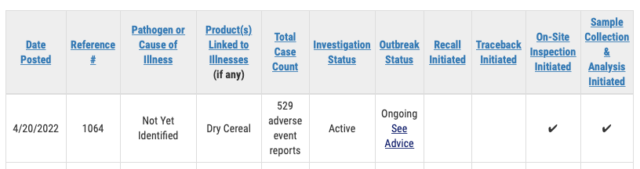
The FDA approached the issue a bit more obliquely, noting that there has not been found a pathogen or cause of the illness (now numbering 529 adverse event reports’) linked to “Dry Cereal.”

I guess I will stick with what I said to the Guardian last week:

William Marler, a lawyer who has been at the center of food safety battles for decades, isn’t convinced that the cereal is to blame for the reported illnesses. “Correlation is not necessarily causation,” he wrote in an email to the Guardian, echoing comments by colleagues elsewhere.

He noted the common experience of Googling a handful of symptoms and learning that the itch on your arm is almost definitely proof of a fatal illness. Something similar may be happening here, Marler suggests.

“People try to connect the dots between something that’s happening and something that’s known, but the connection may not necessarily be accurate,” he said in a phone interview.

“There are hundreds of thousands of people today in the United States that are having vomiting and diarrhea, from a bunch of different causes. And it also may be happening that some of those thousandsof people also happen to eat Lucky Charms. And now they’re seeing it in the news and they’re going: ‘Hey, wait a second. I had diarrhea a week ago, and I ate Lucky Charms. Therefore, it had to be the Lucky Charms.’”

In some cases, many of the complainants may be right about the link between their symptoms and a particular food product – while many others are wrong about the same thing. He describes a 2007 case in which several hundred people got sick from salmonella detected in Peter Pan peanut butter jars. “But we got 5,000 phone calls … And the vast majority of them were people who go, ‘Well, no, I didn’t have any medical treatment,’” he said.

“You knew that there was a clear outbreak link to a product. But then you still had thousands of people presuming that they got sick from eating the product. And they probably did not.”

That’s not at all to suggest that people are making up their symptoms or trying to “game the system” – just that it’s very challenging to ascertain the source. “That’s why foodborne illness cases are sometimes really, really difficult to figure out,” he said. Without “solid epidemiological evidence – you have stool culture, you have purchase history, you have the product testing positive, you have, unfortunately, lots of people getting sick, so you can tell the common denominator of what it is – it’s kind of hard to put it together.”

And of course, some people posting online about a connection between their symptoms and a source are absolutely right, and social media such as iwaspoisoned.com can be a useful tool for getting to the root of a problem. Marler once got a call from a customer saying she’d gotten salmonella from a Los Angeles restaurant and posted about it on Yelp – where dozens of others had said the same thing on the same day. “Ultimately, the Yelp review was correct,” he said. “It was an early warning system for getting the health department to act.”

As for the Lucky Charms, Marler says he’d like to see some more hard evidence – testing of products, clear diagnoses of customers’ illnesses – to learn more.

I’ll still go with “Magically Suspicious.

“In the United States, Escherichia coli O157:H7 causes ≈73,000 infections and 60 deaths annually (1). Infection progresses to hemolytic uremic syndrome (HUS) in 2% to 15% of cases (2).”

UPDATE: In France, STEC surveillance is based only on HUS in children younger than 15, so it only catches the most severe cases of E. coli infection – LINK

According to Sante Publique reports, as of 04/25/2022, 55 confirmed cases have been identified, of which 53 are linked to STEC O26 strains, and 2 to STEC O103 strains. Earlier reports on 04/13/2022, indicated that another 26 other cases of HUS and STEC infections notified to Public Health France with investigations are ongoing. The 54 sick children are aged from 1 to 17 years with a median age of 7 years; 24 (44%) are female; 47 (87%) presented with HUS, 7 (13%) with STEC gastroenteritis. Two children died. The adult did not present with HUS.

The epidemiological, microbiological and traceability investigations carried out since that date have confirmed a link between the occurrence of these grouped cases and the consumption of frozen pizzas from the Nestlé Buitoni brand Fraîch’Up contaminated with STEC bacteria.

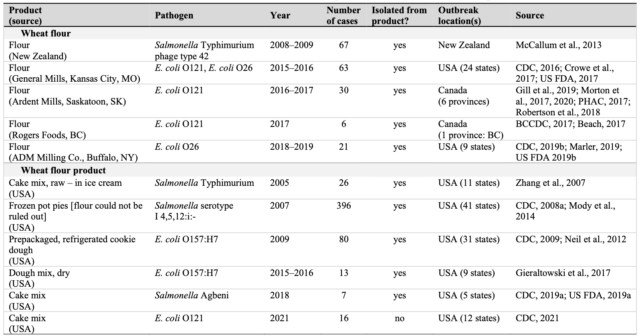
There is something wrong with the Santa Publique E. coli numbers.  Given that there are now at least 47 with hemolytic uremic syndrome (HUS), you would expect to see that the total number of ill would be closer to 500.  It appears that Santa Publique is counting the HUS cases primarily, leaving the STEC gastroenteritis cases relatively uncounted.  There should not be a 87% HUS to 14% STEC gastroenteritis ration – it should at the minimum be reversed, as cited above and as shown in the below E. coli flour outbreaks in the US.

These 55 cases occurred in 54 children and 1 adult, who presented symptoms between 18/01/2022 (week 3) and 25/03/2022 (week 12). The epidemic peak is in week 7 (14/02 to 20/02) and week 9 (28/02 to 06/03), with 10 cases each of these weeks. These 55 cases occurred in 12 regions of metropolitan France: Hauts-de-France (12 cases), Ile-de-France (9 cases), New Aquitaine (8 cases), Pays de la Loire (7 cases), Brittany ( 6 cases), Grand Est (3 cases), Auvergne-Rhône-Alpes (2 cases), Occitanie (2 cases), Provence-Alpes-Côte d’Azur (2 cases), Center Val-de-Loire (2 cases) , Bourgogne Franche-Comté (1 case) and Normandy (1 case).

So, why is flour the likely vector of this E. coli Outbreak?

According to the CDC, flour doesn’t look like a raw food, but most flour is raw. That means it hasn’t been treated to kill germs that cause food poisoning, such as E. coli. These harmful germs can contaminate grain while it’s still in the field or flour while it’s being made. Steps like grinding grain and bleaching flour don’t kill harmful germs—and these germs can end up in flour or baking mixes you buy at the store. You can get sick if you eat unbaked dough or batter made with flour containing germs.

We have seen these flour E. coli Outbreaks several times over the last “Baker’s Dozen” years.

Nestle Toll House Cookie Dough: As of Tuesday, June 30, 2009, 72 persons infected with a strain of E. coli O157:H7 with a particular DNA fingerprint have been reported from 30 states. Of these, 51 have been confirmed by an advanced DNA test as having the outbreak strain; these confirmatory test results are pending on the others. The number of ill persons identified in each state is as follows: Arizona (2), California (3), Colorado (6), Connecticut (1), Delaware (1), Georgia (1), Iowa (2), Illinois (5), Kentucky (2), Massachusetts (4), Maryland (2), Maine (3), Minnesota (6), Missouri (1), Montana (1), North Carolina (2), New Hampshire (2), New Jersey (1), Nevada (2), New York (1), Ohio (3), Oklahoma (1), Oregon (1), Pennsylvania (2), South Carolina (1), Texas (3), Utah (4), Virginia (2), Washington (6), and Wisconsin (1). Ill persons range in age from 2 to 65 years; however, 65% are less than 19 years old; 71% are female. Thirty-four persons have been hospitalized, 10 developed hemolytic uremic syndrome (HUS); none have died. Reports of these infections increased above the expected baseline in May and continue into June.

Flour: As of September 5, 2016, 63 people infected with the outbreak strains of STEC O121 or STEC O26 were reported from 24 states: Alabama (1), Arkansas (1), Arizona (3), California (3), Colorado (4), Iowa (2), Illinois (4), Indiana (1), Massachusetts (3), Maryland (1), Michigan (4),  Minnesota (7), Missouri (1), Montana (2), Nebraska (1), New York (4), Oklahoma (3), Oregon (1), Pennsylvania (2),  Tennessee (1), Texas (2), Virginia (3), Washington (5) and Wisconsin (4). Illnesses started on dates ranging from December 21, 2015 to September 5, 2016. Ill people range in age from 1 year to 95, with a median age of 18. Seventy-six percent of ill people were female. Seventeen ill people were hospitalized. One person developed hemolytic uremic syndrome, a type of kidney failure, and no deaths were reported.

All Purpose Flour: As of July 11, 2019, a total of 21 people infected with the outbreak strain of E. coli O26 were reported from 9 states: California (1), Connecticut (1), Massachusetts (2), Missouri (1), New Jersey (1), New York (7), Ohio (5), Pennsylvania (2) and Rhode Island (1).Illnesses started on dates ranging from December 11, 2018 to May 21, 2019. Ill people range in age from 7 to 86 years, with a median age of 24. Seventy-one percent of ill people were female. Of 20 people with information available, 3 (15%) were hospitalized. No deaths were reported.

Cake Mix: As of July 27, 2021, 16 people infected with the outbreak strain of E. coli O121 have been reported from 12 states: Illinois (2), Indiana (1), Iowa (2), Massachusetts (1), Michigan (1), Nebraska (2), Ohio (2), Oregon (1), South Carolina (1), Utah (1),  Virginia (1) and Washington (1). Illnesses started on dates ranging from February 26, 2021 to June 21, 2021. Sick people range in age from 2 to 73 years, with a median age of 13, and 100% are female. Of 16 people with information available, 7 have been hospitalized. One person has developed a type of kidney failure called hemolytic uremic syndrome (HUS), and no deaths have been reported.


1. Mead PS, Slutsker L, Dietz V, McCaig LF, Bresee JS, Shapiro C, et al. Food-related illness in the United States. Emerg Infect Dis. 1999;5:607–25. 10.3201/eid0505.990502.
2. Dundas S, Todd WT, Stewart AI, Murdoc PS, Chaudhuri AKR, Hutchinson SJ. The central Scotland Escherichia coli O157:H7 outbreak: risk factors for hemolytic uremic syndrome and death among hospitalized patients. Clin Infect Dis. 2001;33:923–31. 10.1086/322598.

And, there have been more outbreaks and recalls.

The E. coli lawyers of Marler Clark have represented thousands of victims of E. coli and other foodborne illness infections and have recovered over $800 million for clients. Marler Clark is the only law firm in the nation with a practice focused exclusively on foodborne illness litigation.  Our E. coli lawyers have litigated E. coli and HUS cases stemming from outbreaks traced to ground beef, raw milk, lettuce, spinach, sprouts, and other food products.  The law firm has brought E. coli lawsuits against such companies as Jack in the Box, Dole, ConAgra, Cargill, and Jimmy John’s.  We have proudly represented such victims as Brianne KinerStephanie Smith and Linda Rivera.

If you or a family member became ill with an E. coli infection or HUS after consuming food and you’re interested in pursuing a legal claim, contact the Marler Clark E. coli attorneys for a free case evaluation.

Additional Resources:

According to Sante Publique reports, as of 04/27/2022: 59 cases of salmonellosis with a strain belonging to the epidemic, Salmonella Typhimurium, have been identified by the National Reference Center (CNR) for salmonella at the Institute Pasteur in France.

The 59 cases are spread over 11 regions (Ile-de-France (11 cases), Grand-Est (10 cases), Provence-Alpes-Côte d’Azur (9 cases), Auvergne-Rhône-Alpes (7 cases), Hauts-de-France (6 cases), Bourgogne-Franche-Comté (4 cases), Normandy (4 cases), New Aquitaine (3 cases), Brittany (2 cases), Occitanie (2 cases), and Corsica (1 case), with a median age of 3 years, and concern 29 boys and 30 girls.

Forty-two cases were able to be questioned by Public Health France. All the cases report, before the onset of their symptoms (which occurred between 20/01 and 31/03/2022), the consumption of Kinder brand chocolates. Seventeen people were hospitalized for their salmonellosis, all since discharged. No deaths were reported.

Kinder Egg products and Schoko-Bons should not be eaten.

As a result of the continued investigation into an outbreak of salmonella cases linked to Kinder products, Ferrero has extended its recall to include all Kinder products manufactured at their Arlon site in Belgium between June and the present date.

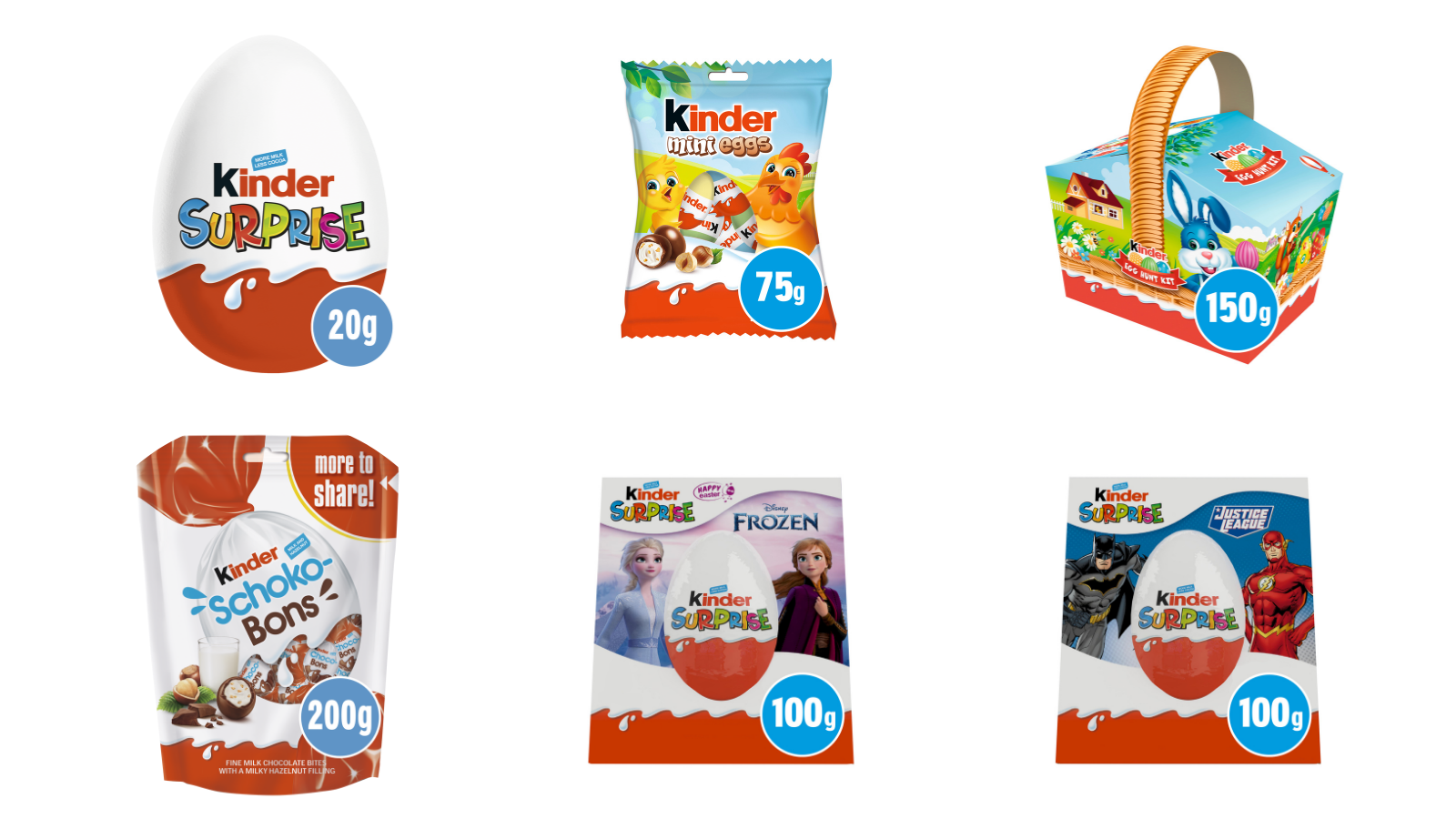
These include Kinder Surprise, Kinder Mini Eggs, Kinder Surprise 100g and Kinder Schokobons.

The new update means all the products in the recall notice, regardless of best-before date, should not be eaten. The previous recall only covered products with best-before dates up to 7 October 2022.

Kinder product recall items

As of 04/22/22, According to EU health officials: The outbreak is characterized by an unusually high proportion of children being hospitalized, some with severe clinical symptoms such as bloody diarrhea. Based on interviews with patients and initial analytical epidemiological studies, specific chocolate products (Kinder) have been identified as the likely route of infection. Affected cases have been identified through advanced molecular typing techniques. As this method of testing is not routinely performed in all countries, some cases may be undetected.

Kinder chocolate product recalls have been launched globally and examples of these can be found on several countries web sites including Belgium, France, Germany, Ireland, Luxembourg, Netherlands, Norway, and the UK. The recalls aim to prevent the consumption of products potentially contaminated with Salmonella. Further investigations are being conducted by public health and food safety authorities in countries where cases are reported, to identify the cause and the extent of the contamination, and to ensure contaminated products are not put on the market.

There has been 1 case reported in the United Sates to date.

According to Sante Publique reports, as of 04/27/2022: 59 cases of salmonellosis with a strain belonging to the epidemic, Salmonella Typhimurium, have been identified by the National Reference Center (CNR) for salmonella at the Institute Pasteur in France.

The 59 cases are spread over 11 regions (Ile-de-France (11 cases), Grand-Est (10 cases), Provence-Alpes-Côte d’Azur (9 cases), Auvergne-Rhône-Alpes (7 cases), Hauts-de-France (6 cases), Bourgogne-Franche-Comté (4 cases), Normandy (4 cases), New Aquitaine (3 cases), Brittany (2 cases), Occitanie (2 cases), and Corsica (1 case), with a median age of 3 years, and concern 29 boys and 30 girls.

Forty-two cases were able to be questioned by Public Health France. All the cases report, before the onset of their symptoms (which occurred between 20/01 and 31/03/2022), the consumption of Kinder brand chocolates. Seventeen people were hospitalized for their salmonellosis, all since discharged. No deaths were reported.

According to the World Health Organization (WHO), as of 25 April 2022, a total of 151 genetically related cases of S. Typhimurium suspected to be linked to the consumption of the implicated chocolate products have been reported from 11 countries (Figure 1): Belgium (26 cases), France (25 cases), Germany (10 cases), Ireland (15 cases), Luxembourg (1 case), the Netherlands (2 cases), Norway (1 case), Spain (1 case), Sweden (4 cases), the United Kingdom (65 cases) and the United States of America (1 case).

Salmonella:  Marler Clark, The Food Safety Law Firm, is the nation’s leading law firm representing victims of Salmonella outbreaks. The Salmonella lawyers of Marler Clark have represented thousands of victims of Salmonella and other foodborne illness outbreaks and have recovered over $800 million for clients.  Marler Clark is the only law firm in the nation with a practice focused exclusively on foodborne illness litigation.  Our Salmonella lawyers have litigated Salmonella cases stemming from outbreaks traced to a variety of foods, such as cantaloupe, tomatoes, ground turkey, salami, sprouts, cereal, peanut butter, and food served in restaurants.  The law firm has brought Salmonella lawsuits against such companies as Cargill, ConAgra, Peanut Corporation of America, Sheetz, Taco Bell, Subway and Wal-Mart.

If you or a family member became ill with a Salmonella infection, including Reactive Arthritis or Irritable bowel syndrome (IBS), after consuming food and you’re interested in pursuing a legal claim, contact the Marler Clark Salmonella attorneys for a free case evaluation.

Additional Resources:

The UK Health Security Agency (UKHSA) is continuing to investigate an ongoing outbreak of salmonella linked to certain Kinder products made in one of Ferrero’s factories, in Arlon, Belgium.

We are working with the Food Standards Agency, Food Standards Scotland, Public Health Scotland, Public Health Wales, Public Health Agency Northern Ireland, as well as international public health and food safety authorities, to ensure that the risk to public health is minimised as far as possible.

As of  April 29, 2022, there are 76 cases linked to this outbreak in the UK. The majority of the cases are children under 5 years of age.

Kinder Egg products and Schoko-Bons should not be eaten.

As a result of the continued investigation into an outbreak of salmonella cases linked to Kinder products, Ferrero has extended its recall to include all Kinder products manufactured at their Arlon site in Belgium between June and the present date.

These include Kinder Surprise, Kinder Mini Eggs, Kinder Surprise 100g and Kinder Schokobons.

The new update means all the products in the recall notice, regardless of best-before date, should not be eaten. The previous recall only covered products with best-before dates up to 7 October 2022.

Kinder product recall items

As of 04/22/22, According to EU health officials: The outbreak is characterized by an unusually high proportion of children being hospitalized, some with severe clinical symptoms such as bloody diarrhea. Based on interviews with patients and initial analytical epidemiological studies, specific chocolate products (Kinder) have been identified as the likely route of infection. Affected cases have been identified through advanced molecular typing techniques. As this method of testing is not routinely performed in all countries, some cases may be undetected.

Kinder chocolate product recalls have been launched globally and examples of these can be found on several countries web sites including Belgium, France, Germany, Ireland, Luxembourg, Netherlands, Norway, and the UK. The recalls aim to prevent the consumption of products potentially contaminated with Salmonella. Further investigations are being conducted by public health and food safety authorities in countries where cases are reported, to identify the cause and the extent of the contamination, and to ensure contaminated products are not put on the market.

There has been 1 case reported in the United Sates to date.

According to Sante Publique reports, as of 04/27/2022: 59 cases of salmonellosis with a strain belonging to the epidemic, Salmonella Typhimurium, have been identified by the National Reference Center (CNR) for salmonella at the Institute Pasteur in France.

The 59 cases are spread over 11 regions (Ile-de-France (11 cases), Grand-Est (10 cases), Provence-Alpes-Côte d’Azur (9 cases), Auvergne-Rhône-Alpes (7 cases), Hauts-de-France (6 cases), Bourgogne-Franche-Comté (4 cases), Normandy (4 cases), New Aquitaine (3 cases), Brittany (2 cases), Occitanie (2 cases), and Corsica (1 case), with a median age of 3 years, and concern 29 boys and 30 girls.

Forty-two cases were able to be questioned by Public Health France. All the cases report, before the onset of their symptoms (which occurred between 20/01 and 31/03/2022), the consumption of Kinder brand chocolates. Seventeen people were hospitalized for their salmonellosis, all since discharged. No deaths were reported.

According to the World Health Organization (WHO), as of 25 April 2022, a total of 151 genetically related cases of S. Typhimurium suspected to be linked to the consumption of the implicated chocolate products have been reported from 11 countries (Figure 1): Belgium (26 cases), France (25 cases), Germany (10 cases), Ireland (15 cases), Luxembourg (1 case), the Netherlands (2 cases), Norway (1 case), Spain (1 case), Sweden (4 cases), the United Kingdom (65 cases) and the United States of America (1 case).

Salmonella:  Marler Clark, The Food Safety Law Firm, is the nation’s leading law firm representing victims of Salmonella outbreaks. The Salmonella lawyers of Marler Clark have represented thousands of victims of Salmonella and other foodborne illness outbreaks and have recovered over $800 million for clients.  Marler Clark is the only law firm in the nation with a practice focused exclusively on foodborne illness litigation.  Our Salmonella lawyers have litigated Salmonella cases stemming from outbreaks traced to a variety of foods, such as cantaloupe, tomatoes, ground turkey, salami, sprouts, cereal, peanut butter, and food served in restaurants.  The law firm has brought Salmonella lawsuits against such companies as Cargill, ConAgra, Peanut Corporation of America, Sheetz, Taco Bell, Subway and Wal-Mart.

If you or a family member became ill with a Salmonella infection, including Reactive Arthritis or Irritable bowel syndrome (IBS), after consuming food and you’re interested in pursuing a legal claim, contact the Marler Clark Salmonella attorneys for a free case evaluation.

Additional Resources:

How confident should we feel with this waring from the FDA:

“those seeking access [to the formula] should consult with their healthcare provider in considering whether the benefit of consuming such product outweighs the potential risk of bacterial infection in the user’s particular circumstances.”

Linked to Cronobacter sakazakii to date:

Illnesses: 4

Deaths: 2

States: 3 (Minnesota, Ohio, Texas)

Perhaps read these first?

Here is the most recent inspection report at the plant – APPLIED – FOI II – BR Abbott Nutritions- FEI# 1815692 9-2021 EIR.

Here are the whistleblower documents – Redacted Confidential Disclosure re Abbott Laboratories – 10-19-2021_Redacted (1)

The U.S. Food and Drug Administration (FDA), along with the Centers for Disease Control and Prevention (CDC) and state and local partners are investigating consumer complaints and/or reports of infant illness, received from 9/20/2021 to 1/11/2022, related to products from Abbott Nutrition’s Sturgis, MI, facility. The four ill patients are reported to have consumed powdered infant formula produced from Abbott Nutrition’s Sturgis, MI, facility.

Following the voluntary recall and hold of certain powdered infant formula products produced at the Abbott Nutrition facility in Sturgis, MI, Abbott has committed to completing enhanced testing of stored product batches prior to making release determinations. While the FDA recognizes that Abbott has conducted standard product testing, there were a limited number of samples tested. Additionally, although finished product testing does not eliminate the risk of contamination, the enhanced testing will provide for a greater chance to detect Cronobacter sakazakii, if present; however, this enhanced level of testing will take additional time.

In the meantime, the FDA has informed Abbott Nutrition that the agency has no objection to the company immediately releasing product to individuals needing urgent, life-sustaining supplies of the specialty and metabolic formulas listed below on a case-by-case basis. The FDA is concerned that the risk of not having certain specialty and metabolic products available could significantly worsen underlying medical conditions and in some cases pose life-threatening risks for infants and individuals who rely on these products. In these circumstances, the benefit of allowing parents, in consultation with their healthcare providers, to access these products may outweigh the potential risk of bacterial infection.

Abbott has confirmed with the FDA that the company will consider release of these products on a case-by-case basis, depending on product availability and the severity of the individual’s need. Patients and caregivers seeking access to these products should contact Abbott directly to request that a product be made available to them by calling 1-800-881-0876.

It is important for parents and caregivers to understand that any products released on a case-by-case basis at this time were made at Abbott Nutrition’s Sturgis, MI, facility, and that the processes, procedures, and conditions that the FDA observed during its inspection of the Sturgis MI production facility from January 31 – March 3, 2022, raise concerns that powdered infant formula produced at this facility prior to the FDA’s inspection carry a risk of contamination. Therefore, those seeking access should consult with their healthcare provider in considering whether the benefit of consuming such product outweighs the potential risk of bacterial infection in the user’s particular circumstances. Parents and caregivers should continue to work with their medical provider to consider whether comparable alternative products may be appropriate.

Parents and caregivers who obtain these products should carefully follow Abbott’s preparation instructions as indicated on the product container. Should product released on a case-by-case basis be used, parents and caregiver should pay close attention to the user’s health status and alert a healthcare provider immediately of any change in health status. In the meantime, the FDA is continuing to work diligently to ensure the safe resumption of production of infant formula at Abbott Nutrition’s Sturgis, Michigan facility.

Specialty and Metabolic Formulas that may be Released on a Case-By-Case Basis:

Glutarex-1
Glutarex-2
Cyclinex-1
Cyclinex-2
Hominex-1
Hominex-2
I-Valex-1
I-Valex-2
Ketonex-1
Ketonex-2
Phenex-1
Phenex-2
Phenex-2 Vanilla
Pro-Phree
Propimex-1
Propimex-2
ProViMin
Calcilo XD
Tyrex-1
Tyrex-2
Similac PM 60/40

The FDA is advising consumers not to use recalled Similac, Alimentum, or EleCare powdered infant formulas. Recalled products can be identified by the 7 to 9 digit code and expiration date on the bottom of the package (see image below). Products are included in the recall if they have all three items below:

the first two digits of the code are 22 through 37 and
the code on the container contains K8, SH, or Z2, and
the expiration date is 4-1-2022 (APR 2022) or later.

In addition to products described above, Abbott Nutrition has recalled Similac PM 60/40 with a lot code 27032K80 (can) / 27032K800 (case). At this time, Similac PM 60/40 with lot code 27032K80 (can) / 27032K800 (case) is the only type and lot of this specialty formula being recalled. Additional recall information for the initial recall is available on the FDA website. Parents can also enter their product lot code on the company’s websiteExternal Link Disclaimer to check if it is part of the recall.

According to Sante Publique reports, as of 04/25/2022, 55 confirmed cases have been identified, of which 53 are linked to STEC O26 strains, and 2 to STEC O103 strains. Earlier reports on 04/13/2022, indicated that another 26 other cases of HUS and STEC infections notified to Public Health France with investigations are ongoing.

These 55 cases occurred in 54 children and 1 adult, who presented symptoms between 18/01/2022 (week 3) and 25/03/2022 (week 12). The epidemic peak is in week 7 (14/02 to 20/02) and week 9 (28/02 to 06/03), with 10 cases each of these weeks. These 55 cases occurred in 12 regions of metropolitan France: Hauts-de-France (12 cases), Ile-de-France (9 cases), New Aquitaine (8 cases), Pays de la Loire (7 cases), Brittany ( 6 cases), Grand Est (3 cases), Auvergne-Rhône-Alpes (2 cases), Occitanie (2 cases), Provence-Alpes-Côte d’Azur (2 cases), Center Val-de-Loire (2 cases) , Bourgogne Franche-Comté (1 case) and Normandy (1 case).

The 54 sick children are aged from 1 to 17 years with a median age of 7 years; 24 (44%) are female; 47 (87%) presented with HUS, 7 (13%) with STEC gastroenteritis. Two children died. The adult did not present with HUS.

The epidemiological, microbiological and traceability investigations carried out since that date have confirmed a link between the occurrence of these grouped cases and the consumption of frozen pizzas from the Buitoni brand Fraîch’Up range contaminated with STEC bacteria.

The total number of cases of HUS linked to the consumption of these pizzas seems to have stabilized since the withdrawal-recall.

French prosecutors have searched a Buitoni frozen pizza factory in northern France, the suspected source of an E. coli outbreak, as well as the headquarters of its owner Nestle France.

An investigation into involuntary manslaughter and deceitful practices was opened on 1 April.

The search at the Caudry factory operated by Buitoni, which is owned by the Swiss food conglomerate Nestle, was confirmed by a police source and the Paris prosecutor’s office, which is leading the investigation.

Nestle France, whose headquarters outside Paris were also raided, announced a recall of the affected Fraich’UP pizzas on March 18, and authorities ordered a halt of their production at Caudry after carrying out two hygiene inspections. The inspections “revealed a deterioration of food hygiene controls”, the presence of “rodents” and “insufficient measures to prevent pests from contaminating a food production site.”

Marler Clark, The Food Safety Law Firm, is the nation’s leading law firm representing victims of E. coli outbreaks and hemolytic uremic syndrome (HUS). The E. coli lawyers of Marler Clark have represented thousands of victims of E. coli and other foodborne illness infections and have recovered over $800 million for clients. Marler Clark is the only law firm in the nation with a practice focused exclusively on foodborne illness litigation.  Our E. coli lawyers have litigated E. coli and HUS cases stemming from outbreaks traced to ground beef, raw milk, lettuce, spinach, sprouts, and other food products.  The law firm has brought E. coli lawsuits against such companies as Jack in the Box, Dole, ConAgra, Cargill, and Jimmy John’s.  We have proudly represented such victims as Brianne Kiner, Stephanie Smith and Linda Rivera.

If you or a family member became ill with an E. coli infection or HUS after consuming food and you’re interested in pursuing a legal claim, contact the Marler Clark E. coli attorneys for a free case evaluation.

Additional Resources:

United Kingdom and France have most illnesses to date.

As of 04/22/22, According to EU health officials: The outbreak is characterized by an unusually high proportion of children being hospitalized, some with severe clinical symptoms such as bloody diarrhea. Based on interviews with patients and initial analytical epidemiological studies, specific chocolate products (Kinder) have been identified as the likely route of infection. Affected cases have been identified through advanced molecular typing techniques. As this method of testing is not routinely performed in all countries, some cases may be undetected.

Kinder chocolate product recalls have been launched globally and examples of these can be found on several countries web sites including Belgium, France, Germany, Ireland, Luxembourg, Netherlands, Norway, and the UK. The recalls aim to prevent the consumption of products potentially contaminated with Salmonella. Further investigations are being conducted by public health and food safety authorities in countries where cases are reported, to identify the cause and the extent of the contamination, and to ensure contaminated products are not put on the market.

There has been 1 case reported in the United Sates to date.

According to Sante Publique reports, as of 04/27/2022: 59 cases of salmonellosis with a strain belonging to the epidemic, Salmonella Typhimurium, have been identified by the National Reference Center (CNR) for salmonella at the Institute Pasteur in France.

The 59 cases are spread over 11 regions (Ile-de-France (11 cases), Grand-Est (10 cases), Provence-Alpes-Côte d’Azur (9 cases), Auvergne-Rhône-Alpes (7 cases), Hauts-de-France (6 cases), Bourgogne-Franche-Comté (4 cases), Normandy (4 cases), New Aquitaine (3 cases), Brittany (2 cases), Occitanie (2 cases), and Corsica (1 case), with a median age of 3 years, and concern 29 boys and 30 girls.

Forty-two cases were able to be questioned by Public Health France. All the cases report, before the onset of their symptoms (which occurred between 20/01 and 31/03/2022), the consumption of Kinder brand chocolates. Seventeen people were hospitalized for their salmonellosis, all since discharged. No deaths were reported.

According to the World Health Organization (WHO), as of 25 April 2022, a total of 151 genetically related cases of S. Typhimurium suspected to be linked to the consumption of the implicated chocolate products have been reported from 11 countries (Figure 1): Belgium (26 cases), France (25 cases), Germany (10 cases), Ireland (15 cases), Luxembourg (1 case), the Netherlands (2 cases), Norway (1 case), Spain (1 case), Sweden (4 cases), the United Kingdom (65 cases) and the United States of America (1 case).

Salmonella Chocolate: According to Sante Publique reports, as of 04/27/2022: 59 cases of salmonellosis with a strain belonging to the epidemic, Salmonella Typhimurium, have been identified by the National Reference Center (CNR) for salmonella at the Institute Pasteur in France.

The 59 cases are spread over 11 regions (Ile-de-France (11 cases), Grand-Est (10 cases), Provence-Alpes-Côte d’Azur (9 cases), Auvergne-Rhône-Alpes (7 cases), Hauts-de-France (6 cases), Bourgogne-Franche-Comté (4 cases), Normandy (4 cases), New Aquitaine (3 cases), Brittany (2 cases), Occitanie (2 cases), and Corsica (1 case), with a median age of 3 years, and concern 29 boys and 30 girls.

Forty-two cases were able to be questioned by Public Health France. All the cases report, before the onset of their symptoms (which occurred between 20/01 and 31/03/2022), the consumption of Kinder brand chocolates. Seventeen people were hospitalized for their salmonellosis, all since discharged. No deaths were reported.

E. coli Pizza: According to Sante Publique reports, as of 04/25/2022, 55 confirmed cases have been identified, of which 53 are linked to STEC O26 strains, and 2 to STEC O103 strains. For 26 other cases of HUS and STEC infections notified to Public Health France, investigations are ongoing.

These 55 cases occurred in 54 children and 1 adult, who presented symptoms between 18/01/2022 (week 3) and 25/03/2022 (week 12). The epidemic peak is in week 7 (14/02 to 20/02) and week 9 (28/02 to 06/03), with 10 cases each of these weeks. These 55 cases occurred in 12 regions of metropolitan France: Hauts-de-France (12 cases), Ile-de-France (9 cases), New Aquitaine (8 cases), Pays de la Loire (7 cases), Brittany ( 6 cases), Grand Est (3 cases), Auvergne-Rhône-Alpes (2 cases), Occitanie (2 cases), Provence-Alpes-Côte d’Azur (2 cases), Center Val-de-Loire (2 cases) , Bourgogne Franche-Comté (1 case) and Normandy (1 case).

The 54 sick children are aged from 1 to 17 years with a median age of 7 years; 24 (44%) are female; 47 (87%) presented with HUS, 7 (13%) with STEC gastroenteritis. Two children died. The adult did not present with HUS.

The epidemiological, microbiological and traceability investigations carried out since that date have confirmed a link between the occurrence of these grouped cases and the consumption of frozen pizzas from the Buitoni brand Fraîch’Up range contaminated with STEC bacteria.