

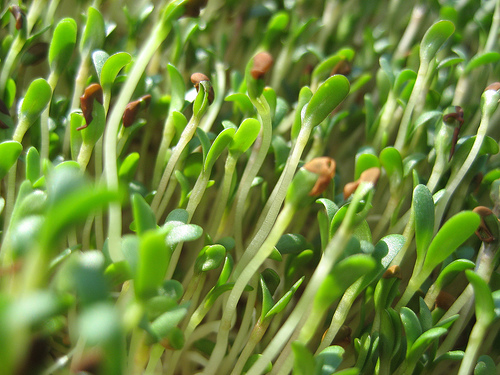
CDC updated its outbreak page today. Thirty-two people in six states are infected with the outbreak strain of Salmonella Bovismorbificans linked to broccoli sprouts grown by Evergreen Fresh Sprouts, LLC of Moyie Springs, Idaho: twenty-four in Washington, four in Montana, and one each in Idaho, Minnesota, Oregon and Utah. Three have been hospitalized. No one has died. Illnesses began between July 7 and September 3. On September 11 the count was twenty-two people in four states with two hospitalizations; Minnesota and Oregon are new, and ten people have been added. The recalled sprouts carried use-by dates of September 7 through 16, the last of which passed eight days ago, and CDC still lists the investigation as open.
Ten more people and two more states, and the two are Minnesota and Oregon
CDC’s September 24 investigation update moved the last illness onset from August 26 to September 3. Of the twenty-seven people interviewed, twenty-six reported eating sprouts or microgreens, twenty-two named broccoli sprouts, and one reported a microgreen mix containing broccoli microgreens, against a FoodNet baseline of 8.7 percent for eating any sprouts in the prior week. Three of the thirty-two have been hospitalized, 9 percent.
CDC’s map shows where sick people live, not where they bought sprouts. Confirmed distribution is still Idaho, Montana and Washington, and both the recall notice and FDA’s advisory say product may have gone further. Utah has had a case since September 9 without appearing on the distribution list, and Minnesota and Oregon now join it. The microgreen line is new too: CDC does not say who grew that mix, the recall covers broccoli sprouts only, and FDA says its investigation is ongoing to determine the source of contamination and whether additional products are affected. That is the sentence to watch.
Twenty-five of the thirty-two got sick before the first recalled bag was delivered
CDC’s onset data, exported September 22 and posted with today’s update, shows two waves. Four people got sick in the second week of July, no one for the next nineteen days, and then twenty-seven between August 2 and August 28, with the busiest single day August 19, when five people fell ill. One more began September 3.
| Week beginning | Onsets |
| July 5 | 2 |
| July 12 | 2 |
| July 19 | 0 |
| July 26 | 0 |
| August 2 | 4 |
| August 9 | 6 |
| August 16 | 9 |
| August 23 | 8 |
| August 30 | 1 |
| Total | 32 |
Illness onsets by week, Sunday through Saturday, computed from the CDC data export dated September 22, 2026 and posted with the September 24 update. The nine weeks sum to thirty-two.
Now put the recall against that curve. The company’s notice says the recalled bags were delivered to distributors between August 24 and September 2. Twenty-five of the thirty-two people were already sick by August 23, and Salmonella takes six hours to six days to make someone ill, so none of those twenty-five could have eaten a recalled bag. By its own dates the recall could account for at most the last seven illnesses. The other twenty-five ate broccoli sprouts from earlier production that was never recalled, because it had been eaten or had expired before anyone knew. That is the ordinary arithmetic of a sprout recall, and it is also why the count keeps rising after the product is gone: CDC says it usually takes three to four weeks to confirm that a sick person belongs to an outbreak, the newest onset is exactly three weeks old today, and bags with September 14 and 16 use-by dates were still on shelves after it.
Washington holds twenty-four of the thirty-two, and its own page still says twenty-one
The Washington State Department of Health last updated its page on September 17: twenty-one Washington residents in nine counties, two hospitalized, and two more broccoli sprout samples positive for the outbreak strain, one from a sick person’s home and one from a local food co-op. CDC’s map now carries twenty-four Washington residents, three the state page does not yet show. Montana’s page has not moved since September 3, when it reported two Montana residents and said local sanitarians were contacting stores one at a time to pull the sprouts; CDC has Montana at four. The state pages and CDC’s page are updated on different days by different people. Use the number attached to whichever agency you cite, and do not add state totals on top of CDC’s national count.
| County | Cases |
| Clark | 2 |
| Island | 1 |
| King | 5 |
| Skagit | 2 |
| Snohomish | 1 |
| Spokane | 3 |
| Walla Walla | 1 |
| Whatcom | 5 |
| Yakima | 1 |
| Total | 21 |
Washington cases by county of residence, as reported by the Washington State Department of Health on September 17, 2026. The nine counties sum to twenty-one.
Four positive sprout samples, 1,290 bags and one week of use-by dates
The recall Evergreen initiated on September 4 reached FDA’s recall page on September 10. It covers 215 cases of six four-ounce bags, 1,290 bags in all, UPC 8 38796 00105 1, with use-by dates of September 7, 9, 11, 14 and 16, delivered to three Washington distributors between August 24 and September 2 and sold on to stores in Idaho, Montana and Washington. The company says it stopped producing and shipping broccoli sprouts on September 4, that a third-party laboratory found Salmonella in a bag with a September 16 use-by date, and that a root cause investigation is under way.
The laboratory record is unusually strong for a sprout outbreak. Montana officials collected an unopened package from a sick person’s home, and whole genome sequencing matched it to the outbreak strain. Washington’s two samples, from the co-op and the sick person’s home, matched as well. Add the company’s own positive and there are four positive product samples. In Evergreen’s 2011 and 2014 outbreaks the product samples never matched, and epidemiology and traceback carried those investigations alone, as I wrote when FDA and CDC posted their pages on September 9. One gap in the notice remains: the company’s announcement describes bags, while CDC and Washington describe bags and clamshell containers sold through grocery stores, food co-ops and restaurants.
Evergreen’s third outbreak since 2011, and the running total is now seventy-six
In 2011, twenty-five people in five states were infected with Salmonella Enteritidis from alfalfa and spicy sprouts sold under the Evergreen Produce label. The company declined FDA’s request to recall until FDA warned the public directly, then recalled on July 1. In 2014, nineteen people in six states were infected with E. coli O121 traced to Evergreen’s raw clover sprouts, and there was no recall at all. Twenty-five plus nineteen plus thirty-two is seventy-six people over fifteen years from one grower. The history, with sources, is in my September 3 post.
Not the alfalfa outbreak, and not the only sprout recall this month
CDC says this outbreak does not appear to be related to the Salmonella and E. coli outbreak traced to alfalfa sprouts from Everything Sprouts of Minneapolis, which stands at fifty-five sick in fifteen states on FDA’s advisory. A Minnesota resident on today’s map is a state of residence, not a second link between the two: the serotypes are different, the growers are different, and the seed lots are different. That outbreak has produced its own chain of recalls, from the grower to the seed supplier to two retail seed sellers, and Evergreen’s is one of six sprout or sprouting-seed recalls posted between August 22 and September 23.
FDA has told the public not to eat raw sprouts since 1999. The bag still does not say so.
On July 9, 1999, FDA advised that anyone who wants to reduce the risk of foodborne illness should not eat raw sprouts, and that children, the elderly and people with weakened immune systems should not eat them at all. Twenty-seven years later that advice is on FDA’s website and nowhere on the package. I first asked FDA to require a warning statement on raw sprouts in March 2003, during a Salmonella outbreak traced to sprouts in Oregon, Washington and California. Two sprout outbreaks, eighty-seven sick people and six recalls in one summer are the argument, again.
What to do
Do not eat Evergreen Fresh Sprouts broccoli sprouts with use-by dates of September 7 through 16. Throw them away or return them, and wash anything they touched with hot soapy water or in a dishwasher. Restaurants and retailers should not sell or serve them. Symptoms of Salmonella usually begin six hours to six days after exposure, and most people recover in four to seven days. Call a doctor for diarrhea with a fever above 102°F, diarrhea lasting more than two days, bloody diarrhea, vomiting so severe that liquids will not stay down, or signs of dehydration. If you ate these sprouts and became ill, ask to be tested. A confirmed case is what connects a person to the outbreak, and it is where the next update’s numbers come from. Marler Clark’s page on this outbreak is here.