Packers-Seahawks.1aThe case count has continued to grow as state health officials work with Public Health — Seattle & King County along with other local, state, and federal partners on the disease investigation. The federal Centers for Disease Control and Prevention (CDC) sent its team of “disease detectives” to the state to help. Investigators are interviewing the most recent cases and comparing information to early cases, which were first reported in the spring.

Disease investigators are searching for possible contamination and exposure sources from a wide range of possible venues, including restaurants, markets, slaughter facilities, and farms/ranches. Salmonella bacteria are commonly found in animals used for food, and proper storage, handling, preparation, and cooking can help prevent the illness known as salmonellosis.

Most of the illnesses have been confirmed with the outbreak strain of Salmonella 4,5,12:I:- bacteria, and early testing shows a connection to a slaughter facility in Graham, WA. Samples were collected at Kapowsin Meats in Pierce County last week. Testing confirms the outbreak strain was present. The business, which is regulated by the United States Department of Agriculture Food Safety and Inspection Service, has cooperated with the investigation. There may be other sources and disease investigators are searching for the origin of the Salmonella bacteria in the outbreak.

The 134 cases include residents of Clark (2), Cowlitz (1), Grays Harbor (1), King (84), Kitsap (1), Mason (2), Pierce (12), Snohomish (24), Thurston (2), and Yakima (5) counties.

In May 2015 public health officials in Kenosha, Wisconsin investigated an outbreak of Salmonella linked to food purchased over Mother’s Day weekend (May 9-10) at the Supermercado Los Corrales in Kenosha. More than 70 people were reported to be ill. Thirty five patients were laboratory confirmed with Salmonella 4,5,12:I:-. Patients were infected with an indistinguishable strain. The outbreak strain was isolated in pork carnitas. The meat and food preparation areas of the facility were closed during the investigation.
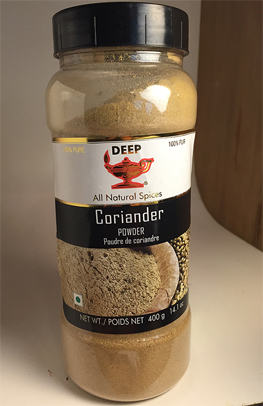
DeepCoriander_250x406Chetak New York LLC of Edison, NJ, is recalling “Deep Coriander Powder” because it has the potential to be contaminated with Salmonella.

The recalled Lot# LE15152 “Deep Coriander Powder” jars were distributed nationwide in retail store from July 30, 2015, to August 13, 2015. The product comes in a 14.1-oz. clear plastic jar marked with the UPC number 011433134347 on the rear of the package. The lot number can be located on the bottom of the jar.

No illnesses have been reported to date in connection with this problem.

The potential for contamination was noted after routine testing conducted by FDA.

My mom, Diane Marler, passed away yesterday at 3:30 PM at the age of 87. Family and friends were with her. She was an amazing mom, but even more she was a most amazing woman. She was far ahead of her time in every way. Her strength, love and smarts will never be forgotten.

IMG_2657

She was an avid reader of my blog – one of the few.  She really was not much into computers, so she made sure my staff copied and mailed to her all the posts weekly.  She would call when she caught typos and was always quick with questions about outbreaks (she was a registered nurse for over 65 years) and what was the latest food to avoid.

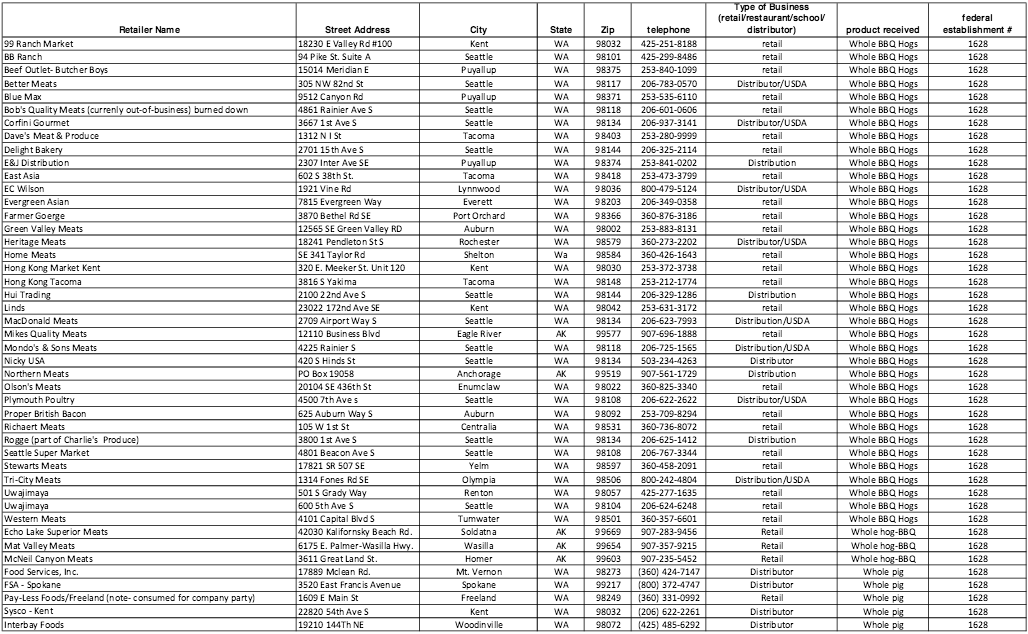
Kapowsin Meats, a Graham, Washington establishment, recalling approximately 116,262 pounds of whole hogs that may be contaminated with Salmonella I 4, [5],12:i:-, the U.S. Department of Agriculture’s Food Safety and Inspection Service (FSIS) announced days ago.  Today the FSIS published where those hogs were sold.  Here is the list:

Screen Shot 2015-08-19 at 1.29.39 PMScreen Shot 2015-08-19 at 1.29.16 PM

Last week, Blue Bell announced the return of its products after a three month halt in production due to listeria contamination. While many Texans rejoiced on Twitter, not all consumers are rushing to get that familiar wooden spoon in hand. Reports over the past few months reveal that Blue Bell knew of the listeria contamination as far back as 2013 and the ice cream is now connected to 10 illnesses and 3 deaths. This month we talked to food safety attorney Bill Marler about the steps Blue Bell took leading up to the listeria outbreak and its long journey back into the public’s good graces.

http://www.texaswatch.org/2015/08/episode-seven-end-of-the-good-ol-days-part-22/

Texas-Tells-Logo-Slider-370-x-230

Indiana-Health-DepartmentThe Indiana State Department of Health has confirmed E. coli O157:H7 infection in three individuals as part of an investigation into reports of diarrheal illness in three northern Indiana counties. The cases are among a total of six illnesses currently being investigated. Some, but not all, are linked to exposure at an unnamed daycare facility. ISDH is working with public health officials in Fulton, Wabash, and Marshall counties to determine the cause of illness in the three other individuals, and to monitor for diarrheal illness in family members or others who may have been in contact with all six individuals who became ill. The six cases currently being investigated include one death.

epi-curve-08-2015-new-300x140The Washington State Department of Health (DOH) and Public Health of Seattle & King County (SKC), with CDC and the U.S. Department of Agriculture’s Food Safety and Inspection Service (USDA-FSIS), are investigating an outbreak of Salmonella I 4,[5],12:i:- infections linked to pork. A total of 134 ill people infected with the outbreak strains of Salmonella I 4,[5],12:i:- have been reported from Washington. Among people for whom information is available, illnesses started on dates ranging from April 25, 2015 to August 1, 2015. Ill people range in age from 1 year to 90, with a median age of 35. Forty-six percent of ill people are female. Among 111 ill people with available information, 16 (14%) report being hospitalized. No deaths have been reported.

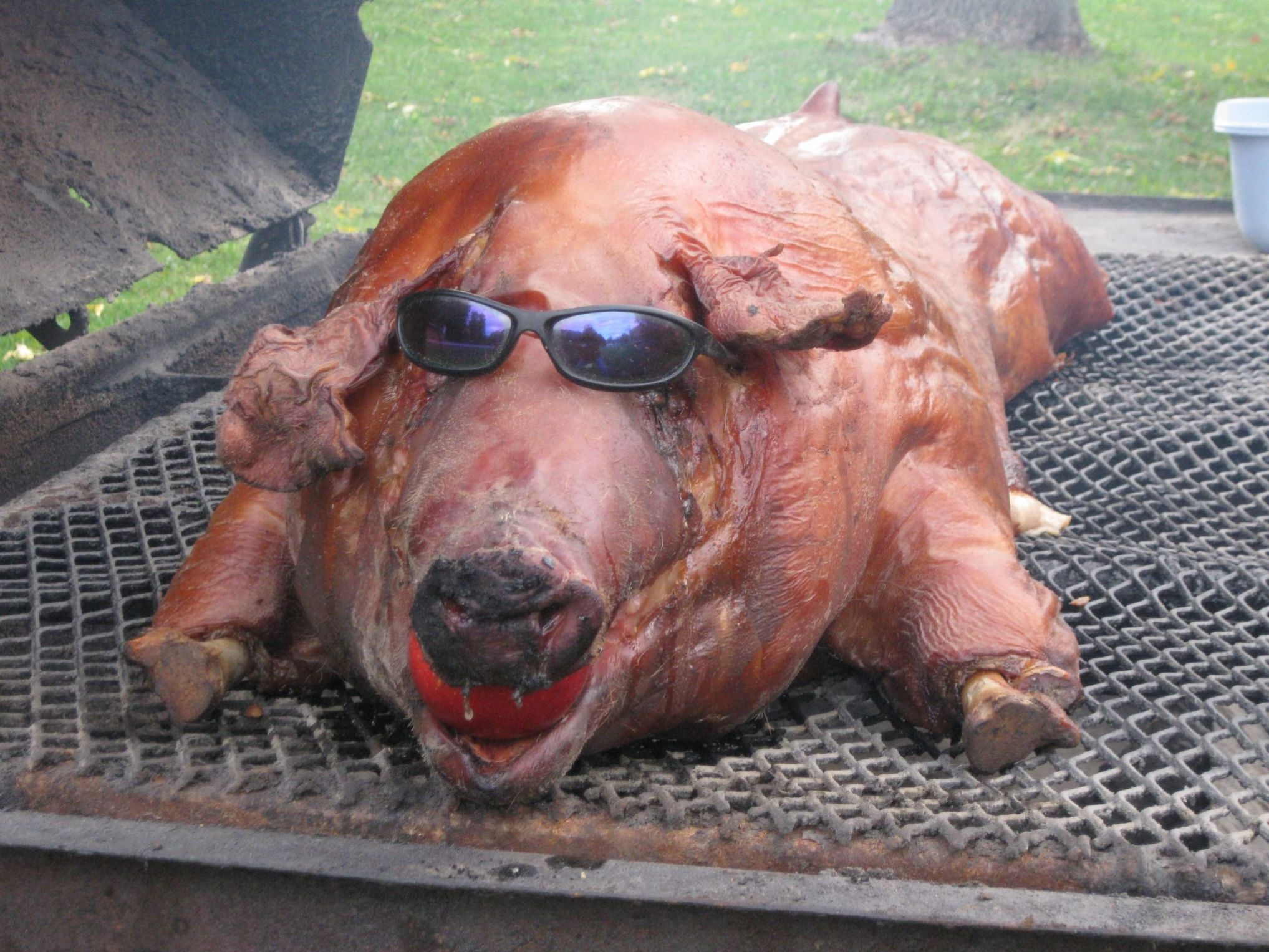
z2012PigRoast RS 038As was reported in the Seattle Times: “The onus falls back on the person who buys that pork product,” Dr. Scott Lindquist, state epidemiologist,, adding later: “No matter what we find and how we find it, the onus is on the consumer to prevent illness.”

As I would have said if asked: “Consumers and their families should not be the last line of defense if producers can not keep pig feces of the meat.”

Which, if you  think about it – it is why there is a recall.

Kapowsin Meats, a Graham, Wash. establishment, is recalling approximately 116,262 pounds of whole hogs that may be contaminated with Salmonella I 4, [5],12:i:-, the U.S. Department of Agriculture’s Food Safety and Inspection Service (FSIS) announced today.

The whole hogs for barbeque item were produced on various dates between April 18, 2015 and July 27, 2015. The following products are subject to recall:

  • Varying weights of Whole Hogs for Barbeque

The product subject to recall bears the establishment number “Est. 1628” inside the USDA mark of inspection. The product was shipped to various individuals, retail locations, institutions, and distributors in Alaska and Washington.

On July 15, 2015, the Washington State Department of Health notified FSIS of an investigation of Salmonella I 4,[5],12:i:- illnesses. Working in conjunction with the Washington State Department of Health and the Centers for Disease Control and Prevention (CDC), FSIS determined that there is a link between whole hogs for barbeque from Kapowsin Meats and these illnesses. Traceback investigation has identified 32 case-patients who consumed whole hogs for barbeque from this establishment prior to illness onset. These illnesses are part of a larger illness investigation. Based on epidemiological evidence, 134 case-patients have been identified in Washington with illness onset dates ranging from April 25, 2015 to July 29, 2015. The 134 cases include residents of Clark (2), Cowlitz (1), Grays Harbor (1), King (84), Kitsap (1), Mason (2), Pierce (12), Snohomish (24), Thurston (2), and Yakima (5) counties.

tjss-logo-whiteThis just popped into my inbox a few moments ago – you should think of joining:

Dear member:

We are happy to announce that our new website was launched today and can be found here. The website features news about the Society and information about John Snow and the cholera epidemic of 1854.  It provides a mechanism to become a member on-line, and to update your contact details if you are already a member.  It will also be possible to order John Snow items (mugs etc) through the site.

We are also delighted to announce the publication today of the latest Broadsheet. You can view it here.  The new website not only has a link to the 2015 broadsheet but also provides an archive of many of the earlier Broadsheets.

Finally, this year’s John Snow Pumphandle Lecture will be held on the 8 October in the John Snow Lecture Theatre at the London School of Hygiene and Tropical Medicine.  The 2015 lecturer is Dr Atul Gawande whose subject will be ‘On Removing the Pumphandle: Innovation in Implementation’.  As we expect a high turnout for this lecture, we have instituted a booking system.  This is free and on-line.  We recommend booking early by clicking here. Members will have priority booking until 1 September, after which tickets will be on general release.  Further details can be found in the 2015 Broadsheet.

Kind regards,

The John Snow Society

illustration-of-structure-of-salmonella-b-john-bavosiThe Salmonella outbreak linked to pork products has grown to 134 cases in 10 counties around the state. Consumers are advised to cook pork thoroughly.

The case count has continued to grow as state health officials work with Public Health — Seattle & King County along with other local, state, and federal partners on the disease investigation. The federal Centers for Disease Control and Prevention (CDC) sent its team of “disease detectives” to the state to help. Investigators are interviewing the most recent cases and comparing information to early cases, which were first reported in the spring.

Disease investigators are searching for possible contamination and exposure sources from a wide range of possible venues, including restaurants, markets, slaughter facilities, and farms/ranches. Salmonella bacteria are commonly found in animals used for food, and proper storage, handling, preparation, and cooking can help prevent the illness known as salmonellosis.

Most of the illnesses have been confirmed with the outbreak strain of Salmonella bacteria, and early testing shows a connection to a slaughter facility in Graham, WA. Samples were collected at Kapowsin Meats in Pierce County last week. Testing confirms the outbreak strain was present. The business, which is regulated by the United States Department of Agriculture Food Safety and Inspection Service, has cooperated with the investigation. There may be other sources and disease investigators are searching for the origin of the Salmonella bacteria in the outbreak.

The 134 cases include residents of Clark (2), Cowlitz (1), Grays Harbor (1), King (84), Kitsap (1), Mason (2), Pierce (12), Snohomish (24), Thurston (2), and Yakima (5) counties.

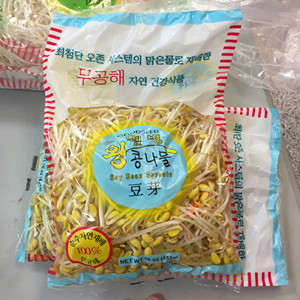
Good-Seed-Soy-Bean-Sprouts-label-300x300In the third such recall this year, Good Seed Inc. of Springfield, VA, is recalling all packages of soybean sprouts and mung bean sprouts because they have the potential to be contaminated with Listeria monocytogenes.

Elaine Lidholm, director of communications for the Virginia Department of Agriculture and Consumer Services, told Food Safety News on Tuesday that no illnesses had been reported in connection with these recalled sprouts, but that the company was being investigated.

The following products are being recalled by the firm:

  • 1-lb. bags of soybean sprouts in clear plastic bags labeled “GOODSEED Soy Bean Sprouts” “Keep Refrigerated” with a UPC Code of “21111 10035″ produced on or after June 22, 2015.
  • 1-lb. bags of mung bean sprouts in clear plastic bags labeled “GOODSEED Mung Bean Sprouts” “Keep Refrigerated” with a UPC code of “21111 20136″ produced on or after June 22, 2015.
  • 2-lb. bags of soybean sprouts in clear plastic bags labeled “GOODSEED Soy Bean Sprouts” “Keep Refrigerated” with a UPC Code of “21112 58772″ produced on or after June 22, 2015.
  • 2-lb. bags of mung bean sprouts in clear plastic bags labeled “GOODSEED Mung Bean Sprouts” “Keep Refrigerated” with a UPC code of “21111 25871″ produced on or after June 22, 2015.
  • 10-lb. bags of soybean sprouts in black plastic bags labeled with a sticker “GOODSEED Soy Bean Sprouts” produced on or after June 22, 2015.
  • 10-lb. bags of mung bean sprouts in clear plastic bags labeled with a sticker “GOODSEED Mung Bean Sprouts” produced on or after June 22, 2015.

These items were distributed to retail stores in Virginia, Maryland and New Jersey.

The contamination was discovered through surveillance and monitoring coordinated by the Virginia Rapid Response Team (RRT), Virginia Department of Agriculture and Consumer Services, and testing by the Virginia Division of Consolidated Laboratory Services, which revealed the presence of Listeria monocytogenes in the product.