

 The CDPH Food and Drug Branch (FDB) and Sacramento County Environmental Management Department (SCEMD) recently investigated an outbreak of botulism linked to the consumption of ready to eat nacho cheese purchased at Valley Oak Food and Fuel in Walnut Grove, California. The nacho cheese was applied to chips by customers from a counter-top, self-service warming and dispensing unit supplied by the cheese manufacturer. These types of warming and dispensing units are typically designed to maintain the cheese at approximately 140 deg. F.
As of May 31, 2017, a total of 10 case-patients were laboratory-confirmed with C. botulinum toxin type A. All patients were hospitalized; nine were in an intensive care unit, seven required ventilator support, and one died. Leftover nacho cheese sauce collected from the gas station yielded C. botulinum toxin type A bacteria and toxin. Due to the extensive distribution of the same lot code of nacho cheese throughout the United States without additional botulism cases, internal testing conducted by the Wisconsin manufacturer of the nacho cheese, and only a single bag of cheese linked to human illness, FDB and SCEMD suspect the nacho cheese was likely contaminated at the retail location. A few items in particular were noted during the investigation that was concerning:
The 5 pound bag of nacho cheese collected at the retail location on May 5, 2017 was being used past the “Best By” date.
Records were not being maintained by the gas station employees indicating when the bag of nacho cheese was originally added to the warming unit.
The plastic tool designed to open the bags of cheese (provided with the nacho cheese warming and dispensing unit) was not being used by employees. FDB is aware that these types of nacho cheese warming and dispensing units are in use at many retail locations throughout California. These units generally provide safe, ready-to-eat foods without significant input from employees at each location. FDB would like to provide the following guidance regarding the use of nacho cheese warming and dispensing units in retail locations.
1. Management and employees should follow the instructions for each type of machine and product they use. Instructions for use may be included on the packaging of the bagged nacho cheese or included on the interior panels of the warming and dispensing unit. These directions may include pre-heating and the length of time a product can remain at elevated holding temperatures. In some cases the product may only be held above 135 deg. F. for 4-6 days.
2. Management should ensure that records are maintained indicating when bagged cheese was last changed. This may be accomplished by writing the date the product was added to the warmer on the bag itself.
3. Management should ensure that the warming and dispensing units are not turned off at night or plugged into a timer. These types of machines need to remain “on” at all times. This will ensure that appropriate temperatures are maintained in this ready-to- eat food.
4. Management and employees should ensure that any supplied tools for opening the bags of cheese are used per the product directions. These devices need to be washed, rinsed, and sanitized between uses. In some cases these opening tools are only supplied with warming and dispensing unit.
5. Management and employees should verify on a regular basis that the internal temperature of the hot held cheese product is being held at the proper temperature. The internal temperature can be measured by placing the cheese product in a cup with a thermometer to verify the product is maintaining the minimum hot holding temperature of 135 deg. F as required under the California Retail Food Code Section 113996 or hot holding temperature as recommended by the manufacturer.
CDPH hopes this information can be shared widely to ensure retail food facilities have current information and are taking appropriate measures to keep our food supply safe. Thank you for your consideration and ongoing collaboration with our Department.
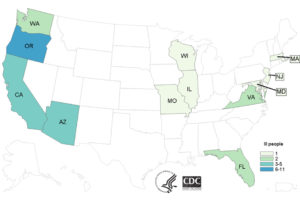
 The Ohio Department of Health, several other states, the Centers for Disease Control and Prevention (CDC), and the United States Department of Agriculture Animal and Plant Health Inspection Service (USDA-APHIS) are investigating a multistate outbreak of human Campylobacter infections linked to puppies sold through Petland, a national pet store chain.
 Campylobacter can spread through contact with dog feces. It usually does not spread from one person to another.
 Live Science
 Islamic State leaders are reportedly asking its followers to carry out terror attacks by poisoning food in Western supermarkets. It is not like poisoning our food has not happened before and we certainly have been warned. In 2011 Secretary of State Hillary Clinton warned of infectious disease outbreaks caused by pathogens falling into the wrong hands and into our food. She said:
 After 9/11, Secretary Thompson said more inspectors and more traceability are keys to our food defense and safety. To date, we’ve made some, but not enough movement to ensure this.
 The Los Angeles County Department of Public Health (Public Health) warns consumers of possible hepatitis A exposure associated with produce that was possibly contaminated by a worker at a street-side fruit vendor who was infected with Hepatitis A. The fruit vendor was located on the corner of W Ave L and 20th Street West, in Lancaster, CA. Anyone who bought fruit from the vendor’s fruit cart (at this location) during the period of August 15 through August 22 may be at risk for hepatitis A.
 The Chicago Department of Public Health (CDPH) has identified an outbreak of Salmonella, impacting at least 14 individuals. As part of the CDPH investigation, Best BBQ at 1648 W. 115th Street has been linked to the outbreak. Following a request from CDPH, Best BBQ closed voluntarily and is fully cooperating with the investigation. At least six individuals have been hospitalized related to the outbreak.
CDPH recommends anyone who recently ate at the restaurant in question and is suffering symptoms to see a medical provider and inform them of the possibility of Salmonella.
“This is a serious condition that is treatable,” said CDPH Commissioner Julie Morita, M.D. “Anyone who believes they may be symptomatic and ate at this restaurant should see their medical provider immediately. CDPH is taking every precaution as part of our robust response in order to limit the impact of this outbreak.”
Salmonella is a bacteria that can be treated with antibiotics. Most people infected develop diarrhea, fever and abdominal cramps between 12 and 72 hours after infection.
The Chicago Department of Public Health (CDPH) has identified an outbreak of Salmonella, impacting at least 14 individuals. As part of the CDPH investigation, Best BBQ at 1648 W. 115th Street has been linked to the outbreak. Following a request from CDPH, Best BBQ closed voluntarily and is fully cooperating with the investigation. At least six individuals have been hospitalized related to the outbreak.
CDPH recommends anyone who recently ate at the restaurant in question and is suffering symptoms to see a medical provider and inform them of the possibility of Salmonella.
“This is a serious condition that is treatable,” said CDPH Commissioner Julie Morita, M.D. “Anyone who believes they may be symptomatic and ate at this restaurant should see their medical provider immediately. CDPH is taking every precaution as part of our robust response in order to limit the impact of this outbreak.”
Salmonella is a bacteria that can be treated with antibiotics. Most people infected develop diarrhea, fever and abdominal cramps between 12 and 72 hours after infection.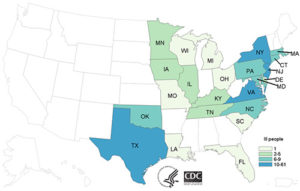 The
The  Two additional outbreaks of Salmonella infections linked to imported papayas from two other farms in Mexico, Caraveo Produce and El Zapotanito, have been identified. Available information indicates that illnesses in these two outbreaks are not linked to papayas from the Carica de Campeche farm and are being investigated separately.
 Thanks to