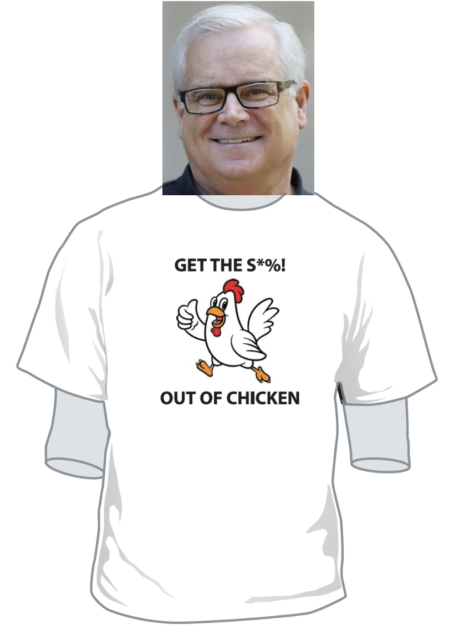
Perhaps I should send them a t-shirt?

The Marion County Health Department (MCHD), in cooperation with La Cocina Mexicana Restaurant in Salem, is investigating a report of Hepatitis A virus exposure.

As a preventative measure, MCHD is recommending that customers who consumed food, whether dine-in, or pickup, purchased on April 20th, 21st, 22nd, 23rd,24th, and 25th discuss the need for Hepatitis A vaccination with their healthcare provider.

Hepatitis A is a viral infection that can be transmitted person-to-person and/or by eating food or drinks contaminated with the virus. Hepatitis A vaccine can prevent infection, but only if given within 14 days of exposure to Hepatitis A.

The Hepatitis A vaccine can be given to persons over 12 months of age who have not completed the two-dose hepatitis A vaccination series. Persons over 40 years old may also receive immune globulin.

Symptoms of Hepatitis A usually start appearing within 4 weeks after exposure but can occur as early as 2 weeks, and even as late as 7 weeks after exposure.

Symptoms include jaundice (yellowing of the skin and eyes), diarrhea, pale-colored stools, stomach pain, dark urine, nausea, feeling tired, loss of appetite and fever.

Children less than 6 years of age generally do not have symptoms or have an unrecognized infection. Almost all people who get Hepatitis A recover completely.

It is rare for Hepatitis A to cause severe illness, but persons 50 years of age or older and those with other liver diseases (particularly chronic Hepatitis B) are more at risk.

The best way to prevent Hepatitis A is through vaccination. While two doses are recommended to complete the Hepatitis A vaccine series, even one dose provides nearly 95% immunity for at least several years.

Good hand hygiene, including thoroughly washing hands after using the bathroom, and avoiding high risk behaviors like needle-sharing, also play an important role in preventing the spread of Hepatitis A.

Here is a letter I recently wrote asking that a recommendation be given to vaccinate food service workers:

ACIP Secretariat

Advisory Committee on Immunization Practices 

1600 Clifton Road, N.E., Mailstop H24-8

Atlanta, GA 30329-4027

acip@cdc.gov

Dear ACIP Secretariat:

The Advisory Committee on Immunization Practices (ACIP) provides advice and guidance to the Director of the CDC regarding use of vaccines and related agents for control of vaccine-preventable diseases in the civilian population of the United States. Recommendations made by the ACIP are reviewed by the CDC Director and, if adopted, are published as official CDC/HHS recommendations in the Morbidity and Mortality Weekly Report (MMWR).

Presently, approximately 5% of all hepatitis A outbreaks are linked to infected food-handlers.

Here is what the CDC continues to say about vaccinating food-handlers:

Why does CDC not recommend all food handlers be vaccinated if an infected food handler can spread disease during outbreaks?

CDC does not recommend vaccinating all food handlers because doing so would not prevent or stop the ongoing outbreaks primarily affecting individuals who report using or injecting drugs and people experiencing homelessness. Food handlers are not at increased risk for hepatitis A because of their occupation. During ongoing outbreaks, transmission from food handlers to restaurant patrons has been extremely rare because standard sanitation practices of food handlers help prevent the spread of the virus. Individuals who live in a household with an infected person or who participate in risk behaviors previously described are at greater risk for hepatitis A infection.

The CDC misses the point; granted, food service workers are not more at risk of getting hepatitis A because of their occupation, but they are a risk for spreading it to customers. Food service positions are typically low paying, and certainly have the likelihood of being filled by people who are immigrants from countries where hepatitis A might be endemic or by people who have been recently experienced homelessness.

Over the past several years, there has been an ongoing outbreak of hepatitis A in the United States. As of February 2, 2023, there have been a total of 44,779 cases with a 61% hospitalization rate (approximately 27,342 hospitalizations). The death toll stands at 421. Since the outbreak started in 2016, 37 states have reported cases to the CDC.

The CDC recommends to the public that the best way to prevent hepatitis A is through vaccination, but the CDC has not explicitly stated that food service workers should be administered the vaccination. While food service workers are not traditionally designated as having an increased risk of hepatitis A transmission, they are not free from risk. 

24% of hepatitis A cases are asymptomatic, which means a food-handler carrying the virus can unknowingly transmit the disease to consumers. Historically, when an outbreak occurs, local health departments start administering the vaccine for free or at a reduced cost. The funding from these vaccinations is through taxpayer dollars. 

A mandatory vaccination policy for all food service workers was shown to be effective at reducing infections and economic burden in St. Louis County, Missouri.

From 1996 to 2003, Clark Country, Nevada had 1,523 confirmed cases of hepatitis A, which was higher than the national average. Due to these alarming rates, Clark County implemented a mandatory vaccination policy for food service workers. As a result, in 2000, the hepatitis A rates significantly dropped and reached historic lows in 2010. The county removed the mandatory vaccine rule in 2012 and are now part of the ongoing hepatitis A outbreak. 

According to the CDC, the vaccinations cost anywhere from $30 to $120 to administer, compared to thousands of dollars in hospital bills, and offer a 95% efficacy rate after the first dose and a 99% efficacy after the second dose. Furthermore, the vaccine retains its efficacy for 15-20 years.  

During an outbreak, if a food service worker is found to be hepatitis A positive, a local health department will initiate post-exposure treatment plans that must be administered within a two-week period to be effective. The economic burden also affects the health department in terms of personnel and other limited resources. Sometimes, the interventions implemented by the local health department may be ineffective. 

Though there are many examples of point-source outbreaks of hepatitis A that have occurred within the past few years around the country, a particularly egregious outbreak occurred in the early fall of 2021 in Roanoke, Virginia. The health department was notified about the outbreak on September 21, 2021, after the first case was reported by a local hospital. The Roanoke Health Department, along with the Virginia Department of Health, investigated this outbreak.

Three different locations of a local restaurant, Famous Anthony’s, were ultimately determined to be associated with this outbreak. The Virginia Department of Health published a community announcement on September 24, 2021, about the outbreak and the potential exposure risk. 

For purposes of the investigation, a case was defined as a “[p]erson with (a) discrete onset of symptoms and (b) jaundice or elevated serum aminotransferase levels and (c) [who] tested positive for hepatitis A (IgM anti-HAV-positive), and frequented any of three Famous Anthony’s locations, or was a close contact to the index case patient, during the dates of August 10 through August 27, 2021.”

As of November 2021, a total of 49 primary cases (40 confirmed and 9 probable) were identified in this outbreak. Two secondary cases were also identified. Cases ranged from 30 to 82 years of age (median age of 63). In all, 57 percent of cases were male. Thirty-one cases included hospitalizations, and at least 4 case patients died. Illness onsets occurred between August 25 and October 15, 2021.

Ultimately, the outbreak investigation revealed that a cook, who also had risk factors associated with hepatitis A, had been infected with hepatitis A while working at multiple Famous Anthony’s restaurant locations. This index case’s mother and adult son also tested positive for hepatitis A. Following an inspection, the outbreak inspector noted, “due to the etiology of hepatitis A transmission, it is assumed the infectious food handler did not perform proper hand washing or follow glove use policy.” It was determined that person-to-person spread was the most likely mode of transmission in this outbreak. Environmental contamination was also considered a possible mode of transmission. 

Overwhelmed by the number of victims who pursued legal action for their injuries, Famous Anthony’s filed for bankruptcy and several of its locations have been closed.

The tragedy of this preventable hepatitis A outbreak cannot be overstated. Four people died. In one family, two of its members lost their lives. Most of the victims were hospitalized. Many risked acute liver failures. At least one person required both a liver and kidney transplants. Medical bills for the victims totaled over $6,000,000 in acute costs with millions of dollars in future expenses.[1] And this all because one employee did not receive a $30-$120 hepatitis A vaccine.

Affordable prevention of future tragedies like the Famous Anthony’s outbreak is possible and necessary. The time has come to at least recommend vaccinations to food service workers to reduce the spread of hepatitis A.

Sincerely,

Bill Marler

On behalf of 31 hepatitis A victims and families


[1] Privately, via mail, I am providing medical summaries for 31 of the victims so there can be a clear assessment of the impacts of hepatitis A on consumers of food at the hands of one unvaccinated food service worker.

In August 2022, the U.S. Food and Drug Administration (FDA), Centers for Disease Control and Prevention (CDC), and state partners conducted an outbreak investigation into a multistate outbreak of Salmonella Typhimurium linked to cantaloupe.

However, the public was not told about the outbreak until a few days ago.  Here are the numbers:

  • Total Illnesses: 88
  • Hospitalizations: 32
  • Deaths: 0
  • Last Illness Onset: September 11, 2022
  • States with Cases: Georgia (1), Illinois (5), Indiana (17), Iowa (39), Kentucky (3), Michigan (3), Minnesota (4), Missouri (2), Ohio (3), South Carolina (1), Wisconsin (10)

This is the explanation from the CDC why the outbreak this cantaloupe was not announced at the time it occurred:

A challenging part of communicating about an ongoing foodborne outbreak is deciding when to issue an outbreak notice. CDC works to balance the need for releasing information quickly with the need for an accurate, specific, and actionable message. CDC issues outbreak notices during foodborne outbreaks if there is an ongoing risk to the public and an actionable message for consumers or retailers.

CDC did not post an outbreak notice on the 2022 Salmonella outbreak linked to melons. By the time the source of the outbreak was identified, the contaminated melons were no longer available for sale in stores or in people’s homes. CDC reviewed FDA’s constituent update and supports the release of information about the 2022 outbreak to make the public aware of the findings from the investigation.

The outbreak response investigation found:

  1. In August 2022, CDC notified FDA about a multistate cluster of Salmonella Typhimurium illnesses with a potential signal for melon exposures. The cases were geographically distributed in the U.S. upper Midwest.
  2. The isolates in this cluster of illnesses were within 7 alleles / 11 single-nucleotide polymorphisms (SNPs) of two FDA soil swab samples collected from a 2020 outbreak investigation in Indiana. As a part of the 2022 investigation, FDA and state partners collected multiple samples, but none of the resulting isolates were a definitive match to the 2022 outbreak strain.
  3. FDA’s 2022 traceback investigation identified 11 points of service, of which 8 traced back to a common packinghouse. Although a common packinghouse was identified, there was no convergence to a single shipment of products, and therefore three farms that supplied the common packing house were identified as potential sources of cantaloupe.

As a result of the traceback, FDA conducted investigations in Indiana at all three farms, their common packinghouse and nearby public lands. Salmonella positive environmental samples were found at each location, but none of the resulting Salmonella isolates conclusively matched the outbreak strain by whole genome sequencing (WGS). 

No cantaloupes were recalled, and no public warning was issued due to the implicated products no longer being on the market.

Download the Full Report (PDF 14MB)

The U.S. Food and Drug Administration (FDA) has released a report on its investigation of the Salmonella Typhimurium outbreak that caused 88 reported illnesses and 32 hospitalizations in the U.S. between July and September 2022. The FDA worked with the U.S. Centers for Disease Control and Prevention (CDC) and state partners to investigate the outbreak, which was linked through epidemiology and traceback to cantaloupe grown in Southwest Indiana during the summer of 2022. The report released today includes an overview of the traceback investigation, investigation results, and various factors that potentially contributed to the contamination of cantaloupe with Salmonella.

As a result of the traceback, FDA conducted investigations in Indiana at three farms, their common packinghouse and nearby public lands. Salmonella positive environmental samples were found at each location, but none of the resulting Salmonella isolates conclusively matched the outbreak strain by whole genome sequencing (WGS). Although the investigation did not result in identification of a specific microbial source or route that resulted in this outbreak, the agency identified Salmonella spp. in on-farm, post-harvest, and off-farm environments.

In light of the investigational findings, FDA highlights the following recommendations and requirements applicable to firms, such as growers of melons and similar produce:

  • Review current conditions and practices to determine whether they are adequate or if additional prevention measures are warranted.
  • Understanding previous land use can help farms identify and address potential sources of pathogens that may affect their farming operations.  
  • Be cognizant of and assess risks that may be posed by adjacent and nearby land uses, especially as it relates to the presence of livestock, including poultry, and the interface between farmland, and other agricultural areas.
  • Consider additional tools such as pre-harvest and/or post-harvest sampling and testing of products to help inform the need for specific prevention measures.
  • Poultry manure, while valued for its fertilizer value, is a known reservoir for Salmonella spp.  Proper application of a manure that has been treated with a validated and verified process to reduce pathogens (e.g. composting with time and temperature measurements) can significantly reduce the potential for the integration of Salmonella or other human pathogens into soils (as compared to the use of raw manures).
  • Inspect, maintain, and clean and, when necessary and appropriate, sanitize all food contact surfaces of equipment and tools used as frequently as reasonably necessary to protect against contamination.
  • When appropriate, use EPA-approved products according to the label for cleaning and sanitizing.
  • Inconsistent adherence to or deviation from existing SOPs for cleaning and sanitizing by farms can affect produce safety. Effective communication on farms about SOPs and any changes to those SOPs can help ensure that food safety practices are being followed.
  • Root cause analyses may be useful in identifying for growers how human pathogen sources in the broader agricultural environment may contribute to contamination.
  • Improve traceability through increased digitization, interoperability, and standardization of traceability records which would expedite traceback and help remove contaminated product from the marketplace more quickly, thereby preventing further illnesses. This is not only important for growers, but also critical for shippers, manufactures, and retailers as well, to improve overall traceability throughout the supply chain.

FDA will work in conjunction with the Indiana State Department of Health to increase awareness amongst the melon growing industry of pathogenic environmental strains in the region to develop and promote risk reduction strategies related to melon growing and harvesting to minimize the impact of these strains.

Food safety is a shared responsibility that involves food producers, distributors, manufacturers, retailers, and regulators. Recognizing the interconnection between people, animals, plants, and their shared environment when it comes to public health outcomes, we encourage collaboration among various groups in the broader agricultural community (i.e., produce growers, state government and academia) to address this issue. Over a decade ago I penned a post entitled “Towards a Policy of Secrecy or Transparency in Public Health.” Here is a bit of it:

A.  Although there is no written policy, it is the way we have done things for years;

Why do I hear my mom saying, “just because so and so does that does not mean you should too.” Like all government policies (and neckwear) – change is good.

B.  Since the outbreak has concluded, there is not an immediate public health threat.

Frankly, that is true in most foodborne illness outbreaks.  In nearly every single outbreak investigated by the CDC the outbreak is figured out far after the peak of the illnesses happened.  However, disclosure gives the public information on which companies have a strong or weak food safety record.

C.  Disclosing the name of the company jeopardizes cooperation from the company in this and future outbreaks; and

If a company will only cooperate if they are placed in a witness protection program and with promises of non-disclosure, it does not say much for our governments and the company’s commitment to safe food.

D.  Bad publicity may cause economic hardship on the restaurant.

True, but not poisoning your customers is a better business practice.

I would also add a couple more reasons that I have received via email (mostly anonymously):

1.  The source was an unknown supplier, so naming the restaurant might place unfair blame on the restaurant.

This one does make some sense.  However, is this the unnamed restaurants first problem with a faulty supplier, or is this a pattern?  And, even if it is the first time, perhaps some of the unnamed product is still in the market? 

2.  Since the outbreak involves a perishable item, by the time the CDC announces the outbreak, the tainted product has long been consumed.

This one I have heard a “bunch” of times – especially in leafy green outbreaks.  However, why should the public be left in the dark about the type of product that sickens as well as the likely grower and shipper so they can make future decision who to buy from?

3.  Going public with the name of the restaurant compromises the epidemiologic investigation by suggesting the source of the outbreak before the investigation is complete.

I completely agree with this one.  This is a tough call, and one that must create the most angst for public health officials – they decide the balance between having enough data to go forward to protect the public health or wait for more data.  The point is do not go forward until the investigation is complete.

4.  Public health is concerned of making an investigation mistake like, it’s the tomatoes, err, I mean peppers; and

See my answer to 3 above.  This is why under the law; public health officials are immune for liability for the decisions that they make in good faith to protect the public.

5.  Public health – especially surveillance – is under budgetary pressures and there is simply not the resources to complete investigations; and

There is no question that this is true.  I have seen it in dropped investigations over the last few years.  Labs are not doing genetic fingerprinting to help reveal links between ill people.  And many tracebacks are stopped by the lack of peoplepower to do the research necessary to find the “root cause” of an outbreak.

For me it is easy – the public has a right to know and to use the information as it sees fit, and people – especially government employees – have no right to decide what we should and should not know.

After its premiere at the Tribeca Film Festival June 9, “Poisoned” will show July 1 (4:30PM) and July 2 (6:30PM) on Bainbridge Island. The theatre seats 225 and the events will be used as a fundraiser for Helpline House. The author, Jeff Benedict will be around to sign books. There will be a short Question and Answer period after the movie.

The plan is to have an “after party” at the Treehouse Cafe next door. Where we will have some swag to give away.

According to the Gallatin County Health Department, Dave’s Sushi in Bozeman is closed until further notice due to possible foodborne illnesses. The health department was notified of possible foodborne illness linked to eating at Dave’s Sushi on April 17. At this time, it is unclear what pathogen caused the illness.

On April 18, the health department performed an inspection and reportedly found Dave’s Sushi with four violations.

Dave’s Sushi will remain closed until further notice, pending a full investigation. According to a press release from the Gallatin City-County Health Department, the illnesses have been linked to eating at Dave’s Sushi on the afternoon of April 17, as well as April 1, April 8, April 9, and April 10.

Yesterday the FDA posted on its website:

A new investigation has been added to the table (ref#1152). Although the pathogen/cause of illness and products linked to illnesses is not yet identified, there are 13 illnesses from one state linked to a single restaurant that has suspended operations. FDA has initiated traceback in coordination with state partners.

It does seem a bit coincidental.

Well, I am clearly back on my pre-COVID travel schedule.

Last week I was in Ontario speaking at the Ontario Food Protection Association.  This week I had the pleasure to speak at the TH Chan School of Public Health at Harvard.  Next week I will keynote at the Western Food Safety Summit Conference in Salinas.  Then it is off to Banff to chat at the VTEC 2023 Conference and then two panels at the Food Safety Summit in Chicago – Whew and that is just May.  In June after the premiere of Poisoned at Tribeca, I will be off to the Association of Food and Drug Officials in Virginia in June and then to Michigan State to teach a class and then back to Georgia for the Center for Produce Safety’s annual conference.  

I am back to my frequent flyer status.

CDC, public health and regulatory officials in several states, and the U.S. Food and Drug Administration (FDA) are collecting different types of data to investigate a multistate outbreak of Listeria monocytogenes infections.

A specific food item has not yet been identified as the source of this outbreak.

Sick people’s samples were collected from July 3, 2018, to March 31, 2023.

Here is an illustration of why it takes so long to figure an outbreak out.

As of April 20, 2023, a total of 18 people infected with the outbreak strain of Listeria have been reported from 15 states – Arkansas 1, California 1, Colorado 1, Illinois 1, Louisiana 1, Michigan 2, Missouri 1, Nebraska 1, New York 1, North Carolina 2, Pennsylvania 1, South Dakota 1, Texas 1, Washington 1 and Wisconsin 2.

Sick people range in age from less than 1 to 96 years, with a median age of 73, and 61% are female. Race or ethnicity information is available for 18 sick people. Two sick people reported Hispanic ethnicity. Of 16 people that did not report Hispanic ethnicity, 15 are White and one is African American/Black. Of 18 people with information available, 17 have been hospitalized. There is one pregnancy-associated illness in a newborn.

This was embargoed until a few moments ago.

USDA Proposes Declaring Salmonella an Adulterant in Breaded Stuffed Raw Chicken Products

WASHINGTON, April 25, 2023 – The U.S. Department of Agriculture’s (USDA) Food Safety and Inspection Service (FSIS) released today a proposed determination to declare Salmonella an adulterant in breaded stuffed raw chicken products when they exceed a very low level of Salmonella contamination. This announcement is a significant first step that builds on FSIS’ proposed regulatory framework to reduce Salmonella infections linked to poultry products, released in October 2022. 

The Centers for Disease Control and Prevention (CDC) estimates that Salmonella bacteria cause approximately 1.35 million human infections and 26,500 hospitalizations in the United States every year. Of those infections, over 23% are attributed to poultry consumption. Foodborne illness can have a devastating impact, both personally and financially, on people’s lives, the cost of which reverberates through the economy. Data from USDA’s Economic Research Service (ERS) show the total cost for foodborne Salmonella infections in the United States is a staggering $4.1 billion annually and the cost for the loss of productivity to the economy is $88 million. These are real costs to real people that can and should be prevented.

“USDA is taking science-based, decisive action to drive down Salmonella illnesses linked to poultry products,” said Agriculture Secretary Tom Vilsack. “Today’s proposal represents the first step in a broader effort to control Salmonella contamination in all poultry products, as well as a continued commitment to protecting American consumers from foodborne illness.” 

Under this proposal, FSIS would consider any breaded stuffed raw chicken products that include a chicken component that tested positive for Salmonella at 1 colony forming unit (CFU) per gram prior to stuffing and breading to be adulterated. FSIS is also proposing to carry out verification procedures, including sampling and testing of the chicken component of breaded stuffed raw chicken products prior to stuffing and breading, to ensure producing establishments control Salmonella in these products. If the chicken component in these products does not meet this standard, the product lot represented by the sampled component would not be permitted to be used to produce the final breaded stuffed raw chicken products. The chicken component represented by the sampled lot would need to be diverted to a use other than breaded stuffed raw chicken products.

Breaded stuffed raw chicken products are pre-browned and may appear cooked, but the chicken is raw. These products are stuffed with ingredients, such as a raw vegetable, butter, cheese or meat such as ham. The products are typically cooked by consumers from a frozen state, which increases the risk of the product not reaching the internal temperature needed to destroy Salmonella. In addition, it may be difficult for a consumer to determine an accurate internal temperature of these products because they contain multiple ingredients that may cook at different rates.

In proposing to declare Salmonella an adulterant in breaded stuffed raw chicken products, FSIS based its decision on several factors, including that since 1998, FSIS and its public health partners have investigated 14 Salmonella outbreaks and approximately 200 illnesses associated with these products. The most recent outbreak was in 2021 and resulted in illnesses across 11 states. 

The labeling of these products has undergone significant changes over time to better inform consumers that they are raw and to provide instructions on how to prepare them safely. Despite these efforts to improve labeling, these products continue to be associated with Salmonella illness outbreaks. Additionally, data from outbreaks and FSIS’ consumer research show that some people may not realize these products contain raw chicken because the outside may appear browned and cooked, which leads them to believe that the product is safe to eat as is or not cook the product to a safe internal temperature.

FSIS is seeking public comments on the proposed determination and the proposed verification sampling program. 

Comments on the proposed determination and verification procedures must be received within 60 days after publication in the Federal Register.  

Comments may be submitted online via the federal Rulemaking portal, available at https://www.regulations.gov; by mail sent to Docket Clerk, U.S. Department of Agriculture, Food Safety and Inspection Service, 1400 Independence Avenue SW, Mailstop 3758, Washington, DC 20250-3700, or by hand or courier delivery to 1400 Independence Avenue SW, Jamie L. Whitten Building, Room 350-E, Washington, DC 20250-3700. All items submitted by mail or electronic mail must include the agency name and docket number FSIS-2022-0013.

Here has been my take on Salmonella as an adulterant.

USDA/FSIS has the authority to deem Salmonella and other pathogens adulterants – they just need to use it.

Everyday Americans will bring a food product (poultry) into their homes that is likely teeming with Salmonella that the manufacturer – by law and with the USDA stamp of approval – knowingly can sell knowing that it may well be tainted with a pathogen that sickens over 1,000,000 yearly.  This is because USDA/FSIS does not consider Salmonella an adulterant.

Personally, as I said to the Los Angeles Times some time ago, “I think that anything that can poison or kill a person should be listed as an adulterant [in food].”

Ignoring Salmonella in meat makes little, if any, sense.

Even after the Court’s twisted opinion in Supreme Beef v. USDA, where it found Salmonella “not an adulterant per se, meaning its presence does not require the USDA to refuse to stamp such meat ‘inspected and passed’, ” our government’s failure to confront the reality of Salmonella, especially antibiotic-resistant Salmonella, is inexcusable.

The Wisconsin Supreme Court in Kriefall v Excel called it as it saw it – at least with respect to E. coli – but the analysis is spot on for Salmonella as well:

The E. coli strain that killed Brianna and made the others sick is a “deleterious substance which may render [meat] injurious to health.” There is no dispute about this. Thus, under the first part of 21 U.S.C. § 601(m)(1), meat that either “bears or contains” E. coli O157:H7 (the “deleterious substance”) is “adulterated.” That E. coli O157:H7 contamination can be rendered non-“injurious to health” by cooking thoroughly, as discussed below, does not negate this; Congress used the phrase “may render,” not “in every circumstance renders.” Moreover, if the E. coli bacteria is not considered to be “an added substance,” because it comes from some of the animals themselves and is not either applied or supplied during the slaughtering process (although we do not decide this), it cannot be said that the E. coli strain “does not ordinarily render [the meat on or in which it appears] injurious to health.” Accordingly, meat contaminated by E. coli O157:H7 is also “adulterated” under the second part of § 601(m)(1).

Now, why would Salmonella be different? According to the CDC, it is estimated that 1.4 million cases of salmonellosis occur each year in the United States. Of those cases, 95 percent are related to foodborne causes. Approximately 220 of each 1,000 cases result in hospitalization, and 8 of every 1,000 cases result in death. About 500 to 1,000 deaths – 31 percent of all food-related deaths – are caused by Salmonella infections each year.

So, where do we stand with the existing USDA/FSIS law on adulteration?

Here is the law:

21 U.S.C. § 601(m)(4) – SUBCHAPTER I – INSPECTION REQUIREMENTS; ADULTERATION AND MISBRANDING – CHAPTER 12 – MEAT INSPECTION – TITLE 21—FOOD AND DRUGS

(m) The term “adulterated” shall apply to any carcass, part thereof, meat or meat food product under one or more of the following circumstances:

(1) if it bears or contains any poisonous or deleterious substance which may render it injurious to health; but in case the substance is not an added substance, such article shall not be considered adulterated under this clause if the quantity of such substance in or on such article does not ordinarily render it injurious to health; …

(3) if it consists in whole or in part of any filthy, putrid, or decomposed substance or is for any other reason unsound, unhealthful, unwholesome, or otherwise unfit for human food;

(4) if it has been prepared, packed, or held under insanitary conditions whereby it may have become contaminated with filth, or whereby it may have been rendered injurious to health; …

Here is the law specifically related to poultry:

Title 21 – FOOD AND DRUGS CHAPTER 10 – POULTRY AND POULTRY PRODUCTS INSPECTION

(g) The term “adulterated” shall apply to any poultry product under one or more of the following circumstances:

(1) if it bears or contains any poisonous or deleterious substance which may render it injurious to health; but in case the substance is not an added substance, such article shall not be considered adulterated under this clause if the quantity of such substance in or on such article does not ordinarily render it injurious to health; …

(3) if it consists in whole or in part of any filthy, putrid, or decomposed substance or is for any other reason unsound, unhealthful, unwholesome, or otherwise unfit for human food;

(4) if it has been prepared, packed, or held under insanitary conditions whereby it may have become contaminated with filth, or whereby it may have been rendered injurious to health;

Hmmm. It is hard to read the above and not think that the words equate to all E. coli as well as Salmonella — frankly, all pathogens in food.

I know, I am just a lawyer, but don’t ya think that when food with animal feces (and a dash of E. coli O157:H7) in it is considered an adulterant, that other animal feces (with dashes of other pathogens, like Salmonella) in them, should be considered adulterated too?  But, hey, that is just me.

Another odd governmental fact is that the FDA does not seem to make a distinction between pathogens it considers adulterants or not.

FDA’s enabling legislation – Sec. 402. [21 USC §342] of the Food, Drug & Cosmetic Act also defines “Adulterated Food” as food that is:

(a) Poisonous, insanitary, or deleterious ingredients.

(1) If it bears or contains any poisonous or deleterious substance which may render it injurious to health; but in case the substance is not an added substance such food shall not be considered adulterated under this clause if the quantity of such substance in such food does not ordinarily render it injurious to health;

(2) If it bears or contains any added poisonous or added deleterious substance … that is unsafe within the meaning of section 406;

(3) if it consists in whole or in part of any filthy, putrid, or decomposed substance, or if it is otherwise unfit for food;

(4) if it has been prepared, packed, or held under insanitary conditions whereby it may have become contaminated with filth, or whereby it may have been rendered injurious to health …

It would be interesting, and perhaps entertaining, to have House and Senate hearings focusing on what should and should not be considered adulterants in our food. I can see panels of scientists from various fields, FDA, USDA and FSIS officials, beef, poultry, fish and produce industry representatives, and consumers discussing this.

I would pay to watch it.

And so now onto some history to ruin your appetite.

In 1971 the American Public Health Association (APHA) sued the USDA on the grounds that its mark of inspection (“USDA inspected for wholesomeness”) was misleading because, even though the USDA had put its stamp of approval on meat—literally—it did not, for example, test the meat for bacteria. Moreover, APHA argued that raw meat was commonly contaminated with Salmonella, which posed a risk to the public health. According to APHA, the USDA should instead require that meat carry both a warning label and cooking instructions. The USDA opposed the APHA, helped ably (and predictably) by the meat industry. As quoted by Marion Nestle in her great book, Safe Food, the USDA’s position was that, given how many foods are contaminated with Salmonella, “it would be unjustified to single out the meat industry and ask that the [USDA] require it to identify its raw products as being hazardous to health.” Nestle at 66. (Note to Reader: No, I am really not making this up.)

In 1974, the DC Circuit Court of Appeals upheld the position of the USDA and the meat industry, doing so in a way that was as nonsensical as it was sexist. The court stated that: “The presence of salmonellae on meat does not constitute adulteration within this definition [of ‘adulterated,’ provided in 21 U.S.C. § 601 (m)]….As it said in its letter of August 18, 1971 ‘the American consumer knows that raw meat and poultry are not sterile and, if handled improperly, perhaps could cause illness.” In other words, American housewives and cooks normally are not ignorant or stupid and their methods of preparing and cooking of food do not ordinarily result in salmonellosis.’” APHA v. Butz, 511 F.2d 331, 334 (1974).

This remained the position of the USDA and the meat industry until 1994 when, in an act of both common-sense and bravado, Michael Taylor, then FSIS Administrator, announced that E. coli O157:H7 would be deemed an adulterant in raw ground beef. The Agency did not, however, change its tune with regard to any other pathogens, especially Salmonella. Indeed, in 1999, when FSIS announced it inane distinction between E. coli O157:H7 in “intact” meat versus “non-intact” meat, the Agency continued to focus on how a given meat was “customarily cooked” as a chief determinant of whether it must be treated as an adulterant. Thus, for example, because it decided that “intact steaks and roasts are customarily cooked in a manner that ensures that these products are not contaminated with E. coli O157:H7,” there was no need to treat this deadly pathogen as an adulterant on intact cuts of meat. Of course, this FSIS policy is also one that appears to have been silently jettisoned by the Agency of late.

The Agency’s position on Salmonella and meat came back to haunt it in a big way when FSIS tried to shut down Supreme Beef Processors, Inc. for repeatedly failing Salmonella performance standards that, according to the Agency, was proof that the ground beef being made there was being processed under “insanitary conditions.” Supreme Beef sued the USDA and not only won an injunction, but it succeeded in having the Salmonella regulations struck down as being “beyond the authority granted the Secretary [of the USDA] by the Federal Meat Inspection Act.” Supreme Beef v. USDA, 275 F.3d 432, 434 (5th Cir. 2001). Explaining its holding, the Court wrote:

The difficulty in this case arises, in part, because Salmonella, present in a substantial proportion of meat and poultry products, is not an adulterant per se, 21 meaning its presence does not require the USDA to refuse to stamp such meat “inspected and passed.” 22 This is because normal cooking practices for meat and poultry destroy the Salmonella organism, 23 and therefore the presence of Salmonella in meat products does not render them “injurious to health” 24 for purposes of § 601(m)(1). Salmonella-infected beef is thus routinely labeled “inspected and passed” by USDA inspectors and is legal to sell to the consumer.

Supreme Beef, 275 F.2d at 438-39. And, of course, not surprisingly, the court in this case was quick to cite the decision in APHA v. Butz, and to note that even now the “USDA agrees that Salmonella is not an adulterant per se.” Id. at 439 n. 21.

In my view the Supreme Beef decision is poorly reasoned and ill-informed. (For example, could not someone at the Court figure out that it is impossible for meat to be “infected” with Salmonella, and the proper term here is “contaminated”?) But the real lesson of Supreme Beef is that the USDA was, and continues to be, an Agency that is unable to decide whose side it is on. Sometimes it puts on its public safety hat, and sometimes—actually, most often—it puts on its pro-meat industry hat. And, unfortunately, these roles are too often contradictory. That is why USDA policy when it comes to meat safety is also too often contradictory.

Perhaps it is just time for the FSIS to take the the position that all pathogens that can kill you in meat are adulterants.  You have the authority – you just need to use it.

My GET THE F OUT OF THE FDA t-shirt has been a big hit. We have given out over 750 to Members of the House and the Senate and hundreds of others to food safety professionals around the world.

Here are a few more ideas that are in the t-shirt pipeline – Vaccinating food services workers against Hepatitis A, Making Cronobacter reportable in every state and getting Salmonella out of Chicken.