I must admit, in 30 years of doing food safety, I seldom recall a health department withholding from the public the source of an outbreak – even Norovirus.

I am reminded by a story some 10 years ago – After Food Safety News broke the story that Taco Bell was the mysterious “Restaurant Chain A” linked to a Salmonella outbreak that sickened 68 people in 10 states, ABC Evening News praised Food Safety News for shining light on this story and the issue of the government’s lack of transparency when businesses make people sick.  Other media, such as the LA Times, Reuters, Daily Mail, The Consumerist, CBS News,Huffington Post, Fox News, and MSNBC, also hailed Food Safety News for shinning the light on the mystery taco restaurant.  Most recently, Barry Estabrook wrote a piece for The Atlantic detailing Food Safety New’s muckraking skills, but praised me and not the people who did all the work.

The San Luis Obispo Tribune reports that an outbreak of norovirus stemming from a North County restaurant has sickened close to 100 people, according to the San Luis Obispo County Public Health Department. SLO County Public Health Epidemiologist Jessie Burmester said 97 people have been reported sick as part of a confirmed norovirus outbreak earlier this month. Burmester said the Public Health Department traced the “unusual, very large community outbreak” back to a North County restaurant, though she did not disclose the name of the business.

“When we perform our investigations, we’re really looking for a common source or exposure point,” she said. “Individuals have provided the name of the restaurant consistently for all the individuals that have reported on behalf of the 97 people so far.” Burmester said the Public Health Department reached its threshold for an outbreak — two reported cases in separate households — on May 15. That day, the agency received more than two reports about the same exposure source, she said. Follow-up investigation showed some people experiencing symptoms of norovirus tied to that facility as early as May 11, Burmester added.

Once it was identified, the Public Health Department began working to help eliminate further spread by pushing “mass cleaning and disinfection” of the restaurant, as well as attempting to track where the cases originated. The restaurant in question has been cleaned three times since the outbreak was first reported, she said. “This has been particularly challenging outbreak,” Burmester said, “but it is not abnormal to see norovirus spread like this, because it doesn’t take much of the virus to spread at all.”

Norovirus is a nasty bug.

Noroviruses are estimated to cause 23 million cases of acute gastroenteritis (commonly called the “stomach flu”) in the U.S. each year, and are the leading cause of gastroenteritis. In addition, norovirus outbreaks may be the most common foodborne illness outbreaks. Noroviruses can cause extended outbreaks because of their high infectivity, persistence in the environment, resistance to common disinfectants, and difficulty in controlling their transmission through routine sanitary measures.

The norovirus is transmitted primarily through the fecal-oral route and fewer than 100 norovirus particles are said to be needed to cause infection. Transmission occurs either person-to-person or through contamination of food or water. Transmission can occur by:

· Touching surfaces or objects contaminated with norovirus and then placing that hand in your mouth

· Having direct contact with another person who is infected with norovirus and showing symptoms

· Sharing foods or eating utensils with someone who is ill

· Exposure to aerosolized vomit

· Consuming food contaminated by an infected food handler.

Boston health inspectors ordered the closure of a Brighton restaurant and suspended the restaurant’s permit to operate after foodborne illnesses were reported and an inspection identified multiple problems this week. Los Amigos Taqueria at 366 Washington St. in Brighton was ordered to close on Thursday. 

The Boston Public Health Commission confirmed that it is investigating “an emerging salmonella outbreak” linked to the restaurant. 

According to a city database, one of six identified failures included “multiple reports of a foodborne illness from items consumed at this location.”

Inspectors took samples of the food from the restaurant and instructed the business not to handle any food without approval from city health officials, the database shows. 

Additional issues identified by the inspection at the Brighton location included “visible soils and mold-like substance” found in a walk-in unit; shelving units with visible rust and soils; and a lack of proper sanitizers at work and prep stations. The restaurant at 1741 Centre St. in West Roxbury had its permit to operate suspended after inspectors found issues including rodent droppings, foods kept outside of proper temperatures and staff members not following proper glove or hand washing procedures.

In Brighton, health inspectors said “There are multiple reports of a foodborne illness from items consumed at this location.” An inspection found “visible soils” and “mold like” substances in a walk-in unit.

At the West Roxbury restaurant on Centre Street, inspectors found “no verifiable evidence of illness policy training,” and no one was in charge of monitoring food temperatures. They said “only one employee properly washed hands between tasks,” and a spatula was found stored in stagnant water.

The inspection also discovered rodent waste in the restaurant.

“Multiple rodent droppings on pineapple cans, bag of pinto beans, beverage single use holders, on storage tables an floor,” the report stated.

Salmonella:  Marler Clark, The Food Safety Law Firm, is the nation’s leading law firm representing victims of Salmonella outbreaks. The Salmonella lawyers of Marler Clark have represented thousands of victims of Salmonella and other foodborne illness outbreaks and have recovered over $850 million for clients.  Marler Clark is the only law firm in the nation with a practice focused exclusively on foodborne illness litigation.  Our Salmonella lawyers have litigated Salmonella cases stemming from outbreaks traced to a variety of foods, such as cantaloupe, tomatoes, ground turkey, salami, sprouts, cereal, peanut butter, and food served in restaurants.  The law firm has brought Salmonella lawsuits against such companies as Cargill, ConAgra, Peanut Corporation of America, Sheetz, Taco Bell, Subway and Wal-Mart.  

If you or a family member became ill with a Salmonella infection, including Reactive Arthritis or Irritable bowel syndrome (IBS), after consuming food and you’re interested in pursuing a legal claim, contact the Marler Clark Salmonella attorneys for a free case evaluation.

Additional Resources:

The premiere of the Netflix Documentary, “Poisoned,” is a few weeks away (June 9) at the Tribeca Film Festival. We are thankful that the folks at Netflix are also allowing us to do a premiere night on Bainbridge Island on July 2. The small, historic Lynwood Theatre holds only about 250 people – but they sell local beer and wine. All tickets will be free and everyone will be asked to donate to our local food bank, Helpline House. The tickets will be available for reservation soon.

My new obsession, T-shirts will be available at the time of the movie premiere along with photos on the red carpet. Poisoned Books will be there for sale by Eagle Harbor Books, and signature by the author, Jeff Benedict. There will also be a special guest MC to do a short Q and A after the movie.

This is quite glam for Bainbridge Island.

For those that want a free T-shirt early, please send me an email with your mailing addressAFTER – you donate whatever you can to Helpline House. I am starting out with a seed gift of $5,000. Here is the link to donate – https://www.helplinehouse.org. Thank you so much.

Here is the shirt in the package:

Here is the front:

Here is the back:

Total Illnesses: 50
Hospitalizations: 3
Deaths: 2      
Last Illness Onset: April 17, 2023
States with Cases: Montana

Per request from Gallatin City-County Health Department and the Montana (DPHHS), the FDA and CDC are assisting with an investigation of illnesses at a single restaurant in Montana. The restaurant temporarily closed following the illnesses and there does not appear to be any further risk to the public. Preparation and storage methods at the restaurant continue to be examined as part of the investigation into the cause of illnesses and this advisory will be updated as information becomes available.

As of May 15, 2023, the investigation has identified 50 ill people who ate at the restaurant between March 28 and April 17, 2023, of whom 44 people reported eating morel mushrooms. There have been three hospitalizations and two deaths associated with this incident. A sample of leftover mushrooms were collected from the restaurant and laboratory analysis determined that the sampled mushrooms were true morels.

Currently, no pathogen, toxin, pesticide, or heavy metal has been identified; however, state and local partners have collected consumer samples from the restaurant and testing and analysis are ongoing. Although epidemiological evidence indicates that morel mushrooms consumed at the restaurant are likely the cause of illnesses, mushroom poisonings can be difficult to diagnose as the exact chemical nature of some toxins found in wild-type mushrooms are currently unknown. 

FDA does not have premarket approval of food products. Claims that mushrooms or other food products are “FDA-approved” are inaccurate and do not ensure that a product is safe. More information is available on the FDA website.

I must admit my obsession with food safety has crossed over to t-shirts.

I love the packaging:

The above will be available at this years IAFP Conference in Toronto. If you can’t wait that long, email me at bmarler@marlerclark.com.

Get the F out of the FDA – is my pitch to separate out Food Safety and Human Nutrition from Drugs and Medical Devices.

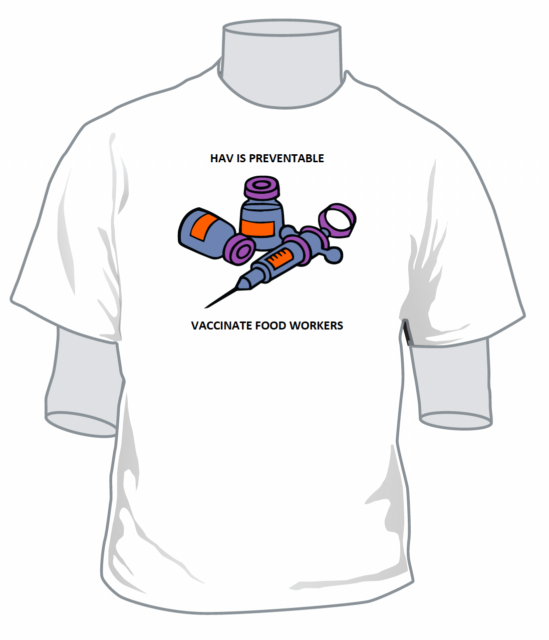
Vaccinating Food Service Workers – this is common sense to avoid a preventable disease – Hepatitis A.

Making Cronobacter reportable nation-wide – again, if you want to prevent illnesses make them reportable.

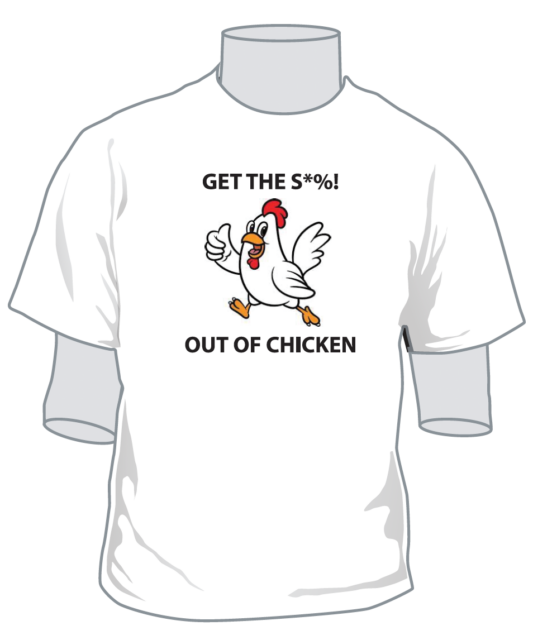
And, finally, getting Salmonella out of chicken – making E. coli O157:H7 an adulterant saved the beef industry (and its customers) – why not do the same with chicken?

Poisoned will premiere at the Tribeca Film Festival on June 9.

It will be followed by a showing at the Garde in New London Connecticut on June 28.

And finally a showing, and fundraiser for local foodbank, at the Lynwood Theatre on Bainbridge Island on July 2.

It is going to be a fundraiser for our on island food bank – Helpline House. Here is the backdrop for the red carpet.

This was the trailer for the book that came out years ago.

Seattle, WA – The Abbott infant formula recall could have been prevented. The FDA had reports of safety failures months before the contaminated formula sickened babies and caused two deaths.

William “Bill” Marler, sent these t-shirts to the Council of State and Territorial Epidemiologists, who are tasked to make recommendations as to what pathogens are reportable.  “I hope that these t-shirts will be a reminder of the awesome responsibility that this council has to protect the public,” said Marler.

The head of the FDA said in testimony to congress months ago:

“The CDC receives reports on foodborne disease outbreaks from state, local, and territorial health departments. On average, CDC receives two to four Cronobacter case reports annually; however, because Cronobacter infection is not reportable in most states, the total number of cases that occur in the United States each year is not known.”

Here is a bit of history about why having bacterial infections reportable can make a difference.

In 1992, from mid-November to mid-January, 9 cases of E. coli O157:H7-associated bloody diarrhea and the hemolytic-uremic syndrome had been reported in San Diego County, California and 1 child died. A total of 34 persons had bloody diarrhea, the hemolytic-uremic syndrome, or E. coli O157:H7 organisms isolated from stool during the period November 15, 1992, through January 31, 1993. E. coli O157:H7 was ultimately identified from 6 persons were indistinguishable from those of the Washington outbreak strain linked to Jack in the Box restaurants in Washington, Idaho, Nevada and California.  All the pre-formed frozen hamburgers were produced by Von’s in California and shipped to those restaurants in those states after the illness in California had already happened. According to public health officials:

Improved surveillance by mandating laboratory – and physician – based reporting of cases of E coli O157:H7 infection and the hemolytic uremic syndrome might have alerted health officials to this outbreak sooner, which could have resulted in earlier investigation and the institution of measures to prevent more cases.

Clearly, had E. coli O157:H7 been reportable, public health officials in California would have caught the illnesses and most likely prevented the hamburgers from being shipped to other states.  Hundreds of people – specifically children – would not have been sickened and three would likely not have died.

Make Cronobacter sakazakii reportable and save lives.

My law practice lives and breathes the science of foodborne illness epidemiology.  Stool cultures, incubation periods, case control studies and genetic fingerprinting make or break causation in cases.  I have a nurse and an epidemiologist on staff who investigate each case, so we know that the claims that we make are well-grounded in both science and the law.  As I tell my opponents, by the time we make a claim, causation and liability are a lock, and the issue to discuss is how much are the damages.

It is with frustration that I encounter lawyers and insurance companies across the table that are ignorant (willfully or by honest stupidity) of the law and the science.  Here are a few instances, one from the distance past and one from last week.

“Your clients are suspected by the ‘FBI’.”

In late June of 2002, residents of Monroe County, New York began to fall ill with Salmonella infections. As their illnesses were confirmed by laboratory testing, hospitals and doctors began reporting the illnesses to the Monroe County Health Department. By June 22, the total number of confirmed cases had reached 17. According to the Health Department, the Salmonella cases were linked to multiple events at the Brook-Lea Country Club (“Brook-Lea”) between June 1 and June 17. In response to the outbreak, the Monroe County Health Department inspected the Brook-Lea kitchen and reviewed its food-handling procedures. In addition, the kitchen was closed and disinfected by a commercial company. While the kitchen remained closed, the Health Department stated that it would review the possibility of allowing the club to have limited outside catering.

By June 24, the number of cases of salmonellosis linked to the Brook-Lea had risen from 17 to 53. These were just the confirmed cases. There were dozens of other cases still waiting culture confirmation. The Health Department had by this point in its investigation obtained stool and blood samples from about 50 kitchen-related staff. The club kitchen also remained closed.  Two days later, on June 26, the results of tests done on kitchen-staff stool samples showed that eight of the about 50 kitchen staff had Salmonella infections. According to the Health Department, it was unknown whether the staff represented the likely source of the outbreak, or whether they “might just be victims”. An additional food worker at Brook-Lea was later found to also be infected, bringing the total number of sick employees to nine.

Over the next three weeks the number of Salmonella cases linked to Brook-Lea soared from 57 to well over 100. At least 95 of the cases were both culture-confirmed and linked epidemiologically to the consumption of food at Brook-Lea between June 1 and June 18. It was also determined that the Salmonella associated with the outbreak was Salmonella enteritidis, a virulent strain often associated with contaminated eggs.

In early July, Brook-Lea management admitted that none of its employees had attended a six-hour voluntary course on safe food handling. The Health Department first offered the food safety course in 1997 and it was available to all foodservice operators and their employees. It was only after the Salmonella outbreak that about 30 Brook-Lea employees received training in safe food-handling practices.

Proving that lightning can strike in the same place twice, on July 30, there was a second, smaller outbreak of Salmonella illnesses at Brook-Lea, yielding six more cases. Four of the cases were Brook-Lea employees. Overall, there were now 106 confirmed cases of Salmonella food poisoning in people residing in Monroe County and the surrounding area. All these cases were linked to the Brook-Lea.

We represented most of the victims in this outbreak, some quite seriously sick. As is my practice, I supplied all the health department records, medical records, wage loss and all other relevant material to both prove causation and assess damages.

A few months after providing all the evidence above, we met with the lawyer and insurance adjuster for Brook-Lea.  Waiting in the conference room for them to arrive, the thought was how best to financially resolve the cases.  As the lawyer and insurance adjuster came in, they seemed a bit glum.  I took it that they might be reluctant to pay what would be needed to resolve the cases – goodness, was I mistaken.

After some stilted pleasantries, the lawyer said with authority that there we be no settlements to the smile of the insurance adjuster.  Perplexed, I ask “why?”  He gleefully pushed a piece of paper from the Monroe County Health Department (we had provided to them) across the table and told me, “we will not pay a penny to these people because they are suspected by the ‘FBI’.”  

It was a short meeting. A month later with a new defense lawyer and insurance adjuster involved, who understood that “Suspected FBI” meant “Suspected Foodborne Illness,” all the cases resolved to the satisfaction of my clients.

“Your client is a plumber.”

In the fall of 2021, the Centers for Disease Control and Prevention (CDC), U.S. Food and Drug Administration (FDA), and state partners investigated an outbreak of Salmonella Oranienburg linked to whole, fresh onions. FDA identified ProSource Produce LLC (or ProSource Inc.) of Hailey, Idaho and Keeler Family Farms and Imported of Deming, New Mexico as suppliers of potentially contaminated whole, fresh onions imported from the State of Chihuahua, Mexico between July 1, 2021 and August 31, 2021. 

As of January 20, 2022, a total of 1,040 cases have been identified. Cases were identified in 39 states (AL, AR, CA, CO, CT, FL, GA, HI, IA, IL, IN, KS, KY, LA, MA, MD, MI, MN, MO, MS, NC, ND, NE, NJ, NM, NY, OH, OK, OR, PA, SC, SD, TN, TX, UT, VA, WA, WI, WV), the District of Columbia, and Puerto Rico. Of the 778 cases with information available, 260 reported hospitalizations. No deaths were reported. Illness onsets ranged from May 31, 2021 to January 1, 2022. Cases ranged from less than 1 year to 101 years in age (median 38). Fifty-eight percent of cases were female. 

Whole-genome sequencing (WGS) of 1,012 clinical isolates showed that bacteria from sick people’s samples were closely related genetically, implying that the cases in the outbreak likely got sick from the same source. During interviews with 407 cases, 72 percent of cases reported eating or maybe eating raw onions or dishes with raw onions prior to illness. Several ill people reported the same restaurants, indicating possible clusters. Twenty illness clusters were identified at restaurants where onions were served. One of these clusters occurred at a location at which the outbreak strain of Salmonella Oranienburg was identified in a condiment container with leftover lime and cilantro. It was reported that this container also contained onions, although none were left for testing. Traceback information identified onions distributed by ProSource Produce LLC and Keeler Family Farms as links in this outbreak. 

On October 20, 2021, ProSource Produce LLC voluntarily recalled whole, raw, red, yellow, and white onion imported from the State of Chihuahua, Mexico between July 1, 2021 and August 31, 2021. Additional onion types possibly implicated in this recall included jumbo, colossal, medium, summer, and sweet onions. The following distributors/retail brands were included in the recall: Big Bull, Peak Fresh Produce, Sierra Madre, Markon First Crop, Markon Essentials, Rio Bue, ProSource, Rio Valley, and Sysco Imperial. 

On October 22, 2021, Keeler Family Farms recalled red, yellow, and white whole, fresh onions imported from the State of Chihuahua, Mexico between July 1, 2021 and August 25, 2021. Onions were distributed to wholesalers, restaurants, and retail stores in all 50 states and the District of Columbia. These onions contain a labeled marked as “MVP (product of MX).”

Recalls were also initiated by companies that sold products containing the recalled onions (Pier-C Produce Inc., Potandon Produce, LLC, HelloFresh, and EveryPlate). The FDA published lists of retailers that received recalled products from ProSource Produce LLC and Keeler Family Farms on October 29 and November 2, respectively. These lists may not include all retail establishments that would have received recalled product, however. The FDA also published a list of additional companies that may have received recalled product from ProSource Produce LLC and/or Keeler Family Farms and further processed the onions by using them as ingredients in new products or repackaging them. As of February 2022, this outbreak is over. 

We represent Andrew Rose, and yes, he is a plumber.

The causal link between Andrew Rose’s confirmed Salmonella Oranienburg infection and the food that he consumed from August 20, 2021, in Oklahoma is clear. On August 20, Andrew consumed fajita chicken enchiladas and fresh salsa from the Los Cabos restaurant located at 300 Riverwalk Terrace, Suite #100, Jenks, OK 74037. The Riverwalk Los Cabos location received onions from Frontier Produce in Tulsa, OK. Frontier Produce provided Los Cabos with multiple shipments of onions—including jumbo red and jumbo yellow—in the weeks leading up to August 20, 2021. Frontier Produce received multiple shipments of recalled onions sourced by ProSource on July 29, 2021, and August 11, 2021.

Andrew had no other viable onion exposures in the week leading up to the onset of his Salmonella Oranienburg infection. He consumed a buffalo chicken sandwich from Arby’s on August 19, 2021 that did not contain onions and ate at two separate Whataburger locations; one on August 17, 2021, and one on August 19, 2021. Whataburger provided an affidavit stating that they did not receive onions from Prosource or Keeler Family Farms. Additionally, Andrew does not cook onions at home. Andrew was not in contact with anyone ill prior to his illness. 

Andrew began to experience symptoms consistent with Salmonella infection on August 22, 2021. An exposure on August 23 is consistent with a Salmonella incubation period that can range from 6 hours to 14 days and averages 12 to 72 hours. A stool specimen collected on September 1 tested positive for Salmonella at the Regional Medical Lab in Tulsa, Oklahoma. 

Further testing by the Minnesota Public Health Laboratory, on behalf of the Oklahoma Department of Health, determined that Andrew was infected with Salmonella Oranienburg and that his specimen was genetically linked to the multistate raw onions’ outbreak of 2021 (WGS ID: PNUSAS233169). The Oklahoma Department of Health interviewed Andrew with an outbreak questionnaire pertaining to the national onions outbreak (CDC Outbreak ID: 2109MLJJX-1) and included him in an outbreak titled “S. Oranienburg, National, 2021.” Andrew’s specimen was included by the CDC on the 2021 raw onions outbreak linelist (CDC Cluster Code: 2109MLJJX- 1). 

Given Andrew’s confirmed infection with Salmonella Oranienburg, his symptom onset within an evidence-driven Salmonella incubation period and during the national Salmonella Oranienburg onions outbreak, his exposure to an implicated source of the outbreak, and the genetic evidence connecting his infection to the outbreak, Andrew was classified as a confirmed case in the national Salmonella Oranienburg onions outbreak by the Oklahoma Department of Health and the CDC (CDC Outbreak ID: 2109MLJJX-1).

Like in the Brooke-Lea case, we supplied everything the counsel and insurance company for the onion supply chain – medical and health department records as well as CDC, FDA and Oklahoma records.  And yes, we supplied his wage loss, and yes, he is a plumber.

After waiting a few month for onion fellows to review the material, I finally was contacted that the insurance adjuster wanted to talk.  As this was a clear case of causation and liability, I expected that we would be able to resolve the case for Andrew.  However, the adjuster gave me the unexpected.  He carefully explained to me that the cause of Andrew’s illness was not the onions, but because my client “was a plumber.”  Perplexed (to put it mildly), I tried to explain that he was a WGS match to over 1,000 people with Salmonella Oranienburg and that Andrew ate onions that we part of the recall.  My explanation gained no traction.

I even tried to explain that even if Andrew did not eat onions (which he did), the onion suppliers were still liable, because even if Andrew picked up the WGS of Salmonella Oranienburg because he was a plumber, he still picked up the WGS of Salmonella Oranienburg from someone who ate the onion, and that the onion supplier was still the proximate cause of Andrew’s illness.

Proximate cause is generally a question of fact. Hertog v. City of Seattle, 138 Wn.2d 265, 275, 979 P.2d 400 (1999)Proximate cause consists of two elements–cause in fact (but for cause) and legal causation (legal policy). Schooley v. Pinch’s Deli Mkt., Inc., 134 Wn.2d 468, 478, 951 P.2d 749 (1998)Cause in fact is based on a “physical connection between an act and an injury” and is determined by the trier of fact. Id.; Hartley v. State, 103 Wn.2d 768, 778, 698 P.2d 77 (1985)Cause in fact requires a direct unbroken sequence between some act and the complained of event. Hertog, 138 Wn.2d at 282-83. This is generally a question for the jury. Legal cause, on the other hand, “reflects policy determinations as to how far the consequences of a defendant’s acts should extend.” Schooley, 134 Wn.2d at 478Hartley, 103 Wn.2d at 779Legal cause is a question of law. Schooley, 134 Wn.2d at 478.

In Almquist v. Finley Sch. Dist. No. 53, 114 Wn. App. 395 (2002), students eating a taco lunch in the Finley School District were infected by E. coli O157:H7. Marler Clark LLP represented the plaintiffs and tried the case to a successful verdict. On appeal by the District, the argument was advanced that the most severely injured child, Faith Maxwell, who did not consume the taco meal but had contact with two unrelated children who had, could not demonstrate that the District’s actions were the proximate cause of her injuries.  

The Court addressed both components of the proximate cause inquiry. Regarding cause-in-fact, the Court held, in sum, that the plaintiffs had presented sufficient evidence for a jury to conclude that Faith was sickened by E. coli O157:H7 as part of the same outbreak that had sickened the other children. The Court concluded:

Secondary cases are not uncommon, generally making up 1 to 10 percent of the total cases in any outbreak. RP at 623-24. Secondary infection generally results from person-to-person contact, most often via the fecal-oral route. RP at 88, 201-02, 245, 248.

To conclude that this is how Faith was infected is more than mere speculation. Faith spent time with two children who ate the taco meal. One had a confirmed case of E. coli infection. An infected child spent the night at Faith’s house and played with her, including dressing her up like a baby. 


These facts are consistent with the experts’ description of the typical secondary infection. And the District offered no plausible alternative explanation for her illness. The jury then had adequate evidence from which to infer that Faith’s illness was caused in fact by the tainted taco meal.

Almquist, 114 Wn. App. At 407.

I told the onion fellows the “I will see them in court.”  We need to teach more science to lawyers and insurance companies.

This fellowship was created in Dave’s honor after his sudden passing in 2017. It is a special opportunity for a young food scientist to work closely with Stop Foodborne Illness and learn from members who have experienced the consequences of failures in food safety firsthand. The Dave Theno Food Safety Fellowship is a partnership between Stop Foodborne Illness and Michigan State University Online Food Safety Program. The Fellow will work full-time for Stop Foodborne Illness and complete a 12-credit Online Food Safety Certificate with Michigan State University.

We have been honored to donate $200,000 to this worthy cause. I would ask that all that care about food safety to consider doing the same.

This is what I wrote about Dave before his untimely death:

In 2013, I wrote a piece on my blog about “Why I Love my Job.”  Its ironic how much of my job and my life over they last 25 years has been intertwined with Dave Theno.  I will miss the occasions we shared a good meal – Dave with a rare steak and mine well-done – with always a very good bottle of wine.  We will all miss his humanity and leadership.

Here is the piece I wrote:

A few months ago I was asked to write something by WSBA about my practice and life as a lawyer.  The ask was something like this:

Mr. Marler, I noted that you are a (“the” – I must admit I added that) preeminent litigator in food poisoning cases in our state (well, actually the “world” – I must admit I added that too). Our members would love an article from you describing a significant case or client that resonated with you, or a description of what it is like to practice in your area of law.

I thought a lot about the ask and my 20 plus years of practice, and the fact that I may well be at the downslope of a job that I truly love.  In a not so often-quite moment, I thought about the beginning of what became both my passion and my job.  Honestly, it has had very little to do with being a lawyer.

I had just turned 35-years-old and was only five years out of Law School, I was a young lawyer in a job that seemed quite dead-end, and then my world changed.

Lauren Beth Rudolph died on December 28, 1992 in her mother’s arms due to complications of an E. coli O157:H7 infection – Hemolytic Uremic Syndrome – also know as acute kidney failure.  She was only 6 years, 10 months, and 10 days old when she died. The autopsy described her perforated bowel as being the consistency of “jelly.”  Her death, the deaths of three other children, and the sicknesses of 600 others, were eventually linked to E. coli O157:H7 tainted hamburger produced by Von’s and served undercooked at Jack in the Box restaurants on the West Coast during late 1992 and January 1993.  I pushed myself to the front of the pack of lawyers.  Roni Rudolph, Lauren’s mom, I have known for nearly 20 years.

Dave Theno became head of Jack in the Box’s food safety shortly after the 1992-1993 outbreak. I too have known Dave for 20 years, mostly because I spent several days deposing (he would say – grilling/torturing) him over the course of the multi-year, multi-state litigation.  However, a decade after spending such quality time (for me anyway) with him, I only recently learned a significant fact about Dave – one that made me admire him even more – one that I think, that all leaders in corporate food safety, or any position of authority, should emulate.

Last year Dave and I shared the stage at the Nation Meat Association (NMA) annual “Meating” in Tampa as an odd pair of keynote speakers. The NMA is an association representing meat processors, suppliers, and exporters.  Dave, spoke just before I did and was rightly lauded as someone who takes food safety to heart.  However, it was his story about Lauren Rudolph and his relationship with Roni that struck me in a physical way.

Dave told the quiet audience about Lauren’s death. He too knew the same autopsy report.  Dave told the audience that the death of Lauren and his friendship with Roni had changed him also in a physical way. He told us all that he had carried a picture of Lauren in his briefcase everyday since he had taken the job at Jack in the Box. He told us that every time he needed to make a food safety decision – who to pick as a supplier, what certain specifications should be – he took out Lauren’s picture and asked, “What would Lauren want me to do?”

I thought how powerful that image was. The thought of a senior executive of any corporation holding the picture of a dead child seeking guidance to avoid the next possible illness or death is stunning, but completely appropriate.

I hugged Dave and we promised to get together again – sometime, someday.

Shortly after leaving Tampa, I spent time with a family in South Carolina whose 4 year old ate cookie dough tainted with E. coli O157:H7 and suffered months of hospitalizations, weeks of dialysis and seizures. She faces a lifetime of complications despite oversight by the Food and Drug Administration of the food she consumed.

After leaving South Carolina I headed to Cleveland, Ohio where I sat across the kitchen table with a family who lost their only daughter, Abby, because she died from an E. coli O157:H7 infection from meat inspected by the United States Department of Agriculture Food Safety Inspection Services.

Neither head of either agency, nor the president of either corporation, whose product took the life of one and nearly the life of the other, ever visited either family, and, that is a shame.

In 20 years of litigation, in 20 years of spending time with Lauren’s or Abby’s family, I am changed.  I see the world far differently than most do now.

If I had any advice to offer to corporate or governmental leaders – run your departments like Dave ran food safety at Jack in the Box. Go meet the families that Dave and I have met.  Sit across their kitchen tables. Go to their child’s hospital room and see more tubes and wires than you can count. Understand what these people have lived though. Take their stories into your heart.

It is hard, very hard, but it will give you a real reason to do your jobs and to love it.

This is what I wrote on the day I spoke at his memorial:

I’m not sure I will get through what I plan on saying today at Dave’s Memorial, so I thought I would put it here:

Funerals are painful, and our hearts go out to Jill and the entire Theno clan. We all share just a small part of your grief.

Funerals are also uncomfortable, because they remind us all of life’s fragile nature and of all the things we should have said too so many.  Especially as we grow older, we think of all the deeds that we have not done, and the ever – decreasing time to do them.

However, we are here today to honor our friend Dave, who unlike most of us, left nothing undone and leaves this life a hero.  Dave was honored by so many.  Here are just a few:

  • NSF Lifetime achievement award
  • American Association of Food Hygiene Veterinarians
  • American Meat Science Association
  • International Association of Food Protection
  • International Meat & Poultry HACCP Alliance
  • Institute of Food Technologists
  • National Advisory Committee on Meat & Poultry Inspection
  • National Advisory Committee for Microbiological Criteria for Foods
  • National Cattlemen’s Beef Association’s Beef Industry Food Safety Council
  • National Meat Association
  • Black Pearl Award by the International Association of Food Protection
  • Innovator of the Year Award from Nation’s Restaurant News
  • California Environmental Health Association’s Mark Nottingham Award
  • Nation’s Restaurant News “Top 50 Players”
  • STOP’s Hero Award and Scholarship

And, this coming year Dave was due for even more deserved recognitions.

Of course, many in the food safety community’s most poignant visual, and most vivid memory, is of Dave asking a picture of Lauren what was the right thing to do.  However, Dave always knew what the right thing to do was, and Lauren was always beside him to confirm it.

In the end, Dave’s profile will not be etched into Mount Rushmore or on the Washington D.C. Mall – but it should be.  Why?  Because Dave’s life’s work saved countless lives and will continue to do so long after all of us have attended our own funerals.

Dave is and will be missed, but he will always be a hero remembered.

This coming week the Food Safety Summit will come to Chicago. I have the privilege to speak at two sessions on the 10th and 11th. Please stop by the Food Safety News booth to see if they have any of the below T-shirts still available.

Since the beginning of my “Get the F out of the FDA” project, we have sent out over 1,000 of the T-shirts. I also recently sent a box of them to the leadership at the Food and Drug Administration.

For years I have advocated for vaccinating food service workers to help prevent the spread of the Hepatitis A virus. I also recently sent boxes of them to the National Restaurant Association and Advisory Committee on Immunization Practices.

It really is far past time to deem Salmonella an adulterant. I hope boxes of T-shirts to the National Chicken Council and Food Safety Inspection Service might encourage this significant change.

The Council of State and Territorial Epidemiologists is the body that decides what “bugs” are reportable to health authorities. The deadly bacteria, Cronobacter, is reportable in only two states. That is flying blind. I hope the Epidemiologists enjoy the box of T-shirts I just sent.

See you in Chicago.