

The Justice Department announced today that Abbott Laboratories has agreed to pay $384,999,040 to resolve False Claims Act allegations that, between January 1, 2018 and December 31, 2022, it manufactured powdered infant formula and nutritional therapy products at its Sturgis, Michigan and Casa Grande, Arizona plants in violation of federal and state statutory, regulatory and contractual requirements — and that government programs bought the product anyway.
Abbott will pay $348,700,868 to the United States and $36,298,172 to states for claims settled by their Medicaid and WIC programs. Three former Abbott employees who brought the underlying qui tam case — Scott Millard, Kristine Cooper and Loren Cooper — will share $69 million. Abbott admits nothing, and says the Department has closed its criminal investigation.
It landed the same day both chambers of Congress walked back into the building. That timing is worth holding onto, and I will come back to it.
What the government said was happening inside the plant
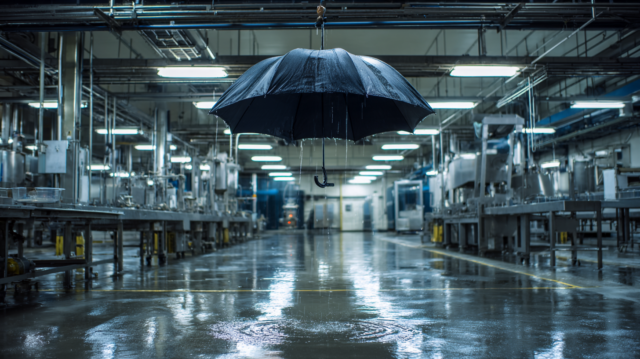
The allegations come from the United States’ Complaint in Intervention, filed November 13, 2025 in the Western District of Michigan. As the Department describes it, roof leaks were a common occurrence at Sturgis, with water running and dripping over equipment. Rather than fix the roof, Abbott used what the complaint calls roof leak umbrellas to divert the water in product processing areas — while corporate leadership understood that a wet environment raised the risk of microbial contamination. Abbott kept running spray dryers after documenting cracks and pits in them, and lengthened the number of batches passing through those dryers between cleaning cycles, which increased production and made the dryer conditions worse.
Then the two allegations that matter most. The government alleges Abbott intentionally did not test for bacterial growth, so that it would not obtain positive results. And in certain instances where testing did show contamination, the government alleges Abbott failed to disclose those results to FDA during the agency’s 2019 and 2022 inspections of the Sturgis plant.
Read those again. Not a failure to find. A decision not to look, and then a decision not to tell the inspector what was found on the occasions when the company did look.
Why the money goes to the Treasury and not to the families
The False Claims Act is a fraud statute. The injured party it protects is the United States as a purchaser. More than half of all infant formula bought in this country is paid for with USDA funds through WIC, and state Medicaid programs pay for formula too. The theory of the case is that Abbott sold noncompliant product into those programs and billed the taxpayer for it.
That is a real injury and $385 million is a real number. But be clear about what this settlement is not. Four infants were hospitalized with Cronobacter sakazakii between September 20, 2021 and February 17, 2022 after consuming powdered formula made at Sturgis, and, as Commissioner Califf told the Senate HELP Committeein May 2022, Cronobacter may have contributed to death in two of those cases. Not one dollar of this settlement goes to those families. Their remedy was, and is, a lawsuit of their own.
The three relators will receive $69 million. I do not begrudge them a dime of it — the qui tam bounty is the reason anyone outside Abbott knows about the umbrellas over the production line, and it worked exactly as Congress designed it to. It is simply worth noticing which injuries American law is built to price, and which it leaves to private litigation and to luck.
The criminal investigation is closed
Under the Federal Food, Drug, and Cosmetic Act, a responsible corporate officer can be charged with a misdemeanor for shipping adulterated food without any proof that he intended to. That is the Park doctrine, and it has been good law since 1975. Here the government’s own complaint alleges considerably more than negligence — it alleges a company that chose not to generate test results and then withheld from FDA the results it did have. Whatever the evidence turned out to be, the Department looked at it and closed the file.
So the price of the conduct described in the complaint is a check, written by shareholders, with no admission and no individual held to account. For scale: Abbott reported net sales of $44.3 billion and net earnings of $6.5 billion in 2025. This settlement is about three days of sales, or about three weeks of profit.
About “no unopened product ever tested positive”
Abbott’s statement today says the settlement does not represent any finding of fault or liability, that no unopened, distributed Abbott infant formula has ever tested positive for Cronobacter sakazakii, that FDA’s testing in early March 2022 of unopened product from the homes of the infants under investigation was negative, and that CDC found no definitive link between the Sturgis facility and the clinical cases.
Every one of those statements can be true and none of them answers the complaint, because the same filing alleges that Abbott declined to test for bacterial growth precisely so that it would not have positives to report. A company accused of building a testing program to miss cannot then offer the absence of a positive as proof of a clean plant.
There is also the nature of the organism. Contamination in a dry powder is sparse and patchy; it does not distribute itself evenly through a lot so that a few retained cans will show it. Cronobacter infection was not reportable in most states at the time and CDC was receiving two to four case reports a year nationally, so four in five months was the signal, not the noise. The government’s case never rested on a positive can. It rested on the conditions the product was made in — which is how food safety law is supposed to work, because by the time you have a positive can you already have a sick baby.
Four years later, the rule has not moved
Abbott shut Sturgis down on February 17, 2022, a national formula shortage followed, and in May 2022 the company entered a consent decree of permanent injunction requiring outside expert oversight before it could reopen. Now there is a fraud settlement. All of it is after the fact, and none of it changed what a formula maker is required to test for.
21 C.F.R. § 106.55 still requires finished-product testing for exactly two organisms: Salmonella and Cronobacter. Clostridium botulinum is not on it. It was not on it in November 2025, when 48 infants across 17 states were hospitalized in the ByHeart outbreak. It was not on it this spring, when four more were hospitalized after consuming Nara Organics formula. It is not on it this morning. On August 27, 2026, CDC closed the Nara investigation and reported that whole genome sequencing tied the two outbreaks to a common source — milk supplied by Organic West Milk and spray dried by Dairy Farmers of America. Fifty-two babies, many on ventilators, one organism, and it is the organism nobody is required to look for. FDA named it by genus and species in a Call-to-Action letter to the entire powdered formula industry on March 8, 2023.
Here is the arithmetic, since today is a day for numbers. California prices BabyBIG, the only treatment for infant botulism, at $69,300 a dose. Fifty-two doses at that price is about $3.6 million — roughly one percent of what Abbott agreed to pay today, and about five percent of what three relators will take home. Screening the ingredient costs a fraction of that again. This is the rare safety requirement that is cheaper than not having it.
Which brings me back to the timing
H.R. 7867, the Infant Formula Safety Modernization Act of 2026, puts C. botulinum on the required testing list, mandates environmental monitoring inside the plant, and holds foreign manufacturers to American standards. The House Health Subcommittee held its hearing on April 29, 2026. No markup has been scheduled since. The Senate passed the narrower S. 272 the same day, 22 to 0 in committee and by unanimous consent on the floor, which tells you this is not a hard vote once somebody puts it on a calendar. S. 272 reaches the organisms already on the list. It does not reach the one that paralyzed these children.
I have written the two committees with jurisdiction four times — Energy and Commerce on June 23 and August 28, HELP on June 29 and August 28, with fourteen families’ statements and photographs attached to the first one. I have had no reply to any of them. This week, in the week both chambers returned, two t-shirts are being hand-delivered to each of the 77 offices on those two committees. A shirt in a plastic baby bottle will not produce a markup. It will sit on a desk and say the argument in one line.
Today the Justice Department found $385 million worth of accountability for how infant formula was made between 2018 and 2022. Every dollar of it is backward-looking, and not one dollar of it requires anyone to run a single additional test tomorrow. Congress can do that part. It has had the bill since March.