Lucky Dogs – There should be a law?

Mid America Pet Food, Mount Pleasant, Texas, is voluntarily recalling one lot of Victor Super Premium Dog Food, Hi-Pro Plus produced at its Mount Pleasant, Texas production facility because it has the potential to be contaminated with SalmonellaSalmonella can affect animals eating the products and there is risk to humans from handling contaminated pet products, especially if they have not thoroughly washed their hands after having contact with the products or any surfaces exposed to these products.

Healthy people infected with Salmonella should monitor themselves for some or all of the following symptoms: nausea, vomiting, diarrhea or bloody diarrhea, abdominal cramping and fever. Rarely, Salmonella can result in more serious ailments, including arterial infections, endocarditis, arthritis, muscle pain, eye irritation, and urinary tract symptoms. Consumers exhibiting these signs after having contact with this product should contact their healthcare providers.

Pets with Salmonella infections may be lethargic and have diarrhea or bloody diarrhea, fever, and vomiting. Some pets will have only decreased appetite, fever and abdominal pain. Infected but otherwise healthy pets can be carriers and infect other animals or humans. If your pet has consumed the recalled product and has these symptoms, please contact your veterinarian.

The affected product was only sold in 5-pound bags. No human or pet illnesses have been reported to date.

Products were distributed to various distributors and retailers in the United States. The affected product consists of 644 cases sold in 5-pound bags with lot code 1000016385with Best By Date 4/30/2024. Lot code information is found on the back of the bag. Images of product are below.

No other products are included in this recall.

This voluntary recall is being issued due to a single sample of Victor Super Premium Dog Food that tested positive for Salmonella in a random sample test conducted by the South Carolina Department of Agriculture.

Retailers and distributors should immediately pull the recalled lot from their inventory and shelves. Do not sell or donate the recalled products.

Do not feed the recalled product to pets or any other animals. Destroy the food in a way that children, pets and wildlife cannot access. Wash and sanitize pet food bowls, cups and storage containers. Always ensure you wash and sanitize your hands after handling recalled food or any utensils that come in contact with recalled food.

Here is my point – even with an outbreak – no recall.

As of August 23, 2023, a total of 18 people infected with the outbreak strain of Salmonella were reported from 4 states (Connecticut 1, Massachusetts 1, New Jersey 11, New York 5). Illnesses started on dates ranging from April 27, 2023, through July 6, 2023. 
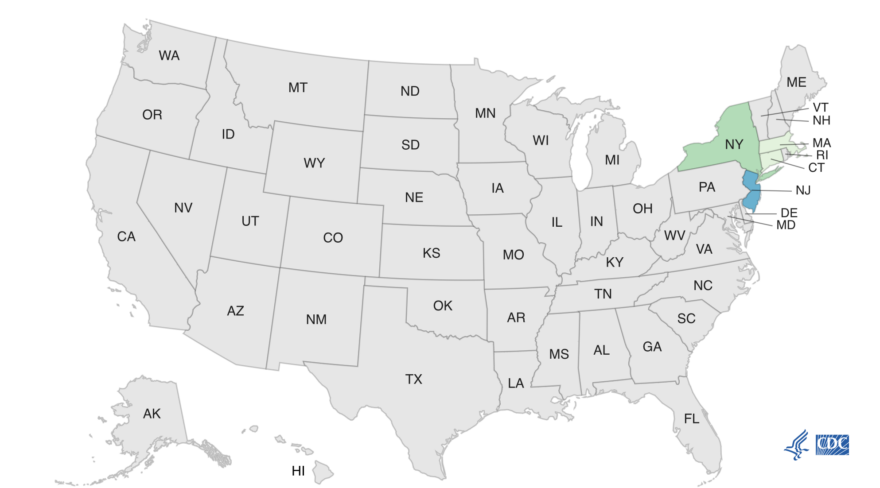
State and local public health officials interviewed people about the foods they ate in the week before they got sick. Of the 16 people interviewed, 10 (63%) reported eating ground beef. Nine sick people reported purchasing the ground beef from ShopRite locations in Connecticut, New Jersey, and New York. Seven of these people specifically reported purchasing 80% lean ground beef products. Two people reported purchasing ground beef products from ShopRite but could not remember the type of ground beef. Epidemiologic showed that ground beef was the likely source of the outbreak. 

Whole genome sequencing (WGS) showed that bacteria from sick people’s samples were closely related genetically. This suggested that people in this outbreak may have gotten sick from the same food.

The outbreak strain was identified in a routine ground beef surveillance sample collected by USDA-FSIS in March 2023.

I have been spending the long Labor Day weekend digging deep into the state health departments, FDA and CDC documents surrounding the 2022 Wendy’s E. coli Outbreak that sickens 109, putting dozens in the hospital, with several children suffering acute kidney failure.

Here is the FDA Traceback Diagram – expect subpoenas.

I laugh sometimes that I spend 100% of my time suing companies for poisoning their customers and 100% of my time trying to convince them to do the opposite.  As I have said far too frequently over the last 30 years – “there is a business reason and a moral reason not to poison your customers.”

This month, besides the 323 people with acute liver failure I need to help, the half a dozen sickened or killed by milkshakes tainted with Listeria, the 109 sickened by E. coli in 2022 that Wendy’s ignores, or the 42 college kids with E. coli in Arkansas, I got a lot on my plate.

In addition to the litigation, I will also work on some persuasion this month.

I have an interview with Scripps on the recall issues with Trader Joe’s at 6:00 AM tomorrow my time.

A Poisoned screening with law students at University of Arkansas this week and an interview on the Sarah Fraser Show.

The I am off to the Global Crisis Management Summit in the UK while finding time for a Podcast on something simple as modernizing US Food Safety.

Then the Highfield Improving Food Safety Webinar.

Then the DC Poisoned premier for Congress members and Senators (perhaps the President too?) – if I can get there, and then.

The San Antonio Texas Trial Lawyers speech.

I have some Education and Litigation in Food Safety Education Month.

Perhaps millions in punitive damages and criminal fines for “conscious disregard to a know risk?”

People always ask my why do leafy green E. coli outbreaks keep happening. I think the bottom line is that retailers, restaurants, growers, processors and the government simply do not give a cow’s pie about the sickened and/or dead consumers – they are simply the cost of doing business or staying in office.

I am working on a recent major E. coli outbreak – I represent several children who developed HUS and will have a lifetime of complications – that was likely linked to iceberg/romaine hybrid grown in Santa Maria in California. The red spot is the particular lettuce grow field, and thanks to Google Earth, we can pan in and see what is less than a stone’s trow away – you guessed it – cow pies.

Growing lettuce in a location like this should be against both common sense and the law. Perhaps it fits the standard for punitive damages – a conscious disregard for a known risk.

I new journal article on the polony tragedy was just published: “Cost estimation of listeriosis (Listeria monocytogenes) occurrence in South Africa in 2017 and its food safety implications.”

Some main points:

Estimate the loss of 204 that died was at least $240,000,000 US

Hospitalization costs were at least $10,400,000 US

Loss to businesses was at least $15,000,000 US

This does not even account for future medical expenses and/or lost productivity to those that survived and who have life-altering complications.

And, what about the emotional cost of the survivors?

Here is the abstract:

Periodic outbreaks of foodborne pathogens have resulted in food safety concerns, due to health implications and cost consequences. Occurrence of Listeria monocytogenes in foods and listeriosis have been reported in developed countries; however, documentation of listeriosis in South Africa is limited. In 2017–2018, Listeria was reported on polony (processed deli meat) and listeriosis was observed in South Africa (L. monocytogenes sequence type 6 (ST-6) was identified as the causal agent for listeriosis). Due to its potential effects, we conducted cost estimates to assess the implications of listeriosis outbreak with respect to illnesses, hospitalizations and deaths, and productivity losses. Cost estimates were computed on publicly available data by using USDA-ERS cost computation model for Listeria. Listeriosis had significant impacts, as mortality of 204 individuals with confirmed listeriosis cases was reported, with infants having the highest percent of fatalities (42%). The cost valuation of fatality cases was over US$ 260 million. Hospitalization costs associated with one-month recovery from listeriosis were estimated at US$ 10.4 million. Productivity losses attributed to listeriosis for humans and export value losses for food processors were in excess of US$ 15 million. Increase of food safety measures in South Africa could reduce foodborne disease outbreaks. Pre-emptive pathogen detection, sanitary procedures and bacterial inactivation can enhance control of L. monocytogenes in food processing environments.

Here is what happened and why:

We are now beyond five years from the date that the NICD announced the association between Tiger Brands’ polony products and the outbreak, and the work done by all parties has only generated more evidence that the NICD’s and Tiger Brands’ conclusions are accurate. There is no evidence to the contrary.

In 2017 and 2018, the world’s largest and deadliest outbreak of listeriosis occurred in multiple provinces of South Africa (Figure 1). The outbreak was caused by contaminated polony, a ready-to-eat, processed meat product. Ready-to-eat, processed meats are a well-known vehicle for listeriosis outbreaks (Thomas et al., 2020). The Minister of Health declared that there was an outbreak of listeriosis on December 5, 2017, and, on March 4, 2018, further identified Tiger Brands’ polony products as the cause of the outbreak. The Minister of Health instructed Tiger Brands to recall all polony products the same day. See generally, Minister of Health September 3, 2018, Media Statement. The Ministry of Health based its conclusions on the investigative findings of the Joint Public Health Emergency Co-ordinating Committee, which was established for the specific purpose of identifying the cause of the outbreak and developing measures to prevent further illnesses and other outbreaks associated with processed meat products generally. Id. The relevant epidemiologic findings are set forth in the paragraphs that follow.

Figure 1. Incidence of Laboratory-Confirmed Listeriosis Cases during the Outbreak Period, According to South African Districts (Thomas et al., 2020).

Cases were reported from across the country, with most cases reported from Gauteng Province (58%). Women accounted for 55% of total cases. The ages of cases ranged from birth to 93 years. Neonates (aged £ 28 days) were the most affected age group, accounting for 43% of cases. This was followed by adults of 15 to 49 years of age, accounting for 32% of cases. The disease outcome was known for 806/1,060 (76%) of cases; 27% (216/806) had the known outcome “died” (Smith et al., 2019).

Listeriosis is a serious foodborne infection with a case-fatality rate (“death rate”) of 20-30% (Thomas et al., 2020). People primarily affected by listeriosis have impaired cell-mediated immunity. This includes those who are pregnant, elderly, or immunocompromised from conditions such as HIV, chronic disease, or immunosuppressive therapy (Thomas et al., 2020). The specific outbreak strain associated with the outbreak was Lm ST6. There are two ways that listeriosis can manifest: febrile gastroenteritis and invasive listeriosis (Coulombier). Invasive listeriosis is characterized by bacteraemia, meningitis, pneumonia, endocarditis, and sepsis (Smith et al., 2019).

A total of 1,060 cases were reported during the period of January 11, 2017, to July 17, 2018 (Figure 2)[1]. The outbreak period was defined as a duration of time during which case numbers exceeded and remained above a weekly threshold of five cases per epidemiological week (Thomas et al., 2020). At the peak of the outbreak (mid-November 2017), 41 listeriosis cases were reported in a single week. Prior to this outbreak, listeriosis was not a reportable disease in South Africa; therefore, information is not available on the prevalence, epidemiology, and description of clusters/outbreaks on listeriosis. Due to the lack of surveillance data, the baseline number of listeriosis cases was estimated from counts of listeriosis cases in 2016.

It is known that in 2015 and 2016, clusters of listeriosis occurred in South Africa. The 2015 listeriosis cluster involved 7 cases total, and the predominant strain was Lm ST6. However, researchers did not have sufficient epidemiologic evidence to connect the 2015 cluster to any specific food product (Shuping et al., 2015). For the 2016 cluster, retrospective analysis of Lm cases from the years 2012-2016 was used to calculate the expected case numbers for years 2013, 2014, 2015, and 2016 in the Gauteng province (Mathebula et al., 2016)[2]. Because there were only 3 cases in the 2016 cluster, researchers needed to estimate the baseline number of cases.

When determining if a cluster of diseases is classified as an outbreak or epidemic, it is essential to know what the baseline number of illnesses is in the population of interest. An epidemic refers to an increase in the number of cases of a disease, above what is normally expected in that population in that area, and an outbreak is defined the same but is often used for a more limited geographic area (Centers for Disease Control and Prevention [CDC], 2012).

Figure 2. Distribution of Laboratory-Confirmed Cases of Listeriosis, According to Outbreak Week and Major Events (January 1, 2017 to August 21, 2018) (Thomas et al., 2020).

Case definitions are used in outbreak investigations to help identify cases who are associated with the outbreak. A case definition includes criteria such as the subject population, implicated location, time, clinical features, and/or laboratory test results if available (CDC, 2012). The initial case definition for the primary listeriosis outbreak included all cases of listeriosis that occurred in South Africa from 2017 to 2018. The initial case definition was appropriate due to the lack of whole-genome sequencing (WGS) data at the beginning of the investigation. Multilocus sequencing typing (MLST) was used later to analyse the WGS results from all viable isolates obtained from case-patients. Researchers discovered that 93% of the clinical isolates collected from cases during the outbreak period were Lm ST6 (Thomas et al., 2020; Gerner-Smidt). The case definition later included sequence typing information to increase the likelihood of identifying a common source (Besser). This finding also showed that the outbreak strain of Listeriosis was definitively the Lm ST6 strain.

Further, we note that investigators thoroughly analysed the theoretical possibility that Lm ST6 was coming from more than just Tiger Brands’ polony products. In short, after conducting environmental investigations at all 157 ready-to-eat meat production facilities in South Africa, there was no Lm ST6 in any other products or facilities except Tiger Brands.

Together with the NCID’s clear statements that Tiger Brands polony products were the source of the outbreak, based on epidemiologic and environmental evidence, the constellation of all evidence conclusively establishes that Tiger Brands’ polony products were in fact the sole source. There is no additional analysis that will materially change these facts.

Based on its investigation findings, the Minister of Health issued a recall of Tiger Brand’s ready-to-eat meat products produced at the Enterprise facility. The Minister of Health also recalled all ready-to-eat meat products produced at Rainbow Foods, but epidemiologic and environmental findings during the investigation showed that this was a precautionary measure only—i.e., the Listeria identified at the Rainbow Foods’ production facility on environmental testing was not Lm ST6, and therefore had no causal association with illness in the outbreak. See Minister of Health March 4, 2017 Statement. Shortly after Tiger Brands’ recall, the outbreak essentially stopped (Figure 3).

Figure 3. Epidemic curve of laboratory-confirmed listeriosis cases by date of clinical specimen collection (n=1 038) and sequence type (ST) (n=564), South Africa, 01 January 2017 to 5 June 2018 (n=1049)

The environmental and epidemiologic investigative findings establish the likely causal nexus between Tiger Brands’ polony products and most all Listeriosis cases that occurred in South Africa before, during, and after the outbreak period. (Coulombier).  As stated above, 93% of clinical isolates that underwent sequencing were shown to be Lm ST6, the strain that was both epidemiologically associated with illness and repeatedly found in the production environment at the Enterprise facility, and nowhere else. But not all isolates could be sequenced, due to the lack of laboratory resources and personnel available (Besser). Based on the high percentage of Lm ST6 clinical isolates, it is highly likely that a similar percentage of non-sequenced isolates would have been Lm ST6 if sequencing could have been done (Coulombier). As further support that there was no difference between the distribution of sequence types among the non-sequenced samples and the distribution of sequence types observed in the sequenced samples, the process of selecting case isolates to be sequenced was not biased. Therefore, it is a statistically valid and provable fact that, in the absence of evidence to the contrary—i.e., sequencing that showed that a clinical isolate was not Lm ST6–a listeriosis patient diagnosed during the outbreak period had a > 90% probability of being related to the outbreak even without confirmed laboratory results (Gerner-Smidt).

After detecting the outbreak, the Centre for Enteric Diseases, a part of the National Institute for Communicable Diseases, conducted a nested case-control study that provided evidence that cases with Lm ST6 infections were more likely to have eaten polony than those with non- Lm ST6 infections (Thomas et. al, 2020). In outbreak investigations, case-control analysis is performed to estimate the odds ratio for the association between specific food items and the outbreak-associated illness. For this nested case-control study, case patients were those with Lm ST6 infections, and control patients were people infected by another strain of LM (i.e., not Lm ST6) during the outbreak period. Results from this study show that the odds ratio was 8.55 with a 95% confidence interval of 1.66 – 43.35. An odds ratio is a measure of association between the odds of becoming ill from consuming a specific food item versus the odds of becoming ill without having consumed the specific food item (Coulombier). An odds ratio of 8.55 signifies that the odds of having eaten polony in Lm ST6 cases is 8.55 times greater than the odds of having eaten polony in non-Lm ST6 cases. Based on the calculated confidence interval, this result is statistically significant because the confidence interval does not include the null value of 1. Therefore, 95% of the time, the true odds ratio fell within this interval.

Prior to the study, food history interviews were conducted to generate a hypothesis as to which food item could have been the source of the outbreak (Coulombier). The food histories were conducted with the use of a standardized questionnaire that inquired as to food consumed by a case-patient over the four weeks prior to onset of symptoms. Open-ended questions were posed to Listeriosis cases to understand each case’s food habits, such as where they purchase food, name of restaurants patronized, and use (and name) of informal food vendors. Closed-ended questions were posed to determine each case’s exposure to specific food items associated with outbreaks in the past and locally consumed foods thought to pose a high risk for listeriosis such as processed meats (e.g., biltong), cold meats (e.g., ham, polony), soft cheeses, raw milk, and raw vegetables. Brand preferences were also captured in the form.  The combination of open and closed-ended questions was and continues to be standard practice for the conduct of epidemiologic investigations internationally and provided investigators with high value data for consideration alongside other epidemiologic and environmental information.

The food history interviews were completed by November 1, 2017. The epidemiologic methods utilized throughout this investigation, including the case-control, were robust and mirrored those used in high-level investigations throughout the world. The investigators’ multi-disciplinary investigative methods were fully appropriate for the outbreak circumstances (Besser).

On January 13, 2018, febrile gastroenteritis developed in 10 children from a nursery in Gauteng Province. Several stool samples were collected from the children, and one yielded Lm ST6. Sandwiches prepared and eaten at the nursery were the only common food exposure, and polony was the common ingredient. Polony was recovered from the nursery refrigerator, and Lm ST6 was identified in the polony produced at Tiger Brands Enterprise Facility in Polokwane (Thomas et al., 2020).

On February 2, 2018, an environmental investigation took place at the Tiger Brands Enterprise Facility in Polokwane following the discovery at the nursery (Gerner-Smidt). Of 317 environmental samples taken from the Polokwane facility, 47 tested positive for Listeria monocytogenes, and of the 47 that tested positive, 34 were subtyped as the outbreak Lm ST6 strain. Additionally, two of 13 samples of unopened polony loaves collected at the facility tested positive for Listeria monocytogenes, and both were subtyped as the outbreak Lm ST6 strain.

These facts stand in stark contrast to the investigations at all other South African ready-to-eat meat producers, during which investigations no Lm ST6 was recovered in any food or environmental sample.

The fact that the public health investigation involved environmental inspections and sampling at the production facilities of other ready-to-eat meat producers is remarkable. Indeed, the public health investigation of this outbreak was unprecedented in scope, even internationally, as it is, in our experience, unprecedented to engage in such robust investigation of producers whose products are not epidemiologically associated with an outbreak. Thus, the only epidemiologic evidence establishes that Tiger Brands, and Tiger Brands alone, produced product contaminated by Lm ST6 during the outbreak period. By incorporating findings from the epidemiologic, environmental, microbiologic, and traceback data, investigators provided conclusive evidence that the source of the outbreak was polony produced fromTiger Brands Enterprise Foods Polokwane production facility, and that there were no other possible causes.

Further, and as set forth previously, the Minister of Health identified Tiger Brands’ polony products as the source of the outbreak on March 4, 2018, and instructed Tiger Brands to recall all its ready-to-eat meat products. At the point in time that Tiger Brands’ polony products were taken off of store shelves and were no longer widely available for purchase and consumption in South Africa, the outbreak ended and listeriosis cases in South Africa shortly returned to their pre-outbreak baseline. As Figure 3 demonstrates, by mid-April 2018 (6 weeks after recall), fewer than 5 cases were reported weekly. Regarding those individuals who became ill between the date of Tiger Brands’ recall and mid-April 2018, listeriosis cases continued to become ill by consumption of Tiger Brands’ polony products that were purchased before the date of the recall, which was to be expected given the lengthy incubation period for listeriosis generally (from 3 days to over one month), or from Tiger Brands’ polony products that were simply not removed from store shelves in time.

Following the findings by the NICD, Tiger Brands conducted its own internal investigation into the outbreak. During this internal investigation, based on information set forth in the discovery conducted to-date and Tiger Brands’ various public statements, Tiger Brands confirmed the presence of the Lm ST6 outbreak strain in both its products and various locations in the production environment at the Enterprise facility. Tiger Brands issued several public statements to this effect.

In a SENS statement dated 19 March 2018, Tiger Brands issued the following public statement:

“On 15 March 2018, Tiger Brands received confirmation from independent laboratory tests corroborating the DoH’s findings of the presence of LST6 in the environment at its Polokwane Enterprise Foods manufacturing Facility. In addition, there was a positive detection of LST6 on the outer casing of two samples.”

On 26 March 2018, Tiger Brands issued a public statement on its website reiterating the independent laboratory results announced in the SENS statement of 19 March 2018 as aforementioned which confirmed the presence Lm ST6 in the Tiger Brands Polokwane Facility. In the 26 March press statement, Tiger Brands CEO, Mr Lawrence Mac Dougall commented on this discovery and, inter alia, stated as follows:

“We are investing all our time and energy into not only understanding the cause of the LST6 detection, but also how it could have come into our facility.”

In a statement to shareholders dated 23 May 2018, Mr Mac Dougall stated that:

“The detection of the presence of Listeria ST6 in our factory in Polokwane was disappointing to us given our compliance with best practices and prevailing standards.”

In a SENS statement dated 25 April 2018, Tiger Brands reported that it had received independent laboratory test results following its own internal investigation which confirmed the presence of the Lm ST6 in samples of ready-to-eat meat products manufactured at the Polokwane Facility:

“The purpose of this announcement is to update shareholders on the results of the independent laboratory re-testing which was carried out in respect of the presence of LST6 in the above samples which were manufactured at the Enterprise Polokwane processing facility. On 24 April 2018, Tiger Brands received confirmation of the presence of LST6 in these samples.”

From both the NICD’s and Tiger Brands’ investigations into the outbreak, there is no evidence that the outbreak had any source other than Tiger Brands’ polony products. There is no epidemiologic support for that proposition, and there is no environmental support for that proposition because NICD found no other positive Lm ST6 samples at any other facility that produces ready-to-eat meat. In fact, Tiger Brands has, in unequivocal terms, admitted to this responsibility. For example, in the request Further Trial Particular, Tiger Brands affirmed its responsibility for Lm ST6 cases:

“Tiger Brands statement of 24 April 2018 was correct. Tiger Brands learnt that laboratory tests had found ST6 in ready-to-eat meat products from its Enterprise Foods manufacturing facility in Polokwane. It accepts that the laboratory findings were correct.”

“Tiger Brands does not know to what products the contamination extended or over what period it occurred. It accepts, however, that ST6 contaminated products from its Polokwane facility probably infected some of the people who suffered from listeriosis during the outbreak.”

“The defendants accept the test results that L. monocytogenes was detected in the polony water coolers at the Polokwane facility.”

Further, and following the Supreme Court of Appeal’s ruling in the third-party subpoena’s litigation, Tiger Brands issued the following statement to the press:

“On Friday, 4 February 2022, the Supreme Court of Appeal overturned the earlier order of the Gauteng Division of the High Court, Johannesburg which required various third parties to hand over epidemiological information relating to the listeriosis outbreak.”

“The 2018 listeriosis outbreak affected many South Africans. We are saddened by the impact it has had on the lives of the victims and those who have lost loved ones from the outbreak. Tiger Brands reiterates its commitment to ensure that a resolution of the matter is reached in the shortest possible time, in the interest of all parties, particularly the victims of listeriosis.”

That Tiger Brands is liable for the manufacture and sale of contaminated polony products that injured people is beyond doubt; the scientific findings from the multi-disciplinary investigation allow only this conclusion, and the functional life of the outbreak ended when Tiger Brands was ordered to withdraw its products from the market. The epidemiologic implications of NICD’s sequencing effort are conclusive, which is the preliminary point made by SAAFOsT, in which organization Tiger Brands is a custodian member, in its December 2017 statement that:

“This is undoubtedly one of the worst listeriosis cases in global history. A large percentage (74%) of all the clinical isolates belong to the same sequence type i.e. ST6—this means that these isolates originate from a single source, most likely a food product on the market.”

What SAAFOsT did not have the benefit of then knowing, however, was that sampling at Tiger Brands’ Polokwane facility would validate in every respect the epidemiologic implications from NICD’s sequencing efforts on human isolates.

We are now beyond four years from the date that the NICD announced the association between Tiger Brands’ polony products and the outbreak, and the work done by all parties has only generated more evidence that the NICD’s and Tiger Brands’ conclusions are accurate. There is no evidence to the contrary.

_____________________

[1]  Note: 23 October 2016 to 3 September 2018 is the “Outbreak Period” in the Certification Order.

[2] The oldest South African CT4148 isolates date from September 2015 and are related to a cluster of three cases of listeriosis in Western Cape Province28; this finding suggests a potential epidemiologic link to the 2017–2018 outbreak. Thomas, et al., 2020

References

Besser, J. (2020). Expert Opinion Regarding a Listeria Outbreak in South Africa Involving Tiger Brands Limited.

Coulombier, D. (2020). Expert Opinion Regarding a Listeria Outbreak in South Africa Involving Tiger Brands Limited.

Gerner-Smidt, P. (2020). Expert Opinion on Subtyping Aspects of the Listeria Outbreak in South Africa Involving Tiger Brands Limited.

Smith, A. M., et al. (2019). Outbreak of Listeria monocytogenes in South Africa, 2017-2018: Laboratory Activities and Experiences Associated with Whole-Genome Sequencing Analysis of Isolates. Foodborne Pathog. Dis. 16(7): 524-530. doi:10.1089/fpd.2018.2586

Thomas, J., et al. (2020). Outbreak of Listeriosis in South Africa Associated with Processed Meat. N. Engl. J. Med. 382: 632-643. doi:10.1056/NEJMoa1907462

Tiger Brands SENS statement dated 19 March 2018, “Financial Impact of Product Recall and Suspension of Operations at the Polokwane, Germiston, Pretoria and Clayville Processing facilities of Value-Added Meat Products (“VAMP”); Institution of Class Action; and Results of Independent Tests carried out in respect of the presence of Listeria monocytogenes ST6 type (“LST6”)”

Tiger Brands Public Statement dated 26 March 2018, “Tiger Brands Listeria Update”

Tiger Brands SENS Statement dated 23 May 2018, “Unaudited group results and dividend declaration for the six months ended 31 March 2018.

Tiger Brands SENS Statement dated 25 April 2018, ‘Results of Independent Tests carried out in respect of the presence of Lister monocytogenes ST6 type (“LST6”)’

Tiger Brands response to Plaintiff’s Further Particulars

Rose, “Tiger Brands Tall Tale”. Financial Mail, 10 February 2022.

Shuping, L., et al. (2015). Investigating a cluster of Listeria monocytogenes cases in the Western Cape province of South Africa, September 2015.

NICD. (2016). Investigation of Listeria monocytogenes cases at Charlotte Maxeke Johannesburg Academic Hospital in Johannesburg, December 2016.

NICD, Listeriosis Outbreak Situation Report. Dated 11 June 2018.

SAAFOST, “Listeriosis Outbreak in South Africa – Latest! By Dr Lucia Anelich, SAAFoST President”. Dated 20 December 2017.

The Arkansas Department of Health continues to investigate an outbreak of Shiga toxin-producing E. coli (STEC) (presumably E. coli O157:H7)  infections in Northwest Arkansas. Symptoms have been reported by approximately 100 students who attend the University of Arkansas including several hospitalizations at Mercy Rogers Hospital and Children’s in Little Rock.

We have been contacted by families whose children (University students) have suffered hemolytic uremic syndrome (HUS), a type of acute kidney failure associated with E. coli O157:H7.

The Department has gathered and is now analyzing survey data from more than 3,200 individuals as it works to pinpoint the source. 

Based on what is known about the onset of E. coli-related symptoms, the outbreak appears to have started more than 10 days ago. Symptoms usually start 3 to 4 days after ingesting the bacteria. 

Because the bacteria is also transmissible, it is important to practice proper hygiene, especially good handwashing, always, on and off campus. The university has increased its surface cleaning and sanitizing protocols to help mitigate the spread. In addition, practice other general E. coli prevention practices including cooking meats thoroughly; washing fruits and vegetables well under water; avoiding cross contamination; avoiding raw milk, unpasteurized dairy products, and unpasteurized juices; and following the four steps to food safety when preparing food: clean, separate, cook, chill.  

Seek medical attention right away if you have any severe E. coli symptoms, including: 

  • Diarrhea and fever higher than 102°F 
  • Diarrhea for more than 3 days that is not improving 
  • Bloody diarrhea 
  • So much vomiting that you cannot keep liquids down 
  • Signs of dehydration, such as decreased urination, dry mouth and throat, dizziness when standing up 

E. coli:  Marler Clark, The Food Safety Law Firm, is the nation’s leading law firm representing victims of E. coli outbreaks and hemolytic uremic syndrome (HUS). The E. coli lawyers of Marler Clark have represented thousands of victims of E. coli and other foodborne illness infections and have recovered over $850 million for clients. Marler Clark is the only law firm in the nation with a practice focused exclusively on foodborne illness litigation.  Our E. coli lawyers have litigated E. coli and HUS cases stemming from outbreaks traced to ground beef, raw milk, lettuce, spinach, sprouts, and other food products.  The law firm has brought E. coli lawsuits against such companies as Jack in the Box, Dole, ConAgra, Cargill, and Jimmy John’s.  We have proudly represented such victims as Brianne KinerStephanie Smith and Linda Rivera.

If you or a family member became ill with an E. coli infection or HUS after consuming food and you’re interested in pursuing a legal claim, contact the Marler Clark E. coli attorneys for a free case evaluation.

Additional Resources:

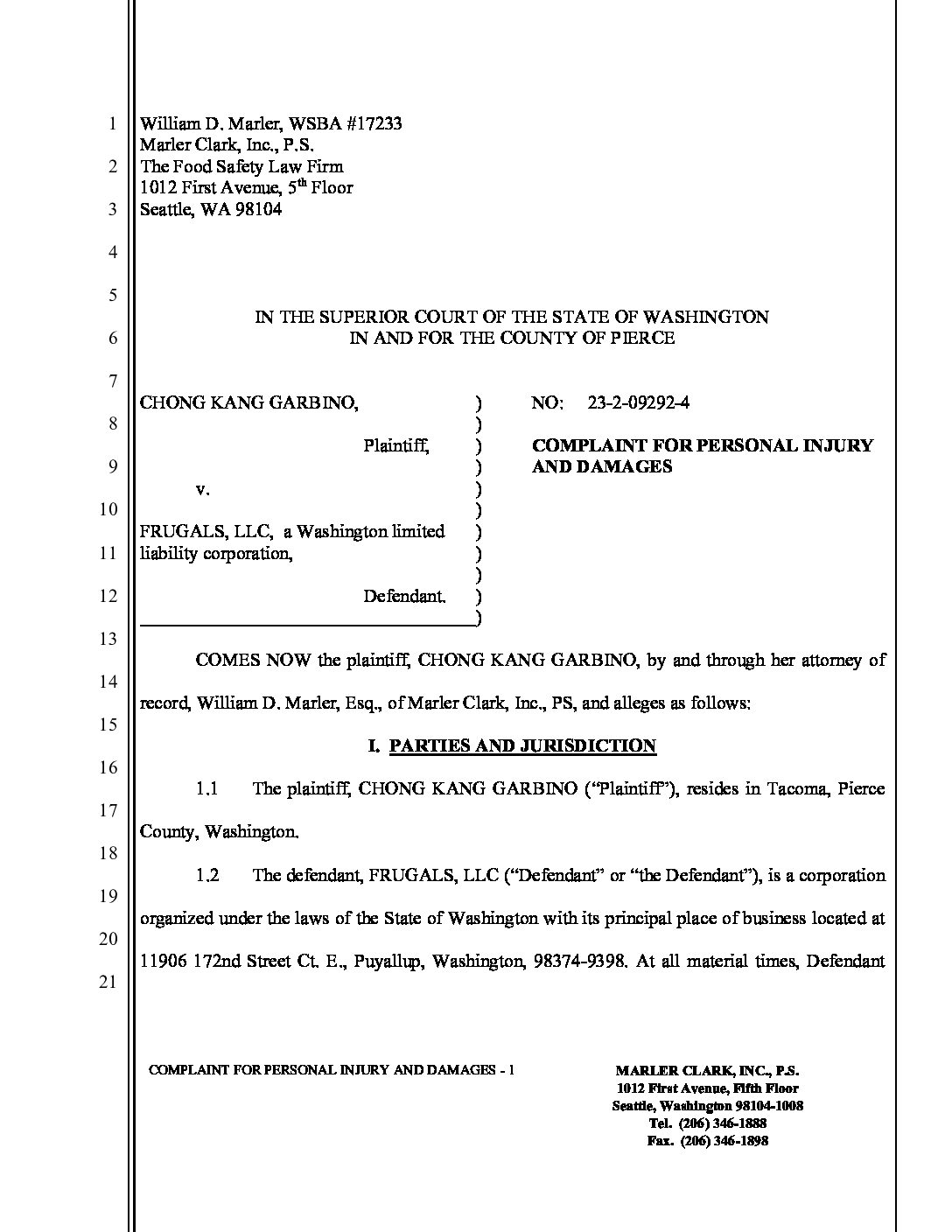
Listeria bacteria found in all milkshake flavors sold at Frugals restaurant at 10727 Pacific Ave. S., Tacoma, WA are associated with a foodborne listeriosis outbreak linked to six hospitalizations and three deaths. Investigators found Listeria in the ice cream machines, which were not cleaned correctly. No other Frugals restaurants are believed to be affected. The restaurant stopped using its ice cream machines Aug. 8, but Listeria can sicken people up to 70 days later. 

Most people who eat food contaminated with Listeria will not get seriously sick, but people who are pregnant, aged 65 or older, and those with weakened immune systems should call their health care provider if they ate a Frugals’ Tacoma milkshake between May 29 and Aug. 7, 2023 and have Listeria symptoms (listed below). Listeria can be treated with antibiotics.

Genetic fingerprinting of bacteria in the milkshakes shows it’s the same strain of Listeria that hospitalized six people between Feb. 27 and July 22 (five people in Pierce County and one person in Thurston County). All six people had conditions that made their immune systems less able to fight disease. Three of the six people hospitalized died. Two people who were hospitalized, but did not die, said they ate Frugals’ Tacoma milkshakes before getting sick.

Listeria symptoms:

  • People who are not pregnant usually have a fever, muscle aches, and tiredness. They may also get a headache, stiff neck, confusion, loss of balance, or seizures.
  • Those who are pregnant usually have a fever, muscle aches, and tiredness. However, Listeria can cause pregnancy loss or premature birth. It can also cause serious illness or death in newborns.

Thanks to the 1920’s song. The good thing about both practicing food law for a long time and having a foodborne epidemiologist on staff is that we have the history of these outbreaks at our fingertips.

YearStateAgentIllHospitalizedDiedBrand
2023WashingtonListeria 663Frugals
2023NY and PAListeria 220Real Kosher
2021-2022MultistateListeria 23221Big Olaf Creamery
2014WashingtonListeria 220Snoqualmie Ice Cream
2010-2015MultistateListeria 10103Blue Bell
2008VermontE. coli 630Homemade Ice Cream, unpasteurized milk
2008MinnesotaSalmonella200Homemade ice cream
2008CaliforniaE. coli 200Consumed at a restaurant; brand or pasteurization unknown
2007CaliforniaNorovirus1700Ice cream with berries, berries were likely the contaminated ingredient
2007PennsylvaniaCampylobacter300Homemade ice cream
2007MinnesotaHepatitis A1560Ice cream or yogurt at a restaurant
2007West VirginiaSalmonella820Homemade ice cream
2006BelgiumE. coli1250Ice cream at a farm
2006CaliforniaSalmonella600Homemade Ice Cream
2005MultistateSalmonella 26110Cold Stone Creamery (cake batter was the contaminated ingredient)
1994MultistateSalmonella 12Schwan’s Ice Cream – the estimated # of ill cases is 224,000!
1993FloridaSalmonella 593Homemade Ice Cream

And, why does the FDA consider Salmonella an adulterant in all foods and the USDA/FSIS does not?

According to the FDA, “[p]athogenic bacteria (e.g., Salmonella or Listeria monocytogenes) are considered adulterants in both human and animal food. Although many animals consuming this food may not become sick themselves, they can become carriers and expose their human family members to pathogenic bacteria. This is especially problematic with young children, the elderly, or people who are immunocompromised.”

According to FDA guidance“[c]”ertain food for animals, such as pet food, poses a significant risk to human health when contaminated with Salmonella, because humans come in direct contact with these foods. Salmonella from such pet food may be ingested directly by humans from their hands or utensils that are contaminated when they feed their pets. Certain vulnerable populations, such as children, the elderly, and individuals with compromised immune systems, are particularly susceptible to acquiring salmonellosis from pet food and may experience more severe symptoms. Additionally, animals may become infected, either asymptomatically or clinically, with Salmonella from the pet food, thus increasing the potential human exposure. 

According to the latest tri-agency (CDC, FDA, FSIS) report (published in November 2022), 23.2% of all Salmonellaillnesses are attributable to chicken and turkey (See 2020 PDF p. 9). The CDC “estimates that Salmonella causes more foodborne illnesses than any other bacteria. Chicken is a major source of these illnesses. In fact, about 1 in every 25 packages of chicken at the grocery store are contaminated with Salmonella.”  According to the  2019 NARMS report“1,400/8,713 (16%) of Retail Chickens tested positive for Salmonella – up from 4% in 2018

507/4,320 (12%) of Retail Ground Turkey tested positive for Salmonella – up from 8% in 2018 and 50% of “Chicken (Cecal)” tested positive – up from 46% in 2018.

Personally, as I said to the Los Angeles Times some time ago, “I think that anything that can poison or kill a person should be listed as an adulterant [in food].”

Ignoring Salmonella in meat makes little, if any, sense.

Even after the Court’s twisted opinion in Supreme Beef v. USDA, where it found Salmonella “not an adulterant per se, meaning its presence does not require the USDA to refuse to stamp such meat ‘inspected and passed’, ” our government’s failure to confront the reality of Salmonella, especially antibiotic-resistant Salmonella, is inexcusable.

The Wisconsin Supreme Court in Kriefall v Excel called it as it saw it – at least with respect to E. coli – but the analysis is spot on for Salmonella as well:

The E. coli strain that killed Brianna and made the others sick is a “deleterious substance which may render [meat] injurious to health.” There is no dispute about this. Thus, under the first part of 21 U.S.C. § 601(m)(1), meat that either “bears or contains” E. coli O157:H7 (the “deleterious substance”) is “adulterated.” That E. coli O157:H7 contamination can be rendered non-“injurious to health” by cooking thoroughly, as discussed below, does not negate this; Congress used the phrase “may render,” not “in every circumstance renders.” Moreover, if the E. coli bacteria is not considered to be “an added substance,” because it comes from some of the animals themselves and is not either applied or supplied during the slaughtering process (although we do not decide this), it cannot be said that the E. coli strain “does not ordinarily render [the meat on or in which it appears] injurious to health.” Accordingly, meat contaminated by E. coli O157:H7 is also “adulterated” under the second part of § 601(m)(1).

Now, why would Salmonella be different? According to the CDC, it is estimated that 1.4 million cases of salmonellosis occur each year in the United States. Of those cases, 95 percent are related to foodborne causes. Approximately 220 of each 1,000 cases result in hospitalization, and 8 of every 1,000 cases result in death. About 500 to 1,000 deaths – 31 percent of all food-related deaths – are caused by Salmonella infections each year.

So, where do we stand with the existing USDA/FSIS law on adulteration?

Here is the law:

21 U.S.C. § 601(m)(4) – SUBCHAPTER I – INSPECTION REQUIREMENTS; ADULTERATION AND MISBRANDING – CHAPTER 12 – MEAT INSPECTION – TITLE 21—FOOD AND DRUGS

(m) The term “adulterated” shall apply to any carcass, part thereof, meat or meat food product under one or more of the following circumstances:

(1) if it bears or contains any poisonous or deleterious substance which may render it injurious to health; but in case the substance is not an added substance, such article shall not be considered adulterated under this clause if the quantity of such substance in or on such article does not ordinarily render it injurious to health; …

(3) if it consists in whole or in part of any filthy, putrid, or decomposed substance or is for any other reason unsound, unhealthful, unwholesome, or otherwise unfit for human food;

(4) if it has been prepared, packed, or held under insanitary conditions whereby it may have become contaminated with filth, or whereby it may have been rendered injurious to health; …

Here is the law specifically related to poultry:

Title 21 – FOOD AND DRUGS CHAPTER 10 – POULTRY AND POULTRY PRODUCTS INSPECTION

(g) The term “adulterated” shall apply to any poultry product under one or more of the following circumstances:

(1) if it bears or contains any poisonous or deleterious substance which may render it injurious to health; but in case the substance is not an added substance, such article shall not be considered adulterated under this clause if the quantity of such substance in or on such article does not ordinarily render it injurious to health; …

(3) if it consists in whole or in part of any filthy, putrid, or decomposed substance or is for any other reason unsound, unhealthful, unwholesome, or otherwise unfit for human food;

(4) if it has been prepared, packed, or held under insanitary conditions whereby it may have become contaminated with filth, or whereby it may have been rendered injurious to health;

Hmmm. It is hard to read the above and not think that the words equate to all E. coli as well as Salmonella — frankly, all pathogens in food.

I know, I am just a lawyer, but don’t ya think that when food with animal feces (and a dash of E. coli O157:H7) in it is considered an adulterant, that other animal feces (with dashes of other pathogens, like Salmonella) in them, should be considered adulterated too?  But, hey, that is just me.

Another odd governmental fact is that the FDA does not seem to make a distinction between pathogens it considers adulterants or not. FDA’s enabling legislation – Sec. 402. [21 USC §342] of the Food, Drug & Cosmetic Act also defines “Adulterated Food” as food that is:

(a) Poisonous, insanitary, or deleterious ingredients.

(1) If it bears or contains any poisonous or deleterious substance which may render it injurious to health; but in case the substance is not an added substance such food shall not be considered adulterated under this clause if the quantity of such substance in such food does not ordinarily render it injurious to health;

(2) If it bears or contains any added poisonous or added deleterious substance … that is unsafe within the meaning of section 406;

(3) if it consists in whole or in part of any filthy, putrid, or decomposed substance, or if it is otherwise unfit for food;

(4) if it has been prepared, packed, or held under insanitary conditions whereby it may have become contaminated with filth, or whereby it may have been rendered injurious to health …

It would be interesting, and perhaps entertaining, to have House and Senate hearings focusing on what should and should not be considered adulterants in our food. I can see panels of scientists from various fields, FDA, USDA and FSIS officials, beef, poultry, fish and produce industry representatives, and consumers discussing this.

I would pay to watch it.

And so now onto some history to ruin your appetite.

In 1971 the American Public Health Association (APHA) sued the USDA on the grounds that its mark of inspection (“USDA inspected for wholesomeness”) was misleading because, even though the USDA had put its stamp of approval on meat—literally—it did not, for example, test the meat for bacteria. Moreover, APHA argued that raw meat was commonly contaminated with Salmonella, which posed a risk to the public health. According to APHA, the USDA should instead require that meat carry both a warning label and cooking instructions. The USDA opposed the APHA, helped ably (and predictably) by the meat industry. As quoted by Marion Nestle in her great book, Safe Food, the USDA’s position was that, given how many foods are contaminated with Salmonella, “it would be unjustified to single out the meat industry and ask that the [USDA] require it to identify its raw products as being hazardous to health.” Nestle at 66. (Note to Reader: No, I am not making this up.)

In 1974, the DC Circuit Court of Appeals upheld the position of the USDA and the meat industry, doing so in a way that was as nonsensical as it was sexist. The court stated that: “The presence of salmonellae on meat does not constitute adulteration within this definition [of ‘adulterated,’ provided in 21 U.S.C. § 601 (m)]….As it said in its letter of August 18, 1971 ‘the American consumer knows that raw meat and poultry are not sterile and, if handled improperly, perhaps could cause illness.” In other words, American housewives and cooks normally are not ignorant or stupid and their methods of preparing and cooking of food do not ordinarily result in salmonellosis.’” APHA v. Butz, 511 F.2d 331, 334 (1974).

This remained the position of the USDA and the meat industry until 1994 when, in an act of both common-sense and bravado, Michael Taylor, then FSIS Administrator, announced that E. coli O157:H7 would be deemed an adulterant in raw ground beef. The Agency did not, however, change its tune regarding any other pathogens, especially Salmonella. Indeed, in 1999, when FSIS announced it inane distinction between E. coli O157:H7 in “intact” meat versus “non-intact” meat, the Agency continued to focus on how a given meat was “customarily cooked” as a chief determinant of whether it must be treated as an adulterant. Thus, for example, because it decided that “intact steaks and roasts are customarily cooked in a manner that ensures that these products are not contaminated with E. coli O157:H7,” there was no need to treat this deadly pathogen as an adulterant on intact cuts of meat. Of course, this FSIS policy is also one that appears to have been silently jettisoned by the Agency of late.

The Agency’s position on Salmonella and meat came back to haunt it in a big way when FSIS tried to shut down Supreme Beef Processors, Inc. for repeatedly failing Salmonella performance standards that, according to the Agency, was proof that the ground beef being made there was being processed under “insanitary conditions.” Supreme Beef sued the USDA and not only won an injunction, but it succeeded in having the Salmonella regulations struck down as being “beyond the authority granted the Secretary [of the USDA] by the Federal Meat Inspection Act.” Supreme Beef v. USDA, 275 F.3d 432, 434 (5th Cir. 2001). Explaining its holding, the Court wrote:

The difficulty in this case arises, in part, because Salmonella, present in a substantial proportion of meat and poultry products, is not an adulterant per se, 21 meaning its presence does not require the USDA to refuse to stamp such meat “inspected and passed.” 22 This is because normal cooking practices for meat and poultry destroy the Salmonellaorganism, 23 and therefore the presence of Salmonella in meat products does not render them “injurious to health” 24 for purposes of § 601(m)(1). Salmonella-infected beef is thus routinely labeled “inspected and passed” by USDA inspectors and is legal to sell to the consumer.

Supreme Beef, 275 F.2d at 438-39. And, of course, not surprisingly, the court in this case was quick to cite the decision in APHA v. Butz, and to note that even now the “USDA agrees that Salmonella is not an adulterant per se.” Id. at 439 n. 21.

In my view the Supreme Beef decision is poorly reasoned and ill-informed. (For example, could not someone at the Court figure out that it is impossible for meat to be “infected” with Salmonella, and the proper term here is “contaminated”?) But the real lesson of Supreme Beef is that the USDA was, and continues to be, an Agency that is unable to decide whose side it is on. Sometimes it puts on its public safety hat, and sometimes—actually, most often—it puts on its pro-meat industry hat. And, unfortunately, these roles are too often contradictory. That is why USDA policy when it comes to meat safety is also too often contradictory.

Perhaps it is just time for the FSIS to take the position that all pathogens that can kill you in meat are adulterants.  You have the authority – you just need to use it.