

The Food and Drug Administration’s Food-Recall Process Did Not Always Ensure the Safety of the Nation’s Food Supply
 Prior Office of Inspector General (OIG) reviews focused on U.S. Food and Drug Administration (FDA) oversight of food recalls. Food recalls are the most effective means of protecting public health when a widely consumed food product is either defective or potentially harmful. At the time of those OIG reviews, FDA did not have statutory authority to require food manufacturers to initiate recalls of most foods.
After those reviews, enactment of the FDA Food Safety Modernization Act gave FDA new authority to order a mandatory recall and require firms to recall certain harmful foods. We conducted this review to determine whether FDA is fulfilling its responsibility in safeguarding the Nation’s food supply now that it has mandatory recall authority.
Our objective was to determine whether FDA had an efficient and effective food-recall process that ensured the safety of the Nation’s food supply. Specifically, we focused on FDA’s (1) oversight of firms’ initiation of food recalls, (2) monitoring of firm-initiated recalls, and (3) maintenance of food-recall data in the electronic recall data system.
We reviewed documentation for 30 voluntary food recalls judgmentally selected from the 1,557 food recalls reported to FDA between October 1, 2012, and May 4, 2015.
FDA did not always have an efficient and effective food-recall process that ensured the safety of the Nation’s food supply. We identified deficiencies in FDA’s oversight of recall initiation, monitoring of recalls, and the recall information captured and maintained in FDA’s electronic recall data system, the Recall Enterprise System (RES). Specifically, we found that FDA could not always ensure that firms initiated recalls promptly and that FDA did not always (1) evaluate health hazards in a timely manner, (2) issue audit check assignments at the appropriate level, (3) complete audit checks in accordance with its procedures, (4) collect timely and complete status reports from firms that have issued recalls, (5) track key recall data in the RES, and (6) maintain accurate recall data in the RES.
Recalls were not always initiated promptly because FDA does not have adequate procedures to ensure that firms take prompt and effective action in initiating voluntary food recalls. FDA’s monitoring of recalls was not always adequate because FDA staff had insufficient oversight to ensure that the assignment was at the appropriate level, and FDA obtained incomplete or inaccurate consignee information from firms initiating recalls. Additionally, FDA lacked adequate procedures to collect timely and complete status reports from these firms because the procedures did not require staff to request status reports at the time the recall was initiated. Lastly, the RES contained deficient recall information because it did not track all information necessary for FDA to effectively monitor recall activities and assess the timeliness of recalls; the RES also contained inaccurate data.
We recommended that FDA use its Strategic Coordinated Oversight of Recall Execution (SCORE) initiative to establish set timeframes, expedite decision-making and move recall cases forward, and improve electronic recall data. We also made other procedural recommendations, which are listed in the report.
FDA agreed with our conclusion that it needs to help ensure that recalls are initiated promptly in all circumstances and said that it will consider the results of our review as it “continues to operate the SCORE team.” FDA also described other actions it has taken in response to our early alert, issued June 8, 2016, and draft report including initiating a new quality system audit process and a plan to provide early notice to the public and more guidance to staff.
Download the complete report or the Report in Brief.
 Public Health England has linked a 12 cases of E. coli to Sainsbury’s Taste the Difference Aberdeen Angus quarter-pounder burgers, 454g packets, which are sold in the frozen section. Product: Taste the Difference 4 pack Aberdeen Angus British Beef Quarter Pounders (Frozen). Batches with ‘Best Before’ dates: July 2018, September 2018 and October 2018
 The Centers for Disease Control and Prevention and the Kansas Department of Health and Environment have linked one person’s Salmonella Oranienburg infection to taking rattlesnake pills. Rattlesnake pills are often marketed as remedies for various conditions, such as cancer and HIV infection. These pills contain dehydrated rattlesnake meat ground into a powder and put into pill form. CDC recommends that you talk to your health care provider if you are considering taking rattlesnake pills, especially if you are in a group more likely to get a severe Salmonella infection.
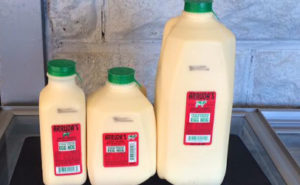 The Rhode Island Department of Health (RIDOH) said
  The Interagency Food Safety Analytics Collaboration (IFSAC) published its analysis of what food tend to be linked to certain bacteria.
 The U.S. Food and Drug Administration has issued an Import Alert over hepatitis A found in raw, frozen tuna from Sustainable Seafood Co. Ltd. in Can Lam, Vietnam, and P.T. Deho Canning Company in North Sulawesi, Indonesia.
 So, where did the romaine lettuce come from?
 Jim Sinnema, owner of Old Silvana Creamery, issued a recall today for the milk because samples of it have tested positive for E. coli. The milk has best-by dates between Dec. 15 and Dec. 23.
 The Public Health Agency of