
Breese Hollow Dairy has been prohibited from selling raw milk after the Department of Agriculture and Markets said it found a sample contaminated with Listeria monocytogenes on Jan. 30.

Agriculture Commissioner Richard Ball warned consumers in Rensselaer County and surrounding areas on Wednesday to not consume unpasteurized raw milk from the dairy business, which has a farm—David Phippen Farm—located in Hoosick Falls.
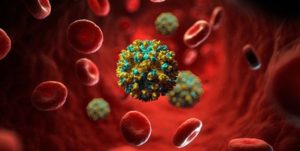
An employee who worked at the Lancaster restaurant Al-E-Oops and the Brookdale Williamsville Senior Living Facility may have exposed 346 patrons and nursing home residents to hepatitis A. The contagious liver virus can be transmitted through contaminated food and water and close contact with an infected person.

Patrons of the restaurant, located at 5389 Genesee St., and the nursing home, may have been exposed to the virus in late January, announced Erie County Executive Mark C. Poloncarz and Health Commissioner Gale R. Burstein. The food prep employee who worked there tested positive for the hepatitis A virus on Monday.

The county is offering an emergency vaccination clinic on from 3 to 8 p.m. Wednesday at Bowmansville Volunteer Fire Station No. 1, located at 36 Main St. in Bowmansville.

Restaurant patrons who could benefit from either a hepatitis A vaccine or immune globulin injection would have eaten at the restaurant between Jan. 27-30, county officials said. Those who patronized Al-E-Oops between Jan. 16-26 may have been exposed to the disease but would not benefit from an injection. Those who patronized the restaurant after Jan. 30 are at no risk.

The National Institute of Communicable Diseases (NICD) reported this week that the number of confirmed listeriosis cases is now 852‚ and 107 people have died. The death rate, based on the outcome data for 355 cases for which details are available, sits at 30 percent, according to the South African news website Times LIVE.

Of the 852 confirmed cases‚ 42 percent were babies younger than 1 month. Pregnant women are 20 times more likely to develop listeriosis infections than other healthy adults. Women account for 55 percent of the reported cases in which gender is known.

Listeriosis comes from eating or drinking food or beverages containing the pathogen Listeria monocytogenes. The bacterium is found in the environment in water, soil, vegetation and in certain animal feces, including those of infected people. It can contaminate animal products, including meat and dairy, seafood and fresh produce. Once Listeria becomes established in a food production facility it can be very difficult to remove.

The source of the South Africa outbreak that started in January 2017 is thought to be a food product or range of products from one company, but that is still just a theory. Victims include people from various social and economic backgrounds.

Yesterday, the Salt Lake County Board of Health amended Health Regulation #5: Food Sanitation to require hepatitis A vaccination for all food workers in an establishment when anyone working in that establishment has been in contact with someone infected with hepatitis A. This amendment is in response to Salt Lake County’s ongoing hepatitis A outbreak and takes effect immediately, on February 1, 2018.

At least 181 people have been sickened in the Salt Lake area.

“Throughout this outbreak, we’ve identified that some people infected with hepatitis A share a household or are otherwise in contact with someone who works at a food service establishment,” explained Gary Edwards, SLCoHD executive director. “When we’ve learned this, we’ve immediately acted to vaccinate all food workers in that same establishment for the protection of the public. This amendment formalizes and codifies that health department response as it relates to food workers.”

The temporary amendment requires food service establishments to vaccinate all employees who handle food if any worker in the establishment is identified as a contact of someone confirmed to have hepatitis A. Establishments have 14 days to comply with the vaccine requirement; workers who do not comply within 14 days will be excluded from work assignments that involve handling food or food-contact surfaces.

Under the temporary amendment, food establishments are responsible for maintaining official record of their employees’ vaccination status. Each occurrence of an unvaccinated employee handling food or a food-contact surface will be recorded as a critical violation on the establishment’s inspection history, and repeated failure to comply may result in suspension or revocation of the affected food establishment’s permit to operate.

The temporary amendment also authorizes SLCoHD to reduce the cost of the first dose of the hepatitis A vaccine by up to 50 percent for anyone seeking vaccination at a health department immunization clinic who can document that they are a food-service employee in Salt Lake County.

Temporary amendments may be enacted by the Board of Health without the normal public hearing process in response to an imminent public health concern. Temporary amendments are limited to 120 days, during which the Board may, if they choose, engage in the full public notification and hearing process to permanently amend a regulation. The Board has not yet determined if it will be necessary to permanently amend Health Regulation #5.

The Michigan jail system is fighting the spread of hepatitis A in the state’s three largest counties.

The Detroit News reports that thousands of jail inmates in Wayne, Oakland and Macomb counties have opted to receive the hepatitis A vaccine for free in recent months.

A spokeswoman for the Michigan Department of Health and Human Services says the vaccine costs the state $25 per dose.

Health officials say those in jail are particularly vulnerable to hepatitis A because of the close quarters inmates share.

The Health Department says southeast Michigan has had 715 cases of hepatitis A and more than 20 deaths since August 2016. Health officials say the majority of cases are among drug users, homeless people, and current and former inmates.

As I said in a previous post, I have been advocating this fo a very, very long time.  For Goodness Sake, Vaccinate – Against Hepatitis A.

The Detroit Health Department recommends all food establishments get their employees vaccinated.

To support this effort, the Detroit Health Department is launching a mobile vaccination clinic program to provide easy and convenient access for Detroit food establishments to vaccinate their employees.

The Department will set up clinics throughout the City of Detroit, where clusters of restaurants are located.

Restaurants can call the Detroit Health Department at 313-876-0135 to arrange for vaccination.

Southeast Michigan has seen 692 hepatitis A cases, with 564 hospitalizations resulting in 22 deaths in the last year.

Hepatitis A is a contagious liver disease that results from infection with the Hepatitis A virus. It can range in severity from a mild illness lasting a few weeks to a severe illness lasting several months. Hepatitis A is usually spread when a person ingests fecal matter — even in microscopic amounts — from contact with objects, food, or drinks contaminated by the feces, or stool, of an infected person.

At least 37 babies in France are known to have fallen ill with Salmonella Agona.  There is reported another illness in Spain, while Greece has also seen one unconfirmed case.

Of the babies taken ill in France, 18 were hospitalized. All are now recovering, according to the public health agency.

Hundreds of lawsuits have already been filed against Lactalis by families who say their children got Salmonella poisoning after drinking powdered milk made by the company.

The French government has laid the blame for the widening crisis squarely on both Lactalis, one of the world’s largest dairy groups, and on retailers who sold the tainted products despite a recall.

Anger has been growing since it emerged that Lactalis’s own tests had discovered salmonella at the Craon site in August and November, but did not report the findings because it had no legal obligation to do so.

Lactalis has recalled more than 12 million packages of Picot, Milumel, Celia and other brands of powdered baby milk from 83 countries.

According to the National Institute for Communicable Diseases, at present, the source of the outbreak is not known.  Although, according to press reports cooked chicken and other deli meats such as ham and ‘polony’ are high on the list of suspects for causing the world’s worst ever recorded listeriosis outbreak.

As of 23 January 2018, a total of 820 laboratory-confirmed listeriosis cases have been reported to NICD since 01 January 2017 (Figure 1). Most cases have been reported from Gauteng Province (59%, 486/820) followed by Western Cape (13%, 105/820) and KwaZulu- Natal (7%, 59/820) provinces. Cases have been diagnosed in both public (66%, 542/820) and private (34%, 278/820) healthcare sectors. Diagnosis was based most commonly on the isolation of Listeria monocytogenes in blood culture (71%, 579/820), followed by CSF (23%, 188/820).

Where age was reported (n=784), ages range from birth to 93 years (median 18 years) and 42% (329/784) are neonates aged ≤28 days (Figure 2). Of neonatal cases, 96% (317/329) had early-onset disease (birth to ≤6 days). Females account for 55% (431/783) of cases where gender is reported. Final outcome data is available for 29% (238/820) of cases, of which 34% (82/238) died.

Municipal Environmental Health Practitioners in all provinces have embarked on systematic inspection and sampling of meat & poultry production, processing, and packaging facilities. Cases of listeriosis will continue to be investigated, with trace back and further investigation of any positive food/environmental samples.

Today interviewed me earlier in the week on the food I tend to avoid and why:

The alarming food recalls keep coming: Romaine lettucepackaged vegetableschickenfrozen fruitcheesespotato chips and many more products in just the last couple of years. All were feared to be contaminated by harmful bacteria.

Bill Marler knows all too well what kind of damage tainted food can do. The Seattle attorney has represented victims of foodborne illness for 25 years — people who came close to death just by eating a hamburger. Marler’s work hasn’t put him off from eating in restaurants, but he’s more wary when he eats out.

“If I had a rule that I follow, it’s that I eat things that are well-cooked or that are cold, because bacteria tend to not do well at hot temperatures and tend to not grow at cold temperatures,” Marler told TODAY.

“There’s just some good common sense when you’re not controlling the food you consume.”

Each year, 48 million Americans get sick from foodborne diseases and 3,000 die, the CDC estimates. It names norovirus, salmonella and clostridium perfringens as the top three illness-causing germs. Bugs that are more likely to lead to hospital stays include botulism, listeria and E. coli. E. coli cases linked to red meat are down, but Marler has been alarmed by an increase in cases of listeria, which — unlike most bacteria — can grow at refrigerator temperatures.

Based on the cases he’s been involved in, Marler has come up with a list of seven foods he never eats:

1. Raw sprouts

All types of raw sprouts, including alfalfa, mung bean, clover and radish sprouts, are at the top of Marler’s list.

“Sprouts are just a really difficult product to make safe,” he said. “Seeds get contaminated and then when you sprout things in warm water, it’s a perfect bath for the bacteria to grow.”

The Barf Blog, a website run by a former professor of food safety, has documented at least 55 sprout-associated outbreaks — or “sprout-breaks,” as Marler calls them — worldwide since 1988. Most have been caused by salmonella and E. coli.

The latest suspected outbreak has sickened eight people with salmonella in Illinois, Wisconsin and Minnesota since December, with raw sprouts served at Jimmy John’s restaurants “a likely source,” the CDC reports. The Illinois Department of Public Health asked the restaurant chain to remove sprouts from their menus until the investigation is complete.

Sprouts should be cooked thoroughly to reduce your risk of illness, the government advises. Children, the elderly, pregnant women, and people with weakened immune systems should avoid eating any raw sprouts, it notes.

2. “Raw” milk and juices

Whatever possible benefit you think you might get from unpasteurized milk or “raw” packaged juice, it’s not worth the risk, said Marler, who helped create a website listing some of the consequences of people drinking contaminated raw milk, including kidney failure and paralysis.

Raw milk and products made from it can contain bacteria, viruses, and parasites that pose “severe health risks, including death,” the CDC warns. Possible germs include campylobacter, E. coli, salmonella and listeria, with 81 outbreaks in 26 states linked to raw milk from 2007-2012, the agency notes.

As for raw juice, if you’re making it at home in a clean environment, washing the exterior of the fruit, and then drinking the juice right away, the risks are very low, Marler said. Just skip any packaged “raw” juice.

Marler would also stay away from “raw” water: “It’s sometimes amazing to me how we humans forget our history,” he said. “You just sort of scratch your head and wonder what people are thinking.”

3. Raw flour

Raw flour has been linked to E. coli outbreaks, so resist the temptation to eat cookie dough or taste raw cake batter.

“It’s something I think the public is pretty unaware of and we need to educate people that when handling flour you buy in the bags in the grocery store, you have to consider it a raw agricultural product that could be the source of a pathogen,” Marler said.

People often dust their kitchen counter top with flour when rolling out dough. Think about it this way: it’s not dissimilar to putting raw chicken on your counter, so wipe things down and consider using wax paper instead, he advised.

4. Pre-cut fruits and vegetables

The more you control food in your own kitchen, the less likely it is to be a problem, Marler believes. He finds it much safer to take your own apple, wash it, cut it and put it in a plastic bag for lunch than to go to the grocery store and buy an apple that was sliced a few days ago in facility 500 miles away.

“It’s certainly convenient, but sometimes I think the convenience isn’t worth the risk,” he said. “I don’t buy pre-washed, pre-bagged products, but if I did, I would wash it again myself. It’s all about decreasing the bacterial load.”

5. Ground meat that’s not well done

Any ground meat has to be cooked thoroughly, Marler said. That’s because bacteria on the surface of the meat can get mixed throughout the product when it’s ground. Be sure to cook ground beef, veal, pork and lamb to an internal temperature of 160°F, the CDC notes.

When it comes to a whole piece of beef steak, like filet mignon, Marler would consider eating it medium or medium-well done. But chicken, turkey and other poultry has to be cooked thoroughly, he noted. The CDC recommends cooking it to an internal temperature of 165°F.

In case you’re wondering, Marler isn’t that concerned about raw fish, but he still doesn’t eat a lot of sushi.

6. Raw oysters

Marler has seen a spike in bacterial and viral illnesses linked to raw oysters in the last several years, perhaps because the water is warmer for longer periods of time, he said. Eating raw oysters is not worth the risk, he added.

7. Raw eggs

They’re still on Marler’s list, although government oversight and industry intervention have made eggs a lot safer today than they were a decade ago, he said.

But even though the likelihood of salmonella has “decreased a lot,” he still wouldn’t eat eggs raw (even from the chickens he raises at home), sunny-side-up or soft-boiled, especially in a restaurant. He always opts for scrambled eggs.

I have been advocating this fo a very, very long time.  For Goodness Sake, Vaccinate – Against Hepatitis A.

The Detroit Health Department recommends all food establishments get their employees vaccinated.

To support this effort, the Detroit Health Department is launching a mobile vaccination clinic program to provide easy and convenient access for Detroit food establishments to vaccinate their employees.

The Department will set up clinics throughout the City of Detroit, where clusters of restaurants are located.

Restaurants can call the Detroit Health Department at 313-876-0135 to arrange for vaccination.

Southeast Michigan has seen 692 hepatitis A cases, with 564 hospitalizations resulting in 22 deaths in the last year.

Hepatitis A is a contagious liver disease that results from infection with the Hepatitis A virus. It can range in severity from a mild illness lasting a few weeks to a severe illness lasting several months. Hepatitis A is usually spread when a person ingests fecal matter — even in microscopic amounts — from contact with objects, food, or drinks contaminated by the feces, or stool, of an infected person.