

A month ago, I posted drafts of two citizen petitions I intend to file with the FDA – one asking for a warning statement on cheese made from unpasteurized milk, the other on raw and lightly cooked sprouts – and asked you to tell me what I got wrong. On October 3 I thanked you and asked for more. You kept sending it. Thank you, again.
Many of you waded through tens of thousands of words of regulatory prose and sent back corrections, sources and arguments. Some of you agreed with me and some of you did not, and both kinds of comments made the petitions better. A few of the changes since the first drafts:
- The cheese warning now says the bacteria “can cause serious illness or death.” The record – two deaths in the 2017 Vulto Creamery listeriosis outbreak, and hemolytic uremic syndrome in at least six people in the four recent cheese outbreaks – supports saying so, and FDA already uses those exact words in the same regulation for very low-calorie protein products.
- A reader asked what “uncontroversial” means in the First Amendment test that applies to required label disclosures. It was a fair question, and the cheese petition now answers it, including the case least favorable to me.
- A restaurant culinary director with twenty-one years in professional kitchens showed me how the FDA Food Code already requires a menu advisory for a hamburger cooked to order but not for the raw sprouts on the same plate. The sprout petition now asks FDA to close that gap.
- Each petition now has an Appendix A showing the statement on a retail package, on a placard at a deli or sandwich counter, and on an online product page, so you can see what the warnings would look like.
Why the cheese petition matters more today than it did a month ago
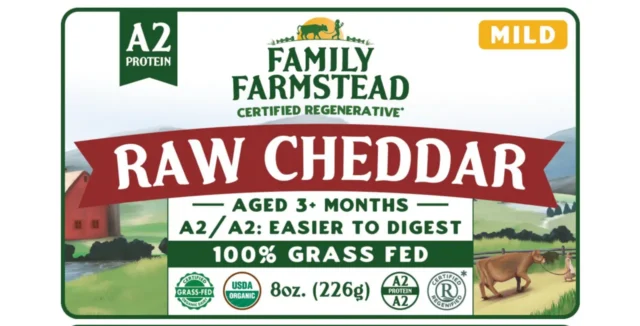
The petitions were never about one outbreak, but the outbreaks keep making the case. In late September, CDC and FDA linked Graziers raw milk cheese from Sierra Nevada Cheese Company to an E. coli O26:H11 outbreak: 13 people in nine states, eight hospitalized, three with hemolytic uremic syndrome, and a median age of five. The first person got sick on July 7. FDA contacted the company on September 24 – eleven weeks later. The package told parents that the cheese was aged at least 60 days, which is what federal law requires. It did not tell them what FDA wrote in 2015: that E. coli O157:H7 can survive 60 days of aging in cheddar.
That is the fourth outbreak in thirty-one months linked to raw milk cheese that complied with the 60-day rule – Raw Farm in February 2024 and again in March 2026, and Twin Sisters Creamery in 2025 – for a total of 43 people sickened, 17 hospitalized and at least six with hemolytic uremic syndrome, many of them young children. And on October 5 the American Academy of Pediatrics issued a policy statement saying that aged raw milk cheese still poses an infection risk and naming warning labels as a measure pediatricians should support.
In the interest of full disclosure, and as both petitions state, I represent people sickened in the Graziers, Twin Sisters Creamery and Evergreen Fresh Sprouts outbreaks, and I have represented people hospitalized in both Raw Farm outbreaks. On October 6 I filed suit for the family of a child with hemolytic uremic syndrome in the Graziers outbreak.
Neither petition asks FDA to ban anything. Adults who want raw milk cheese or raw sprouts would remain free to buy them. The petitions ask for one sentence on the label, so that what the government already tells people in press releases and on web pages is in front of them when they make the choice.
The revised drafts
- Email me at bmarler@marlerclark.com if you would like to review them.
One more week – here is what I would most like to hear about
- Type size. Both petitions ask for the warning in type no smaller than 8 point, the size FDA requires in the Nutrition Facts panel. Look at the label renderings in the appendices. Is that big enough to be read in a grocery aisle, or should it be larger?
- Cheesemakers and retailers: Is the placard at the cheese case and the deli counter workable? What would it cost you?
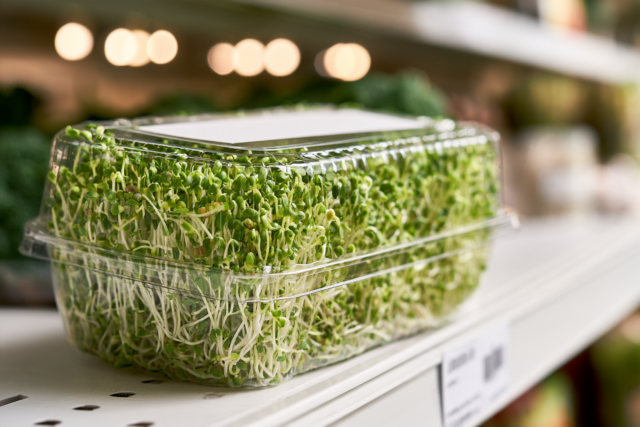
- Sprout growers and seed sellers: Does the requirement for seed sold for home sprouting reach the right products, and does the exemption for validated treatment give you a real path off the warning?
- Physicians and public health officials: Have I named the right groups, in the right words?
- Everyone: What information unfavorable to these petitions have I missed? The certification FDA requires obliges me to include it.
Email me at bmarler@marlerclark.com or call 1-800-884-9840 by Friday, October 30, 2026. If you would like the Word version to mark up, ask and I will send it. After I file, FDA will assign each petition a docket number on regulations.gov, where anyone can comment formally, and the agency has 180 days to respond. Pointing out an error now is a lot more useful than pointing it out then.
Thanks again.
Bill