

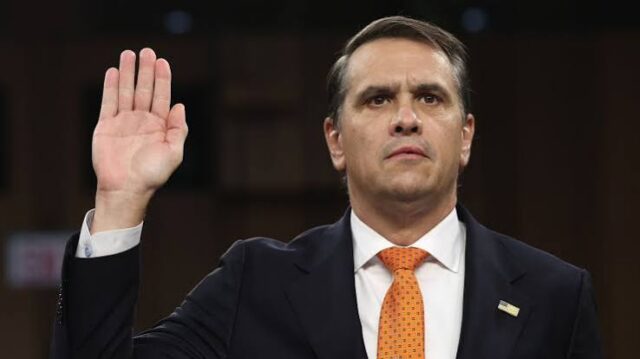
Todd Blanche was confirmed as Attorney General early Saturday morning on a vote of fifty to forty-nine. Among the many things he now runs is the criminal enforcement of the Federal Food, Drug, and Cosmetic Act. I have spent more than thirty years suing companies that poisoned my clients, and in all that time I have put one question to the Justice Department that has never been answered: when does making producing tainted food and making people sick become a crime?
I keep a slide for those questions. When I speak to industry groups, or teach, I put up the list of every American food company and every executive the United States has actually prosecuted. It is a short slide. It fits with room left over. This week I went back through it against the Department’s own press releases and the court records and found that my own list was missing several cases. Here is the corrected version, as complete as I can make it, together with the law that makes all of it possible.
Section 333(a)(2) turns the identical conduct into a felony carrying up to three years, and it does so in exactly two circumstances: the defendant already has a final FDCA conviction, or the violation was committed with intent to defraud or mislead. That is the entire dividing line between a misdemeanor and a felony in food. Not the number of people hospitalized. Not whether anyone died. Whether somebody lied.
The dollar figures written into section 333 — a thousand dollars for the misdemeanor, ten thousand for the felony — are 1938 fossils, and nobody has paid them in decades. 18 U.S.C. § 3571 supplies the real numbers. An individual faces up to $100,000 on a Class A misdemeanor, and $250,000 if the offense is a felony or results in death. A company faces $200,000, and $500,000 for a felony or where death results. That last distinction matters more than it looks: the corporate ceiling only doubles if the government charges the misdemeanor as one that resulted in death, and it usually has not. Then comes subsection (d), the alternative fine: twice the gross gain, or twice the gross loss, whichever is greater. That subsection is where every large number in this piece comes from. The $25 million from Chipotle and the $41.675 million from Family Dollar are not statutory maximums under Title 21. They are twice-the-gain arithmetic.
Meat and poultry live under different statutes with the same architecture. 21 U.S.C. § 676(a) of the Federal Meat Inspection Act and § 461(a) of the Poultry Products Inspection Act both give one year by default and three years where the violation involves intent to defraud or the distribution of an adulterated article. Bribing a federal meat inspector is its own felony under § 622, and it carries something almost nothing else in food law does — a mandatory minimum of one year, a maximum of three, and a fine of not less than $5,000. It is worth being precise about that section, because it is easy to reach for and easy to get wrong. Quality Egg did plead to a bribery felony, but the charge came under the general federal bribery statute in Title 18, not under section 622, because the man taking the $300 was a USDA egg grader and not a meat inspector.
Both charges have been available since long before I was born, and the money is real. Almost every case below has a Justice Department press release behind it, and FDA keeps a standing index of the DOJ releases involving its Office of Criminal Investigations if you want the primary documents. Here is how often anyone has used the statute, oldest first.
1. Beech-Nut Nutrition Corp. (1987–89) — fake apple juice. The company pleaded guilty in November 1987 to 215 felony counts of shipping mislabeled juice with intent to defraud and paid a $2 million fine plus $140,000 in investigative costs, at the time by far the largest penalty ever paid under the Act. Two executives, president Niels Hoyvald and vice president John Lavery, were convicted at trial the following February, fined $100,000 each and sentenced to a year and a day. Neither served that sentence. In March 1989 the Second Circuit threw out every FDCA count on the ground that venue in the Eastern District of New York was improper, leaving standing only Lavery’s convictions for conspiracy and mail fraud. Hoyvald pleaded guilty to the food and drug charges that November and received five years of probation, 1,000 hours of community service and a $100,000 fine. There was no pathogen in this case at all. There was a lie, and the lie is what produced the felonies — and in the end the only convictions that survived appeal were the fraud counts, not the food counts.
2. Odwalla, Inc. (1998) — apple juice, E. coli O157:H7. Sixteen misdemeanor counts of delivering adulterated food, a $1.5 million fine — a quarter million of it earmarked for research and consumer education — and five years of probation, after unpasteurized juice killed a sixteen-month-old girl and sickened sixty-six other people in 1996. It was the largest criminal fine in FDA history at the time, and the first criminal conviction ever obtained in a large-scale pathogen outbreak. It established that a company could be convicted over a large outbreak without any proof of intentional wrongdoing, and nearly every case below is built on it. It was also my first.
3. Sara Lee / Bil Mar Foods (2001) — hot dogs and deli meat, Listeria. One misdemeanor count of preparing and selling adulterated meat and poultry, a $200,000 fine, a $3 million grant to Michigan State for food safety research, and $1.2 million to settle claims over product sold to the Defense Department. The outbreak killed at least fifteen people, caused six miscarriages and sickened around a hundred more, and forced the recall of 35 million pounds of product. The $200,000 was reported as the statutory maximum for a corporate defendant, and it was — for a Class A misdemeanor not charged as having resulted in death. Charged the other way, the ceiling would have been $500,000. The U.S. Attorney said there was no evidence the company knew, notwithstanding a USDA inspector’s account that management had stopped testing once the tests started coming back positive.
4. Jensen Farms — Eric and Ryan Jensen (2013–14) — cantaloupe, Listeria. A six-count Information, all misdemeanors, to which the brothers pleaded guilty on every count. They were sentenced to five years of probation each, the first six months in home detention, 100 hours of community service and $150,000 apiece in restitution — $25,000 per count, consecutive, paid to the victims. The Jensen brothers surrendered to U.S. Marshals and appeared in shackles, which nobody had ever seen in a misdemeanor food case. Their cantaloupe killed thirty-three people and sickened 147. The government presented no evidence that they knew, and none that they were chasing money. I have seen it written that they shipped melons they knew were contaminated. They did not. That is what makes the case matter — it is the purest Park prosecution on the list.
5. Quality Egg, LLC and Austin “Jack” and Peter DeCoster (2014–15) — shell eggs, Salmonella Enteritidis. The company pleaded guilty to two felonies — bribery of a public official, and introducing misbranded eggs into interstate commerce with intent to defraud — plus the strict-liability misdemeanor, and was sentenced to a $6.79 million fine, three years of probation and a $10,000 forfeiture. Father and son each pleaded to the misdemeanor as responsible corporate officers and drew three months in prison, a year of supervised release and a $100,000 fine apiece; the three defendants together owed $83,008.19 in restitution. The bribe at the center of it was $300 in petty cash, authorized by a marketing manager who pleaded guilty in 2012 and was sentenced to four years of probation. The Eighth Circuit affirmed the prison terms in 2016 over a dissent, and the Supreme Court declined to take the case. That decision is the single most important thing on this list: it holds that a food executive can go to prison for a crime that required no knowledge and no intent.
6. Peanut Corporation of America (2014–15) — peanut butter and paste, Salmonella. A federal jury convictedStewart Parnell of conspiracy, mail fraud, wire fraud, the sale of misbranded and adulterated food and obstruction — every count against him but one — and he was sentenced to twenty-eight years, the longest sentence ever imposed in a food safety case. His brother Michael, a broker, got twenty. Quality assurance manager Mary Wilkerson got five years for obstruction. The two plant operations managers who pleaded guilty and testified, Samuel Lightsey and Daniel Kilgore, got thirty-six months and seventy-two months. Nine people died and 714 were confirmed sick. This is the outlier that everyone cites and nobody replicates — and it is worth being precise about why it happened. The Parnells were convicted because they emailed each other about shipping product they knew had tested positive. The prosecution turned on fraud, not on contamination.
7. ConAgra Grocery Products, LLC (2015–16) — Peter Pan peanut butter, Salmonella. One misdemeanor count of shipping adulterated food. The Information and a pre-negotiated plea agreement were filed in May 2015; the company did not actually enter its plea and get sentenced until December 2016, when it paid an $8 million fine and forfeited $3.2 million more. At least 625 people in forty-seven states were sickened in 2006 and 2007. It took the Department more than eight years to bring the charge, and no individual was charged at all.
8. Rancho Feeding Corporation (2015–16) — beef, condemned and uninspected cattle. Not a pathogen case, but squarely a food crime, and charged under the Federal Meat Inspection Act at 21 U.S.C. §§ 610(c) and 676(a). Co-owner Jesse “Babe” Amaral Jr. got a year and a day for conspiring to distribute adulterated, misbranded and uninspected meat after directing employees to carve “U.S.D.A. Condemned” stamps out of carcasses and swap the heads of cancer-eyed cattle for healthy ones. His partner Robert Singleton got three months, and so did kill-floor foreman Felix Cabrera; the yardman drew probation and home detention. It triggered a recall of 8.7 million pounds. Judge Breyer called it one of the most calculated circumventions he had ever heard of, and noted it was only luck that nobody got sick.
9. Roos Foods, Inc. (2016) — Mexican-style cheese, Listeria. A misdemeanor plea and a $100,000 fine, plus a consent decree of permanent injunction against the company and its two principals. Eight people were sickened and one died.
10. Oasis Brands, Inc. and Christian Rivas (2016) — quesito casero, Listeria. Rivas pleaded to a two-count Information — Count 1 a felony under §§ 331(a) and 333(a)(2) for delivering adulterated cheese with intent to defraud and mislead, Count 2 the responsible-corporate-officer misdemeanor under § 333(a)(1) — and was sentenced to fifteen months in federal prison. He had promised the FDA he would stop shipping and then kept shipping. Five sickened, one dead. If you want a single document that shows how the felony and the misdemeanor differ, that charging Information is it.
11. Chipotle Mexican Grill, Inc. (2020) — multiple outbreaks. A criminal Information charging adulteration under the FDCA, a three-year deferred prosecution agreement, and a $25 million fine — at the time the largest ever in a food safety case. More than 1,100 people were sickened between 2015 and 2018. No executive was charged, and because it was a deferred prosecution, the company was never convicted of anything.
12. Blue Bell Creameries, L.P. and Paul Kruse (2020–23) — ice cream, Listeria. The company pleaded guilty to two misdemeanor counts and was ordered to pay $17.25 million in fine and forfeiture, plus $2.1 million to resolve False Claims Act allegations over product sold to federal facilities. Ten people were sickened and three died. The company’s former president was separately indicted on seven felony counts of wire fraud and conspiracy for allegedly concealing what the company knew. His 2022 trial ended in a mistrial with ten of twelve jurors voting to acquit, and in 2023 the government dropped the felonies in exchange for a plea to one strict-liability misdemeanor and a $100,000 fine. No jail.
13. Kerry, Inc. and Ravi Chermala (2023) — Kellogg’s Honey Smacks cereal, Salmonella. The company pleaded to a misdemeanor and paid $19.228 million in fine and forfeiture, then the largest criminal penalty ever imposed following a conviction in a food safety case. The outbreak sickened 135 people across thirty-six states and hospitalized thirty-four. The plant’s director of quality assurance pleaded to three misdemeanor counts, admitting that he had directed subordinates to withhold information from Kellogg’s and to alter the plant’s pathogen-monitoring program — one of the very few individuals below the C-suite ever charged. His plea agreement was one of roughly half a dozen documents sealed in the case.
14. Family Dollar Stores, LLC (2024) — a rodent-infested distribution center. One misdemeanor count of causing FDA-regulated products to become adulterated while held under insanitary conditions, and a fine and forfeiture totaling $41.675 million, the largest monetary criminal penalty in the history of food safety enforcement, plus three years of compliance obligations for Family Dollar and Dollar Tree. Fumigation of the West Memphis warehouse produced 1,270 dead rodents. Product had gone to 404 stores across six states. No outbreak was ever reported. Hold that thought.
15. Vulto Creamery, LLC and Johannes Vulto (2024) — raw milk cheese, Listeria. The company and its founder each pleaded guilty to one misdemeanor count of causing the introduction of adulterated food into interstate commerce. Environmental swabs at the Walton, New York plant had come back positive for Listeria species repeatedly from July 2014 through February 2017. Eight people were hospitalized and two died. Vulto was sentenced to three years of probation, a $100,000 fine and 240 hours of community service; the defunct company drew a year of probation. I have spent two decades collecting reasons why raw milk cheese is a bad idea. This is one of them, and it is the only raw milk case on the list.
16. Quality Poultry and Seafood, Inc., Mary Mahoney’s Old French House and four individuals (2024) — mislabeled fish. Not a pathogen case at all, and pay attention to the sentences. The largest seafood wholesaler on the Mississippi Gulf Coast pleaded guilty to selling cheap frozen imports from Africa, India and South America to restaurants as premium local species, a scheme that ran from 2002 to 2019 and kept running for more than a year after FDA agents executed a search warrant. QPS was sentenced to five years of probation, $1 million in forfeiture and a $500,000 fine. Sales manager Todd Rosetti got eight months in prison. Business manager James Gunkel got probation and home detention. Mary Mahoney’s, the Biloxi restaurant, paid nearly $1.5 million, and its co-owner drew probation, home detention and a fine. Nobody was made sick by any of it. The entire case file is public.
17. Valley Processing, Inc. and Mary Ann Bliesner (2024–25) — apple and grape juice concentrate. The company pleaded to conspiracy to introduce adulterated and misbranded juice; its eighty-three-year-old owner pleaded to two FDCA misdemeanors, including failing to register a food facility. Together they forfeited $742,139, and she was sentenced to probation. The indictment described concentrate stored outdoors in barrels for years, blended with fresh product and sold under new lot numbers to customers who supplied the National School Lunch Program. FDA photographed a rat floating on the crust of a juice tank. Nobody is known to have gotten sick, and this one happened forty miles from where I take depositions.
18. Abuelito Cheese, Inc. (2026) — queso fresco, Listeria. The most recent case on the list. The company pleaded guilty in Newark on May 21 to introducing adulterated food into interstate commerce under §§ 331(a) and 333(a)(1). FDA had swabbed the plant in early 2020, found Listeria and warned in a June 2020 letter that conditions were conducive to Listeria monocytogenes. The outbreak came in February 2021 — thirteen hospitalized, one dead across four states. Under the plea agreement the company will pay a $487,754 fine and forfeit $658,430, a total of $1,146,184, with sentencing set for October 15, 2026. Note where the file now sits: the case page is the Criminal Division’s, not the Civil Division’s.
Eighteen. In forty years. Against an industry that, by CDC’s own estimate, sickens forty-eight million Americans every year, hospitalizes 128,000 of them and kills three thousand. Eleven of the eighteen were resolved as misdemeanors or, in Chipotle’s case, with no conviction at all. Add up every American who has ever served a day of federal prison time over food, and you get twelve people: Stewart and Michael Parnell, Mary Wilkerson, Samuel Lightsey and Daniel Kilgore, Christian Rivas, Jesse Amaral, Robert Singleton and Felix Cabrera, Jack and Peter DeCoster, and Todd Rosetti. Twelve names in four decades, and five of them came out of a single peanut plant in Blakely, Georgia.
Look at what does and does not move the Department, because it is not what anyone in the industry thinks it is. Jensen Farms killed thirty-three people and the brothers got probation. Blue Bell killed three, and its chief executive paid a hundred thousand dollars after a jury declined to convict him of fraud. Johannes Vulto killed two and got probation and community service. Family Dollar did not sicken a single reported person and paid the largest criminal penalty in the history of the field. Todd Rosetti did not sicken anyone either, and still went to prison for eight months over fish labels. The variable is not the body count. It is whether a prosecutor can prove somebody lied — and after that, whether the lie is easy to photograph. A rat on a pallet is easy. A grouper that is really swai is easy. An unvalidated wash step is not.
Here is what I am asking of the new Attorney General, and none of it requires legislation or money.
Publish the charging guidelines. I asked for this in Forbes in July 2015 and again that June, and eleven years later there is still nothing public that explains why the Jensen brothers went before a magistrate in shackles while companies with far worse compliance records never heard from anyone. It used to be closer. The old U.S. Attorneys’ Manual carried sections on felony charging for intent to defraud, Park misdemeanor liability and food fraud prosecutions. The current Justice Manual, last updated in January 2021, dropped all three. What is left is a consultation rule telling a U.S. Attorney’s office when to call Washington — Park liability, death or serious bodily injury, more than $100 million at stake, fraud on the FDA — and it says nothing about when to charge. Deterrence you cannot predict is not deterrence.
Tell us who does this work now. The Consumer Protection Branch, which held the FDCA authority under 28 C.F.R. § 0.45(j), was dissolved on September 30, 2025. Its criminal food work moved into a new Health and Safety Unit inside the Criminal Division’s Fraud Section, stood up on November 30, 2025 with twenty-three prosecutors carried over from the Branch, while the Civil Division’s new Enforcement Section kept concurrent authority to investigate and prosecute the same FDCA crimes. Two components, one statute, and no published division of labor. Reuters counted about 215 people at the Branch when the disbanding was announced, but that number covered attorneys, support staff and agents together and the Department has published no comparable count for the new unit, so how much was actually lost is something only the Department can say. Meanwhile the Justice Manual still tells prosecutors to consult the Branch, at 9-99.000 and again in the CHIP guidance the Department itself updated in January 2026, months after the Branch stopped existing. Publish the new unit’s authority and its head count and fix the Manual. Every case on the list above was worked by an office that is no longer there.
Say whether the Park misdemeanor is still charged. For fifty years the industry has been told that a responsible corporate officer can be convicted without knowledge or intent. The DeCosters went to prison on that theory in 2015 and the Eighth Circuit blessed it, and so far as the public record shows nobody has gone to prison on it since — though I cannot say that with certainty, because at least one sentence, Ravi Chermala’s, was never announced. People do still plead to it. Johannes Vulto did, Mary Ann Bliesner did, and both drew probation. If probation is now the ceiling, say so, because right now every food safety consultant in America is selling the risk of a prison term and nobody knows whether that risk is still real.
Ask the President to take food out of Executive Order 14294. You cannot revoke it yourself and I am not pretending otherwise. But the order, signed on May 9, 2025 — two weeks after Reuters reported that the Consumer Protection Branch was being disbanded — declares that criminal enforcement of regulatory offenses is disfavored, that strict liability offenses are “generally disfavored,” and that prosecutions should focus on defendants alleged to have known their conduct was unlawful. Section 8 already exempts immigration and national security from all of it. Food can be exempted too, and you are the one who can ask. Until then there are two things you can do without asking anybody. The first is to state in writing that the food misdemeanor is not covered, because section 3(b) of the order defines a criminal regulatory offense as a federal regulation enforceable by a criminal penalty, and section 333(a)(1) is a statute. The second is to explain section 4(d), which tells you to consider whether an offense appears on an agency’s published list before you open an investigation or bring a charge. HHS filed its list on May 8, 2026, in consultation with your Department: FDA reported fourteen criminal regulatory offenses, seven of them strict liability, and the Department set down as a policy determination that it will evaluate alternatives to strict liability criminal enforcement. I wrote when the order issued that Blue Bell, Kerry, ConAgra, Chipotle, Wright County, Odwalla and Jensen Farms would probably never have been charged under it, and I wrote it again in December. I would like to be wrong.
I have built a career on a system that pays my clients after they are hurt. It is a poor substitute for not hurting them. Every food safety executive I have ever deposed has told me some version of the same thing: the budget requests get approved after somebody gets prosecuted, not after somebody gets sick. Eighteen cases in forty years is not a deterrent. It is a lottery, and the industry has learned to play the odds. Attorney General Blanche, prove me wrong.
By the way, if you need a lawyer to run the shop, I know one.