

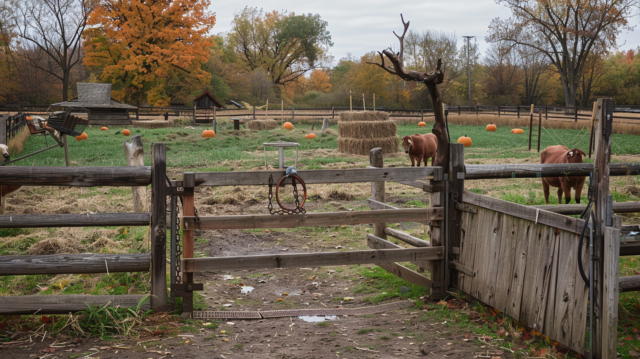
As of October 26, 2026, the Will County Health Department counts five laboratory-confirmed Shiga toxin-producing E. coli infections possibly linked to visits to Bengtson’s Pumpkin Farm in Homer Glen, Illinois, on or after September 29. Four of the five were hospitalized, the patients are between four and 38 years old, no deaths have been reported, and more than 200 visitors have filled out the county’s symptom survey. The petting zoo is closed; the rest of the farm is open. Marler Clark has spoken with the family of one of the children who was sickened and is investigating.
We are investigating on behalf of one of the families.
I will say this once and briefly. I have spoken with the family of one of the children sickened in this outbreak, and the firm is investigating. I am not going to describe the child, the family or the illness, now or later, beyond what the family chooses to make public. I have represented children sickened at pumpkin patches, petting zoos and fairs for a long time, including at a pumpkin patch in Longview, Washington, and the pattern of these outbreaks is familiar enough that the questions worth asking are already known. I listed them on Friday. What follows is what has changed since.
Four of the five people sickened were hospitalized, and that was not in Friday’s announcement.
When the county announced the investigation on October 23, it gave five lab-confirmed cases and nothing about ages or hospital care. The Herald-News reported Monday that four of the five were hospitalized, that at least three have been discharged, and that the county does not know the status of the fourth. The ages run from four to 38, and the patients do not all live in Will County, which communications manager Kevin Juday said is part of why the cases took time to surface and to be linked. Four hospitalizations out of five confirmed cases is a severe ratio for Shiga toxin-producing E. coli. It can mean a virulent strain, or it can mean that only the sickest people have been tested so far. Either way it belongs in the public notice, because it tells parents how seriously to take a child’s bloody diarrhea this week.
More than 200 survey responses means five is a floor, not a count.
The county asked anyone who visited on or after September 29 and became ill to complete a confidential online survey. More than 200 people have. Most of them will not turn out to be E. coli, and a survey is not a stool culture. But a petting zoo at a popular pumpkin farm in the Chicago suburbs during the busiest four weeks of its year sees tens of thousands of visitors, and the people who were sick two or three weeks ago and did not see a doctor will never be counted. Five confirmed cases spread across more than one county, four of them in the hospital, is the top of an iceberg whose size depends on how many of those 200 the county follows up with a call and a test request.
| Date | What happened | Source |
| Sept. 29 onward | Exposure window for visitors asked to report symptoms | Will County Health Department |
| Oct. 21 | County contacts the farm; food service areas and vendors inspected, no problems found | Farm statement; WGN |
| Oct. 23 | Investigation announced: five lab-confirmed STEC cases; petting zoo voluntarily closed; survey opened | Will County Health Department |
| Oct. 26 | Still five cases, ages 4 to 38, four hospitalized, at least three discharged; 200-plus surveys; railings, hand-wash stations and tables swabbed; veterinarian samples the animals | The Herald-News |
| About Nov. 5 | Animal and surface laboratory results expected | Will County Health Department, via The Herald-News |
Sources: Will County Health Department statements as reported by The Herald-News (October 26, 2026), WGN and NBC Chicago (October 23), read October 27. Check: four hospitalized of five confirmed is 80 percent; the confirmed count has not moved between October 23 and October 26 while surveys passed 200.
The samples taken Monday are the ones that matter, and a negative animal does not clear the pen.
On Monday, October 26, county environmental health staff swabbed railings, hand-washing stations and tables near the food service area and the petting zoo, and a veterinarian sampled the animals. Results are expected in about ten days. Two things about those results. First, ruminants shed E. coli O157 and the other Shiga toxin producers intermittently, so a goat that is negative on October 26 can have been shedding on October 10; the Compendium of Measures to Prevent Disease Associated with Animals in Public Settings says as much and warns against reading a negative as exoneration. Second, the question is not only whether an animal is positive but whether the animal isolate, the railing isolate and the five patient isolates are the same strain by whole genome sequencing. Illinois has the lab to do that. The county should say now that sequencing is planned and that the results, positive or negative, will be published.
A clean food-service inspection does not clear a petting zoo.
The farm’s statement leans on the October 21 inspection of its food service areas and vendors, which found no problems, and the county’s food-preparation tests have come back negative so far. Good. That is also beside the point. In the petting zoo outbreaks on the public record, from the 2004 North Carolina State Fair through the pumpkin patches in Washington and Minnesota, the vehicle was rarely a food item. It was manure on a rail, on a shoe, on a stroller wheel, on a hand that held a sippy cup, in sawdust that blew across a walkway. The county itself says it does not normally regulate petting zoos and is involved because the farm holds food permits. That is the regulatory architecture, not the county’s fault, and it is why the Monday swabs of railings and hand-wash stations are more important than any food test.
What the farm’s statement says, and what it leaves out.
In its statement to NBC Chicago, Bengtson’s says testing is under way, no source has been confirmed, its first thoughts are with the sick and their families, and the petting zoo is staffed, has hand-washing sinks at the entrance and exit and cleans its pens daily. Rides, attractions, food stands and vendors remain open. The statement does not mention that four people were hospitalized. It does not say how many visitors came through the petting zoo between September 29 and the day it closed, whether the farm will contact ticket holders, whether the animals have ever been tested before, or where the animals came from and under what contract. The county’s environmental health director, Sean Conners, says the farm can safely keep operating. I do not quarrel with that call for the rides and the corn maze. I would want the petting zoo to stay closed until the animal and environmental results are back and sequenced, not merely until the season ends.
What should happen in the next ten days.
Post a case definition and a weekly update, with ages, hospitalizations and any hemolytic uremic syndrome, so parents are not learning the hospitalization count from a newspaper. Call every one of the 200 survey respondents who reported bloody diarrhea and get them tested. Sequence every patient, animal and environmental isolate and publish the comparison. Ask the farm to notify ticket holders directly. And when the results are in, whatever they show, put the whole file on the county’s website, because the next pumpkin farm’s operator should be able to read it. The consumer version of this post, with symptoms, incubation and when to see a doctor, is on Food Poison Journal; the prevention material for families and operators is at Fair-Safety.com; and what HUS is and why it follows E. coli in young children is at about-hus.com.
How many people are sick from Bengtson’s Pumpkin Farm E. coli? Five laboratory-confirmed cases as of October 26, 2026, ages four to 38, four of them hospitalized and at least three discharged. More than 200 visitors have submitted symptom surveys that the county is still reviewing.
Has the source of the Bengtson’s E. coli outbreak been found? No. Food-preparation tests are negative so far. Animals, railings, hand-wash stations and tables were sampled October 26, with results expected in about ten days.
Is Bengtson’s Pumpkin Farm open? Yes, except for the petting zoo, which the farm closed voluntarily on October 23.