

 According to Bidart Bros., today the United States Food and Drug Administration (FDA) announced the results of findings from additional tests performed on samples collected from Bidart Bros. apple processing plant near Bakersfield, California. Test results confirm two strains of Listeria monocytogenes were found at the apple processing facility and are believed to be the
Bidart Bros. Recalls a year of Granny Smith and Gala Apples
 According to the Packer and AP, Bidart Bros. has expanded an apple recall to include all granny smith and galas shipped from its Shafter, California facility in 2014 — not just ones sent to caramel apple marketers implicated in a listeria recall.
“Several” samples collected at the Bidart Bros. apple packing facility tested positive for
Have you seen a recall of Bidart Bros. Granny Smith and Gala Apples in the US?
 Late last night the Canadian Food Safety Authority issued an update to the food recall warning issued on December 24, 2014 to include the recall of both Granny Smith apples and Gala apples exported by Bidart Bros. in the United States (US) from the marketplace due to possible Listeria monocytogenes contamination. Identified importers of the
Wick Fowler 2-Alarm Chili Kit Recalled due to Undeclared Peanuts and Almonds
 Reily Foods of Louisiana is recalling Carroll Shelby brand and Wick Fowler brand chili seasoning kits because they may contain peanut and almond allergens not declared on the label.
Anyone with an allergy to those two foods could have a serious allergic reaction if they eat these products.
The products are Carroll Shelby Chili Mix
Kroger Recalls Happy Apples with Listeria
 Happy Apples is expanding their voluntary recall of caramel apples to include Kroger Brand caramel apples produced by Happy Apple Company with a best use by date between September 15th and November 18th 2014, because it has the potential to be contaminated with Listeria monocytogenes.
Kroger brand caramel apples produced by Happy Apple Company
The Latest on the Caramel Apple Listeria Outbreak

The Outbreak: The CDC reports as of December 30, 2014, a total of 32 people infected with the outbreak strains of Listeria monocytogenes have been reported from 11 states: Arizona (4), California (2), Minnesota (4), Missouri (5), Nevada (1), New Mexico (6), North Carolina (1), Texas (4), Utah (1), Washington (1), and Wisconsin (3). Thirty-one
A Classic Norovirus Outbreak at the Royal Hawaiian Hotel
 On May 17, 2014 the Hawaii Department of Health (HDOH) learned of an outbreak of gastrointestinal illnesses among Royal Hawaiian Hotel guests and restaurant patrons. People who had attended a wedding dinner reception held on May 15 at the Azure Restaurant, a guest food establishment at the hotel, had reported symptoms to the hotel general
Norovirus – a Nasty Bug
An Introduction to Norovirus
The Centers for Disease Control and Prevention (CDC) estimates that noroviruses cause nearly 21 million cases of acute gastroenteritis annually, making noroviruses the leading cause of gastroenteritis in adults in the United States. [1] According to a relatively recent article in the New England Journal of Medicine:
The Norwalk agent was the first virus that was identified as causing gastroenteritis in humans, but recognition of its importance as a pathogen has been limited because of the lack of available, sensitive, and routine diagnostic methods. Recent advances in understanding the molecular biology of the noroviruses, coupled with applications of novel diagnostic techniques, have radically altered our appreciation of their impact. Noroviruses are now recognized as being the leading cause of epidemics of gastroenteritis and an important cause of sporadic gastroenteritis in both children and adults.
Of the viruses, only the common cold is reported more often than a norovirus infection—also referred to as viral gastroenteritis. [2]
Nature has created an ingenious bug in norovirus. [3] The round blue ball structure of norovirus is actually a protein surrounding the virus’s genetic material. [4] The virus attaches to the outside of cells lining the intestine, and then transfers its genetic material into those cells. Once the genetic material has been transferred, norovirus reproduces, finally killing the human cells and releasing new copies of itself that attach to more cells of the intestine’s lining. [5]
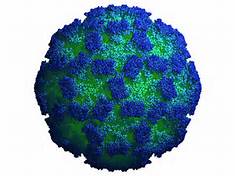
Norovirus (previously called “Norwalk-like virus” or NLV) is a member of the family Caliciviridae. The name derives from the Latin for chalice—calyx—meaning cup-like, and refers to the indentations of the virus surface. [6] The family of Caliciviridae consists of several distinct groups of viruses that were first named after the places where outbreaks occurred. The first of these outbreaks occurred in 1968 among schoolchildren in Norwalk, Ohio. The prototype strain was identified four years later, in 1972, and was the first virus identified that specifically caused gastroenteritis in humans. Other discoveries followed, with each strain name based on the location of its discovery—e.g., Montgomery County, Snow Mountain, Mexico, Hawaii, Parmatta, Taunton, and Toronto viruses. A study published in 1977 found that the Toronto virus was the second most common cause of gastroenteritis in children. Eventually this confusing nomenclature was resolved, first in favor of calling each of the strains a Norwalk-like virus, and then simply, a norovirus – the term used today.
Humans are the only host of norovirus, and norovirus has several mechanisms that allow it to spread quickly and easily. Norovirus infects humans in a pathway similar to the influenza virus’ mode of infection. In addition to their similar infective pathways, norovirus and influenza also evolve to avoid the immune system in a similar way. Both viruses are driven by heavy immune selection pressure and antigenic drift, allowing evasion of the immune system, which results in outbreaks. Norovirus is able to survive a wide range of temperatures and in many different environments. Moreover, the viruses can spread quickly, especially in places where people are in close proximity, such as cruise ships and airline flights, even those of short duration. [7] As noted by the CDC in its Final Trip Report:
Noroviruses can cause extended outbreaks because of their high infectivity, persistence in the environment, resistance to common disinfectants, and difficulty in controlling their transmission through routine sanitary measures.Continue Reading Norovirus – a Nasty Bug
What is it about “commercially-produced, prepackaged whole caramel apples” that caused a Listeria Outbreak?
 According to the FDA, although the Happy Apple Company and Merb’s Candies received apples from other growers, the FDA’s ongoing traceback investigation has confirmed that Bidart Bros. is the only apple grower that supplied apples to both companies.
Happy Apple reported that it recently received notice from Bidart Brothers, one of its apple suppliers
Caramel Apple Listeria Numbers: 32 in US and 2 in Canada
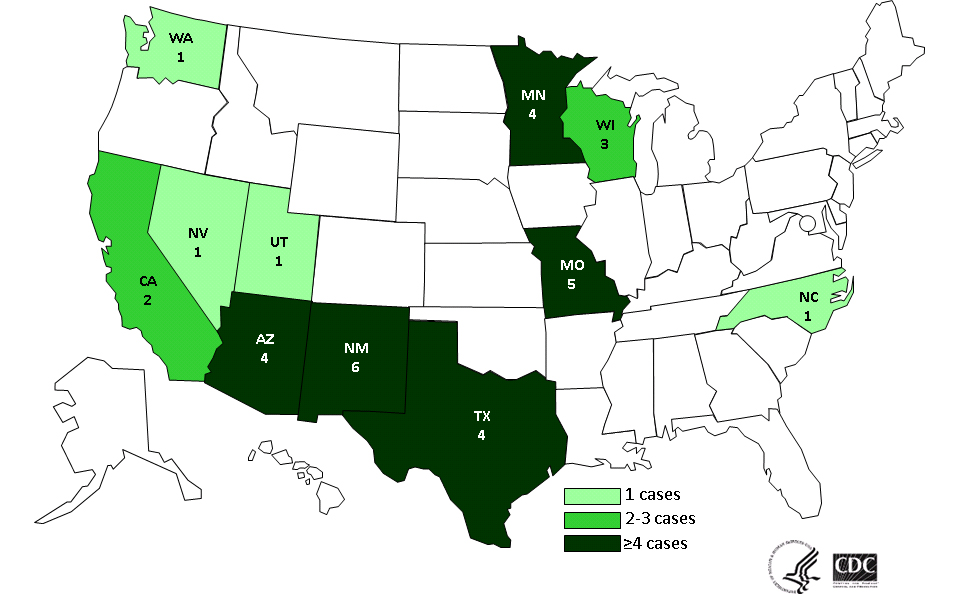 The CDC reports this morning that as of December 30, 2014, a total of 32 people infected with the outbreak strains of Listeria monocytogenes have been reported from 11 states: Arizona (4), California (2), Minnesota (4), Missouri (5), Nevada (1), New Mexico (6), North Carolina (1), Texas (4), Utah (1), Washington (1), and Wisconsin (3).