The lead level detected in the FDA sample of WanaBana apple cinnamon puree is 2.18 parts per million (ppm), which, for context, is more than 200 times greater than the action level the FDA has proposed in draft guidance for fruit purees and similar products intended for babies and young children. 

Key Facts:

  • Total Adverse Events: 34
  • Report Date Ranges: October 17, 2023 – November 15, 2023
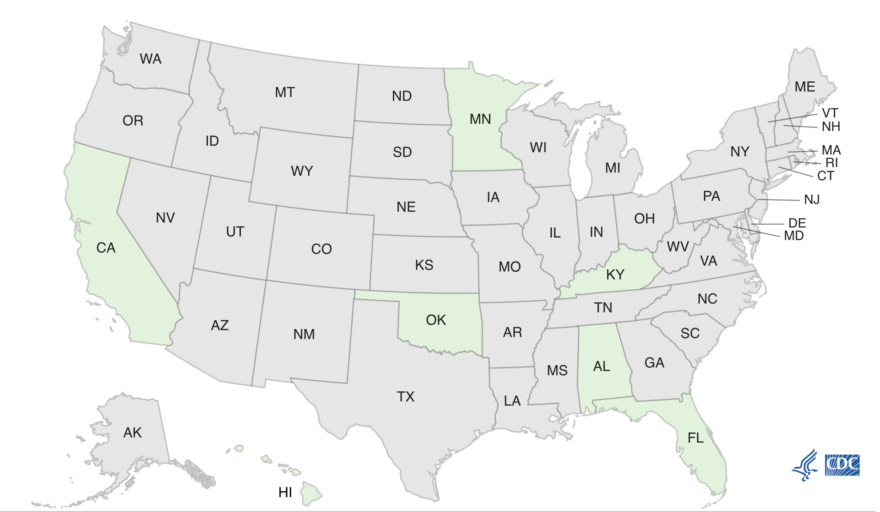
  • States with Adverse Illness Events: AL (1), AR (1), CA (1), CT (1), FL (1), IL (1), LA (3), MD (2), MI (1), MO (1), NC (5), NE (1), NH (1), NM (1), NY (4), OH (1), PA (1), SC (2), TN (1), TX (1), VA (1), WA (1), Unknown (1)
  • Product Distribution: Nationwide

FDA, along with CDC and state and local partners, is investigating reports of elevated blood lead levels in individuals with reported exposure to Apple Cinnamon Fruit Puree pouches manufactured in Ecuador and sold under WanaBana, Weis, and Schnucks brands.  

Outbreak:

As of November 16, 2023, there have been 34 reports of illness potentially linked to recalled product submitted to FDA. FDA is continuing to evaluate incoming adverse reports of illnesses.  

FDA and other state partners collected and analyzed additional product samples of fruit puree and applesauce pouches. FDA detected elevated levels of lead in one finished product sample of WanaBana Apple Cinnamon Puree collected from Dollar Tree.

Recall:

To date, sample analysis of WanaBana, Weis, and Schnucks fruit puree pouches that do not contain cinnamon and are not part of the recall, have not shown elevated levels of lead.

Cinnamon:

FDA’s leading hypothesis is that cinnamon used in these recalled pouches is the likely source of contamination for these products; however, the FDA has not yet been able to collect and test samples of the cinnamon used in the recalled products. The FDA is continuing to work with Ecuadorian authorities to investigate the source of the cinnamon. At this time, FDA has no indication that this issue extends beyond these recalled products, but to further protect public health, FDA is screening incoming shipments of cinnamon from multiple countries for lead contamination.   

In addition to determining the source of cinnamon, FDA’s investigation is ongoing to determine the point of contamination and whether additional products are linked to illnesses. At this time, the FDA is not aware of any other reports of illnesses or elevated blood lead level adverse events reported for other cinnamon-containing products or cinnamon.

Recall:

The FDA also reminds industry that it is the legal responsibility of companies distributing food products that are sold in the U.S., to comply with applicable requirements in the Federal Food, Drug, and Cosmetic Act and FDA’s regulations

By law, food manufacturers have a responsibility to significantly minimize or prevent chemical hazards when needed. This includes putting in place any needed preventive controls to reduce or eliminate the presence of lead in their products. Most food manufacturers and processors are covered by the preventive control provisions of the Current Good Manufacturing Practice, Hazard Analysis, and Risk-Based Preventive Controls for Human Food rule. The preventive control provisions require industry to implement controls to significantly minimize or prevent any identified chemical hazards, such as lead, requiring a control. In addition, some manufacturers may conduct verification activities like testing the final product. 

For more information please see FDA’s Draft Guidance for Industry on Hazard Analysis and Risk-Based Preventive Controls for Human Food.  

FDA will update this advisory as information becomes available.

There are now almost two dozen children with reported adverse effects linked to applesauce pouches that have high levels of lead.

The 22 children impacted live across 14 states with the state of residence for one of them being unknown. 

There are recalls for four products related to the illnesses:

  • Realled WanaBana apple cinnamon fruit puree pouches
  • Recalled Schnucks-brand cinnamon-flavored applesauce pouches and variety pack
  • Recalled Weis-brand cinnamon applesauce pouches

The WanaBana product has been distributed nationwide. The Schnucks and Weis brand products were distributed within those regional grocery store chains. The recall also includes markets outside of the United States. Customer information provided by the company shows that product was also distributed to Cuba and the United Arab Emirates.

The Food and Drug Administration first reported the situation on Oct. 28. The WanaBana company announced the recalls on Oct. 31.

“As part of this investigation, FDA and state partners are collecting and analyzing additional product samples of fruit puree and applesauce pouches. At this time, sample analyses have not shown elevated levels of lead in any non-recalled products,” according to the FDA’s updated alert on Nov. 13.

Federal investigators began working on the outbreak of “adverse reactions” after the North Carolina Department of Health and Human Services and the North Carolina Department of Agriculture & Consumer Services reported four children with elevated blood lead levels, indicating potential acute lead toxicity. 

The North Carolina investigators identified WanaBana Apple Cinnamon Fruit Puree pouches as a potential shared source of exposure. As part of their work, North Carolina investigators analyzed multiple lots of WanaBana Apple Cinnamon Fruit Puree, detecting extremely high concentrations of lead. The FDA has reviewed and supports those analytical findings and determined that levels of lead found in the analyzed pouches could result in acute lead toxicity.

Consumers are warned not to feed the recalled products to their children or eat them themselves. Lead is toxic to humans and can affect people of any age or health status, but children are particularly susceptible to lead toxicity. Lead poisoning can result in a number of long-term problems, including developmental disorders and brain damage.

“These products have a long shelf life. Consumers should check their homes and discard these products. Most children have no obvious immediate symptoms of lead exposure,” according to the FDA’s expanded alert. “If there’s suspicion that a child may have been exposed to lead, parents should talk to their child’s healthcare provider about getting a blood test.”

Short term exposure to lead can result in the following symptoms: headache; abdominal pain/colic; vomiting; anemia. Longer term exposure could result in the following additional symptoms: irritability; lethargy; fatigue; muscle aches or muscle prickling/burning; constipation; difficulty concentrating/muscular weakness; tremor; weight loss.

As of the Nov. 13 outbreak update the FDA reported children with symptoms in Alabama, Arkansas, Louisiana, Maryland, Missouri, North Carolina, New Mexico, New York, Ohio, Pennsylvania, South Carolina, Tennessee, Texas and Washington.

Of 7 sickened, 6 are under the age of 1.

As of November 1, 2023, seven people infected with the outbreak strain of Salmonella have been reported from seven states. Illnesses started on dates ranging from January 14, 2023, to August 19, 2023. One person was hospitalized, and no deaths have been reported.

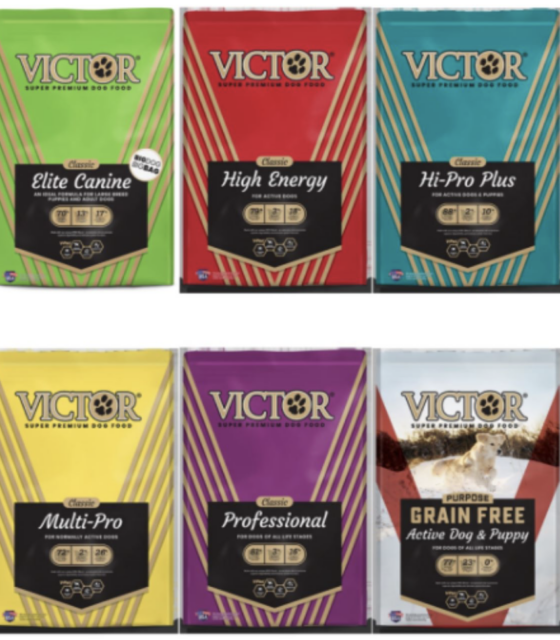
State and local public health officials are interviewing people or their family about pets or pet food that the sick person may have come into contact with before they got sick. Of the five people interviewed, all (100%) reported contact with a dog or having a dog in the household, and three (60%) fed their dogs Victor brand dog food. One person reported feeding the Hi-Pro Plus product, and the other two did not remember the specific type of Victor brand product they fed their dogs.

Public health investigators are using the PulseNet system to identify illnesses that may be part of this outbreak. CDC PulseNet manages a national database of DNA fingerprints of bacteria that cause foodborne illnesses. DNA fingerprinting is performed on bacteria using a method called whole genome sequencing (WGS). WGS showed that bacteria from sick people’s samples are closely related genetically. This suggests that people in this outbreak got sick from the same product.

Victor brand Hi-Pro Plus dog food with a lot code of 1000016385 was collected from retail for routine testing by the South Carolina State Department of Agriculture and Salmonella was identified through analysis by the South Carolina Department of Health and Environmental Control. WGS showed that the Salmonella in this dog food is closely related to bacteria from sick people. This means that people likely got sick by touching this dog food, touching things like dog bowls that contained this dog food, or touching the poop or saliva of dogs that were fed this dog food. There have been no leftover Victor brand products from sick people’s homes available for testing for Salmonella.

Organic Pastures Dairy Company (OPDC) & Raw Farm Recalls and Outbreaks 2006-2023
 
Started OPDC in 2000 https://certifiedhumane.org/mcafee-farms-organic-pastures-dairy-company/
Changed name to Raw Farm LLC in 2020

Organic Pastures Dairy Company Recalls and Outbreaks
 
September 2006 Raw Milk E.coli Outbreak: 6 ill/2 HUS  https://www.cdc.gov/mmwr/preview/mmwrhtml/mm5723a2.htm
 
September 2007 Raw Cream Listeria Recall https://www.cdfa.ca.gov/egov/Press_Releases/Press_Release.asp?PRnum=07-068
 
December 2007 Raw Milk Campylobacter Outbreak: 8 ill  https://marlerclark.com/pdfs/ClusterofCampylobacterinfectionsrawmilkEpi22007.pdf
 
September 2008 Raw Cream Campylobacter Recall https://www.cdfa.ca.gov/egov/Press_Releases/Press_Release.asp?PRnum=08-061
 
November 2011 Raw Milk E.coli Outbreak: 5 ill/3 HUS https://realrawmilkfacts.com/PDFs/Organic-Pastures-outbreak-letter-2011.pdf
 
May 2012 Campylobacter Raw Milk/Cream Outbreak: 10 ill, reported illnesses from Jan. thru April https://www.cdfa.ca.gov/egov/Press_Releases/Press_Release.asp?PRnum=12-018
 
October 2015 Campylobacter Raw Milk Recall https://www.cdfa.ca.gov/egov/Press_Releases/Press_Release.asp?PRnum=15-050
 
January 2016 E.coli Raw Milk Outbreak: 9 ill/2 HUS https://www.cdph.ca.gov/Programs/CEH/DFDCS/CDPH%20Document%20Library/FDB/FoodSafetyProgram/EnvInvReports/SignOff_OPDC%20FinalReport101116_Redacted.pdf
 

Raw Farm LLC Recalls and Outbreaks
 
May 2023 Campylobacter Raw Milk Recall https://www.cdfa.ca.gov/egov/press_releases/Press_Release.asp?PRnum=23-069&print=yes
 
August 2023 Salmonella Cheese Recall  https://www.cdfa.ca.gov/egov/press_releases/Press_Release.asp?PRnum=23-127
 
October 2023 Salmonella Raw Milk Outbreak (ongoing investigation)
San Diego County—12 illnesses https://www.foodsafetynews.com/2023/10/more-confirmed-infected-in-outbreak-linked-to-raw-milk-from-california-dairy/
Orange County—7 illnesses https://www.foodpoisonjournal.com/food-poisoning-information/raw-farm-milk-salmonella-outbreak-expands-to-orange-county/

I am off to New York for a Court hearing on November 13th, but also attending The Critics Choice Association (CCA) Gala and Awards Ceremony the evening before. I hope my tux fits.

The Critics Choice Association (CCA) has announced the nominees for the Eighth Annual Critics Choice Documentary Awards (CCDA). The winners will be revealed at a Gala Event on Sunday, November 12, 2023 at The Edison Ballroom in Manhattan. The ceremony will be hosted for the second year in a row by longtime event supporter, actor, and standup comedian Wyatt Cenac.

The Critics Choice Documentary Awards will be live-streamed through Facebook, YouTube and X (formerly Twitter). Viewing links will be available on the Critics Choice Association website at 7:00 PM ET on Sunday, November 12.

BEST SCIENCE/NATURE DOCUMENTARY

32 Sounds (Abramorama)
Between Earth & Sky (PBS)
Life on Our Planet (Netflix)
Path of the Panther (National Geographic)
Poisoned: The Dirty Truth About Your Food (Netflix)
Secrets of the Elephants (National Geographic)
Wild Beauty: Mustang Spirit of the West (Gravitas Ventures)

The CDC has been reporting on an ongoing person to person outbreak of Hepatitis A for years. Since the outbreaks were first identified in 2016, 37 states have publicly reported the following as of October 6, 2023:

            •           Cases: 44,915

            •           Hospitalizations: 27,445 (61%)

            •           Deaths: 423

Now, the CDC has just reported : Preventable Deaths During Widespread Community Hepatitis A Outbreaks — United States, 2016–2022

Hardly a week goes by that there is not yet another announcement of a hepatitis A positive employee putting co-workers, customers and the restaurant brand at risk. There have been illnesses, deaths, thousands of customers have had to stand in long lines to get preventative vaccines, some restaurants have shuttered and there certainly have been lawsuits.

All preventable by a hepatitis A vaccination – the only foodborne illness that is vaccine preventable.

It really is past time for public health to recommend the same. Here is what I have asked the CDC for:

ACIP Secretariat
Advisory Committee on Immunization Practices 
1600 Clifton Road, N.E., Mailstop H24-8
Atlanta, GA 30329-4027
acip@cdc.gov

Re:  Letter to the CDC’s Committee on Immunization Practices – It is time to deal with Hepatitis A and Food Service Workers

Dear ACIP Secretariat:

The Advisory Committee on Immunization Practices (ACIP) provides advice and guidance to the Director of the CDC regarding use of vaccines and related agents for control of vaccine-preventable diseases in the civilian population of the United States. Recommendations made by the ACIP are reviewed by the CDC Director and, if adopted, are published as official CDC/HHS recommendations in the Morbidity and Mortality Weekly Report (MMWR).

Presently, approximately 5% of all hepatitis A outbreaks are linked to infected food-handlers.

Here is what the CDC continues to say about vaccinating food-handlers:

Why does CDC not recommend all food handlers be vaccinated if an infected food handler can spread disease during outbreaks?

CDC does not recommend vaccinating all food handlers because doing so would not prevent or stop the ongoing outbreaks primarily affecting individuals who report using or injecting drugs and people experiencing homelessness. Food handlers are not at increased risk for hepatitis A because of their occupation. During ongoing outbreaks, transmission from food handlers to restaurant patrons has been extremely rare because standard sanitation practices of food handlers help prevent the spread of the virus. Individuals who live in a household with an infected person or who participate in risk behaviors previously described are at greater risk for hepatitis A infection.

The CDC misses the point; granted, food service workers are not more at risk of getting hepatitis A because of their occupation, but they are a risk for spreading it to customers. Food service positions are typically low paying, and certainly have the likelihood of being filled by people who are immigrants from countries where hepatitis A might be endemic or by people who have been recently experienced homelessness.

Over the past several years, there has been an ongoing outbreak of hepatitis A in the United States. As of February 2, 2023, there have been a total of 44,779 cases with a 61% hospitalization rate (approximately 27,342 hospitalizations). The death toll stands at 421. Since the outbreak started in 2016, 37 states have reported cases to the CDC.

The CDC recommends to the public that the best way to prevent hepatitis A is through vaccination, but the CDC has not explicitly stated that food service workers should be administered the vaccination. While food service workers are not traditionally designated as having an increased risk of hepatitis A transmission, they are not free from risk. 

24% of hepatitis A cases are asymptomatic, which means a food-handler carrying the virus can unknowingly transmit the disease to consumers. Historically, when an outbreak occurs, local health departments start administering the vaccine for free or at a reduced cost. The funding from these vaccinations is through taxpayer dollars. 

A mandatory vaccination policy for all food service workers was shown to be effective at reducing infections and economic burden in St. Louis County, Missouri.

From 1996 to 2003, Clark Country, Nevada had 1,523 confirmed cases of hepatitis A, which was higher than the national average. Due to these alarming rates, Clark County implemented a mandatory vaccination policy for food service workers. As a result, in 2000, the hepatitis A rates significantly dropped and reached historic lows in 2010. The county removed the mandatory vaccine rule in 2012 and are now part of the ongoing hepatitis A outbreak. 

According to the CDC, the vaccinations cost anywhere from $30 to $120 to administer, compared to thousands of dollars in hospital bills, and offer a 95% efficacy rate after the first dose and a 99% efficacy after the second dose. Furthermore, the vaccine retains its efficacy for 15-20 years.  

During an outbreak, if a food service worker is found to be hepatitis A positive, a local health department will initiate post-exposure treatment plans that must be administered within a two-week period to be effective. The economic burden also affects the health department in terms of personnel and other limited resources. Sometimes, the interventions implemented by the local health department may be ineffective. 

Though there are many examples of point-source outbreaks of hepatitis A that have occurred within the past few years around the country, a particularly egregious outbreak occurred in the early fall of 2021 in Roanoke, Virginia. The health department was notified about the outbreak on September 21, 2021, after the first case was reported by a local hospital. The Roanoke Health Department, along with the Virginia Department of Health, investigated this outbreak.

Three different locations of a local restaurant, Famous Anthony’s, were ultimately determined to be associated with this outbreak. The Virginia Department of Health published a community announcement on September 24, 2021, about the outbreak and the potential exposure risk. 

For purposes of the investigation, a case was defined as a “[p]erson with (a) discrete onset of symptoms and (b) jaundice or elevated serum aminotransferase levels and (c) [who] tested positive for hepatitis A (IgM anti-HAV-positive), and frequented any of three Famous Anthony’s locations, or was a close contact to the index case patient, during the dates of August 10 through August 27, 2021.”

As of November 2021, a total of 49 primary cases (40 confirmed and 9 probable) were identified in this outbreak. Two secondary cases were also identified. Cases ranged from 30 to 82 years of age (median age of 63). In all, 57 percent of cases were male. Thirty-one cases included hospitalizations, and at least 4 case patients died. Illness onsets occurred between August 25 and October 15, 2021.

Ultimately, the outbreak investigation revealed that a cook, who also had risk factors associated with hepatitis A, had been infected with hepatitis A while working at multiple Famous Anthony’s restaurant locations. This index case’s mother and adult son also tested positive for hepatitis A. Following an inspection, the outbreak inspector noted, “due to the etiology of hepatitis A transmission, it is assumed the infectious food handler did not perform proper hand washing or follow glove use policy.” It was determined that person-to-person spread was the most likely mode of transmission in this outbreak. Environmental contamination was also considered a possible mode of transmission. 

Overwhelmed by the number of victims who pursued legal action for their injuries, Famous Anthony’s filed for bankruptcy and several of its locations have been closed.

The tragedy of this preventable hepatitis A outbreak cannot be overstated. Four people died. In one family, two of its members lost their lives. Most of the victims were hospitalized. Many risked acute liver failures. At least one person required both a liver and kidney transplants. Medical bills for the victims totaled over $6,000,000 in acute costs with millions of dollars in future expenses. And this all because one employee did not receive a $30-$120 hepatitis A vaccine.

Affordable prevention of future tragedies like the Famous Anthony’s outbreak is possible and necessary. The time has come to at least recommend vaccinations to food service workers to reduce the spread of hepatitis A.

Sincerely, 
Bill Marler
On behalf of 31 hepatitis A victims and families

1 Privately, via mail, I am providing medical summaries for 31 of the victims so there can be a clear assessment of the impacts of hepatitis A on consumers of food at the hands of one unvaccinated food service worker.

Report Date Ranges: October 17, 2023 – November 1, 2023
States with Cases: AR (1), LA (1), MD (1), MO (1) NC (2), Unknown (1)

According to the CDC, exposure to lead can seriously harm a child’s health and cause well-documented health effects, including damage to the brain and nervous system, slowed growth and development, learning and behavior problems, and hearing and speech problems. If your child may have been exposed to lead, talk to your child’s health care provider about getting a blood lead test.

Children under the age of 6 are at greatest risk for health problems caused by lead exposure. The health effects of lead exposure are more harmful to younger children than older children and adults because their bodies are still developing, and they are growing so rapidly. Young children also tend to put their hands or other objects, which may be contaminated with lead dust, into their mouths.

Product Distribution: Nationwide

As reported in a safety alert issued by FDA on October 28, 2023, the FDA, along with the North Carolina Department of Health and Human Services (NCDHHS) and the North Carolina Department of Agriculture & Consumer Services (NCDA&CS) are investigating reports of four children with elevated blood lead levels, indicating potential acute lead toxicity. The NCDHHS investigation identified WanaBana Apple Cinnamon Fruit Puree pouches as a potential shared source of exposure. As part of their investigation, NCDHHS analyzed multiple lots of WanaBana Apple Cinnamon Fruit Puree, detecting extremely high concentrations of lead.

The FDA has reviewed and supports NCDHHS’s analytical findings and found that analytical results at this level could result in acute toxicity. The FDA has shared the results with the firm and on October 31, 2023, Wanabana LLC initiated a voluntary recall of all WanaBana Apple Cinnamon Fruit Puree Pouches.

Since the first alert was issued this investigation has been transferred to FDA’s Coordinated Outbreak Response & Evaluation (CORE) Network for additional follow up, in collaboration with the Centers for Disease Control and Prevention (CDC) and state and local partners. Two additional brands of products are also subject to recall: certain Schnucks cinnamon-flavored applesauce pouches and variety pack and certain Weis cinnamon applesauce pouches.

FDA has received additional reports of illnesses and is working to evaluate those complaints. FDA’s investigation is ongoing to determine the source of lead contamination and whether additional products are linked to illnesses. FDA will update this advisory as information becomes available.
Product

Certain apple puree and applesauce products. This includes all lot codes and expiration dates of:

            •           Recalled WanaBana apple cinnamon fruit puree pouches

            •           Recalled Schnucks brand cinnamon-flavored applesauce pouches and variety pack

            •           Recalled Weis brand cinnamon applesauce pouches (i.e., specific lots of UPC 041497216123)

Symptoms of Lead Toxicity 

Lead is toxic to humans and can affect people of any age or health status. Protecting children from exposure to lead is particularly important because they are more susceptible to lead toxicity. Most children have no obvious immediate symptoms. Parents and caretakers should consult a healthcare provider if you suspect a child may have been exposed to lead. Short term exposure to lead could result in the following symptoms: headache; abdominal pain/colic; vomiting; anemia. Longer term exposure could result in the following additional symptoms: irritability; lethargy; fatigue; muscle aches or muscle prickling/burning; constipation; difficulty concentrating/muscular weakness; tremor; weight loss.

Stores Affected

            •           WanaBana apple cinnamon fruit puree pouches are sold nationally and are available through multiple retailers including Sam’s Club, Amazon, Dollar Tree, and other online outlets.

            •           Schnucks brand cinnamon-flavored applesauce pouches and variety pack are sold at Schnucks and Eatwell Markets grocery stores.

            •           Weis brand cinnamon applesauce pouches are sold at Weis grocery stores.

Recommendation

            •           Consumers should not eat, sell, or serve recalled WanaBana, Schnucks, and Weis brand apple cinnamon pouches and should discard them.  

            •           These products have a long shelf life. Consumers should check their homes and discard these products.

            •           Most children have no obvious immediate symptoms of lead exposure. If there’s suspicion that a child may have been exposed to lead, parents should talk to their child’s healthcare provider about getting a blood test.

            •           Contact your healthcare provider if you think you may have symptoms of lead toxicity after eating recalled fruit pouches.

As of October 24, 2023, 41 jurisdictions, including 40 states and New York City, have reported a total of 2,272 laboratory-confirmed cases of cyclosporiasis. 

These individuals had not traveled outside of the United States during the 14 days before they got sick. This is an increase of 315 cases since the last update on August 31, 2023.

Sick people ranged in age from 2 to 96 years, with a median age of 51, and 57% were female. The median illness onset date was June 24, 2023 (range: April 1 to August 31). Of 2,242 people with information available, 186 have been hospitalized. Zero deaths have been reported.

Cyclospora: Marler Clark, The Food Safety Law Firm, is the nation’s leading law firm representing victims of Cyclospora outbreaks. The Cyclospora Attorneys and Lawyers have represented victims of Cyclospora and other foodborne illness outbreaks and have recovered over $850 million for clients.  Marler Clark is the only law firm in the nation with a practice focused exclusively on foodborne illness litigation. Our Cyclospora lawyers have litigation Cyclospora cases stemming from outbreaks traced to basil and lettuce products.

If you or a family member became ill with a Cyclospora infection after consuming food and you are interested in pursuing a legal claim, contact the Marler Clark Cyclospora attorneys for a free case evaluation.

The FDA issued this warning this morning – Recall underway.

Summary of Problem and Scope

The FDA was recently made aware of a developing investigation by the North Carolina Department of Health and Human Services (NCDHHS) and the North Carolina Department of Agriculture & Consumer Services (NCDA&CS) regarding four children with elevated blood lead levels, indicating potential acute lead toxicity. The NCDHHS investigation identified WanaBana apple cinnamon fruit puree pouches as a potential shared source of exposure. As part of their investigation, NCDHHS analyzed multiple lots of WanaBana apple cinnamon fruit puree, detecting extremely high concentrations of lead. The FDA has reviewed and supports NCDHHS’s analytical findings and found that analytical results at this level could result in acute toxicity. The FDA has shared the results with the firm whose representatives are cooperating with the FDA and have agreed to voluntarily recall all WanaBana apple cinnamon fruit puree pouches regardless of expiration.

Audience

Parents and caregivers of toddlers and young children who have recently purchased WanaBana apple cinnamon fruit puree pouches.

Product

WanaBana apple cinnamon fruit puree pouches, all lot codes and expiration dates.

WanaBana apple cinnamon fruit puree pouches are sold nationally and are available through multiple retailers including Sam’s Club, Amazon and Dollar Tree.

WanaBana has agreed to voluntarily recall all WanaBana apple cinnamon fruit puree pouches regardless of expiration.

Purpose

The FDA is advising parents and caregivers not to buy or feed WanaBana apple cinnamon fruit puree pouches to children because the product may contain elevated levels of lead. Parents and caregivers of toddlers and young children who may have consumed WanaBana apple cinnamon fruit puree pouches should contact their child’s healthcare provider about getting a blood test.

Signs and symptoms of lead toxicity

Lead is toxic to humans and can affect people of any age or health status. Protecting children from exposure to lead is important to lifelong good health. Lead exposure in children is often difficult to see. Most children have no obvious immediate symptoms. If there’s suspicion that a child may have been exposed to lead, parents should talk to their child’s healthcare provider about getting a blood test. Although lead can only be diagnosed through clinical testing, signs and symptoms of lead toxicity vary based on exposure.

Short term exposure to lead could result in the following symptoms:
• Headache
• Abdominal pain/Colic
• Vomiting
• Anemia

Longer term exposure could result in additional symptoms:
• Irritability
• Lethargy
• Fatigue
• Muscle aches or muscle prickling/burning
• Occasional abdominal discomfort
• Constipation
• Difficulty concentrating/Muscular exhaustibility
• Headache
• Tremor
• Weight loss

FDA Actions

The FDA is issuing this public health alert advising parents and caregivers not to purchase or feed WanaBana apple cinnamon fruit puree pouches to toddlers and young children because they may contain elevated levels of lead. The FDA is continuing to work with state officials and the firm, collecting additional information, and taking steps to remove all contaminated product from the market.