Today, our global food supply is a long one.  The lengthening of the supply chain allows more opportunities for problems to occur.

Chris Fronzak, my client and lead singer for the heavy metal band Attila, consumed a spicy tuna roll containing Nakaochi Scrape at a Metairie, Louisiana restaurant while his band was on tour –
In the summer of 2002 I received a phone call one morning from a fellow who had been up all night with diarrhea and vomiting.  He had learned too that several others who had attended a wedding the prior weekend were sick as well.  Thus started our investigation into the Brook-Lea Country Club Salmonella outbreak. 

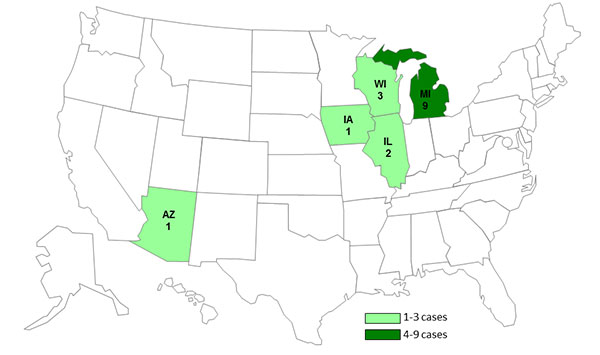
In April and May of 1998, public health officials in eleven states received an unusually high number of reports that patients receiving health care services for gastrointestinal illness had been diagnosed with Salmonella serotype Agona infections.  The number of illnesses represented an eightfold increase over the median number of Salmonella Agona cases reported in those

The facts of this most unfortunate incident were well covered in the report issued by the Macomb County Health Department on May 1, 2002.  Of note, the illnesses were “associated with the consumption of cannolis and cassata cake from Black Forest Cakes and Pastries.”

Laboratory investigation showed that 46 stool cultures tested positive for Salmonella

The posts I recently did on Jack in the Box and Odwalla prompted some readers to ask what other stories I had.  Unfortunately, I have a very large plate full.  Perhaps by retelling some of these stories others will be prompted to pay just a bit(e) more attention to food safety.

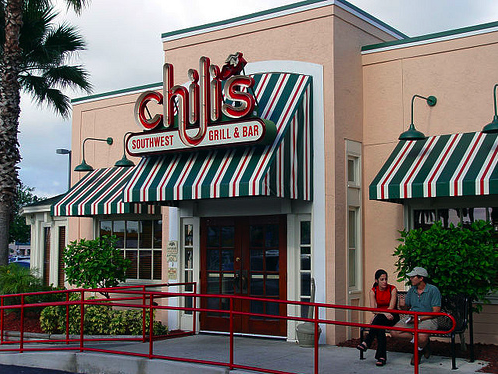
On June 30, 2003, Lake County Health Department (LCHD) received a report from Lake Forest Hospital indicating that a patient was ill with a Salmonella infection. The LCHD immediately contacted the patient and interviewed him, using a questionnaire that is standard for the epidemiological investigation of foodborne illness outbreaks. One of the first things learned by the interviewer was that the patient had recently eaten at the Chili’s Grill & Bar in Vernon Hills, Illinois.

About an hour after receiving this first report, a second person contacted LCHD to report that a family member had become ill after eating at Chili’s in Vernon Hills. This prompted the LCHD to send investigators to the restaurant to inspect it. What they found was disturbing. The restaurant’s dishwashing machine was broken and corroded; the tube that fed chlorine into the machine was plugged, preventing proper sanitization of dishes. Employees told the investigators that the machine had not worked properly for at least a week. In fact, according to the LCHD Final Report, “[e]mployees had wrapped plastic bags around the line to stop the chlorine from spraying into the air.” Despite the obvious broken condition of the dishwasher, the restaurant management still had done nothing to get the machine “repaired” that is, until caught by the health department.

During their inspection, the investigators also found food not stored at proper temperatures in the cooler. And following questioning of the on-duty manager, investigators learned that three employees, plus another manager, had called in sick that day with flu symptoms.

The next day, LCHD received two new reports of individuals with Salmonella infections who had eaten at Chili’s on June 26, while Chili’s management reported six more ill employees. With evidence of the outbreak-source growing increasingly clear, investigators returned to the restaurant to instruct employees on hand-washing procedures, require the use of nailbrushes, and to issue a glove-use order. This meant that no further bare-hand contact of food was to be allowed at the restaurant. The investigators also collected stool samples from the employees there in addition to interviewing each one of them regarding gastrointestinal symptoms. As a result of these interviews, investigators discovered thirteen employees who had been allowed to work despite suffering from diarrhea and other symptoms.

Because of the large number of infected employees identified, the LCHD ordered the restaurant to close. A statement issued by LCHD Executive Director Dale Gallassie announced that:

Due to the large number of ill employees, and the high potential for spread of this illness, Chili’s was required to cease all operation or face suspension or revocation of its food service permit, at which time Chili’s management made the decision to voluntarily close the establishment.Continue Reading A Salmonella Outbreak to Remember: 2003 Vernon Hills Chili’s

Jouni Meats, Inc., a Sterling Heights, Michigan retail store, is recalling approximately 500 pounds of ground beef products that may be contaminated with a strain of Salmonella Typhimurium, the U.S. Department of Agriculture’s Food Safety and Inspection Service (FSIS) announced today. These products were produced between Dec. 4, 2012, and Dec. 9, 2012, and distributed

Hog head cheese products produced by EST. 2257 have been linked to a recent Salmonella Uganda cluster involving six case-patients from Louisiana. Working in conjunction with the Louisiana Office of Public Health, FSIS was able to link illnesses to the RTE pork products produced at this establishment based on epidemiologic and traceback investigations. Illness onset