The Washington Post’s reporters, Kimberly Kindy and Brady Dennis jumped into FSIS’s “what’s an adulterant” thicket with their story posted yesterday “Salmonella outbreaks expose weakness in USDA oversight.”  The article is worth the read.

Regarding FSIS allowing the meat industry – chicken, beef, etc., to ship us all food tainted with Salmonella, what happened to my client and reported by the post says it all:

The Agriculture Department inspector showed up at Rick Schiller’s home in November to collect potential evidence from his freezer: three pounds of chicken thighs, wrapped in plastic and stamped with a Foster Farms label.

Schiller, a 51-year-old California advertising executive, had recently returned from a five-day stay in the hospital prompted by severe vomiting, diarrhea and an infection that left his joints throbbing and his right leg purple and twice its normal size.

“I’ve been around the block. I’ve had some painful things,” he said. “But nothing like this.”

He takes drops for his right eye, which is constantly congested, red and itchy. On cold nights, he carries firewood in his left arm because his right still feels weak.

“I don’t know what the long-term prognosis is going to be,” he said. “I’m just thankful that I’m alive.”

Mr. Schiller was part of one of two 2013 Foster Farm chicken Salmonella outbreaks that sickened over 500, putting 40% of those in the hospital.  And, guess what?  No recalls because Salmonella is not considered an adulterant despite what it does to Foster Farm’s customers. But, what if FSIS and the industry considered Salmonella an adulterate – like common sense tells most of us?  As the post reports, there is a history of success with calling pathogens what they are:

The agency declared a zero-tolerance policy for the strain in many beef products after hundreds of Americans fell ill and four children died in 1993 after eating tainted hamburger meat from fast-food chain Jack in the Box.

As researchers eventually identified other types of E. coli that were particularly virulent and resistant to antibiotics, those likewise got labeled “adulterants” by the USDA, meaning the agency considers them dangerous substances that should be banned from commerce. A ban gives the USDA legal authority to order recalls, something it does not have with Salmonella.

The result: Over time, deaths and infections from E. coli have decreased significantly.

“It worked,” said Seattle lawyer Bill Marler, who specializes in food poisoning cases and is representing Schiller. “Ninety-five percent of my cases used to be E. coli. Today it is nearly zero. The industry will kick and scream, but they can fix it.”

Go figure.

Lynne Terry reports that since December 2013, Oregon health officials have been looking into the source of Campylobacteriosis that has sickened five individuals in Oregon and Ohio. All cases report eating undercooked or raw chicken livers; most cases consumed chicken livers prepared as pâté. The cases in Ohio ate chicken liver pâté while visiting Oregon. The Oregon Health Authority is working with USDA and CDC.

Ms. Terry reports that the chicken livers were processed at Draper Valley Farms in Mt. Vernon, Washington.  One person ate chicken liver pâté at the Heathman; another dined at Wildwood; the third Oregonian purchased chicken liver pate prepared and sold by a Market of Choice store.  Draper Valley did not issue a recall. Under U.S. Department of Agriculture regulations, processors are allowed to sell chicken livers tainted with a high level of Campylobacter.

This is the second reported multistate outbreak of campylobacteriosis associated with consumption of undercooked chicken liver in the United States.

Chicken livers should be considered a risky food. A recent study found up to 77 percent of chicken livers tested were positive for Campylobacter. Washing chicken livers is not enough; chicken livers can be contaminated on the inside and on the outside, which is why thorough cooking is the only way to kill bacteria in contaminated livers.

Pâté made with chicken liver is often undercooked to preserve texture. It can be difficult to tell if pâté is cooked thoroughly because livers are often partially cooked then blended with other ingredients and chilled. Pâté prepared at a USDA inspected facility is considered safe to eat because in order to pass inspection the livers must be cooked to a proper temperature.

Norovirus is again in the news – cruise ships, fancy restaurants and even a high school.

Norovirus is a virus that is encased in a protein shell. It can live outside the human body for weeks and possibly months, and it is resistant to hand sanitizer and soap.

It takes only a small number of Norovirus viral particles to make you sick – as few as 10 Norovirus particles can make an adult sick. The average Norovirus virus is around 35 nanometers across — one-third the size of most viruses — so the volume of an infectious dose is very small.

Norovirus is persistent. People infected with Norovirus continue to shed it for up to three weeks, long after the vomiting and diarrhea have passed.

Norovirus can be passed a surface to hand to mouth.  You can also inhale the Norovirus.

For more information about Norovirus, visit http://www.about-norwalk.com/

The product was distributed to certain Brookshire Food Stores, Krogers and Walmarts in Louisiana and Texas, as well as certain Super 1 Foods Stores in Louisiana and Market Latina and Super 1 Foods Stores in Texas.
PFP Enterprises, a Fort Worth, Texas, establishment, is recalling approximately 15,865 pounds of beef products because they may be contaminated with E. coli O103, E. coli O111, E. coli O121, E. coli O145, E. coli O26 and E. coliO45, the U.S. Department of Agriculture’s Food Safety and Inspection Service (FSIS) announced today.The following products are subject to FSIS recall:
  • 10.5-lb. boxes of Beef Outside Skirt Steak, with a pack date of “12/13/13”
  • 20-lb. boxes of Studio Movie Grill Beef Tenderloin Sliced, with a pack date of “12/05/13”
  • 15-lb. boxes of Preseasoned Beef for Fajita, with a use by date of “1/13/14”
  • 40-lb. boxes of Southwest Style Beef Skirts, with a pack date of “12/5/13”
  • 20-lb. boxes of Patterson Food Processors Beef Skirt Seasoned, with a pack date of “12/9/13”
  • 10-lb. boxes of Preseasoned Beef for Fajitas, with a pack date of “12/9/2013”
  • 40-lb. boxes of Preseasoned Beef for Fajitas w/Binder, with a pack date of “12/9/2013”
  • 12-lb. boxes of Seasoned Beef for Fajitas, containing 6 2-lb. packs, with a use by date of “1/15/14”
  • 12-lb. boxes of Mexican Style Beef for Fajita, containing 6 2-lb. packs, with a use by date of “1/11/14”

The products subject to recall bear the establishment number “Est. 34715” inside the USDA Mark of Inspection. The products were produced on Dec. 5, 2013, and distributed to retail stores and restaurants in Arizona, Oklahoma, Puerto Rico and Texas.

FSIS personnel became aware of the problem during a Food Safety Assessment when they discovered that beef trim tested presumptive positive for multiple non-O157 Shiga toxin-producing E. coli (STEC) strains through the company’s testing program. The company inadvertently did not carry the test out to confirmation, and not all affected product was held.

FSIS and the company have received no reports of illnesses associated with consumption of these products.

Many clinical laboratories do not test for non-O157 STEC, such as STEC O26, O103, O45, O111, O121 or O145, because it is harder to identify than STEC O157. People can become ill from STECs 2-8 days (average of 3-4 days) after consuming the organism. Most people infected with STEC O26, O103, O45, O111, O121 or O145 develop diarrhea (often bloody) and vomiting. Some illnesses last longer and can be more severe. Infection is usually diagnosed by testing of a stool sample. Vigorous rehydration and other supportive care is the usual treatment; antibiotic treatment is generally not recommended.

Most people recover within a week, but, rarely, some develop a more severe infection. Hemolytic uremic syndrome (HUS) is uncommon with STEC O26, O103, O45, O111, O121 or O145 infection. HUS can occur in people of any age, but is most common in children under 5 years old, older adults and persons with weakened immune systems. It is marked by easy bruising, pallor and decreased urine output. Persons who experience these symptoms should seek emergency medical care immediately.

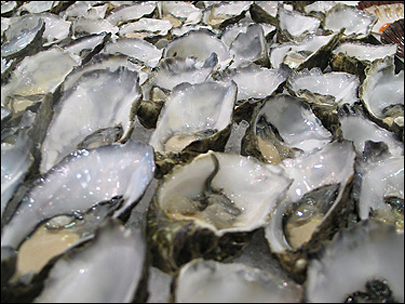
After the Oregon Department of Agriculture confirmed three cases of  Campylobacter related to the consumption of raw shucked oysters from the Coos Bay Oyster Company the company  issued a recall notice for all of its shucked oysters — a recall that has then expanded to include all of its shellstock oysters as well.

The oysters were distributed through wholesale dealers and retail stores in Oregon and California.  Coos Bay Oyster Company said it has ceased production and distribution of the product while the state agriculture officials and the company continue investigating the cause of the problem.

The recall includes:

• Plastic Tubs (half-gallon, quart, pint and half-pint), Coos Bay Oyster Co. raw or ready-to-eat shucked oysters, with sell-by dates from Jan. 15-Feb. 17.

• Red onion sacks that contain five dozen shellstock oysters in various sizes with a Coos Bay Oyster Co. label and shellstock tags with various harvest dates between December and January.

Campylobacter symptoms include diarrhea, headache and body ache, cramping, abdominal pain, and fever. Typically, this occurs within 2-5 days after being exposed to the organism. The diarrhea may be bloody and can be accompanied by nausea and vomiting. The illness usually lasts one week.  Department of Agriculture said some infected persons may not show any symptoms, but those with compromised immune systems face the added danger of it spreading to the bloodstream, where it can cause a serious, life-threatening infection.

Heston Blumenthal has shut his London restaurant Dinner, which has two Michelin stars, for a week after 24 guests fell ill with the vomiting bug norovirus, officials said on February 2nd.

The closure comes five years after an outbreak of norovirus caused by contaminated shellfish forced Blumenthal to close The Fat Duck, his three-starred restaurant in Bray for 10 days.

Westminster City Council, the local authority, said 24 diners and 21 staff had been taken ill at Dinner, which was named the seventh best restaurant in the world in last year’s San Pellegrino awards.

James Armitage, the council’s food safety manager, said: “Test results this week have shown that there has been an outbreak of norovirus at the Dinner restaurant at the Mandarin Oriental Hotel in Knightsbridge.

Lightening does strike twice.


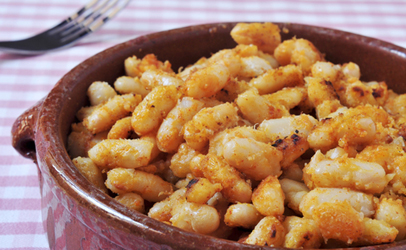
Helen Carter, President of the Athens-Limestone Foundation for Aging, which hosted the Athens Bean Day Event linked to last years Salmonella outbreak, released a letter in which she disagrees with portions of the Alabama State Health Department Report.  The report linked the event to dozens of Salmonella illnesses and hospitalizations.

Carter said in the statement the horse trough identified as one of six potential sources of cross-contamination responsible for the food contamination was borrowed from a local business. She said it was brand new, and this has been the process by which the beans have been prepared for the last 15 years.

No horses used the trough before it was used for soaking the beans, Carter continued. She said there are only so many things that can hold the 250 pounds of beans they must cook.

She said everybody was given gloves and were wearing them as far as she saw.

In her statement, Carter said, “Our board is dedicated to helping the community. The board certainly did not intend for an outbreak to occur. Without knowing the exact cause of the contamination, it is difficult to address what could have been done to prevent it.”

Joel Ebert of the South Dakota Capital Journal got the headline “Listeria Hysteria.”

Perhaps it would have been better – although a bit longer – “Raw Milk Farmer and South Dakota Department of Agriculture Caught between a Rock and a Hard Place.”

Late last week the South Dakota Department of Agriculture (SDDA) announced that raw milk from Jerseydale Farms, a Brookings, South Dakota-based raw milk producer, tested positive for Listeria.  According to a posting on the Department of Agriculture’s website:

Listera [monocytogenes] can cause serious and sometimes fatal infections in young children, frail or elderly people and individuals with weakened immune systems. Listeria [monocytogenes] infection can cause miscarriages and stillbirths among pregnant women. A person with listeriosis may have fever, muscle aches and sometimes nausea or diarrhea. If infection spreads to the nervous system, headache, stiff neck, confusion, loss of balance or convulsions can occur.

The SDDA then announced:

Contaminated bottled raw milk was sold in the Brookings County area. If you have purchased this bottled raw milk, SDDA advises the product be discarded or returned.

Clearly, this announcement was not good for Jerseydale Farms’ business.

The announcement and warning about Jerseydale Farms’ milk also occurred prior to the completion of final Listeria test results that would determine the specie type. A spokesperson for the SDDA told Mr. Ebert when the final testing was complete a week after the announcement, the sample collected from Jerseydale Farms had tested positive for Listeria innocua, not the potentially deadly, Listeria monocytogenes.

SDDA told Mr. Ebert that SDDA was obligated to inform the public, even though the tests about the specie of Listeria had not been completed at the time of the announcement.  However, although the SDDA appears to stand behind its initial announcement, Trever Gilkerson of Jerseydale Farms said the decision negatively impacted the dairy.

Therefore, “Between and Rock and a Hard Place” seems a bit more apt – had SDDA not announced the test result and waited a week for the final result, and it had been Listeria monocytogenes and people became ill, we would be calling for heads to roll.  Of course the farmer now wants those same heads to roll for the test results coming back for Listeria innocua instead of monocytogenes.

The SDDA looks a bit foolish and the farmer is understandably upset.  I guess the good news is that no one got sick.  That is good for customers and good for the farmer.

Jean Cole of the News Courier reports today: “Health Dept.:  Beans soaked in horse trough – Dozens taken ill after annual event.”

Salmonella outbreak confirmed at annual Bean Day dinner hosted by the Foundation on Aging at the First Baptist Church Family Life Center in Athens, Alabama.

A nine-page study issued by the Alabama Department of Public Health and obtained Friday by The News Courier reveals that uncooked beans for the annual fundraiser had been soaked in a plastic-lined horse trough covered with plywood before the event and that existing bean soup was topped off with new bean soup during the event.  Those are just some of the possible ways the beans became contaminated with Salmonella senftenberg, according to the report.

An estimated 250 to 300 people ate food prepared for the Oct. 4 dinner hosted by the Athens-Limestone Foundation for Aging and held at First Baptist Church Family Life Center in Athens. The menu included white beans with ham, onions, vinegar-based coleslaw, cornbread, soft drinks and a variety of homemade desserts.  About 50 people reported falling ill following the event, though some may never have reported their illness.

Salmonella senftenberg was isolated “in two environmental samples obtained from the church, nine food samples and all stool specimens,” according to the report. “The two positive environmental samples were from environment swabs of a dirty strainer and the double sink floor drain at the church.”

The oysters were distributed through wholesale dealers and retail stores in Oregon and California.

On January 30, Coos Bay Oyster Company recalled Plastic Tubs (1/2 gallon, quart, pint, half – pint), Coos Bay Oyster Co., Raw/Ready – to – eat Shucked Oysters, with sell by dates from January 15 – February 17, 2014 because they have the potential to be contaminated with Campylobacter. On January 31, the recall was expanded to include all of its shellstock oysters in red onion sacks containing five (5) dozen shellstock oysters (various sizes) with a Coos Bay Oyster Co. label and shellstock tags with various harvest dates (December 2013-January 2014).

The recall is the result of an epidemiologic investigation of a Campylobacter outbreak in Oregon. There have been three (3) confirmed reported cases of Campylobacter illness related with the consumption of raw shucked oysters to date.  The three Oregon patients who became ill with Campylobacter coli (a less common species of Campylobacter) reported illness after eating raw oysters between January 15-20, 2014. All patients were males between 50-75 years of age. Of the three patients, two were hospitalized and are reportedly recovering well.

The Oregon Health Authority has announced the investigation of a cluster of three Campylobacter cases among Oregon residents who consumed raw oysters. The oysters came from two different markets in Lane and Coos counties. The oysters were harvested from Coos Bay Oyster Company of Charleston, Oregon. Campylobacter is an organism that can cause serious and some times fatal infections in young children, frail or elderly people, and others with weakened immune systems.

Coos Bay Oyster Company has ceased the production and distribution of the product as the Oregon Department of Agriculture (ODA).