According to the New York City Department of Health, there is an outbreak of a rare skin infection that comes from handling raw seafood, causing skin lesions, pain and swelling to the hands and arms and even difficulty moving fingers.

Health officials are warning those who purchase raw fish and seafood in Manhattan, Queens or Brooklyn to wear waterproof gloves when handling those fish, and to seek medical care if they discover red bumps on hands or arms.

The bacteria causing the infection are called Mycobacterium marinum and it gets into the body through a cut or other injury.  Thirty cases have been identified, and all of those report handling live or raw fish bought at markets in Manhattan, Brooklyn or Queens.

Nearly 24,000 sickened in two outbreaks over two years?

Yesterday the CDC reported on the ongoing Foster Farms Salmonella chicken outbreak.  Now a total of 481 individuals infected with the outbreak strains of Salmonella Heidelberg have been reported from 25 states and Puerto Rico.  The number of ill persons identified in each state is as follows: Alaska (1), Arkansas (1), Arizona (22), California (365), Colorado (9), Connecticut (1), Delaware (1), Florida (4), Hawaii (1), Idaho (5), Illinois (1), Kentucky (1), Louisiana (1), Michigan (3), Missouri (5), North Carolina (1), Nevada (10), New Mexico (2), Oregon (10), Puerto Rico (1), Tennessee (1), Texas (10), Utah (4), Virginia (4), Washington (16), and Wisconsin (1). 38% of ill persons have been hospitalized.

Most of the ill persons (76%) have been reported from California.

Epidemiologic, laboratory, and traceback investigations conducted by local, state, and federal officials indicate that consumption of Foster Farms brand chicken is the likely source of this outbreak of Salmonella Heidelberg infections.

Should sound familiar.

In July 2013 the CDC reported a total of 134 individuals infected with the outbreak strain of Salmonella Heidelberg were reported from 13 states. The number of ill persons identified in each state with the outbreak strain was as follows: Alabama (1), Alaska (13), California (11), Hawaii (1), Idaho (2), Massachusetts (1), Montana (2), New York (1), Oregon (40), Utah (3), Virginia (1), Washington (57), and West Virginia (1).   Illnesses stretched from late May 2012 to April of 2013.  31% of ill persons were hospitalized.

Most of the ill persons were reported from two states, Oregon (40) and Washington (57).

Collaborative investigative efforts of local, state, and federal public health and regulatory agencies indicated that Foster Farms brand chicken was the most likely source of this outbreak.  Testing conducted by the Washington State Public Health Laboratories identified the outbreak strain of Salmonella Heidelberg in four intact samples of chicken collected from three ill persons’ homes in Washington, which were traced back to two Foster Farms slaughter establishments.

Two Salmonella outbreaks beginning nearly two years ago with 615 sickened with over 30% hospitalized.  Remember, according to the CDC, for every one person who is a stool-culture confirmed positive victim of Salmonella in the United States, there is a multiple of 38.5 who are also sick, but remain uncounted. (See, AC Voetsch, “FoodNet estimate of the burden of illness caused by nontyphoidal Salmonella infections in the United States,” Clinical Infectious Diseases 2004; 38 (Suppl 3): S127-34).

If you want a little insight into the legal history of Salmonella as a non-adulterant, read these:

FSIS’s and Foster Farms’ Reason for NOT Recalling Salmonella Chicken: “Shit Happens!”

Butz, Supreme Beef and FSIS’s Salmonella Policy – A Bit(e) of History

And, why some meat with Salmonella gets recalled and some not:

Why does the FSIS like Foster Farm’s Salmonella better than Cargill’s Salmonella?

According to the CDC today the investigation continues into Salmonella Heidelberg infections likely related to Foster Farms chicken.

As of February 28, 2014, a total of 481 persons infected with seven outbreak strains of Salmonella Heidelberg have been reported from 25 states and Puerto Rico, since March 1, 2013. 38% of ill persons have been hospitalized, and no deaths have been reported. Most ill persons (76%) have been reported from California.

The number of reported infections from all seven outbreak strains of Salmonella Heidelberg returned to baseline levels in January and the outbreak appeared to be over, as noted in the previous update on January 16, 2014. However, the investigation continued.

Ongoing surveillance identified in February that infections from two of the previously rare outbreak strains have again exceeded the number of infections expected to be reported to PulseNet during this time of year.

Epidemiologic, laboratory, and traceback investigations conducted by local, state, and federal officials indicate that consumption of Foster Farms brand chicken is the likely source of this outbreak of Salmonella Heidelberg infections.

The outbreak strains of Salmonella Heidelberg are resistant to several commonly prescribed antibiotics. Although these antibiotics are not typically used to treat Salmonella bloodstream infections or other severe Salmonella infections, antibiotic resistance can increase the risk of hospitalization in infected individuals.

Under the Poultry Products Inspection Act, 21 U.S. Code § 458:

(a) No person shall—

(2) sell, transport, offer for sale or transportation, or receive for transportation, in commerce,

(A) any poultry products which are capable of use as human food and are adulterated or misbranded at the time of such sale, transportation, offer for sale or transportation, or receipt for transportation;

Under 21 U.S. Code § 342:

A food shall be deemed to be adulterated—

(a) Poisonous, insanitary, etc., ingredients

(1) If it bears or contains any poisonous or deleterious substance which may render it injurious to health; but in case the substance is not an added substance such food shall not be considered adulterated under this clause if the quantity of such substance in such food does not ordinarily render it injurious to health

(2)

(A) if it bears or contains any added poisonous or added deleterious substance … or

(3) if it consists in whole or in part of any filthy, putrid, or decomposed substance, or if it is otherwise unfit for food; or

(4) if it has been prepared, packed, or held under insanitary conditions whereby it may have become contaminated with filth, or whereby it may have been rendered injurious to health;

Fact, despite the hundreds are sickened, the USDA’s FSIS still does not consider Salmonella an adulterant per the definition above.  That is why Foster Farms can knowingly sell chicken tainted with Salmonella and FSIS does nothing about it.

It is clear that USDA’s FSIS has the ability to declare Salmonella an adulterant.  It did it to E. coli O157:H7 in 1994 and to other shiga-toxin E. coli in 2011.  However, absent leadership at USDA’s FSIS to do it, perhaps we need to consider U.S. Sen. Kirsten Gillibrand’s “Safe Meat and Poultry Act” that she introduced last Fall.  Gillibrand’s bill seeks to:

  • Create mandatory pathogen reduction performance standards and expand the authority of USDA to regulate new pathogens, which will make progress toward targeting and reducing dangerous pathogens in the meat and poultry supply.
  • Improve consumer notification for recalls of contaminated products.
  • Provide whistleblower protection for government and private workers in the food industry to report public-health issues and support a more resilient agriculture industry.
  • Provide better enforcement penalties, including criminal penalties, for intentionally putting unsafe products in the marketplace, and escalating enforcement action for the few bad actors who have a repeated history of serious failures to ensure food safety.
  • Safeguard our borders from unsafe or adulterated foreign meat and poultry products by ensuring regular international audits by the Food Safety and Inspection Service.
  • Increase the emphasis on prevention throughout the entire food-safety system, including for pathogens, chemical residues and potential contamination.

Or, USDA’s FSIS could respond to the regulatory petition filed in 2011 by the Center for Science in the Public Interest.  However, that petition would only apply to ground meat and poultry found to contain antibiotic-resistant strains of Salmonella.

Or, we can continue to do nothing.

Eight Salmonella Serotypes Identified

The CDC published this week in MMWR that in August 2012, the Arkansas Department of Health (ADH) was notified of gastrointestinal illness outbreaks in two unnamed Arkansas state prisons. ADH investigated the outbreaks and conducted case-control studies to identify the source of the illnesses. The report described the results of these investigations, which identified 528 persons with onset of diarrhea during August 2–18, 2012.

Results from one prison investigation identified chicken salad as the most likely vehicle. At the second prison, person-to-person transmission and contamination of multiple foods likely contributed to illness.

Analysis of stool specimens from inmates identified eight serotypes and 15 pulsed-field gel electrophoresis (PFGE) patterns of Salmonella.

Isolates of Salmonella from eggs produced at the second prison matched two outbreak patterns. An additional 69 inmates were positive by culture but were not interviewed or did not report diarrhea, making the total case count 597.

Sanitarians identified problems with food preparation, hand washing, and food safety training.

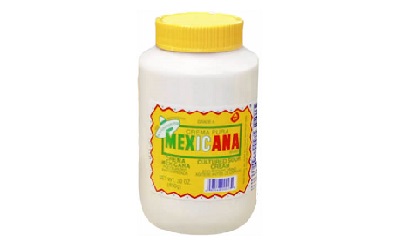
Roos Foods, the company whose cheese products are connected to a Listeria outbreak that has killed one person, has expanded its ongoing recall to include sour cream.

The company is now recalling its Crema Pura Mexicana Cultured Sour Cream, produced in Kenton, DE.

Last week the company recalled 16 different cheese products under four brand names.

One California resident has died in connection to the outbreak. Another seven people from Maryland have been sickened, with seven total patients requiring hospitalization.

Three of those sickened were newborns.

The recalled products were distributed in Maryland, Virginia and the District of Columbia.

Sun Hing Foods Inc. of South San Francisco, CA, the Importer of Record, is recalling approximately 1,282 pounds of Canadian liver pâté products produced without the benefit of full USDA inspection, the U.S. Department of Agriculture’s Food Safety and Inspection Service (FSIS) announced late Wednesday.

While this is a Class I recall, FSIS issues a Public Health Alert for an imported product when the country of origin recalls the product. However, FSIS issues a recall for an imported product when the product is not presented for inspection at the U.S. border. In the United States, the recall is undertaken by the Importer of Record, which is accountable to FSIS.

The following Sun Hing Foods, Inc., products are subject to recall:

  • 2.75-oz. and 4.76-oz. packages of “FLOWER ® BRAND, LIVER PÂTÉ / PÂTÉ DE FOIE” bearing case code “215960.”
  • 4.76-oz. packages of “FORTUNE ® BRAND, LIVER SPREAD / PÂTÉ DE FOIE” bearing case code “215960.”

Packages will bear the Canadian establishment number “265.” The products were distributed into commerce in Connecticut, Florida, Georgia, Illinois, Maryland, Massachusetts, Michigan, Missouri, New Jersey, New York, Pennsylvania, South Carolina and Virginia.

The problem was discovered when FSIS import staff reviewed records and discovered that the product was not presented by the independent third-party carrier for USDA inspection at the U.S./Canadian border.

The Hilton Head Island Packet reports that nearly 300 people might have been exposed to hepatitis A at Hudson’s Seafood House on the Docks restaurant February 15th, but so far no cases stemming from the exposure have been confirmed.  An employee at Hudson’s Seafood House on the Docks tested positive for hepatitis A on last Friday, six days after the employee had worked at the restaurant.

Anyone who was at the restaurant from 4 p.m. until closing time February 15th — when the infected employee was working — should contact his or her primary care provider to receive a single-dose vaccine no later than March 1.  The treatment must be administered within 14 days of possible exposure because people usually become sick within 15 to 50 days after being exposed. Symptoms include fatigue, fever, loss of appetite, nausea, vomiting and abdominal pain, and those infected may also experience joint pain and jaundice.  Most patients recover completely within two months, but symptoms can persist for up to six months in severe cases.  Acute liver failure is a risk.

If hepatitis A vaccines are not available at a primary care provider, customers should call DHEC at 800-868-0404 to schedule an appointment at a local health department.  DHEC clinics in Beaufort County will provide hepatitis A vaccines by appointment this week; vaccines cost $52.30 for people who have health insurance, $25 for those without insurance and $13 for children.

AP reports that Minnesota Department of Health officials say Salmonella at the Old Country Buffet in Maple Grove, Minnesota sickened nearly two-dozen people.  The outbreak affected customers who ate at the restaurant in late January, particularly on January 25th.

One diner had to be hospitalized for about two weeks.

In a statement Old Country Buffet says it is working closely with the health department to determine what caused the outbreak’s cause.

The company says it’s also bolstering food safety training.

Nine illnesses not linked to 23 others in 15 Sates.

The CDC reported today that a total of nine persons infected with the outbreak strain of Salmonella Heidelberg were reported from Tennessee. Two (22%) of nine ill persons were hospitalized, and no deaths were reported. All of the ill persons were incarcerated at a single correctional facility located in Tennessee.

Epidemiologic and traceback investigations conducted by Tennessee and federal officials indicated that consumption of Tyson brand mechanically separated chicken was the source of the outbreak of Salmonella Heidelberg infections at the Tennessee correctional facility. On January 10, 2014, Tyson Foods, Inc. recalled approximately 33,840 pounds of mechanically separated chicken products that may be contaminated with Salmonella Heidelberg.

This strain of Salmonella Heidelberg is commonly reported to PulseNet. Twenty-three additional persons infected with this same strain were identified from 15 other states. Investigations determined that these ill persons were not related to the outbreak in Tennessee. Sources of the infections in these 15 states were not identified.

Well, almost.

According to press reports, security camera video led Mingo County health officials to shut down a pizza hut in Kermit, West Virginia.  The Mingo County Health Department shut down the store, citing conditions constituting a “substantial hazard to the public health.”  Mingo County Health Department officials say it could be days or even weeks before they consider reopening the Pizza Hut.

The video shows the district manager urinating in the restaurant’s kitchen sink.

Pizza Hut corporate officials confirm the man is a district manager, and has been fired.

The Pizza Hut Corporation released a statement, which says in part they are “embarrassed” by the man’s actions, and that pizza hut has “zero tolerance for violations” of its operating standards.