Over the last year the CDC reported a total of 481 persons infected with seven outbreak strains of Salmonella Heidelberg in 25 states and Puerto Rico and an earlier total of 134 persons infected with the outbreak strain of Salmonella Heidelberg in 13 states.  Although FSIS issued a Public Health Alert following the second outbreak announcement, no recall was issued despite the chicken products being linked to Foster Farms.

However, during 2013, the following recalls were announced by the FDA on pet food tainted with Salmonella with no reported illnesses of pets or humans:

Bailey’s Choice Recalls Chicken Treats Because of Possible Salmonella Contamination

Nestle Purina Voluntarily Recalls Limited Number of Purina ONE beyOnd Our White Meat Chicken and Whole Barley Recipe Adult Dry Dog Food Bags Due to a Potential Health Risk

Goldenfeast® Inc. Recalls Bird Food Due to Possible Salmonella Contamination from Parsley

P&G Voluntarily Recalls Limited Quantity of Dry Pet Food Due to Possible Health Risk

Natura Pet Issues Voluntary Recall of Specialized Dry Pet Foods Due to a Possible Health Risk

Hartz Mountain Corporation is Voluntarily Recalling One Specific Lot of 1.2 oz. Size of Wardley Betta Fish Food Due to Possible Health Risk

Rural King Recalls Deer Corn Because of Possible Health Risk

Natura Pet Expands Voluntary Recall of Dry Pet Foods Due to Possible Health Risk

Merit Bird Company, LLS Recalls Vitae Because of Possible Health Risk

Bravo! Issues a Voluntary Recall for Three Raw Frozen Food Diet for Dogs and Cats Because of Possible Salmonella Health Risk

Natura Pet Expands Voluntary Recall of Dry Pet Foods Due to Possible Health Risk

Natura Pet Issues Voluntary Recall of Specialized Dry Pet Foods Due to Possible Health Risk

Bravo! Recalls 2 lb Tubes of Chicken Blend-Raw Frozen Food Diet for Dogs and Cats (One Lot Code) Because of Possible Salmonella Health Risk

Diggin’ Your Dog Recalls Strippin’ Chicks Pet Treats Distributed in Colorado and Nevada Due to Possible Salmonella Hazard

Steve’s Real Food Recalls Turducken Canine Recipe Patties Because of Possible Health Risk

Jones Natural Chews Co Recalls Woofers Dog Treats Because Of Possible Salmonella Health Risk

United Pet Group Inc., Voluntarily Withdraws “Ultra Blend Gourmet Food for Parakeets,” “eCotrition Grains & Greens Nutritional Supplement for Parakeets,” “eCotrition Grains & Greens Nutritional Supplement for Canaries and Finches,” and “eCotrition Grains & Greens Nutritional Supplement for Cockatiels” Due to Possible Salmonella Contamination

Kasel Associates Industries Recalling Certain Pet Treats Due to Salmonella Contamination

The Honest Kitchen® Voluntarily Recalls Limited Lots Of Verve®, Zeal®And Thrive® Products Due To Possible Health Risk

Nutri-Vet, LLC Recalls Nutri-Vet and Nutripet Chicken Jerky Products Because Of Possible Salmonella Health Risk

Kaytee Recalls Bird Treats and Greens Due to Possible Salmonella Contamination from Parsley Flakes

Kasel Associated Industries Recalls All Products Manufactured at its Denver, Colorado Facility from April 20, 2012 thru September 19, 2012 Because of Possible Salmonella Health Risk

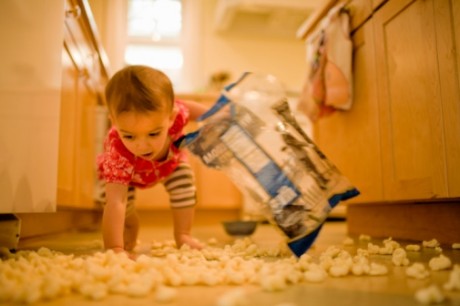
Hmm, the dog is much cuter than the kid above anyway.

Dole Fresh Vegetables is voluntarily recalling a limited number of cases of bagged salad. The products being recalled are Dole Italian Blend (UPC 7143000819), Fresh Selections Italian Style Blend (UPC 1111091045), Little Salad Bar Italian Salad (UPC 4149811014) and Marketside Italian Style Salad (UPC 8113102780) coded A058201A or B, with Use-by date of March 12, 2014 due to a possible health risk from Listeria monocytogenes. Dole Fresh Vegetables is coordinating closely with regulatory officials. No illnesses have been reported in association with the recall.

The product code and Use-by date are in the upper right-hand corner of the package; the UPC code is on the back of the package, below the barcode. The salads were distributed in 15 U.S. states (Connecticut, Florida, Illinois, Indiana, Kentucky, Maryland, Massachusetts, Michigan, New Jersey, New York, North Carolina, Ohio, Pennsylvania, South Carolina, Virginia) and 3 Canadian provinces (New Brunswick, Ontario & Quebec).

This precautionary recall notification is being issued due one sample of Dole Italian salad which yielded a positive result for Listeria monocytogenes in a random sample test conducted by the Canadian Food Inspection Agency.

Although product is 1 day past its Use-By date and it is highly unlikely that any product is still available at retail, retailers should check their inventories and store shelves to confirm that none of the product is mistakenly present or available for purchase by consumers or in warehouse inventories. Dole Fresh Vegetables customer service representatives are already contacting retailers and are in the process of confirming that the recalled product is being removed from the stream of commerce.

Listeria monocytogenes is an organism that can cause foodborne illness in a person who eats a food item contaminated with it. Symptoms of infection may include fever, muscle aches, gastrointestinal symptoms such as nausea or diarrhea. The illness primarily impacts pregnant women and adults with weakened immune systems. Most healthy adults and children rarely become seriously ill.

Apparently, food picked up just a few seconds after being dropped is less likely to contain bacteria than if it is left for longer periods of time, according to the findings of research carried out at Aston University’s School of Life and Health Sciencesin Birmingham, England.

The findings suggest there may be some scientific basis to the “five-second rule” – the urban myth about it being fine to eat food that has only had contact with the floor for five seconds or less. Although people have long followed the five-second rule, until now it was unclear whether it actually helped.

The study, undertaken by final-year biology students and led by Anthony Hilton, professor of microbiology at Aston University, monitored the transfer of the common bacteria Escherichia coli (E. coli) and Staphylococcus aureus from a variety of indoor floor types (carpet, laminate and tiled surfaces) to toast, pasta, biscuit and a sticky sweet when contact was made from three to 30 seconds.

The results showed that:

  • Time is a significant factor in the transfer of bacteria from a floor surface to a piece of food, and
  • The type of flooring the food has been dropped on has an effect, with bacteria least likely to transfer from carpeted surfaces and most likely to transfer from laminate or tiled surfaces to moist foods making contact for more than five seconds.

Professor Hilton said: “Consuming food dropped on the floor still carries an infection risk as it very much depends on which bacteria are present on the floor at the time; however the findings of this study will bring some light relief to those who have been employing the five-second rule for years, despite a general consensus that it is purely a myth.

“We have found evidence that transfer from indoor flooring surfaces is incredibly poor with carpet actually posing the lowest risk of bacterial transfer onto dropped food.”

The Aston team also carried out a survey of the number of people who employ the five-second rule. The survey showed that:

  • 87 percent of people surveyed said they would eat food dropped on the floor, or already have done so.
  • 55 percent of those who would, or have, eaten food dropped in the floor are women.
  • 81 percent of the women who would eat food from the floor would follow the five-second rule.

Professor Hilton added: “Our study showed that a surprisingly large majority of people are happy to consume dropped food, with women the most likely to do so. But they are also more likely to follow the five-second rule, which our research has shown to be much more than an old wives’ tale.”

I think I will still pass.

Oregon Freeze Dry, Inc. of Albany, Oregon has voluntarily recalled 59,780 cases of Kirkland Signature Real Sliced Fruit, produced exclusively for Costco Wholesale Stores. In cooperation with Costco, the company issued the recall after determining the product has the potential to be contaminated with Salmonella.

Precautionary recall measures began on Saturday, March 8, 2014. Consumers who may have purchased the product were contacted by phone and US. Mail, and a letter regarding the voluntary recall was posted on the Costco website. Furthermore, the affected product was removed from Costco floors. No confirmed cases of Salmonella poisoning from consumption of this product have been reported at this time, Any Kirkland Signature Real Sliced Fruit that is currently available for purchase has been rigorously tested and is safe for consumption. No other products made by Oregon Freeze Dry, Inc. are affected.

Kirkland Signature Real Sliced Fruit is sold in a red and white case containing 20 pouches of freeze-dried snacks. Consumers who have purchased Kirkland Signature Real Sliced Fruit with the following “Best Before Dates,” listed on the upper left corner of the front panel of the case, are urged to return the product to the place of purchase for a full refund.

Best Before Date: FEB 14 2015 – MAR 11 2015 (which reads FEB142015 – MAR112015)

Cases of the potentially contaminated Kirkland Signature Real Sliced Fruit were distributed to Costco Wholesale stores in the following locations: Alabama, Arizona, California, Colorado, Connecticut, Delaware, Florida, Georgia, Hawaii, Illinois, Indiana, Iowa, Kansas, Kentucky, Maryland, Massachusetts, Michigan, Minnesota, Missouri, Nebraska, Nevada, New Hampshire, New Jersey, New Mexico, New York, North Carolina, North Dakota, Ohio, Pennsylvania, South Carolina, South Dakota, Tennessee, Utah, Vermont, Virginia, Wisconsin, and Puerto Rico.

Oregon Freeze Dry, Inc. is issuing the recall as a proactive safety precaution. Salmonella, is an organism which can cause serious and sometimes fatal infections in young children, frail or elderly people, and others with weakened immune systems. Healthy persons infected with Salmonella often experience fever, diarrhea (which may be bloody), nausea, vomiting and abdominal pain.

Dole brand Italian Blend salad is being pulled from store shelves because of possible Listeria contamination.

The salad, made by Dole Fresh Vegetables Inc., is sold in Ontario, Quebec and New Brunswick but may have also been sold in other provinces.

The Canadian Food Inspection Agency says the affected salad is sold in a 10-ounce bag with a best-before date of 14-MR-12.

Food contaminated with Listeria monocytogenes may not look or smell spoiled but can still make you sick.There are no reported illnesses tied to eating this salad.Symptoms can include vomiting, nausea, persistent fever, muscle aches, severe headache and neck stiffness. Pregnant women, the elderly and people with weakened immune systems are particularly at risk.

The U.S. Food and Drug Administration on Thursday suspended the registration of Roos Foods Inc., the maker of cheese and sour cream that caused an outbreak of Listeria in Maryland and California that included one death.  The facility’s registration was suspended after FDA determined there was still a reasonable probability that food manufactured by Roos could pose a public health threat.

Without FDA registration, Roos will be unable to ship food to retailers or sell any products.

FDA inspected the company’s facility between Feb. 18 and March 4, finding a number of “insanitary conditions,” including a roof leaking so badly that water was raining down onto equipment and storage tanks in the cheese processing room. Inspectors also found standing water in processing rooms, metal roofs with flaking rust, and food residue left on equipment after cleaning had been performed.

The suspension will be lifted when Roos Foods can demonstrate that the conditions at its facility no longer have a “reasonable probability” of threatening public health.

The Roos Foods Listeria outbreak has been connected to seven hospitalizations in Maryland and one death in California. Five of the illnesses involved a pregnancy: two sickened mother-newborn pairs and an additional sickened newborn.

The company previously recalled all lots of the following cheese products:

  • Mexicana:
    • Cuajada En Terron
    • Cuajada/Cuajadita Cacera
    • Cuajada Fresca
    • Queso Fresca Round
    • Queso Dura Viejo Hard Cheeses
  • Amigo:
    • Cuajada En Terron
    • Cuajada/Cuajadita Cacera
    • Cuajada Fresca
    • Queso Fresca Round
    • Queso Dura Viejo Hard Cheeses;
  • Santa Rosa De Lima:
    • Cuajada En Terron
    • Cuajada/Cuajadita Cacera
    • Cuajada Fresca
    • Queso Fresca Round
    • Queso Dura Viejo Hard Cheeses
  • Anita Queso Fresco

The company has also recalled its Crema Pura Mexicana Cultured Sour Cream.

The products are packaged in flexible plastic bags and rigid plastic clam shell packages in 12 oz. and 16 oz. sizes under the brand names: Mexicana, Amigo, Santa Rosa De Lima, and Anita. They were distributed in Maryland, Virginia and Washington, D.C, through retail stores.

T’was the Friday before Christmas and all through the House – and Senate…

Perhaps an out of context fairytale is not how you expect me to start a discussion about the Food Safety Modernization Act (FSMA), or “Fizz Ma” to some.  However, FSMA is a modern political tale that almost did not come true in the late days of 2010 in the nearly empty hallways and offices of congressional leadership.  But, first I must digress.

Until January 1993 I had never given much thought to safe food.  I assumed, like most Americans still do, that our food supply is, as our politicians always remind us, “the safest in the world.”  Yet, standing in the ICU watching a young Jack in the Box E. coli victim struggle against a deadly toxin, it was impossible to see food, certainly not hamburger, as safe.

In 1993 and through the congressional elections a few years later, a flurry of food safety ideas came from politicians until those ideas were crushed in the argument against trying to insure that all American’s had health insurance and the elections that swept “The Contract with America” into office.  Although the Jack in the Box E. coli outbreak, with nearly 700 ill and four children dead, outraged a nation and nearly brought the beef industry to its knees, without more ill and dead over a sustained period of time, memories faded and the broad, substantive food safety changes, were shelved.

However, the 1990’s were not a complete food safety disaster.  One act, thought at the time heretical, managed to slip through, but it certainly did so with much notice.  In 1994, Mike Taylor, then head of USDA’s Food Safety Inspection Services (FSIS), stood before the all powerful American Meat Institute (AMI) and announced in clear and simple language that hamburger could no longer be sold with the type of E. coli in it that caused the Jack in the Box catastrophe.  The AMI, and others, sued FSIS to stop such crazy behavior.  However, thanks to good lawyering, a wise court and the beef industry turning a loss into a win, our hamburger is safer today that at anytime in the last two decades.  In the 1990’s E. coli cases linked to hamburger accounted for most of my law firm’s revenue, today that is nearly zero.  Less money because there a fewer kids with kidney failure linked to hamburger – that is a good thing.

But, as “the hamburger disease” slowly died, foodborne outbreaks were being linked to nearly everything else in the refrigerator and pantry – apple juice, lettuce, spinach, sprouts, peanut butter and cookie dough – sickening thousands and making headlines – and lawsuits.  Some of the tainted products were mistakes in mass production, others locally grown, organic fare.  As imports increased so did food poisoning issues from hepatitis A berries from South America to Listeria in fancy cheese from Italy.  By 2006 it seemed that there was a foodborne illness outbreak a week, and with a different political wind blowing through the capital, food safety ideas once shelved, were dusted off, and were being discussed once again.

By now, I had been in the food safety world for well over a decade and had taken much from the food industry on behalf of their customers.  I had money, and I made use of it to secure access to the offices of politicians to discuss “why it is a bad idea to have poisoned voters.”  I also spent time speaking to the food industry around the world on the topic of “put me out of business.”  It is funny how donations of money and the ending of my career were topics both groups enjoyed.

It was late 2006 and I was in D.C. for the – I cannot recall how many times.  I had spent the morning shepherding clients to hearings to explain the devastation of being poisoned by food.  I had a few moments to meet some senate staffers on the ideas they had shelved over a decade ago, but felt now was the time to modernize food safety legislation for the first time in over 50 years.  As I was escorted out a back door I began the walk down a very long senate office hallway.  As I moved along towards the elevator at the far end, I nearly bumped into the somewhat new senator from Illinois as he and a staffer headed quickly to the same elevator.  As we all walked in silence and waited for the same elevator, the youngish senator, who I had met a few years earlier at a fundraiser in Seattle, looked over at me.  Perhaps he recognized me but most likely he did not.  I smiled and introduced myself.

Over the next few years I gathered frequent flyer miles on the straight shot from Seattle to D.C.  Again, sometimes attending hearings with clients, sometimes meeting with congress members and senators, and even once testifying.  I watched as the shelved food safety ideas of the 1990’s came alive in committee rooms.  By the summer of 2009, what was the House version of FSMA was passed overwhelmingly with both democrat and republican support.  Industry and consumers came together to work all sides of the isles.  FSMA headed to the senate where senators had already been working on a similar version of the groundbreaking legislation.  And, then it stalled.

By now the fight over what to do about the near economic collapse of 2008, and the anger generated by the introduction and passage of the Affordable Care Act (a.k.a “Obamacare”), had sucked the ability to agree on much of anything out of the senate, in fact most of D.C.  Both the house version and the senate version were going nowhere as was any other meaningful legislation for that matter.

What little movement that was occurring in the senate on food safety now centered over how to unwind many provisions so as to not potentially impact smaller and more local agriculture with those “damn food safety regulations.”  Those actually concerned with being against “one size fits all” legislation, merged with proponents of raw milk and other “any government is bad” groups to form what I described as the “Teat Party” as they tried to convince us that the “government was going to take over our backyard gardens.”

The 2010 midterms changed the political dynamic swinging the house to another party.  Although the senate stayed the same, no significant legislation, less alone FSMA moved.  Finally, as fall moved to winter, the senate passed its version of FSMA.  Problem, however, was that what the senate passed was supposedly constitutionally incorrect.  The senate passed version had a clause inserted that required a charge for a re-inspection in certain circumstances.  The house, which by the constitution can set “taxes,” viewed this charge as a tax and “blue slipped” the senate’s version sending it back the other side of capitol hill.

Over the next months as senators eyed the exit door that is Christmas, FSMA competed with the “Dream Act, “Don’t Ask Don’t Tell” and other worthwhile legislative initiatives.  I recall one trip to D.C. on a crowded elevator with young Hispanic merit scholars and muscled service members thinking to myself that FSMA now was competing for the last weeks of 2010 with smart kids about to be deported and gay service members who fight for our freedom.  I pushed myself to the back of the elevator.

By the Friday before Christmas I had spent the week urging senators from both parties to move FSMA back to the house before the recess.  In the early afternoon of that Friday, I was sitting in the office of one senator listening to a long description of what was either lactose intolerance or an aversion to gluten, when I was summoned to a meeting of top senate staffers.  As I was ushered into a meeting room off the majority leaders office alarms went off – apparently a guy with a gun had tried to enter the capitol.  The door was promptly locked from the inside and we were all ordered to stay.  After a few awkward moments were we all likely contemplated rather being somewhere else, we started talking about food safety.

The staffers all pointed to the lack of time left to move anything out of the senate and back to the house for a vote and the logistical issues surrounding FSMA’s constitutional flaw.  I left discouraged and took a late flight out of Dulles.

Ironically, as I pen the piece, I am sitting in the same chair where I received an email the following morning from one of the senate staffers telling me they had figured out how to get the senate version of FSMA back to the house for a vote before Christmas.  This time when the bill passed the house it did so by a small majority (nearly 75 members had already left D.C. for vacation).

That “youngish senator” I had walked the hall with a few years previously signed the bill shortly thereafter.  I have a signed copy of the bill on my wall.

Will FSMA end my law practice?  Honestly, it is too early to tell.  Most of the rules are still being written, being commented on or being implemented.  Needed additional funding of inspectors has not been appropriated.

Many of you reading this article will be at the forefront of what FSMA will actually look like in practice.  For those of you that have the baton of implementation, as you do your jobs remember that the kids I have represented in the last 20 years are much like the kids you go home to at night.

Yes, it is time to end my practice.

Tampa Bay Police report, shortly after dinner, Ronnie Morales felt sick and called 911. However, he was feeling so ill that his girlfriend drove him to St. Joseph’s Hospital. When they arrived his girlfriend also became ill and was rushed across the street to St. Joseph’s Women’s Hospital where they induced labor, as she was 9 months pregnant. A short time later, her daughters, 7-year-old Elyana and 6-year-old Rayna, started experiencing hallucinations and felt ill. Both children and Ronnie Morales received tracheal intubation and were hospitalized. They were released from the hospital in good condition on Wednesday, March 5th. The mother and her healthy baby boy were released Thursday, March 6th.

TPD’s Forensic investigators took possession of the food items that the family consumed prior to falling ill. They also took the family’s oven for testing. Initial test results received today from the Hillsborough County Medical Examiner’s Office determined the family consumed bottom round steak contaminated with LSD. Toxicology test on samples from the family members are pending. Results are expected in the next three weeks.

Detectives determined the family bought the meat at a Walmart located at 1501 North Dale Mabry Highway. The chain has been very cooperative with the investigation and voluntarily turned over all meat of that type that was on their shelves at that time. The Medical Examiner is currently testing that meat. TPD does not have any other similar cases. At this point, it appears this is an isolated incident. Detectives are still working to determine if a crime has occurred. The Federal and Florida Department of Agriculture along with the Hillsborough County Health Department are investigating the case with TPD detectives.

Less than a year after it was named the source of an E. coli outbreak that sickened 10 people, Coco Loco at A&M, a Mexican restaurant in College Station, TX, has made it into the news again for a bad health inspection report.

Regional publication The Eagle listed Coco Loco at A&M among recent area restaurants with health inspection infractions.

According to the inspection, which earned the restaurant a grade of 77 out of 100, the following problems were detected:

“Improper manual/mechanical ware washing and sanitizing, improper cooling for cooked/prepared food, food items not reheated to 165 F in two hours, unapproved sewage/wastewater disposal system, food contact surfaces of equipment and utensils not cleaned/sanitized/good repair, lack of good hygienic practices.”

The E. coli outbreak tied to Coco Loco occurred just under a year ago, when 10 people were found sick. Among them were two young brothers who developed hemolytic uremic syndrome, a potentially fatal kidney disease associated with severe E. coli infections.

Indiana Health officials have learned that packages of Original Skittles sold at a Richmond, Indiana, Marathon Food Mart contained unconfirmed chemical substances, according to preliminary tests. The contamination was discovered following the sudden illness of two individuals who ate from a package of Original Skittles on the afternoon of March 4. The individuals visited Reid Hospital and were treated for burning throats, cramping and diarrhea and have been released from the hospital.

State and local health officials are working with Indiana State Police, the Food and Drug Administration and others to investigate the situation. Samples of the Skittles have been sent to the State Laboratory for testing.

Health officials are advising individuals who have purchased Skittles with the following lot numbers listed below to not consume the product.  Unopened packages, or open packages with product still in the bag, should be placed in an envelope and held in a safe place until recovered by the Indiana State Police.  Contact the Indiana State Police Pendleton Post at 800-527-4752 (The 800 number only works in Indiana).  Please provide the officer with your name, phone number and address where the Skittles are being held and arrangements will be made to retrieve them as soon as possible.

Skittles lot numbers:

08JUL14 023
01DEC14 023

The Marathon Food Mart at 2105 National Road West in Richmond, Indiana, and the Skittles distributor, Eby Brown, have withdrawn all Skittles with the lot numbers in question.