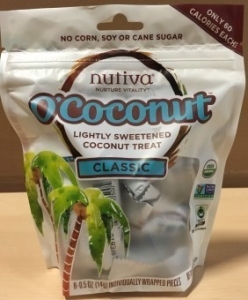
183609-248x300Nutiva, an Organic Superfoods company, has initiated a voluntary product recall of the following O’Coconut™ products after being notified by supplier that samples of a raw material in this product have the potential to be contaminated with Salmonella. “We are choosing to voluntarily recall three of our O’Coconut items as a precautionary measure to provide the safest products for our customers,” states John Roulac, Nutiva’s CEO.

Salmonella is an organism that can cause serious and sometimes fatal infections in young children, elderly people, and others with weakened immune systems. Healthy persons infected with Salmonella often experience fever, diarrhea, nausea, vomiting and abdominal pain. In rare circumstances, infection with Salmonella can result in the organism getting into the bloodstream and producing more severe illnesses.

Consumers who have purchased these items are urged not eat the product, and to dispose of it or return it to the where it was originally purchased.

SONY DSCTexas Star Nut and Food Co., Inc. of Boerne, Texas is voluntarily recalling Nature’s Eats Natural Macadamia Nuts, Lot Code #31435001, because it has the potential to be contaminated with Salmonella, an organism which can cause serious and sometimes fatal infections in young children, frail or elderly people, and others with weakened immune systems. Healthy persons infected with Salmonella often experience fever, diarrhea (which may be bloody), nausea, vomiting and abdominal pain. In rare circumstances, infection with Salmonella can result in the organism getting into the bloodstream and producing more severe illnesses such as arterial infections (i.e., infected aneurysms), endocarditis and arthritis.

Nature’s Eats Natural Macadamia Nuts, Lot Code #31435001 was distributed only to HEB stores, in Texas. The product was sold between 12/30/2014 and 3/20/2015.

Product: Nature’s Eats Natural Macadamia Nuts 6 oz. is Lot Code # 31435001 packed in cello bags.

Specific Code Date on Packages: Best Before 12/23/2015 located on the bottom of the nutritional label on the back of the bag. The only potential affected lot code is #31435001.

The recall was initiated as a result of a report received by the U.S. Food and Drug Administration which detected Salmonella in a random sampling of our Nature’s Eats Natural Macadamia Nut product. The recall was as the result of a routine sampling program by the FDA which revealed that the finished products contained the bacteria.

No illnesses have been reported in relation to this product at this time.

The company has ceased the production and distribution of the product as the FDA and the company continues their investigation as to what caused the problem.

ucm439282La Terra Fina is issuing a voluntary recall of its Organic Spinach Dip due to a potential health risk from Listeria exposure. The recall of product available in Bay Area Costco stores is a precaution. This is the only product that has been impacted and there have been no reports of illness.

Product Name La Terra Fina Organic Thick & Creamy Spinach Dip & Spread, 24-ounce tub

UPC Code 640410513730

Best-By Date 3/24/2015 4/01/2015 4/14/2015 4/20/2015

The quality of its products and satisfaction of its customers is La Terra Fina’s top priority. The brand follows rigorous food safety and ingredient testing standards and is withdrawing this product out of an abundance of caution for consumer safety. La Terra Fina urges consumers who have purchased this item in the impacted region to discard any opened or unused product and contact their local Costco store.

logo3MMWR reports today that on July 19, 2014, a packing company in California (company A) (a.k.a. Wawona Fruit) voluntarily recalled certain lots of stone fruits, including whole peaches, nectarines, plums, and pluots, because of concern about contamination with Listeria monocytogenes based on internal company testing. On July 31, the recall was expanded to cover all fruit packed at their facility during June 1–July 17.

After the initial recall, clinicians, state and local health departments, CDC, and the Food and Drug Administration (FDA) received many inquiries about listeriosis from concerned consumers, many of whom had received automated telephone calls informing them that they had purchased recalled fruit. During July 19–31, the CDC Listeria website received >500,000 page views, more than seven times the views received during the previous 52 weeks.

In early August 2014, a two-enzyme pulsed-field gel electrophoresis (PFGE) pattern shared by three L. monocytogenes isolates from stone fruit associated with the recall was uploaded to PulseNet. Four human isolates with isolation dates during the period May 8–July 8, 2014 (Illinois, Massachusetts, and South Carolina) and August 28 (Minnesota) were identified that had PFGE patterns indistinguishable from isolates from company A stone fruit. Samples of stone fruits from company A collected after the recall yielded an additional 31 L. monocytogenes isolates, 22 of which were indistinguishable from the initial isolates by PFGE; three other PFGE patterns were identified that did not match any isolates from clinical specimens collected during May 1–August 31. Whole-genome sequencing (WGS) analysis by whole-genome multilocus sequence typing showed that isolates from the Massachusetts and Minnesota patients were highly related to the isolates from recalled stone fruits, whereas the Illinois and South Carolina isolates were not.

Strong evidence linked the Massachusetts case to recalled stone fruit, including food exposure interviews, receipt and shopper card data, and WGS results showing very high genetic relatedness between the patient’s isolate and isolates from nectarines. Consumption data and WGS results suggest that stone fruit was also the likely source of L. monocytogenes infection in the Minnesota case; however, the later dates of illness onset and fruit purchase suggest that the patient consumed stone fruit that was not included in the recall.

beef_cheeksA Chicago wholesale meat company is recalling nearly 170,000 pounds of meat products that may be contaminated with bacteria that can cause illness.

The Illinois Department of Agriculture announced the recall Thursday of meat that may be tainted with a dangerous type of E. coli bacteria. The recall affects beef cheek products distributed to stores and restaurants in Chicago by El Cubano Wholesale Meats.

The products are labeled “For Cooking Only” and bear the establishment number “EST. 4653a” inside an inspection mark. They also are labeled “Iowa Best Beef.”

The problem was discovered by Department of Agriculture inspectors. The agency believes some product may be in freezers in restaurants and retail stores.

kraft-mac-and-cheese-recallHmm, there are things called metal detectors.

Kraft Foods is recalling about 242,000 cases (about 6,000,0000 boxes) of its macaroni & cheese after eight consumers complained about possible pieces of metal in the well-known blue boxes.

It is possible some boxes may contain small pieces of metal, Northfield-based Kraft said Tuesday. The company said no injuries have been reported and apologized to consumers. Some consumers have found pieces of metal.

It is the latest in a string of recalls by the food company over the past several months.

The company recalled 7.25-ounce size boxes of Kraft original flavor macaroni & cheese with “best when used by” dates of Sept. 18, 2015, through Oct. 11, 2015, with “C2” directly below the date. The “C2” refers to the production line on which the affected products were made.

The products were shipped in the United States and to several other countries, but not Canada.

The cases include single packages, three-pack boxes, four-pack shrink-wrapped packages and five-pack shrink-wrapped packages, the company said.

P311dhecAccording to the CDC and the Kansas Department of Health and Environment, five patients who were treated in a single hospital (Via Christi Saint Francis) in Kansas were infected with one of four rare strains of Listeria monocytogenes. Illness onset dates range from January 2014 to January 2015. Thus far five were sickened and three died. The deaths have been reported to have occurred with patients with a underlying health conditions. One of the victims Richard Porter’s wife Lois spoke out last evening on “Listeriosis victim’s wife speaks out.”

FDA was notified that three strains and four other rare strains of Listeria monocytogenes were found in samples of Blue Bell Creameries single serving Chocolate Chip Country Cookie Sandwich and the Great Divide Bar ice cream products collected by the South Carolina Department of Health & Environmental Control during routine product sampling at a South Carolina distribution center, on February 12, 2015. These products are manufactured at Blue Bell Creameries’ Brenham facility.

The Texas Department of State Health Services, subsequently, collected product samples from the Blue Bell Creameries Brenham facility. These samples yielded Listeria monocytogenes from the same products tested by South Carolina and a third single-serving ice cream product, Scoops, which is also made on the same production line. Three of the patient strains, which are highly similar, have also been found in products manufactured at the Blue Bell Creameries production facility in Brenham, Texas.

120811map-600After three years and six months, the civil litigation on behalf of sixty-six families of the injured and the dead has been resolved against all remaining defendants. The settlement was finalized late last week. The settlement amount is confidential and the parties agreed to the following statement:

“The matter was resolved by mutual agreement of the parties.”

According to the Centers for Disease Control and Prevention (CDC), at least 147 people in 28 states were identified as part of the Listeria outbreak traced to cantaloupes grown by Jensen Farms in August and September of 2011.  33 deaths and 1 miscarriage were officially attributed to this outbreak, though the total dead may be as high as 36.

Marler Clark represented the families of 46 victims of the 2011 Listeria outbreak linked to cantaloupe grown by Jensen Farms.  The law firm pursued compensation from Jensen Farms, the firms that audited the farm’s food safety practices, the companies that distributed the Listeria-contaminated cantaloupes and the retailers that sold the unsafe food.

Jensen Farms declared Chapter 11 Bankruptcy on May 25, 2012.  All Marler Clark clients’ claims with Jensen Farms were resolved through the bankruptcy proceedings; however, claims against other parties were finally resolved in the last weeks.  The Jensen brothers were criminally charged.

Marler Clark filed lawsuits on behalf of all 46 families.  Those lawsuits were brought against multiple defendants in courts in 12 states.  They were filed on behalf of the families of 29 people who died and 17 people who survived.

The total past medical expenses to date were in excess of $15,000,000.

2015-Blue-Bell-Recalled-ProductsFrom a Blue Bell press release:

For the first time in 108 years, Blue Bell announces a product recall.

One of our machines produced a limited amount of frozen snacks with a potential listeria problem.

When this was detected all products produced by this machine were withdrawn.  Our Blue Bell team members recovered all involved products in stores and storage.

This withdrawal in no way includes our half gallons, quarts, pints, cups, three gallon ice cream or the majority of take-home frozen snack novelties.

I guess they forgot about the customers who actually contracted Listeria.

Sales must just be that important.

7098022_GThe Kansas Department of Health and Environment (KDHE) has been working with the Centers for Disease Control and Prevention (CDC), the U.S. Food and Drug Administration (FDA) and the Texas Department of State Health Services (DSHS) to investigate an outbreak of listeriosis cases in five adult Kansas residents linked to ice cream consumed from Blue Bell Creameries. Listeriosis is a serious infection usually caused by eating food contaminated with the bacterium Listeria monocytogenes.

Five people in Kansas have become ill as part of this outbreak and three deaths have been reported. Patients became ill with listeriosis after hospitalizations for unrelated causes at the same hospital. They became ill between January 2014 and January 2015 after a majority were known to have consumed Blue Bell Creameries ice cream at the hospital. The hospital was not aware of the listeriosis contamination. The outbreak was recently discovered after two patients were identified with the same strain of listeriosis. Further investigation identified three other patients with listeriosis who had been hospitalized for unrelated causes before the onset of listeriosis.

Today, the FDA warned consumers about the potential contamination in Blue Bell Creameries’ products. Kansas health officials are warning consumers who have purchased the following Blue Bell Creameries novelty items and have not consumed the items to discard them:

  • Chocolate Chip Country Cookie
  • Great Divide Bar
  • Sour Pop Green Apple Bar
  • Cotton Candy Bar
  • Scoops
  • Vanilla Stick Slices
  • Almond Bar
  • No Sugar Added Mooo Bar (regular Mooo Bars are not included)

Potentially contaminated items have been pulled from retail locations by Blue Bell Creameries and are no longer available for purchase. At this time, no other products from Blue Bell Creameries have been linked to this outbreak. The FDA issued a consumer advisory about certain Blue Bell ice cream products made in Texas. The March 13 notice was issued after several confirmed cases of Listeriosis in Kansas were linked to products made on a single production line at the Blue Bell Creameries plant in Brenham.

The disease primarily affects older adults, pregnant women, newborns and adults with weakened immune systems. Symptoms of listeriosis include fever, muscle aches, headache, stiff neck, confusion, loss of balance and convulsions. Symptoms begin from three to 70 days after consuming the bacteria. In 2014, five cases of listeriosis were reported in Kansas.

Anyone who believes they may have become ill with listeriosis should contact their health care provider.