DSC_0019Blue Bell Creameries is expanding its recall of products that were produced in the Broken Arrow, Okla., plant to include Banana Pudding Ice Cream pints, which tested positive for Listeria monocytogenes, and additional products manufactured on the same line.

These items have the potential to be harmful to young children, frail or elderly people, and others with weakened immune systems. Although healthy individuals may suffer only short-term symptoms such as high fever, severe headache, stiffness, nausea, abdominal pain and diarrhea, Listeria monocytogenes infection can cause miscarriages and stillbirths among pregnant women.

The products being recalled are distributed to retail outlets, including food service accounts, convenience stores and supermarkets in Alabama, Arizona, Arkansas, Colorado, Florida, Georgia, Illinois, Indiana, Kansas, Kentucky, Louisiana, Mississippi, Missouri, Nevada, New Mexico, North Carolina, Ohio, Oklahoma, South Carolina, Tennessee, Texas, Virginia, and Wyoming.

On April 3, 2015, Blue Bell Creameries voluntarily suspended operations at its Broken Arrow, Okla., plant to thoroughly inspect the facility due to a 3oz. institutional/food service chocolate cup that tested positive for Listeria monocytogenes and was immediately withdrawn from all outlets. That product was only available to Blue Bell’s food service and institutional accounts and was recalled along with 3oz. vanilla and strawberry institutional/food service cups.

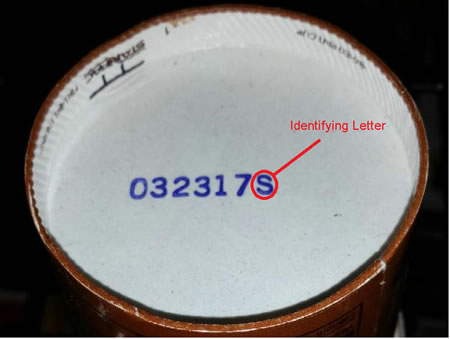
On April 4, 2015, out of an abundance of caution, Blue Bell began working with retail outlets to remove all products produced in Broken Arrow, Okla., from their service area.  These products are identified with a code date ending in O, P, Q, R, S or T located on the bottom of the carton and they are a part of the voluntary market withdrawal.

On April 7, 2015, the U.S. Food and Drug Administration notified Blue Bell that the Banana Pudding Ice Cream pint tested positive for Listeria monocytogenes. This pint was produced in the Broken Arrow, Okla., plant on February 12, 2015. Subsequently Blue Bell is recalling all products made on that one particular production line, from February 12, 2015 – March 27, 2015.  These products were produced on that same line and have a code date ending in either S or T.

jackandpeterDeCoster_406x250-e1401772183375In a week, Austin “Jack” DeCoster and his son, Peter DeCoster, will both face possible jail sentences stemming from a Salmonella outbreak caused by their Iowa egg farms in 2010.

The Salmonella outbreak ran from May 1 to Nov. 30, 2010, and prompted the recall of more than a half-billion shell eggs, the largest recall of its kind in history. And, while there were 1,939 confirmed infections, statistical models used to account for Salmonella illnesses in the U.S. suggest that the eggs may have sickened more than 62,000 people.

The family business, known as Quality Egg LLC, has already pleaded guilty to the federal felony count of bribing a USDA egg inspector and to two misdemeanors associated with the outbreak. It has agreed that the LLC will pay a $6.8-million fine and the DeCosters will be fined $100,000 each, for a total of $7 million.

Left to be decided by U.S. District Court Judge Mark W. Bennett at sentencing is whether the DeCosters will do any prison time.

I am not sure if Judge Bennett has read Bill Neuman’s New York Times article from September 2010 entitled, “An Iowa Egg Farmer and a History of Salmonella.” However, he should. Here are some of the highlights/lowlights:

DeCoster’s frequent run-ins with regulators over labor, environmental and immigration violations have been well cataloged. But the close connections between DeCoster’s egg empire and the spread of Salmonella in the United States have received far less scrutiny.

Farms tied to DeCoster were a primary source of Salmonella enteritidis in the U.S. in the 1980s, when some of the first major outbreaks of human illness from the bacteria in eggs occurred, according to health officials and public records. At one point, New York and Maryland regulators believed DeCoster eggs were such a threat that they banned sales of the eggs in their states.

“When we were in the thick of it, the name that came up again and again was DeCoster Egg Farms,” said Paul A. Blake, who was head of the Enteric Diseases Division at the Centers for Disease Control and Prevention in the 1980s, when investigators began to tackle the emerging problem of Salmonella and eggs.

Records released by Congressional investigators last week suggest that tougher oversight of Mr. DeCoster’s Iowa operations might have prevented the outbreak, which federal officials say is the largest of its type in the nation’s history, with more than 1,600 reported illnesses and probably tens of thousands more that have gone unreported.

According to the records, Mr. DeCoster’s farms in Iowa conducted tests from 2008 to 2010 that repeatedly showed strong indicators of possible toxic salmonella contamination in his barns. Such environmental contamination does not always spread to the eggs, and it is unclear what actions Mr. DeCoster took in response. However, when the Food and Drug Administration inspected the farms after the recalls, officials found unsanitary conditions and the presence of Salmonella enteritidis in barns and feed.

The first enteritidis outbreak recognized by public health officials came in July 1982, when about three dozen people fell ill and one person died at the Edgewood Manor nursing home in Portsmouth, N.H. Investigators concluded that runny scrambled eggs served at a Saturday breakfast were to blame. They traced the eggs to what the Centers for Disease Control reports referred to as a large producer in Maine; interviews with investigators confirmed that it was Mr. DeCoster’s former operation.  Eggs from the same farms were also suspected in a simultaneous outbreak that sickened some 400 people in Massachusetts.

In 1987, the deadly outbreak at Coler Memorial Hospital on Roosevelt Island occurred. Investigators determined that mayonnaise made from raw eggs had caused the outbreak. They traced the eggs to Mr. DeCoster’s Maryland farms. On a July night in 1987, scores of elderly and chronically ill patients at Bird S. Coler Memorial Hospital in New York City began to fall violently sick with food poisoning from eggs tainted with salmonella.  “It was like a war zone,” said Dr. Philippe Tassy, the doctor on call as the sickness started to rage through the hospital. By the time the outbreak ended more than two weeks later, nine people had died and about 500 people had become sick. It remains the deadliest outbreak in this country attributed to eggs infected with the bacteria known as Salmonella enteritidis.

After two more outbreaks were linked to DeCoster eggs the following year, New York banned Mr. DeCoster from selling eggs in the state. He was forced to agree to a rigorous program of salmonella testing on his farms in Maine and Maryland.  Michael Opitz, a poultry expert retired from the University of Maine, said that the testing found that a Maine breeder flock owned by Mr. DeCoster was infected, meaning that hens there could be passing the bacteria to their chicks, which might grow up to lay tainted eggs. Widespread contamination was also found in laying barns.

In 1991, tests revealed more salmonella contamination at one of Mr. DeCoster’s farms in Maryland. The state quarantined the eggs, allowing them to be sold only to a plant where they could be pasteurized to kill bacteria. Mr. DeCoster challenged the order and a federal judge ruled that Maryland could not block him from shipping eggs to other states. He was still barred from selling the eggs in Maryland, and in 1992, a state judge found that he had violated the quarantine by selling eggs to a local store; Mr. DeCoster was given a suspended sentence of probation and a token fine.

Soon after interstate shipments resumed in 1992, eggs from the Maryland farm caused a salmonella outbreak in Connecticut, according to a 1992 memo from the Maryland attorney general’s office. Federal regulators insisted that Mr. DeCoster decontaminate his barns.  Dr. Roger Olson, the former state veterinarian of Maryland, said that Mr. DeCoster complained about the cost of testing and the quarantine and insisted there was little risk associated with his eggs.

I think Jack and Peter need some time away to think about this.

Screen Shot 2015-04-04 at 9.58.39 PMFood Safety News reports that the U.S. government has filed a lawsuit against Wholesome Soy Products of Chicago, attempting to stop the company from distributing food products after an outbreak of Listeria was linked to the company’s mung bean and soybean sprouts.

Last fall, the Centers for Disease Control and Prevention (CDC) reported that it was collaborating with the Food and Drug Administration (FDA) and two states to investigate a multi-state outbreak of infections linked to Listeria monocytogenes.

Ultimately, there were five reported cases in Illinois and Michigan. All five people were hospitalized, and two deaths were reported.

Wholesome Soy Products recalled mung bean sprouts last Aug. 28 after FDA isolated Listeria bacteria from samples during a routine inspection. Subsequent FDA inspections in August and October 2014 found unsanitary conditions at the company’s facility.

Whole genome sequences of the Listeria strains isolated from Wholesome Soy’s mung bean sprouts and environmental isolates collected at the firm’s production facility were found to be highly related to sequences of Listeria strains isolated from the five people who became ill between June and August 2014, the CDC’s report stated.

©NAPI-logoNoel Lyn Smith of the Farmington Daily Times reports that Navajo Pride is recalling its bleached, all-purpose flour because of possible Salmonella contamination.

The recalled flour is marked with lot No. 075B110064 and is stamped with an expiration date of March 16, 2016, according to a company press release issued on Thursday. The flour comes in 5-pound cloth bags, 25-pound cloth bags and 50-pound paper bags.

Navajo Pride, a subsidiary of Navajo Agricultural Products Industry, first issued the recall of 42,175 pounds of flour distributed to retail and wholesale customers in Arizona, New Mexico, Texas and Utah on March 31. The recall was issued after results from routine testing on March 20 showed the possibility of Salmonella in the flour processed on March 16.

Consumers should not use the flour and can dispose of it into the garbage or return it to the point of purchase for a refund.

There have been no reports of people contracting the bacteria.

West-Virginia-Governor-Earl-TomblinWest Virginia Governor Earl Ray Tomblin’s veto message:

Pursuant to the provisions of section fourteen, article VII of the Constitution of West Virginia, I disapprove Enrolled Committee Substitute for Committee Substitute for Senate Bill No. 30 for the following reasons.

Signing this bill into law would pose a serious risk to public health.  First, the bill acknowledges that consuming raw milk has inherent dangers and that it may contain “bacteria that is particularly dangerous to children, pregnant women and those with compromised immunity.”  A product with these types of health risks should be subject to more supervision than merely requiring a person to release the seller from liability for such risks.  Second, the bill lacks provisions regarding oversight and regulatory authority with respect to sanitation or the handling and storage of raw milk.   Given the health implications of the bill, the Bureau for Public Health should have been given oversight and regulatory authority in raw milk production.

For the foregoing reasons, I disapprove Enrolled Committee Substitute for Committee Substitute for Senate Bill No. 30.

opqrst-code-date-450pxBroken Arrow plant possibly linked to additional illnesses.

After Listeria in ice cream from Blue Bell Creameries sickened five adults in Kansas, the company announced Friday that it is voluntarily suspending operations at its manufacturing plant in Broken Arrow, OK.

“The Broken Arrow operations will be suspended so that our team of expert consultants can conduct a careful and complete examination to determine the exact cause of the contamination,” read a company statement. “We have notified the U.S. Food and Drug Administration of our action and we remain committed to being transparent with that federal agency. Once our investigation is complete and we have made all necessary improvements, it will return to operation.”

Initially, Kansas reported five people infected with one of four strains of Listeria monocytogenes who were all hospitalized at the same hospital for unrelated problems before developing listeriosis. Three of the patients subsequently died.

Of the four ill people for whom information is available on the foods eaten in the month before Listeria infection, all four consumed milkshakes made with a single-serving Blue Bell brand ice cream product called “Scoops” while they were in the hospital.

Whole genome sequences of Listeria monocytogenes strains isolated from these ice cream products were highly related to sequences of Listeria isolated from four of the patients.

The Blue Bell brand ice cream products were made at the company’s Brenham, Texas facility.

Investigators later isolated Listeria monocytogenes from single-serving Blue Bell brand 3-oz. institutional/food service chocolate ice cream cups (not “Scoops”) collected from the Kansas hospital and from the company’s Oklahoma production facility. These isolates were indistinguishable from each other by pulsed-field gel electrophoresis (PFGE).

The ice creams cups were recalled March 23.

CDC searched the PulseNet database and identified six patients with listeriosis between 2010 and 2014 who had Listeria isolates with PFGE patterns indistinguishable from those of Listeria isolated from Blue Bell brand 3-oz. institutional/food service chocolate ice cream cups. An investigation into whether these illnesses are related to exposure to Blue Bell products is ongoing.

“Based on the information CDC has at this time, we recommend that consumers do not eat any Blue Bell brand products made at the Oklahoma production facility and that retailers and institutions do not sell or serve them,” the agency stated in its outbreak update posted Friday evening.

Blue Bell brand products made at the Oklahoma production facility can be identified by checking for letters “O,” “P,” “Q,” “R,” “S,” and “T” following the “code date” printed on the bottom of the product package.

shigella-spp-300pxShigella sonnei has spread via international travelers to 32 states and Puerto Rico, US health officials say.

Between May 2014 and February 2015, a drug-resistant strain of shigella has infected 243 people across the US, according to the US Centers for Disease Control and Prevention (CDC). The CDC’s findings were first published in the agency’s Morbidity and Mortality Weekly Report.

The CDC found that 90 percent of cases of the shigellosis infection analyzed in Massachusetts, California, and Pennsylvania were resistant to ciprofloxacin (Cipro), the top shigellosis antibiotic in the US.

The agency found that the potent, Cipro-resistant strain was “repeatedly introduced as ill travelers returned and was then infecting other people in a series of outbreaks around the country.” Many shigella strains in the US were already considered too advanced for other drugs, including ampicillin and trimethoprim/sulfamethoxazole.

The CDC added that shigellosis spreads quickly among nursing homes, “childcare facilities, homeless people and gay and bisexual men, as occurred in these outbreaks.”

“These outbreaks show a troubling trend in Shigella infections in the United States,” said CDC Director Tom Frieden in a public statement.

The CDC was first alerted to the new breed of shigella – which causes diarrhea in those infected – in December. Further investigation found that the strain was resistant to Cipro. The agency found that international travelers were largely responsible for the strain’s introduction, while other cases, including around 100 infections among the homeless population in San Francisco, were contracted by other means.

6914024103_383b2e512b_zThe Pinal County Public Health Services District (PCPHSD) took action today to temporarily suspend the food establishment permit of the Windmill Winery in Florence.

The temporary suspension is being conducted while officials with PCPHSD conduct an investigation into a Salmonella outbreak that is linked to a wedding that took place at the facility on March 19.

The PCPHSD was alerted to the outbreak after they received a call from a participant of the wedding who reported that several attendees were sick and at least 4 were hospitalized.  At that time Public Health officials began an investigation into the Windmill Winery’s food practices and discovered that the operators had exceeded their legally allowable level of food preparation and used a non-permitted caterer.

“All are serious violations of the Pinal County Environmental Health Code and Arizona state statute,” said PHPSD Director Tom Schryer.  “Our inspection and preliminary review of the practices of this operator found several potential sources of this outbreak, but it will take at least the next several days to determine the cause.”

Schryer stated the public’s health and safety are at the forefront of this action.

“While we search for an exact cause the prudent thing to do is suspend food service in the facility so that is the action I am taking today,” Schryer said.  “The goal is to protect the public’s safety.”

The exact cause of the illnesses will be under investigation for some time.

As of April 3, at least 22 people have been reported ill that attended the wedding, but this number is expected to grow as the investigation progresses.  The PCPHSD is working with State health officials and the CDC to investigate these cases.

stilliman_406x250Food Safety News reported yesterday that Louisiana’s Silliman Institute students may well be part of an E. coli outbreak. Silliman sent students home last Friday, March 27, resumed classes Monday, March 30, and then called it quits until Monday, April 6.

“There is an outbreak of STEC (Shiga toxin-producing Escherichia coli) in a school in Region 2 and it is being investigated,” Ashley Lewis, spokeswoman for Louisiana’s Department of Health and Hospitals, told Food Safety News.

“As the investigation progresses, the Department continues to take all necessary preventive measures to protect public health,” Lewis noted, adding, “Louisiana law prohibits the disclosure of the content of epidemiological investigations except to the institutions concerned. The Department would also clarify that any decisions related to facility closure have been made by the facilities themselves.”

The first child sickened in the Louisiana outbreak, a girl, was reportedly hospitalized with the kidney disease known as hemolytic-uremic syndrome, or HUS. The second child, also hospitalized but without HUS, was not being held in a pediatric intensive care unit and was likely going to avoid kidney dialysis.

Today the Department of Health and Hospitals told WBRZ as many as 18 students are exhibiting symptoms of diarrhea and vomiting. The department is testing the cases for E. coli or norovirus. At least one case has been tentatively identified as E. coli. Symptoms began Sunday and have hospitalized some of the ill students. The state is investigating what made them sick, but said it does not appear to be in the water or in the food at school.

 A recent Salmonella Schwarzengrund outbreak associated with the Boise, Idaho Pho Tam restaurant has sickened at least five people.

http://www.dreamstime.com/stock-images-vietnamese-pho-soup-image24578684Food Safety News reports: “We’ve gone in and inspected and looked at appropriate food safety controls,” said Christine Myron, public information officer for the Central District Health Department in Boise. “They’ve not determined a definite source yet, and they don’t know how it got into the food,” she added.

The department’s environmental health staff took food samples from the restaurant and no Salmonella bacteria grew from them, Myron said. Based on the lab results so far, she said this outbreak is not associated with a national one.

“Sounds like it’s localized to Boise,” Myron noted. She said she could not comment on the current status of the five victims.

The first Salmonella case related to this particular outbreak was reported in late February and the most recent one was reported on Thursday, Myron said. The restaurant is currently open and complying with all food safety regulations.

According to the U.S. Centers for Disease Control and Prevention (CDC), people infected with Salmonella bacteria develop diarrhea, fever, and abdominal cramps between 12 and 72 hours after infection. The illness usually lasts 4 to 7 days, and most individuals recover without treatment.

In some cases, however, diarrhea may be so severe that the patient needs to be hospitalized. In these patients, the Salmonella infection may spread from the intestines to the bloodstream and then to other body sites. In these cases, Salmonella can cause death unless the person is treated promptly with antibiotics. The elderly, infants, and those with impaired immune systems are more likely to have a severe illness.

Salmonella bacteria are commonly found in raw or undercooked foods such as eggs, egg products, meat, meat products, unpasteurized (raw) milk, or other unpasteurized dairy products such as cheese. Thorough cooking and processing will effectively kill Salmonella bacteria.