
yelpSo, when will public health announce an outbreak?

Over the last week, I was been retained by two friends who both ate together at Don Antonio’s in mid-March and developed Salmonella.

According to Yelp, a lot more people did as well.

Hannah:

My co-workers and I have been fans of Don Antonio’s lunch specials for years, until now.

We had lunch there Thursday, March 19. One of my coworkers got so sick that she spent three days in the hospital. My other coworker and I got hit with the illness a few days later and not as badly, but we’re still miserable. I am shocked to read the other reviews of people getting sick and am so upset that this was preventable. I will avoid Don Antonio’s at all costs now. It’s not worth the risk of a trip to the hospital.

Jose:

Don’t go there . On Friday March 20 2015 5 of my co-workers and my self we went to have lunch together and now we all have gone to emergency room! Because of diarrhea vomiting head ache fever and much more! But the worst part is that we went so see the doctor and we are still the same! Now I don’t know what to do because I have tried everything and nothing work.

Scarlett:

Is management aware that several customers, including myself got very ill? I went here on March 20 for lunch.  Shortly after I got very sick.  I went to my doctor and then to the hospital.  It is salmonella.  I am so angry.. I read the other reviews here so I’m wondering if management is aware? !

Dionne:

BEWARE! I see others have already posted but my daughter and I ate here on 3/19 and she got salmonella. As of 4/3 she is still ill. I’m horribly upset to see others wound up sick too; I am posting in hopes no one goes there.

Golden T.:

FOOD POISONING!

As with the other Yelp reviewers that recently went to Don Antonio’s for lunch, my two friends and I also got sick.  We ate there on Friday, March 20th.  I ended up in the ER for several hours, went through two bags of IV for hydration, took pain medication, anti-nausea medication and antibiotics. I just recently started to feel a little better but still not 100%.

My friend took food home for her family.  Her 3 y/o and 14 y/o also got extremely ill.  She and her 14 y/o went to Urgent Care and she took her youngest to a pediatrician.

Our other friend, who has a new baby, was also very ill and is struggling to recover.

This is worthy of a Department of Health investigation.  For my sick compatriots, I hope that all of us can fully recover from this.

Cassandra S.:

My boyfriend recently got food poisoning or so we thought it was just food poisoning after he ate lunch at the restaurant last Friday. He’s been bed ridden since Friday and it’s now Wednesday. We’ve been to the hospital twice and to the doctor’s twice. Finally, we received a call from the Dr. that he got salmonella. Not freaking cool Don Antonois. Really disgusting.

Veronica L:

My Husband and 3 of his co-workers all ended up with Food Poisoning after having lunch at this place.  We spent the weekend at Urgent Care, my husband had diarrhea, vomiting , and temperature of 103.4. Him and his co-workers all have missed work due to the same.  I would not recommend this place at all! We all think they recycle their salsa.

Andrea M.:

Salmonella!  My friend are here on March 20, 2015 and became very sick. The sickness lasted for one week.  Had to go to the hospital multiple times. Test came back as salmonella.  Beware – don’t want this happening to anyone else.

Todd H.:

Salmonella!  To everybody who has been sick from eating at Don Antonio’s, go to the hospital immediately because it is Salmonella.  It was the worst week of my life.  Hopefully, nobody else has to go through what I went through.

Leonel Z.:

Warning do not go to this restaurant…

My friends and I came to this restaurant last week on Friday March 20 2015 and we all ended up at the emergency room with a really bad bacteria and didn’t know what it was… They gave me the results today and they said i have salmonella. Eat at your own risk.

And, one from Trip Advisor:

Ms. L:

“SALMONELLA POISONING. Don’t go here”

We have eaten here over 15 years and I was horrified to find out my friend and I got Salmonella poisoning there on March 20, 2015. It’s unacceptable that a Los Angeles restaurant with an “A” rating can be delivering salmonella to its customers for several days. I’ve just discovered others online reviews (see Yelp) confirming the same thing. It’s a disgusting illness, worse than standard food poisoning and serious. Whatever they did, too many people got sick so they should be investigated to find out what’s going on there. It’s an extremely popular restaurant, very successful and there is no excuse for such an incident. Shame on you Don Antonio’s, what happened to all of us who ate there that week could have been life threatening, words cannot describe my disappointment.
Fisher Nuts-329x169John B. Sanfilippo & Son, Inc. (JBSS) announced today that it is voluntarily recalling Fisher brand chopped walnuts packaged in 10 ounce plastic bags because some of these products may be contaminated with Salmonella.

Consumers who have recently purchased the items with the BEST BY DATES listed in the table below at retail stores located nationwide and in Puerto Rico should not consume this product. The BEST BY DATES can be found on the back of the bags.

To date, JBSS has not received any reports of illnesses in connection with the items listed above.

This voluntary recall is the result of a routine sampling program conducted by the FDA in the retail marketplace which revealed that a 10 ounce package of Fisher brand chopped walnuts contained Salmonella.

I think I have heard this before:

2014 John B. Sanfilippo & Son, Inc. Voluntarily Recalls Fisher Brand 8 oz. Chopped Walnuts and Fisher Brand 8 oz. Pecan Cookie Pieces Because of Possible Health Risk

2010 John B. Sanfilippo & Son, Inc. Voluntarily Recalls Snack Mix and Cashew Products Due to Possible Health Risk

2009 John B. Sanfilippo and Son, Inc. Expands Voluntary Recall to Include Raw Shelled Pistachio Products and Products Containing Raw Shelled Pistachios Due to Possible Health Risk

Salmonella is an organism, which can cause serious and sometimes fatal infections in young children, frail or elderly people and others with weakened immune systems. Healthy persons infected with Salmonella often experience fever, diarrhea (which may be bloody), nausea, vomiting and abdominal pain. In rare circumstances, infection with Salmonella can result in the organism getting into the bloodstream and producing more severe illnesses such as arterial infections (i.e., infected aneurysms), endocarditis and arthritis.

ecoli-bacteriaThe Whatcom County Health Department (WCHD) is investigating an outbreak of shiga toxin – producing E. coli O157 associated with the Milk Makers Fest that was held at the Northwest Fairgrounds in Lynden on 4/21 –4/23/15.

WCHD is continuing to interview cases to determine if there was a common food or water source or activity, such as the petting zoo or other contact with livestock.

Washington State Department of Health Communicable Disease Epidemiology is assisting with the outbreak investigation. Cumulative total: 18 cases* (5 cases have been hospitalized), 18 probable cases ** Change since last report 4/30/15: +1 case, +3 probable cases, 1 new hospitalization.

*Cases include those with positive labs (preliminary presumptive positive O157 and final confirmed positives), and clinical cases with close contact with a case with positive or presumptive positive labs.

** Probable cases are cases with clinical symptoms and were associated with the event, but lab results are not available or labs were not done.

Clarification from previous reports: the state public health lab is testing confirmed E. coli O157 isolates for serogroup (to determine if O157:H7 or another related serogroup).

Preliminary positive O157 isolates are regrown and have further testing done at a commercial lab to confirm O157. We expect to get the first results of serogroup testing from the state public health lab early next week.

Screen Shot 2015-05-01 at 1.44.44 PMThe Global Food Safety Forum announced the release of its 2015 White Paper, Food Safety Technologies: Key Tools for Compliance. Authors from the private and public sectors have written chapters dealing with specific technology and regulatory issues with specific reference to the following: Overview of technology development in food safety regulation over the span of the last five years and the role of technology in enforcement and compliance.

  • The link between strategic regulatory provisions and technology innovation.
  • Quantifying risk of EMA (economically motivated adulterated product) and conducting content analysis using food safety technologies.
  • Mitigating risk through food safety insurance for buyers and suppliers.
  • The evolving nature of regulations to match new business opportunities and market conditions.
  • Globalization of food supply chains: The advancement of food safety technologies in Asian countries with a spotlight on the cold chain, tracing and verification systems.
  • A Chinese corporate perspective on the need for vertically and horizontally integrated supply chains to insure safe and quality food distribution in China.
  • Recent technology breakthroughs and their applications in food safety and prospective system technology innovation launches in the year ahead.

Eric Wu, Director of GFSF, introduced the White Paper, singling out the diverse, illustrious group of contributors to the publication. He said, ” We are very grateful to our authors who have done an outstanding job in illustrating the intersect between compliance and technology from different perspectives. Their contributions have elevated the GFSF White Paper to an instructive level which should be useful for all our readers.”

GFSF is a non-profit industry organization with a diverse membership base of leading multinational companies in the global food chain, Chinese companies, US state departments of agriculture, and trade associations. GFSF focuses on the global food chain. As a private-public platform, GFSF offers its members and government regulatory agencies opportunities for collaboration and information sharing, technical assistance, new-e-course certified programs, and food safety liability and recall contamination insurance products.

Screen Shot 2015-04-30 at 5.44.08 PMAccording to the Bellingham Herald – of the 32 cases traced to the festival:

  • 17 have been confirmed by the state’s public health lab or tested positive at local labs — or were people with E. coli symptoms who had been in close contact with someone in the first two groups.
  • 15 additional people had been at the festival and were sick but lab results, some of which were pending, weren’t available yet.
  • 4 have been hospitalized.

We have been retained by several of the families, including one child who has developed hemolytic uremic syndrome (HUS).

The Whatcom County Health Department (WCHD) continues to investigate an outbreak of shiga toxin-producing E. coli O157:H7 associated with the Milk Makers Fest that was held at the Northwest Fairgrounds in Lynden Washington on 4/21 – 4/23/15. WCHD is continuing to interview cases to determine if there was a common food or water source or activity, such as the petting zoo or other contact with livestock.

It is certainly not like we have not seen this before:

For more information on the risks of zoonotic exposures, see Fair Safety Dot Com.

According to WCHD, shiga toxin-producing E. coli (STEC) infections are caused by bacteria found in the guts of many mammals, some of which can cause severe infections. It takes only a relatively few (hundreds) of bacteria to cause infection. The bacteria can contaminate food, water, or surfaces where they can go from hand to mouth. Secondary cases are common among household members. Illness occurs 1-8 days after infection, and can be mild or severe. Symptoms include cramping diarrhea, which can become bloody after a few days. Usually there is no fever, or only a low grade one. Maintaining hydration can reduce the risk of complications. Severe disease can result in hemolytic-uremic syndrome (HUS). Antibiotics and antimotility (antidiarrheal) medicines can increase the risk of HUS in STEC infections.

HY-VEE-LOGO-04292015Hy-Vee issued a recall Tuesday for its Hy-Vee Summer Fresh Pasta Salad due to possible listeria contamination. Hy-Vee recalled the pasta salad after the store was notified vegetables used in the pasta were potentially contaminated with listeria.

The company released a list of 45 stores on Wednesday that received the pasta salad.

“We immediately notified our stores and we identified which stores may have been distributed that product. We immediately identified and told them to dispose of that product,” said Tara Deering-Hanson, a spokeswoman for Hy-Vee.

The Summer Fresh Pasta Salad is sold in the kitchen department cold cases and salad bars. The recalled product would have been available between April 9 and April 27.

Hy-Vee officials said it has not received any complaints regarding the pasta salad.

sunimageSliced apples and products containing them produced by Sun Rich Fresh Foods Ltd., of Brampton, Ont., are being recalled because of the possible presence of Listeria.

The Canadian Food Inspection Agency says the recall is based on its test results and there has been one illness linked to the slices.

The recall covers Sun Rich Apple Slices in 57-gram, 595-gram and three-pound packages with a best-before date of May 17. Other Sun Rich products – Fruit Medley, Waldorf Salad Kit and Apple Slices with Grapes – are also being recalled.

Shoppers Drug Mart Apples and Grapes, Starbucks Seasonal Fruit Salad and Subway Apples are also part of the recall.

The CFIA says food service establishments such as hotels, restaurants, cafeterias, hospitals and nursing homes should also avoid selling or using these products.

Food contaminated with Listeria can produce symptoms that include vomiting, nausea, persistent fever, muscle aches, severe headache and neck stiffness. Pregnant women, the elderly and people with weakened immune systems are particularly at risk.

A list of the recalled products, package sizes and best-before dates are available at the CFIA website.

jenis-logoAccording to the Jeni’s website, after its ice cream has tested positive for Listeria, Jeni’s is destroying more than 535,000 pounds (265 tons) of ice cream. According to Jeni’s CEO, that is 15 semi-truck loads or more than 300 pallets. He estimates that this recall will cost the company more than $2.5 million.

That is a lot of ice cream. All of this, and the risk to the company and its employees could have been avoided with a more rigorous sanitation program and well as environmental and product testing – all of which Jeni’s has implemented – post problem.

And, some news on the topic:

Tainted ice cream raises larger questions about food safety

Jeni’s may face long recovery from recall

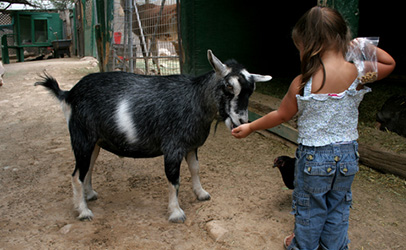
http://www.dreamstime.com/royalty-free-stock-photo-petting-zoo-image1008725The Whatcom County Health Department (WCHD) is investigating an outbreak of E. coli among school children. WCHD officials say four school children have lab-confirmed cases of E. coli and two others have E. coli symptoms after attending the Milk Makers Fest at the Northwest Fairgrounds in Lynden on 4/21/15. Two children have been hospitalized.

WCHD is interviewing the ill students and their parents to identify whether there was a common food or water source or activity, such as the petting zoo or other livestock contact. WCHD is also monitoring for spread to other household members. WCHD has contacted medical providers in Whatcom County about the outbreak and have asked them to obtain stool cultures and notify us of any cases of diarrhea in children that attended the event in Lynden.

WCHD is urging that if your child attended the Milk Makers Fest and develops diarrhea before May 1, please take your child to your regular health care provider for evaluation and testing. It is important to wash hands carefully with soap and running water after using the toilet and before eating to prevent the spread of infection. Children with diarrhea should stay home and not return to school until 24 hours after the diarrhea has stopped.

Shiga toxin-producing E. coli (STEC) can cause diarrhea and abdominal cramping, sometimes with vomiting, with or without a low-grade fever. After several days, the diarrhea can become bloody. These infections can be mild, without bloody diarrhea, or can be severe, and complicated by kidney failure and hemolysis (breakdown of red blood cells). Antibiotics and antimotility medicines (antidiarrheal medicines) should not be used with STEC infections, since they increase the risk of kidney failure. Keeping the ill person well hydrated can reduce the risk of kidney failure.

thConsumer Federation of America (CFA) today released an in-depth analysis of the U.S. Department of Agriculture’s (USDA) primary meat and poultry food safety regulatory program. The report found that while the program has resulted in benefits to public health, further progress has been hindered by gaps in the program and by a legal challenge which has constrained robust action.

The program, known as the Pathogen Reduction/Hazard Analysis and Critical Control Points (PR/HACCP) regulation, was implemented following the 1993 outbreak of E. coli O157:H7 illnesses and deaths linked to undercooked hamburgers sold at Jack in the Box restaurants in the northwestern United States. The PR/HACCP regulation, which went into effect in 1998, requires meat and poultry plants to develop food safety systems in which plants take steps to identify and prevent contamination of meat and poultry products.

CFA’s report, titled “The Promise and Problems of HACCP: A Review of USDA’s Approach to Meat and Poultry Safety” traces the history of USDA’s implementation of the PR/HACCP regulation and identifies gaps which have hindered the ability of the regulation to fully protect consumers.

Specifically, the report cites two examples of ongoing problems which have not been adequately addressed in the 17 years since the regulation first took effect:

  • Too often plants have failed to develop effective food safety plans while USDA has failed to adequately identify problems with those plans.
  • Plants are repeatedly cited for reoccurring food safety violations with little consequence.

These gaps have continued to occur and have often been identified in the wake of large, nationwide foodborne illness outbreaks, yet the problems have not been adequately addressed. CFA recommends that USDA develop better approaches to reviewing plant food safety plans, including requiring that plants be required to prevent specific pathogens; and that USDA establish clear procedures to address reoccurring violations and when to take increased enforcement action.

The report also identifies how a court case brought against USDA by meat processor Supreme Beef in 1999 has hindered how USDA enforces its food safety regulations. In particular, the court case (Supreme Beef v USDA) limited the ability of USDA to enforce its regulations, effectively barring the government from shutting down a plant which fails to meet safety standards for Salmonella. Consumer groups have argued since that Congress should provide USDA with explicit authority to set and enforce food safety performance standards.

“USDA needs to provide better assurance that plants are reducing contamination of meat and poultry products and that the agency is effectively enforcing its regulations,” said Chris Waldrop, Director of the Food Policy Institute at Consumer Federation of America. “Enforceable standards would allow the agency to take decisive action when a problem is first identified rather than after an outbreak has already occurred.”

The Report

The Summary